Categories
Health

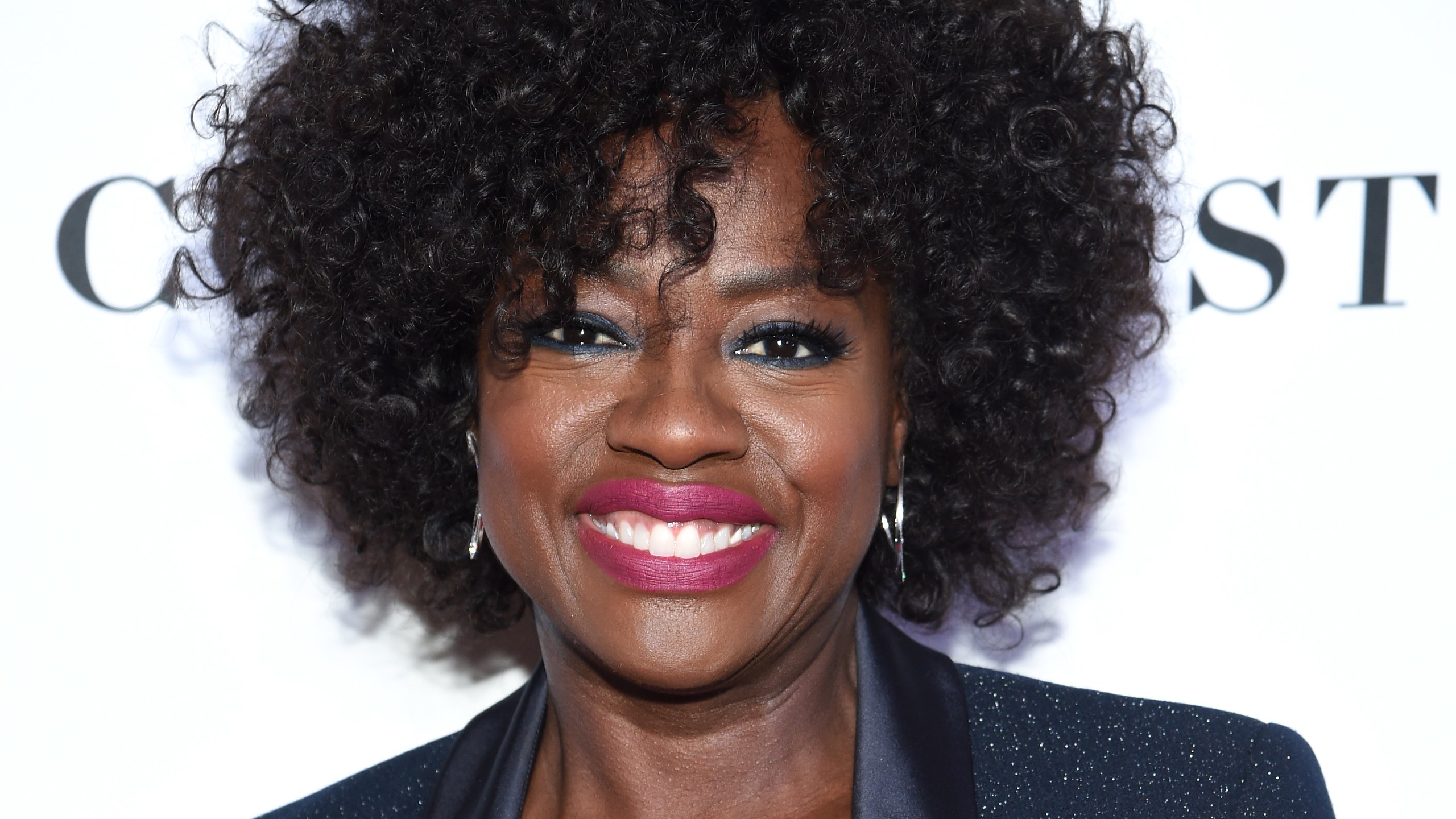
Viola Davis Is Officially Starring as Michelle Obama in New Showtime Series, 'First Ladies'


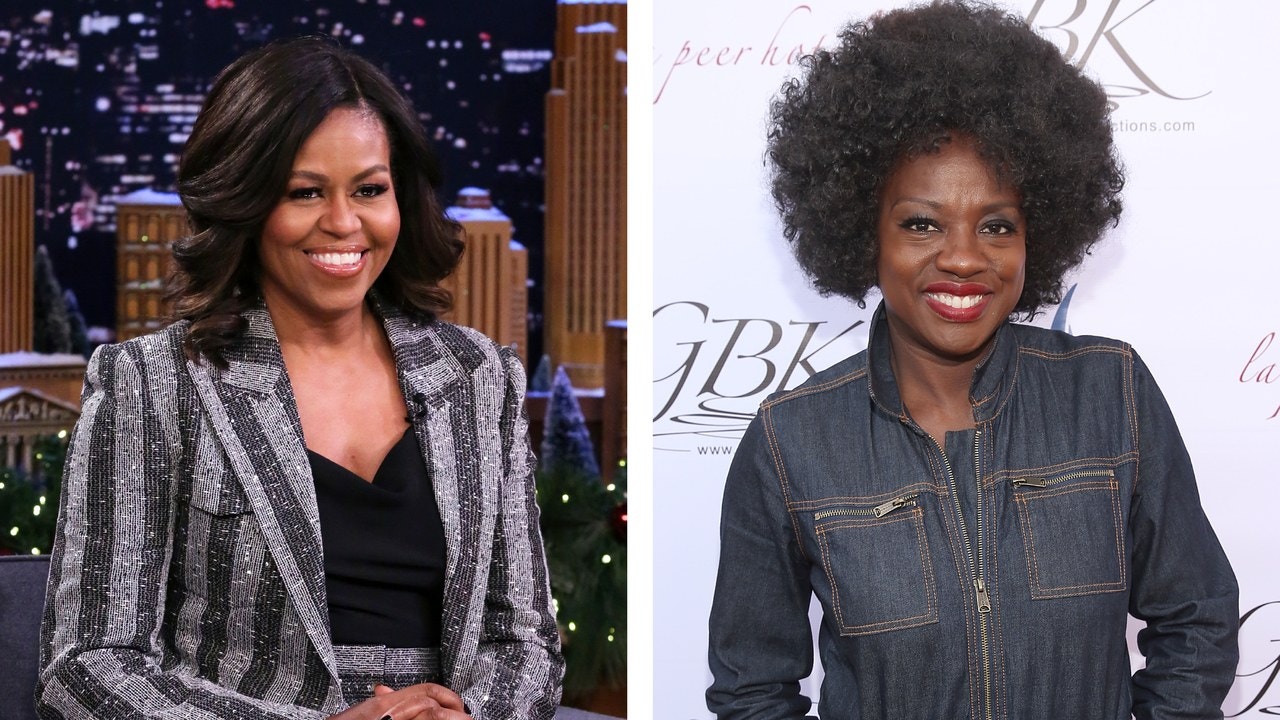
Showtime has officially ordered First Ladies to series, marking Michelle Obama as Academy Award winner Viola Davis‘ first television role since her tenure as Annalise Keating on How to Get Away With Murder, wrapping this May.

According to a statement from Showtime, the new anthology series will follow the “personal and political lives” of the nation’s first ladies, with the first season focussed on Eleanor Roosevelt, Betty Ford, and Michelle Obama. Roosevelt and Ford have yet to be cast. “First Ladies is set in the East Wing of the White House, where many of history’s most impactful and world-changing decisions have been hidden from view, made by America’s charismatic, complex and dynamic first ladies,” the statement revealed.

The one-hour drama was originally put in development by Showtime last August with a three-script commitment. The announcement of a full series pickup came on February 5.

“Throughout our history, presidents’ spouses have wielded remarkable influence, not only on the nation’s leaders but on the country itself.” said Jane Winograde, the President of Entertainment at Showtime Networks Inc. “Having Viola Davis play Michelle Obama is a dream come true, and we couldn’t be luckier to have her extraordinary talent to help launch this series.”

Aside from portraying Obama, who served as First Lady of the United States from 2009 to 2017, Davis will be an executive producer of the project. The actress holds five Emmy nominations and took home one win as well as a Golden Globe and SAG Award for her portrayal as a ruthless, hardened defense lawyer on HTGAWM. Oh, and don’t forget her Oscar win for Best Supporting Actress for Fences, the film adaptation of the play that won the actress a Tony back in 2010.

Hopefully, this political drama can soothe the ache left in the wake of HTGAWM as well as the Showtime staple Shameless, in its 11th and final season this year.


Source link

Categories
Health

Viola Davis Is the New Face of L'Oréal Paris


L’Oréal Paris has been on a mission lately to make one thing clear—every woman is “worth it,” no matter her age. Over the past few years, the beauty brand’s been working to expand its roster of spokeswomen beyond the typical starlets in their twenties. Jane Fonda, Helen Mirren, Courteney Cox, and Vanessa Williams have all been tapped to be a part of the L’Oréal family. In fact, as of this fall, its portfolio included nine women over the age of 40. Now its latest announcement makes 10.

At 54 years old, actress and activist Viola Davis is the new face of L’Oréal Paris, making it her first-ever contract with a big beauty brand. (And if you’ve ever seen her walk a red carpet or watched a minute of her on How to Get Away With Murder, you’ll join me in saying it’s about freaking time.)

Davis announced the news on Instagram today, writing: “The self affirming words of, ‘Because I’m worth it’ have always given me chill bumps. What a joy it will be to not just say them over and over again…but to spread the message of worth to women around the world. It is a gift.”

Introduced by L’Oréal’s deputy general manager (and Glamour Women of the Year, All Year honoree) Anne Marie Nelson-Bogle at an intimate press event yesterday, Viola told a crowd of beauty editors exactly what being labeled “worth it” means to her.

“I believe that the greatest privilege is to be who you are,” she said. “No apologies for your age, your color, anything. As long as you’re you and living up to who that is and what that means, you’re worth it. That’s self-worth.”

She went on to tell the room how when she began acting she felt pressure to conform to Hollywood’s “classic” (read: stale, singular, Eurocentric ) definition of “pretty.”

“Earlier in my career when I was much more affected, [conforming] almost felt like prerequisite to success, which is crazy if you think about it—what do looks have to do with acting ability?” she said. “In order to succeed, you had to meet these impossible standards. Now I am much more secure in who I am, but there was a time that I did feel those pressures and succumb to them to a degree.”

But also, she pointed to her role as Annalise Keating on HTGAWM (who wasn’t originally written to be a black woman) as proof Hollywood is evolving. “To have been a part of that shift is so powerful and humbling,” she said.


Source link

Categories
Health

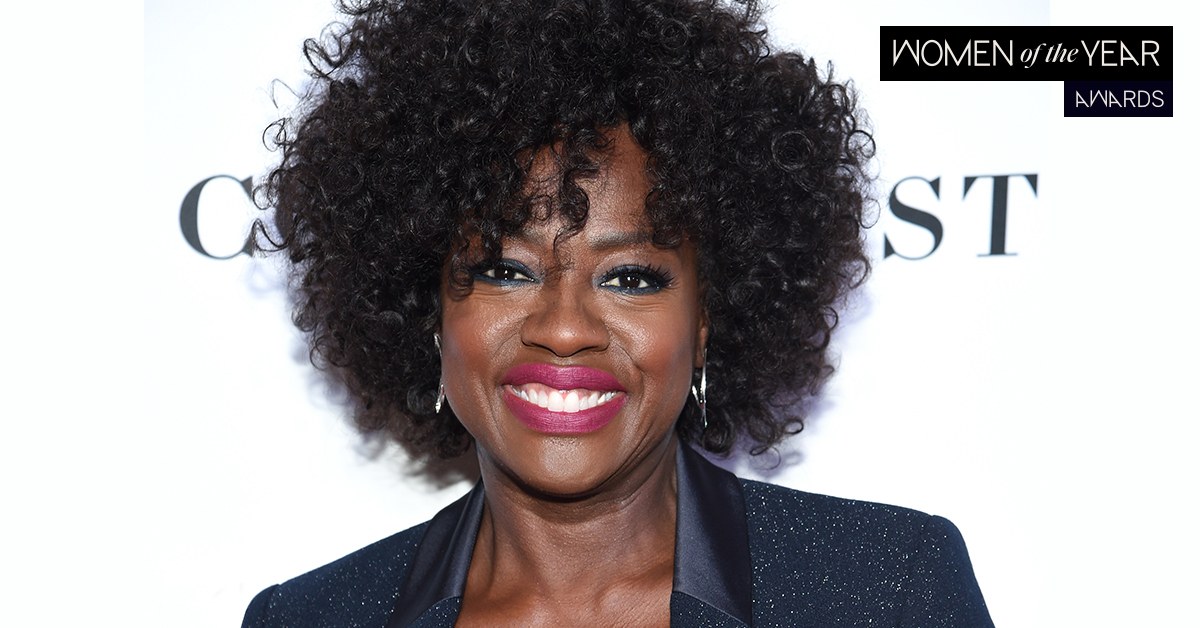
Read Viola Davis' Incredible Acceptance Speech at Glamour's 2018 Women of the Year Awards


On Monday night, November 12, Viola Davis was honored as one of Glamour‘s 2018 Women of the Year in New York City. The actor delivered an important, inspiring speech to the audience that’s necessary reading. But first, she was introduced by Steve McQueen, who directed her upcoming movie Widows. “The truth, the whole truth, and everything but the truth, so help me God. That is Viola Davis,” he said, before introducing the actress.

Read Davis’ full speech, below:

“Chrissy Teigen ruined it for me. I actually don’t have much to say. I just find it so interesting that some of the greatest myths come out of people just dying to themselves and being resurrected. It always starts with a death. It always starts with just hitting rock bottom and having nothing left.

You know, I came from a story where I didn’t feel just less than or I just didn’t have a voice or not pretty. I felt invisible. I came from a long line of women who felt invisible. And they’re the ones who attempted to throw me an invisible rope. Courage is just fear said with prayers. And I feel that it takes a great deal of courage to hit bottom and feel invisible and then to share one’s story. But it’s in the sharing of the story in front of people who have empathy that kills shame. And once that shame is killed, guess what? You’re running. When I look at the zeitgeist today and look at what is happening with women in terms of sexual assault, in terms of poverty, in terms of politically what’s happening, I think to myself the change and the shift that needs to happen is the internal. It’s finding the courage to own one’s story. To say and wake up one day and feel, like, ‘Damn, I’m not perfect. Sometimes I don’t feel pretty. Sometimes I don’t want to slay the dragon. Sometimes the dragon I’m slaying is myself, but damn it, I am worth it. I don’t have to barter for my worth. I don’t have to pay someone for it. I came out of my mom’s womb worthy.’

Courage is just fear said with prayers. And I feel that it takes a great deal of courage to hit bottom and feel invisible and then to share one’s story.

At 25, which was a time in my life that I was at Juilliard, and they basically said, ‘You’re overweight. You’re going to play a matriarch your entire life. What kind of roles can you play, Viola?’ And I thought to myself, ‘Oh my God, I know I’m an actor. I know that’s what I was born to do. That’s what’s going to make my life worthwhile. I know I have something in me.’

There was no one to give me the answer. So I remember I took a trip to Africa, that was paid by Juilliard, by the way, so I have to give them some credit. And I studied the dance, music, and folklore of four different tribes just for a very short period of time. And I went into a village of the Mandinka tribe. One day there were these group of women that came through the tribe, and they were dressed in oversized clothes, oversized shoes. They painted their faces. They had drums, and they had huge calabashes of food. They were screaming at the top of their lungs. Just screaming. They yell. They kept screaming like that and they kept making funny faces, rolling their eyes.

And soon, other people came out of their houses, and pretty soon you saw hundreds of people gathering around them. Hundreds of them. They passed the calabash around of food and they all just slopped it in their mouths. And they slopped it and they ate it and passed it around. And then all those people were screaming. So loud I couldn’t hear myself. I was like, ‘What the hell is this? What ritual is this?’ I later found out these were women who were infertile. And the biggest blessing you could have as a woman in the Gambia was to have a child. These women felt that the reason why they hadn’t be blessed with a child is because God didn’t hear their voice, that God didn’t see them. So the ritual was about as making as much noise as you could possibly make so God could hear it and pour down a blessing.

Be willing to own your story and share it.

We don’t have that ritual here. We pray for connection. We pray to be seen. We pray that somehow that invisibility cloak will be unleashed and reveal us. I say it is up to me to lift that veil and to show you and to have the courage and the vagina to not have to get it together to show up. To show up imperfectly and beautifully and messily as I am. And it’s that truth that connects me to everyone in this room. It is that that that allows you to unleash your story and do the same. You know lighthouses don’t go around the island just shining their light and saving people. They just sort of stand there, shining. That’s what I choose to do with my work. I just choose to be me. And I think that is something that we can all do.

Native Americans would kill the Buffalo and take out the heart and eat it—sort of internalized courage, the courage and the guts to just slay dragons. Biggest dragons I think you can slay is yourself. I’ll tell you 70 percent of women now. There’s been a 70 percent spike of suicide in young women. One of the main reasons is images of on the Internet of women sharing their beautifully perfect life. That’s a known fact, according to the CDC. I say if perfectionism is driving the car, then shame is riding shotgun and fear is that nagging backseat driver.

Be willing to own your story and share it. I’ll tell you one thing: You might as well put the bow and arrow behind you and the sword, because you will be the most courageous person in the world. That’s what my work inspires. That’s what my production company inspires.

My tribe, the people who scream up to the Gods for me, and give me hope are my posse right here: my Lisa, my Estelle, my beautiful Julius. My love of my life, my Genesis, my Elizabeth.

Thank you so much Glamour. Glamour magazine. Thank you for this honor. I kind of have an issue with the word ‘icon.’ Just a little bit! But if it means that you feel like I represent anything and that I inspire anybody to do anything. It’s like they say, you don’t die until the last person who has a memory of you dies.”


In her Women of the Year profile, Davis remembered the early days of her career, when she was a student at Julliard: “I was angry a lot… Nobody asked me to do [classical roles] as a black actress.” Many “bad performances” (her words) and small parts later, her role in 2008’s Doubt would catapult her to wide acclaim and grant her more opportunities and agency as a performer. Now, she can not only help create those narratives (via her company with husband Julius Tennon, JuVee Productions) but also inspire those following in her footsteps. As her How to Get Away With Murder co-star Aja Naomi King said: “To be a black actress, and to have watched the evolution of her career, it’s altered the way I have looked at this entire industry. Every time she wins, it feels like success for all of us. Because here’s the face of this beautiful, tall, striking, dark-skinned, natural-hair-wearing black woman who is basically saying, ‘I dare you to tell me no.'”

Catch up on all the 2018 Women of the Year happenings here.

Related Stories:

Why Viola Davis Says She Regrets Doing The Help

Viola Davis Won’t Let Her Daughter Dress Like a Princess Unless She Has Natural Hair

The Quiet Power of Viola Davis


Source link
Categories
Health

Viola Davis Says She Regrets Doing The Help


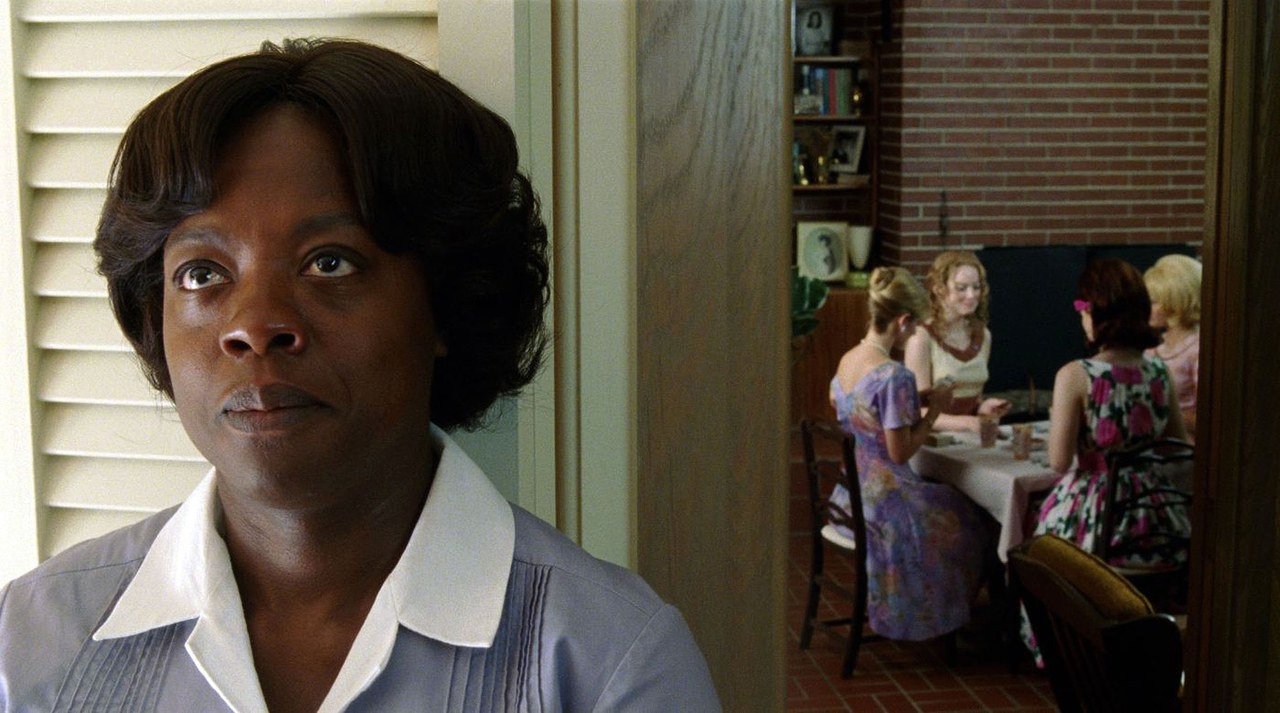
Viola Davis is out and about promoting her new film Widows—and in the process, she’s igniting conversations about the depth and scope of past characters she’s portrayed. Specifically, her role in The Help as a 1960s maid named Aibileen Clark for which Davis received a Best Actress Oscar nomination. Speaking to The New York Times, Davis shared that The Help is a source of regret for her because she felt like the voices of the maids weren’t heard.

In the interview, Davis was asked several questions from readers, including whether she regretted passing up a role. “Almost a better question is, have I ever done roles that I’ve regretted?” she replied. “I have, and The Help is on the list.”

Davis explained that she didn’t feel the story fully explored the perspectives of the maids. “I just felt that at the end of the day that it wasn’t the voices of the maids that were heard,” she said. “I know Aibileen. I know Minny. They’re my grandma. They’re my mom. And I know that if you do a movie where the whole premise is, I want to know what it feels like to work for white people and to bring up children in 1963, I want to hear how you really feel about it. I never heard that in the course of the movie.”

PHOTO: Moviestore collection Ltd / Alamy Stock Photo

Viola Davis in ‘The Help’

Still, those feelings don’t diminish the relationships she made on the set. “The friendships that I formed are ones that I’m going to have for the rest of my life,” she said. “I had a great experience with these other actresses, who are extraordinary human beings. And I could not ask for a better collaborator than Tate Taylor.”

Although The Help won many accolades when it came out (in addition to Davis’ Oscar nomination, her costar Octavia Spencer won the award for Best Supporting Actress), critics have taken issue with its treatment of the black characters. Roxane Gay has called the film “emotionally manipulative,” and the Association of Black Women Historians issued a statement that said the film was “the coming-of-age story of a white protagonist, who uses myths about the lives of black women to make sense of her own.”

In fact, this isn’t the first time Davis has criticized the film. “The anger, the vitriol, and the hatred that [the maids] would have towards these white women if they were asked, if they were put in a situation where they were isolated, would have been vocalised,” she said at a BAFTA event last year. “You didn’t see none of that!” But by steering the conversation and reminding people of the film’s shortcomings, Davis continues to reinforce why nuanced portrayals of black women are so critical.

As she put it at the BAFTA event, “That’s the issue I have with a lot of our stories. By the time… it makes it to the screen, the truth is so filtered down, and then it’s given to you to make you feel very comfortable. It’s not our job to make you feel comfortable, it really isn’t. If you feel comfortable, then that is your journey, and your cross to bear. That is the beauty of art, the beauty of art is that we throw it to you, you receive it, and if you shift in some way, [then] we’ve done our job.”

Related: What We Can Learn From Viola Davis’ Oscar Win


Source link

Categories
Health

Viola Davis Won't Let Her Daughter Dress Like a Princess Unless She Has Natural Hair


In between being nominated for all the acting awards and being a damn inspiration, Viola Davis spends a fair amount of time going to bat for women of color. She did at last year’s Oscars, at the 2015 Emmys, and she did it again this afternoon by sharing a very important rule she has for her daughter.

We all know that women of color face discrimination everyday—from the workplace to the makeup counter—and Davis never allows a moment of personal achievement to pass without reminding the world of this imbalance. Still, at the same, she celebrates the power of black women (see the straight up transcendence of any one of her acceptance speeches). So it’s not surprising that she brings the same fire and fierce affection for blackness to raising her daughter. When it comes to playing dress up, Genesis, age 6, is given the full range of Disney princesses and superheroes to choose from, but Davis draws one line.

“I say, ‘You’ve gotta wear your hair exactly the way it is,” Davis told Yahoo Lifestyle. “You can be Wonder Woman, but you gotta be Wonder Woman with your hair. You can be Elsa, but you gotta be Elsa with your hair.’”

The news is run through with stories detailing the obstacles that women of color face simply for living life with natural hair and this uncomfortable truth makes Davis’s rule all the more meaningful. She goes on to explain that she tells her daughter she can be anyone she wants, “if you start with the palette of loving who you are.” Cue total and absolute sense of affirmation.

Judging by Davis’s throwback Instagram post below, this rule has been in place for some time.

And judging by this Instagram post, it’s giving Genesis a sense of self-worth that is truly exceptional:

Related Stories:
Everyone Should Read Taraji P. Henson’s Powerful Message About Natural Hair
Why Are My Daughter’s Beauty Apps Othering Brown Girls
An Open Letter to My 7-Year-Old Black-Latina Daughter


Source link