Categories
Health

This Vibrator Is the Ultimate Way to Destress


Okay, back to business. The vibe fits perfectly in the palm of my hand, not too big, not too small. Very ergonomic. (I’m using my fancy words now!)

When I turned it on, I could immediately tell that it was pretty strong, yet still quiet—no one wants to sound like they are getting jackhammered in the spasm chasm. Some vibrators I have owned sounded like that scene from Men in Tights where the Sheriff of Rottingham is trying to break into Maid Marian’s chastity belt. Before kids that’s not a huge issue but now, it’s definitely a no-go.

I quickly discovered that most of the power in this little baby is concentrated in the tip, which allows you to be precise with exactly where you want the pressure and vibration to hit the most. It’s shape and length allow it to press against pretty much your entire inner labia if you desire full coverage vibration, not just clit action.

This worked well with and without lube. I usually don’t use lube, but I’m doing this for science so I tried it both ways. Even when wet, it doesn’t slip much from your grip. (Which can happen with the non-silicone hard surface toys I’ve tried and is a real pain in the ass.)

Simplicity is definitely Maude’s best feature. With just three settings and one button, it’s not hard to switch it up quickly if you need to give your business a break so you can drag out an orgasm, or to ramp things up to hurry it along.

Its also fantastic to use with a partner. So many places you can stimulate! Along the shaft, the balls, nipples. Your head, shoulders knees and toes, knees and toes. (I don’t recommend eyes and ears and mouth and nose, however.)


Source link

Categories
Health

Face Fillers: Your Ultimate Guide to Treatments and Costs


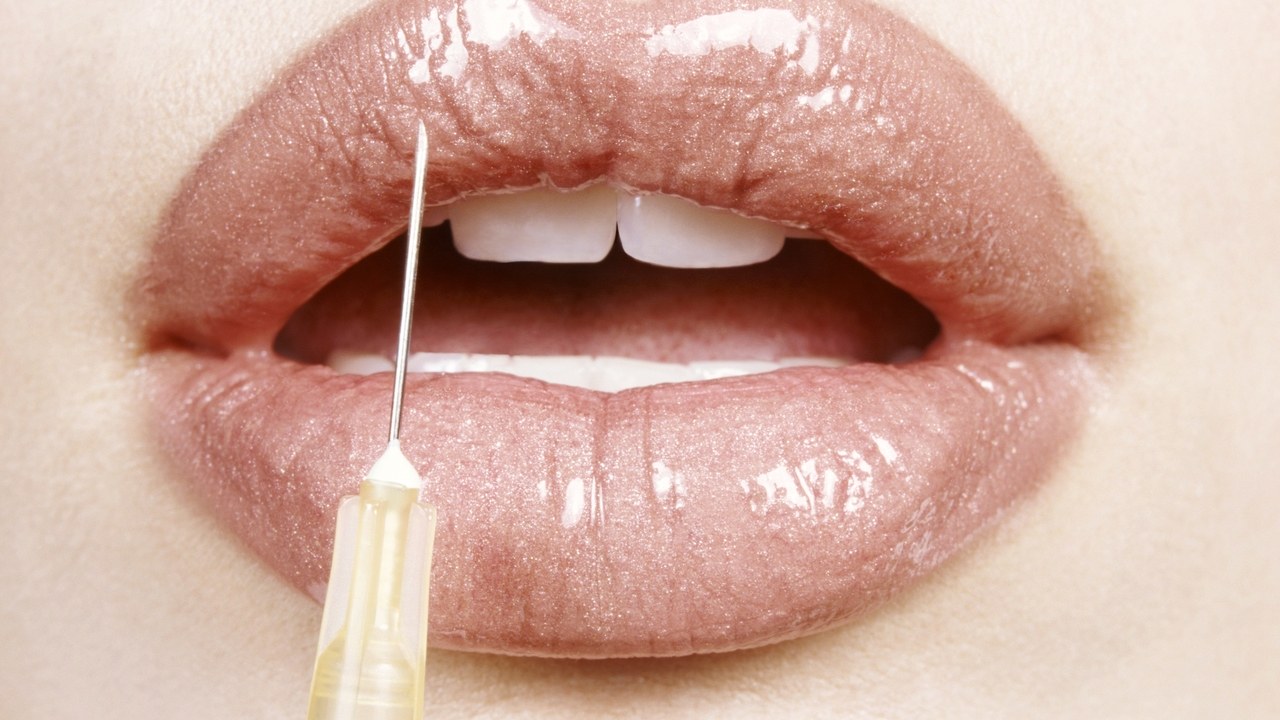
Simon Ourian, M.D., whose Beverly Hills clinic Epione is particularly popular for injectables, counts lips as one of his most-requested treatments. He estimates the average cost at $2,900 to $4,900. “Fillers can be charged by units or by area,” he says. “In my practice, we charge by area to achieve the desired look each patient wants instead of limiting them to a certain amount of units per area.” That pricing model may also be due to the fact that he compounds his own formations with FDA-approved fillers. “For a more youthful, plumped appearance, I use a combination a of hydrophilic-based fillers and a non-hydrophilic formula to create a more defined appearance for areas such as the lip boarders,” he says.

Dendy Engelman, M.D. prefers a thinner, softer product made from hyaluronic acid like Juvederm Volbella for lips. In her clinic, they charge by the syringe, so based on the amount of product you need, the starting price is typically $1,000 to $1,400. (And FYI, to get the look most influencers have, it’s typically two to three syringes, if not more.)

Cheeks

Want more lifted and sculpted cheekbones? There’s filler for that. But the midface is an area where you might see a cannula more commonly used than a needle. “Cannulas are blunt-tipped thin tubes used for filler placement,” says Weiser. Because they lack the sharp tip of a needle, they’re less likely to be inserted directly into a blood vessel, causing potential complications that can be as severe as blindness. “The one drawback of the cannula is that they are not quite as precise as needles so occasionally more product volume is needed, or the result may be slightly less exact than intended,” she adds. “Many experienced providers choose to use a combination of cannula for large scale injections and than a needle for the fine and more precise aspects.”

Your dermatologist or plastic surgeon will apply or inject a local anesthetic to the treated area, create an opening with a needle, and slide the cannula in. As for the technique and cost, that depends on the result you want. “The midface loses fat and structural support from the cheekbone resulting in a flattening and shadowing of your cheek,” says Weiser. “Filler can be used along the cheekbone to a more youthful contour to your cheeks.” She estimates that this type of midface injection can cost around $1,200, and typically those getting this treatment tend to be older and have already lost volume in their cheeks due to aging. But, again, if you want the “Instagram face” look, there’s also the option to contour your cheeks, creating a sharper, lifted cheekbone instead of making your midface look fuller. Expect that to start around $650.

Temples

Temples are another area of the face that will lose fat and become hollow over time, according to Weiser. You likely won’t need too much product here, but pricing also factors in complexity of treatment. “Treating a temple hollow could cost $1,500 or more,” she says. This is one of those “no-filler filler” treatments where if done correctly, it won’t look like you’ve had any work done. Currently, this isn’t an FDA-approved use, although licensed practitioners do often use injectibles off-label (like jaw Botox for teeth grinding).

Jawline

Some patients ask for jawline filler in order to compensate for loss of bone structure over time, while others simply want to sculpt a more angular profile. Ourian cites jawline contouring as the most popular treatment in his clinic. “For a chiseled appearance, I created a calcium-based and hyaluronic acid formula,” he says, estimating the cost tends range between $3,900 to $5,900. (Note again, that this is off-label use.)


Source link

Categories
Health

YouTube Launches the Ultimate Destination for Fashion and Beauty Videos


If you’ve ever lost hours of otherwise productive time because one seemingly innocent link to watch Naomi Campbell disinfecting her plane seat led to a practically enchanting makeup tutorial from Patrick Starrr followed by a recap of what Emma Chamberlain was up to at Paris Fashion Week, YouTube and Derek Blasberg have done their job. And their latest accomplishment comes by way of the official launch of YouTube.com/Fashion.

Simply referred to as /fashion—“slash fashion,” that is—YouTube has christened the ultimate destination for style videos with its new vertical. Essentially /fashion is a place to discover all things fashion and beauty in one place. It’s also Blasberg’s biggest project to date since being named the stream behemoth’s head of fashion and beauty partnerships.

“When I joined YouTube last summer, I saw this hunger from viewers who loved consuming style content—and I wanted to give them more!” says the former editor, specifically referring to the 244% increase in fashion and beauty creators on YouTube between 2014 and 2018. “Much like Music and Gaming, which are established verticals on YouTube, we wanted to carve out a special destination for our users. Today, I’m proud to launch /fashion, which brings together the worlds of the already fabulous YouTube community with that of high fashion in one seamless destination.”

[embedded content]

Of course for anyone paying attention, YouTube’s been leading up to this major moment for some time now. In the past few months, tons of fashion personalities have launched personal YouTube pages dedicated to sharing the behind-the-scenes of their lives and work, including Lily Aldridge, Victoria Beckham, and the aforementioned supermodel with a strong preference for germ-free airplane seats and shopping for groceries in person.

[embedded content]

“I mean, where else could you find a legendary supermodel shopping at Whole Foods? What Naomi is doing right, as are a lot of our other fashion professionals, is being authentic, vulnerable, and opening up their lives to viewers,” says Blasberg.”Content you’ll see on Naomi’s channel is different than what you’ll see on Alexa Chung’s channel and is different than what you’ll see on Alexander Wang’s channel. They’re all creating content that reflects who they are as a person — Alexander Wang, for example, just launched a new series called ‘Spill the Boba,’ where he spills the {boba} tea with special guests in an interview-type format.”

[embedded content]

It’s no coincidence /fashion is live today, just as New York Fashion Week is about to kick off (followed by the European tour of Fashion Weeks, as well). All eyes—especially those prone to fall down YouTube holes of runway videos and backstage makeup applications—will be on the fashion world and /fashion is setting an all-encompassing stage for all manner of related content ready to be devoured.

[embedded content]

“Before I came on board, fashion brands didn’t have access to someone at YouTube or support in how to best utilize the platform,” Blasberg says of the process of getting /fashion to launch. “I’m proud to say that we’ve been changing that in a tremendous way and that a lot of what you’ll see on /Fashion reflects that.”

[embedded content]

Aside from personalities and brands who’ll have a greater voice on Youtube, /fashion will also welcome style-related content from popular creators such as Ingrid Nilsen and Jackie Aina; publishers including Vogue, LOVE Magazine, and, of course, Glamour; as well as a virtual front-row view of runway shows around the globe.

[embedded content]

“At the heart of our platform are some amazing creators who organically know how to create engaging and authentic content,” Blasberg adds of this exciting endeavor. “By encouraging brands, fashion professionals and publishers to think like our creators (and collaborate with them!), we are seeing new voices and channels emerge. This is reflected on /Fashion and content we think will draw viewers back again and again.”


Source link

Categories
Health

Dermal Fillers: Your Ultimate Guide to the Types of Injectibles


Ultimately, if it sounds too affordable to be legitimate, it probably is. If in doubt, get a quote from several clinics near you. Dr. Golueke warns against injecting products without being able to trust exactly where they came from. “There’s a black market for Botox and fillers, so people get Botox and fillers which look like the original product, but they are fake,” he says. We’ve already seen the many deals floating around online, but this is one case where you should definitely stick to reputable professionals. You just don’t want to risk it.

“Board-certified dermatologists and plastic surgeons are the only providers fully trained and qualified to administer injectables,” cautions dermatologist Dr. Jessica Weiser. “It’s always appropriate for a patient to ask the provider what their training and qualifications are for providing the suggested treatments.”

The consultation should cover a few key things.

We’ve all seen cases of objectively bad injectables. Beyond going to a board-certified expert, it’s always a good idea to make sure you and your derm (or surgeon) are on the same page about what you’re trying to achieve. And in some cases, you might be told that what you’re trying to achieve isn’t possible. While you can do a lot with injectables, they still need to work with the proportions of your features and it’s possible to over-enhance them. Dr. Weiser recommends going for a gradual approach and adding more if needed.

Dr. Golueke adds that you should also feel comfortable about changing your mind. “If you’re unsure, no real, serious doctor would mind if said you needed to think about it,” he says. “If you don’t feel like doing it, don’t do it.” If you do, make sure you take this time to get any remaining questions or concerns addressed. “The doctor may ask you if you have had any adverse reactions to past injections, how long ago the last injection was, if you are taking any medications—those are all important,” he says.

Smoothing wrinkles is just one of many options.

People typically think of injectables as a treatment for wrinkles and fine lines, but there are many other reasons why someone might get them. Dr. Weiser tells us that her most frequent requests used to come from women, typically ages 40 and over. Now, she’s seeing a dramatic increase in their use in patients from 20 to 40 years old, “primarily neuromodulators to reduce lines, but also dermal fillers to soften under-eye hollows, lift cheekbones, and enhance lips.”

You may have heard the phrase “off-label” before, which Dr. Weiser defines as “using products for unapproved indications.” Injectables go through clinical trials for safety, but they’re not technically approved for their full range of popular uses. For instance, the brand Botox is the only neuromodulator approved for use in your forehead and around your eyes, but brands like Dysport and Xeomin are routinely used there, too. Off-label uses for neuromodulators include injecting them into the masseter muscle at the back of your jaw (to lessen clenching and narrow your lower face), on neck bands (to relax them), and in the central jaw (to keep the corners of your mouth from pulling down).

Filler has even more uses. Dr. Weiser sees the most requests around the midface (to define and raise cheekbones), along the nasolabial folds (to soften frown lines), and in lips (to plump them or just to smooth the surface). “Many off-label uses include the hollow under the eyes, the temples, the jawline, and liquid rhinoplasty to finesse the appearance of the nose,” she adds.

In comparison, Kybella is pretty straightforward. It’s approved on-label for melting excess fat under your chin, but derms may also use it off-label in other “small stubborn pockets of fat.”

Pain is usually “minimal.”

Whenever we’ve brought up the topic in the past, we’ve seen many people flinch at the idea of a huge needle approaching their faces. It can be disconcerting, but it shouldn’t hurt. Dr. Weiser classifies the feeling as “minimal pain.” Dr. Golueke likens the feeling of neuromodulators to “a pinch, similar to when your blood is taken.” Dermal fillers are a step up, but your derm or surgeon will offer a numbing cream before treatment to reduce the insertion pain. Your doctor might also cool the area. According to Dr. Golueke, the two more painful filler areas on the face are the nasolabial fold and the lips. As for Kybella injections, Dr. Weiser says they will sting intensely, but that can be lessened with lidocaine injections and ice packs.

Recovery time is relatively short.

There’s a reason so many patients opt for minimally invasive treatments; they offer fast results and very little downtime. If you get Botox, you might see small pink dots immediately after treatment, but they should go away with 10 to 15 minutes. Dr. Golueke notes that you might see minor bruising in certain instances, but it fades in five to seven days.

Filler does cause swelling and bruising, but it lasts no more than a few days (and can even go away within hours, although you probably shouldn’t make any plans day of). Sensitive tissues will probably swell more—your lips, for instance. Dr. Weiser warns that if swelling doesn’t go away within a few days, you should call your doctor.


Source link

Categories
Health

Jennifer Lopez Confirms What We All Know, Says A-Rod Is the Ultimate Instagram Husband


If you’re looking to find the perfect inspiration to showcase your Instagram-official relationship, Jennifer Lopez and Alex Rodriguez—masters of the art form—have some advice.

The newly engaged pair have diligently documented their entire romance on Instagram, straight from the moment they went public. From vacations to events, product launches, and even their engagement, it’s all up there for the world to see. And, according to Lopez, it’s all thanks to A-Rod’s hard work as an Instagram (future) husband.

“He loves taking pictures and documenting the moment,” Lopez shared with People. Rodriguez echoed his fiance’s statement, adding that he’s more than happy to photograph and share their every move—especially now that he’s retired from baseball.

“I don’t have to play 162 games anymore, so I have a lot time on my hands,” he said. “I like to have fun.”

But, let’s be real, it’s not like A-Rod developed these Insta skills on his own: He happily admitted that he receives a little bit of advice from his daughters Natasha, 14, and Ella, 10, on exactly how to capture a moment for social media the best way.

“My coaches are my girls—they’re my biggest critics,” Rodriguez said. “I know immediately if I posted something dorky, because both of the girls start blowing me up. They’re like, ‘Dad take that down, we’re teenagers. We’re going to be ragged on at school.’ We have fun with it, but they know best because that’s more their strength.”

Of course, the relationship between J.Lo and A-Rod is a symbiotic one. Although Rodriguez has lent even more shine to his future wife’s Insta game, she’s returned the favor by helping him with his own (more literal) style.

“Jennifer has taught me that it’s less about what you wear and more about the fit,” Rodriguez told People. And you can definitely tell—after all, this couple is basically famous for dressing in adorably coordinated outfits.

But in the end, the duo noted that it’s really about getting to do things together, as a couple.

“Everything that we do, we do together,” Lopez said. “We’re constantly supporting each other in our individual endeavors and then we’re thinking about all the things that we can build together. He knows my dreams and I know his dreams, and together we feel like we’re stronger. He is my biggest collaborator and my biggest supporter.”


Source link

Categories
Health

Why Staycations Are the Ultimate Self-Care Splurge


Once upon a time, working from home was the dream. I would have freedom and flexibility. I could craft my schedule as I desired and be my own boss. I envisioned having a designated writing desk that overlooked a bustling cityscape, complete with never-ending French press coffee and a stack of periodicals that I actually had time to read.

And then I started working from home.

My expectations were a little…off. I should note that I don’t work from home full time. I have a day job in Washington, D.C., that requires me to be in an office four days a week. I have a great team and enjoy the work, but balancing my 9-to-5 with my schedule as a writer and consultant is tough. My early mornings, evenings, and weekends are almost entirely set aside for freelance projects. Put another way, I spend a lot of time at home.

I’ve always associated the concept of home with a personal sanctuary. I grew up in a humble, two-bedroom house. Our space was small, and my space was even smaller. Regardless, it was essential that I make it my own: I stuck those glow-in-the-dark stars and moons onto the ceiling of my room. I taped up pages that I’d ripped out of my favorite fashion magazines. And you better believe I squeezed a bright blue blow-up chair in there sometime between 1998 and 2000.

I like to think that my interior design skills have improved since then. And while I believe I have created a clean, cozy, and inviting home as an adult (thanks, Marie Kondo), I never really considered the effect working from home would have on my so-called sanctuary.

For starters, it’s less a sanctuary and more a place that reminds me that I have work to do. I still get nice and comfy on my sofa, bundle up in a fleece blanket, and binge watch Queer Eye like the best of them. But my laptop (and, even worse, my desktop) give me some serious side-eye the whole time.

So often, before I know it, I’m knee deep in spreadsheets, calendars, and project management apps because when you run your own business, there is literally always work to do. I go to bed stressed and wake up stressed. My bed used to be my happy place. Now it’s just where I try to switch off for the day.

Not being home—even though it was just a couple miles away—gave me permission to finally hit the off button.

Near the end of last year, as I rapidly approached burnout, I decided that I had to get out of my apartment. Otherwise, I was never going to stop obsessing over my workload. It also happened to be my birthday month, which is pretty much the only excuse I need to spend what I would ordinarily consider exorbitant amounts of money on myself.

My proposal to my fiancé went a little something like this: Let’s “waste” away a weekend at a buzzy, hip hotel in a neighborhood on the other side of town. Their flagship restaurant had been getting rave reviews since its opening, but—like with everything else in my life—I let work get in the way of ever making a reservation and checking it out.

Now, we had the perfect excuse. We were hotel guests and could easily saunter down to the restaurant from our room. The meal lived up to the hype, and we stayed up until 2 a.m. (!!!) drinking overpriced cocktails alongside off-the-clock lobbyists and Capitol Hill staffers.

The next day, I proceeded to stay in our absurdly soft king size bed for approximately seven hours. At first, shame and a sense of urgency began to creep in. Surely I should actually—oh, I don’t know—get up and do something? Didn’t I have an email to reply to? An invoice to submit? A story idea to flesh out?

Yes, yes, and yes. But not being home—even though it was just a couple miles away—gave me permission to finally hit the off button. I left my phone plugged into its charger for hours without checking it. It was the most liberated I’d felt in months. Every time I thought about climbing out of that unbelievably comfortable bed, I reminded myself that I was intentionally taking this time and spending this money to rest. When thoughts about my workload began to creep in, I immediately countered them with, “The only job you have right now is to not be obliged or committed to anyone or anything other than yourself.” In other words, your job is to switch off. When I reframed my thinking in this way, everything changed.

It reminded me of a time I was in therapy and had a revelatory breakthrough: Sometimes, self-care is doing nothing. Yes, yoga classes are great. Mani/pedis are great. A glass of wine is great. Going to a movie is great. But you know what else is great, especially for us perpetually burnt out millennials? Doing. absolutely. nothing.

The key, of course, is to not let the guilty feeling that you should be doing something (and at all times) consume you. Getting out of my home environment played an essential role in making that sense of guilt less palpable. And once that happened, I became more comfortable with the idea of spending a whole day in bed, literally doing nothing other than channel surfing and talking to my fiancé (when I wasn’t sending him on snack runs to local coffee shops—God bless that man). While having him around to pick up food and chat about the trending news of the day was a pleasure in and of itself, I can definitely see the appeal of a completely solo staycation.

“We’ve noticed an increase in women taking staycations, especially with other women for a ladies weekend or even alone just to get away,” says Sarah Abelsohn, marketing manager at Estancia La Jolla Hotel & Spa in La Jolla, California. “Women are feeling more empowered to travel alone. They understand that taking time for themselves and unplugging is necessary and important for maintaining a work-life balance.”

“Anything I do for myself—like a weekly blowout—is really done to save time so I can work some more. It’s paramount for my sanity to take a staycation.”

That’s what Kerry Gillick-Goldberg has done every year for the past four years.

“I take an annual staycation after my final client event of the season at the end of October,” says Gillick-Goldberg, a public relations and marketing professional. “I take two days to de-stress, have a massage, get my hair done, and not think about being a wife and mother. I actually invite my husband for a dinner date and then make him go home.”

Like me, Gillick-Goldberg has workaholic tendencies that can be hard to tame and control. Her staycation is her conscious attempt at finding a way to “truly relax.”

“I tend to work a lot, and anything I do for myself—like a weekly blowout—is really done to save time so I can work some more,” she explains. “I think it’s paramount for my sanity to take a staycation. I’m only 30 minutes from home and can be available in case of a true emergency. And since it’s so close by, I have absolutely no guilt.”

As a single mother working from home, Christina Towle says that staycations help her mix up the boredom that can come with an everyday routine. She lives two hours outside of New York City and frequently plans staycays at Loews Regency Hotel in midtown Manhattan.

“I can go to their in-house spa and gym, walk to Central Park, and go to Bloomingdale’s and Bergdorfs to shop,” Towle says. “On top of the fun, there is also business I can do, like planning meeting with clients and using the hotel’s business center. And it’s an extremely cozy hotel so it feels homey.”

Admittedly, I’m not the best at shopping around for deals. Including food, drinks, and valet parking, my escape weekend cost about $850—more than a spa day or shopping spree to be sure, but less than your typical full-blown vacation. (This time of year—a.k.a. the dead of winter—if you don’t live in sunny locales, you can find discounts on many luxury hotels. John Maibach, managing director of the Loews Regency, says that January is a particularly popular month for staycations. “There’s about a 10 percent increase of New Yorkers staying with us this year compared to last January,” Maibach shares. “Typically, January is a quieter month in New York overall. This gives locals the opportunity to take advantage our special offers and packages that are not available all year round.”)

Although I’m budget-conscious, I’m willing to spend on staycations because I know the return on investment: I’m paying for an escape, both physically and mentally, that will force me to slow down. I may not be able to jet set to an exotic locale every time I need to get away. But I can definitely get lost in a sea of crisp white sheets for an entire weekend. And these days, that’s honestly the only escape I need.

Mekita Rivas is a multicultural writer, editor, and content strategist based in Washington, D.C. She frequently covers culture, style, travel, and wellness.


Source link