Categories
Health

Prince Harry Reportedly ‘Feels Terrible’ For Hurting Queen Elizabeth II


While Prince Harry stands by his decision to step back from his royal duties, he reportedly feels terrible for hurting Queen Elizabeth II in the process.

According to a source with Us Weekly, the ensuing drama and quarrels were never a part of his plan. “He feels terrible about hurting his grandmother, whom he adores,” the source says.

The same source also claims that the decision may have been more about his wife, Megan Markle, than himself. If the source is to be believed, Harry (who’s just going by his first name now) is feeling “a bit isolated” in Canada. “He misses nights out with his boys, polo matches and rugby, and he’s really been craving a decent pint,” the source claims. “He had to put his wife first, end of story. Even if it’s left him feeling a bit isolated.”

Back in January, the royal couple announced their decision to step back. “After many months of reflection and internal discussions, we have chosen to make a transition this year in starting to carve out a progressive new role within this institution,” the duke and duchess wrote on Instagram. “We intend to step back as ‘senior’ members of the Royal Family and work to become financially independent, while continuing to fully support Her Majesty The Queen.” Was this really only two months ago? It feels like this has been going on for years.

Fast-forward to February, royal historian Robert Lacey told People that the queen may feel particularly in tune with Prince Harry’s feelings. “She has a particular sensitivity to what Harry has been going through because of her closeness to Margaret and seeing the same dramas and tensions played out two generations ago,” Lacey said. He added, “The younger-sibling syndrome is an enduring problem. The system has not found a way of giving them the recognition that they need.”

Through it all, the queen plans to be there for her grandson. “She won’t dwell on the exit,” royal biographer Ingrid Seward also told People. “She is very pragmatic. She has left the door open for Harry especially.”

So basically, no hard feelings all around.


Source link

Categories
Health

The Vagina Episode of Goop’s New Show Isn’t Terrible


Gwyneth Paltrow’s Goop “docu-series” The Goop Lab, a quasi-documentary reality show on Netflix from the actress-influencer’s lifestyle brand, is almost exactly what you’d expect. There are magic mushrooms and powdered diet food and plasma facials and “energy healing.” The activities shown run from charmingly expensive nonsense (like the medium who argues that the refusal to accept mediums is like the historical refusal to accept that the earth is round) to underresearched and irrational (“The prevailing belief that we cannot control our autonomic nervous system is a fallacy,” says one expert, who argues you can keep your body temperature up using just your brain before jumping into a freezing body of water).

So it’s odd that in the middle of all of this, there is a truly ground-breaking episode about female pleasure.

“The Pleasure Is Ours,” the third episode in the series, clocks in at under 40 minutes. In that brief window, it manages to interrogate society’s bludgeoning impact on female pleasure, deliver full-frontal shots of a dozen vulvas, debunk myths about basic biology, summarize rigorous studies about female orgasm, teach a clinically tested orgasm technique, share tips for communicating and receiving pleasure, and show an actual woman having an actual orgasm on your actual screen.

It’s educational, anti-shaming, and entertaining. There’s certainly never been anything like it on mainstream TV. The weird truth is that Gwyneth Paltrow and her preternaturally glowy-looking Santa Monica mafia made something that could make the world a better place. This episode of television will actually help people. Viva la vulva.

But it wouldn’t be Goop if it wasn’t also a bit problematic. In between all the empowering talk about female pleasure, Paltrow also revealed that she doesn’t know the difference between the vagina (the birth canal) and the vulva (the outer area of your anatomy including the labia and pubic mound)—two completely different body parts.

Plenty of grown women don’t know that they’re probably saying vagina when they mean vulva—vagina has been used as a blanket term for years. But it’s disturbing considering Paltrow’s company has been selling women products for their vaginas or vulvas for years—some that have been actively harmful and others that have promoted the myth that vaginas are dirty and smelly and need to be cleaned. And she’s just learning how to correctly label them?

Goop’s relationship with female biology is well documented. In 2015 the company published an article that (inaccurately) linked wearing underwire bras to breast cancer. The same year the site was rightly criticized for promoting vaginal steaming, which, as Dr. Ann Robinson wrote, can cause itching and the risk of vaginal thrush, plus spreads misinformation—the vagina is self-cleaning. In 2018 the company paid a settlement of $145,000 in the state of California over unsubstantiated claims about jade and rose quartz eggs, which the company falsely claimed “balance hormones, regulate menstrual cycles, prevent uterine prolapse, and increase bladder control” if used in the vagina. (The suit also included an essential-oil blend that Goop claimed could prevent depression.) They inaccurately claimed that tampons contain toxins, tried to turn people off mainstream lubes, and marketed a $15,000 dildo.

The “Pleasure Is Ours” docu-series episode, however, is so opposite to all of these claims and myth mongering that it seems almost as if it was made by another company. The women share deep insecurities about their bodies and talk about “genital shame.” They talk about the trouble with “performative receiving” with sex educator and “pleasure anarchist” Isabella Frappier, and it’s strangely emotional to watch them, for the first time, practice telling imaginary sex partners what feels good. “Shame is a killer of pleasure,” famed 90-year-old sexologist and orgasm expert Betty Dodson says in episode. (In a 2008 study of 500 women with anorgasmia, the inability to orgasm, she coached 456 straight to the Big O). The women look at labias and learn about the makeup of the clitoris (which, the show points out, was only fully mapped in 2005) and practice obtaining consent.

In spite of the weird revelation that the woman peddling vagina candles does not know what a vagina is, the whole thing feels strangely miraculous.

The episode, in all of its unlikely beauty, is missing only one thing: male viewers. “The Pleasure Is Ours,” which should be required viewing for women and anyone who has sex with them, will probably be watched almost exclusively by women. No wonder we reach for absurdly expensive sex products or believe faulty information about our bodies sometimes—we have been both punished by society’s indifference to our pleasure and fully tasked with rectifying the problem.

Jenny Singer is a staff writer for Glamour.


Source link

Categories
Health

Mammograms Don't Have to Be Terrible, Thanks to This Breakthrough Screening Technology


As far as conversations about your breasts go, cancer screenings aren’t exactly the most fun topic. Mammograms are a powerful tool for catching breast cancer early, but they’re also, let’s be honest, extremely uncomfortable. According to current guidelines, women should be getting screened once a year starting at age 40, but even that’s too much for some of us—studies estimate anywhere from 25 to 46 percent of women skip their regular screenings.

To improve the exams, who better to ask for insight than women getting them? An all-female team of engineers at GE Healthcare did just that when developing their latest breast cancer screening technology. The goal: “How do we get patients to, quite frankly, not hate this exam?” Kathleen Schindler, global mammography clinical product leader at GE, explains.

Instead of an anxiety-inducing, awkward experience, they wanted to design a mammogram process created by females, for females. “Women are the ones who are having the exams done, and women are [often] the people who are performing the exam, as well,” Schindler says. “If we’re going to really focus on why women don’t like having mammograms, then we should be talking to women. It’s an incredibly intimate and powerful exam—the patient should be involved, not just simply having the exam done to them.”

After talking to more than 1,000 mammography technologists, radiologists, and patients, the answer was clear: To make mammograms suck less, put the women having them in control.

Called Senographe Pristina, the resulting mammogram technology developed by GE’s team of female engineers allows you—the patient—to control the speed and intensity of the screening by using a small handheld device called Pristina Dueta. After the mammography technologist positions your breast, you get to control the compression using plus and minus buttons. “You know where your limit is more than I do,” Schindler says, speaking as a former mammography technologist.

So when exactly does getting a mammogram matter? “Women should begin screening mammography at age 40 and continue yearly mammograms as long as they are healthy,” says Laurie Margolies, M.D., system chief of breast imaging at Mount Sinai Health System. (Official guidelines vary: The American Cancer Society advises starting yearly screenings at 45.)

That said, there are a few risk factors that might prompt you to start screening in your thirties or even younger. “The most common risk factor for early screening is a family history in a first-degree relative, i.e., your mother, sister, or daughter,” says Margolies. In these cases doctors recommend you start getting mammograms 10 years before the age your relative was diagnosed. So, if your mom was diagnosed with breast cancer at 37, you’d want to start getting screened at 27.

To assess your individual risk, online tools like Bright Pink’s Assess Your Risk Quiz can help, but always make sure to talk to your doctor to create the health plan that makes the most sense for you and your breasts.


Source link

Categories
Health

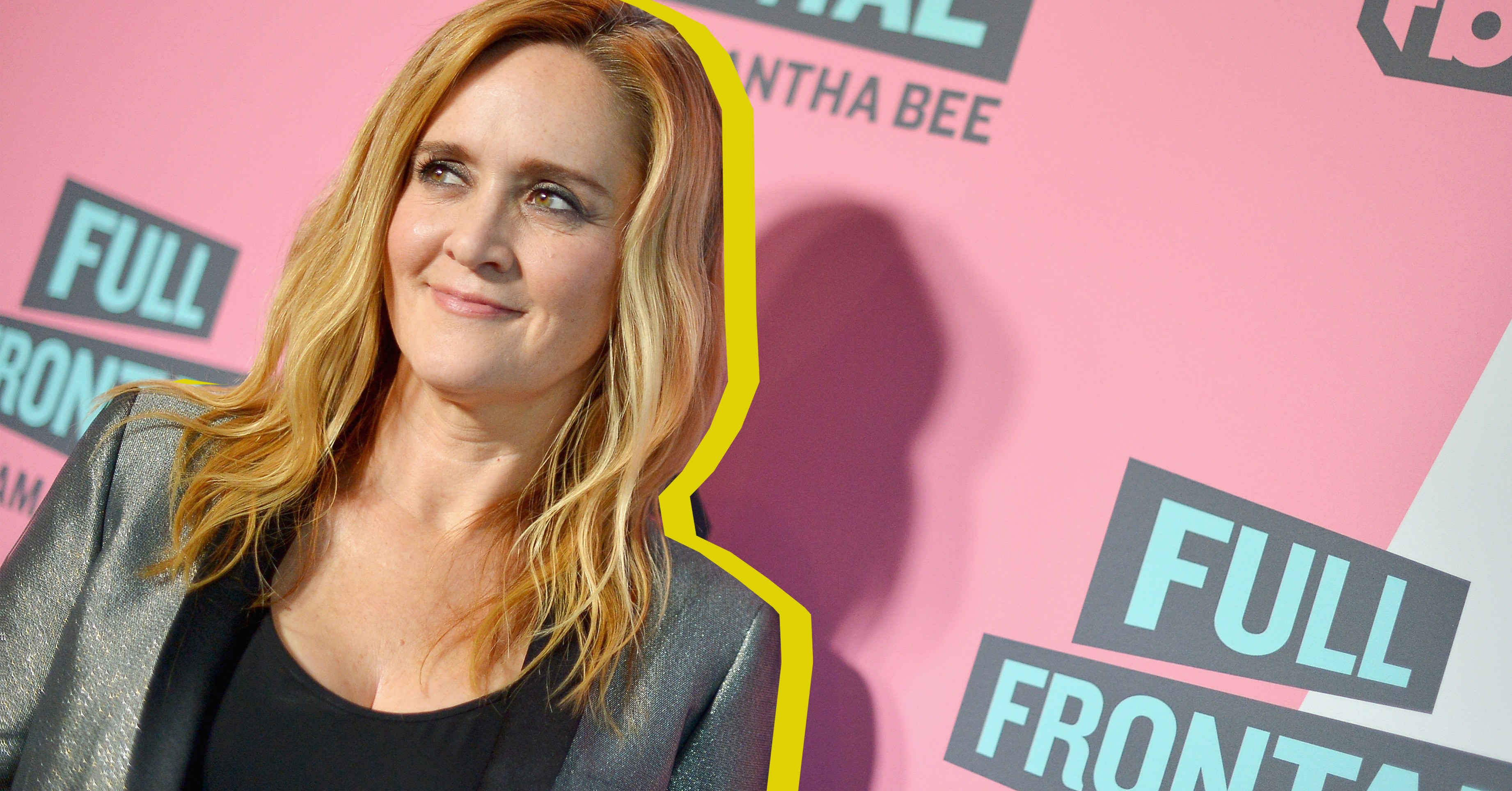
The Public Outcry Over Samantha Bee Makes Me Wonder: Is the C-Word Really *That* Terrible?


On Wednesday night, Samantha Bee stood on the soundstage of her show, Full Frontal with Samantha Bee, as she does almost every week. As usual, the comedian criticized current political events by pitching acerbic hard balls at a speed that would make Babe Ruth jealous. While showing an Instagram photo that Ivanka Trump posted of herself holding her child, Bee addressed the big pink hypocritical elephant in the room by connecting Ivanka’s sentimental picture to the recent news about immigrant children being separated from their parents at the border.

“Let me just say, one mother to another, do something about your dad’s immigration practices you feckless cunt, he listens to you!” Bee yelled into the camera.

What followed wasn’t an examination into Ivanka’s potentially hypocritical photo or the Trump family’s remarkable tone-deafness, but rather a skewering of Bee’s use of the C-word by all media outlets, both left and right leaning. Senior Media Reporter, Oliver Darcy said “It was a really disgusting remark” on CNN’s Newsroom; BBC News used the headline, “Samantha Bee insults Ivanka Trump with obscene phrase;” and NBC News called Bee’s usage of the C-word a “vulgar slur.”

While Bee took to Twitter on Thursday to apologize for her comments, saying the use of the C-word “was inappropriate and inexcusable” and something the comedian regrets, the public continued to reproach Bee’s word choice. Even Chelsea Clinton came to Ivanka’s defense, tweeting, “It’s grossly inappropriate and just flat-out wrong to describe or talk about @IvankaTrump or any woman that way.” In addition to the media and public’s condemnations of Bee, CNN reports that two advertisers, Autotrader and State Farm, have suspended their commercials from running during Full Frontal.

It’s understandable that people would be shocked, but considering the decibel of the outrage it caused, it’s worth taking a second to ask: is saying the C-word really that bad?

Few words in the English language are as taboo as the C-word. You might argue that the only other word that renders the level of discomfort that “cunt” does is the N-word. Unlike the N-word, though, the C-word has no racial ties (even if Megyn Kelly is likening Bee’s use of the C-word to Roseanne Barr’s recent racist ramblings). Similarly to the N-word, though, the C-word does have a history of being used in the subjugation of a group of people, since it gained a pejorative meaning to reinforce cultural bias against women over time. “Cunt” didn’t always have a disparaging connotation, though. As the Oxford English Dictionary says, “[The word ‘cunt’] does not seem to have been considered inherently obscene or offensive in the medieval period, as suggested by its use in names and in medical treatises of the time, it is now normally considered the strongest swear word in English.”

As the OED reveals, “Cunt” originally appeared during the Middle Ages as an anatomical term for the female genitals, but the earliest recorded use of it occurred in the year 1230. Varied spellings of the word appeared in certain writings from the time, whether it be “cunte” or “count.” In an edition of the Medulla Grammatice from 1425, the word “Vulua” was defined as “A count or a wombe.” Translation: a vulva is a woman’s cunt. Even before the Latin-Middle English glossary defined “vulva” by using the word “cunt,” the word for a woman’s genitals frequently included sexual subtext. A proverb from 1325, as quoted by the OED, states, “Ȝeue þi cunte to cunnig, And crave affetir wedding.” According to Vice, that phrase translates to, “Give your cunt wisely and make (your) demands after the wedding.” In the proverb’s case, a woman’s vagina is implied to be a resource which she may or may not allow men to access.

The backlash against Bee’s use of the word “cunt” almost says more about the ways in which society views women’s genitals than it does about the invisible lines that Bee may or may not have crossed. The New York Times, for example, couldn’t even use the word when reporting about Bee’s misstep! Instead, they alluded to Bee’s usage as a “crass insult” and a “vulgar epithet.”

It’s not like we’ve never heard this type of talk from a prominent figure before: In August 2015, Donald Trump refuted Megyn Kelly’s capability and objectivity after a presidential debate. Trump didn’t just question Kelly’s abilities as a journalist, he implied that Kelly lacked the biology to remain rational because of her sex. “You could see there was… blood coming out of her wherever. In my opinion, she was off base,” Trump told CNN. He later tweeted to clarify that by “wherever,” he meant Kelly’s nose, but the damage had been done and members of both the left and right responded in outrage over Trump’s reinforcing of the age-old belief that a woman’s anatomy made her irrational, or “hysterical.” Following that misstep, the infamous “Grab ’em by the pussy” tape was released in October 2016. And since then, feminists have reclaimed the term “Pussy” and its power by marching in “pussyhats” and boldly chanting that “pussy grabs back.”

The word “cunt” has also, at times, been reclaimed by certain feminists. Inga Muscio’s 1998 book, Cunt: A Declaration of Independence, explains why the term “cunt” gained its taboo only because of a patriarchal system which shames and decries female sexual desire. An article published by Quartz about the word reveals that writer Katrin Redfern found that Muscio’s book had changed her opinion of the word, proving that context is everything.

If there’s one thing that the Samantha Bee blunder has proven, it’s that in the context of the United States in the year 2018, calling someone a word that has to do with a woman’s vagina will still lead to public outrage. Shaming anyone for using their sexuality freely by calling someone a “slut” or “cunt” doesn’t lead to progress for women’s rights, but it also doesn’t necessarily mean that a line has been crossed either. Yes, words have power, but it feels unfair to throw stones at Bee for a using one that some people find shocking. Especially when others in much higher positions of power regularly talk about women—not to mention immigrants and people of color—in ways that are equally, if not more, damaging.

Angelica Florio is a New York-based writer whose work has appeared in Playboy, Bustle, Splitsider, and more.


Source link