Categories
Health

Demi Lovato Just Got Very Candid About Her Relapse and Eating Disorder


In a new interview on The Ellen DeGeneres Show, Demi Lovato got extremely candid about her 2018 relapse, after six years of sobriety, and how she battled her eating disorder while struggling with toxic people in her orbit. The interview aired on Thursday, March 5.

She started by opening up about her eating disorder, which she describes as her “primary problem.” In this first video, below, she tells a story about how her own team—whom she no longer works with—would control her food by removing fruit from her hotel rooms and keeping her from eating cake on her own birthday.

“My life, I just felt like it was so—and I hate to use this word—but I felt like it was controlled by so many people around me,” the pop star told host Ellen DeGeneres. “If I was in my hotel room at night, they’d take the phone out of my room so I couldn’t call room service.”

[embedded content]

Lovato then went even deeper on relapsing and getting sober. “I have to preface it with the fact that I got sober at 19. So I got sober at an age where I wasn’t even legally allowed to drink,” Lovato began. “I got the help that I needed at the time, and I took on the approach of a one-size-fits-all solution, which is sobriety, just sobriety. My whole team took that approach, and we did it, and we ran with it, and it worked for a long time.”

Again, Lovato stressed how much control her own team believed they were entitled to. “Over the years, it progressively got worse and worse, with people checking what my orders at Starbucks were on my bank statements,” she continued. “Just little things like that, it led me to being really, really unhappy. My bulimia got really bad, and I asked for help, and I didn’t receive the help that I needed. And so I was stuck in this unhappy position. And here I am sober, and I’m thinking to myself, ‘I’m six years sober, but I’m miserable. I’m even more miserable than I was when I was drinking. Why am I sober?’”

The Ellen DeGeneres Show


Source link

Categories
Health

Borderline Personality Disorder: The Power of the Proper Diagnosis


As an angsty, unstable, totally depressed 19-year-old, few things caught my attention, but one day, walking into my kitchen, I was grabbed by the title of a book my mom had left out on the counter: Get Me Out Of Here: My Recovery From Borderline Personality Disorder, a memoir by Rachel Reiland. Cautiously, I picked it up. I did want to get out of here. Get out of my mind, get out of my life, get out of the skin I felt increasingly desperate to claw my way out of.

Reading the first few pages, I felt seen. Reiland nailed the uncontrollable sadness, the crying, the knowledge that these reactions weren’t proportionate responses to whatever situation was at hand. Every emotional response felt too big for its surroundings, she described, but grasping how to turn down the volume was always a bit out of reach.

I immediately googled this mysterious mental illness, and the picture that emerged of someone with borderline personality disorder (BPD) sounded exactly like me: fear of abandonment, unstable relationships, suicidal tendencies, chronic emptiness, emotional regulation issues, significant depression, explosive anger, self-harm…the list went on.

At first I felt relieved. I had almost every symptom—after years of misdiagnoses, I finally had an answer. But then the fear set in. I didn’t want BPD or the rigid stigma associated with it. That would mean I was really crazy.

So I stayed silent. It would be another five years before I brought up the suspicion that I had borderline personality disorder to my therapists.

A Misdiagnosis

According to the doctors that my parents desperately took me to see throughout my adolescence, I didn’t fall neatly into any category. Despite that, I was diagnosed with bipolar disorder. It wasn’t a perfect fit—I had the mood swings by not the mania characteristic of the condition—but it was clear I needed mental health treatment, and a bipolar diagnosis was an adequate way to get it.

A diagnosis is not an indictment; it is a path to treatment. It is a way to separate yourself from your disorder, a way to say, “Oh, that’s why I behave in this way.” It’s a means of getting the help you need. Of course, when a diagnosis is incorrectly applied, treatment is pretty ineffective. It’s not uncommon for people with BPD to be misdiagnosed with bipolar disorder since there are many symptoms that overlap. It’s like wearing a pair of shoes two sizes too small—they don’t quite work, but hey, at least you have shoes.

I was put on medication to help level out my mood swings. But despite the drugs and the therapists, the emotional dysregulation raged on. I was miserable and continually suicidal; I constantly felt there was something wrong with me. I felt as though my life—and my mind—weren’t mine. Everything felt completely and utterly out of control.

Living With BPD

At 24, I was sitting in my therapist’s office, shaky, exhausted, and at the end of my rope. I was having trouble in my familial relationships, in my friendships, at work. I could barely get out of bed. I was drinking a lot, exhibiting disordered eating patterns, and self-harming. I was not even close to taking care of myself, but these coping mechanisms were the only way I knew how to survive. They were the only tools I had.

It wasn’t working. Ever since I’d found the book my mom had left out on the kitchen counter, BPD had been lurking in the back of my mind, hopeful and terrifying at the same time. Finally, I brought it up to my therapist. In time, she agreed that this was indeed what she believed I was dealing with. When the words came out of her mouth, I no longer felt resistance or fear. I just feel understood. With a diagnosis, I realized, there I was a path to healing.


Source link

Categories
Health

Obsessive Compulsive Disorder: This Is What It's Like to Be Obsessed With Perfection


Eighteen months ago, I was in the throes of some of the darkest moments of my life—but on paper, it didn’t look like that. I had just finished a national tour for my first book, The Crowdsourceress, and positive coverage had started rolling in. My company, which launched crowdfunding campaigns for stellar creators worldwide, had raised a combined $20 million to help bring their creative projects to life. Journalists were calling me a wunderkind and a guru; my name was even added to Forbes’ “30under30” list. By the looks of things, I was killing it.

But alone one day soon after the tour ended, I couldn’t leave my bed. Sobbing on the phone to my mother like a terrified child, I was deep in a spiral of repetitive, fearful thoughts. My skin was crawling with anxiety.

This wasn’t my first total meltdown. I had suffered from these obsessive thoughts of uncertainty for almost two decades of my life.

I grew up a happy kid—spunky, opinionated, and incredibly curious. But something happened in my pre-adolescent years: I became painfully afraid of bad things happening to me. From what I remember, it started when I was around 10. After watching a nineties horror film, I became wildly obsessed with the idea of being abducted by aliens. I would lie in bed every night imagining all the ways I could be abducted, and then rush into my parents room, begging to sleep near them for protection.

The author with her mom.

Courtesy of Meg Daly

I didn’t just have these terrorizing thoughts at night though; on some idle weekends, I would find myself pacing back and forth indoors, thinking about the various ways I could be tortured by the aliens that would eventually abduct me. I remember so clearly one Saturday morning my Dad pointing to a painting and saying, “This painting exists. Aliens don’t. You have a higher probability of being abducted by this painting!” I laughed, relieved, but still uncertain.

When I eventually let go of my alien obsession, I moved onto another fixation: perfection.

I was finishing fifth grade, and applying to a prestigious middle school. I told myself that I had to get in—in my mind, if I failed, it would irreparably derail my entire life. Fixated, I would complete all my homework, organize it neatly in my sparkly folders, and get into bed early. But I couldn’t go to sleep: instead, I would pray relentlessly, pleading for straight A’s. Fearful that my homework could suddenly disappear into thin air while I slept, I’d anxiously jump out of bed to check that it was still there. I would do this about twenty times a night.

By the time I turned 12, my obsessions shifted again, this time to a subject on many a pre-teen mind: sex. But I wasn’t fantasizing about a new crush or exploring pleasure as my body went through puberty. Instead, I was terrified of anything related to sex—it got to a point where I didn’t want to be touched fearing any unpredictable sensation in my body. My obsession became so paralyzing that I would retrace the most innocent of past interactions, analyzing them for the slightest improprieties and confessing whenever I felt something could have been perceived as wrong. Whenever I did have a sexual thought—all of which felt weird and deviant—I would fixate for hours on end about what it meant about my identity as a person, rocking back and forth into what seemed like a hole of darkness.

At first, like my other moments of catastrophic crises, I implored my parents for reassurance, describing my graphic fears in detail. But I realized that this new obsession felt different—it was too taboo. I stopped sharing and began internalizing my rituals, while another obsessive idea set in: I really believed that if my parents knew my thoughts, even though they had been my biggest supporters so far, they would disown me forever.

When I started high school, I became really good at hiding my internal battles—so began my years of trying to cope on my own. I would power through episodes of distress by throwing myself into piles of work as a necessary distraction, or avoid situations that triggered the anxiety. The intense dedication to my work helped me excel but it masked the obsessive thoughts playing on loop in my mind. In college I had two majors, a minor, and an honors thesis but I remember thinking I could have—should have—done so much more.


Source link

Categories
Health

Camila Cabello: I Feel in Control of My Obsessive-Compulsive Disorder Now


Camila Cabello has opened up about her mental health before, speaking candidly about her anxiety in interviews and on social media. Now, she’s speaking out about her obsessive-compulsive disorder in the June issue of Cosmopolitan U.K..

“OCD is weird. I laugh about it now,” she said, per E! Online. “Everybody has different ways of handling stress. And, for me, if I get really stressed thinking about something, I’ll start to have the same thought over and over again, and no matter how many times I get to the resolution, I feel like something bad is about to happen if I don’t keep thinking about it.”

Once Camila got diagnosed, her obsessive-compulsive disorder became easier to handle, she explained. “I didn’t know what it was and when I found out, and [learned] how to step back from it, it made me feel so much better,” she said. “I feel so much more in control of it now. To the point where I’m just like, ‘Aha! OK, this is just my OCD.’ I’ll ask my mom a question for the fourth time, and she’ll be like, ‘That’s OCD. You’ve got to let it go.'”

Previously, in an interview with Billboard, Camila discussed how she deals with her anxiety. “I was having terrible anxiety, nonstop,” she said, when asked about her high and low points of the year. “My heart would beat really fast the whole day. Two hours after I woke up, I’d need a nap because my body was so hyperactive. It was so eff—sorry, but it was so f*cked up. I was scared of what would happen to me, of the things my brain might tell me. I realized the stuff I thought was important isn’t worth my health. Now I write in a diary every day, work out, and meditate.”

Four months after the interview, Camila had to leave during a Fifth Harmony concert because she was dealing with her anxiety. “Hi Missouri, sorry I couldn’t finish the set last night,” she wrote on Snapchat at the time. “Was having too much anxiety and couldn’t finish it. I love u. I’m truly sorry.”

Related:

Camila Cabello Turned Airport Security Into a Runway Again—This Time With Her Mom

Watch Camila Cabello React to Fans Covering Her Songs

Elle Fanning, Camila Cabello, and Aja Naomi King on What Beauty Means to Them


Source link

Categories
Health

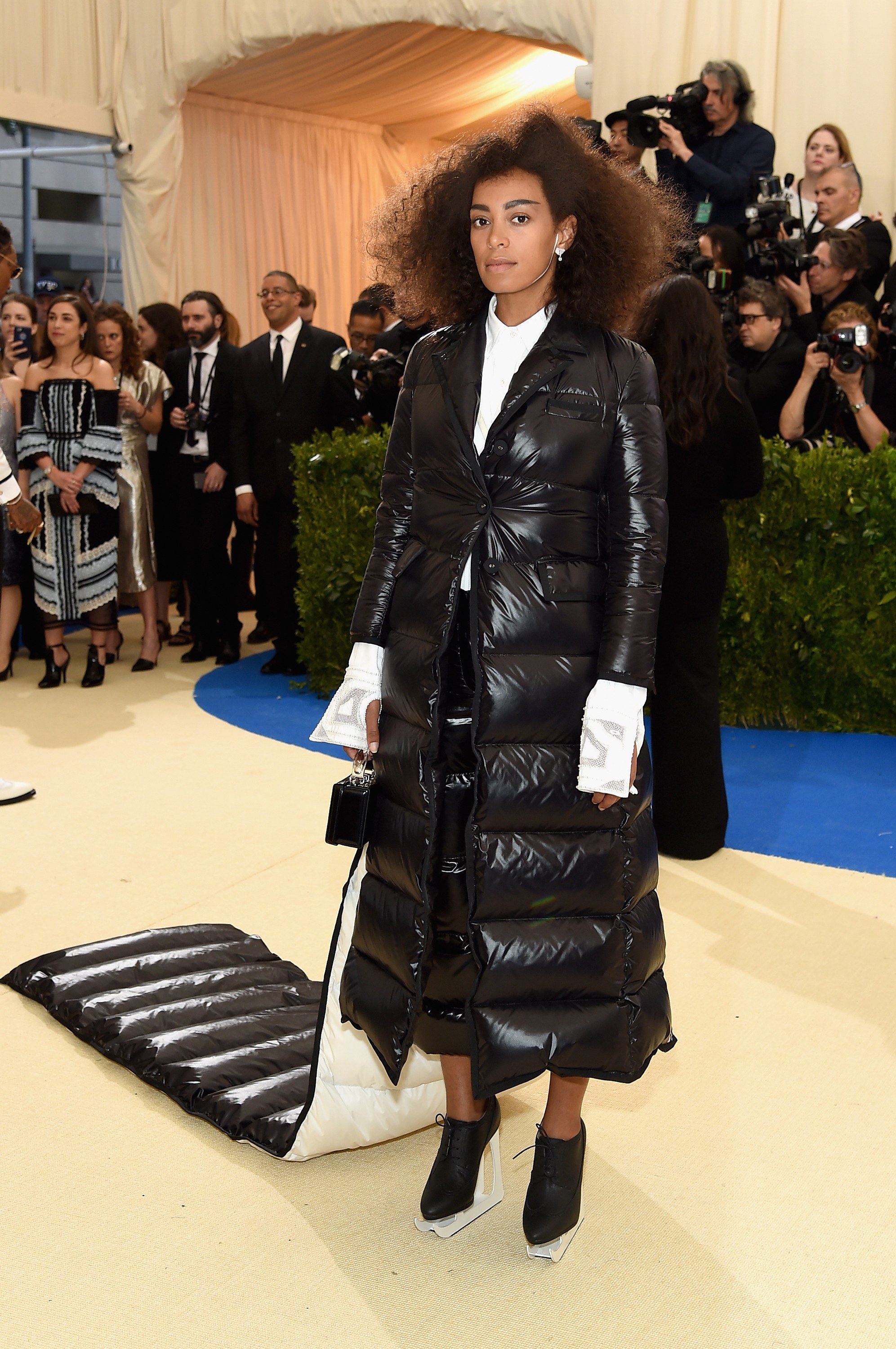
Solange Knowles Cancels Afropunk Performance to Deal With Autonomic Disorder


In a lengthy Instagram post, Solange Knowles has shared that she has been “quietly treating and working through an autonomic disorder” for the past five months.

“Wrote, deleted and re wrote this like 5 times…” she began the message. “However it’s so important to me for the people in South Africa, a place that has tremendous meaning to me and that has given me SO SO MUCH, to know why I won’t be performing at Afro Punk this NYE.”

The singer was days away from performing with the likes of Anderson .Paak at the Afropunk Festival in Johannesburg but pulled out last minute due to her health. Autonomic disorders affect the proper function of major organs like the heart, intestines, and bladder, though Knowles did not go into specifics about her condition, only describing the diagnosis as “complicated.”

“It been a journey that hasn’t been easy on me… Sometimes I feel cool, and other times not so cool at all,” continued Knowles. “I’m still learning so much myself, but right now, my doctors are not clearing me for such an extended lengthy flight, and doing a rigorous show right after. I can’t put into words how saddened and sorry I am that I am unable to perform for you guys this NYE, there is simply no other place I wanted to be than there with my family to bring in 2018 with you…….”

The festival, which has its roots in Brooklyn, has been held in Paris and London in the past, but this was to be its first time in Africa. Knowles promised to return to the continent and perform with Afropunk in the future.

“[…] it is so extremely important to me to connect with the people who have so closely inspired me in so many ways,” she wrote. “I can’t thank Afro Punk enough for their support, and to all of the other festivals this past summer/fall who have known about my health, kept it confidential, and gone out of their way to make me feel supported while doing these shows.”

This year, while continuing to promote her latest record, A Seat at the Table, released in September of 2016, Knowles has been making the festival rounds, playing at a number of shows including at San Francisco’s Outside Lands, New York City’s Panorama Music Festival and London’s Lovebox Festival, where she told the crowd: “I was in the hospital this morning. I was in the hospital for three days. After my show I had a serious episode and was told I shouldn’t perform.”

Forty-eight hours later, she was on the stage at Chicago’s Pitchfork Music Festival. In order to make those shows, she had gotten”out of that b—h,” she had said at the time of leaving the hospital. This time, however, she’s not taking any chances.

Knowles, who won her first Grammy this year for Best R&B Performance for “Cranes in the Sky”, shared: “As a part of the self care that I’ve tried to encourage this past year, it needs to start with myself, and I’m looking forward to doing a better job of this 2018. This past year has been one of the most fulfilling of my life… Performing this record and experiencing the energy exchange with you guys has been astounding, and I’m so excited about continuing to do the work I feel so absolutely humbled and appreciative to be doing next year. It gives me life.”

Related: Afropunk Festival Returns to Brooklyn, Closes Out Summer Festival Street Style on a High Note


Source link

Categories
Health

What It's Like to Be a New Mom When You Have Panic Disorder


It happens some time in the third week of parenting a newborn child: the moment when you start to feel like you’re below deck on a quickly sinking ship. With a double-digit number of interrupted nights under your belt, but without a sense of routine, your grasp on time becomes tenuous. Minutes in the middle of the night hold whole reams of barely connected thought streams. Your hormones shift in spurts and gushes, with waves of euphoria following hours of dazed, robotic movements. Visits from well-wishers have died down and a new reality sinks in: You are going to be this baby’s parent forever.

My tumultuous third week came with two particularly difficult addendums. First, it wasn’t just my hormones slip-sliding up and down, I also had to contend with my SSRI-reliant body—I’ve been taking Citalopram for more than five years— adjusting to each new surge and loss of dopamine. And second, quick breaks from peeking at my daughter’s sleeping face and washing breast pump equipment were filled with some extremely alarming news alerts. See, my daughter was born on January 22, 2017—the day after I marched with a half million other women in Washington, D.C., and two days after Trump was sworn in as the forty-fifth president of the United States.

Those weeks were a feverish nightmare of protest, upheaval, and panic. Psychiatric experts were espousing to the world that Trump suffers from “grave emotional instability.” Thousands were gathering to protest at airports as families worried that the hastily composed travel ban would tear them apart. The President was already flexing some autocratic tendencies by firing acting Attorney General Sally Yates and not firing Michael Flynn. Would America slip that easily into an oligarchy? What new other restrictions and nasty surprises did the new administration have in store? Every New York Times push notification brought more nail biting and agita.

I knew even before pregnancy —and Trump’s election—that after childbirth my panic disorder might rouse itself from relative dormancy. After years of sometimes daily or hourly panic attacks, they’d mostly abated, but my psychiatrist warned that even a potent SSRI dose isn’t always enough to combat the changes brought on by a hyperactive endocrine system—the wash of hormones that floods your bloodstream after childbirth can leave even the most emotionally balanced woman struggling. I thought I might be in the clear, because the first five days after my daughter’s birth passed by uneventfully—even her several-day-long stay in the NICU for breathing issues didn’t set off any undue panic—but on our sixth night, home from the hospital, as I snuggled the baby to my breast in the coldest hour of the day, panic started to tiptoe back into the edges of my brain. Panic of the acid-flashback, snarling-monster-under-the-bed, reality-seeping-off-into-the-distance variety.

There isn’t much to do while nursing in the middle of the night. I could watch TV, but I liked to sit in a particular armchair in my bedroom and the noise might wake my sleeping husband. I envy any woman who says she can read a novel at 4 am with a finicky newborn attached to her chest. And so, to the Internet I went. At first, scrolling through my Twitter feed and catching up on the day’s news felt refreshingly normal. See? I’d tell myself. Even with a baby, I’m still me.

But the weight of my news binges caught up to me—quickly. Every time I settled into my armchair and toggled through my New York Times and Facebook apps, a physical jolt of fear lurched through me. North Korea was celebrating successful long-range missile launches and the President was responding with bluster and insults. Trump was hosting weird and wild press conferences, sounding more authoritarian with each turn. The head of the military’s Special Operations Command was professing worry that “our government continues to be in unbelievable turmoil.” Mr. Trump’s Wild Ride came crashing into my bedroom three times a night. I’d clutch the baby against me, try to regulate my breathing, and imagine myself cozily back in bed in an alternate universe that didn’t involve a wannabe despot and a needy infant. It rarely worked.

My anxiety took on a particularly political flavor. What the hell, I would ask myself, were we thinking by having a baby while the world is ending? It feels silly to recall now, but I would replay various scenarios—in which the military took over my home city of Washington, D.C. or North Korea launched a missile at us—over and over in my head, imagining what things I would need to quickly grab for the baby, or wondering how we would fortify the house and keep her quiet so we wouldn’t be found. In a particularly desperate moment I (a virulent gun opponent) asked my husband if we should buy a gun; for thirty minutes I pressed the point so forcefully that he nearly conceded. Because I live only a mile and a half from the White House, these fears felt real, even urgent at the time. If an uprising were to erupt anywhere in the nation, it would be here. And I had gone and nailed myself to the wall by adding a baby to the mix.

I don’t think that these anxieties were only experienced by people with a preceding diagnosis, like me. But do I know that my anxiety took on a life of its own. It crept out of my late-night nursing sessions and into the daylight, usually accosting me in the precise moments when I should have been able to unwind—during corpse pose in yoga class, or just after the baby had drifted off for a nap. The only time I remember truly relaxing was, oddly enough, in the emergency room after I hemorrhaged a not insignificant amount of postpartum blood. Lying there, surrounded by medical professionals and under a heap of warmed blankets, I felt irrationally safe. More precisely, I felt like I had given up control to a group of people who I knew could care for me—I didn’t need to make any decisions, and nothing bad could possibly happen to me.

Panic disorder, like most anxiety-related issues, is an inherently selfish mental disease. The moment of an attack, the rest of life recedes into the background—and if it doesn’t happen automatically, you push it there. The most urgent need becomes survival. Of course, your life is never in any danger, but with your brain quickening to a frantic pulse, and your skin flashing hot and then cold, death feels like it’s sitting on your shoulder, waiting to reach in and stop your heart. And if we subscribe to the most dominant notion about parenting, it’s that selflessness is required in all things; your life, post-child, ought to be entirely in service of that child. But panic attacks upend that natural order—the only thing more powerful than our parenting instincts is our survival instinct. And panic attacks trick our brains into believing that survival is at stake.

One late spring day, on a little trip to some botanical gardens with my husband and the baby, I had a particularly egregious panic attack. It’s no exaggeration to say that we somehow were given the perfect baby—she eats like a dream, has slept twelve hours a night since 12 weeks, and whole days go by without anything resembling a cry—but that day her mere existence scratched at my skin. Every moment that I was in her presence felt like torture. With her around, I couldn’t focus entirely on me—and in the midst of panic, when your body systems are quite literally in fight or flight mode, self-care feels dire. A baby, with its abundant needs, demands far too much attention for a panic-addled brain to . I remember fleeing to my bedroom like a sulky teenager and telling my husband that under no circumstances was he to bring “that baby” in until I was ready to see her. I pulled the covers over my head and cried for three hours.

Even then I recognized the inherent contradiction in my psyche. The panic induced feverish worry that some apocalypse-sized event would threaten my daughter’s safety—but it also made me push her away, to prioritize myself before her.

At the end of the crying jag I made a deal with myself. Each week I could give my panic one hour of time. One hour to hoard old glass bottles in case I needed to preserve water in the event of a government overthrow. One hour to Google “Why are so many helicopters flying over D.C.?” One hour to just sit and pick my cuticles while I let scary thoughts flutter across my eyelids. One hour to sit and stew in my guilt over worrying about such absurdities when some mothers don’t know where their next meal will come from, or how they’ll pay the rent, or whether their partners will come home too drunk to control their emotions. That hour eventually became less and less integral to my week: by setting up a system where I knew I could worry about something later, I eventually just plain forgot to worry about the thing. But more than anything, it was the knowledge that my daughter, even in her infancy, could sense the emotions swirling around her that helped me curb many—though certainly not all— of my impulses.

I come from a long, illustrious line of worriers—worriers who don’t merely fret, but wake for long stretches of the night, stiff and unsteady, cycling through minor fears about cavities or unbought sheets or upcoming long drives. Worriers who fit the mold of a classic anxious person. In fact, my sister is such an accomplished worrier that we ask her to worry about things for us so they won’t happen. “I need you to worry about something for me,” is an all too common text on our family thread.

It’s only logical to assume that my daughter might inherit some of those tendencies, too. With a panicked mother hovering above her, that risk will only increase. Now, when that New York Times alert that North Korea has announced that it has a nuclear missile capable of reaching the East Coast pops through but I’m stacking blocks with my daughter on our living room floor, I breathe and tuck away the worry for later in the day. She may end up inheriting my anxiety, but I’d also like her to learn from my newly zen approach to dealing with it. Tending to my anxiety has become an act of preservation—not just for me, but for both of us.


Source link