Categories
Health

People Are Debating Which Fictional Characters Would Have Voted for Donald Trump


Every once in a while, a viral moment happens on the Internet that brings everyone together—like when the Cats trailer dropped last week, or this new viral thread about which fictional characters voted for Donald Trump. Yup, on Sunday, July 21, Twitter user @MalKatz gave the world this challenge: “Name a fictional character who absolutely voted for Trump. NO villains.”

The responses have been hilarious, and, in some cases, highly debatable. The tweet’s original author offered up a couple of solid suggestions, including Lady Gaga‘s dad in A Star Is Born and Amy Poehler’s “cool mom” from Mean Girls. (Though, obviously Leslie Knope would never.)

It may be tough to admit for liberal fans, but it’s hard to argue with some of these. “When Emily [from Gilmore Girls] votes for Trump, it’s the final straw between her and Lorelei,” Ashley Nicole Black tweeted. I see no lies.

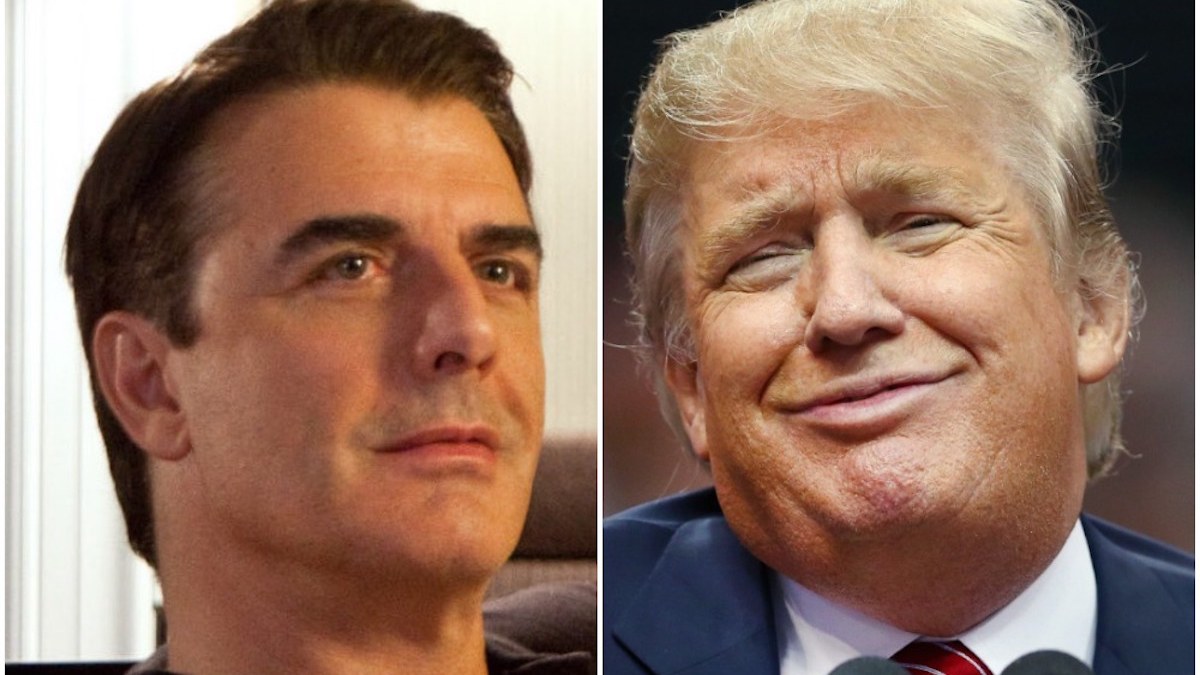
Mr. Big’s name popped up too, but to the person who also nominated Sex and the City‘s Carrie, we’d like to point out that Ms. Bradshaw told us herself she doesn’t vote (during the plot arc about her dating the politician). Charlotte York may have gone for Donald Trump, though. “I feel like Charlotte [from Sex and the City] would have secretly voted for [Trump] too, but would’ve also been genuinely devastated with his ‘behavior,'” one fan posited. How scarily accurate, am I right?

Check out some more responses to this inquiry, below.

“Phoebe [from Friends] voted for Jill Stein. Or not at all, because I could see her ‘not believing in voting,'” tweeted one person. Another wrote, “Most likely, Lucille Bluth [from Arrested Development] would find a place in the administration.”

Now let’s do who’s supporting who in the 2020 primaries. Let’s start with the characters in Gossip Girl. You know Blair Waldorf has some opinions.


Source link

Categories
Health

Donald Trump's Attacks on Congresswomen Are Racist and Sexist. Ignoring That Is a Mistake We Can’t Afford


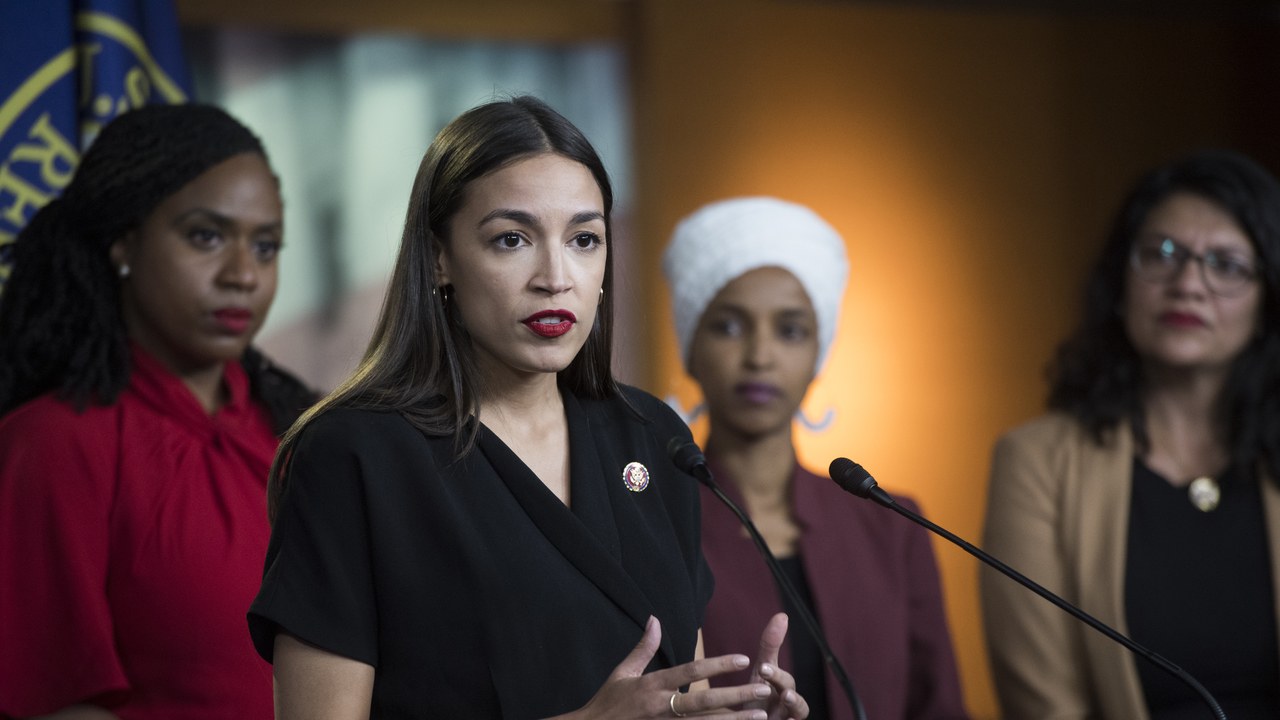
Donald Trump is spending his week doubling down on his racist suggestion that four Democratic lawmakers—Reps. Alexandria Ocasio-Cortez of New York, Ilhan Omar of Minnesota, Ayanna Pressley of Massachusetts and Rashida Tlaib of Michigan—should “go back” where “they came” from. Last night, he presided over a crowd in North Carolina that at one point chanted “Send her back!” in reference to Omar. At times, when Trump mentioned the women, people in his audience shouted “Treason!” and “Traitors!”

It’s utterly irrelevant to Trump and his supporters that three of four of the women were born in the United States and that the fourth, Omar, immigrated from Somalia as a child and has spent more than half her life as a citizen. In focusing attention on these particular women, Trump activates the well-documented passions and fears of his supporters, people demonstrably threatened by the browning of America. But, he also activates the disgust and repugnance that too many people feel about women claiming power and authority, particularly the power and authority to decide what America is and should be. It would be a foolish and dangerous mistake, particularly as we move towards a presidential election in which more women than ever are candidates, to ignore the confluence of these prejudices.

Trump’s “go back” dictate makes an assumption about who “real Americans” are, and research shows he’s not alone in his warped thinking. For most of our history, the notions of “citizenship” and “manhood” have been as inextricably linked in most people’s minds as “American” and “white” are. Only in our recent past have minorities and women been extended rights, like the freedom to vote, to run for office, to bear arms, to serve in juries, and to work, as elite white man have since independence. Studies show even now, in the words of one social science researcher, that “to be American is implicitly synonymous with being White.” In the same vein, many people’s explicit, and implicit, belief systems continue to support the notion that men are “natural” leaders, but that women are not; that men serve in public capacities, and women private ones. Trump appeals to the specific combination of these beliefs to undermine women as not only incapable of self-governance, but as unfit to govern others. That’s the hateful core of this latest diatribe; people like them aren’t suited to tell people like us what to do.

Trump’s casual “go back” is a dogwhistle to racists and xenophobes but it also reinforces age-old biases against the rise of a “feminized elite.” Women who are educated and progressive, the old chestnut goes, are dangerous to men and to the nation. This tired equation allows Trump’s most extreme supporters to rationalize threats against women as legitimate act of patriotism and renders violence against them a form of twisted self-defense. Trump’s campaign rallies were frenzied carnivals of this misogynistic idea, with thousands of mostly white Americans chanting “lock her up” and parading around effigies of a caged Hillary Clinton. It’s how a West Virginia Republican lawmaker tweeted, “she should be ’hung’,” and another proclaimed, “Hillary Clinton should be put in the firing line and shot for treason.” One of Trump’s supporters was particularly clear when he explained, during the 2016 race that “Hillary needs to be taken out“ and that he was prepared to do it himself. “[I[f I have to be a patriot, I will,“ he said. The same ideas were more subtly conveyed when, earlier this year, a video was aired during a Memorial Day Fresno-Grizzlies game in which Ocasio-Cortez was depicted as an “enemy of freedom“ alongside Kim Jong Un and Fidel Castro.

But Trump isn’t just content to question women’s patriotism. He also impugns their expertise and knowledge. The charge that people of color and women “don’t understand” the complicated affairs that animate our national discourse is a popular right-wing talking point drawn from racist and sexist science. It suggests that people of color and women lack the intellectual capabilities and emotional wherewithal to lead. Of course, that means that women of color who work in the public sphere are special targets of these attacks. A Media Matters supercut of Fox News’s coverage of AOC, for example, demonstrates the network’s near-obsession with portraying her—a woman with a degree in economics and the recipient of a fellowship awarded to high academic achievers—as “ignorant,” “idiotic,” and someone who “doesn’t know what she is talking about.” She is, the hosts emphasize, a “pompous little twit,” who “makes no sense.” In a similar vein, Trump has referred to black athletes, politicians, and media representatives as “low IQ individual[s]” and “dumb.”


Source link

Categories
Health

Jeffrey Epstein, Donald Trump, and the Powerful Men Who Get Away With It


If we’ve learned anything from the presidency of Donald Trump, it’s that more often than not rich men get away with it—whatever it is.

For all the overdue justice that #MeToo secured, the last 20 or so months have seen countless men scrutinized and then…exonerated. From Trump to Brett Kavanaugh, the process tends to follow a familiar script: Justice is invoked, press conferences are held, social media is ablaze, and then the outrage fades—or worse, it never quite materializes in the first place.

When the dust settles, the man tends to retain his position (or in the case of Brett Kavanaugh, is rewarded with a lifetime appointment to the Supreme Court). From time to time, he’s forced to slink off for a little like Louis C.K. (whose eventual comeback seems inevitable) or Charlie Rose. But a lot of the powerful men of are able to ride it out. There’s some fallout, the word “allegations” is sprinkled into 10,000 news stories, and then people like Eric Bolling or Bill O’Reilly recover; as popular in conservative circles as ever. It’s been hard to see #MeToo as a triumph or as all it was supposed to be, especially when people like Donald Trump, Jr. use it as a punchline.

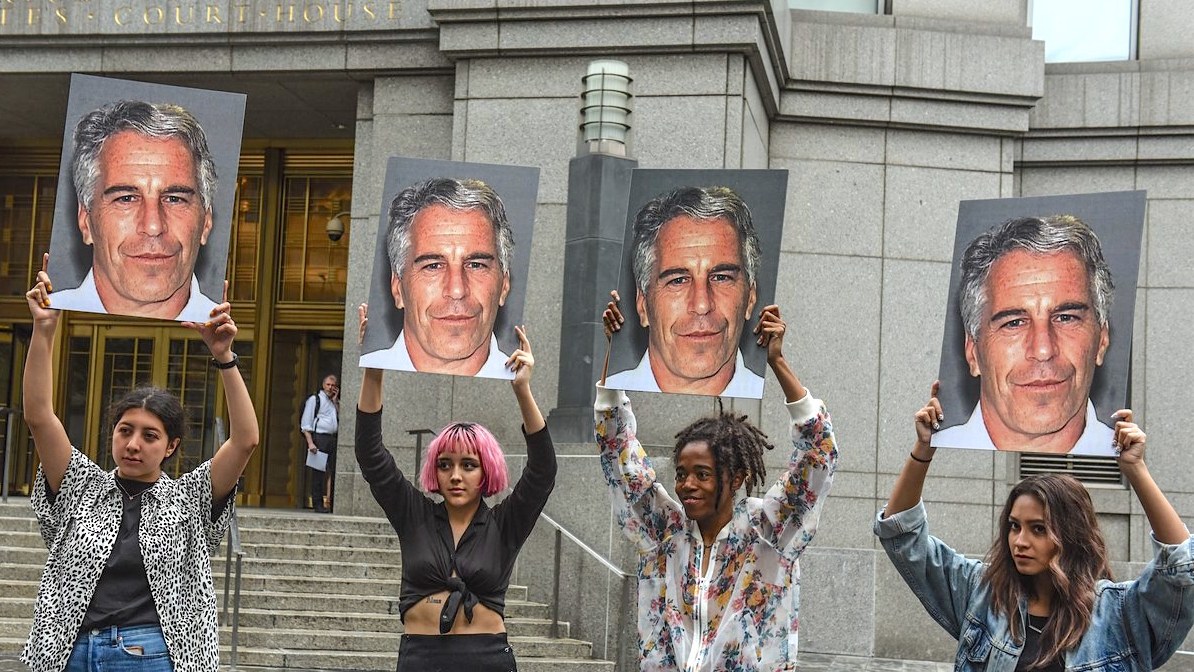
But on Saturday the Daily Beast broke the news that Jeffery Epstein had been arrested as soon as he stepped off his private jet at Teterboro Airport in New Jersey. He was taken directly to a prison cell. When his indictment was unsealed, it revealed that Epstein had been charged with “one count of sex trafficking of minors” and “one count of conspiracy to engage in sex trafficking of minors.” It feels like a strange victory. In a time when rich men seem to have a separate justice system all their own, what does it mean for a powerful person to be treated like what he really is—a man who’s been accused of sex trafficking children for over a decade?

But it’s not so simple. I wish the fact that Epstein could face an actual sentence commensurate with his crimes means the dawn of a new era. The bad guys get caught! They suffer for it. Instead, Epstein feels not even like an aberration, but like proof: the system is broken and unfair. He isn’t just some guy who made one mistake; the charges against him paint him as a serial sexual predator. When prosecutors made their case that Epstein should be denied bail, Bloomberg reports that the team pointed to the “vast trove of lewd photographs” it uncovered in a search of Epstein’s New York mansion (once valued at $77 million) over the weekend. The images, the government said, show he is a danger to the public. But if you’ve read the Miami Herald investigation that revived the allegations against Epstein, you already knew that. And so did all the other powerful men who decided for years not to do anything about it.

In 2008, Alex Acosta, who is now the secretary of labor and was then a district attorney in Miami, secured for Epstein a non-prosecution agreement that allowed him to plead guilty to a fraction of what he was accused of; he ultimately served 13 months, most of it in a private wing of a county jail that permitted him to leave for work almost every day. This week, Acosta addressed the new charges on Twitter, writing, “The crimes committed by Epstein are horrific, and I am pleased that NY prosecutors are moving forward with a case based on new evidence.”


Source link

Categories
Health

A Timeline of Donald Trump's Inappropriate History With Women


1993: Jill HarthThat same year, Trump also allegedly subjected makeup artist Jill Harth to a “steady string of sexual assaults, as The Guardian reports. He allegedly groped her under a dinner table at the Plaza Hotel’s Oak Room and, later, he allegedly pinned her against a wall in one of his children’s bedrooms and and groped her. “He pushed me up against the wall, and had his hands all over me and tried to get up my dress again,” Harth recalled, “and I had to physically say: ‘What are you doing? Stop it.’ It was a shocking thing to have him do this because he knew I was with George, he knew they were in the next room. And how could he be doing this when I’m there for business?” Harth later formally accused Trump of attempted rape in a 1997 lawsuit.

1994: A 13-year-old GirlTrump has been accused of raping a 13-year-old girl in the apartment of convicted pedophile Jeffrey Epstein. The case, which was recently filed for the third time in New York City, where the alleged rape occurred, consists of two affidavits filed by “Joan Doe” and “Tiffany Doe” which corroborate the victim’s story, as Buzzfeed reports. “Joan” says she was told about the assault after it happened, while “Tiffany”—who was apparently hired as a “recruiter” to bring young girls to Epstein’s apartment—alleges Trump and Epstein raped the victim more than once. Trump’s attorney has denied these accusations, though more information on the case may yet unfold—a hearing has been set for this December in New York.

1995 or 1996: E. Jean Carroll

The advice columnist wrote in a June 2019 New York Magazine cover story that in 1995 or 1996, Trump allegedly raped her in the dressing room at Bergdorf’s. Carroll writes that Trump asked her for advice buying a gift for “a girl,” which led to him asking her to try on a piece of lingerie. According to her account, “the moment the dressing-room door is closed, he lunges at me, pushes me against the wall, hitting my head quite badly, and puts his mouth against my lips.” Carroll alleges that he pins her against the wall, then “the next moment, still wearing correct business attire, shirt, tie, suit jacket, overcoat, he opens the overcoat, unzips his pants, and, forcing his fingers around my private area, thrusts his penis halfway—or completely, I’m not certain—inside me. It turns into a colossal struggle.” She also notes that the friends she told after the alleged assault corroborated her story to the magazine. Trump denied her allegations in a statement.

1996: Five or Six ModelsLisa Boyne, a health food business entrepreneur who apparently shared a dinner from hell with Trump, told The Huffington Post that she and a friend, along with “five or six models,” were seated at a semi-circular table with Trump in 1996. When the models wanted to get up to leave, Trump refused to get up to let them do so, instead forcing them to walk on top of the table where he “stuck his head right underneath their skirts,” per Boyne’s account, and remarked on their underwear and genitalia. “It was the most offensive scene I’ve ever been a part of,” Boyne said. “I wanted to get the heck out of there.”

1996: Alicia MachadoWhile Trump’s behavior towards former Miss Universe winner Alicia Machado wasn’t physically sexual, it was the definition of predatory and verbally abusive behavior. “He was very overwhelming. I was scared of him. He’d yell at me all of the time,” says Machado in a video clip executed by Hillary Clinton’s campaign. “He’d tell me, ‘You look ugly,’ or, ‘You look fat.’ Sometimes he’d ‘play’ with me and say, ‘Hello, Miss Piggy,’ ‘Hello, Miss Housekeeping.'” Trump also body-shamed Machado when she gained 40 pounds after winning her title, which led to her developing eating disorders. “Long after, I was sick with eating disorders,” she recalls. “I wouldn’t eat, and would still see myself as fat because a powerful man said so. This is a man who doesn’t realize the damage he causes.”

After Machado told her story, Trump reacted by slut-shaming her.

1997: Five Miss Teen USA ContestantsBack in 1997, Trump created discomfort for at least five teenage Miss Teen USA contestants—including one who was as young as 15—when he visited their dressing room as they were changing. “I remember putting on my dress really quick because I was like, ‘Oh my god, there’s a man in here,’” former Miss Vermont Teen USA
Mariah Billado told Buzzfeed. His response, according to Billado, was something along the lines of “Don’t worry, ladies, I’ve seen it all before.” Other contestants referred to the incident to Buzzfeed as “shocking” and “creepy.” While 11 of the other contestants from that year’s pageant told Buzzfeed they don’t remember the incident, Trump has gone on the record bragging about his access to dressing rooms before. “I’ll tell you the funniest is that I’ll go backstage before a show and everyone’s getting dressed,” he told Howard Stern. “No men are anywhere, and I’m allowed to go in, because I’m the owner of the pageant and therefore I’m inspecting it. … ‘Is everyone OK?’ You know, they’re standing there with no clothes. ‘Is everybody OK?’ And you see these incredible looking women, and so I sort of get away with things like that.”


Source link
Categories
Health

This Is Why Donald Trump Says He Called Meghan Markle 'Nasty'


President Donald Trump‘s (somewhat controversial) state visit to the United Kingdom continued this morning—and he’s still talking about Meghan Markle, one of the members of the royal family that he actually hasn’t met during his trip. (Markle is still officially on maternity leave after the birth of baby Archie.)

During an interview with Piers Morgan on Good Morning Britain, Trump appeared to double-down on his “nasty” comments about the Duchess of Sussex. In case you missed it, here’s how we got here: Before traveling to London, he talked to The Sun about a variety of issues, including comments that Markle made during the 2016 presidential campaign where she called Trump “misogynistic” and “divisive.”

“I didn’t know that. What can I say? I didn’t know that she was nasty,” he can be heard saying on an audio recording, even though the president subsequently claimed that the quote was “fake news.”

Morgan asked Trump directly, “Do you think Meghan Markle is nasty?”

“No, you know, the question was asked of me and I didn’t know that she said anything bad about me, sounds like she did,” Trump responded. “And that’s OK, hey join the crowd…And I said, ‘Well, I didn’t know she was nasty.’ I wasn’t referring to that she’s nasty, but that she was nasty about me. Essentially I didn’t know she was nasty about me. But, you know what, she’s doing a good job and I hope she enjoys her life.”

“I think she’s very nice,” he continued. “Now, I don’t know her but it just shows you how terrible the news can be.” Morgan said that Trump’s comments on Markle did seem somewhat ambiguous, but the president continued to press the “fake news” angle. “That’s OK for her to be nasty,” he said. “But it’s not good for me to be nasty to her, and I wasn’t.”

He went on to say that Prince Harry, who attended a private lunch with the Trumps, was a “terrific guy” but that he did not bring up the Markle situation with him. “We didn’t talk about it,” he said. “I was going to because it was so falsely put out there.” Trump says that Harry spent a good amount of time talking with Ivanka Trump and the rest of his family and that he “couldn’t have been nicer.”

Watch the full exchange below:

Now, if we could just have a video of Harry and Markle’s conversation after he got home.


Source link

Categories
Health

Camilla Parker Bowles Gave a Shady Wink During Tea With Donald Trump, and People Are Living


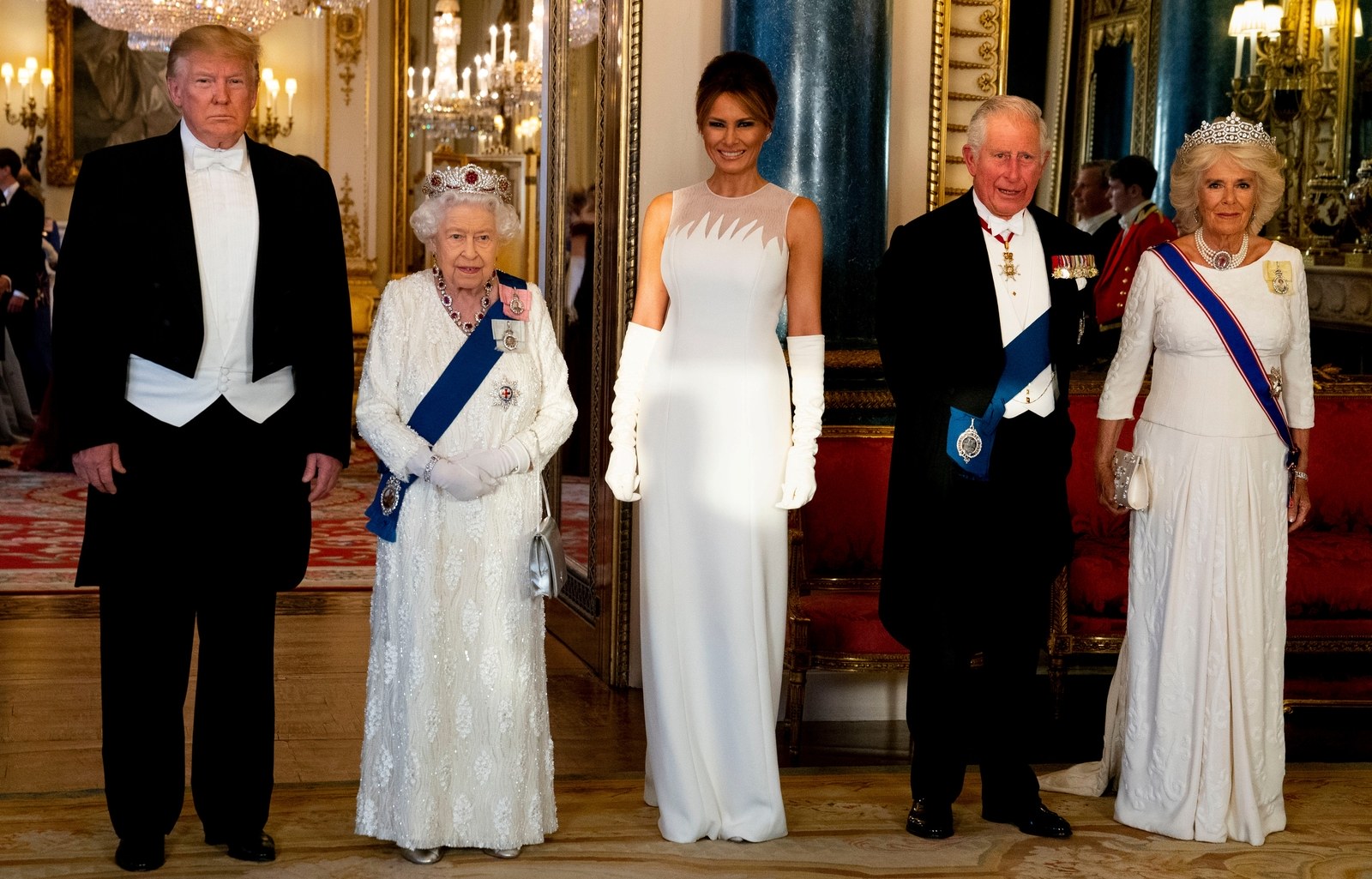
Camilla Parker Bowles is the royal everyone’s talking about today, thanks to a cheeky wink she gave behind President Donald Trump‘s back during his visit to the U.K. on Monday, June 4.

The reasoning behind the Duchess of Cornwall’s wink is unclear. Is she being shady? Funny? Was there just something in her eye? OK, it’s definitely not that last one. This was a clear, distinct wink, and whatever the context, it’s funny as hell.

The Internet, naturally, is having a field day over Bowles’ gesture, with some asserting it confirms the royal family’s eye-roll attitude toward Trump. Of course, that’s just conjecture. The royals are pretty tight-lipped when it comes to moments like this (and also…everything else), so we’ll probably never know exactly why Bowles winked. So let’s just enjoy it at face value, shall we?

First, check out Camilla Parker Bowles’ instantly-iconic moment for yourself, below:

And read some Twitter users’ reactions—all hilarious.

“In that one wink Camilla has redeemed herself entirely to me. All is forgiven,” one person wrote on Twitter. “Camilla’s face is the look your mum gives you when you say you want to go home,” posted another, while a third simply wrote, “We are all Camilla.” Yes, we are.

It’s been a whirlwind few days for the royal family and the Trumps. The group had dinner tonight at Winfield House, the residence of the U.S. ambassador in England, where Trump is staying during his visit. There was also a ceremonial welcome for the Trumps at the Buckingham Palace Garden on Monday.

Getty Images

One person who noticeably isn’t meeting with Trump on his trip is Meghan Markle, who’s still on maternity leave. In an interview with The Sun earlier this week, Trump reportedly called Markle “nasty” after learning she accused him of being “misogynistic” and “divisive” in the 2016 election. He later denounced The Sun‘s story in a tweet:


Source link