Categories
Health

The Cream Skin Routine Gave Me the Softest Skin of my Life


Lately my skin has been acting like my friend’s newborn: It’s agitated and clearly upset, but I still cannot figure out the source of its tantrum. This winter it’s played host to breakouts, a newly rough texture on my forehead, enough oil to resemble an environmental disaster, and dry patches anywhere that hasn’t yet been co-opted by a zit. The guessing game of what’s behind this—dehydration, a new foundation I’ve been testing, or the good-smelling oil that a bunch of celebrities love—and their respective solutions haven’t yet worked.

So I decided to let it self-soothe—you know, just let it cry it out until it gives up and leaves me alone. (No, I don’t have kids, if you’re wondering.) For skin, that means going with the bare minimum, even with moisturizing ingredients. And yes, I know that drying out my skin is counterproductive, seeing as moisture-starved skin only churns out more oil, but if you’ve ever struggled with breakouts, you don’t need me, a rando on the internet, to tell you that it’s hard to break that habit.

But recently I did, and it’s all thanks to something called “cream skin.”

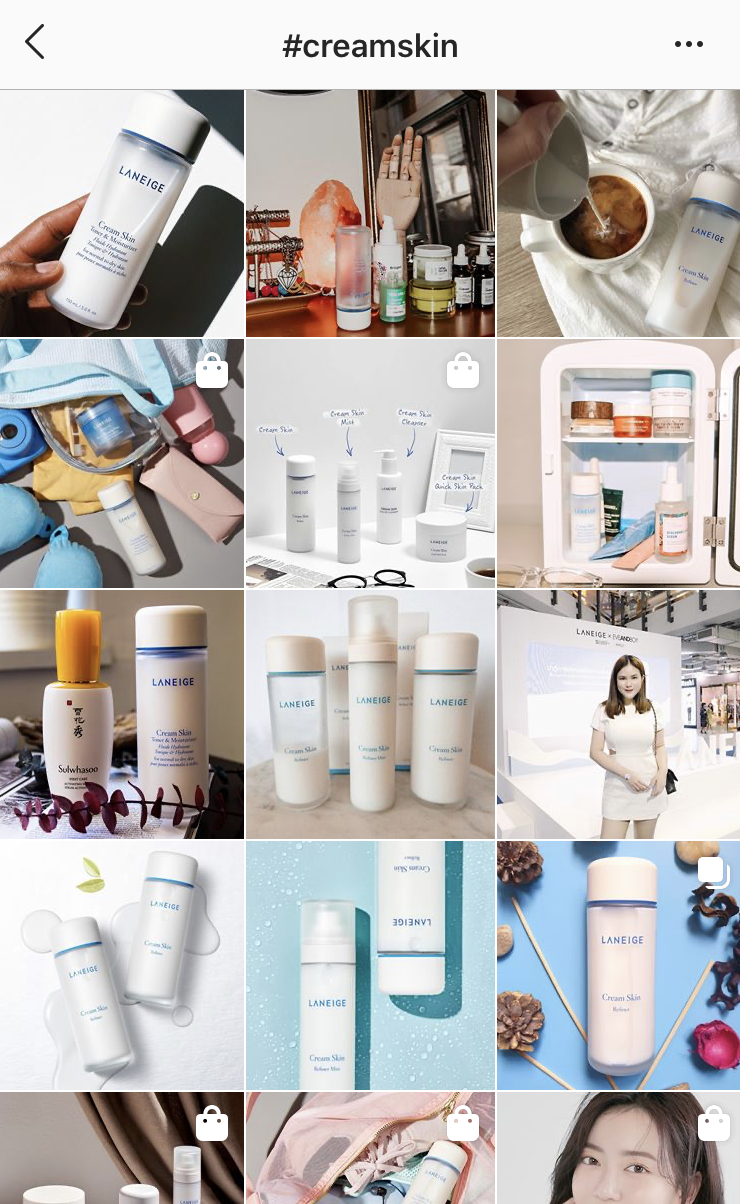
As with glass skin, cream skin is a uniquely Korean phenomenon. But that’s pretty much where the similarity ends. Glass skin is used to describe the appearance of skin, whereas cream skin is a product type—specifically, Laneige Cream Skin Toner & Moisturizer. “When you look up the hashtags, you can see right away that #GlassSkin describes skin that looks poreless, luminous, and translucent,” says Alicia Yoon, a licensed esthetician and the founder of Peach & Lily. “When you look up the hashtag #CreamSkin, you can see that it is all about the actual product type, not a skin look.”

A glance at the #creamskin hashtag on Instagram

How it all started is a lesson in the nuances of language. “In Korean, the word skin (or 스킨) doesn’t always refer to the actual skin on your face. It’s also used to refer to toners or essences,” explains Yoon. “For example, I grew up hearing my mom fondly talking about how applying ‘skin’ is so great for skin, since essences and hydrating toners replenish moisture.”

Its appeal is in its hybrid formulation of cream and essence. “It applies on like liquid, but settles in like a nice, protective moisturizer,” says Yoon. And I’m delighted to find that she’s right; the emulsion is just as weightless and quick to absorb as your average essence, which is part of the reason Yoon assured me that it wouldn’t send me into a breakout spiral. “The great thing about cream-skin products is they’re at once deeply hydrating and lightweight,” she says.



Source link

Categories
Health

Augustinus Bader The Cream Review: Why It's Worth Every Cent


The most raved about secret in beauty this year wasn’t a magic facialist or Real Housewife-lauded injection, it was an unassuming moisturizer made by a 60-year-old German scientist who’d never worked in the industry, let alone had an Instagram following. And yet, despite having none of the traditional resources that makes a beauty brand an overnight success—like paid celebrity spokespeople, $1 million ad campaigns, or millennial pink packaging—Augustinus Bader became a sleeper hit purely through word of mouth.

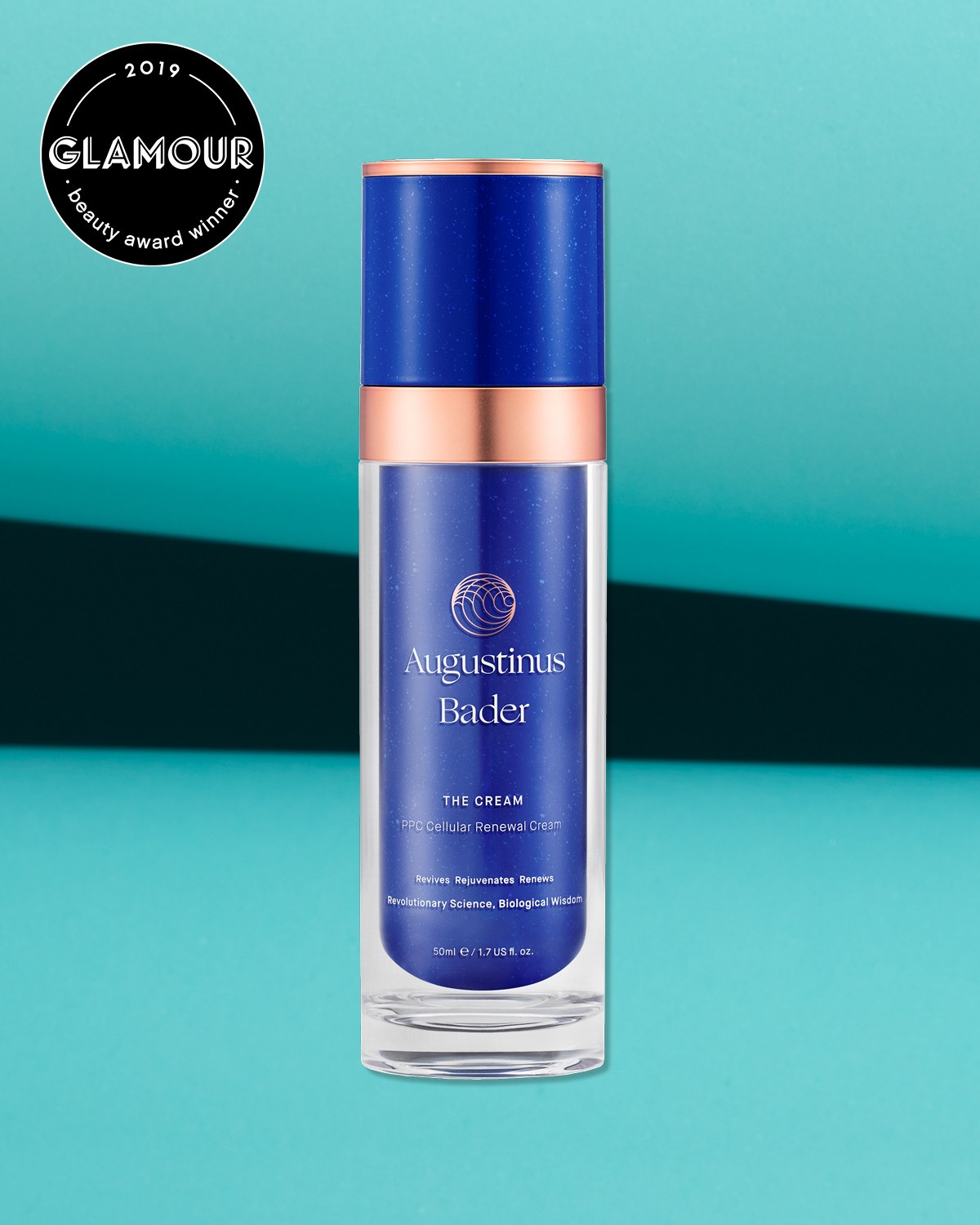
In the nearly two years since it launched, AB’s “miracle cream” has gotten accolades from Ashley Graham, Kate Bosworth, and Victoria Beckham (who’s since launched a moisturizing primer with the brand). Glamour even gave it a Beauty Award for Best Moisturizer, a highly competitive category as you can surely imagine. So before I even uncapped the weighty blue-and-copper tube of its famed The Cream, which costs a cool $265 for 50 mL, I was basically set to fall in love with it—price tag be damned.

But the only kind of hype I pay real attention to is beauty editor hype; if my product-inundated colleagues are raving about it, I figure it has to stand out from the pack. And for weeks, every single editor I knew had told me about the cream in an attitude I can only describe as reverent. I was ready to experience my own Bader-sparked miracle.

Augustinus Bader The Cream

Violet Grey

$265

$215

Buy Now

Bizarrely, I didn’t immediately fall head over heels for it (don’t worry, a second plot twist will follow shortly). Sure, it was a good face cream. The light texture absorbed quickly and my skin looked decent, but it didn’t exactly wow me. I felt like a thin layer just wasn’t doing much in the moisturizing department—which, apparently, I later learned isn’t even what The Cream claims to do. It’s more of an overall skin rejuvenator. The brand also sells a Rich Cream for dry skin, which contains additions like avocado and argan oil to aide with extra hydration, but I began with the original thinking it’d be enough.

In order to get maximum effectiveness from the active ingredients, I did what a few other friends and makeup artists had advised and skipped all other products, except face wash. The Bader formula is based on TFC8 (Trigger Factor Complex 8), a proprietary cocktail of over 40 different ingredients, including vitamins and amino acids. It’s meant to encourage regeneration and healing—Professor Bader actually discovered the formula while looking for solutions to help burn survivors heal quicker—and TFC8 is supposed to activate your stem cells, which go to work to repair fine lines, dark spots, and visible pores. I had heard that the ingredients within were enough to replace all other skin care, so I devoted myself to a one-step kind of lifestyle and waited for my skin to start looking like I had just walked out of a spa. And then I waited some more…


Source link

Categories
Health

Tatcha Water Cream Review: A Savior for Winter-Dry Skin


There’s absolutely nothing that gets me excited about winter approaching—not snowstorms, not practical shoes, and definitely not the need to have to invest in a puffer jacket over a cute high-waist bikini. But there is one thing that makes cooling weather—and the annoying problems it brings—much more tolerable. And that’s Tatcha’s The Water Cream moisturizer.

For the most part my skin behaves. It doesn’t break out that frequently and it isn’t oily. But when winter comes around, it dries out faster than wet boots in front of a radiator, which is to say my more or less slapdash evening skin-care routine suddenly becomes a thing lest my face cracks off.

I’m typically not someone big on moisturizing. Much to my friends’ dismay, I usually end my night with a face wipe and call it a day. But I am someone who can be easily persuaded to buy things if they’re pretty, and nothing completes a top shelf like Tatcha. So last winter, when a particularly frigid week was wreaking havoc on my skin, I went down a Sephora rabbit hole and came up with the brand’s Water Cream.

Not only is it one of Tatcha’s best-selling products, it sold out twice over when it first launched, making it one of Sephora’s top-selling moisturizers. When you read the reviews—and better yet, what’s in the formula—you immediately get why.

For one, the cream is described as providing a “water-burst,” which is just as incredible as it sounds. Putting it on feels like hydrating your face with magic. Victoria Tsai, the founder of Tatcha, describes the cream as a “sprinkler for your skin.” The formula is made with Japanese wild rose, which is known to help even out skin texture, and Japanese leopard lily, to control any excess oil in order to prevent breakouts. But it isn’t just packed with botanicals; it’s also filled with powerful Japanese superfoods like green tea, rice, and algae that help restore radiance. To top it all off, the cream has 23-karat gold infused in it to give your skin subtle (but not shimmery) glow. And really, what’s more luxurious than that? Hm, maybe the tiny golden spoon it comes with?

Don’t be fooled by its size or the amount of moisturizer it scoops out, though. A little goes a long way. Just a pearl-sized amount (or one scoop) is enough to drench my face, which my skin promptly drinks up and repays me with a lack of dry, flaky patches—even in the dead of winter. The refreshing effect gives my face the appearance equivalent of a full eight hours of sleep—dewy and so incredibly bright.


Source link

Categories
Health

The Best Retinol Cream I've Tried: Kate Somerville +Retinol Vitamin C Moisturizer


I have a confession: As much as I confidently advise all my friends, colleagues, and random strangers to slather their faces in the best retinol creams and serums, I rarely go anywhere near them myself. As someone who takes pride in being glowy, you’d think I’d be be stocking up. The vitamin A derivative has been proven to speed up the turnover rate of your cells, which translates to a smoother, clearer complexion. It’s one of the few ingredients that dermatologists have backed for years, and I’ve seen its effects on others firsthand, but my routine has remained conspicuously retinol-free for years.

The best way to explain my avoidance is that my previously acne-prone self was introduced to retinol through its prescription cousin, Retin-A, also known as tretinoin or retinoic acid. If you haven’t tried it before, it’s strong, much stronger than retinol. After one week of using it, you will realize exactly how much skin can flake off your face per day (a terrifying amount, as it turns out). If your doctor, like mine, instructs you to apply it more frequently than you should, you’re in for one red, inflamed complexion before your acne eventually clears.

One miserable year with Retin-A was enough to put me off anything that sounded remotely similar to the word. In theory, I knew retinol was much gentler—and extensive beauty research had taught me that the way to incorporate it into your beauty routine is gradually, using it a few nonconsecutive days a week and buffering with moisturizer if needed. In practice, I always ended up reaching for something else.

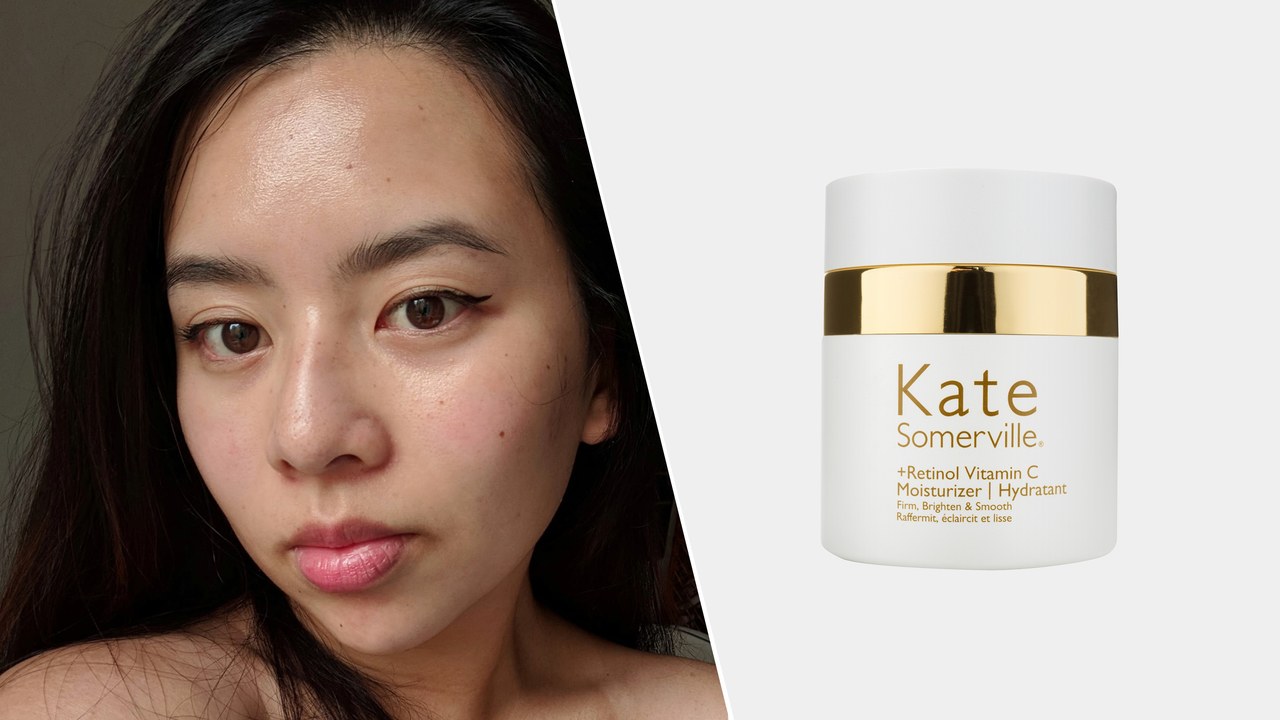
Fate intervened when I had one too many late nights and ate one too many slices of home-baked cake this summer, and my skin had some feelings about it. Aside from breakouts on my cheeks and clogged pores on my nose, my complexion just looked somewhat duller and sadder overall. I did what I always do in this situation and went into the giant cardboard box that doubles as my disorganized beauty closet. And in its depths, the first thing I unearthed just happened to be a gleaming bottle of Kate Somerville +Retinol Vitamin C Moisturizer. It seemed like the right time to welcome it into my life.

Resolving to proceed cautiously this time, I began slowly incorporating it into my routine for a week. “It takes two to four weeks to adjust to retinol,” says dermatologist Joshua Zeichner, M.D., confirming everything I learned the hard way. “I typically recommend applying retinol-based products every other night and advancing as tolerated over the next month.”

I followed his instructions, never applying it more frequently than every other night, and sometimes leaving an extra night in between for good measure. The brand says it’s possible to use this nightly, but I decided it wasn’t the right time for me to live on the edge. To be extra safe, I concentrated the moisturizer only on the areas that needed it most—dispensing a single pump of lightweight, silky cream out of the airtight tub. I’d then dab tiny amounts over layers of essence and serum on my nose, mid-cheeks, and chin. I was also careful to avoid the apples of my face, which are prone to mild rosacea and thus don’t really appreciate any disruption of the retinol sort. This process was strictly reserved for nighttime only (as retinol should always be)—and always followed by copious amounts of sunscreen during the day. I paired it with my latest year-round obsession, the Dynamic Skin Recovery SPF 50 Moisturizer from Dermalogica. I kept this up for two weeks, and—wow.


Source link

Categories
Health

People Are Not Happy Big Little Lies Cut This Infamous Ice Cream Scene


We’re now five episodes deep in season two of Big Little Lies, and the lies are finally clawing their way to the surface. But you know what didn’t claw its way to the surface? The infamous ice cream cone scene, which was cut from last night’s episode.

Remember last year when photos of Reese Witherspoon launching an ice cream at Meryl Streep’s back tore through the Internet? Who wouldn’t? I mean, when an Academy Award-winning actor throws dessert at another Academy Award-winning actor, the world tunes in. In fact, I shouldn’t be asking if you remember those photos. I should be asking: Where were you when photos of Reese Witherspoon throwing an ice cream cone at Meryl Streep hit the internet?

A masterpiece.

TheImageDirect.com

I was excited to see how it would all unfold on Big Little Lies—but unfortunately, the highly-anticipated scene aired during last night’s episode and ends with Madeline (Witherspoon) simply leering at Mary Louise (Streep) while clutching her cone with a vice-grip. Yes, reader: HBO actually cut the cone throw. And now I have nothing.

I have over a decade left on paying off my student loans. I have a credit card bill that’s skyrocketing with no end in sight. I can barely afford to keep my healthcare. I endured a 6.9 earthquake this weekend that made me slither into my Amazon Prime cart and slam the purchase button on a pair of emergency radios. I’m just about prepped and ready for the apocalypse. In other words, I have one thing that I look forward to every week: watching Academy-Award winning women glare at their onscreen husbands on Sunday nights. I’d hoped the ice cream cone throw could bolster my spirits for at least a month; now, this injustice has made me do a lot of thinking.

Meryl Streep on Big Little Lies season 2

Meryl, completely free of ice cream.

HBO


Source link

Categories
Health

12 Best Sunscreens for 2019 – Spray, Cream, Reef-Safe, and More


Ask any dermatologist, the fact that we need to wear sunscreen is not up for debate. But there’s a reason people hate the stuff. Sunscreen has a bad rap for being chalky, greasy, and generally all-around annoying. The good news is though that the latest generation of formulas will change the way you feel about slathering up.

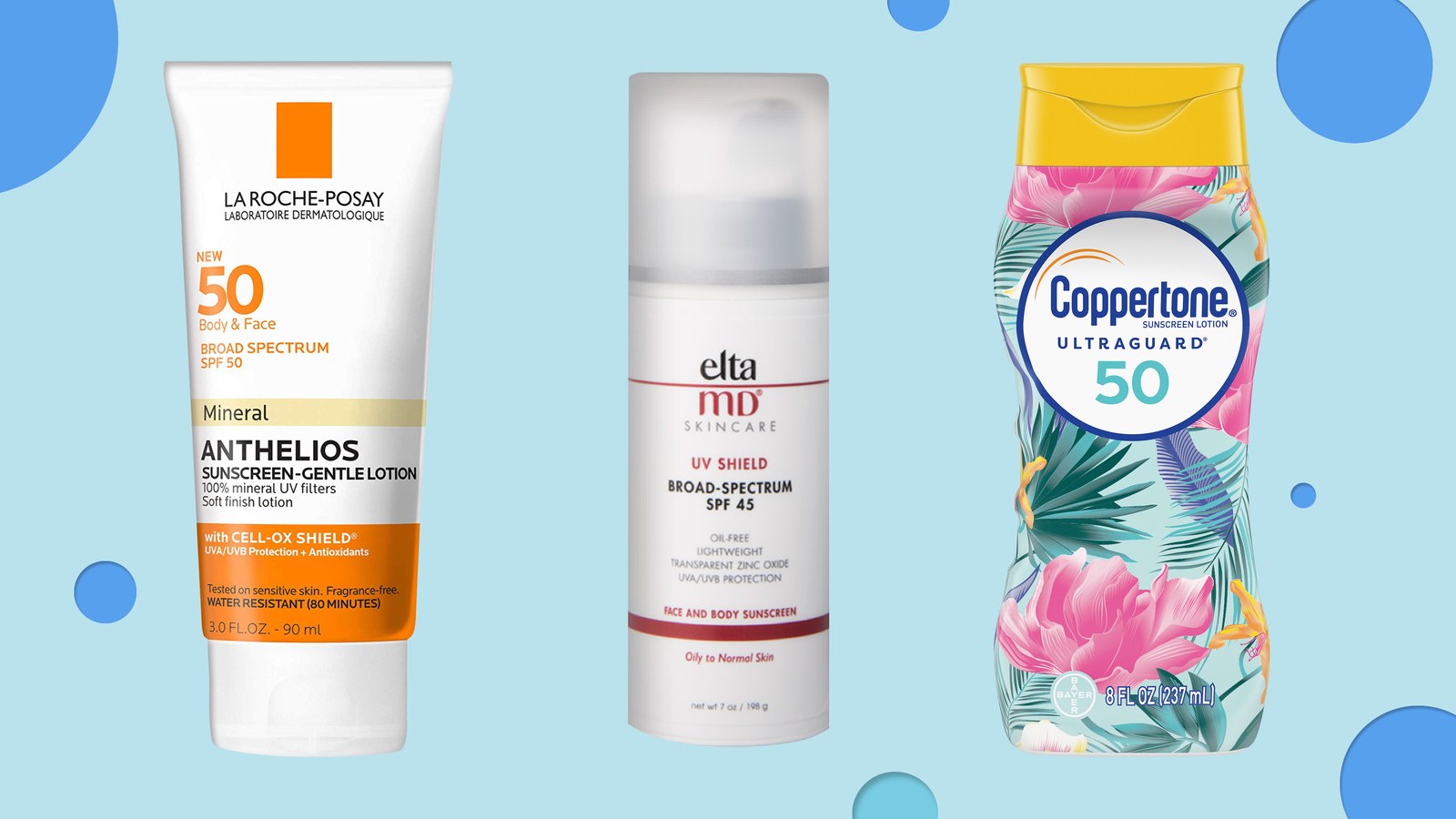
But first, to choose the best sunscreens, it helps to know the terminology: According to the American Academy of Dermatology, mineral sunscreens include ingredients like titanium dioxide and zinc oxide to deflect UVA and UVB rays, which act as a protective shield to block the sun’s rays from coming through (that’s why they’re also known as “physical blocks”). Chemical sunscreens, on the other hand, refer to ingredients that neutralize the sun’s rays as they hit your skin. They also often include antioxidants that disarms free radicals—which cause UV ray-based harm—and cut down damage to skin cells.

Both mineral and chemical have their advantages, but derms say mineral blocks tend to be kinder to sensitive skin. Chemical sunscreens have also recently come under fire—both by the FDA, which is cracking down on safety regulations, and by environmentalists, which have found that the ingredients oxybenzone and octinoxate are damaging to coral reefs (sunscreens with these ingredients will officially be banned in Hawaii starting in 2021). But chemical sunscreens are also the easiest formulas to put on and tend to leave less of a white cast.

Which sunscreen you choose comes down to personal preference, but derms stand by these wise words: The best type of sunscreen is the one you will use. To help take out the guesswork, we asked Glamour editors to test just about every formula under the sun to report back on which ones fit the bill. Ahead, the best sunscreens you’ll actually want to wear this summer.


Source link