Categories
Health

Skinceuticals C E Ferulic Review: Best Vitamin C Serum


On paper, it sounds like it would be tough to fall in love with Skinceuticals C E Ferulic Serum. It’s a $166 investment, smells like hot dogs, and it isn’t packaged in a millennial pink bottle. And yet, like all great tales of love, none of this seems significant because the ending (bright, glowing, luminous skin) is so compelling, you’ll completely forget about the rest.

Since its launch, C E Ferulic has become one of the most widely adored products on the market—and not just by pros. Sure, dermatologists have voted it the best overall vitamin C serum, and almost every editor I know owns a carefully guarded stash, but shoppers also love it. Look at Skinceuticals C E Ferulic reviews on any given website and five-star ratings abound. Glamour readers swear by its ability to bring dull, damaged skin back to life—so much so, it won a Beauty Award in our Readers’ Choice category. (Says Ali N. from Utah: “I am not exaggerating when I say that Skinceuticals C E Ferulic completely changed my skin. Monthly acne? Poof. Gone. Fine lines—what fine lines? People say my skin has never looked better.”)

To understand its mass appeal, you just have to look at the star ingredient: vitamin C. The antioxidant is one of the few ingredients experts unanimously recommend for its protective and brightening properties. When formulated to penetrate within the deeper layers of your skin, vitamin C combats free radicals from UV light and environmental aggressors. It also helps stimulate collagen and even skin tone—two clearly visible effects that accompany its invisible shielding properties.

Not all formulations do it equally well, though. Derms tend to prefer L-ascorbic acid (a pure form of vitamin C) because it’s more likely to reach the skin depth where it’s most effective. The problem is, it’s highly unstable and works best at a concentration between 10-20%, so brands need to formulate carefully to deliver something that actually works. That’s one area where Skinceuticals has definitely done its research. Aside from its 15% concentration of L-ascorbic acid, the brand has also conducted 16 clinical studies on the benefits of this formula alone.

While the hero of the formula is undoubtedly the L-ascorbic acid, the accompanying 1% vitamin E, and 0.5% ferulic acid are there to help it reach its full potential. According to dermatologist and cofounder of LM Medical Morgan Rabach, M.D., the vitamin E “stabilizes vitamin C for maximum skin protection, and ferulic acid helps lower the pH level, so your skin can use the vitamins easily.” The result is a stable, powerful serum that gets the job done.
Sarah Wu


Source link

Categories
Health

17 Best Vitamin C Serums for Brighter Skin in 2019


No matter which skin issues you’re currently bemoaning, chances are your routine could benefit from a vitamin C serum. The antioxidant is one of the few skin care ingredients dermatologists will back for its noticeable brightening, protective, and collagen-boosting properties. “Vitamin C is an antioxidant,” says dermatologist Kenneth Howe, M.D., at Wexler Dermatology. “When ultraviolet light penetrates your skin, it causes lasting damage by producing free radicals. Vitamin C can prevent that damage by ‘quenching’ the free radicals as they form.” There’s just one caveat: “It has to be present within the deeper layers of your skin in order to do that.”

This is the main reason derms will often tell you to get your daily dose of vitamin C in serum form. “They typically have the highest concentration of active ingredients,” says Howe. In order to get maximum results, though, you’ll need these highly concentrated actives to be properly formulated. You might have heard experts debating the merits of various forms of the power ingredient. Here’s one to memorize: L-ascorbic acid. “It’s a pure form of vitamin C,” says dermatologist Joshua Zeichner, M.D.. “It’s typically highly unstable, so it must be adequately protected from sunlight and capped at an acidic pH.” Howe’s preferred form is also L-ascorbic acid, which he says penetrates more deeply than other forms, making it more likely to reach the layers of skin where you actually need it to work. And that’s not all you need to think about it when it comes to the best vitamin C serums; you’ll also want to consider its concentration.

“You should look for serums that contain 10% to 20% vitamin C,” says dermatologist and cofounder of LM Medical, Morgan Rabach, M.D. “Less than 10% is not as effective and over 20% causes more skin irritation.” A supporting cast of characters can also boost its efficacy. “Vitamin E stabilizes vitamin C for maximum skin protection, and ferulic acid helps lower the pH level of vitamin C so your skin can use the vitamins easily,” she says. “I also look for darkly tinted glass bottles with airless delivery, as air causes vitamin C to degrade.”

It seems like a lot to remember, so we did the heavy lifting of finding out where those multiple factors intersect. Below, the 17 best vitamin C serums (or products with serum-like textures, to use the term more generously) that meet this stringent list of criteria. Scroll through to find out which bottle delivers on a budget, which is perfect for packing in your carry-on, and which meets every single derm’s approval.

All products featured on Glamour are independently selected by our editors. However, when you buy something through our retail links, we may earn an affiliate commission.


Source link

Categories
Health

Summer Fridays CC Me Serum Review: The Best Gentle Vitamin C Serum


While for some Summer Fridays simply means leaving work early, for beauty lovers the term has taken on a totally new meaning since the brand behind Instagram’s favorite masks hit the scene in 2018. After reaching cult status with their first product, the Jet Lag Mask, co-founders Marianna Hewitt and Lauren Gores Ireland have since released two more masks, R+R and Overtime, both of which quickly gained the same crazy popularity. Despite all the buzz around the brand, they have yet to venture outside of masks. Until now.

The brand just revealed its first product not housed in its signature aluminum tube. That’s right, Summer Friday’s first non-mask product is here. And it’s a good one.

CC Me Serum is a brightening serum that targets dark spots for glowing, “filter-free” skin. In order to lighten dark spots like hyperpigmentation, acne scars, sun spots, and melasma, it relies on two forms of vitamin C. This ingredient also helps prevent signs of aging and fights pollution and dehydration. In addition, it has collagen to keep skin plump and bouncy, squalene for a surge of moisture, and a blend of fruit and flower extracts to soothe. Finally, coffee and green tea bring anti-inflammatory benefits to the table. While vitamin C serums have a reputation for being irritating, the brand claims this one is suitable for all skin types due to the addition of the soothing and hydrating ingredients.

According to the founders, the idea for the serum was completely crowdsourced—fans have been begging them for a brightening serum since the launch of Jet Lag. “We asked our community what their top skin care concerns were, and hyperpigmentation and dark spots kept coming to the top of the list, so we knew we wanted a product to help with this,” Hewitt and Gores Ireland told Allure. “They had been asking us for serums as well so we took a look at what our followers wanted and then formulated a product made from our communication with them.”

The serum has a light milky constancy, and a very delicate floral sent—it’s worth noting that it lacked the hot dog or penny scent associated with a lot of vitamin C serums. The airtight bottle feels secure, and I like knowing that no light can get inside, which can break down the active ingredients faster. As soon as I patted the serum on, my skin drank it right up, and I could feel my skin getting plump and bouncy from the squalene. There was no greasy residue, just a luminous base perfectly primed for makeup. I often find vitamin C drying on my sensitive skin, but so far this one has been a delight to use.


Source link

Categories
Health

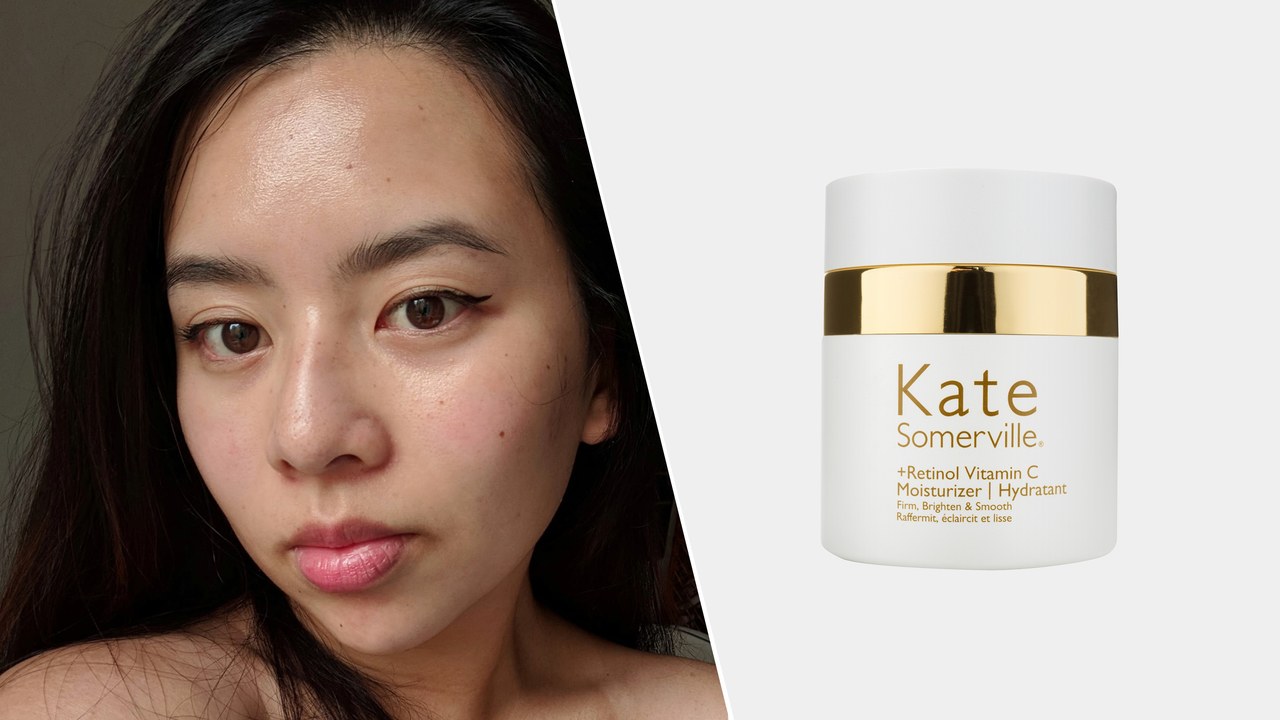
The Best Retinol Cream I've Tried: Kate Somerville +Retinol Vitamin C Moisturizer


I have a confession: As much as I confidently advise all my friends, colleagues, and random strangers to slather their faces in the best retinol creams and serums, I rarely go anywhere near them myself. As someone who takes pride in being glowy, you’d think I’d be be stocking up. The vitamin A derivative has been proven to speed up the turnover rate of your cells, which translates to a smoother, clearer complexion. It’s one of the few ingredients that dermatologists have backed for years, and I’ve seen its effects on others firsthand, but my routine has remained conspicuously retinol-free for years.

The best way to explain my avoidance is that my previously acne-prone self was introduced to retinol through its prescription cousin, Retin-A, also known as tretinoin or retinoic acid. If you haven’t tried it before, it’s strong, much stronger than retinol. After one week of using it, you will realize exactly how much skin can flake off your face per day (a terrifying amount, as it turns out). If your doctor, like mine, instructs you to apply it more frequently than you should, you’re in for one red, inflamed complexion before your acne eventually clears.

One miserable year with Retin-A was enough to put me off anything that sounded remotely similar to the word. In theory, I knew retinol was much gentler—and extensive beauty research had taught me that the way to incorporate it into your beauty routine is gradually, using it a few nonconsecutive days a week and buffering with moisturizer if needed. In practice, I always ended up reaching for something else.

Fate intervened when I had one too many late nights and ate one too many slices of home-baked cake this summer, and my skin had some feelings about it. Aside from breakouts on my cheeks and clogged pores on my nose, my complexion just looked somewhat duller and sadder overall. I did what I always do in this situation and went into the giant cardboard box that doubles as my disorganized beauty closet. And in its depths, the first thing I unearthed just happened to be a gleaming bottle of Kate Somerville +Retinol Vitamin C Moisturizer. It seemed like the right time to welcome it into my life.

Resolving to proceed cautiously this time, I began slowly incorporating it into my routine for a week. “It takes two to four weeks to adjust to retinol,” says dermatologist Joshua Zeichner, M.D., confirming everything I learned the hard way. “I typically recommend applying retinol-based products every other night and advancing as tolerated over the next month.”

I followed his instructions, never applying it more frequently than every other night, and sometimes leaving an extra night in between for good measure. The brand says it’s possible to use this nightly, but I decided it wasn’t the right time for me to live on the edge. To be extra safe, I concentrated the moisturizer only on the areas that needed it most—dispensing a single pump of lightweight, silky cream out of the airtight tub. I’d then dab tiny amounts over layers of essence and serum on my nose, mid-cheeks, and chin. I was also careful to avoid the apples of my face, which are prone to mild rosacea and thus don’t really appreciate any disruption of the retinol sort. This process was strictly reserved for nighttime only (as retinol should always be)—and always followed by copious amounts of sunscreen during the day. I paired it with my latest year-round obsession, the Dynamic Skin Recovery SPF 50 Moisturizer from Dermalogica. I kept this up for two weeks, and—wow.


Source link

Categories
Health

Your Guide to Retinol, Hyaluronic Acid, Vitamin C, and More Confusing Skin Care Ingredients


By now you know the drill: Every few months a new wunderkind skin care ingredient is discovered in some remote locale, and pretty soon it’s everywhere—in your masks, serums, foot creams, insert-step-in-your-beauty-routine-here. But at the end of the day, there are only a handful of ingredients that have stood the test of time and truly become essential. “In skin care, they’re the holy grail,” says Cambridge, Massachusetts, dermatologist Ranella Hirsch.

You’ve probably heard of all these by now. (Retinol, hyaluronic acid, AHAs, peptides, and vitamin C all make the list.) But you may still be a little confused on what exactly each one does—and how you should be using them. Here, we break it all down.


Source link

Categories
Health

The Best Vitamin C Serums on Amazon Under $50


To hear dermatologists tell it, if you’ve ever walked outside, your skin would be better for using a vitamin C serum. Years of sun exposure leads to free radicals, which over time make for skin that looks dull, uneven, tired, and generally not its best. Regularly using vitamin C, which is full of antioxidants (the trick to neutralizing free radicals), gives your skin a brighter, lit-from-within glow with good health. Seems like a no-brainer to use, no? The only downside is that historically vitamin C serums didn’t run cheap, and people would pay up because it was worth it. But thanks to Amazon, they’re both effective and affordable—almost suspiciously so. Given the shady sellers that can lurk online, it’s tough to tell which are legit. So Glamour‘s editors read the reviews, weighed the positives, and tested Amazon’s most-reviewed, reasonably priced, and generally beloved serums to find which ones deliver. Read on to shop our new go-tos.


Source link