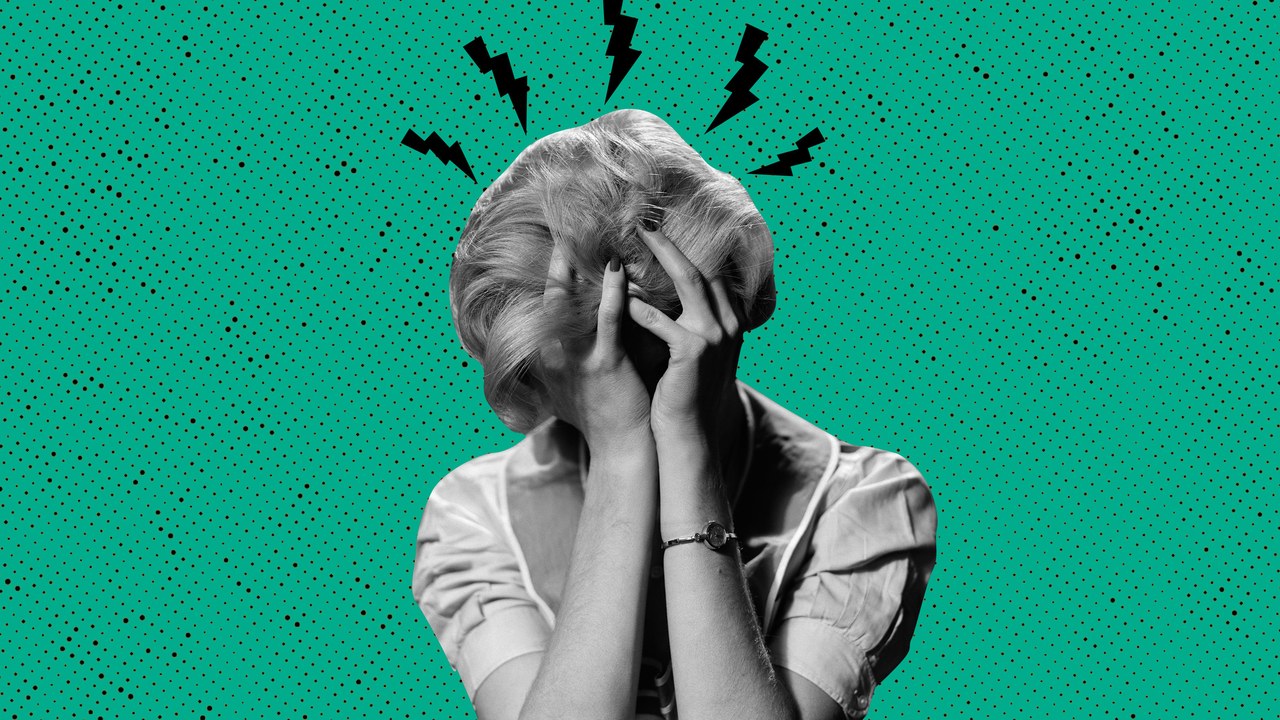
In my decades dealing with the vicious pounding in my skull, I’ve tried just about everything to get it to stop: I cut out alcohol, soy sauce, balsamic vinegar, chocolate, aged cheeses, overripe bananas (banana bread is bad news), bacon, pizza, gluten, down pillows, crack-of-dawn flights, exercise, ponytails, hats, movie theaters, dinner parties, social small talk, sleeping in rooms over 70 degrees, too much screen time… The list went on.
I tried every over-the-counter medication (the equivalent of jumping into a bull pen armed with a toothpick); every available prescription drug (only useful once an attack had already brought me to my knees); and every natural tincture I could get my hands on (ironically most herbal concoctions actually gave me migraines). I tried acupuncture, mouth guards, osteopathy, Reiki, massages, and a migraineur’s fave: banging my head against a wall. At best, I found little relief.
In the nineties, pharmaceutical companies released a class of drugs called triptans, which helped significantly with stopping migraines once they started—but still, no magic pill existed to prevent them. That didn’t stop doctors from trying all the options available; faulty-brained folks like me could be prescribed antidepressants, anti-seizure meds, and beta blockers—all pills for another purpose that patients had accidentally discovered reduced their migraines.
I was throwing an entire arsenal of drugs and therapies but none could shove the bully in my brain aside. Instead, they unleashed insomnia, jitters, weight gain, fatigue, uneven brows, and a near nervous breakdown. I felt like I was living my life in purgatory—always waiting for the next blow to my head.
I thought I would be forever doomed to this migraine-induced hell, but recently science (praise you, science!) has delivered a breakthrough to those of us desperate to leave our days of writhing in pain in dark rooms behind.
In 2017, my neurologist, Peter McAllister, M.D., co-founder and medical director of the New England Institute for Clinical Research, told me about a promising new drug. Researchers had discovered a specific peptide released during a migraine episode, part of a chain reaction that triggers that ice-pick-in-eyeball pain I’d been trying to eradicate for four decades. Dubbed a “CGRP Blocker,” the drug travels directly to the site of this pesky peptide and stops the bugger in its tracks. “This is the first preventative drug designed specifically for migraine,” says Dr. McAllister, who was a principal investigator on the studies behind the development of the drug. In his experience as a neurologist, it was like night and day for migraine sufferers, he told me.
Only one issue: the please-let-it-be-a-miracle drug wasn’t yet available. I held my breath for six months, fantasizing about the new life I might have—as I had every time I heard about a potential “cure.” I would spend time with my kids every morning, instead of hiding under the damp towels they fetched for my head. I would enjoy a vacation without inevitable days spent locked in my hotel room whimpering after the blows of another migraine. I would feel the simple bliss of being able to take a yoga class or leisurely swim without paying in pain the next morning.
Then in happened: in May of last year, the FDA approved the first CGRP blocker (Amgen’s Aimovig) and it was as if heaven itself had opened up. Cue the chorus of angels: ahhhhhh! I tried to manage expectations. It might not work for me—until this point nothing had—but when my first cooler pack containing the drug arrived last September, I could barely contain my excitement.