Categories
Health

She Was Assaulted by a Drunk Man. Now the CEO of Absolut Vodka Is Telling Her Story.


Mukherjee sees it as her job—and the job of the brands she leads—to help people understand the truth: that perpetrators are the ones responsible for sex crimes. After she was attacked as a child, she told no one what happened. “Like with any victim, you’re so scared,” she says. Then, when she was a young teenager, her mother died—she was hit by a drunk driver. As an adult she was in an abusive relationship, in which alcohol, she thinks, had a part. After she broke it off, she started volunteering with other survivors and saw that her experience wasn’t unusual. “Seeing the role of alcohol play into the abuse of other women and other victims as well, it’s just unacceptable,” she says. “And so for me to have this opportunity as a CEO to be able to start this conversation, that’s my responsibility as a leader.”

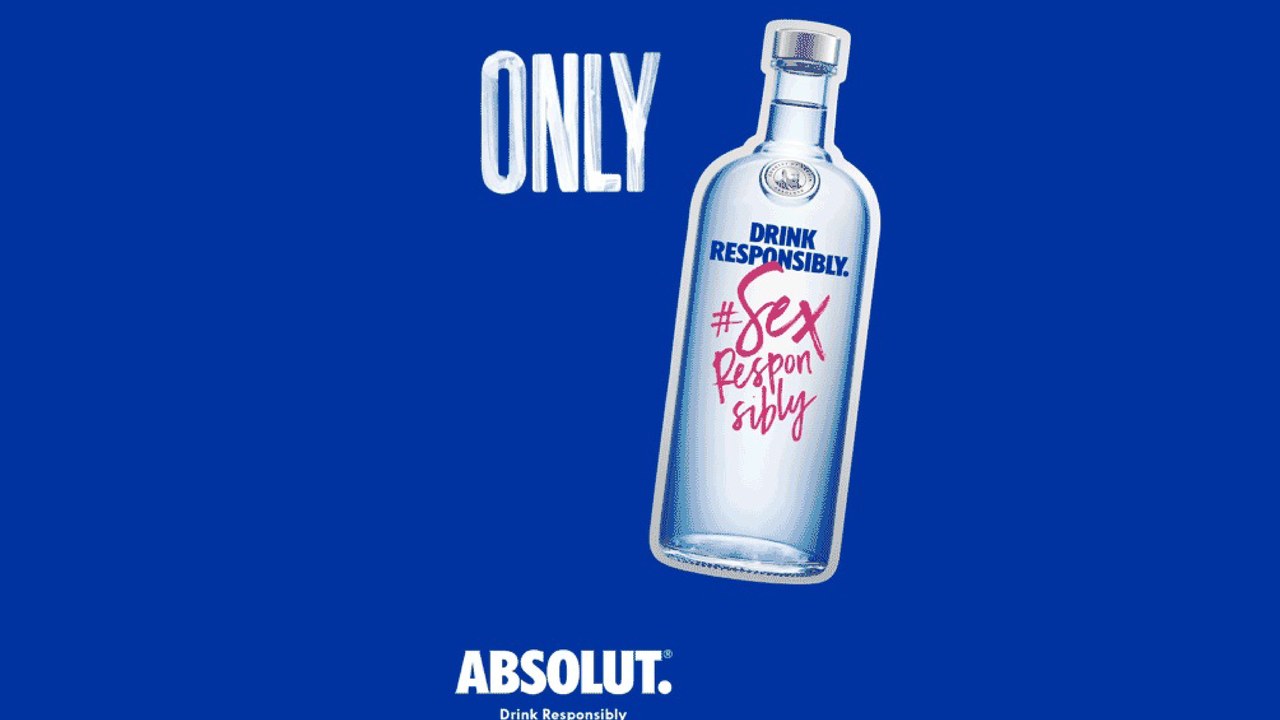
The company developed their ads with RAINN (Rape, Abuse and Incest National Network) and will partner with the organization throughout the campaign and onwards. On Valentine’s Day, Absolut will donate $1 to RAINN for every share and retweet their campaign gets. Mukherjee has also signed on to join RAINN’s national board. She plans to continue working with RAINN and campaigning for consent long beyond the initial ad rollout.

“Perpetrators out there are abusing alcohol and using it as a weapon, and it needs to stop,” she says. “That’s the dialogue we want to create. Everyone’s been talking about ‘drinking responsibly’ forever. But now let’s put our money where our mouth is.”

“This is the first time there’s been a real partnership that involves a lot of public messaging and working together over the long term,” says Scott Berkowitz, founder and CEO of RAINN. “They’ve made clear that they want this to be a long-term relationship. Our mission is very straightforward: it’s to reduce the numbers of sexual assaults in the country and I think their involvement is going to help us in that work.”

For some, the partnership might come as a surprise. But for Mukherjee, it’s just the natural, more ambitious expression of her values. Mukherjee spent years working with Chetna, a non-profit organization dedicated to helping South Asian women who experience domestic violence, as well as volunteering with other nonprofits that support survivors of abuse and violence. In separate conversations, she and Berkowitz used almost identical language to explain that drinkers should be held accountable for their behavior: Responsible drinking means “drinking in a way that allows you to make decisions rationally, like knowing that you should not get behind the wheel of a car,” they both say. In other words: Drinking isn’t an excuse for crime. And sex crimes aren’t an exception.

That’s not a message that’s come from an alcohol company before. It’s not even a message that’s come from mainstream culture.

“There is less moral culpability attached to the defendant who is legally intoxicated,” wrote Judge Aaron Persky, in his decision to sentence Brock Turner to just six months in county jail, though Turner had been found guilty of sexually assaulting an unconscious woman, Chanel Miller.

“College Women: Stop Getting Drunk,” read the headline of a Slate article by Emily Yoffe in 2013. “When [women] render themselves defenseless, terrible things can be done to them,” she wrote.

Perhaps Jed Rubenfeld, a professor at Yale, put it the most clearly, in Yale Law Journal in 2013. “Is it so clear unconscious sex should be criminal?” he asked.

These comments crystalized a belief most people have heard from college administrations, respected newspaper columnists, and parents and authority figures—that drinking makes you vulnerable to sexual assault. If you drink, especially if you’re a woman who drinks, you’re at least partially responsible for your assault.
Source link

Categories
Health

Eight People a Day on Average Are Sexually Assaulted in an Uber, According to New Uber Report


It’s the app that made getting into a stranger’s car seem normal. Billed as a safer alternative—for women in particular—to one-man taxis, Uber is now responsible for nearly four million trips a day. But after almost 21 months of data collection, the platform has released an unprecedented safety report, a record of thousands of sexual assaults and over 100 Uber-related deaths. The first of its kind across not just ride-share apps but most big businesses, the 78-page document is a damning account of violence

The review, which Glamour previewed, tabulates and categorizes all reported incidents from 2017 and 2018 and focuses on the most critical: fatalities and sexual assaults. In that period and after around 2.3 billion rides, 107 people died in Uber-related motor vehicle fatalities, 19 people died in Uber-related fatal assaults, and nearly 6,000 people experienced sexual assault—that’s on average eight reports per day and eight more than most of us think about when we open the app to request a ride.

The sexual assault claims run the gamut. For the report, Uber developed five categories of sexual assault, defined in consultation with the National Sexual Violence Resource Center (NSVRC) and the Urban Institute. The names sound clinical—non-consensual kissing of a non-sexual body part, attempted non-consensual sexual penetration, non-consensual touching of a sexual body part, non-consensual kissing of a sexual body part, and non-consensual sexual penetration. But advocates stress that consistent taxonomies for assault are essential; the fact that we don’t have them is just one of countless reasons it’s been so hard to put reforms in place. And no matter how dispassionate the tone, the numbers are a gut punch: 464 reports in 2017 and 2018 claim the most serious offense—non-consensual sexual penetration (of which most of those victims were riders; 92% overall). But the data also points to a less recognized problem—assaults on vulnerable drivers. Across all five sexual assault categories, the percentages of drivers and riders who report even out. Drivers, who have few defenses against intoxicated users, report assaults at more or less the same rate as riders.

In an introduction to the data, Uber stresses that 99.9% of Uber trips—of which there are now close to 4 million per day—“end without anything going wrong or anyone contacting us” and that the “vast majority” of the .1% of reports that Uber does receive are not safety-related at all. (True, but context that Uber repeats more than once in a document that also details hundreds of cases of serious assault. The effect is somewhat disquieting.)


Source link

Categories
Health

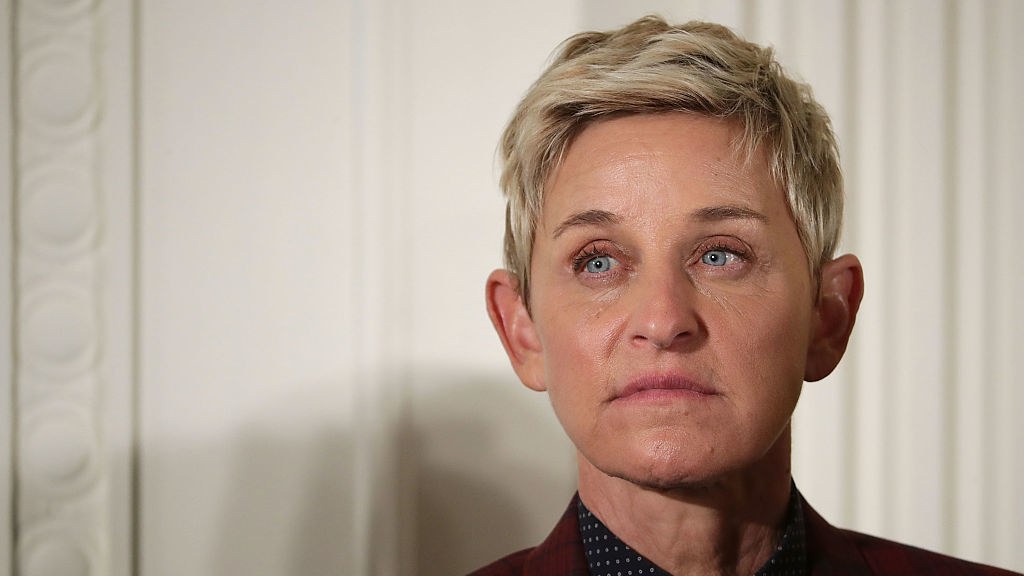
Ellen DeGeneres Opens Up About Being Sexually Assaulted As a Teenager


In a new episode of David Letterman’s Netflix series, My Next Guest Needs No Introduction, Ellen DeGeneres gives a powerful interview about the sexual assault she experienced as a teenager. In it, DeGeneres describes how her stepfather—who she describes as “a very bad man”—groped her, using her mother’s mastectomy as a pretext.

“My mother had had breast cancer right after they got married,” she tells Letterman, according to E!. “So she had a breast removed, and they had a very, very sexual relationship, which was also very uncomfortable for me. And he told me when she was out of town that he’d felt a lump in her breast and needed to feel my breasts because he didn’t want to upset her, but he needed to feel mine.”

She continues, “Again, because I didn’t know about bodies, I don’t know that breasts are all different. Anyway, he convinced me that he needs to feel my breasts and then he tries to do it again another time, and then another time he tried to break my door down, and I kicked the window out and ran ’cause I knew it was gonna do—it was gonna go more to something.”

“And I didn’t want to tell my mother,” she says, “because I was protecting her and I knew that that would ruin her happiness.”

“I should never have protected her,” she adds, according to EW. “I should’ve protected myself, and I didn’t tell her for a few years and then I told her, and then she didn’t believe me and then she stayed with him for 18 more years.”

This isn’t the first time the talk show host has spoken out about her stepfather—that was in a 2005—but as DeGeneres tells Letterman, she continues to talk about her sexual assault as a way to help other survivors.

“That’s another thing that, you know, I’m angry at myself because….I was too weak to stand up—I was 15 or 16 and…I mean, it’s a really horrible, horrible story and the only reason I’m actually gonna go into detail about it is because I want other girls to not, you know, ever let someone do that,” she says, adding later, “That’s the only reason I think it’s important to talk about it because there’s so many young girls, and it doesn’t matter how old you are, and when I see people speaking out, especially now, it angers me when victims aren’t believed because we just don’t make stuff up. And I like men, but there are so many men that get away with so much.”

“It is just time for us to have a voice,” she says. “It’s time for us to have power.”

The full episode will be out when season two of My Next Guest Needs No Introduction premieres on May 31.


Source link

Categories
Health

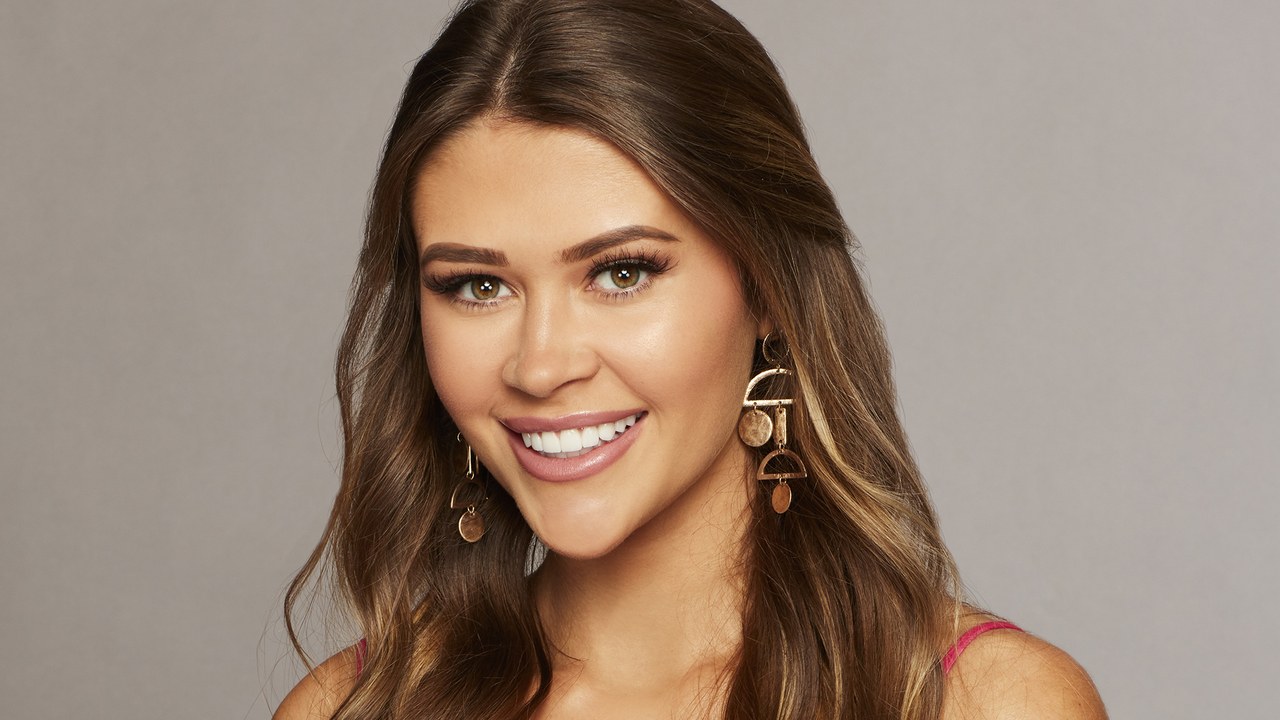
On The Bachelor, Caelynn Miller-Keyes Opens Up About Being Sexually Assaulted in College


During her first solo date with Colton Underwood on tonight’s episode of The Bachelor, Caelynn Miller-Keyes opens up about being sexually assaulted in college. “It’s the most difficult thing in the world,” she tells him during their conversation. “It’s affected every single person in my life. It’s so painful.”

In an interview with People published before the episode aired, Caelynn said, “My life was flipped upside down. And even though I’ve moved on, it is something I will struggle with forever.”

The incident, Caelynn tells People, happened at a party during her sophomore year of college after her wine glass was drugged. “I woke up the next morning, and I was completely naked in my bed, and I knew that something bad had happened,” she says. A friend at the party alleged that one of the men there assaulted Caelynn. A second male, according to Caelynn’s other friend, lifted her dress in front of his fraternity brothers. “They watched and laughed and took photos and Snapchats. It was horrible,” Caelynn tells Colton on tonight’s episode.

“These situations happen when you’re safe,” she tells People. “They don’t necessarily happen when you’re walking down a dark alley. It’s when you’re comfortable and when you let your guard down.”

According to Caelynn, a hospital initially told her they wouldn’t do a rape kit unless she filed a police report. “At that point, these were friends of mine and I wasn’t entirely sure what had happened, so I wasn’t positive I wanted to file a police report. But later that night, I did, once I figured out what had really happened,” Caelynn says. “The reporting process is a lot more difficult than people realize. I had no idea what to do. I was completely stranded, I was completely alone. I didn’t even think it was possible to be turned away from a hospital. Thankfully, I had a good support system and people went to a second hospital with me and I was able to get a rape kit and speak to authorities and go through that process. But it’s a lot more difficult than it seems.”

By the time she visited the hospital again, Caelynn says enough time had elapsed that the results were inconclusive. Only one man from the situation was expelled from Caelynn’s college. The others faced no repercussions.

“Even though they got away with it, I’m happy that I still fought,” Caelynn says. “I can live with myself and know that at least I tried and I pushed and I went after justice.”

Bachelor fans—as well as Colton—quickly took to Twitter to commend Caelynn for speaking out. Below, just a few reactions:

Caelynn isn’t revealing the names of the men involved. “I’ve detached myself in a way from the perpetrators because I felt like that was the healthiest thing to do. I don’t want to have to keep reliving it. I was able to forgive the men,” she tells People. “And once you’re able to do that, you’re able to take that power back. I hope they’ve learned from that experience and that they never do it again.”

The Bachelor airs Monday nights at 8 P.M. ET on ABC.

If you’d like to speak to someone about sexual assault, don’t hesitate to reach out to RAINN’s hotline at 800.656.HOPE (4673).


Source link

Categories
Health

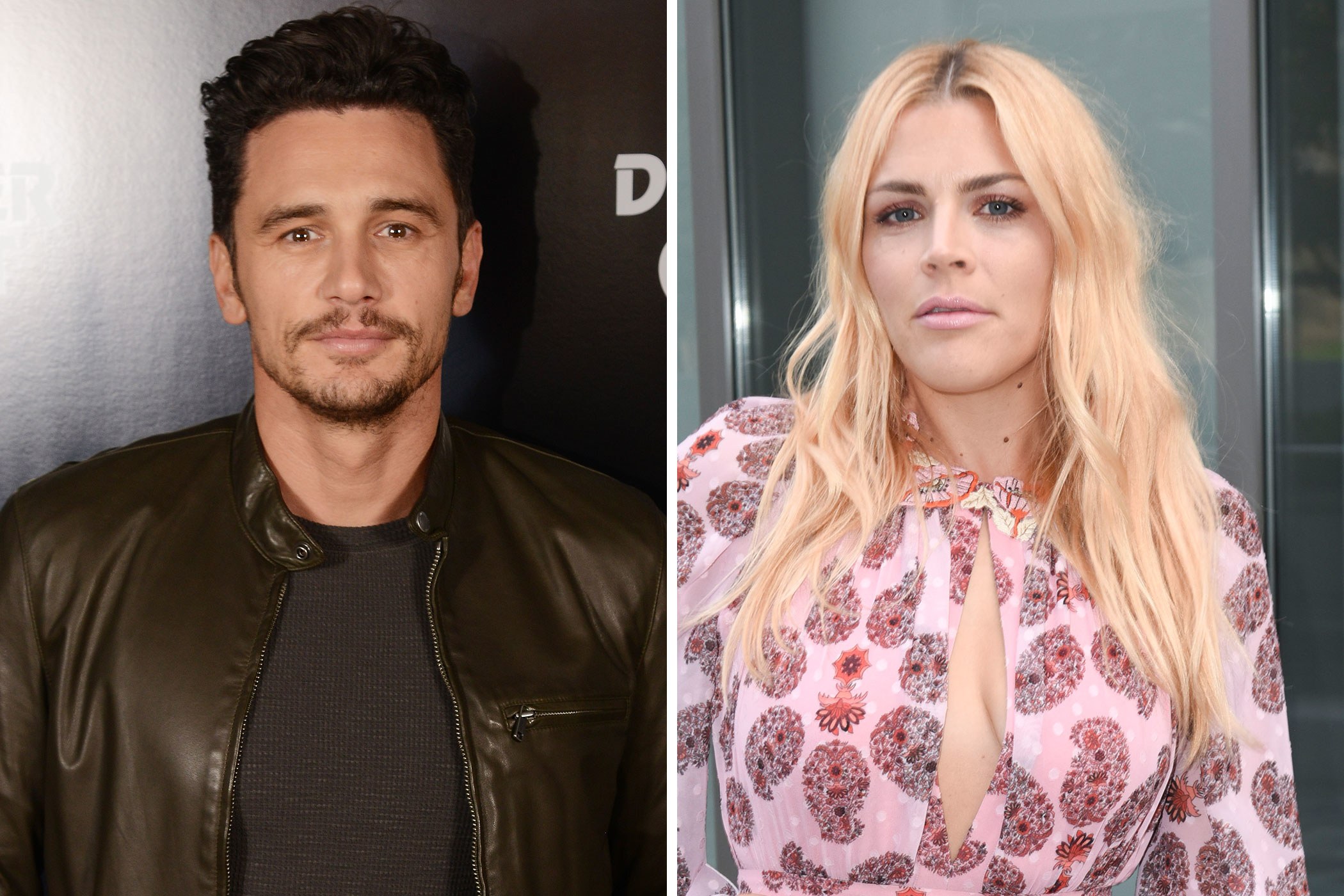
Busy Philipps Says James Franco Physically Assaulted Her on the Set of 'Freaks and Geeks'


In her new memoir, This Will Only Hurt a Little, Busy Philipps alleges she was physically assaulted by James Franco—whom she calls a “fucking bully”—on the set of Freaks and Geeks.

According to an excerpt first obtained by Radar Online, Philipps claims that she and Franco were shooting a scene in which the actress says she was directed to “lightly hit Franco in the chest” while delivering a line. In response to the action, she says he broke character and lunged at her.

“He grabbed both my arms and screamed in my face, ‘DON’T EVER TOUCH ME AGAIN!’” she claims in the book, per Radar Online. “And he threw me to the ground. Flat on my back. Wind knocked out of me.”

She writes that he then stormed off and the crew was left to help her up. She says she sobbed to costar Linda Cardellini, who reportedly urged her to call her manager. The next day, she says, Franco apologized, after he was reportedly ordered to, but he apparently never received any consequences for his actions, Radar Online reported.


Source link

Categories
Health

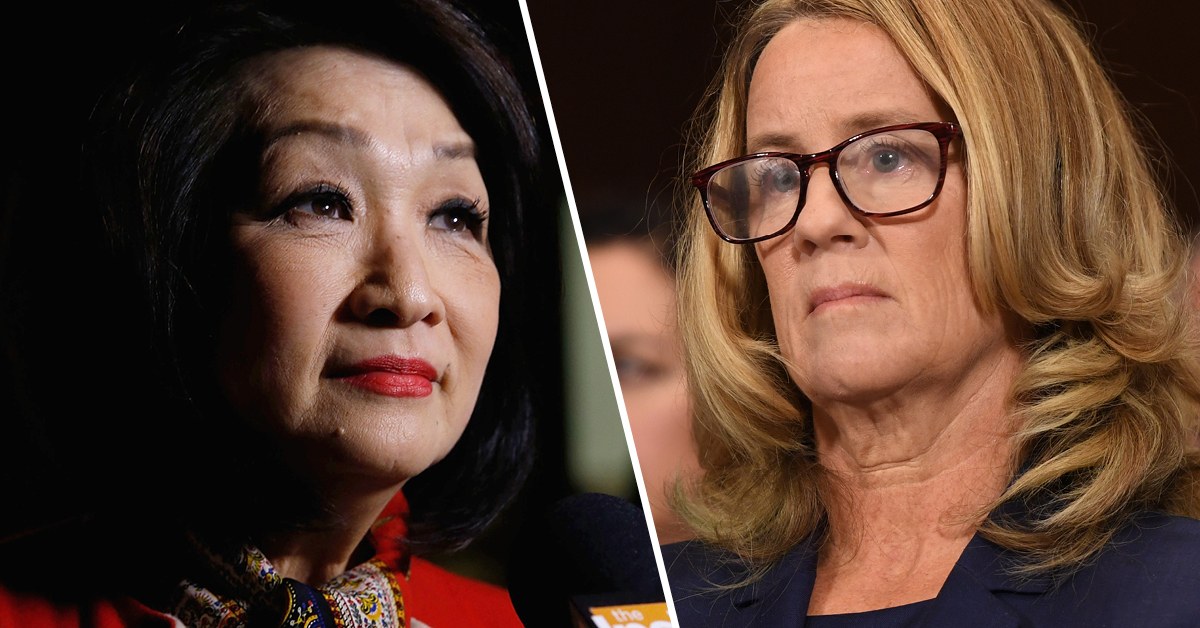
Connie Chung Reveals She Was Sexually Assaulted in a Letter to Christine Blasey Ford


In a powerful op-ed in the Washington Post framed as a letter to Brett Kavanaugh’s accuser Christine Blasey Ford, journalist Connie Chung reveals that she is a victim of sexual assault.

“I, too, was sexually assaulted — not 36 years ago but about 50 years ago,” Chung writes. “I have kept my dirty little secret to myself. Silence for five decades.”

She says the abuser was her family’s trusted doctor—the man who had delivered her as a baby in 1946. Much like Ford’s recollection before the Senate Judiciary Committee, the exact time and date may not be clear in her memory, but Chung writes with certainty about who assaulted her.

“It was the 1960s. I was in college. The sexual revolution was in full swing. The exact date and year are fuzzy. But details of the event are vivid — forever seared in my memory. Am I sure who did it? Oh yes, 100 percent.”

Similarly, Ford told the committee of her certainty about Kavanaugh when asked by Sen. Dianne Feinstein (D-Calif.) how she was sure it was him. “The same way that I’m sure that I’m talking to you right now,” Ford said.

The details Chung describes in the piece are painful to read (and may be triggering to some). She visited her doctor to secure birth control and found herself on his examination table awaiting her first gynecological exam.

“While I stared at the ceiling, his right index finger massaged my clitoris. With his right middle finger inserted in my vagina, he moved both fingers rhythmically. He coached me verbally in a soft voice, ‘Just breathe. Ah-ah,’ mimicking the sound of soft breathing. ‘You’re doing fine,’ he assured me. Suddenly, to my shock, I had an orgasm for the first time in my life. My body jerked several times. Then he leaned over, kissed me, a peck on my lips, and slipped behind the curtain to his office area. I don’t remember saying anything to him. I could not even look at him. I quickly dressed and drove home.”

Chung thinks she may have told one of her sisters, but did not tell her parents or report the doctor to authorities. “It never crossed my mind to protect other women. Please understand, I was actually embarrassed about my sexual naiveté,” she writes. “I was in my 20s and knew nothing about sex. All I wanted to do was bury the incident in my mind and protect my family.”

In another heartbreaking detail (and an added layer to why some women don’t report assault), she says that her mother could neither read nor write in English—and she could not drive. (Her parents immigrated from China the year before she was born.) So that she did not have to return to the doctor’s office, Chung told her mother he lived too far away. She eventually told her husband, but doesn’t recall exactly when.

Like Ford, she says she is “terrified” about making this public revelation. “I can’t sleep. I can’t eat. Can you?” she asks. “If you can’t, I understand. I am frightened, I am scared, I can’t even cry.”

“I wish I could forget this truthful event, but I cannot because it is the truth. I am writing to you because I know that exact dates, exact years are insignificant. We remember exactly what happened to us and who did it to us. We remember the truth forever. Bravo, Christine, for telling the truth.”

Bravo, to you both.

MORE: Watch Donald Trump Publicly Mock Christine Blasey Ford at Mississippi Rally


Source link