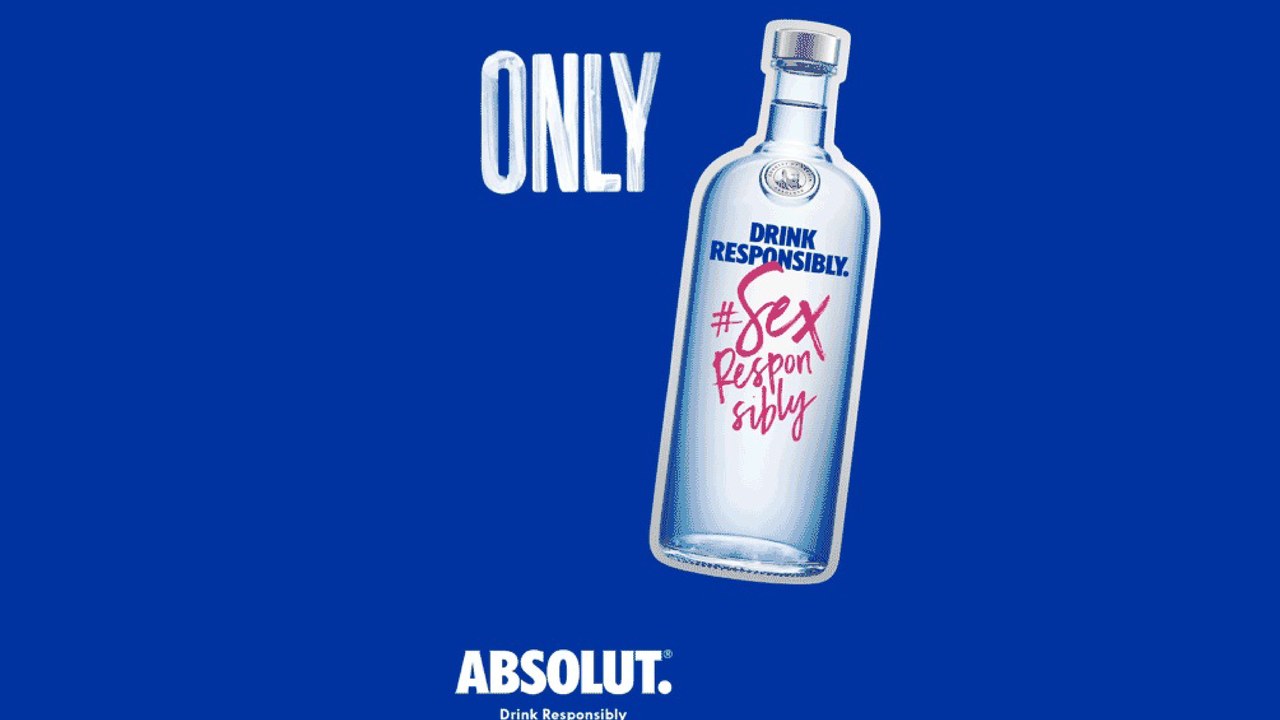
Mukherjee sees it as her job—and the job of the brands she leads—to help people understand the truth: that perpetrators are the ones responsible for sex crimes. After she was attacked as a child, she told no one what happened. “Like with any victim, you’re so scared,” she says. Then, when she was a young teenager, her mother died—she was hit by a drunk driver. As an adult she was in an abusive relationship, in which alcohol, she thinks, had a part. After she broke it off, she started volunteering with other survivors and saw that her experience wasn’t unusual. “Seeing the role of alcohol play into the abuse of other women and other victims as well, it’s just unacceptable,” she says. “And so for me to have this opportunity as a CEO to be able to start this conversation, that’s my responsibility as a leader.”
The company developed their ads with RAINN (Rape, Abuse and Incest National Network) and will partner with the organization throughout the campaign and onwards. On Valentine’s Day, Absolut will donate $1 to RAINN for every share and retweet their campaign gets. Mukherjee has also signed on to join RAINN’s national board. She plans to continue working with RAINN and campaigning for consent long beyond the initial ad rollout.
“Perpetrators out there are abusing alcohol and using it as a weapon, and it needs to stop,” she says. “That’s the dialogue we want to create. Everyone’s been talking about ‘drinking responsibly’ forever. But now let’s put our money where our mouth is.”
“This is the first time there’s been a real partnership that involves a lot of public messaging and working together over the long term,” says Scott Berkowitz, founder and CEO of RAINN. “They’ve made clear that they want this to be a long-term relationship. Our mission is very straightforward: it’s to reduce the numbers of sexual assaults in the country and I think their involvement is going to help us in that work.”
For some, the partnership might come as a surprise. But for Mukherjee, it’s just the natural, more ambitious expression of her values. Mukherjee spent years working with Chetna, a non-profit organization dedicated to helping South Asian women who experience domestic violence, as well as volunteering with other nonprofits that support survivors of abuse and violence. In separate conversations, she and Berkowitz used almost identical language to explain that drinkers should be held accountable for their behavior: Responsible drinking means “drinking in a way that allows you to make decisions rationally, like knowing that you should not get behind the wheel of a car,” they both say. In other words: Drinking isn’t an excuse for crime. And sex crimes aren’t an exception.
That’s not a message that’s come from an alcohol company before. It’s not even a message that’s come from mainstream culture.
“There is less moral culpability attached to the defendant who is legally intoxicated,” wrote Judge Aaron Persky, in his decision to sentence Brock Turner to just six months in county jail, though Turner had been found guilty of sexually assaulting an unconscious woman, Chanel Miller.
“College Women: Stop Getting Drunk,” read the headline of a Slate article by Emily Yoffe in 2013. “When [women] render themselves defenseless, terrible things can be done to them,” she wrote.
Perhaps Jed Rubenfeld, a professor at Yale, put it the most clearly, in Yale Law Journal in 2013. “Is it so clear unconscious sex should be criminal?” he asked.
These comments crystalized a belief most people have heard from college administrations, respected newspaper columnists, and parents and authority figures—that drinking makes you vulnerable to sexual assault. If you drink, especially if you’re a woman who drinks, you’re at least partially responsible for your assault.