Categories
Health

Sophia Bush Isn't Afraid to Speak Truth to Power


This article is part of a series profiling the inspiring women of Together Live, a band of all-female storytellers who will travel across the U.S. this fall, spreading love, laughter, and hope. In 10 cities, big and small, the intimate one-night-only events serve as a reminder that no matter what divides us, women are strongest when we come together. Learn more about Together Live here—and get excited to join the party.


You may remember Sophia Bush as the it-girl of the early aughts. Starring as Brooke on the teen juggernaut, One Tree Hill, and as Beth in the ultimate revenge film, John Tucker Must Die—the media feverishly covered her every move. But what they weren’t writing about was what was happening beneath the surface—the fact that Bush was coming into her own as an activist. Bush first became vocal about humanitarian causes in regard to the environment, but since has spoken out about everything from the harassment she’s experienced on sets, to voting rights. Last year she participated in the viral hashtag #WhyIDidntReport movement—thanking Christine Blasey Ford and sharing her own experience of assault. Before that, she was also a founding member of Time’s Up.

Here, Bush let’s us in on the people who have told her to not speak out, but rather to stay in her lane, and why she refused to listen.

Glamour: You’ve been a loud and proud advocate for the causes close to your heart, whether it’s your work with Time’s Up or I Am a Voter. How did you first decide to trust your voice, and fight for the things you care about?

Sophia Bush: In my experience, the truth itself has an energy, like a drum beat. It makes noise inside of me. And there is nothing to do but speak it. It will never quiet down, nor should it. I’ve always been outspoken about justice, but I do remember when that personal tendency went public after Deepwater Horizon and the Gulf of Mexico oil disaster it caused. As a lifelong lover of this planet of ours, I was incensed at the environmental injustice I was witnessing. And I still am! We have so much work to do. But the work won’t get done if we don’t first have the conversation about the issue at hand. That’s step number one. And we can take our action steps from there.


Source link

Categories
Health

I'm Afraid to Tell My Male Bosses I'm Pregnant


“Would you like to know the gender?” the woman who had announced the results of a first-trimester blood test asked over the phone. She had just told me my near-geriatric pregnancy looked fine so far. Gripping onto the steering wheel of my car, on my way back from an interview for a news story, I fiddled with the air conditioning, waiting for this stranger, whose name I don’t know, to give me news about my 13-week fetus.

“Congrats,” she said, clearly bored after relaying the news yet again to someone that day.

Then, she hung up.

We’re having a girl. I’m terrified. I’m 34, freelance (AKA unemployed), and facing an uphill battle as I think about how I’ll claw my way back into the workforce full-time once I deliver. But in that moment, I was so excited that I pulled over to call my husband.

I’m six months pregnant now and none of my editors know. Most of them are male. Many of them have kids. I know because they talk about them all the time in the doting, loving way only a father can. One mentions his children while working from home when I submit a 6,000-word feature; it’s a tough handoff day between him and his wife. Another apologizes when he’s delayed in responding to my edits because he has been taking care of two sick children since his return from an international vacation.

Each time I speak to one of them on the phone, I hang up in awe with the ease they speak about being fathers. I’m so envious.

I haven’t told any of them I’m pregnant. When I go on assignment with a colleague, I wear a massive button down, lifting the camera gear with my knees and hoping I can hide the burgeoning bump. The only other professional colleague I’ve told is another female freelance journalist. Over chicken wings in rural Appalachia, she told me she has worked with other female freelance journalists who’ve decided to wait to have children until after the 2020 election or until they are hired full-time somewhere. That night, after another 14-hour reporting day, I think about what she said. It terrifies me, but it also makes me feel more sane. I know I have to withhold this information. The more I reveal, the greater the risk to my career.

And about my career. Here’s what it’s like: I spent the majority of six months after Hurricane Maria in Puerto Rico, investigating claims that the Puerto Rican government made in the aftermath of the crisis. When I asked for a single day off to see my Irish husband become an Irish-American citizen, my then boss waited until the day before to ask if I really had to go. I assured him, no, not at all, it was fine. When protests broke out in Charlotte, North Carolina, after a white police officer shot and killed an African-American resident, I drove with a cameraman overnight to sleep in a pay-by-the hour motel to be the first team there to cover the riots. When I worked in Afghanistan, I spent two years traveling alone across the country for work and research, dodging questions about whether I was qualified to run a team of Afghan men.

Each time I had family or friends visit during a quiet period, I’ve been called away, without fail. Once, my parents came to town, and for the first time in nearly a decade, I lived in the United States. Mom had plans to make samosas the next day and take us to Costco so I could stock up on books and food samples. Of course, at 3 a.m., my phone rang, asking me to go cover a protest somewhere. I jumped out of bed and made it onto the 5 a.m. flight. I love what I do, and this is the fealty it demands.


Source link

Categories
Health

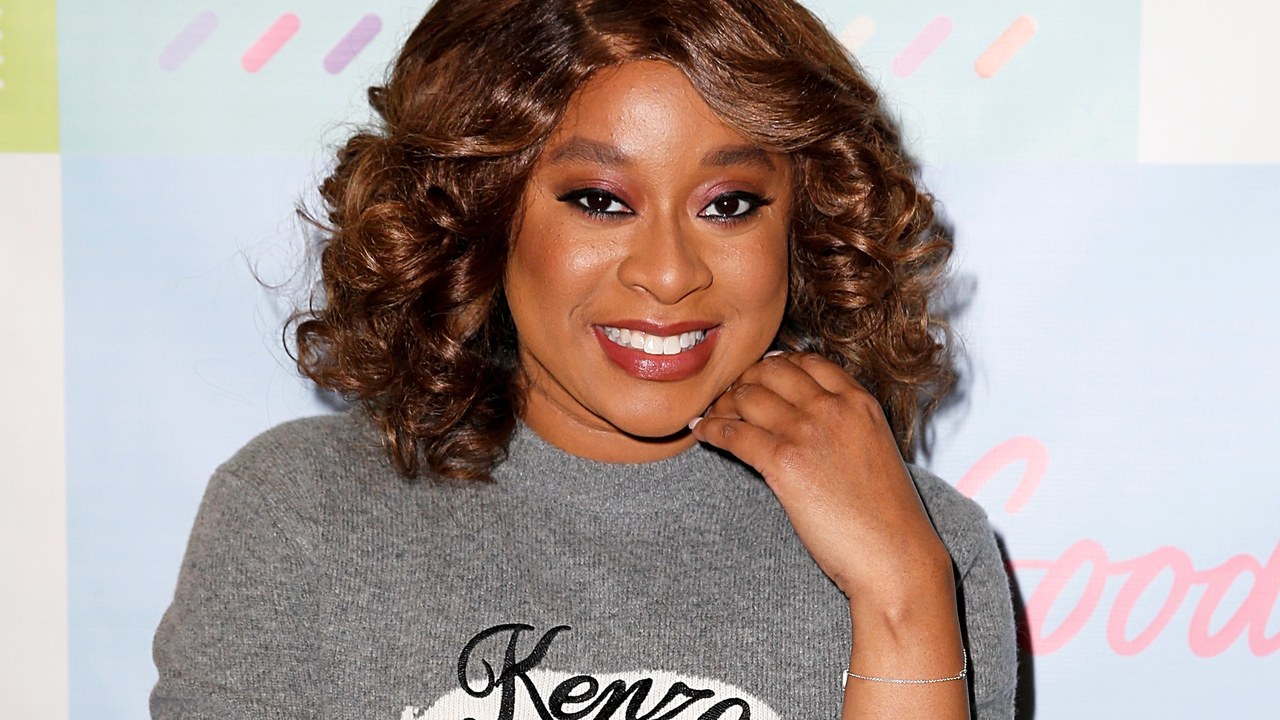
Phoebe Robinson Isn't Afraid to Talk About Her Stomach Hair


Fill in the blank: “I love my hair…”

I love my hair when it’s fresh out of the shower and I’ve just deep conditioned. The curls are very bouncy, that’s my favorite. Shea Moisture is so good.

What’s your favorite way to take a moment for yourself?

I like to go in the shower, sing Diana Ross, and hit none of the notes. It makes me feel good! I feel like her.

What city or country gives you the greatest beauty inspiration?

New York. You just walk down the street and see people wear all sorts of things—vintage, thrift, high/low fashion. It always makes me think, “Ohhhh, I should do that.”

You’re stranded on a desert island. What are the three products you bring with you?

I’m gonna bring Fenty Beauty lipstick, my Intuition f.a.b. razors because I grow hair like crazy—I’ll probably have to stop taking biotin. And then my third thing: Sarah Jessica Parker’s Lovely perfume. It’s very light. I love it.

What colors are loving on your nails right now?

I always do a nude Chanel. I forget the name of it, but I always do a nude color. Every once in a while I’ll do a bright color but I like chill nails.

What’s your go-to getting ready music?

These days I’ve been doing a lot of early ‘90s Mariah Carey, just throwing it back. I think because it’s summer. You just want to feel good.

How much time do you spend getting ready?

I try to spend no more than 30 minutes, including showering. I’m always running late. I could spend a full hour if I wanted to, but I’m like, “You gotta get in there, you gotta just wash up real quick, you gotta shave real quick, and then just do a quick face.” I do a toner, vitamin C serum, moisturizer, and then I’m out the door.

What’s the last Instagram rabbit hole you went down?

When the Met Gala came out I was like, “Oh, I love this outfit. I’m gonna look at that designer…” So I just spent a couple hours looking at every single designer and that was great.

What’s your favorite emoji?


Source link

Categories
Health

These Celebrities Aren't Afraid to Get Real About Pregnancy and Childbirth


We love a celebrity baby announcement here at Glamour.com—especially seeing and reading about how excited the parents-to-be are to meet their child. But let’s be real: pregnancy isn’t all ice cream and gorgeous glow, nor is childbirth the glossed-over, relatively sterile before-and-after we so often see onscreen. After all, you’re growing an entire human inside you for nine-ish months—it’s not going to be sunshine and roses around the clock.

We tend not to see this other side from celebrities: After all, a glam squad and years of professional training means they always look like they’re feeling at the top of their game, with not a hair out of place. But over the years, women in the spotlight have started to use their platform to talk about the not-so-pleasant sides of pregnancy and childbirth as a way to raise awareness of common experiences and issues women might not otherwise hear about (so many aspects women’s health today still aren’t discussed openly). And honestly—if this doesn’t prove that pregnancy and childbirth are beyond different for each woman, we don’t know what does.

Read on for a few celebrities who have told it like it is, from Chrissy Teigen being her usual candid, hilarious self to Serena Williams recounting a life-threatening birth experience.


Source link

Categories
Health

Are Women Afraid to Compete With Each Other at Work?


At one of my first jobs, I was blogging for an entertainment media company but was eager to take on extra script writing. Shortly after I was hired, another female writer came on board. My editors asked us who wanted to take on a new assignment, and I didn’t raise my hand. She landed the gig, and the next one too.

Now I realize why I held back—I was afraid our relationship would suffer. Anticipating a rift between us made me avoid competing with her altogether.

What I experienced is a real thing. Selin Kesebir, Ph.D., an assistant professor at London Business School, has studied how competition affects women’s relationships. Her team asked women and men to complete a simple typing task with same-gender and with opposite-­gender participants and rate how they felt afterward. The women going up against other women reported higher levels of negative emotions—like feeling nervous, insecure, or hesitant. Men competing with each other were more likely to report positive reactions; they felt energized and excited. And when the women went head-to-head with the guys? They didn’t feel as threatened as with their female peers, nor did they worry their relationships with the men would suffer. It was a girl-on-girl problem.

“When women had to compete with other women, they often felt like their relationship was negatively impacted,” says Kesebir. “Those feelings may lead women to avoid situations where they’d have to compete with female coworkers or to not compete as vigorously.” That means they may miss out on landing big career opportunities.

There are so many obstacles to the path of success; is it really possible that women are holding one another back? Yes, experts say, but the reasons run deeper than you may think. Take a look.

Girls aren’t exposed enough to healthy competition.

When girls play as kids, Kesebir says, “they try to make things equal, whereas boys try to decide who is better.” Boys’ activities are traditionally competitive, while girls’ focus on communal goals, like helping and supporting each other.

This made me think of when I was in sixth grade and I told a girl on my coed soccer team that I’d “kick her butt.” My coach told me to cut it out, and I asked why. “That’s how boys talk,” he said. Kesebir wasn’t surprised by my story. “The notion is,” she says, “that girls who try to compete tend to be disliked.”

The message to young women today is starting to change. Think of the Always #LikeAGirl campaign, which embraces feminine qualities as markers of strength, or the increased visibility of women in sports. “But generally,” says Kristen Liesch, Ph.D., a consultant on gender equality and diversity, “girls are still implicitly discouraged to behave in ways commensurate with competing, like leadership.”

Workplaces tend to be cutthroat rather than cooperative.

When Lauren, 37, started in marketing and communications in Los Angeles, she was assertive and ambitious, and viewed those qualities as strengths. She’d go after promotions and wouldn’t shy away from negotiating her pay. But a few months into the job, she saw the downside to a highly competitive workplace—her female boss seemed to be taking credit for the team’s work. And the other women were quick to go behind one another’s backs and throw another female colleague under the bus. So Lauren had to look out for herself. “It felt like only one of us could move up,” she says.

Some call this the Sisterhood Ceiling, a phenomenon whereby women prevent other women from advancing in the workplace by doing things like actively undercutting them. Kesebir emphasizes that it’s the workplace culture that’s a strain for women, not the inability of women to work together or compete in general. In fact, women in her study who were asked to cooperate reported fewer nega­tive feelings and the lowest amount of relationship damage. In general, managers can help shift the culture.

“They can focus on making things more egalitarian,” says Kese­bir, by highlighting how everyone on the team can contribute, for example. Tapping into dynamics that work for everyone is good for morale and the bottom line, Kesebir says.

There’s a scarcity of female leaders.

“Women have made huge strides in getting to the top,” says Shaun Harper, Ph.D., executive director of the University of Southern California’s Race and Equity Center, “but they’re still underrepresented in leadership. There’s this feeling that they have to compete against each other for a few coveted slots.”

Lauren felt that and says it was magnified by her being a woman of color. “Growing up black, I thought there was room for only one,” she says. “That’s all you see. There’s only one black friend on the TV show, so that reinforced my competitive nature. So whenever I saw someone getting public praise, I thought, OK, I’ve got to roll up my sleeves and fight harder.”

It’s not just promotions that seem scarce, but praise too. “There’s evidence that when women work alone or in a group of other women, credit is given appropriately and equally,” Liesch says. “However, when women work with men too, those men often get credit for the team’s work.”

If you can’t change your office culture overnight (and who can?), it can help to reframe how you view it. When Chris Castillo, 29, now a career coach and trainer in Denver, worked in advertising, she had an unspoken rivalry with another woman on the team with the same title. “We both wanted to stand out,” Castillo says. “She’d make comments about who was ‘the boss’ out of us two, and I got jealous every time I felt she was doing better than me. I made comments too.”

“There’s evidence that when women work alone or in a group of other women, credit is given appropriately and equally. However, when women work with men too, those men often get credit for the team’s work.” —Kristen Liesch, Ph.D., a consultant on gender equality and diversity

It continued until Castillo confronted her coworker. “We admitted we were wrong, addressed our concerns, and agreed to move on,” she says. Rather than let their competitive dynamic be disruptive, Castillo says, they saw it as an opportunity to learn from each other and became each other’s support system: “I still talk to her, and I’m so thankful for that relationship.”

It’s worth remembering that competition is not a bad thing, and it’s often a part of work.

“I want women to not be afraid of competition, but to know that we can get ahead through collaborating too,” says Claire Wasserman, founder of Ladies Get Paid, an organization based in New York City that seeks to close the wage and leadership gap. “Looking out for yourself does not mean that it has to be to the detri­ment of others. You never know where that person is going to end up. They could help you get another job, or support you at being better at your own work.”

That’s a win-win.

Kristin Wong has written for The New York Times and The Cut.


Source link
Categories
Health

Ellen Pompeo Is About to Make $20 Million a Year—and She Isn't Afraid to Talk About It


It’s a new day in Hollywood—one when women are not afraid or embarrassed to speak out about the money they make, or aren’t making in the recent cases of Catt Sadler and Michelle Williams.

So it’s incredibly refreshing to hear another very public woman, Ellen Pompeo, open up about with pride about becoming dramatic television’s highest-paid actress. Most of us know the actress for her long-running role as Meredith Grey on the Shonda Rhimes‘ behemoth, Grey’s Anatomy. (And yes, people, it is still on the air and doing very well, thank you very much.) In a new Hollywood Reporter story, Pompeo gets real about how she got to her new contract (worth more than $20 million a year) and the struggles, both internal and external, along the way.

“I’m 48 now, so I’ve finally gotten to the place where I’m OK asking for what I deserve, which is something that comes only with age,” she opens, going on to describe that while she might not be perceived as “relevant” or buzzy these days, she’s been good at her role for 14 years which she (rightly) counts as a serious accomplishment. She may not have become the movie star she once thought she’d be, but the business and her financial freedom is way more important. Pompeo credits Rhimes with empowering her to ask for what she believes she deserves—no small feat for many women in the world, famous or not. Says Rhimes, “As a woman, what I know is you can’t approach anything from a point of view of ‘I don’t deserve’ or ‘I’m not going to ask for because I don’t want other people to get upset.’ And I know for a fact that when men go into these negotiations, they go in hard and ask for the world.”

Pompeo also says the departure of Patrick Dempsey in 2015 opened a door for her on the negotiations front. In the past, he could be leveraged against her in a “we have Patrick, we don’t need you” way that she says happened for years. “At one point, I asked for $5,000 more than him just on principle, because the show is Grey’s Anatomy and I’m Meredith Grey. They wouldn’t give it to me. And I could have walked away, so why didn’t I? It’s my show; I’m the number one. I’m sure I felt what a lot of these other actresses feel: Why should I walk away from a great part because of a guy? You feel conflicted but then you figure, ‘I’m not going to let a guy drive me out of my own house.'” Damn, straight.

As Pompeo knew to be true, the show survived. And now she’s got an insanely lucrative contract and back-end deal, producing and directing credits, and real power. But even when she felt empowered and supported by her boss, she worried about looking greedy by asking for too much. “But CAA compiled a list of stats for me, and Grey’s has generated nearly $3 billion for Disney. When your face and your voice have been part of something that’s generated $3 billion for one of the biggest corporations in the world, you start to feel like, ‘OK, maybe I do deserve a piece of this.'”

She wants to set an example for other women to seize their moments too. And we can all take that example to heart, even those of us whose paychecks are made up of far fewer zeros. And while she doesn’t think that the only solution to the imbalance is more women in power, Pompeo does think it is something that should happen. It’s the kind of work environment she knows and has learned from, thanks to Shonda Rhimes. “And now my eight-year-old daughter gets to come here and see fierce females in charge. She loves to sit in the director’s chair with the headphones on yelling “Action” and “Cut.” She’s growing up in an environment where she’s completely comfortable with power. I don’t know any other environment in Hollywood where I could provide that for her. Now I hope that changes…and soon.”

We need more women to speak this frankly about finances and the often cruel imbalances of power if we ever hope to make real and lasting changes in the pay gap. So well done, Mer.


Source link