Categories
Health

Nordstrom Anniversary Sale 2018: Best Early Access Fashion Buys


Sometimes, it pays to be a frequent shopper—at the very least, it does when you’re a Nordstrom’s Anniversary Sale devotee. Though the annual blowout officially kicks off on July 20 (and runs through August 5), the retailer lets its cardmembers in on Early Access deals a full eight days early, starting on July 12. And those who’ve shopped a sale like this one before know: To score the best products, time is of the essence.

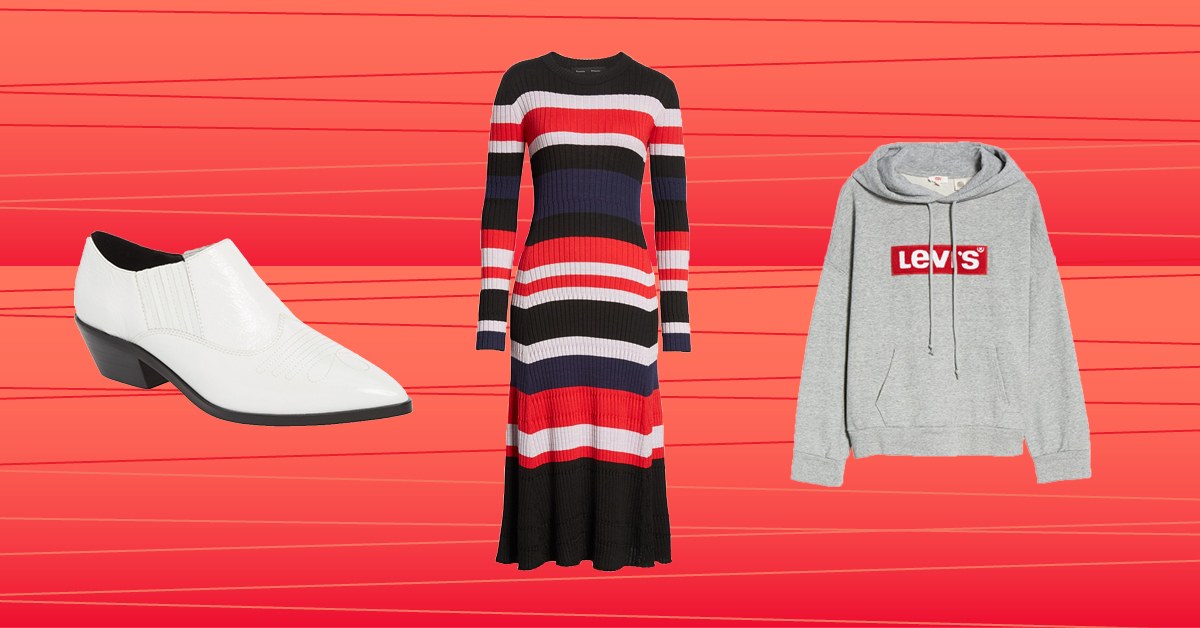
If you hold the golden ticket—or, in this case, silver credit card—you’ll likely be spending most of the next week browsing through the hundreds of products going on the 2018 Nordstrom Anniversary Sale early, while the rest simply enjoy the catalog. We’re talking Topshop skirts, Marc Jacobs cardigans, Rebecca Minkoff shoes… and plenty of other very good fashion items you can buy and wear now, or save for the fall.

We’re here to navigate the hundreds of product pages (and add to your cart in a timely fashion) by rounding up the very best finds from the initial rollout. Scroll down for all of early access picks from the 2018 Nordstrom Anniversary Sale.

We bring you the trends. You make them your own. Sign up for our daily newsletter to find the best fashion for YOU.


Source link

Categories
Health

Billy Bush Writes 'New York Times' Op-Ed Stating the Access Hollywood Tape Is True


Late last night, The New York Times published a new op-ed written by former Access Hollywood host, Billy Bush, titled “Yes, Donald. You Said That.”

Of course, the quotes Bush is referring to are those from the infamous tape in which the now President says:

“I moved on her like a bitch. But I couldn’t get there. And she was
married. Then all of a sudden I see her, she’s now got the big phony
tits and everything. She’s totally changed her look…I better use
some Tic Tacs just in case I start kissing her. You know, I’m
automatically attracted to beautiful — I just start kissing them. It’s
like a magnet. Just kiss. I don’t even wait. And when you’re a star,
they let you do it. You can do anything…Grab ’em by the pussy. You
can do anything.”

Bush is heard egging Trump on throughout the tape, was summarily fired by NBC, and now he seems to be on a publicity tour to rehab his image—even tweeting, “Well, you asked…” when sharing the Times piece—and frankly, I’ve got no time for it.

Actually, Billy, I don’t think we did. Reports started circulating last week that the President had privately expressed that perhaps the tape was faked, even though at the time he told The Washington Post: “This was locker room banter, a private conversation that took place many years ago. Bill Clinton has said far worse to me on the golf course—not even close. I apologize if anyone was offended.”

Here’s the thing: Anyone who actually thinks that tape isn’t real is never going to be convinced otherwise. We all know there’s a segment of Trump’s base who will side with him, no matter what facts are presented to the contrary. There was not ever any real dispute over the veracity of the tape. We didn’t need Billy Bush to confirm it.

Now, the substance of Bush’s op-ed isn’t all bad, per se. He says that he believes the women who have accused Trump of misconduct. Great. He admits that he was “guilty of sacrificing a bit of ourselves in the name of success.” We all knew that, but OK, I’m glad you can say it out loud now. He writes, “The activist and gender-relations expert Jackson Katz has said that this is not a women’s issue—it’s a men’s issue. That’s a great place to start, and something I have real thoughts about—but it is a story for another day.” True, but what are you waiting for? Probably a book deal.

I’m sure I sound a little cynical, and that’s probably because I am. How can you not be, given how we’ve watched the failing upward of men behaving badly so many times? This happened and Trump became the President of the United States. Yeah, I’m cynical. But also, I just don’t have time right now to help make men feel better about what they’ve done. This moment in time is so utterly raw, emotional, and triggering for women. We are too busy taking care of one another to give Bush a warm pat on the back for performing what I suppose he considers “wokeness.”

“On a personal note, this last year has been an odyssey, the likes of
which I hope to never face again: anger, anxiety, betrayal,
humiliation, many selfish but, I hope, understandable emotions. But
these have given way to light, both spiritual and intellectual. It’s
been fortifying.

I know that I don’t need the accouterments of fame to know God and be
happy. After everything over the last year, I think I’m a better man
and father to my three teenage daughters—far from perfect, but
better.”

I’ll take a hard pass on all this rhetoric, especially the part where you try to use your daughters for sympathy, like so many men before you. I do feel for them, very much. But they shouldn’t be a tool you use to get your career back.

I hope you continue to evolve as a person, Billy Bush. Seriously, I do. Just keep it to yourself.


Source link
Categories
Health

Senator Elizabeth Warren: Attacks on Birth Control Access Are Attacks on Women's Freedom


If anyone told a young woman today that she was expected to quit school after eighth grade or leave her job once she got married, most Americans would be outraged. Not fair! Women should have the same range of economic choices as men.

Through the years, one door after another has opened, as women have become astronauts and neurosurgeons, run Fortune 500 companies and nonprofit organizations, and started their own businesses. Sure, there’s still a lot of ground to make up, but the country has headed in the direction of greater equality for decades now.

Despite this progress, near-constant attacks on safe and cost-effective women’s health care have become a regular part of our political debates. The latest front in this battle? Access to contraception. The Affordable Care Act required employer-sponsored health insurance policies to cover birth control without additional costs. On October 6, in one of his series of reckless attacks on health insurance in America, President Trump ended that protection.

These fights are often framed as ideological discussions. But for millions of women, access to health care isn’t about ideology at all—it’s about economics.

Americans, at least in private, agree that using birth control is a no-brainer. The vast majority have used it, including ninety-nine percent of women (and by extension, their partners) who have had sex between the ages of 15 and 44.

Some of the reasons for this are obvious. Contraception prevents unintended pregnancy and reduces the abortion rate. Certain forms of birth control prevent sexually transmitted infections, and others help control debilitating health conditions. But contraception is not only about health; it is about economic security as well.

Americans, at least in private, agree that using birth control is a no-brainer.

As every parent knows, the decision to have children is momentous—and carries massive economic consequences. Because the United States does not ensure that parents have access to paid family leave or affordable childcare, new costs add up quickly. The totals are striking: middle-income parents with two kids will spend an estimated $230,000 to raise a child born in 2015 from birth through age 17, amounting to roughly $13,000 per year. Starting a family is a big commitment, and millions of people use contraception until they decide to do so.

But the out-of-pocket costs for baby cribs and car seats are only the tip of the iceberg. A mother experiences a measurable decline in earnings immediately after having a child—a decline that continues throughout her lifetime. And women don’t have to be mothers to benefit economically from contraception—just ask college students, or women with crippling endometriosis, how contraception helps them land and hold down jobs.

The arrival of the birth control pill in 1960, later joined by other effective contraceptives, gave Americans more control over if, when, and how they chose to grow their families. That control, in turn, helped fuel economic opportunity for American women, American families, and the American economy. After the widespread introduction of birth control, the number of women in professions once closed to them increased dramatically. And without the movement of women into the workforce since 1970—a trend partly enabled by the availability of effective birth control – our country’s GDP would only be three-quarters the size it is today.

Contraception helps level the economic playing field for women.

Contraception helps level the economic playing field for women. With birth control available, women have more chances to go to school, get jobs, create businesses, and grow our economy. They can more reliably plan their economic futures. But birth control offers these benefits only when women can access it—and when their bosses can’t dictate what types of birth control it’s appropriate for them to use.

While 99% of women have used birth control at least once, cost is a big factor restricting consistent access. Prior to the ACA, one in three women struggled to afford the out-of-pocket costs of prescription birth control. These costs put additional strain on the finances of workers already struggling to make ends meet—and also reduced contraceptive use. According to a 2010 Centers for Disease Control report, hundreds of thousands of women who tried various forms of contraception gave up because the methods were “too expensive,” “insurance did not cover it,” or because contraception was “too difficult to obtain.” The ACA’s birth control protections helped level the playing field: women in America saved an average of $255 a year on birth control pills and saw cost reductions for other contraceptive methods.

For millions of women, President Trump’s edict isn’t some abstract, ideological debate. For a working couple with modest wages and piles of student loan debt, the ability to decide when to have children is an economic issue. For a student working towards her college degree and financial independence, access to birth control is an economic issue. For a woman working two jobs with two kids in daycare, affordable contraception is an economic issue.

This isn’t the Trump Administration’s first attack on women’s health. Efforts to defund Planned Parenthood, repeal the ACA and Medicaid, and block access to safe, legal abortions have put women on the economic defensive. But those efforts require Congress—and so far, despite the best efforts of Mitch McConnell and Paul Ryan, they have failed. Now, President Trump has turned to a decision he can make without Congress: make it harder to access birth control. With the stroke of a pen, the President shrunk the economic futures of millions of women. He should reverse this decision—and if he won’t, Congress should force him to.


Source link