Categories
Health

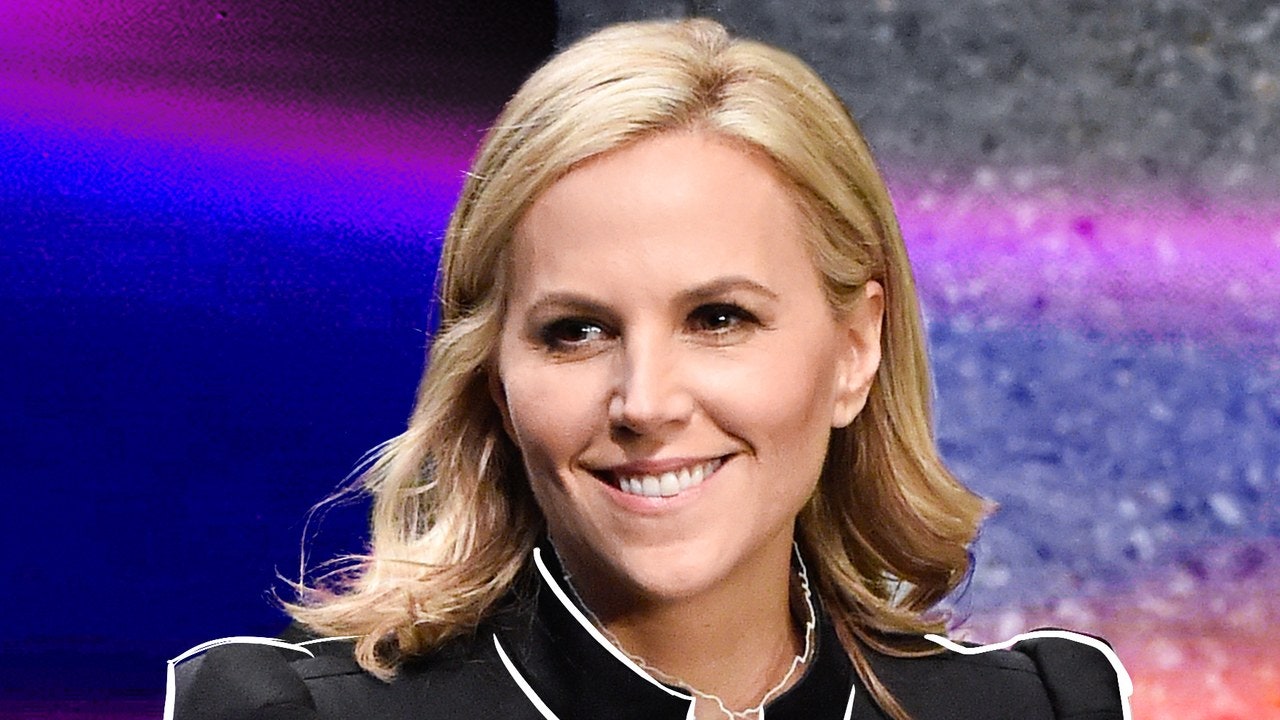
Tory Burch: Ambition Is Not a Dirty Word


Women are the future. I truly believe that.

Women’s empowerment has never been about the optics for us—in fact, we didn’t talk about the work of our Foundation for a long time because we didn’t want it to be perceived as marketing. Six months ago, I sent an email to our team telling them that finally, ten years after launching our Foundation, it was now time to talk externally about everything we are doing.

Women’s empowerment isn’t just a foundational principle for us, it’s something we have been financing for over a decade. To date, Tory Burch LLC has given over $20M to our Foundation. Every Tory Burch product that has been purchased over the past ten years has contributed to that number.

We also provide about $1 million a month in affordable loans for women entrepreneurs through our Capital Program in partnership with Bank of America. To date, we have distributed over $57 million to 3,500 women across the United States—from bakers to civil engineers.

A few years ago, we began to think bigger. On top of correcting the inequity on the back end, we questioned how we could combat the bias that causes inequity in the first place. It got me thinking about an instance in which I realized I had bought into my own unconscious bias.

Early in my career, a friend pointed out to me that I had shied away from the word “ambition.” It was a turning point for me.

The truth is, the word “ambition” takes on a completely different meaning when applied to a woman than when applied to a man. Women are criticized for exhibiting the very same quality men are praised for. This has to change.

Ambition creates pioneers, thinkers, innovators and leaders. We tend to associate ambition with the workplace but it’s about being ambitious in all that you do—whether that’s starting a company, running for office, or being a stay-at-home mom.

We launched our #EmbraceAmbition global initiative in 2017 to encourage women to own their power, their drive and their dreams. This is a message that is relevant to all women, from all around the world. In fact, our video reached 98% of all the world’s countries and has been viewed millions of times.

We have made progress but there is still so much that needs to be done. This is a problem we can solve, but only if we are willing to do the work and to take bold action—together. Men have to be part of this conversation if we want to create real and lasting change. Equality is not a woman’s issue. It’s not a man’s issue. It’s an issue of humanity.

Tory Burch is the executive chairman and chief creative office of Tory Burch LLC, an American lifestyle brand, and founder of the Tory Burch Foundation.
Source link

Categories
Health

Meghan Markle and Prince Harry May Not Be Able to Use the Word ‘Royal’ Anymore


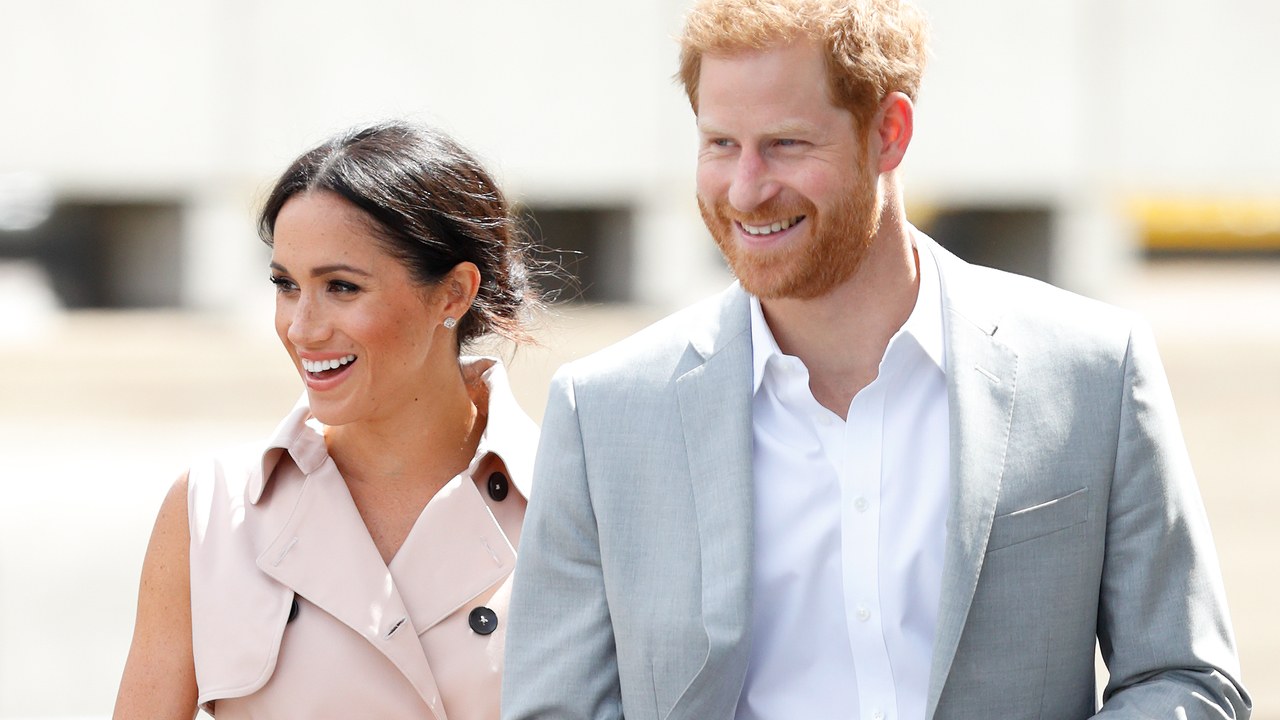
So much has happened since Meghan Markle and Prince Harry announced they’re stepping down as senior members of the royal family. The couple and baby Archie now live in Vancouver (they’ll be dividing their time between North America and the U.K.). They’re diversifying their work engagements (Prince Harry spoke at a J.P. Morgan event in Miami earlier in February). And the changes keep on coming. Now, it seems Markle and Prince Harry may not be able to use the word “royal” as part of their new brand⁠—specifically regarding the charity nonprofit they hope to launch.

This news comes after The Daily Mail’s report that Queen Elizabeth II has outright “banned” the two from using the word “royal” in their current and future endeavors. People magazine’s sources, however, aren’t being so drastic. Rather, they’re saying “discussions” are underway about the matter.

“As the Duke and Duchess of Sussex are stepping back as senior members of the royal family and will work towards financial independence, use of the word ‘royal’, in this context needed to be reviewed. Discussions are still ongoing,” the source tells People.

They continue, “As part of the process to transition the Duke and Duchess of Sussex into their new chapter, planning has been well underway around the launch of their new nonprofit organization. Details will be shared in due course.”

That being said, People reports it is “likely” Markle and Prince Harry will not use the word “royal” going forward. For now, though, their Instagram handle is still @SussexRoyal. We’ll keep you posted on when (and if) that changes.

Meghan Markle and Prince Harry announced in early January 2020 they were stepping back from the royal family. “After many months of reflection and internal discussions, we have chosen to make a transition this year in starting to carve out a progressive new role within this institution,” they wrote on Instagram. “We intend to step back as ‘senior’ members of the Royal Family and work to become financially independent, while continuing to fully support Her Majesty The Queen It is with your encouragement, particularly over the last few years, that we feel prepared to make this adjustment.”


Source link

Categories
Health

LGBTQ+ Folks on the Power of Watching ‘The L Word’ for the First Time


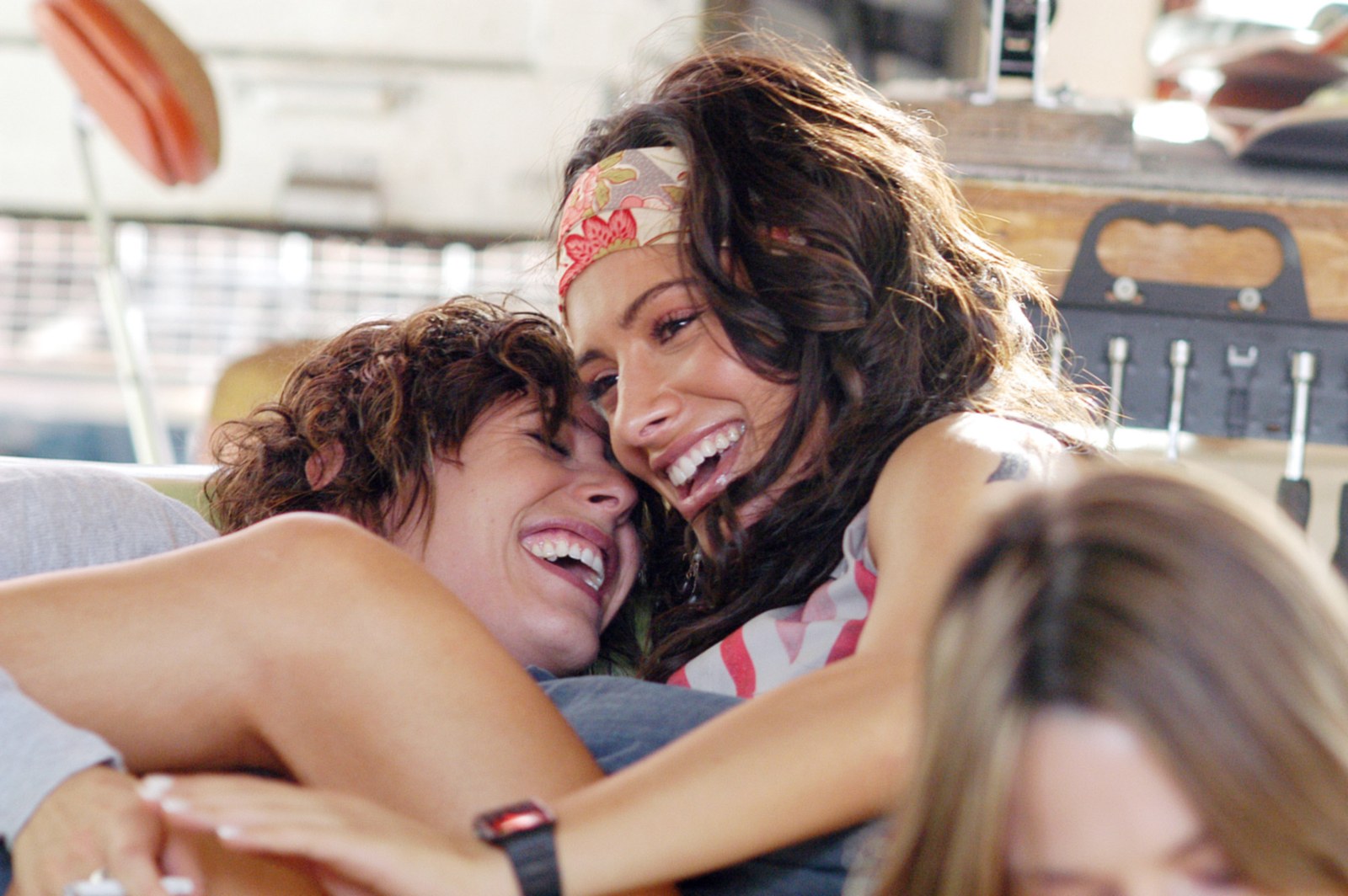
Katherine Moennig and Sarah Shahi in season three. ©Showtime Networks Inc./Courtesy Everett Collection

Caitlin Copple Masingill, 36, Boise, founder and president, Full Swing PR

The L Word was huge in my own coming-out process. I binge-watched the series in my apartment in Sun Valley, Idaho, where I worked as a cocktail waitress for a year. I watched it with my best friend, Amy, who was straight but very supportive of my coming out-process. Having also grown up in rural Idaho, she was pretty intrigued by the L.A. lesbian subculture of the day. I couldn’t find any lesbians to date in Idaho, so it was a rough year, but watching The L Word gave me hope that I’d find someone eventually and be able to explore my true sexual orientation. Sure enough, when I moved to Montana for graduate school, Missoula proved to be full of lesbians, and watch parties of The L Word ensued. I met my first girlfriend shortly after I moved there. I dated women pretty much exclusively for a decade but ended up getting back together with my uber-supportive college sweetheart, a dude named Jeff. I prefer to identify as queer and not bisexual. I feel like I’m 80% gay and 20% bi, and Jeff happens to fall in the 20%. We’ve been married since June 2017 and have a three-year-old, and we live in Boise. I was the first openly LGBTQ person elected to the Missoula City Council in 2011, when I was 27.”

Kenny Screve, 24, Bethlehem, Pennsylvania, LGBT+ advocate and social media influencer

“The first time I watched The L Word, I had recently came out of the closet. During that time, I was extremely afraid of not being accepted. Then I found the The L Word. I was extremely happy to watch something that supported the LGBT+ community. I thought it was so surreal and necessary. I enjoyed every minute of The L Word and really thought the world needed to see couples that aren’t heterosexual. The characters on the show were amazing and did a really good job showcasing what it’s like to be a lesbian. Meaning, their relationships aren’t much different from your typical heterosexual relationship. The show reminded me of Sex and the City, lesbian edition. The L Word also shows the struggle LGBT+ people have to go through on the daily. It really depicts the lives of some of my lesbian friends. I loved Tina and Bette as a couple. Ultimately, I just think it’s important for society to play shows like this because it gives us LGBT+ folk something to relate to. It can be really annoying to watch a show that you can’t relate to whatsoever. I watched it in my dorm room alone and sometimes with a group of friends. But mostly alone. When I’m really into a show, I don’t like to get distracted from all the tea, but I enjoy conversations with my friends about it. As a gay man, I totally related to some of the struggles faced by some of the L Word characters. Representation is super important. For society to move forward, it’s necessary.”

Mara Wilson, 32, Los Angeles, actor and writer

“As a teen, I was deeply closeted and thus conflicted about openly enjoying anything even rumored to be about women loving women. It was years before I admitted my love for the Spice Girls, let alone the Indigo Girls. Lesbians in pop culture were either the object of a joke or an object of male fantasy. So it was a relief when friends of mine started passing around DVDs of The L Word at boarding school. Yes, it was sensationalist and very of its time, but it was one of the first shows I saw that showed queer women as people. I remember being happy when I took a personality quiz and got Bette, and annoyed when I took another one and got Jenny. It was the first time I felt that I could identify fully with fictional queer women, maybe because all my friends, regardless of orientation, were doing it too.

”I definitely still had a long way to go, though: A few years later I saw a play in New York with my then boyfriend and said ‘Oh, my God!’ when I saw Kate Moenning’s name in the playbill. My boyfriend said, ‘What do you know that actress from?’ I said, ‘Oh, just from…stuff.’”

Melissa Kravitz is a writer based in New York City. Follow her at @melissabethk on both Instagram and Twitter.


Source link

Categories
Health

Jennifer Beals Says the 2016 Election Ignited the L Word Reboot


I asked Beals if the press tour she’s on right now differs from that of 10 years ago—as in are she, her co-stars, and Chaiken being well-received by media? Or have they faced challenges? She believes it’s the culture, more broadly, that’s changed. “What’s different is that people are more attuned to these conversations and ready to have these conversations,” she said. “Back then, people didn’t quite even have the vocabulary to have the conversation. You know, when language is changing, when language is trying to keep up with the reality of experience, it’s a tectonic shift in the way we think, and the way we see each other, and the way we see ourselves. So, I think the conversations are different now.”

In Generation Q, Bette Porter is campaigning to be the first out lesbian mayor of Los Angeles—a fitting job for her and a fitting mayor in the cinematic universe of The L Word (and let’s be real, probably IRL too). In the pilot alone, Bette makes a series of inspiring speeches that made me remember just how special and important Ms. Porter was in the aughts, and how important Beals’s voice remains as a bullheaded ally of the LGBTQ+ community. When I asked Jennifer if she misses anything about the original show, she channeled Bette and set me straight.

“I don’t. I try to move forward. I try not to hold on,” she said. “Holding on will just lead you to nostalgia, and we don’t have time for nostalgia. We’re living in a time that requires all of us to be intensely present, because what’s interesting about these conversations about gender and sexual identity is that they also pertain to how we are on the planet, and how we are treating the planet. Both things require us to shift the paradigm, and shift absolute consciousness, and shift entire systems.”

What she said next is truly a mantra I’ll be carrying into 2020: “Holding onto the past? We don’t have time for that. I don’t have time to be nostalgic.”

The L Word: Generation Q premieres this Sunday, December 8 at 10 P.M. ET on Showtime.

Jill Gutowitz is a writer and comedian living in Los Angeles. Follow her on Twitter @jillboard.


Source link

Categories
Health

Read Every Word of Michelle Williams' Powerful Emmys Speech About Equal Pay


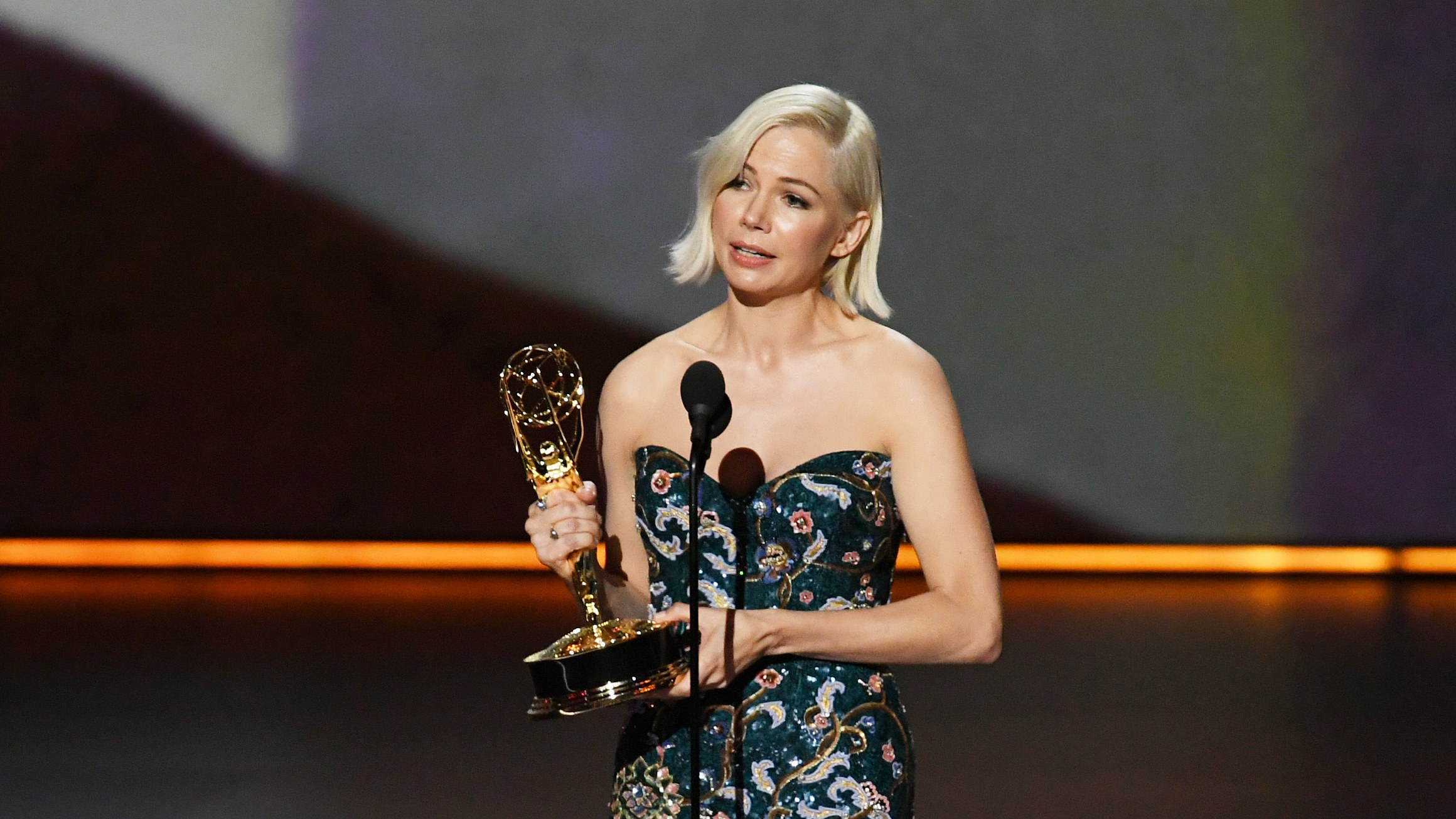
On Sunday, September 22, Michelle Williams won the Emmy for her performance of Gwen Verdon in the FX drama miniseries Fosse/Verdon. And once on stage to give her acceptance speech, she dedicated her time to a very important cause: equal pay.

“Thank you so much to the television academy for this and to the incredible cast and crew who have worked so hard to make this TV show, especially you Sam Rockwell. I know how hard you worked,” she began. “I see this as an acknowledgment of what is possible when a woman is trusted to discern her own needs, feel safe enough to voice them, and respected enough that they’ll be heard.”

Williams then explained that every time she asked for anything she needed in order to do her job—big or small—she heard “yes” in reply. “When I asked for more dance classes, I heard yes,” she said. “More voice lessons, yes. A different wig, a pair of fake teeth not made out of rubber, yes.”

She continued, “All of these things, they require effort and they cost more money. But my bosses never presumed to know better than I did about what I needed in order to do my job and honor Gwen Verdon.”

More important, they didn’t just support her with props and lessons. They supported her with equal pay.

“And so I want to say, thank you so much to FX and to Fox 21 studios for supporting me completely and for paying me equally because they understood that when you put value into a person it empowers that person to get in touch with their own inherent value. And then where do they put that value? They put it into their work,” she said. “And so the next time a woman and especially a woman of color—because she stands to make 52 cents on the dollar compared to her white, male counterpart—tells you what she needs in order to do her job listen to her. Believe her. Because one day she might stand in front of you and say thank you for allowing her to succeed because of her workplace environment and not in spite of it.”

She finished the speech with a shoutout to her daughter. “Matilda, this is for you, like everything else.”

Fans quickly took to social media to share their praise for Williams’ speech.

“That Michelle Williams speech belongs on a plaque,” one tweeted. “Michelle Williams thank you for acknowledging that there is a far greater wage gap for women of color than literally everyone else including white women,” another noted.

Celebrities including Kerry Washington and Debra Messing also took to Twitter to celebrate Williams.

Fans also called out how supportive Williams’ best friend, Busy Phillips, was during the speech:

Backstage, Williams spoke out more about equal pay. “I’d know from the inside how difficult it was to feel like you were ever really getting ahead. And no matter how many accolades [I got], I couldn’t make it translate into long-term security, so the discrepancy with All the Money in the World illustrated not just a larger point for me, a woman of privilege, but how difficult it is for women of all [backgrounds],” she told press. “When you look at all numbers, 52% on the dollar is what a hispanic woman will make compared to a white male.”

For the record, Williams is spot on with her speech. August 21 marks Black Women’s Equal Pay Day, the point in the year when the average black woman’s wages finally equal what a white man earned the year before. It’s time we all start talking more about pay disparity—on the Emmys stage and off.


Source link

Categories
Health

A Mural at New York Fashion Week Has Everyone Talking About the Word "Fat"


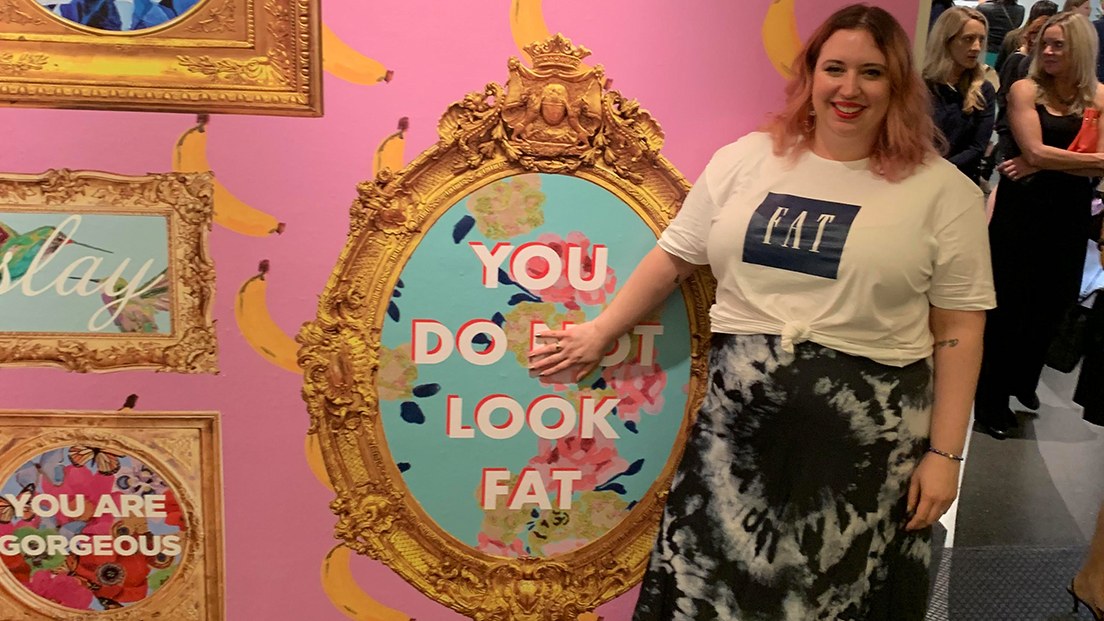
The start of this New York Fashion Week began for me like any other. I sifted through my closet of graphic tees, printed blazers, and prairie dresses to land on my look for the day: a tie-dye midi skirt, pointed black leather boots, and a T-shirt that looks like GAP’s logo but instead proudly displays the word “FAT.” I knotted it to show some skin, tossed on a red backpack, and headed to my first show: Target, which was showing at the Curvy Con.

I, like a growing number of plus-size women and body-positive activists in fashion, have made the decision to reclaim the word fat. That’s not to say my feelings about it were always positive. Until about six years ago, if you had called me fat, I would have melted into a hysterical mess. That word carried so much weight in my mind. To me, it meant I was disgusting, unlovable, and unacceptable by society’s standards, unworthy of even existing—it was one of the worst things someone could say about me. It took years of writing about plus-size fashion and immersing myself in a community of fat-positive women to get me to a place where I’m not just past the stigma, but where I’m actually proud of my body. Now on the other side of that thinking, I comfortably describe myself as fat on a regular basis. I see it as a neutral descriptor, and no more insulting than someone saying I’m pale, have pink hair, or hazel eyes (all true). As a size 18, I’m also fat; it’s not a slur, it’s a fact.

No one in fashion, with the small exception of the few truly size-inclusive designers like Christian Siriano and Chromat’s Becca McCharen-Tran, gets that more than CeCe Olisa and Chastity Garner Valentine, the co-founders of Curvy Con, one of the most highly anticipated events in the plus-size community. Which is why when Curvy Con moved its schedule to coincide with NYFW three seasons ago, it was a big deal—a signal to the fashion industry that fat women are here, fat women are fashionable, and we’ve got the money to shop.

Walking into Curvy Con I was greeted by joyful exclamations from fellow attendees, excited about seeing a fat woman wearing a top that proudly proclaimed her fatness. The decor reflected that mindset; the walls of the two-floor space were covered in affirmations like “Sizeism ends here,” “Face the fat,” and “Big Girl Energy,” as well as quotes from Lizzo and other plus-size celebrities. Models of diverse sizes (not just 12) hit the runway in Target’s new size-inclusive collections that go up to 3X, and bloggers ranging in size from 14 to 26 were lining up in droves to try out Anthropologie’s extended sizes.

It felt the way fashion should be: representative of the 68% of American shoppers who wear a size 14 or above.

Wrapped in my cocoon of body positivity, I left the Curvy Con to attend my first show of the day at NYFW’s main location, Spring Studios. While diversity (in all senses of the word) among attendees is improving, I had a feeling my shirt might possibly evoke a different reaction there. But what I wasn’t expecting was that the biggest criticism of my size would come from a mural painted on the walls of the show venue.

At first glance, the mural (created by fashion’s latest art darling Ashley Longshore) looks like yet another Insta wall photo opp. It’s got Longshore’s signature whimsy—portraits of Care Bears, colorful florals, and cheeky slogans. But amidst a slew of affirmations such as “You are perfection,” “You are gorgeous,” and “Make it reign” was one so ironic, I almost had to laugh: “You do not look fat.” There I was, a fat woman wearing a “FAT” T-shirt being told that I didn’t, in fact, appear that way—as if it were such a terrible thing to be.


Source link