Categories
Health

I'm an Autistic Woman, and This Is How I Navigate the Workplace


What started out as a civil conversation between me and my former department chair quickly escalated into a heated argument. I stormed out of her office yelling some poorly chosen and insulting words that no one should ever say to a supervisor. I was a professor in the middle of an autistic meltdown, and I wasn’t about to stick around for what I knew would come next, an uncontrollable crying fit.

Imagine a switch turning on in your head that is completely out of your control. An explosive burst of emotions makes it impossible for you to control your impulses because your brain can no longer handle any rational thoughts. You can barely say anything at all, but you somehow manage to lash out at your boss, gutturally screaming insulting words. The fact that your job could be on the line or that you’re overreacting doesn’t even cross your mind until the volcano stops erupting.

Usually, the inciting incident that sets a meltdown in motion doesn’t seem significant enough to cause an intense emotional reaction. For example, any unexpected disruption to my routine like a change to my teaching schedule can be the straw that breaks the camel’s back.

While anyone pushed hard enough at work can have an emotional breakdown, an autistic meltdown is usually much more intense. Once the fight or flight response is fully engaged, very little can be done to stop it. The crying fit I avoided in my former department head’s office ended up happening in my own office, which continued to a lesser extent on my drive home, and even after I got home.

Imagine a switch turning on in your head that is completely out of your control.

I didn’t always know I was autistic, but I knew that I was different. I was a selectively mute child who rarely spoke in the classroom, but I didn’t stand out because I wasn’t disruptive. Most girls from my generation weren’t diagnosed unless they had an extreme form of autism. Even now, many girls who have autism spectrum diagnosis (ASD) go undiagnosed or are misdiagnosed. Only 1 girl for every 4.5 boys has an ASD diagnosis, according to the Centers for Disease Control and Prevention. Recent studies have found gender differences with autism, which could explain the skewed gender ratio. I wasn’t diagnosed with ASD until my late thirties.

If you know an autistic woman at work, she may seem calm and friendly one moment and argumentative and angry the next. I sometimes feel like Dr. Jekyll and Mr. Hyde. But I don’t hold a grudge against any of my colleagues, even when we’ve had heated arguments in meetings.

An autistic woman may also have trouble working in teams because she has trouble with empathy, as I do. I often belabor points in meetings even when I have no chance of convincing others of my viewpoint. If you work with an autistic woman, try to be patient, knowing that she will likely have difficulty with communication even when she has a lot of valid points to share.

Luckily, I didn’t get fired over those insulting words I said to my former department chair. She never brought up the incident after that, at least not in a direct way. One day, she offhandedly said, “I feel like there’s always been some tension between us.” My response was simply to agree and leave it at that.

She didn’t know I was autistic until a year later. She was in the audience at a creative writing festival when I read a personal essay I wrote for Glamour revealing I’m autistic. She later approached me in the hallway outside my office to say, “Thank you for sharing your…condition.” She struggled with the last word, not sure exactly what to call it.

Another reason I have difficulty interacting with students and colleagues in the workplace is my prosopagnosia, commonly known as face blindness. I have trouble recognizing faces with this condition, which two thirds of autistic people have, according to one study.

It’s especially hard for me to take class attendance when I can’t match the names on my rosters to faces. I often hide this embarrassing weakness by pretending that I know more names than I do. I ask students who come late to class to tell me their last names so I can find them easier on my roster. This helps me to cover up the fact that I don’t know their first names. It’s also difficult for me to talk to my colleagues that I don’t see often because I can’t recognize them in a crowd. This is especially difficult to do if I see them out of context, such as a chance encounter off campus.

I have trouble looking people in the eye. I have to make a conscious effort to do it. Sometimes, I end up losing my train of thought while trying to divide my attention between engaging in a conversation and making eye contact. But having a job that requires me to interact with a lot of people, I’ve trained myself to look toward, if not directly at, faces. Not focusing directly on faces certainly plays a part in my bad memory for them. I usually have good face recognition, though, for students who frequently meet me one-on-one in office hours or colleagues who have offices in my hallway.

I have trouble looking people in the eye. I have to make a conscious effort to do it.

If you know someone who is autistic at work, don’t assume that she doesn’t want to socialize even if she rarely initiates conversations. She might keep her office door closed most of the time because it’s easy to get distracted by any sort of noise, but this doesn’t mean she doesn’t want to interact with her coworkers. Most of my attempts at socializing happen in awkward moments in the doorways of my colleagues’ offices. I want to be more social, but I have a lot difficulty having a conversation that doesn’t have a defined purpose.

My ASD diagnosis helped me take better control of my autism in the workplace. I still have more than a few disagreements with colleagues and supervisors, including the occasional autistic meltdown, but normally, I know my limits and remove myself from places and situations that threaten sensory overload.

My teaching evaluations are generally good, other than occasional comments about not smiling enough. I’ve improved my social deficits by using scripted language and recognizing my difficulty with empathy. I’ve also found ways to be more flexible with my routines and maintain better control over my sensory issues. I regulate my emotions with exercise, especially by practicing yoga and Taekwondo.

Despite the challenges in the workplace, I’ve managed to have a very successful career as an autistic professor and writer. My intense interest in literature led me to become an expert with a doctorate in my field. My excellent long term memory and ability to record memories as videos in my imagination has helped me to write vivid scenes as a creative writer. I’ve also mentored and taught thousands of students and collaborated with many colleagues and administrators over the past eighteen years.

We would all benefit from more awareness and acceptance of neurodiversity in the workforce. I might not walk around campus telling everyone that I’m autistic, but I’m not ashamed to talk about it either. One time a student came up to me after class to tell me she was surprised to learn that I was autistic. She had come across my articles about autism by chance when she did an internet search to find my contact information. She has an autistic brother, so we ended up sharing our stories.

Jennifer Malia, who runs the Facebook page Mom With Autism, is an English professor at Norfolk State University. She is currently working on a book about autism and gender.


Source link

Categories
Health

Blake Lively Plays a Blind Woman Who Regains Her Sight in the First 'All I See Is You' Trailer


In June 2016, Blake Lively released a genuinely terrifying shark movie called The Shallows. You remember it, right? She played a surfer who found herself stuck on a rock in the middle of the ocean, only feet away from a man-eating shark. What transpired was a 90-minute fight for survival that kept you on the edge of your seat. Truthfully, I’m not sure how Lively’s ever going to top it.

Well, actually, I do: Her upcoming film All I See Is You looks just as thrilling as The Shallows, but in a completely different way. Lively plays Gina, a blind woman who’s dependent on her husband, James (Jason Clarke), for pretty much everything—but that all changes when Gina undergoes surgery and regains her sight. Now that Gina’s literally seeing clearly for the first time, the dynamic in her marriage changes. She wants to go out, explore, and live her life loudly, but that doesn’t seem to sit well with James. That’s what this trailer suggests, at least.

“I just feel like I knew everything, and now I don’t,” Gina tells James after getting the surgery, which is pretty much code for, “Wow, I’m hot as hell, and I don’t want to spend my time sitting around the house with some scrub anymore.”

Check out the full trailer for yourself, below:

The premise of All I See Is You reads like your average romantic thriller, but this trailer hints at some serious scares. Is James going to go all Fatal Attraction on Gina and kill the guys she flirts with? Is he going to try to…make her blind again? That would be seriously effed up. We’ll find out when All I See Is You hits theaters October 27.

Related Stories:

Blake Lively Is ‘Awakened’: The Actress Talks Sexism in Hollywood and Raising Fearless Daughters

Blake Lively Is Channeling Orange Is the New Black for Her New Movie


Source link

Categories
Health

Lena Waithe Becomes the First Black Woman to Win for Comedy Writing at the 2017 Emmy Awards


Lena Waithe just made Emmy Awards history by becoming the first Black woman to win for Outstanding Writing in a Comedy Series for Master of None. (She was also the first Black woman ever nominated in this category.) This was a monumental moment for television history, and it wasn’t lost on the celebrities in the audience: Nearly everyone stood up and clapped for Waithe as she walked up to accept her prize.

Waithe’s acceptance speech was emotional; she took time to thank the slew of people in front of and behind the camera on Master of None. However, Waithe really won over the crowd toward the end of her speech when she gave an impassioned message to the LGBTQIA+ community.

“I see each and everyone one of you,” she said. “The things that make us different: those are our superpowers. Everyday when you walked out the door, put on your imaginary cape and go out there and conquer the world—because the world would not be as beautiful as it is if we weren’t in it.”

Watch that part of her speech in the video, below:

Waithe’s contribution to Master of None is perhaps best encapsulated in the Thanksgiving episode from the most recent season, where her character’s mom finally says that she’s happy for her. (Waithe plays Denise, a queer woman, on Master of None.)

“It’s such a pivotal moment for women, particularly women of color, who may be struggling with what it’s like to have a gay child,” Waithe said. The grabbing of the hand, the looking in the eyes and saying, ‘I’m happy with the way you turned out,’ instead of this long speech of ‘It’s OK that you’re gay,’ is a moment of acknowledgment. For a lot of queer people, that’s all we could ever want.”

For more of our 2017 Emmy Awards coverage, click here.

Related Stories:

Master of None Writer and Star Lena Waithe Had the Best Response to Making Emmy History


Source link

Categories
Health

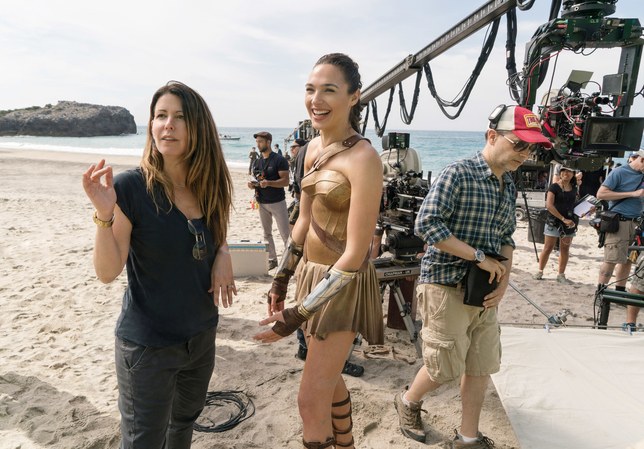
Patty Jenkins' Paycheck for Directing 'Wonder Woman 2' Is Appropriately Huge


PHOTO: Clay Enos/©Warner Bros./courtesy Everett Collection

Wonder Woman was one of the most popular films of the summer, raking in a whopping $816 million worldwide—and counting. (The film is still showing in theaters.) With a box-office score this good, it’s no surprise Warner Bros. quickly announced there’d be a Wonder Woman sequel coming in 2019. At the time WB originally revealed this news, Gal Gadot (Wonder Woman) was attached to the project, but the first film’s director, Patty Jenkins, was not. The reason, you ask? Money.

Given the astronomical success of Wonder Woman, Jenkins held out for a better deal to direct the second installment—as she should’ve. After all, she was instrumental to the success of Wonder Woman, and she wanted her compensation for round two to match what male directors receive for similar sequels—again, as it should.

And now it reportedly does. According to The Hollywood Reporter, Jenkins and Warner Bros. finally settled on a number she’s happy with. The publication reports Jenkins will receive between $7 million and $9 million in directing and writing fees, not to mention substantial backend. Somewhere in Themyscira, Wonder Woman is screaming, “YAAAS.” (Please take a moment to envision that in your head. You’re welcome.)

Unfortunately, the road to this agreement was a rocky one. THR writes Warner Bros. and Jenkins’ negotiations were “lengthy” and “tough,” which is unfortunate. Why do women have to jump through so many hoops to receive equal pay? That should be guaranteed across the board. Hopefully someday it will.

Jenkins’ deal will certainly help move the dial forward—in Hollywood, at least. It makes Jenkins the highest-paid female filmmaker in history. Wonder Woman‘s success sent an important message to studio executives: that women are more than capable of helming successful, big-budget projects. Frankly, it’s frustrating this even needed proving in the first place.

Everyone, no matter what profession you’re in, can learn something from Jenkins’ negotiations. It’s important to not only know your worth, but to fight for it. With or without a lasso.

Related Stories:

Wonder Woman Director Patty Jenkins on the Feminist Superhero: “Being Badass Doesn’t Mean She’s Not Loving”

Patty Jenkins Responds to James Cameron’s Ridiculous Critique of ‘Wonder Woman’


Source link

Categories
Health

Demi Lovato Held Hands With a Woman Over the Weekend, and Twitter Is Thrilled


Demi Lovato has one of the strongest and most loyal fanbases ever—that’s why they’re called Lovatics. The “Sorry Not Sorry” singer receives thousands of messages from them daily advocating for her health and happiness. They just want Lovato to be fulfilled, no matter what, in any form that takes: releasing music, not releasing music, dating a man, dating a woman, dating someone gender nonconforming, or being single. It’s all good as long as Lovato puts herself first.

So it’s no surprise that photos of Lovato holding hands with a woman, DJ-producer Lauren Abedini (according to PerezHilton), in Disneyland over the weekend delighted these diehards. Granted, these pictures don’t mean Lovato is dating Abedini—but that didn’t stop Twitter from doing happy dances in 140 characters or less.

Check out the photos in question, below, along with some of the best reactions we found:

Some of these tweets label Abedini as Lovato’s alleged new “girlfriend,” but the majority of them are just messages from fans who are elated to see her being so open and authentic. Of course, this is how Lovato’s been her entire career. She’s spoken candidly in the past about her former addictions, body image issues, mental health struggles, and, yes, her sexuality. Lovato told People magazine in June 2016 that she doesn’t think sexual preferences require a label. “As humans, it’s just about a connection with someone,” she said.

Plus, there’s her 2015 song, “Cool for the Summer,” which many people believe is about sexual experimentation. Lovato herself hinted to this in 2015, during an interview with Alan Carr, when she said, “I don’t think there’s anything wrong with experimentation at all.”

Regardless of what these photos mean, it’s clear Lovato’s in a really great place in her life. Her Instagram is filled with posts about self-love, and she’s releasing some of her rawest music to date, like “You Don’t Do It For Me Anymore,” a track that’s actually about breaking up with her former self—not a significant other. “I see the future without you / The hell was I doing in the past / Now that I’ve learned all about you / A love just like ours wouldn’t last,” she sings.

What we do hope lasts, however, is Lovato living life on her own terms. Frankly, that’s how we all should be.

Related Stories:

Demi Lovato Opens Up About Being Five Years Sober in This Touching Instagram Post


Source link

Categories
Health

This Woman Is Inspiring People to Donate to Harvey Relief—By Sending Them Cat Photos


The Hurricane Harvey relief effort just got a boost thanks to a very unlikely source: a cat named Jerry in Brooklyn, NY.

Rachel Millman, who’s 29 and also happens to Jerry’s owner, was out for a walk in her Brooklyn neighborhood, thinking about how she’d wanted to help storm-ravaged Texas but didn’t have the funds for a substantial financial contribution. So she came up with an alternative plan: Offer to send people photos of her roommate’s goofy cat in exchange for proof that they donated to Harvey aid.

“@ me with proof of donating to a charity for south Texas and I will dm you a photo of Jerry behaving badly,” Millman tweeted, hoping her out-of-the-box approach might inspire people to donate—at most—a collective $1,000. But Jerry, an exceptionally large feline with a penchant for peeing just outside his litter box, proved to be a pretty big incentive: Within three hours—between midnight and 3 a.m., no less—she’d received images of donation receipts totaling double her initial hope.

“I was shocked,” Millman told Glamour.

Seeing Millman’s success, some of her friends tried their hand at a similar type of fundraising: Branson Reese, an artist, launched a spin-off campaign that allowed people see a special comic he’d created in exchange for proof of donations. Another offered up tarot card readings.

As the various campaigns gained momentum throughout the week, donation receipts rolled in from people who’d given to food banks, diaper banks, animal shelters, and various hurricane relief funds. Mara Wilson, author and Matilda actress, sent Millman proof of a contribution to the Texas Diaper Bank. Of course, some people sent proof of donations they’d made prior to Monday night—but many others were inspired by Millman’s campaign to step up and donate for the first time.

Take this donor, who wrote “I want to see the Jerry photo” when he contributed to the Hurricane Harvey Relief Fund:

As far as why people were incentivized by Millman and her pals, she chalks it up to the intense “social aspect”—donors were motivated by seeing other people get celebrated on social media, and from there, it was a snowball effect. “My dad was making fun of me earlier for this being the most millennial fundraising,” she said.

“Millennial” it may be, but as the numbers climbed and Millman starting adding, she was stunned: As of Thursday morning, She and Reese had accumulated receipts totaling $21, 249.15, a sum Millman calls “surreal.” “I did not think this would work to the extent that it did, she said.

Still, Millman wouldn’t accept all the credit for her genius fundraising initiative. “The people who deserve celebrating are the ones who donated,” she added. “I’m super fortunate to be first witness to such an outpouring of good.”

Texas is in need of serious help in the aftermath of Hurricane Harvey. The storm pelted Houston and the surrounding area with record-breaking rainfall and ushered in disastrous flooding, leaving thousands stranded in their homes. Experts say the Harvey recovery process could take years

And Jerry? He doesn’t seem to know what a difference he’s making. According to Millman, “He’s been getting slightly annoyed by me grabbing him for thank-you videos for bigger donors.”


Source link