Categories
Health

How to Get Rid of Back Acne: The Best Bacne Treatment to Try


Despite their lofty claims, few skin care products actually give instant results. This you know, especially if you’ve ever had a zit and needed it gone yesterday. So when I stepped out of the shower a few weeks ago and spotted some angry-looking bacne on the backs of my shoulders, I was prepared for a slog. I surveyed my bathroom counter, I slapped on a chemical exfoliant I’d brought home to test (Paula’s Choice Skin Perfecting 8% AHA Gel, which is technically for your face), and I headed to work ready to deep-dive into Makeup Alley and skin care Reddit for a better game plan.

Yet in an honest twist of fate, the constellation of red spots on my back was gone the next morning. It was like a zitty fairytale. I’m a die-hard fanatic for Paula’s Choice, but the one-day turnaround was surprising nonetheless. Curious about whether there’s any science to slapping the stuff for your face onto your back, I reached out to dermatologist Joshua Zeichner, M.D., for some answers.

While acne on your face and body are similar and trace back to the same factors (sweat, dirt, oil), Zeichner, director of cosmetic and clinical research in the Department of Dermatology at Mount Sinai Hospital, says that treating bacne is difficult because of the sheer surface area you need to cover, plus the regular exposure to things like dirty bra straps. So if the skin on your body is constantly breaking out, Zeichner says beta hydroxy acids (BHAs) like salicylic acid and benzoyl peroxide are the move. If it’s more rare and some days you just wake up with a red shoulder scourge, an AHA like the Paula’s Choice Gel clears your skin without the aftermath of dry, itchy skin.

Real beauty goes beyond the surface—and so do we. Sign up for our newsletter to get honest reviews, personal essays, and more every day.

The Gel is a glycolic acid, which I’ll admit was a gamble. Alpha hydroxy acids (AHAs) are excellent for brightening your skin and creating that lit-from-within effect, but there’s a reason dermatologists warn to only use them at night, or with a powerful sunscreen. They increase your skin’s photosensitivity, which means they make you more susceptible to sunburn. But my shirt covered my shoulders, so I squirted a few pumps of the gel into my hands, smothered it onto the parts of my back that I could reach (graceful as ever), and continued on my way. The Gel’s combination of green tea, aloe, and glycolic acid flattened out my raised acne, and there were only a few faint red marks where they’d been. Ever since, as soon as I’ve seen a pimply shoulder situation start to arise, I’ve slathered it on and gotten the same results.

As luck (and seasonal weather changes) would have it, the discovery coincided with friends messaging me about the best back acne treatment. (There’s nothing like warm weather sweat, not-washed-enough bra straps, and shoulder-baring outfits to make you suddenly aware of the skin on your back.) Finally I have a great answer.

Paula’s Choice Skin Perfecting 8% AHA Gel, $29, dermstore.com

Related Stories:
How to Deal With Every Summer Skin Issue, From Sunburns to Bug Bites
8 Women of Color on Their Go-To Products for Hyperpigmentation
This Millennial Blue Face Mask Shrinks Whiteheads Overnight


Source link

Categories
Health

The Easy Sunburn Treatment That Kept My Skin From Peeling


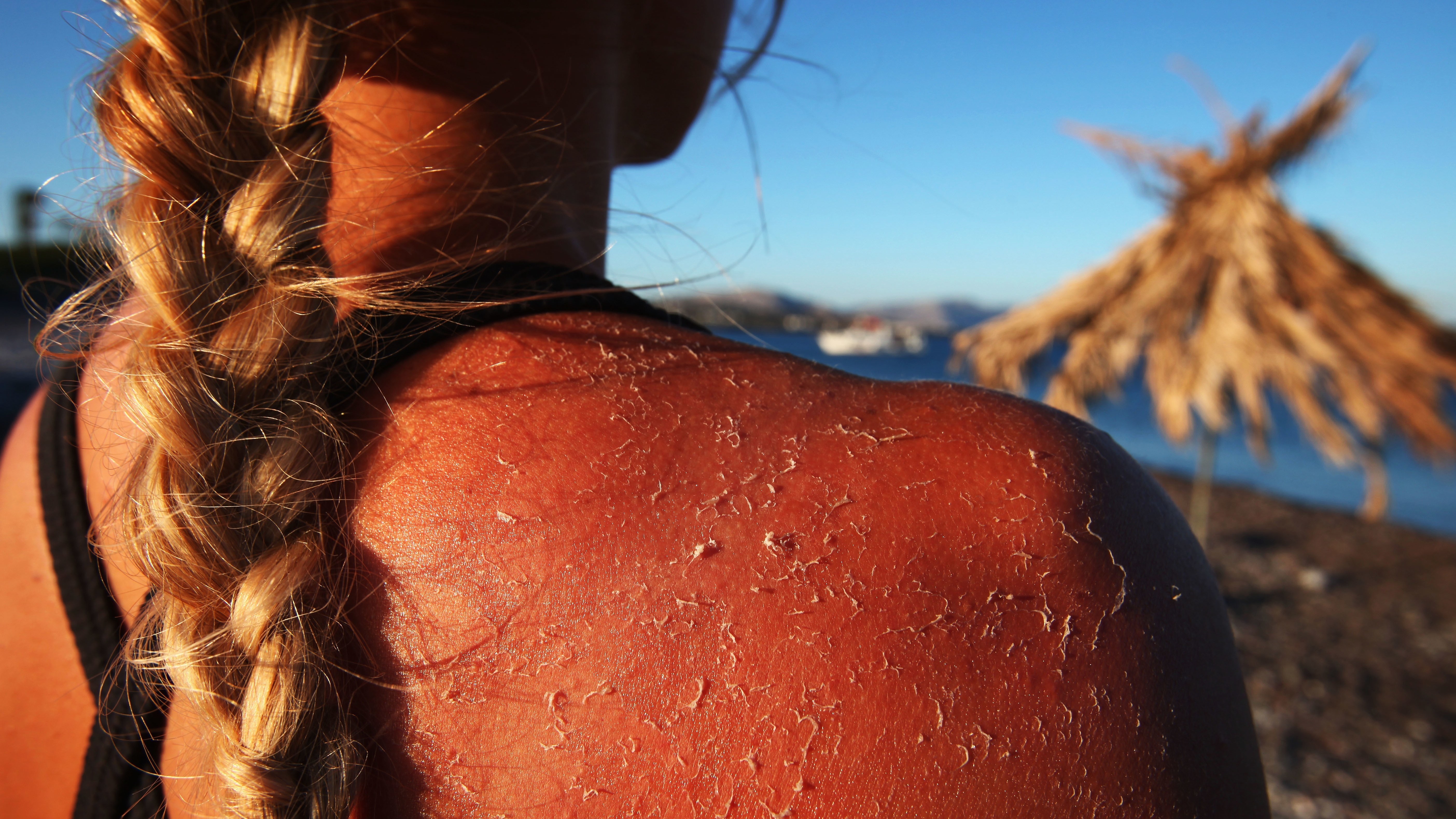
I made a mistake. Despite my status as a friend to sunscreens everywhere, I misjudged and a few weeks ago, disaster struck. I’d escaped New York’s disappointing, grayscale “spring” for a weekend in California, and as a printer-paper-colored person, I’d stuck with the daily casual sunscreen application that’s part of my routine. Mistakenly, I thought this would be enough to protect me while on a day trip kayaking around North California. I walked off the water with a few sick burns and more than a few regrets.

I’d squirted a dollop of sunscreen into my hands and palmed it over my face and body, but in the unforgiving view of hindsight, it was clear that I’d skated over the top of my forehead and the back of my right hand. They were both bright, tomato red, and the thought of the free radicals sinking into my skin and getting up to suspicious shit with my DNA haunted me. Back in the airport with some time to kill, I handled it like I do many problems, and headed straight to the nearest beauty product purveyor to concoct my own sunburn treatment.

Real beauty goes beyond the surface—and so do we. Sign up for our newsletter to get honest reviews, personal essays, and more every day.

I know aloe is usually one of the top recommended products, but with none in sight and just 20 minutes until boarding, I needed to improvise. Thanks to luck or fate, there was a Kiehl’s boutique in my terminal. My game plan was simple but calculated: stock up on derm-approved antioxidants to stop the peeling. I started with vitamin C, which is known for its brightening and antioxidant properties. Where UV light is full of free radicals that lead to skin damage, vitamin C serums like Kiehl’s Powerful Strength Line Reducing Concentrate with Vitamin C repair that damage by neutralizing free radicals and brightening your skin’s surface.

Never one to quickly call it a day while shopping, I kept browsing. Set up by the entrance was a display for the brand’s new Centella line. Centella asiatica is also enjoying its moment in the sun, popping up in products like L’Oréal Revitalift Cicacream Anti-Wrinkle + Skin Barrier Repair and the much loved Dr. Jart+ Cicapair Tiger Grass Color Correcter. Dermatologist Joshua Zeichner, M.D., explains the appeal: Also known by the cooler name of tiger grass, he says, Centella asiatica has demonstrated wound healing properties, like moisturizer crossed with Neosporin.

And thus my embarrassment concoction and DIY sunburn treatment was complete. I’ll be the first to admit I am not a doctor, so I wasn’t necessarily expecting to see any results. Still, in one sleep the redness was gone. Over the next week I kept on applying vitamin C serum (I had this great one by BeautyRx at home), and topping it with Innisfree’s Cica Balm. I saw the telltale beginnings of peeling skin only twice. Both times I rubbed on a layer of balm and the flaking disappeared. I love to peel, so this was a personal triumph.

Three days later my skin was back to normal, and Dr. Zeichner backs up that the combination may have been to thank—or at least more beneficial than regular moisturizer. As I head into summer, my newfound power couple isn’t leaving my side—along with a tube of Australian Gold sunscreen. SPF 50.

More Summer Skin Prep:
How to Cover Sunburn the Right Way—And Actually Make It Heal Faster
The FDA Is Warning People Not to Use Sunscreen Pills in Place of SPF—Here’s Why
Hawaii’s Sunscreen Ban Doesn’t Hit Until 2021, but the Reason for It Is Scary
10 Self-Tanners That Won’t Turn You Orange, According to Glamour.com Editors


Source link

Categories
Health

Serena Williams' Childbirth Experience Should Be a Wake-up Call About the Medical Treatment Black Women Are Getting


When I read about Serena Williams’ experience giving birth to her daughter in this month’s Vogue, a sense of familiarity washed over me. As an ob-gyn, I’ve cared for many women who have had complex pregnancies and deliveries. I’ve performed emergency C-sections and treated postpartum complications, like the blood clots she experienced. As a mother, it also brought back memories of my own pregnancy and delivery, which was complicated by high blood pressure and preeclampsia. Thankfully, my postpartum course was much less complicated than Williams’ was, but, like many women, I had a pregnancy that wasn’t straightforward. And while reading her story, I couldn’t help but think of how often our own stories—specifically, black women’s stories—don’t end well.

In the United States between 700 and 1,200 women die from complications associated with pregnancy or childbirth every year, and another 60,000 almost die. We have one of the worst maternal mortality rates in the developed world. And it’s getting worse: Between 1990 and 2013 our maternal mortality rate has more than doubled. The reasons aren’t completely clear. Some researchers say the increase is simply because we now have a more accurate and standard way to tally deaths associated with pregnancy and childbirth. Others attribute the increase to the fact that more women are delaying pregnancy until later in life, and later-in-life pregnancies can carry greater risks to the mother. Still, it’s worth noting that whatever the cause of the spike, overall the risk of death because of pregnancy is still fairly low. Most women go on to have uncomplicated pregnancies and deliveries.

But black women are the exception. According to the Centers for Disease Control (CDC), we are three times more likely to die due to pregnancy-related complications than women of other races, something Williams even drew attention to in a recent Facebook post.

This is not new information. Health care providers, researchers, and others in the medical community have known about these disparities for years. In the past they were most often ascribed to the generalized “poorer health” of black women. It is true that black women are more likely to have medical problems—like heart disease, diabetes, and high blood pressure—than women of other races. But do these differences exist solely because of the “poorer health” of black women?

Many researchers now believe that it is racism—not race— that is the problem. For example, even when we take medical history into account, black women are two to three times more like to die from pregnancy-related complications than white women with the same condition. And while maternal mortality rates are certainly greater for poor women than wealthier women, poverty alone can’t explain these disparities either. An analysis of maternal deaths in New York City found that black women who had at least a college degree still had greater mortality rates than white women who had not graduated high school.

In a country where we spend $111 billion per year on maternity care, how is it possible that the color of your skin can determine whether having a baby is a death sentence?

One theory looks at the way stress impacts black women’s health. Experiences of oppression are not unique to black women, of course, but the intersection of certain oppression—like racism, gender discrimination, and economic inequity—is unique to the experience of black women in the United States, and it can have a profound impact on health. This phenomenon is called “weathering,” a term coined by Arline Geronimus, a research professor at the University of Michigan’s Population Studies Center, and it describes the increased wear and tear that poverty, racial discrimination, and political marginalization have on the biology of black women. According to Geronimous, black women experience “accelerated aging,” which accounts for some disparities in health outcomes—including maternal mortality. In other words, the emotional engagement it takes just to function in the world begins to take a toll on physical health.

This phenomenon is exacerbated by the inherent bias—implicit or explicit—in our health care system. Historically, black women have not had the same access to health care services as white women. We are more likely to lack insurance and deliver our babies at underresourced and underperforming hospitals. As Williams described in her birth story, black women’s complaints are also more likely to be ignored or dismissed by medical providers. Studies have found that a patient’s race and ethnicity does have an impact on a physician’s decision making, and that doctors tend to perceive black patients more negatively than white patients. This has a direct impact on the quality of care. One study found that, even when access to care and insurance coverage are the same, people of color still receive a lower quality of health care..

The bottom line is, black women are dying wholly preventable deaths. Part of my job as a health care provider is to understand how these factors intersect to impact my patients and their health. And something like maternal mortality can’t be understood outside of a historical, social, and political context. Considering the intersection of oppressions allows us to seek solutions that challenge the status quo. Advocates, policy groups, and research organizations like the Black Mamas Matter Alliance and the National Birth Equity Collaborative are working to ensure that these solutions don’t further perpetuate inequities.

Delivering your baby should not be a death sentence. Serena Williams lived to tell her story. Many women don’t.

Jamila Perritt, M.D., M.P.H., F.A.C.O.G., is a fellowship-trained, board-certified obstetrician and gynecologist with a background in family planning and reproductive health. She provides community-based care focusing on the intersection of sexual health, reproductive rights, and social justice. Dr. Perritt works as a clinical provider in Washington, D.C., and the surrounding areas and as a reproductive health care consultant collaborating with organizations to provide ongoing support and subject matter expertise on sexual and reproductive health, family planning, and reproductive justice. You can follow her on Twitter @ReproRightsDoc.


Source link

Categories
Health

Donald Trump Hasn't Apologized for His Treatment of Women, so This Reporter Did It for Him


Since The New York Times first published their investigation into Harvey Weinstein’s alleged pattern of sexual harassment and misconduct, dozens of men in politics, media, and entertainment have been exposed for their countless misdeeds. With each new story comes the standard apology from a man in power—they ask for the public’s forgiveness and express various levels of regret for their reported behavior.

But throughout this entire reckoning, one man has been unflinchingly unapologetic: President Donald Trump.

As it stands now, at least 19 women have come forward with allegations of sexual misconduct against Trump. Not only has he made no effort to apologize for these allegations, he, in turn, has branded his accusers as liars. And in an instance when he did express remorse—see: post–Access Hollywood tape and post–”grab them by the pussy”—he then tried to rewrite the narrative among his colleagues and claim that the leaked tape was a fake. It’s maddening under normal circumstances but even more unbelievable when you consider that he’s the President.

To help us assuage all our frustrations, Vox’s Liz Plank took it upon herself to create a can’t-miss mash-up that features Trump doing what women everywhere have hoped he’d do for months: apologizing for his behavior. Trump may never say actually say “sorry,” but this is the next best thing.

Watch the clip below:


Source link