
Categories
Health

How Do I Talk Dirty Without Sounding Like a Porn Star?


PHOTO: Rachel Bellinsky/Stocksy

Hi Emily!

I have an extremely healthy (and safe) sex life with my boyfriend—but here’s my issue. I have no idea how to talk dirty. Normally I’d say how great he feels inside of me, tell him to put his hands here or there, but I get stuck after this. I don’t want to sound like a porn star, but I do want him to be turned on from what I say.

What can I say besides this to turn him on that isn’t too intense?

Marci, 27

Marci,

The good news is you already seem to be over that awkward slump of initiating some dirty conversation, and that’s half the battle! While there’s nothing wrong with what you’re saying now, I get that you want to expand your dirty talk repertoire without coming off as some wanna-be porn star.

Here are some tips for finding the perfect balance between sexy and distasteful when it comes to your dirty talk:

Do relax: Your partner already enjoys having sex with you so, take comfort in that realization, and it’ll be easier to let go of your inhibitions. Don’t worry too much about how you sound or what you say at the beginning— the fact that you’re trying is already turning him on.

Don’t force it: To sound more natural, focus on something that’s happening in the moment. Instead of saying “this feels good,” expand on that– the more details the better.

Don’t focus on what you think he wants to hear: Develop your own script, and don’t feel like you have to sound super freaky for it to work.

Do practice before you start: Texting or talking to your guy ahead of time is a perfect way to set yourself up for some great dirty talk—and it doesn’t have to be dramatic to have the right effect. You can even even practice on your commute home from work or in front of the mirror. Practice what you want to say and how you’re going to say it. (The lower and breathier your voice is, the better!)

Don’t be afraid to ask questions: Asking things like, “What do you want me to do?” or “What would turn you on right now?” can be great for turning your dirty talk monologue into a dialogue. This way, all the sexiness doesn’t have to fall on you!

With these tips, you’ll be a dirty talk dynamo before you know it!

XX
Emily

Emily Morse is a doctor of human sexuality and host of the top-rated iTunes podcast Sex With Emily. As an expert, author, and star of television and radio programs, she has inspired millions of listeners and followers to make sex a priority, enhance communication, and strengthen their relationships. To learn more or to subscribe to her podcast, visit sexwithemily.com.


Source link

Categories
Health

Floyd Mayweather, Convicted Abuser, Steps Up to Defend Trump's 'Locker Room' Talk


This week in bad people with bad opinions, boxer Floyd Mayweather Jr.—a convicted domestic abuser — thinks there was absolutely nothing wrong with Donald Trump’s “grab ‘em by the pussy” comments.

In case you somehow forgot, in the lead up to the November presidential election, a 2005 interview surfaced of then-reality star Trump speaking to Billy Bush for an episode of Access Hollywood. While awaiting taping, Trump regaled Bush with tales of sexually assaulting women, saying “you can do anything” to women — including “grab them by the pussy” — so long as you’re famous enough.

Trump repeatedly defended the comments, insisting it’d just been “locker room” talk.

Now, nearly a year after the tape’s release, Mayweather thought it would be a good idea to defend our commander-in-chief’s words, telling “Hollywood Unlocked” that’s just how “real men” speak.

“He speaks like real men spoke,” Mayweather said in the video interview, which has since been deleted from YouTube. “Real men speak like, ‘Man, she had a fat ass. You see her ass? I had to squeeze her ass. I had to grab that fat ass.'”

Mayweather didn’t stop there. “So he’s talking locker-room talk,” he said. “Locker-room talk. ‘I’m the man, you know what I’m saying? You know who I am. Yeah, I grabbed her by the pussy. And?'”

Mayweather’s comments are making people furious, especially given the fact that in 2011, a Las Vegas judge sentenced the boxer to 90 days in jail after he pleaded guilty to a domestic violence charge and pleaded no contest to two harassment charges.

His light sentence was thanks, in large part, to a plea deal he made in order to avoid felony and misdemeanor charges that could have sent him to state prison for 34 years, ESPN reported. Prior to his sentencing, Mayweather had also been arrested for three separate domestic violence incidences, convicted of misdemeanor battery in 2002 and again in 2005. So, perhaps the athlete isn’t best suited to explain how “real men” speak.

Many people were quick to pick up on the hypocrisy of a man with a history of violence against women insisting that Trump’s comments were OK. Immediately after Mayweather’s interview surfaced, Twitter took the boxer — and the president — to task.

“If y’all didn’t want the man in the White House, y’all should have voted the other way,” Mayweather added in the interview. “He did what he had to do, and he got there.” Reminder: Most of America did, in fact, vote the other way.


Source link

Categories
Health

Heather Heyer's Cousin Asks Why It Took the Death of a White Woman for People to Talk About Racism


PHOTO: Chip Somodevilla/Getty Images

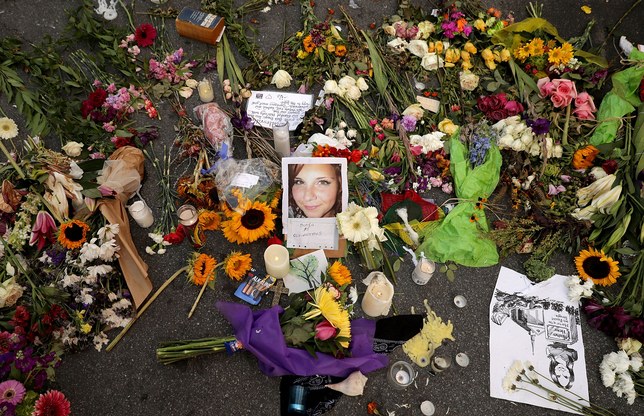
At a memorial service for her daughter Heather Heyer—the 32-year-old woman who was killed earlier this month while protesting a white supremacist rally in Charlottesville, Virginia—her mother Susan Bro made clear that the best way to remember her daughter was to take “righteous action.”

“I’d rather have my child, but by golly, if I’ve got to give her up, we’re going to make it count,” she told the crowd at Heyer’s memorial service last week.

Already, Bro and other members of Heyer’s families are putting these words into actions and taking a stand against injustice and racism. Last week, Bro said she’s refused to speak with Donald Trump following a press conference in which he equated counter-protesters like Heyer to the neo-Nazis, white supremacists, and alt-right groups that had flocked to the Virginia city to keep a Confederate monument from being taken down. And over the weekend, Heyers cousin Diana Ratcliff wrote a powerful op-ed for CNN examining her family’s white privilege in the context of what happened in Charlottesville—and questioning why it took the death of a white woman to open many American’s eyes the country’s ongoing racial conflict that millions have experienced their entire lives.

“We never had to worry someone wouldn’t hire us because of the way we look,” Ratcliff wrote. “We never have to worry that our children might become victims of someone else’s prejudice. We’ve never been told we can’t live in a certain neighborhood or attend a certain school because of the color of our skin. Until last week, we had no idea what it feels like to lose someone to hate.”

Ratcliff then reflected on the poignant memorial service but recounted the one thing that struck her the most. “The moment that will forever be burnt in my memory was when a speaker asked the uncomfortable question,” she said. “While she hailed Heather’s courage, she asked something to this effect: ‘Why does a white woman have to get killed for you all to become outraged?’ All I could think was, ‘Heather is sitting in heaven right now, shaking her head in agreement.'”

“Why is it that the death of a white woman at the hands of a white supremacist group has finally gotten the attention of white folk? Why have we been turning our heads the other way for so long?” she added. “How many black families, Latino families, Asian families, Native-American families before us have been left broken from this ugly vein of hatred in our country? Too many. And to my non-white brothers and sisters, I am so sorry that many of us weren’t paying attention before Charlottesville.”

She continued, speaking critically of those who refuse to acknowledge racism and have grown complacent, saying:

“How did America go from a black President to white supremacist
neo-Nazis marching in the street? That is the question we need to be
asking ourselves. And if we take a long hard look at ourselves, we’ll
find out that it’s because we went into denial. We elected a black
person, we made friends with some minorities, and we patted ourselves
on our backs, saying, ‘Well done self, we have eliminated racism.’
Clearly, we have not. It’s been lurking in the shadows, waiting in the
spaces of the words we say and the words we don’t say. The actions we
take and the actions we don’t take.”

Ratcliff then condemned the idea of this tragedy being a result of violence “on many sides.”

“The majority of the counter-protesters were concerned residents of Charlottesville, not a fringe political group,” she wrote. “The so-called “alt-right,” or the white nationalists, have no place in America, and they don’t deserve a place on our political spectrum. There is no space at the political table for them. There is no common ground, and there is no compromise.”

But as a Ratcliff concluded her op-ed she reinforced the same message that Heyer’s mother relayed to the nation: That the country should look to what happened in Charlottesville as a call to action.

“If there is one positive I have taken away from the loss of Heather, it is that it isn’t the length of your life that is important, it’s what you do with your life that matters,” Ratcliff said. “If you truly believe all lives are equally important, then make your life matter.”


Source link