Categories
Health

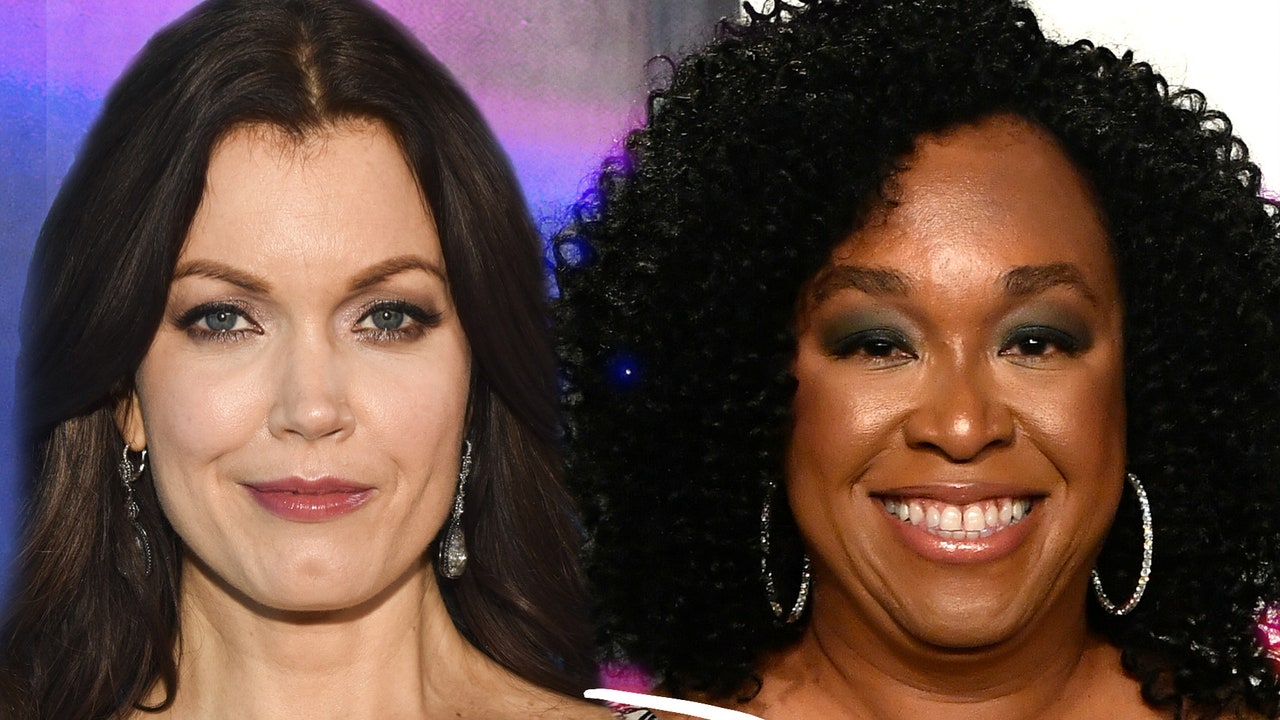
What Bellamy Young Learned About the Power of Sisterhood from Shonda Rhimes


To celebrate International Women’s Day 2020, we asked women like Jackie Aina, Cecile Richards, Andrea Mitchell, Bellamy Young, and more to reflect on how other women have lifted them up—mentored them, advised them, represented them, and above all showed them what was possible. We’ll be sharing their stories here all week.

Unlike most people in the world, I have lived in a matriarchal society. I highly recommend it.

The women who lived there with me—we found our power, we found our voices and were encouraged to lift them up. And once we stepped into that light, we never turned around and said, “Oh, darkness, I missed that.” The experience changed us forever.

Let me explain: For a beautiful period of time, I had dual citizenship in two countries—the United States of America…and Shondaland.

In 2011, Shonda Rhimes cast me as Mellie Grant on Scandal. I knew that the role was a huge break, especially for a woman in her 40s. At that point, knowing what I knew about television and this business, I had just given up hope on certain kinds of opportunities. It had taken a toll on me. It’s like, “Well, I won’t be cast as that kind of character.” Or, “OK, I won’t get that kind of part.” As soon as someone posts your age online, you just know your options are narrowing.

With Scandal, I was going in to read for this tiny part. I had, I think, two lines. But Shonda Rhimes doesn’t write characters. She writes souls, and then over time, through casting, those souls reveal themselves to her. All of those details—gender, sexuality, race—come into clearer focus, which is how that small part became something so much bigger. I remember standing there, thinking how fortunate I was just to be in that room. But then I got in front of Shonda, and there’s something in how she sees you. It’s profound. It’s not overt and it’s not strange. It’s so safe and curious and accepting. She looks at you, and she doesn’t see your outfit or your hair. She sees who you are.

I got the part, obviously. And then I did seven episodes and became a series regular the next year. It was an acting job, of course. It was work. But it was also transformational for me, as a person. I got to be a different kind of woman. And I have said that to Shonda, too. I’ve told her: “I don’t know how you chose me, but I am grateful for Mellie. I am grateful that I got to be her. I am grateful that people got to know her.”

She’s a fictional character, but she—and Shonda—showed me something different was possible. When I was growing up in America in the 1980s, we were told, “You can have it all and you better pretend that it’s working.” There was no wiggle room. We weren’t supposed to show the cracks. It was a “succeed at any price, move forward, and leave everyone else in the dust” mindset. I think that’s starting to change.

But it’s still hard to be a woman in a position of power. There’s this sense that if we make one wrong move, we’re out. It wasn’t like that with Scandal or with Shonda, who taught us all to work and stretch and fall and stand and laugh and fail and sob and just be honest about what we were going through.

I hope that we passed a little of that on to the audience, to the women who saw Mellie Grant and Olivia Pope on screen and felt just a little braver in their own lives. These women were not perfect. So far from it. But when the time came, they knew how to stand up for themselves. They failed big time, but they stood their ground.
Source link

Categories
Health

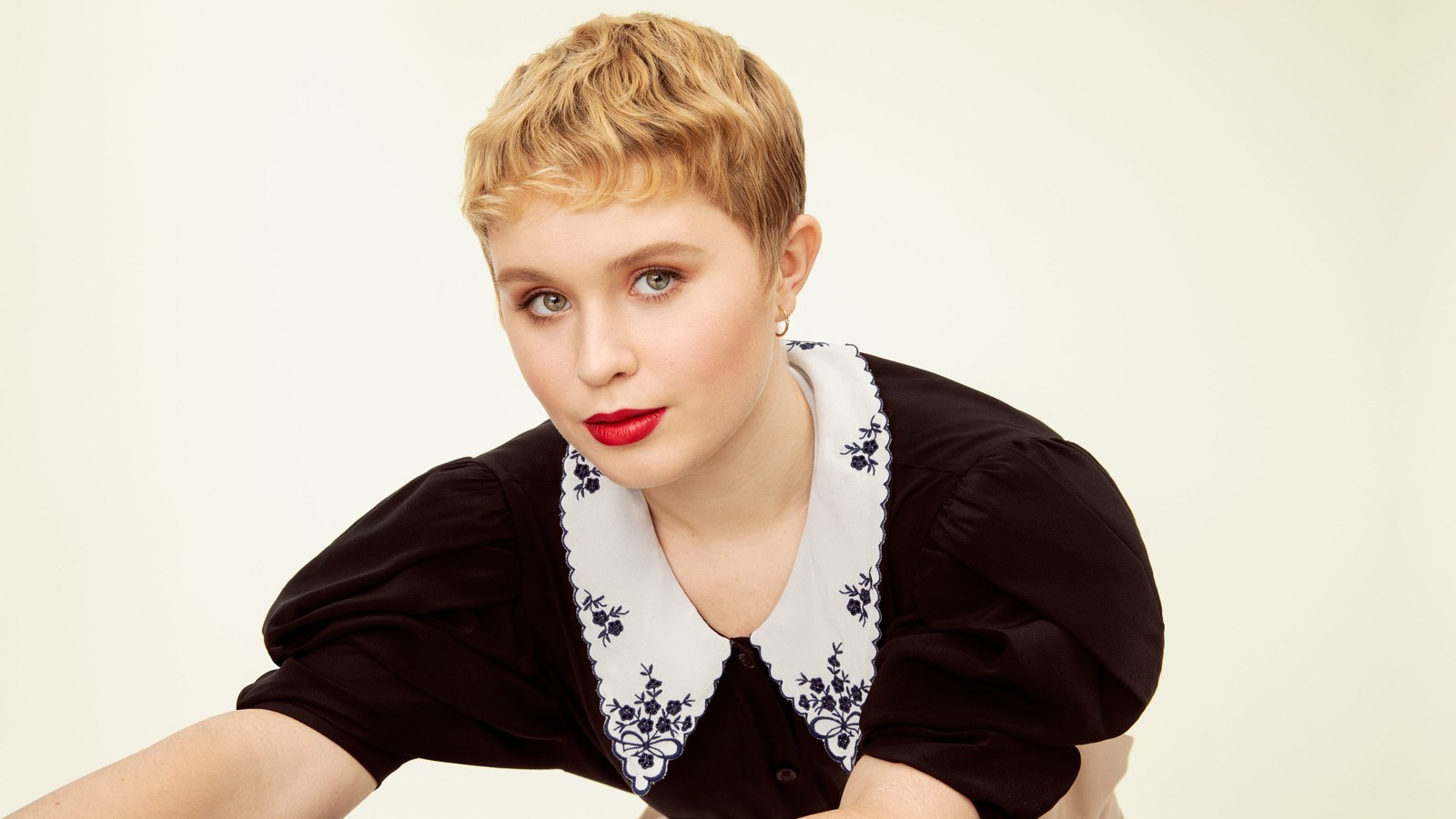
Eliza Scanlen on Little Women, the Power of Sisterhood, and Ambition


Back to Beth: Without her own sister by her side—“filming made me miss her a lot,” she says, though they FaceTimed constantly—while shooting in Boston, Scanlen fully immersed herself in the March sisterdom. She lived in the same apartment complex as Saoirse Ronan (Jo) and Florence Pugh (Amy), and Emma Watson (Meg) lived around the corner. “I actually found the apartment complex,” Scanlen says, proudly. “But Saoirse seems to think that it’s a retirement village. It’s not! I refuse to say it was a retirement village because it was a lot of fun. If anything, people were very happy to have us there.” The four became like family, with regular sleepovers and dinner parties. “We’d make wintry meals. Florence made soup, I made a curry.” Florence, she adds, is really good at making mulled wine, while Saoirse is the “queen of gin.” They’d watch Summer Heights High and took care of each other. “There were some nights when Saoirse would get home really late from filming, and I’d leave dinner on her doorstep.”

When asked which onscreen sister she was closest to, Scanlen answers like a true March—which is to say it’s impossible to pick. “I don’t think I ever had a moment alone with any particular person,” she says. “We were all inextricably linked to one another. The connection we have is incomparable.” But then again, there are some things that only flesh-and-blood sisters can get away with. “My sister was visiting for a week, and she ended up taking home a lot of my underwear. So now I need to go shopping—I don’t have enough anymore.”

Caitlin Brody is the entertainment director at Glamour.

Stylist: Thomas Carter Phillips at the Wall Group; hair: Blake Erik at Forward Artists; makeup: Gita Bass at the Wall Group.


Source link

Categories
Health

Inside the Secret Sisterhood of Women Who Share a Sperm Donor


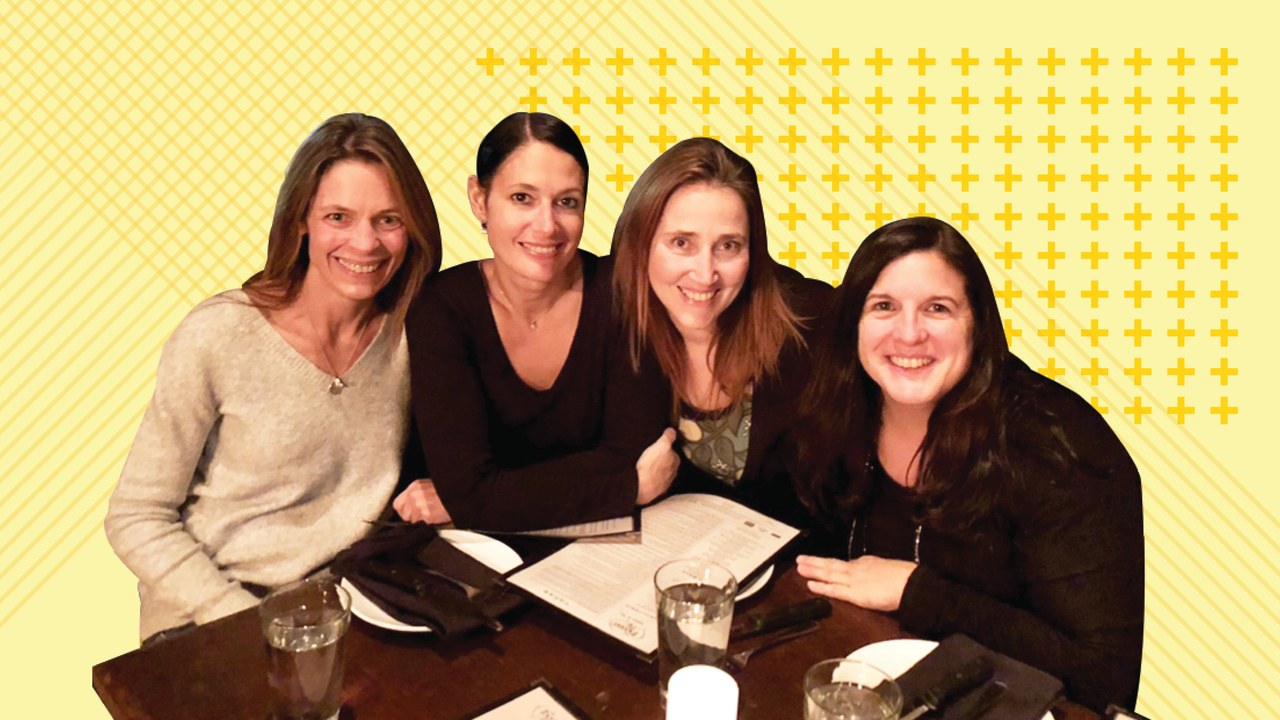
It hasn’t been all happy selfies and late-night talks over bottles of wine. We have different parenting styles and didn’t always agree on how much to tell the kids, or what language to use (brother and sister? donor sibling? special friend?), especially given the varied ages of our brood (two to nine, at our first big reunion). There was a long stretch when I couldn’t shake the feeling that Emily, earth mother extraordinaire—seriously, she makes her own almond butter—was kind of passive aggressive and judge-y. When Gabi and I moved from New York to Florida, in part so we could be closer to Emily and Dana’s crew, we saw even less of them than in previous years. What the hell? I felt ignored and unwelcome.

I soon recognized these things for what they were—typical family tiffs, rifts and misunderstandings. When it came to the important stuff, we were there for each other. When I faced a series of agonizing spinal surgeries, the moms chipped in to fly Gabi to spend time with her siblings. And soon after our move, when hurricanes Irma and Dorian threatened Florida, we evacuated to Emily’s home in Atlanta.

Granted, this choice may not be right for everyone. I know not all donor-related parents bond the way we have. Maybe it’s because we’re all women—having dads in the mix might’ve complicated matters. The donor sibs also bear a strong resemblance to each other, which isn’t true for all such families. I found it impossible to feel nothing for these kids who look just like mine—I felt a primal tug, and that feeling seems to have extended to their moms, too. We were also each firmly committed to giving our children the gift of knowing each other. If they didn’t enjoy each other’s company—fine. The children could opt out. But at least they’d have a choice.

So far, they’ve opted in. They’re not all best friends, but they seem to enjoy a sense of solidarity. Gabi hears from her siblings regularly. Two of them attended summer camp together. “Do you really have nine brothers and sisters?” one of the other campers asked. “Yeah,” they said, and shrugged.

I have no idea what the future holds. After spending three-and-a-half hours with my daughter on lockdown in a suburban mall, I’m not sure I want to know. The reports of an “active shooter” turned out to be a false alarm but I left feeling shaky and yet incredibly blessed. Emily’s texts kept me informed and grounded, and the other moms’ check-ins after I got home helped soothe my frayed nerves.

I’m sure there are plenty of people out there who think we’re crazy to pursue this experiment. I like to believe the stars were aligned when each of us chose Donor 527. Biology connects the children, but fate brought us mothers together. The one thing I know for certain is that I couldn’t have hand-picked a better group to call family.


Source link

Categories
Health

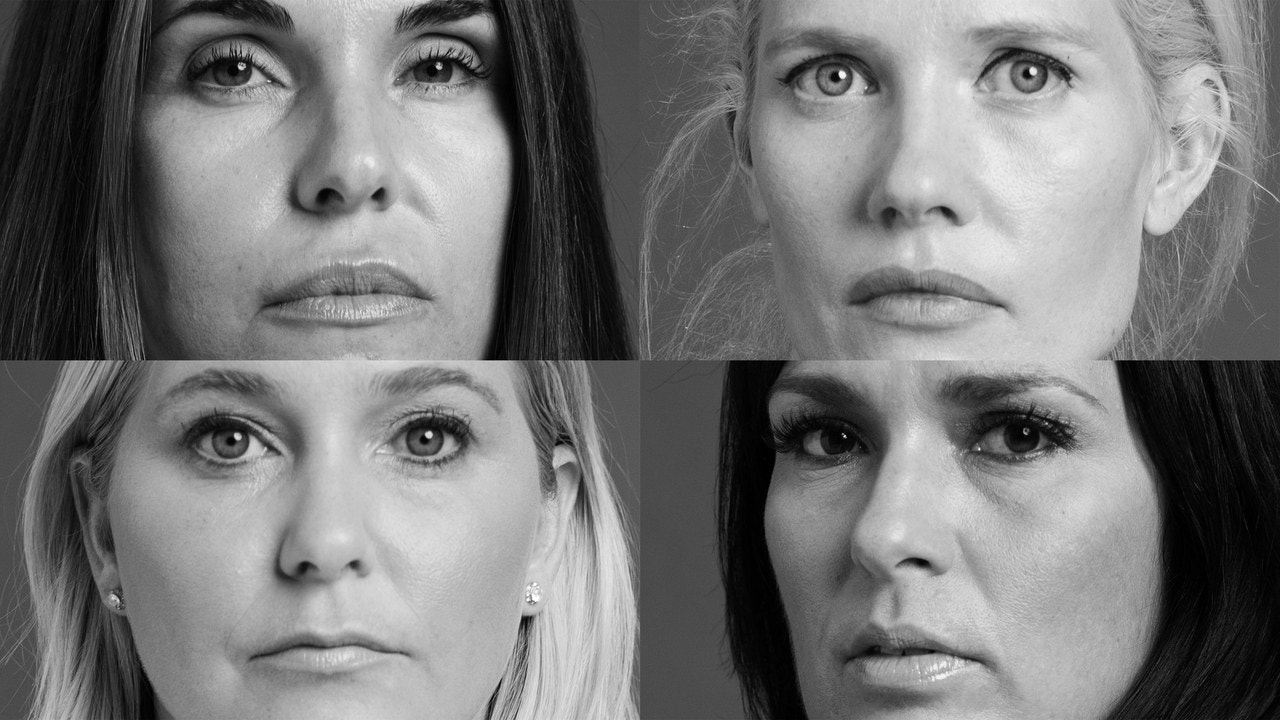
5 Survivors of Jeffrey Epstein’s Abuse on Trauma, Justice, and Sisterhood


Rachel Benavidez: This is important stuff, and this is an important sisterhood that we have. And Virginia said, “Well, we want to focus on moving forward,” which absolutely, I do. I want to move forward with this, and help other women and children.

Virginia Giuffre: That’s what we were.

Rachel Benavidez: So, it’s very important. For me, I’m still in that phase of healing and trauma, and processing that. But I want to move forward. And I feel like with my sisterhood, with these women, and all the other hundreds who aren’t here, that that can really help me. So, thank you, Virginia, for putting yourself out there on all levels, and providing this opportunity for all of us.

Virginia Giuffre: It means the world.

Rachel Benavidez: You’re beautiful. And you’re so strong. And I love when you speak, you’re like, “Yeah, and what about going after that bitch” [laughter]. It was like, yeah, yes. I’m just happy to be here, and I’m happy to share my story. But I’m very teary, so I’m sorry. And I’m a ugly crier.

Virginia Giuffre: Don’t worry!

Rachel Benavidez: It’s not too pretty.

Teresa Helm: Speaking about the sisterhood of everyone gathering throughout these, this time? I don’t even know how to put it. These times, this time? What is this?

Rachel Benavidez: It’s a time warp. It feels like I’m in a time warp, actually.

Virginia Giuffre: It’s a past, present, and future topic.

Teresa Helm: It is. It is a past, present, and future. I mean, it’s been nearly two decades since this all began. Who knew that nearly two decades later, I would be sitting around discussing this now, going through it, seeing the events unfold as they have? And who knows how they’re going to continue to unfold?


Source link

Categories
Health

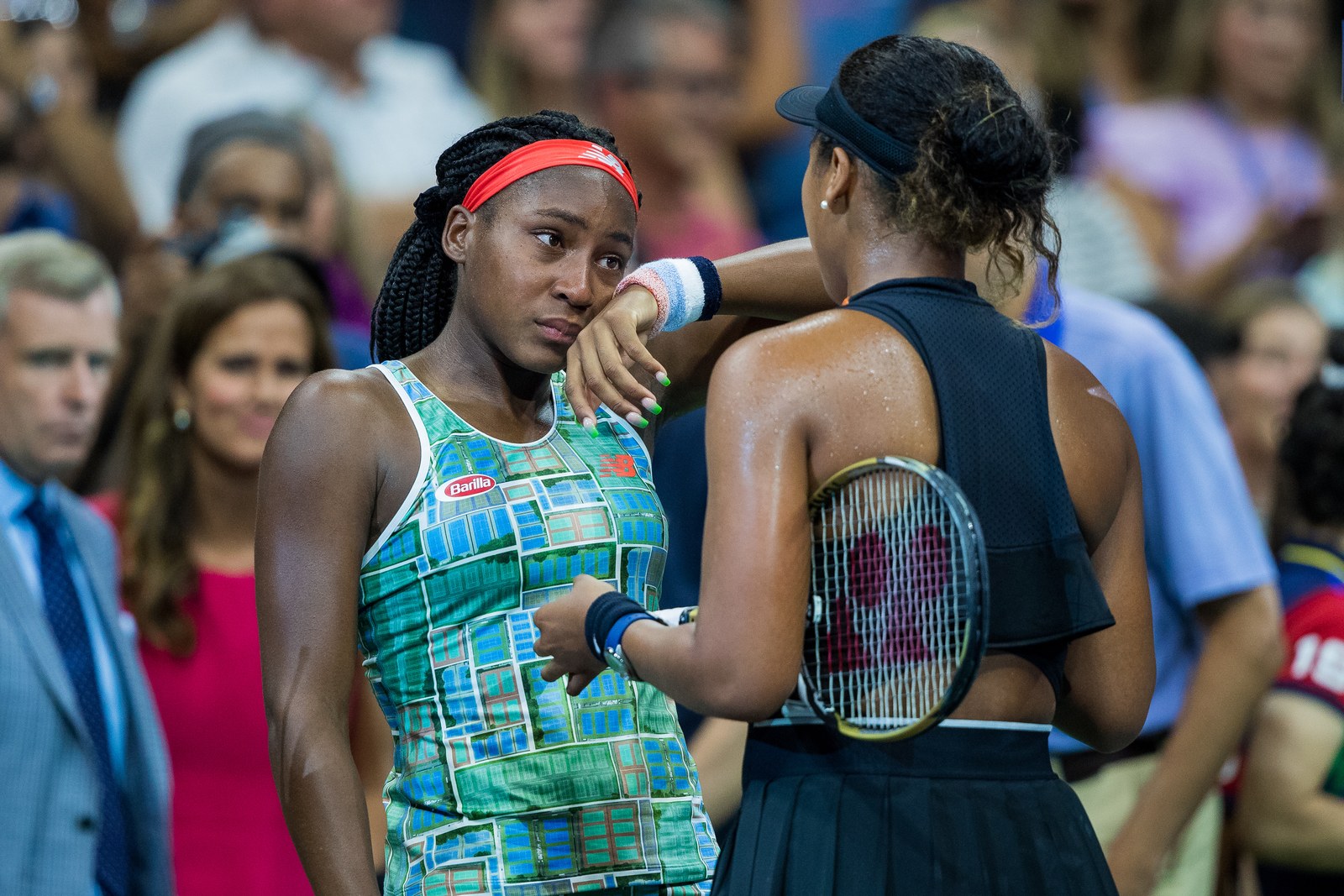
This U.S. Open Moment Between Naomi Osaka and Cori 'Coco' Gauff Is the Definition of Sisterhood


On Saturday, August 31, Naomi Osaka and Cori “Coco” Gauff faced off in the final round of the U.S. Open for a thrilling match between the two athletes who have been dubbed “the future of women’s tennis.” But in the end, Osaka prevailed over Gauff, beating her 6-3 6-0—and as soon as she won the match point, the two athletes met at the net, exchanged a few words and hugged. But then something downright pure happened—and it’s pretty much the definition of what sisterhood is about.

As a teary-eyed Gauff gathered her belongings, Osaka approached her and asked her to join her for the post-match interview, which is usually reserved for the winning player. Though the 15-year-old initially declined the offer, Osaka assured her that it was OK to cry and encouraged her to seize the opportunity to address the crowd who came to see her.
“These people are here for you,” she told Gauff. “I think it’s better than going into the shower and crying. We have to let these people know how you feel.”

Chaz Niell/Getty images

Check it the moment for yourself in the video, below:

It was very similar to when Serena Williams comforted Osaka following the U.S. Open final last year. After Osaka defeated her idol Williams, the veteran tennis star defended her opponent against an upset crowd.


Source link