Categories
Health

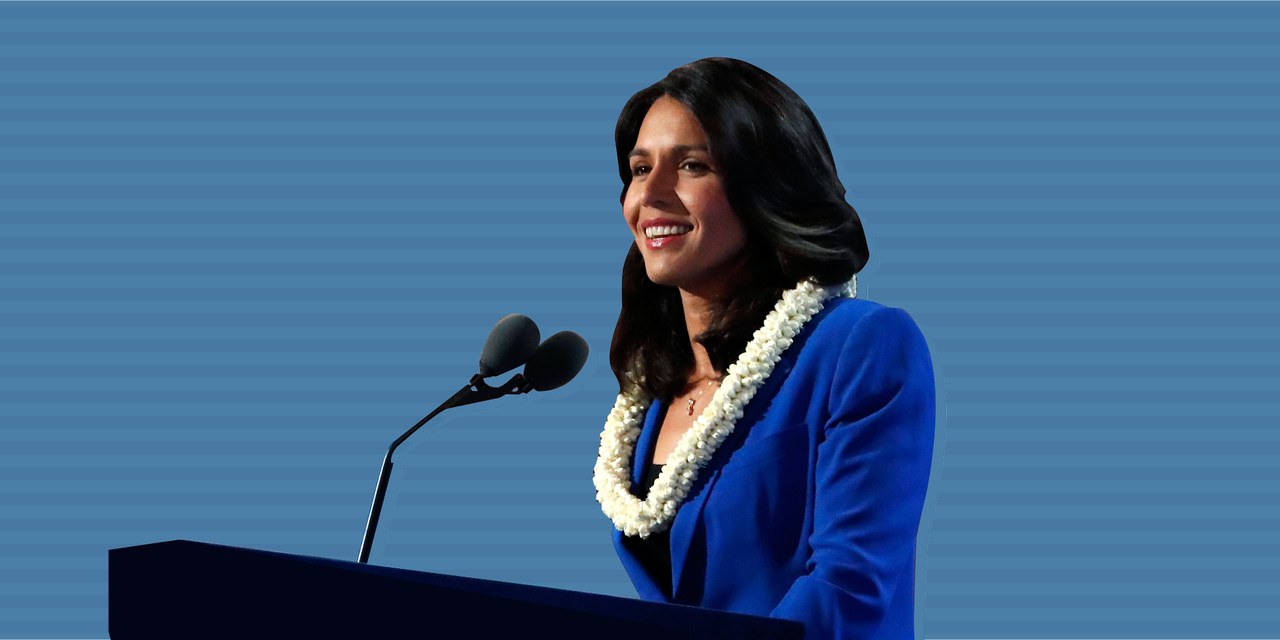
Tulsi Gabbard Wants to Put a Little ‘Aloha’ in the 2020 Presidential Race


Maybe it felt a little familiar—a young, telegenic progressive who grew up in Hawaii taking the stage at the Democratic National Convention.

For Tulsi Gabbard, who’d started a political career in state government, being invited to speak at the 2012 convention was unusual—she was only a candidate for Congress, not a member. Still, she’d caught the eye of party brass, and there she was in Charlotte, North Carolina, talking about her time in a war zone with the National Guard, and honoring the troops, and moving America forward.

Gabbard and the Democrats were there, of course, to celebrate and renominate Hawaii-raised President Barack Obama, who in 2004, as a young candidate for U.S. Senate, had given the rousing DNC speech that put him on the path to the White House.

In 2016, Gabbard was back at the DNC podium. This time, she wasn’t there to lend her voice to the party’s choice, Hillary Clinton; instead, she was there to formally nominate Clinton’s primary rival, Bernie Sanders.

And now, she’s kicked off her own bid to stand at that podium in 2020 as the Democrats’ pick to face off against President Donald Trump. At 37, she’ll be on one of the youngest Democrats in the mix (Julian Castro, who’s also making a run, is 44), which might increase her appeal to young, motivated voters.

Gabbard sat down with Glamour in New York prior to her formal announcement, which is scheduled for Saturday, January 19, and talked about what’s important to her, what’s not, and why she was considering getting into the race.

So, who is Tulsi Gabbard?

Why do this, and why now? “Ultimately, what this comes down to is having leaders in this country who are focused first and foremost on serving and fighting for the people in this country and fighting for our planet and fighting for peace,” she says. “This is what I’m focused on and I’m seeing how can I best be of service to the people of this country.”

Does she think America is finally ready to elect a woman president? “I do. But I think more people are looking for a president who will be a servant leader, who will be a champion for them, regardless of gender or race or anything else. I supported Bernie Sanders in 2016, and the challenge that I heard from people, some in the media and just others, [was], ‘How dare you not support someone who could become the first woman president!’ And my response to them was, ‘I’m offended that you are assuming that I can only think as far as my gender.’ Substance matters. Leadership matters. Judgment matters,” Gabbard says. “Having a leader and a commander-in-chief who’s able to have foresight and think through what the consequences are of the policies and the decisions that they’re making—I think this is what is more at the forefront on people’s minds as they consider who our next president should be than is it going to be a man or a woman?”

Her tough talk—especially on foreign policy (she once memorably tweeted at the president that “being Saudi Arabia’s bitch is not ‘America First’”)—might seem jarring when laid out side by side with her frequent talk of living in the Aloha State. But she has no plans to dial down the intensity.

“You know, ‘aloha’ is most often used as a way to say hello or goodbye. But what a lot of folks don’t realize is that the word aloha has a much more powerful deep meaning,” she says. “The fact is we use it to greet people because [when] I aloha you [it means] I’m coming to you with an open heart and with love and with respect, and a recognition that we are all interconnected.”

Gabbard has lived in Hawaii since she was a young child (she was born in American Samoa), and her father, Mike, was elected to the state legislature there. In 2002, when she was 21, Gabbard became the youngest person ever elected to the legislature. She stepped down in 2004 to deploy to the Middle East with the Hawaii Army National Guard, serving two tours. Between deployments, she worked for the late veteran Sen. Daniel Akaka (D-Hawaii), and later served on the Honolulu City Council before her 2012 election to Congress. She was one of the first female combat vets in to serve and took the Congressional oath of office on the Bhagavad Gita as the first Hindu member of the House.

Gabbard was 33 when she married cinematographer Abraham Williams (he was 26), after they bonded over surfing and their love of nature and the sea. “I’m so grateful to have the love and support from my best friend and my partner in my life. Every time I get back to Hawaii—he’s based in Hawaii—we make it a priority to [get] in the ocean, usually as quickly as possible after I get off the plane,” she says. “We get out for a six o’clock in the morning surf and have that time without technology and the noise of life… Re-centering, replenishing. It makes everything better. Starting off the day that way and it’s just spending that time in nature… it’s a really powerful thing.”

Gabbard was previously married to Eduardo Tamayo (his surname appears on her uniform in some photos); she’s said her time away in the military strained their union to the breaking point. She described it the experience as difficult, “but unfortunately, not an uncommon story for people who go through being separated for nearly two years,” she told Vogue.

A Bumpy Start

Gabbard’s path to the Oval Office could also be difficult. She’s up against candidates—including Senators Elizabeth Warren of Massachusetts and Kirsten Gillibrand of New York—with better name recognition. Americans tend to choose their presidents from the ranks of governors and senators, not House members; and aside from President Obama, they have all hailed from the lower 48. Some in the party doubt she can go the distance. Howard Dean, the former Vermont governor who ran for president and once lead the DNC, recently said he sees most of the Democrats whose names are being floated as potential nominees as qualified for the job — with one exception: Gabbard. “I don’t think she knows what she’s doing,” he told CNN, in part because of her 2017 meeting with Syrian President Bashar al-Assad, and controversial positions she once held on LGBTQ issues.

Gabbard disclosed that she had met with Assad, who is considered a war criminal by the United States, after the fact in an interview with CNN. Asked about the meeting by Glamour, she said, in part, “As a veteran, I know the cost of war, and the need to secure our country. If we are serious about peace and our national security, we must be willing to meet with not just our friends, but adversaries and potential adversaries as well. Otherwise, the only alternative is more war, more suffering, more lives lost.”

In the early 2000s, she opposed same-sex marriage, and when she ran for state office, as CNN reported, she emphasized her work with an anti-marriage equality political action committee run by her dad. Her entry into the 2020 arena quickly led to the resurrection of her anti-gay comments, and she’s moved to apologize and explain how she’s evolved on these issues.

“In my past, I said and believed things that were wrong, and worse, hurtful to the LGBTQ community and their loved ones,” she told Glamour. “Many years ago, I apologized for my words and, more importantly, the negative impact that they had. I remain deeply sorry for having said them. My views have changed significantly since then, and my record over the last six years in Congress reflects what is in my heart: A strong and ongoing commitment to fight for LGBTQ rights.” While in Congress, Gabbard has supported legislation prohibiting discrimination based on sexual orientation in housing, employment, and education, and has publicly opposed banning transgender people from the military.

Gabbard says her time in the military was critical to her change of heart. “I served shoulder to shoulder with people who became some of my best friends—gay, straight, and trans—people I was willing to give my life for, and them for me,” she says. “Through both of my Middle East deployments, I saw and experienced firsthand how dangerous it is when government attempts to act as a moral arbiter for their people—telling them who they can and cannot love, what they must do with their bodies, what kind of clothes to wear, or how to worship—or face punishment for not complying.  I realized just how dangerous it can be to allow our government to dictate or get involved in the most personal parts of our lives—telling us who we can and cannot marry, or dictating to a woman what she must do with her body.”

Gabbard is far from the first presidential hopeful to defend a shift in her views on such social wedge issues over time—neither Democrats Obama nor Clinton initially supported gay marriage; on the GOP side, Mitt Romney went from pro-choice to opposing abortion after what he called a personal epiphany. How it will affect her nascent campaign remains to be seen.

Her Plan for the Win

Gabbard knows she can’t rely on being the most experienced lawmaker in the game, the most well-known, the best financed, or the least controversial. So why does she think she can win over voters? “I’ve talked to people who voted for Donald Trump, and I’ve listened to them,” she says. “And there’s not enough of that listening going on. And look, there are people who are racist and who are bigots and that’s not who I’m talking about. … There are people who have lost their jobs because of destructive trade deals of the past and whose fear and insecurity not just comes from the loss of that job, but the loss of the pride and the security that comes from maybe working in a trade or an industry that their father and their grandfather had worked in before, and [who] don’t feel represented.”

The feeling of being forgotten or unchampioned, isn’t a partisan thing, Gabbard says: “That’s where I see is there’s great opportunity… There’s a great hunger from people who want somebody to fight for them and someone to care for them, and not feel like they’ve been left behind.”

Her military experience is also playing a key role in shaping her platform. On international affairs, Gabbard has spoken extensively about getting the U.S. out of the role of global cop, including pulling military support in the Middle East: “We should end our all U.S. military support for Saudi Arabia in this genocidal war that’s being waged in Yemen,” she says—a stance that gives her a chance to lay into the president.

“We see Donald Trump talking about how he doesn’t want to risk a $110 billion arms deal with Saudi Arabia and therefore, he’s willing to, whatever it is, turn a blind eye. He doesn’t want to break this ‘alliance’ with Saudi Arabia,” she says. “He’s an example of someone who’s a businessman without a conscience and who is essentially willing to ‘make the deal’ no matter the cost of the consequence.”

At home, she mentions a wide range of issues she’d put at the forefront of domestic policy—first and foremost using the money the U.S. spends on military action overseas and to deal with problems here: “whether they be infrastructure or health care, education, housing—the things that people are focused on in their everyday lives.”

Gabbard speaks of criminal justice reform, protecting the environment, improving health care for veterans, and making headway on combating the opioid crisis. She also supports the legalization of marijuana: “In many states where they have legalized either medicinal marijuana or full legalization… [we’ve] seen a direct correlation in reduction of opioid-related deaths and opioid addiction,” she says.

Big picture, Gabbard sees the fabric of the nation as frayed or tattered, if not torn, by the exploitation of “bigotry and divisiveness for political gain” by those in power.

“This is the threat in our country today,” she says. “This is what is so dangerous for us as United States of America and for our future. And this is what must be addressed, and the only way that we can address this is to combat this hatred and this darkness with the most powerful force of love and what we in Hawaii call ‘aloha’.”

“You know, unfortunately, too often people mistake love with weakness or being passive, but the fact is there is no force more powerful than love,” she says. “And we look to examples like Martin Luther King and Nelson Mandela, who were facing such dark and divisive times and challenges and who chose to fight back and defeat those forces of darkness with their own message [and] leading with love and aloha.”

How much love, how much aloha, will voters show Tulsi Gabbard in the battle of Election 2020? She’ll soon find out.

Celeste Katz covers politics and elections. She’s @CelesteKatzNYC on Twitter and reachable at CelesteKatz@protonmail.com.



Source link

Categories
Health

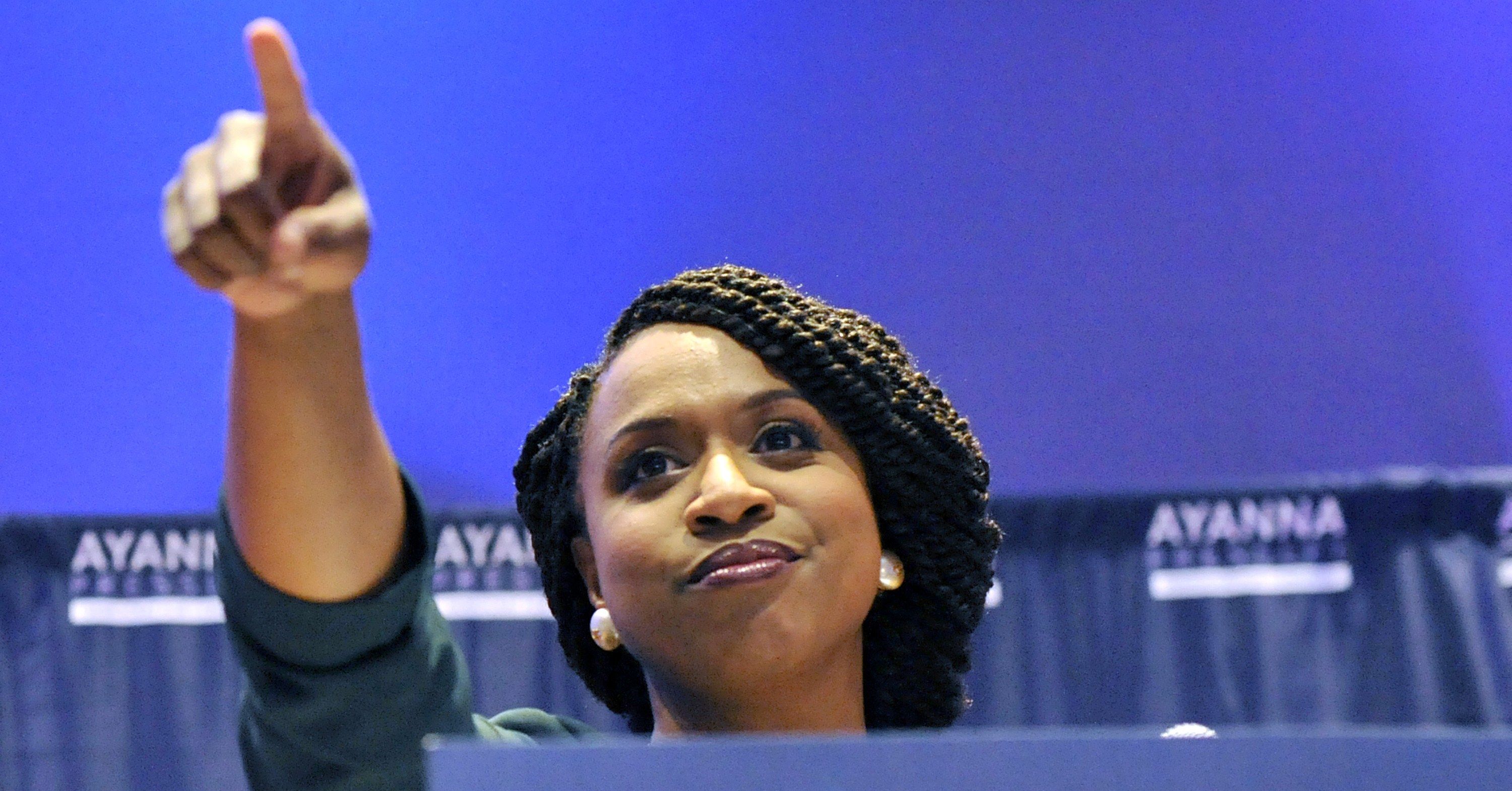
Ayanna Pressley Won the Massachusetts Primary Because She Ran the Best Race


The headlines framed the narrative.

“A Stunner: Ayanna Pressley Topples Michael Capuano,” wrote WBUR. “In Primary Stunner, Pressley Unseats Incumbent,” pronounced the Associated Press. The New York Times chimed in similarly. So did the Los Angeles Times and HuffPost.

The stories teased out some nuance, but all across the media landscape, an overall assessment took shape: In one of the last primaries of this midterm season, one more woman of color beat one more establishment white man at the ballot box. The articles insisted that the race had seemed like a lock for Rep. Michael Capuano, who represented (and had been popular in) his district in Massachusetts for 10 terms.

But then Ayanna Pressley swooped in! An “upset.” And a “stunner.” A vanquisher of familiar political orders! No surprise: Instantaneous comparisons were drawn to Alexandria Ocasio-Cortez, the Democratic Socialist and political newcomer, who crushed Rep. Joe Crowley in New York in June. How else to explain Pressley’s triumph? Commentators insinuated that in the end, voters had picked her as part of a national trend that favors women and minorities, not because she ran a matchless race. Outlets leaned on terms of shock and surprise, with a tone that said, “No one could have anticipated this! Not even us.”

Except, it wasn’t like that at all.

Unlike Ocasio-Cortez, Pressley isn’t a political newcomer—not by a stretch. In 2009 she was elected to the Boston City Council and has served on it ever since. (With that first win, she became the first black woman ever in her seat.) In 2015, Emily’s List handed her their annual Gabrielle Giffords Rising Star Award. She’s helped lead Emerge Massachusetts, an organization that trains women to run for office. She is not 28. She’s 44, just three years younger than Barack Obama was when he was elected president of the United States.

True, Ocasio-Cortez boosted her in June, and Democratic leadership rebuffed her, reluctant as usual to back someone in a seat a Democrat already occupies. But also true? Massachusetts Attorney General Maura Healey endorsed her. She’s popular in the district. Her team ran a pitch-perfect race, with a motto that resonated (“Change Can’t Wait”) and an approach that was cost-effective. It worked.

Her reputation is in fact so storied that when the race was called, writer Rebecca Traister tweeted: “I know I’ve said this before, but I have never been as blown away by a politician as I was the first time I heard Ayanna Pressley speak.”

And Jamilah Lemieux, now an advisor on Cynthia Nixon’s New York gubernatorial bid and a communications consultant and critic, put an even finer point on it: “Ayanna Pressley might be our first Black woman president,” she tweeted. Lemieux didn’t write that to herald some “stunner,” a force no one saw in the distance. She tweeted that three years ago.

Earlier this summer, Glamour interviewed Pressley for our November issue. (Ahem, we were not “stunned” by this win.) In our conversation, Pressley reflected on what it was like to be the first black woman on the Boston City Council—not so much how it felt for her, but how people received her.

“It was always in the recesses of my mind that if we were successful, that I would be a first,” she said. “But it was not the motivation behind my run.” She ran because she knew she could do the work and because she had good ideas. She didn’t run to fit into someone else’s “trend piece.”

“There were so many naysayers who couched my victory solely [as motivated by] voters who wanted to make history,” Pressley said. The narrative frustrated her. “To me, [it] took away from what I had accomplished.”

Ayanna Pressley didn’t stun Boston. She’s not an upset. She ran a brilliant race, and she won. Those who missed her rise? You weren’t paying attention.


Mattie Kahn is a senior editor for Glamour.

MORE: Ayanna Pressley Reacting to Her Historic Massachusetts Primary Win Will Make Your Day


Source link

Categories
Health

The Race to Photograph a Pregnant Kylie Jenner Is Officially Out of Control


Kylie Jenner, the youngest sibling of the Kardashian-Jenner family, has long been rumored to be pregnant with her boyfriend Travis Scott’s child. Unlike her sisters Kim and Khloé, however, Kylie has decided to keep her reported pregnancy under wraps, which is totally her choice. However, it appears that some around her are less than respectful of her decision to experience her reported pregnancy in private—and her last account is actually shocking.

On this Sunday’s episode of Keeping Up With the Kardashians, Kylie called her mother, Kris Jenner, to inform her that she caught one of her employees red-handed as they attempted to take a photograph of her—as Kylie was just chilling at her kitchen table. Translation: It’s getting to the point where Kylie can’t even find safety, security, and privacy inside her own home.

“I really feel bad for Kylie because there’s always somebody that’s trying to exploit a certain situation,” Kris said on the show, adding that both she and Kylie contemplated having the employee arrested.

“To have somebody in her own home trying to snap pictures they shouldn’t be snapping is really, really stressful,” Kris added. “You want to be able to trust the people that you’re surrounded by, but we have to really be on alert at all time, and that’s extremely upsetting when you feel like you can’t be in your own bedroom or bathroom.”

Neither Kris nor Kylie revealed what happened to the photograph, or the employee, but, well, one can guess. The incident, beyond being a total invasion of Kylie’s privacy, does point out just how thirsty the world has become for a photo or some insight into the 20-year-old’s personal life.

The rumors of her pregnancy really are getting out of control, too. From fans reporting she’s having twins, to media outlets exclaiming she’s already in labor or has even given birth, it might be time for us all to collectively take a Kylie Jenner chill pill. After all, it’s not our right to know her personal news until she’s ready to share it. Like sisters Kim and Khloé, she’ll do it when she’s ready—it just might not be as quickly as fans want it.

Related Content:
–These Kylie Jenner Baby Rumors Are Getting Out of Hand
–Kylie Jenner Reportedly Threw a Secret Baby Shower Over the Weekend
–Kylie Jenner Claps Back at Paparazzi for Photoshopping a Baby Bump


Source link

Categories
Health

Jane Fonda and Gloria Steinem Talk Race, Sexual Harassment, and Harvey Weinstein


Feminist legends Jane Fonda and Gloria Steinem appeared on MSNBC Wednesday, and as to be expected, the icons had plenty of thoughts on the ongoing Harvey Weinstein scandal. The women stopped by All in With Chris Hayes as representatives of the Women’s Media Center—a progressive, nonpartisan, nonprofit organization that they co-founded with Robin Morgan in 2005 to raise the visibility of women and girls in the media—and discussed the dozens of women who have come forward with allegations of sexual harassment and assault against the former Hollywood powerhouse.

“It feels like something has shifted,” Fonda said. “It’s too bad that it’s probably because so many of the women that were assaulted by Harvey Weinstein are famous and white and everybody knows them. This has been going on a long time to black women and other women of color and it doesn’t get out quite the same.”

Fonda added that the women who have come forward have made a big difference, and she hopes that it will cause a “domino effect” that will spread to other industries.

Steinem built upon Fonda’s point, saying that more women speaking out has potential to change attitudes about these types of crimes and cause society to reevaluate a previous (lack of) response.

“If you steal money, you probably get arrested and convicted, because everybody says stealing is wrong,” Steinem said. “But if you do something that is very sexist or racist, because there still is a critical mass of bias in this country, it takes more cumulative instances for it to be recognized. So we have reached a tipping point, I think.”

“The important thing to remember is that it’s about power and the idea that you have to dominate to be sexual,” Steinem added. “That’s the fundamental problem.”

Fonda then added that the Weinstein revelations have focused on a lot of high-profile women in a widely-talked about industry—but this is not the same experience for millions of women across numerous professions in the U.S.

“Twelve million people in the United States work in restaurants. Most of them are women,” she said. “They’re often young—but not always—but they survive on tips, which means that they have to put up with a lot.”

Host Chris Hayes chimed in, adding that in the service industry, the customer acts as the boss and restaurant workers will have to “grimace through an inappropriate comment.” Fonda seconded this idea, saying if a woman doesn’t “look smiley with a low-cut, tight dress” it could work against her.

“You’re not being paid a living wage so you depend on your tips,” she continued. “This often is the first job, right? So for these young women it becomes the norm: ‘Nothing can be as horrible afterward as what was done to me in restaurants, so it must be this is just the way life is.’”

As the interview concluded, the discussion turned to Republicans who have criticized the Democratic party and said they have not been tough enough on Weinstein (who had donated to a number of political campaigns). However, Fonda and Steinem countered that the GOP has no grounds to offer such criticisms, considering the reaction to sexual harassment allegations against men like Roger Ailes, Bill O’Reilly, and even Donald Trump.

“That we have a president who profiteered off of beauty contests is absurd in itself,” Steinem said, adding, “In addition to the fact that he is a self-confessed harasser.”

You can watch the full interview below.


Source link

Categories
Health

Issa Rae and Melina Matsoukas on Race, Sex, and Season 2 of 'Insecure'


Last July, I screened the pilot of Insecure, the HBO comedy about two best friends, Issa and Molly, who are unsettled and on the cusp of 30. In that episode Issa takes Molly, who’s crying “tears of singleness,” to an open mic night to cheer her up—and proceeds to take the stage and perform a freestyle rap called “Broken Pussy,” based on Molly’s inability to keep a dude. It kills. Like Molly, I was in my late twenties and aggressively single at the time, and I laugh-cried on my couch…alone…on a Saturday night watching the scene. The girls are real, the writing is sharp, the jokes land, and the look is lush.

So who’s behind all that magic? Issa Rae (who made a name for herself on YouTube with The Misadventures of Awkward Black Girl) cocreated the show with Larry Wilmore and sold it to HBO when she was just 28. Rae—who writes, stars in, and produces—then tapped fellow TV first-timer Melina Matsoukas, known for music videos like Rihanna’s “We Found Love,” to direct and later produce. (You can also thank Matsoukas for directing Beyoncé’s “Formation” video.) Together these two revolutionaries and fast friends have told a new kind of story about female identity and black female identity.

Now the series—which earned Rae her first Golden Globe nod last winter—is wrapping up its second season. Fresh off a life-changing breakup, Issa (Rae) is running her vibrator out of batteries; meanwhile, power lawyer Molly (Yvonne Orji) sees her world turned upside down after she opens a male colleague’s massive check by accident. Their friendship? It’s what’s holding them together.

As for Rae and Matsoukas, they’re as unstoppable as ever.

These Girls

“There was a familiarity between us: ‘I don’t know you, but I know you,’ ” Rae says of meeting Matsoukas.

Photograph by Bec Lorrimer Stylist: Deborah Afshani

GLAMOUR: How did this friendship, and partnership, come to be?

ISSA RAE: I started out as a fan, watching Melina’s music videos. I put her name on the list for the show early on, and because of her nonexperience in TV, it was kind of overlooked. Until it wasn’t, and HBO was like, “Yo, you wanna take a risk? Who you want?”

MELINA MATSOUKAS: I remember our first Skype call was terrible. But two days later we were in a room, and we spoke the same language. We’re both black women navigating the world, having to code-switch and figure out how and where we fit in.

ISSA: There was a familiarity, “I don’t know you, but I know you.” After I left that meeting with Melina, I danced in the elevator.

MELINA: I remember going to HBO, and the president at the time was like, “We don’t normally do this.” Meaning: give a first-time creator, a first-time director, and a first-time showrunner [Prentice Penny] an opportunity to do it together. “But let’s do it.” It was because of Issa that I was even in that room. She’s paving the way for young female filmmakers and filmmakers of color.

ISSA: Then we went to sushi—

MELINA: She got me drunk. And wrote all my stories into seasons one and two!

ISSA: You’re such a liar! I’d never really gotten a chance to work with someone who challenges while being collaborative. Especially being a woman of color, sometimes it’s hard for us to put our foot down. You work with a lot of men, and they’ll be like, “She has the reputation for being kind of a [makes a disapproving noise].” Melina knows what she wants and has an excellent reputation.

MELINA: Issa is redefining the black female identity on television. I don’t think we’ve ever seen a more basic character than Issa Dee. As black women, we can never just be regular—have flaws, be vulnerable, be a hypocrite, whatever. She’s shown us that person; I don’t know if we have seen that on television before.

GLAMOUR: Let’s talk about season two: Molly and Issa’s relationship is really the relationship. Were there any tropes about female friendships, or about black female friendships, that you were trying to disrupt with the show?

ISSA: In a lot of the shows that I’m still a fan of, like Love & Hip Hop, Basketball Wives, and The Real Housewives, there’s a lot of tension between women of color. We live off the drama and the fights, but that’s not all female friendships.

MELINA: We’re also showing that your soulmate is sometimes your best friend. That your female friendships can be just as fulfilling as [romantic] relationships, if not more.

GLAMOUR: This season Molly opens her white colleague’s check by accident and sees that he’s getting this jaw-dropping amount of money. Why did you want to dig into the issue of pay equity?

ISSA: It’s just something that’s real: Women are paid less than men, despite the fact that that’s illegal. Black women, specifically, are paid less than white women. It’s something that we wanted to address: She is great at her job, so why would they undervalue her?

GLAMOUR: Another moment I loved: Issa starts using her vibrator, then it dies. That scene is cool because it shows raw female desire. She runs around the apartment looking for batteries so she can pleasure herself; she wasn’t running around to get a condom so she could have sex with a guy. How did that scene come about?

ISSA: In the [writers’] room we were talking about what it feels like to be thirsty and how we don’t really get to see female characters masturbate. Even in a funny way. Especially black women! So we wanted to portray that, while remaining true to our show and showing sexual frustration.

GLAMOUR: Both Molly and Issa are single. What challenges do you see women, and black women in particular, facing in the dating world, and how do those experiences inform this season?

ISSA: We’re combating being undesirable. That’s a lot of the narrative: that black women are undesirable. Every day an athlete or a rapper says something along the lines of “That’s why I don’t date black women.” Like Kodak Black—your name is Kodak Black and you don’t f-ck with black women? OK, cool.

MELINA: Stay over there!

Drunk in Love

“Issa got me drunk and wrote all my stories into season one and season two,” jokes Matsoukas.

Photograph by Bec Lorrimer Stylist: Deborah Afshani

ISSA: We’re showing that these women are desirable. But Melina, you always say, “This is L.A. How are they getting so many dates?”

MELINA: Sometimes I’m like, Y’all wrote this black woman’s wet dream, where you have this fine-ass dude stalking you, calling you, but you’re not calling him. That’s not real life, but…

ISSA: L.A. dating: People feel they can always do better.

GLAMOUR: There are so many things that the white characters do and say in Insecure that make me, as a white woman, cringe.

MELINA: And you’re like, “Do I do that?”

GLAMOUR: [Laughs.] And by bringing humor to it, you can easily call it out: “Stop doing this—”

MELINA: Right, don’t touch my hair. You need humor to deal with these obstacles, whether it’s racism or sexism. It is easier for people to understand and accept [that criticism] when there’s humor in it.

GLAMOUR: As I look at the credits, I see a lot of women’s names. What is the staffing like behind the scenes?

MELINA: Our story is rooted in authenticity, and our stories are best told by the people they are about, you know?

ISSA: There’s a lot of sex this season. When I’m in the writers’ room, I dissociate myself: “Let’s have Issa do this!” By the time I’m shooting, I’m like, “Aww, f-ck! I gotta do this shit?” I’m still a regular-ass person who gets embarrassed and shy. It’s more comfortable to be around a woman director.

GLAMOUR: Is there mentoring going on behind the scenes?

MELINA: It’s such a priority for us. We have a shadowing director on every episode. The person is literally like a shadow to the director.

GLAMOUR: Kerry Washington was one, right? What was that like?

MELINA: Crazy. My friend was like, “Was Kerry Washington your intern?” I’m like, “She wasn’t my intern.” [Laughs.] She wants to direct, and she asked if she could come and learn. She was a total student. But we also have young filmmakers who shadow the crew. We’re trying to be that school, as we’re learning ourselves.

GLAMOUR: You have a number of celebrity fans, including Sterling K. Brown, who guest-stars this season.

ISSA: At an event he said, “I love the show, if you ever need….” I was thinking, Ha-ha, he’s just being polite. A few months later, he slid into my DMs: “These are my free days, if you have anything!” I was like, What? We had the perfect role. Every woman who watched his scenes on the monitors had a pasted-on smile—he’s dreamy.

GLAMOUR: And President Obama told you he liked the show too. What was it like to meet him?

ISSA: I brought my mom to a party at the White House. She got to the front of the line and got a hug from him. Then I got in line with Yvonne [who plays Molly]. The president held my hand and said to Yvonne, “Oh, she’s having a good year!” I was like, “The President knows me?” We started screaming! He was like, “I love the show and the soundtrack, and I love to see black women being creative.” I walked away and collapsed to my knees. [Laughs.] My mom missed the whole thing. She was so busy obsessing over her hug. She was like, “What did I miss?” Mom, you missed everything!

GLAMOUR: So many women—black, Latina, white—relate to the characters in this show. What should that say to Hollywood execs?

MELINA: That you don’t have to be one color to relate to a story. I grew up watching a lot of non-people-of-color whose stories I related to in my way. But everybody’s worth is as important as the next person. And we need stories that are different. Understanding about other people leads to acceptance, which is something that we need desperately.

Bonus Round! Here Are the Best Practices for Working with a Friend, According to Issa Rae

Don’t beat around the bush.

“Melina and I are really straightforward with each other. We’re both clear and passionate about our points.”

Swallow your nos.

“I’m always tempted to say, ‘Nah, that won’t work.’ But I think you should be willing to try ideas
out before saying no. Be open-minded.”

Save your fight.

“If something is important to Melina and not all that important to me, I let her win. ‘You can have this one thing; just know I’m gonna ask for my one thing a few days from now!’”

Give props where props are due.

“I tell her when an idea is great right away: Usually it’s a ‘Yaaasss, you did that, you did that!’ I’ll dance. I will sing.”

Encourage her to live.

“I recognize you need a personal life: Take your vacation, go hang out with your man, have fun! I’m gonna have your back, and you’ll have mine.”

You can catch the season two finale of Insecure tonight on HBO at 11 p.m. EST or catch up on the whole season with HBO Go.


Source link