Categories
Health

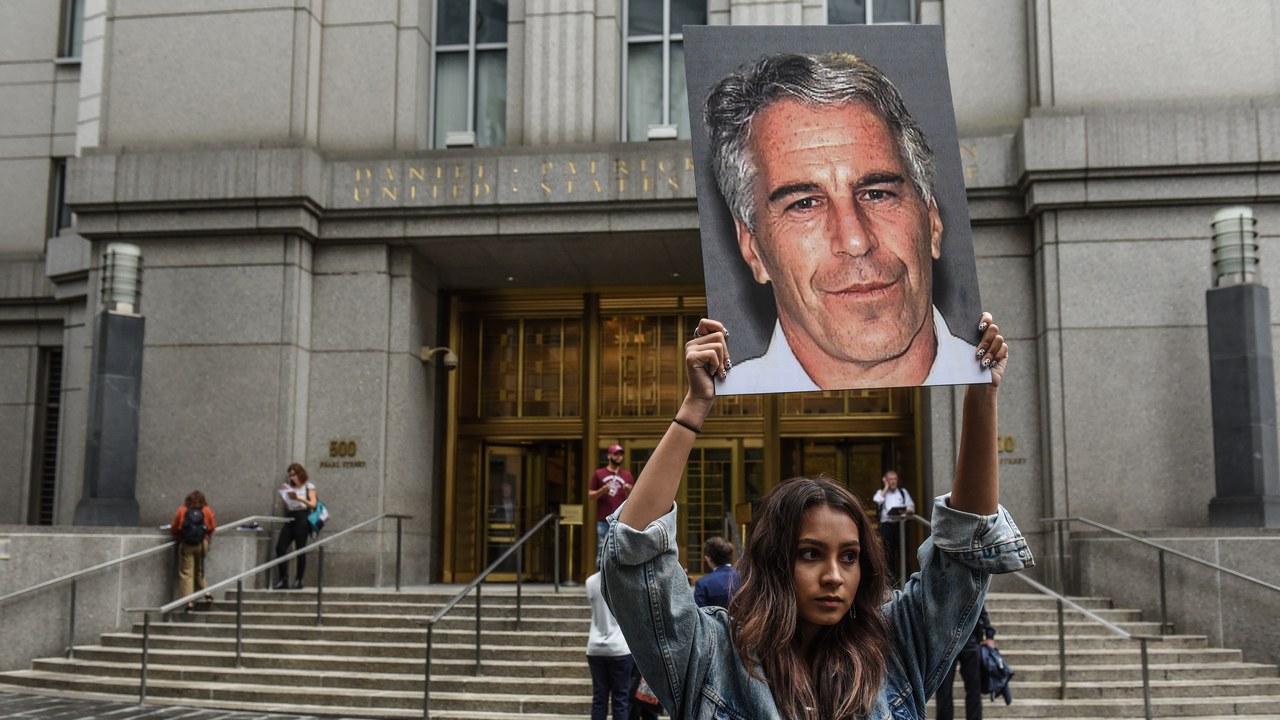
Pay Less Attention to Jeffrey Epstein’s Death and More to What His Accusers Need Now


Over the weekend, Jeffrey Epstein was found dead in his cell at the Metropolitan Correctional Center in Manhattan of an apparent suicide. The moment it happened I could almost hear the sound of a million conspiracies blooming on the internet, each more insane than the next. It hadn’t been unthinkable, though—it was after all his second attempt.

But within minutes, there was talk of a swap, a body double, a plan hatched to get Epstein to Guantanamo Bay. Rapid-fire connections were drawn to the convoluted (and not real) QAnon conspiracy theory, which alleges a vast (and not real) “deep-state” effort to undermine Donald Trump. I saw supposed pictures of the corpse, and comments that it obviously didn’t match Epstein. I saw threats leveled against the Clintons and deceptive hashtags spring up like daisies. But what I didn’t see—at least not at first—was a great effort to think about what Epstein’s death would mean for his alleged victims. The focus had been switched, veering from the real plight of his victims to the fantasy of his death. We can leave investigations into Epstein’s death to the professionals, but the Twitterverse could stand to turn its attention to a conspiracy that we already know is legitimate: how badly run America’s jails are, how badly treated America’s victims of sexual assault and rape are, how the criminal justice system makes allowances for the powerful and the well-connected, while millions of people convicted of lesser crimes are made to suffer more. There is an actual miscarriage of justice here, and you don’t need to turn to Reddit to find it. Epstein’s alleged victims deserved better.

In the time since his suicide, a number of his accusers have spoken out to express their frustration.

“I am extremely mad and hurt thinking he once again thought he was above us and took the easy way out,” Jena-Lisa Jones, 30, who claims that Epstein abused her when she was 14, told ABC News.

In a statement, Jennifer Araoz, 32, who has accused Epstein of rape, expressed her own disappointment: “We have to live with the scars of his actions for the rest of our lives, while he will never face the consequences of the crimes he committed, the pain and trauma he caused so many people.”

These women haven’t accused the government of a wild master plot or drummed up support for internet theories. They’ve just asked to be heard, listened to, and respected. But of course, in Trump’s America, the prospect of a vast web of lies appeals more than the simple fact of a group of women’s truth. campaign. Trump got into politics on the back of birtherism, a conspiracy theory that suggested Barack Obama wasn’t born in the United States. (Spoiler: He was.) Since he was elected president, he’s continued to make references to various supposed schemes, egging on his base. So it should come as no surprise that, as Mother Jones put it, within minutes of the news that Epstein had died, “Trump appointees, Fox Business hosts and Twitter pundits revived a decades old conspiracy theory, linking the Clinton family to supposedly suspicious deaths. #ClintonBodyCount and #ClintonCrimeFamily trended on Twitter.”

It’s crucial to call out Trump’s insane and dangerous social media activities, but not at the expense of Epstein’s accusers who are begging us to remember who the real victims in this case are. It was exquisitely Trumpian: Another potential moment of restorative justice stolen from women who just wanted a powerful man to be held accountable.

Source link

Categories
Health

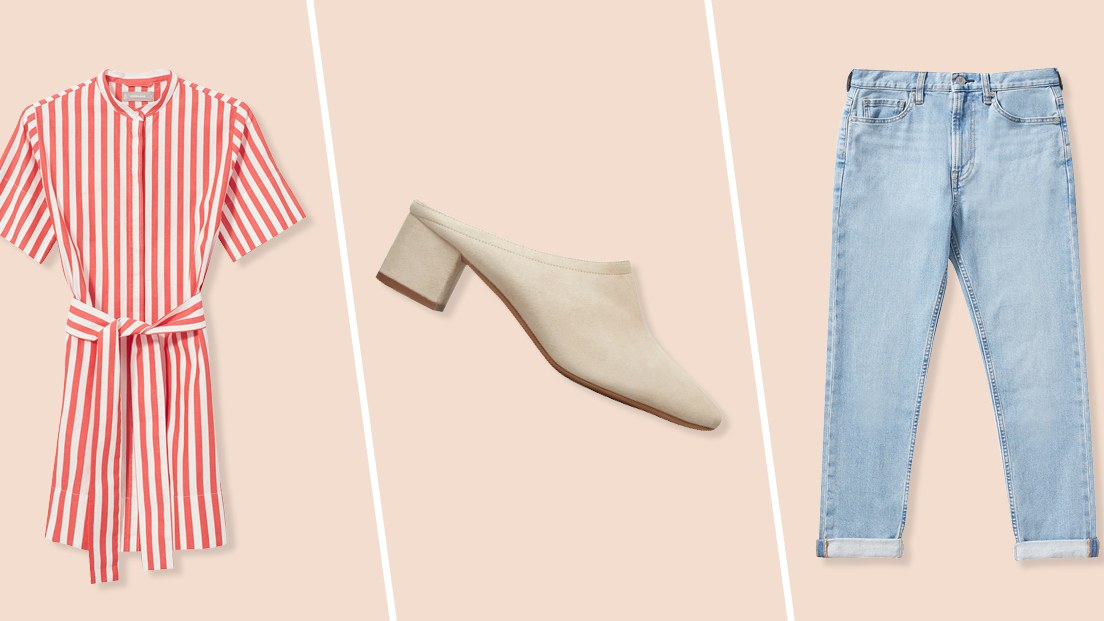
Everlane Choose What You Pay Sale: 15 Things You Should Buy


Anyone due for a basics overhaul knows that Everlane is the best place to start. The direct-to-consumer brand carries just about every wardrobe essential—the white T-shirt, the relaxed jean, the casual flat—all made with a commitment to ethical production and sustainable materials. With trend-proof pieces always in stock, Everlane sales are rare. But when they happen, they’re good.

Everlane’s best-known sale is its “Choose What You Pay” event. The brand will curate items it overstocked and offer them for a reduced price; shoppers have three options to choose from, ranging from 15 to 50 percent off, and pick how much they want to spend. Everlane has said that this model is all part of its mission to promote radically transparent shopping: “Part of it was this opportunity to explain to the customer what the markup meant, and then the opportunity to give the customer a choice,” CEO Michael Presyman explained to BuzzFeed. When you shop “Choose What You Pay,” you know you’re getting your money’s worth. More important, you’re getting pieces that will always have a home in your closet, for a great price.

We narrowed down the 15 Everlane items you should buy first at its “Choose What You Pay.” Shop them all, ahead.


Source link

Categories
Health

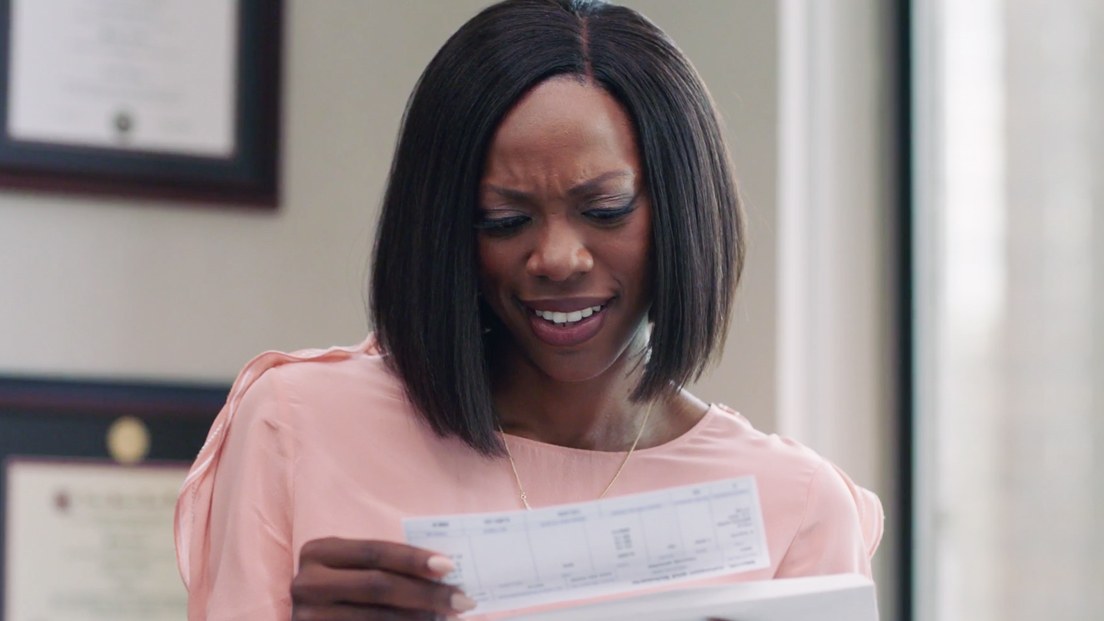
Real Women Open Up About Discovering They Weren't Receiving Equal Pay


Eventually, my group’s creative director—a woman—noticed there was a huge gap between my salary and my male colleague’s. She corrected it by giving me a raise, and also adjusting both of our titles. I was happy.

After that, we hired on a male creative director who was favorable toward his male employees. He promoted the male designer to a senior level, and boosted his salary by another $20,000. He didn’t promote me—and only adjusted my salary by $8,000. I spoke with my creative director plenty of times about this pay issue during our one on one meetings, and he’d cut me off after I would say something like, “Oh, there’s stats out there that females get underpaid next to their male coworkers,” with “Well, that’s not true anymore.”

He told me that me that my male coworker spoke up more and was very vocal, whereas I’d been maintaining and making clients happy. He said he wanted me to work on pitching to clients more and then we could discuss a promotion. So I tried to pitch more, but it never happened. In fact, the one chance I had at running a meeting with a client, the male creative director took over the entire thing! He didn’t even give me a chance to speak. Eventually, I left the company and vowed to never let that happen to me again. — Karen, advertising, Tampa

My boss felt bad I was paid less, but said the company didn’t have the budget to fix it.

Salary: $70,000; Pay Gap: $20,000: I was a section editor at a magazine, and my male colleague had a similar title. The main difference, though, is that I ran a team and was in charge of producing both daily and long form content for the website, while also curating and editing an entire print section. He, on the other hand, didn’t have any print responsibilities and also didn’t run a team.

I found out that he was being paid $20,000 more than me through a coworker, who had been told firsthand. I’ve always tried to be pretty transparent about how much I make, because I think the idea that it’s “impolite” to talk about money is perpetuated by men who don’t want to be confronted with a pay gap—and therefore feel morally responsible for fixing something that they benefit from. Like, if they don’t know then it can’t really happen, right?

My first thought upon finding out was embarrassment, to be honest. I don’t know why, I just felt kind of humiliated. Like maybe I wasn’t doing a good job, even though I was doing so much work and my team seemed to really like me. But then I got pissed. I was well-regarded by my superiors and the people who reported to me, I was doing the job of two people—two actual people!—and I was making less than someone with far fewer responsibilities? That made me mad.

I brought it up at my next review, which was maybe a couple months later. I don’t recall my exact words, but I basically said that I wanted a raise and deserved one, and that I knew what my male colleague was making. The difference in our responsibilities was pretty evident, so just my knowing about it underlined the point. And my manager was aware that it was unfair, and was even sympathetic about it. But unfortunately, I was told they were on a budget freeze, and couldn’t offer to give me more until at least the end of the year. I waited a few months and when the money never materialized—and a few other issues arose—I finally quit.


Source link

Categories
Health

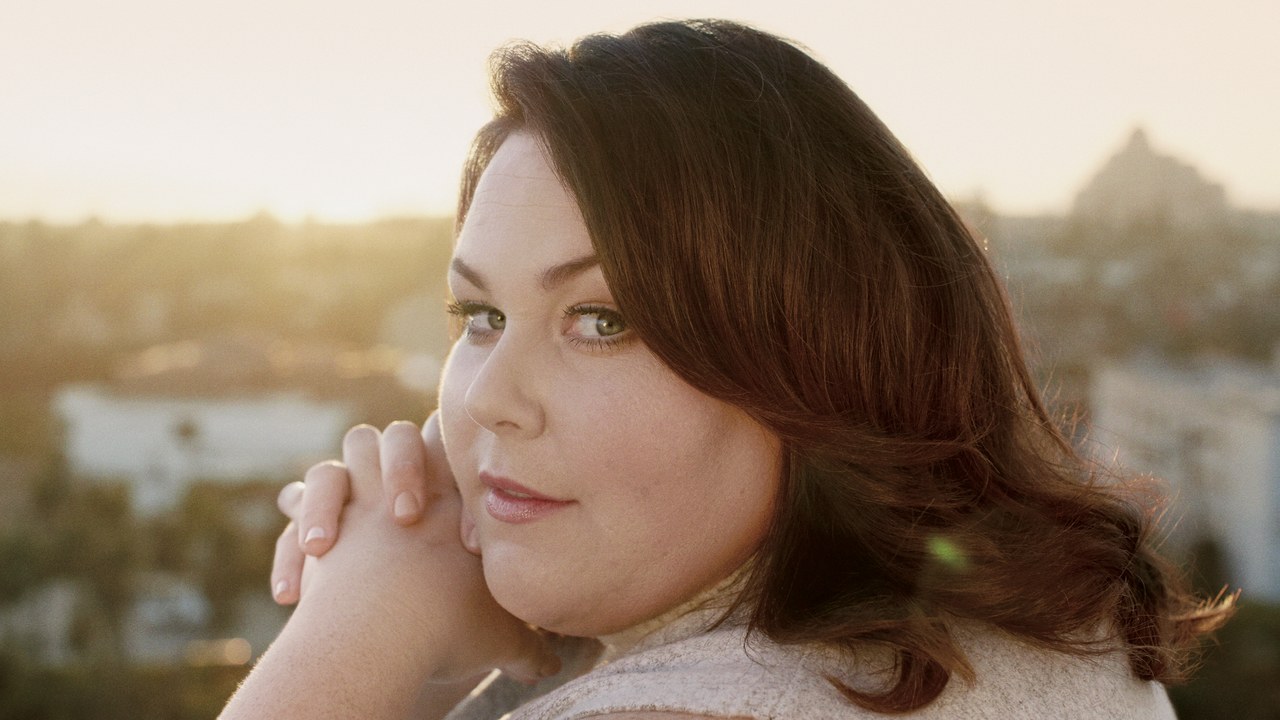
Chrissy Metz: From 81 Cents in the Bank to Equal Pay on 'This Is Us'


The anecdote has reached mythic proportions: Before Chrissy Metz, 38, made it in television, she lived with six women in a cramped two-bedroom apartment. She had to borrow gas money to get to auditions and lived on a steady diet of dollar-store ramen noodles, all while racking up massive debt (nearly $12,000 worth.) When fate at last intervened, with Metz landing the role of Kate Pearson on This Is Us, she had 81 cents in her bank account.

But while the gig was a personal game-changer, Metz was the rookie on set. In the first and second seasons, she made much, much less than her cast mates. While she earned $40,000 per episode, veteran actor Milo Ventimiglia took home $115,000, according to The Hollywood Reporter.

Metz didn’t make a fuss. After all, even earning a steady paycheck as an actress had seemed so inconceivable. She’d grown up watching her mom skip meals. Before she landed This Is Us, she collected unemployment checks. And even now, she’s one of the few plus-size women with a leading role on television. Metz felt fortunate just to have a seat at the table. “For the first two years, I thought, ‘Oh I should just be grateful,’” Metz tells Glamour. “But then I realized, ‘I think I’ve done ok, and now it’s time [to negotiate].’”

After the second season of This Is Us, with two Golden Globe nominations under her belt (and the collective chorus of women who’ve stood up to demand more in here ear), Metz decided she was done just being grateful. “It was everything, collectively,” she says. “Our audience’s [support], other women standing up for themselves, and just feeling like, ‘Ok, I’ve been recognized for the work that I’ve done—not entitled, but recognized, and maybe it’s ok [to ask].’”

With the tremendous success of This Is Us—it’s the biggest drama on broadcast TV—Metz’s cast mates also came to the conclusion that it was time to revisit their contracts. But this time, the beloved Pearson clan banded together. Now Ventimiglia, Mandy Moore, Sterling K. Brown, Justin Hartley, and Metz receive identical checks. What does equal pay mean to Metz? A cool $250,000 per episode, which amounts to $4.5 million per season, according to The Hollywood Reporter. Metz credits her co-workers for the tenor of the process: “We all understood where everyone was coming from. It felt really respectful and professional and nice to know that if I need to, I could do it again.”

But the newfound zeros at the end of Metz’s paycheck haven’t changed her financial philosophy. She doesn’t have to reach too far back in her memories to recall what it felt like not to be able to afford rent, let alone a new pair of shoes. Lately, she’s trying to feel comfortable living in a “gray area” in relation to her wealth. “It’s about not being so tight that you’re not enjoying what you worked really hard for, but also not spending all of it just because you have it,” she says. “It’s sitting in that gray area of like, well, this is what I’ve learned from my past experiences, my parents, and this is what I’m going to have to do in order to have a different life.” For Metz, this means evaluating her purchases. While she’s reluctant to spend a lot on more disposable items, like clothes, Metz has built a beautiful home for herself—and fills it with the kind investment furniture she never had as a child.


Source link

Categories
Health

10 Women Who Fought for Equal Pay, and Got the Salaries They Deserved


Eighty cents. That’s how much women are paid on average for each dollar a man makes. The number alone is pathetic, and women of color are hit even harder. Black women earn 61 cents on the dollar, while Native American women take home 58 cents. For Latinx women, it sinks even lower: a mere 53 cents. Of course no one woman is in a position to change the wage gap on her own, and it takes a tremendous amount of privilege to even be in a position to fight for more. That said, there’s no satisfaction quite like watching a woman demand to be paid what she’s worth. From Ellen Pompeo to Mika Brzezinski—women are leveling up at the negotiation table and setting an example for how we should all be treated at work. Here, we celebrate their victories.


Source link

Categories
Health

Serena Williams Says Pay Discrepancy for Female Athletes Is 'Ludicrous'


Serena Williams—and the U.S. women’s soccer team—isn’t here for the pay gap. On Friday, the tennis icon called the pay gap in sports “ludicrous” while sharing her support for the team and its lawsuit against the U.S. Soccer Federation.

“The pay discrepancy is ludicrous,” Williams, a 23-time grand slam singles champion, told reporters during a press briefing at the BNP Paribas Open in Indian Wells, California. “It’s a battle; it’s a fight,” she added. “I think at some point in every sport, you have to have those pioneers, and maybe it’s time for soccer.”

Twenty-eight players on the U.S. women’s soccer team announced the lawsuit on Friday, International Women’s Day, alleging what it called “institutionalized gender discrimination.”

The lawsuit goes far beyond pay, which still remains a major issue across the sports industry, and calls out how often female athletes get to train compared to their male counterparts, medical treatment, and more, The New York Times reported.

“I think to be on this team is to understand these issues,” Megan Rapinoe, one of the team’s midfielders, told The New York Times. “And I think we’ve always—dating back to forever—been a team that stood up for itself and fought hard for what it felt it deserved and tried to leave the game in a better place.”

Another female athlete who can relate to fighting hard against gender discrimination is tennis great Billie Jean King. On Friday, she too came out to support the soccer team: “Sports are a microcosm of society. What is happening with the USWNT [United States women’s national soccer team] is happening in the workplace,” she tweeted. “The time has come to give these athletes what they deserve: equality.”

Williams reiterated the importance of this fight not just for the women in sports now, but for all future generations of female athletes. I’m playing because someone else stood up,” she said, “and so what they are doing right now is hopefully for the future of women’s soccer.”


Source link