Categories
Health

The New Abortion Underground Starts with Information


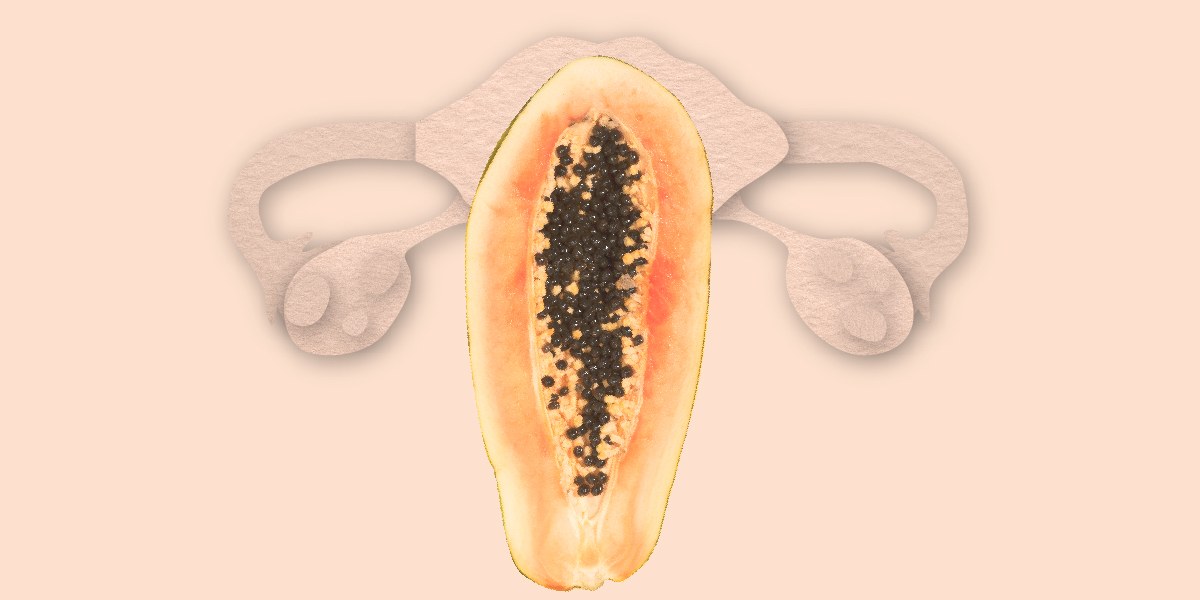
A papaya, it turns out, is a good model of a uterus in the early stages of pregnancy. Well—the papaya is a bit bigger, actually. And the average uterus has more of a tilt. But overall, the fruit is a close replica.

That’s what I’m told during a training session hosted by the Reproductive Health Access Project (RHAP). Under the guidance of our instructor, a doctor and RHAP fellow, I insert a thin metal instrument into the top of my papaya to create an opening before inserting a small suction device called an aspirator. There’s a slight slurping sound as the papaya seeds are sucked into the aspirator’s main chamber. Slurp. Slurp. Slurp. And then it’s done.

The procedure I’ve just performed is supposed to imitate a manual vacuum aspiration—a type of abortion that can be used up until about 12 weeks gestation. “Abortion is so politicized and stigmatized, but a lot of people don’t really know what it entails,” says Lisa Maldonado, RHAP’s executive director. RHAP has been organizing trainings like this since 2005 to help demystify abortion care. Their philosophy? Information is power.

A growing number of women have been arrested or even imprisoned for ending their own pregnancies.

Health care modeling with a papaya might sound silly, but it can serve as empathy training and an introduction to abortion care for medical professionals. It’s why RHAP started providing these workshops, and later expanded them to include pro-choice advocates and activists. “If you’re providing options counseling for patients, it’s really great to have an understanding of what the patient is going to be going through so you can answer questions, explain things and help patients make the right decision for themselves,” Maldonado says. (Med students and doctors—including those who were not trained in how to provide abortions in medical school—of course get additional training, often through a residency program, or a specialized fellowship like the one RHAP provides.)

Understanding what women seeking abortions are really going through, however, obviously involves more than a papaya. During the RHAP training, we also discussed the state of abortion access and the legal challenges women sometimes face if they end a pregnancy. While Roe v. Wade is still the law of the land, anti-choice laws have made abortion harder and harder to access. “Right now, there’s a chipping away [of abortion rights], state by state, rule by rule,” says Heather Booth, an activist who founded the Jane collective in 1965, an underground network that helped thousands of women in Chicago secure safe abortions before the procedure was legal in the U.S. She points to limits on contraception, restrictions on reproductive health information, longer waiting periods, and fewer abortion centers as just some of the barriers that have been put in place to effectively deny women access to abortion care. It’s a many-tentacled attack, and advocates must be informed to stay a step ahead.

“The symbol of the coat hanger really ought to be replaced with a symbol of a handcuff.”

Trainings like RHAP’s—and information sessions offered by groups like the SIA Legal Team, a band of lawyers aiding women who pursue self-managed abortions—are a new and vital front against the escalating attack on reproductive rights in this country. In a heated “fake news” environment, it’s easy for information to get distorted, especially as more laws go on the books in various states. “There’s a real tendency to conflate abortion that could be construed as unlawful with abortion that is dangerous or ineffective,” says Jill E. Adams, founder and strategy director of the SIA Legal Team. Addressing both legality and safety is key for abortion advocates. “While we’re fighting to keep [abortion] legal, we also have to take those steps to make sure that it’s safe, accessible, and available,” Booth says.

Experts know that when legal abortion is out of reach, women turn to other options. That’s already happening now: “There are people who are doing underground abortions in places where clinics have been closed down, or where people don’t have the funds or any other options,” says Booth. Underground abortions in 2019 (and in a possible post-Roe future) may look different than when Jane was created. Today, women seeking to end a pregnancy—and people organizing networks to provide abortions where they are inaccessible—often use pills instead of procedures to self-manage their abortion. (Medication abortion—a combination of mifepristone and misoprostal pills approved by the FDA for abortion in 2000—is safe and effective and also an option provided by many abortion clinics.)

But this, in turn, has lead to a new legal threat: A growing number of women have been arrested or even imprisoned for ending their own pregnancies. “Though abortion is legal throughout the United States, people who self-manage their abortions, and those who assist them, can risk unjust investigation, arrest and time in prison,” says Adams. “The symbol of the coat hanger really ought to be replaced with a symbol of a handcuff because in this day and age, the risk may be legal, not physical.” Women of color, immigrants, and low-income women are particularly at risk for legal persecution, she says.

“Nobody should fear arrest or prison for ending their own pregnancy, for supporting someone who’s decided to do this, or for seeking medical help.”

With a newly-minted conservative majority on the Supreme Court, the legal future of Roe and abortion access is all the more uncertain. But activists are doing what they always did, like they did with Jane: Banding together to share information, such as about self-managed abortion; to discuss the challenges, including new laws and legal risks; to strategize and prepare for whatever might come next.

Trainings like RHAP’s are helping to light the way of the new abortion underground—while papaya trainings help demystify what an abortion is like for women who do have access to clinics, legal-focused trainings help illuminate the perils facing women pursuing self-managed abortions (whether by choice or lack of access to abortion care). Today, the two go hand-in-hand. “The papaya workshops are a great place to start having those discussions, especially when we talk about the big picture of abortion access and how it’s changing,” Maldonado says. Adds Adams: “Nobody should fear arrest or prison for ending their own pregnancy, for supporting someone who’s decided to do this, or for seeking medical help.”

Meghan Racklin is a writer and law student in New York. Follow her on Twitter at @meghan_racklin.

Photo by Getty Images


Source link

Categories
Health

Manal al-Sharif Starts a Movement


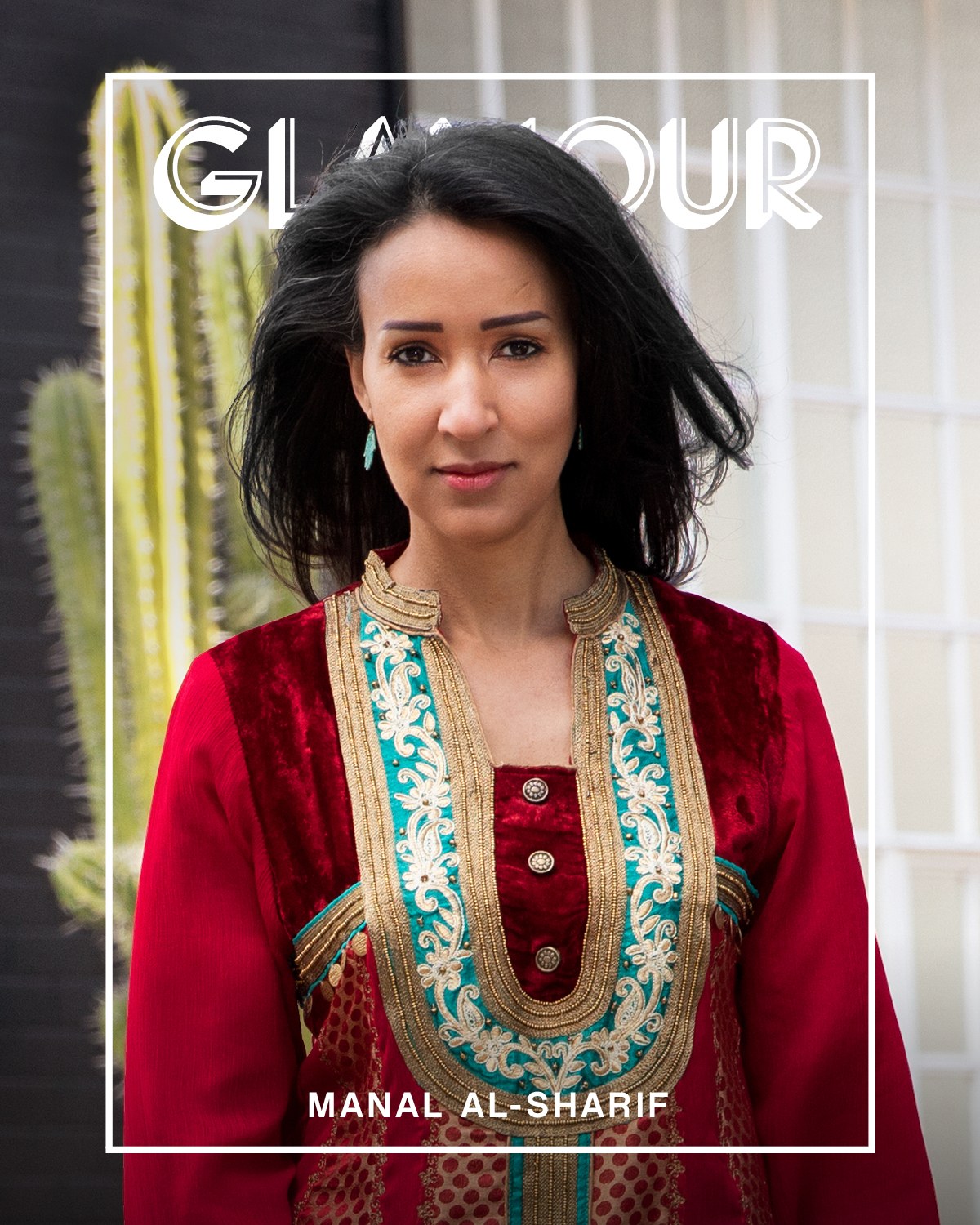
It was the painting of two Saudi women weavers on the wall in my apartment that Manal al-Sharif noticed first. During our FaceTime call, the breathtaking view of Sydney’s Parramatta River playing peekaboo in the background, she shared her own still-life drawings—two sets of meticulously sketched eyes and a realistic still-life of pumpkins. This is the only art that remains after she burned select pieces some years ago, believing images of humans and animals to be unholy in her birthplace of Saudi Arabia.

“I am back to art, finally,” she tells me later. It’s a remarkable liberty she now enjoys in her home in Australia, where she can race off in her Nissan on a moment’s notice. These are things al-Sharif, 39, does not take for granted. Thanks to her efforts, and those of her fellow activists, Saudi Arabia is no longer the last country on earth where women aren’t allowed to drive; on June 24, the nation declared women could get behind the wheel without a male guardian. But it’s a bittersweet victory for al-Sharif: She remains in self-imposed exile, one of many Saudi women activists to leave the country after the ban was lifted for fear of imprisonment. Out of nine of her compatriots, several are still behind bars. Nevertheless, her resolve to push against the status quo remains.

PHOTO: MICHELE ABOUD. HAIR: MAX PINNELL AT RELOAD AGENCY; MAKEUP: DESIREE WISE AT NETWORK AGENCY; SITTINGS EDITOR: LUCIA ARIAS-MARTINEZ

Al-Sharif grew up in Mecca with Muslim parents. She tells me she was always curious as a girl. “When they told me I can’t do this, I can’t read that, I would ask, ‘Why?’” she says. “I was always questioning: Why are there no women leaders? We were invisible in my society, and that bothered me so much. They say to us: ‘A woman leaves her house twice—once to her husband’s house, and the second to her grave.’ That is just so sad. I wanted to be me.”

In 2011 the computer scientist was a divorced single mother with her own house and money. “I made decisions in my life,” she says. She had her own car too, but couldn’t drive it without a male guardian. When she complained to a coworker about the unjustness, he told her there was no formal law against driving—women just couldn’t get a driver’s license. That’s when al-Sharif helped launch the Women2Drive campaign. Several activists got behind the wheel, but to galvanize support, al-Sharif videotaped her drive and posted it on YouTube. The clip went viral.

The authorities, unsurprisingly, did not rally behind al-Sharif the way women did; she was detained twice and imprisoned for nine days. Even when she was released, she was sequestered in her own country. “I was threatened, cornered, harassed,” she says. Her brother had to flee the country with his family. But most painful? The day her son Abdalla came to her bruised from a beating at school. “One of the kids had asked, ‘What do you think of Manal al-Sharif?’ and the teacher said, ‘She is crazy and should be under arrest,’” she recalls. “And he said, ‘Mom, jail is for bad people.’” After that she began shielding her son from her work, but didn’t give up.

“I was always questioning: Why are there no women leaders? We were invisible in my society, and that bothered me so much.”

Her activism cost her her job. When she tried to remarry, the government refused to grant her permission. She and her Brazilian husband wed anyway—which cost her custody of Abdalla. He must remain in Saudi Arabia with his father; he cannot visit her in Australia or meet his new brother, Daniel. Similarly, she cannot visit him without risking imprisonment. She feels tremendous sorrow that they are apart; for now she’s compiling every news clipping about her work and awards alongside a copy of her memoir, Daring to Drive, in a box for Abdalla. She hopes that one day she can tell him her own narrative, a different one from that of those who maligned her for challenging tradition and patriarchy. “Eventually,” she says, “he will know.”

Then there’s the frustration that her compatriots are not free. “Loujain Hathloul, Eman al-Nafjan, Aziz al-Yousef,” she says. “Samar Badawi and Nassima al-Sadah—I met every single one of these women…. I broke bread with them. We have been together from day one.” So she continues to fight for autonomy from existing guardianship laws. “I’m not free until we all are free,” she says.

She has to go now, to drive to pick up Daniel—an everyday act of freedom for mothers around the world. I have to know: Who inspires her? “Saudi women,” she says without pause. A woman there, she continues, “is stripped away from all her rights, her face, name, and identity. And yet she is there. She is a survivor; she’s a fighter. She makes it against all the odds.”

Jamia Wilson grew up as an American expat in Saudi Arabia and is executive director and publisher of the Feminist Press.

HAIR: MAX PINNELL AT RELOAD AGENCY; MAKEUP: DESIREE WISE AT NETWORK AGENCY; SITTINGS EDITOR: LUCIA ARIAS-MARTINEZ


Source link

Categories
Health

A 10-Day March Against White Supremacy from Charlottesville to D.C. Starts Today


Calling all civil activists: Just weeks after a “Unite the Right” rally left one woman dead and more than a dozen wounded in Charlottesville, a bloc of several activist groups are marching from the Virginia city to Washington, D.C. to protest white supremacy.

Starting Monday (August 28) groups like Working Families, the Action Group Network, United We Dream, Color of Change, and the Women’s March will assemble in Charlottesville and begin heading North as part of a 10-day nonviolent demonstration that will concluded in Washington on September 6. As the event organizers detailed on the official website, the march is meant “to demonstrate our commitment to confronting white supremacy wherever it is found.”

“It’s clear that we can no longer wait for Donald Trump or any elected official to face reality and lead,” the organizers continued. “We are coming together to reckon with America’s long history of white supremacy, so that we can begin to heal the wounds of our nation.”

Basic meals, water, and snacks will be offered to the marchers, and housing will be provided primarily through churches along the planned route. A charted course can be found on the official website, but a rundown of the scheduled trajectory appears as follows:

Monday, August 28th – Charlottesville to Commonwealth, 3.5 mi.
Tuesday, August 29th – Commonwealth to Ruckersville, 13.2 mi.
Wednesday, August 30th – Ruckersville to Madison, 12.0 mi.
Thursday, August 31st – Madison to Culpeper, 17.6 mi.
Friday, September 1st – Culpeper to Remington, 11.6 mi.
Saturday, September 2nd – Remington to Calverton, 11.0 mi.
Sunday, September 3rd – Calverton to Manassas, 14.6 mi.
Monday, September 4th – Manassas to Fairfax, 13.7 mi.
Tuesday, September 5th – Fairfax to Falls Church, 8.2 mi.
Wednesday, September 6th – Falls Church to D.C., 8.0 mi.

Once the marchers make it to D.C., the plan isn’t to pack up their things a head home. Instead, they intend to remain in Washington for a sustained period of time until their overarching demands are met.

“This is the time for us to stand up for justice and equality. This is the time to confront white supremacy in our government and throughout our history,” the organizers explained. “We demand that President Trump be removed from office for allying himself with this ideology of hate and we demand an agenda that repairs the damage it’s done to our country and its people.”

Related: Raising Our Daughters After Charlottesville: An Open Letter to Ivanka Trump


Source link