Categories
Health

Adele Is Living Her Best Life on Vacation in Anguilla


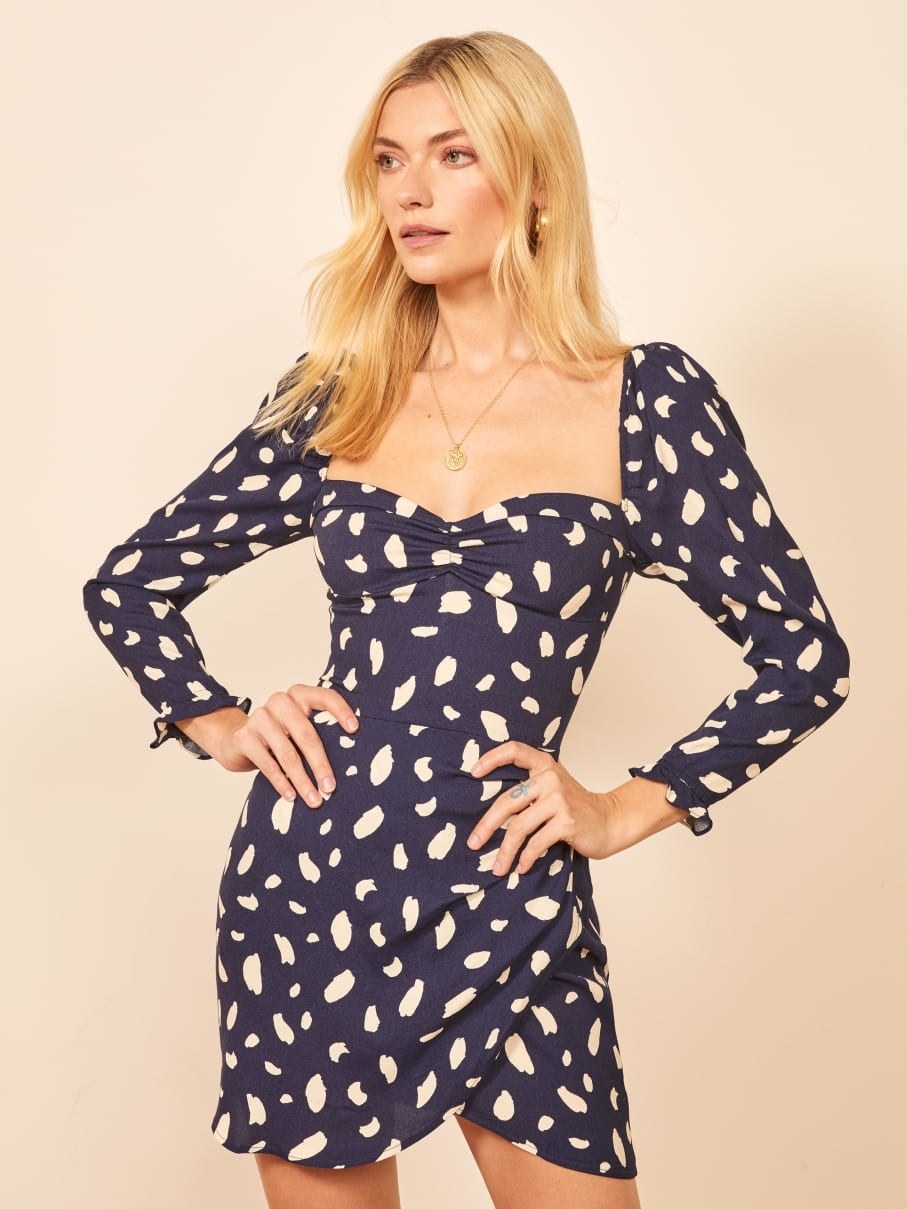
Adele is ringing in the New Year with the coolest vacation of all time: She’s currently on the beach in Anguilla with Harry Styles, James Corden and Corden’s wife—which officially makes her the most enviable person alive. Despite how high-profile the whole thing seems, Adele looked totally carefree and casual during the trip, wearing a cool splatter-print dress by Reformation—and it’s currently still available to shop.

Fans caught Adele hanging out on the sand and smiling happily in the mini dress, which she paired with a bright handkerchief around her neck. She’s not the only celebrity who has been into this Reformation print lately; as Harper’s Bazaar reports, Kaia Gerber was recently seen in a different silhouette of the dress in the same print. It’s a sign of how versatile the splatter pattern is: It works for a chic date night or for a lazy beach day with Harry Styles. (We’re still daydreaming about this.)

The “Amala” dress retails for $248, but it might be worth it to twin with your favorite A-listers; everyone from Meghan Markle to Kendall Jenner to Busy Philipps are fans of the eco-conscious brand.

Courtesy of Reformation 

If there’s anyone who deserves to relax by the beach, it’s Adele. She had an eventful 2019 that included planning a bachelorette party for her bud Jennifer Lawrence. But it was also a bit of a tough time for her in the spring, when she announced that she and her husband of two years, Simon Koneck, had decided to go their separate ways. The singer didn’t say much about the split at the time, but she did seem to take things in stride by posting a hilarious meme about catching herself in her feelings, indicating she was holding up pretty well. Now, if this vacation is any indicator, she seems to be doing even better—but who wouldn’t be after such a star-studded beach trip?
Source link

Categories
Health

My Life as Sex Worker Taught Me Everything I Need to Know About Money


If I didn’t work, I didn’t earn—there is no paid time off when you’re a sex worker. Sick days meant no money, so I cammed as much as I could, sometimes seven nights a week.

Some nights I made $900, some nights I made $25. Some months I made $6,000, others I made just $1,500. One month I made over $15,000, while a few months I barely made anything. My total income depended directly on how much I worked, how much energy I put into my shows, and—especially—how much time I put into maintaining my relationships outside of business hours.

Over all, in my year and a half as a cam girl, I earned over $100,000.

Step 4: Keep My Clients Happy

Building relationships with all my viewers was critical to maintaining an engaging room, but with some, my relationships were much more complicated. The bulk of my income came from “whales”—regulars with deep pockets and generous spending habits. Whales often tipped large: $125, $200, $300 at a time. Their tips had the potential to grow my income and stature in the industry, but they often tipped unpredictably, sometimes for nothing in particular.

Generally whales wanted more—emotional care-taking, private sessions, access to my personal life. If neglected, they would leave, and the loss of their support could cause my rank on the site to plummet. Whales took up a significant amount of my time, and I couldn’t incorporate them into my standard income calculations. If I didn’t build a relationship with a big tipper, if I neglected them, or if I failed to figure out what they liked fast enough, they’d quickly move onto someone else.

Step 5: Learn My Lesson

Camming taught me how to run a business. I learned to be entrepreneurial, to make a living off my creativity and self-expression. I learned about tax law, self-employment, digital marketing, the importance of a savings account and the difference between gross and net profit. I learned how to take a risk on myself.

More than anything, I learned how much work it takes to make porn and to be a successful sex worker. I learned that everything the movies taught me was fake: no rich clients fell out of the sky, no one mailed me piles of jewelry “just because,” no one gave me a million dollars for a smile.

Being a cam girl was the hardest job I’ve ever had. So, the next time you find yourself enjoying the content that sex workers make, compensate them—pay for your porn and tip your strippers well. Sex work is work. And, as it turns out, hard work at that.

Isa Mazzei is a screenwriter, producer, and the author of Camgirl. Follow her at @isaiswrong.


Source link

Categories
Health

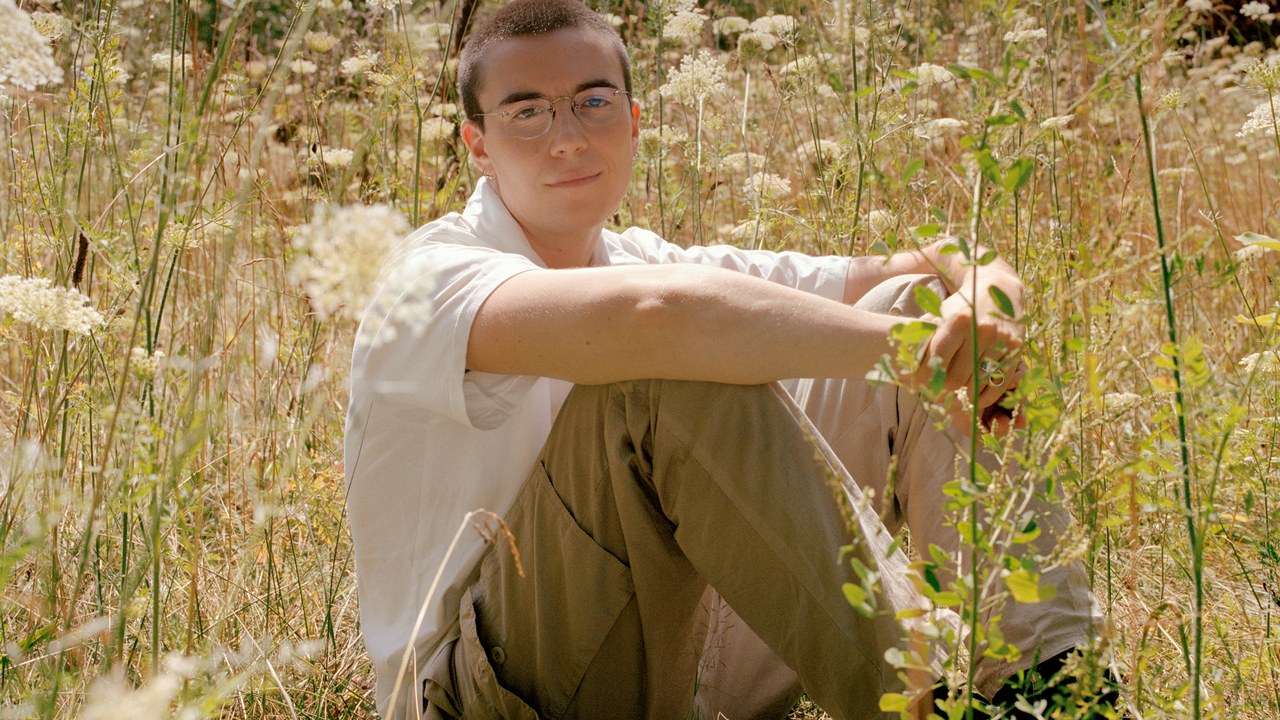
Cyrus Grace Dunham: 'Pretending to Be a Girl For Much of My Life Made Hiding the Norm, Not the Exception'


For this year’s Women of the Year issue, we asked some inspiring figures—past honorees, athletes, and more—to reflect on their work. Next up is memoirist Cyrus Grace Dunham, who explores how we can name ourselves. Read on for Dunham in their own words, and head here to buy your tickets for our annual summit and awards ceremony in New York City on November 10 and 11.

Pretending to be a girl for much of my life made hiding the norm, not the exception. When people told me I had omitted information, obscured basic facts, left out details of my life, I would get this hot feeling all over me. I hadn’t been dishonest on purpose; I just didn’t know another way
to be. My performance of “girlhood” left me dissociated from myself and the world around me. The polite, articulate young woman everyone else encountered felt almost like a hologram; I had the sense I was hiding something monstrous, though I had no idea how to articulate what that monstrousness was.

My dissociation grew more extreme when, at the end of my teens, my sister [Lena Dunham] got famous. I watched her become a symbol that existed outside the physical body of the person I knew and loved. And her fame affected how I understood myself too. My old name, Grace,
appeared in the media in ways I didn’t consent to. This made me feel even more alienated from my name than when I saw it on IDs or in paperwork. I started to feel like my name was a separate entity, a distant abstraction. This experience helped me understand more deeply the ways I was already a symbol: a “woman” and a white person with a puritan-sounding first name, someone from a fairly prominent, class-privileged family, someone’s sister, someone’s daughter.

Maybe it seems contradictory, then, that I would choose to write a memoir and divulge so much about my life thus far. The hardest part, I found, was attempting to write about the loved ones who have shaped me. People become stories when we distill them into a few sentences, paragraphs, or pages, and I do have regrets about subjecting my lovers, friends, and family to this kind of simplification. I could write a whole book about every person I mention, and so many that I didn’t. Since I’ve been written about in ways I didn’t consent to, it was important to me that everyone in the book had a chance to read and respond to the ways I depicted them. Many of those conversations were extremely difficult. We remember certain events differently, and certain moments made us feel drastically different ways. But still, I’m glad the book holds evidence of these dialogues, which heavily informed the final draft.

I think, partially, I was comfortable turning myself into a character because I’ve always felt like one anyway. My own life has often felt like a video game or a movie to me, my consciousness projected into an awkward, gangly, white “female” avatar. One thing I know is that writing about myself as a character helped a more authentic me wrest away some of that person’s power. In doing so, I was able to shed certain symbols that no longer felt livable.

Cyrus Grace Dunham is the author of A Year Without a Name.


Source link

Categories
Health

Keeping My Hair Through Chemo Saved My Life


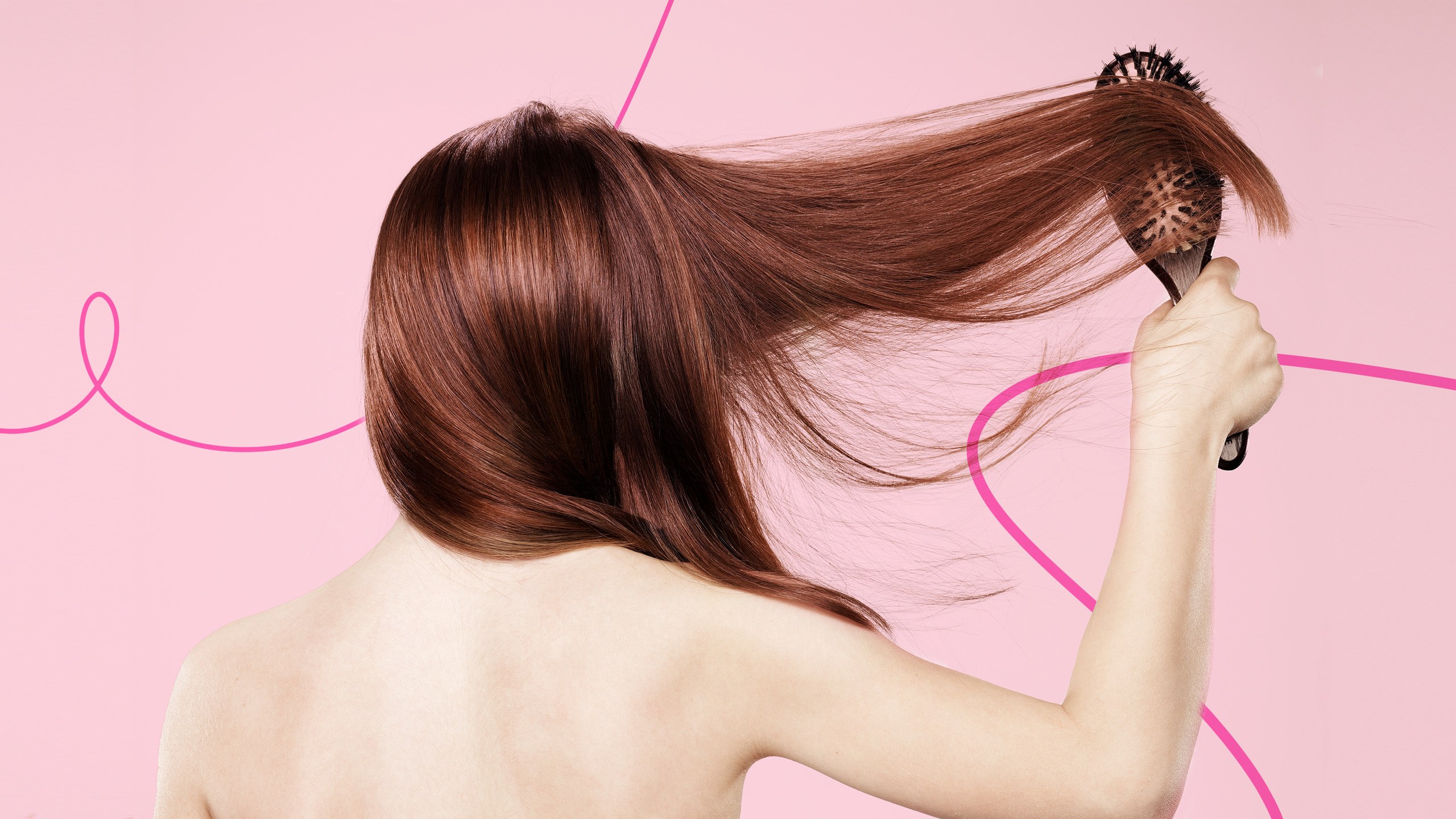
I’ve had long hair for most of my life. Through high school and college and motherhood and laugh lines, it has been a constant. For as long as I can remember, my hair has been tied in a long ponytail or cascading far below my shoulders, a security blanket I can drape close to my face when I’m feeling shy or a wavy mass I can flaunt when I’m feeling sexy. My hair is the reason one of my daughter’s favorite games is salon. When she was a toddler, we would sit on the couch together and take turns doing each other’s hair. I pinned her wispy locks back with barrettes. She twisted my hair into messy buns.

When I was diagnosed with breast cancer at the age of 35, there was plenty to worry about. Would I survive long enough to take my daughter to kindergarten? Would my sense of femininity disappear along with my breasts? Would my family ever recover if I did not? But amidst these pressing questions was one far more superficial, but no less pressing in my mind: Would I have to say goodbye to my hair?

For as long as breast cancer patients have been prescribed chemotherapy, they have been left bald by the treatment. The reason is that some types of chemotherapy are indiscriminate. The drugs can kill cancer, but along the way, they can also damage other rapidly dividing cells in the body, including hair follicles. This is why after just one or two intravenous chemotherapy treatments, many breast cancer patients find their hair falling out in clumps, clogging their shower drains and reminding them that they are sick—apart from the rest of the humans around them, abnormal, special in the worst way.

I was profoundly sad about the idea of going bald. At three, my daughter was far too young to understand the complexities of cancer, but hiding my disease would be impossible if I looked vastly different, if our salon game was no more. I also dreaded the idea of strangers knowing that I was a cancer patient—the sad looks and awkward conversations in the grocery line. The looks of pity from other parents at daycare pick up. I would lose so much to cancer. Did I have to lose my privacy too?

My doctor gave me a prescription for a “hair prosthesis,” also known as a wig.

But miraculously, I never needed one. Nine days before my first chemotherapy session, an email arrived in my husband’s inbox. “I look forward to helping your wife save her hair!” said the note. A week earlier, my husband had written a company that makes specially designed “helmets” cancer patients can wear during chemotherapy infusions. Known as “cold caps,” these devices are filled with a gel cooled anywhere from 15 to 40 degrees below zero which restricts blood flow to the scalp—and therefore the amount of chemotherapy that reaches it. The process sends hair follicles into sort of a dormant state, protecting them from the rampage of the chemo drugs. So-called “scalp cooling” has been common in Europe for decades and is increasingly available to cancer patients in the U.S. I wanted in.

For $2,600 I rented a set of caps, freezing them before each of my six chemo infusions. During the sessions, my husband strapped them to my head as the poison that would ultimately save my life ran into my veins. A representative for the company taught him to stick a panty liner on my forehead during each infusion so I didn’t get frostbite on my bare skin. I bought a satin pillowcase to reduce friction on my head while I slept; I took biotin supplements; I washed my hair just once a week and only with cold water. I did everything I could to reduce stress on my hair.


Source link

Categories
Health

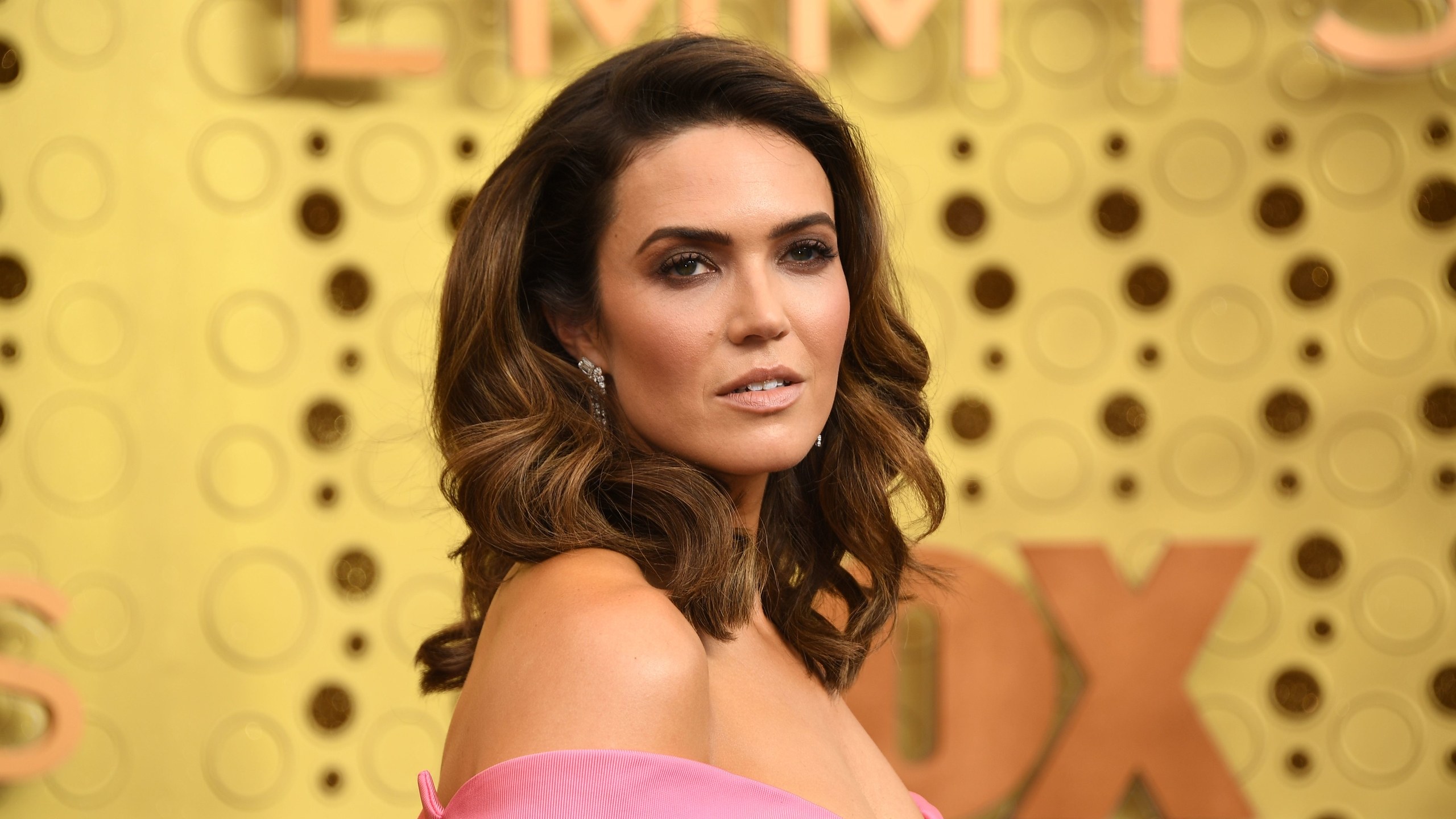
Mandy Moore Is Working on a New TV Show Based on Her Life


Long before Mandy Moore was yanking at our heartstrings and racking up Emmy nominations as Rebecca Pearson on This Is Us, she was one of the biggest popstars of the early aughts. If her first single “Candy” hasn’t been stuck in your head for the past two decades, there’s a nostalgia-fueled new show coming to reacquaint us with Moore’s early career on the pop charts.

Audiences will get to relive an interpretation of Moore’s meteoric rise to fame with 90’s Popstar, a TV show coming to ABC. Deadline reports that the show, which has a pilot commitment, will follow a plot loosely based on Mandy Moore’s early stardom. In it, a Florida teen becomes a pop singer seemingly overnight—leaving her and her family to navigate a wild new reality.

The show’s teen singer is inspired by Moore, who signed a recording deal with Empire Records in 1999, when she was just 15 years old. You know the rest of Moore’s story: Her first album, So Real, went platinum, and she reached her first Billboard Top 30 Single with 2000’s “I Wanna Be With You.” Despite her connection to the forthcoming show’s source material, Moore reportedly won’t be playing any of the characters on the show. Instead, she’ll be behind the camera as an executive producer.

One look at the names joining Mandy Moore on 90’s Popstar, and you know this show is going to get emotional. The script is being written by Amanda Lasher, who’s hailed over TV successes including The Bold Type, Gossip Girl, and Riverdale. The rest of the behind-the-scenes team for 90’s Popstar includes This Is US showrunners Isaac Aptaker and Elizabeth Berger, who’ll join Moore as executive producers.

Casting announcements and an expected air date haven’t been shared for the pop stardom vehicle quite yet. But with Moore lending a hand, it’s safe to say her new show is going to be good. Until the new show airs, Moore will be busy with This Is Us. NBC announced in May that it ordered three more seasons of Moore’s popular drama.


Source link

Categories
Health

Lung Cancer Left Me In Limbo—But It Won’t Stop Me From Living My Life


At 32, I embarked on a second career—I love kids and was meant to be a teacher so I got my master’s in education. That same year, my son Parker was born, so I finished my classes online with a baby in tow.

Juggling the two wouldn’t be easy under any circumstances, but ours was particularly tough: Parker has hemophilia, which means he can bleed spontaneously and internally. Falls, broken bones, and even going to the dentist can be concerning. I have to give him intravenous injections. When Parker was 2, we found ourselves in the ER—except this trip wasn’t for him, it was for me. I was faint, dizzy, and had an immense feeling of malaise.

A chest x-ray revealed a mass on my lung. I knew instantly it was cancer.

I saw a pulmonologist, who wanted to take a wait-and-see approach. “No way,” I thought. I wanted the mass out. As the parent of someone with a bleeding disorder, you learn how to advocate for yourself. My doctor ordered a PET scan and there was god news: My mass didn’t appear to be cancerous. We scheduled another scan for six months later just to be sure.

By the time I got that second scan, I’d started teaching. The pulmonologist left me a message with the results. I didn’t listen to it for two weeks. When I finally did, I learned that my mass had grown and I needed to have surgery to remove it. I was scared to death—I had a 3-year-old son with health issues. I needed to be there for him.

When my surgeon opened me up, he didn’t know what he was seeing. The mass was like jelly. He sent it out to another clinic, and a week later, I found out it was an extremely rare type of lung cancer. I had to have a second surgery to take out the lower left lobe of my lung and my lymph nodes. I went to most of my appointments on my own so that my husband, Aaron, could be with our son. I started going to therapy to try to figure out to process everything, and my therapist suggested I ask Aaron what it’s like to be married to someone with lung cancer. He’s strong but he told me he felt like he couldn’t show weakness. Then he sobbed for the first time since my diagnosis.

I got involved with a lung cancer nonprofit called Lungevity. I also started going to Gilda’s Club, a cancer-support community named for Gilda Radner. I’m an African-American woman, and I met another African-American woman there who had breast cancer for the third time. She had to take two buses and then walk to chemo, which would sometimes make her late. The nurses, pissed at her tardiness, would sometimes turn her away. I meanwhile, had people at school sending food and helping to take care of my family. I had a supportive church group. I had other mom friends who helped to pick up the slack. We should all have that kind of support. How do you survive stage-4 cancer without it? My mission is to help other women of color survive cancer.

Three months after my first surgery, I started teaching middle school full-time. I couldn’t just stay at home and perseverate on my cancer. I had to do something. My students helped heal me. I didn’t tell them about my lung cancer until a month or two in. It was wonderful to be able to say, “If you feel like your life sucks right now, I promise it will get better.” I teach language arts, which is all about sharing stories and understanding characters. I think I have a lot to pull from.

For the first year after my surgery, I got a scan every three months. Now, in my second year of recovery, I get one every six months. Once I make it to five years, we get closer to talking about being cured and not having a reoccurrence. I don’t want to say I’m in limbo, but I can’t lie and say I don’t get worried when I lose a couple of pounds. I call what I’m doing “surviving.”


Source link