It’s been a full week since Meghan Markle and Prince Harry announced they’re stepping down as senior members of the royal family. Slowly but surely, details surrounding their decision have been trickling out—including, now, the moment they knew they wanted to shake things up.
A palace source who spoke to People says baby Archie’s birth is when everything changed. That was May 2019, in case you forgot, and by then the Sussexes “knew they were going to hit the nuclear button,” says this source.
Adds a friend of Markle and Prince Harry’s, “When Meghan came around and she was interested in making changes, [Harry] welcomed it.” A second friend tells the publication that when Archie was born, the pair’s focus shifted even more to “doing what’s right for their family.”
In case you’re not caught up on the details, Meghan Markle and Prince Harry issued a statement last week that said they would be taking a step back from the royal family in an attempt to establish financial independence. “It is with your encouragement, particularly over the last few years, that we feel prepared to make this adjustment. We now plan to balance our time between the United Kingdom and North America, continuing to honour our duty to The Queen, the Commonwealth, and our patronages,” they wrote.
Multiple reports have circulated about how other senior members of the royal family feel about this decision. The only definitive thing we know is that Queen Elizabeth II is seemingly on board—at least from the statement she released to the public.
“My family and I are entirely supportive of Harry and Meghan’s desire to create a new life as a young family,” she said. “Although we would have preferred them to remain full-time working Members of the Royal Family, we respect and understand their wish to live a more independent life as a family while remaining a valued part of my family.”
“You’re never too young to start self-exams, and you should go for an annual mammogram as soon as possible, certainly by 40, but earlier if you have a history of breast cancer in your family,” says Tami. Be your own advocate on the latter; controversially, the American Cancer Society recently raised its recommended age for starting annual mammograms from 40 to 45, yet most insurance companies will still cover routine mammograms at age 40, often younger. “If I’d followed the age-45 guideline, I wouldn’t be alive today,” Tami once said to me. Terrified, I went and got my first at age 38 by asking my ob-gyn to write me a prescription. At the time, I had no family history, but insurance did cover the test. Now, lo and behold, I do have a family history; my mom is currently being treated for breast cancer. I’m so glad that I already got a couple “baseline” mammograms—ones that future tests can be compared against to look for changes.
No type of breast cancer is “no big deal.”
Since one in eight women get breast cancer, almost all of us know someone who’s had early-stage and seems perfectly healthy now. “The perception is, ‘Oh, you have breast cancer, you’ll be fine,’” Tami says. “People think you can just have a double mastectomy and be cured.” She did, when doctors initially thought she was stage II. “In my mind, I said, “OK. I know there’s a high survival rate. I don’t care, I don’t need my hair, I don’t need my boobs. Now I know that even for stage II, a mastectomy is just the first step of a year-long process of reconstruction and treatment.” And much too often, the story doesn’t always end there: “Thirty percent of early-stage breast cancer will eventually come back as stage IV or metastatic, where it has spread to other organs or the bones, and there is no cure for that.”
Picture an airplane falling from the sky every single day.
And each time, 115 people die. Imagine the hysteria and outrage we would all feel. Yet that’s how many people die each day from metastatic breast cancer. I found this analogy so powerful when Tami first shared it with me. Research leading to new treatments for MBC is the only thing that can reduce that number, yet just 3 to 5 percent of U.S. breast cancer research funding currently goes toward that. How to begin to shift that imbalance: Find out what percentage of dollars from any breast cancer donation you make will go toward research, versus awareness and programming. Better yet, donate directly to metastatic breast cancer research. METAvivor is currently the only U.S. organization dedicated solely to awarding annual peer-reviewed stage IV breast cancer research grants. To raise awareness for this cause, metastatic breast cancer has its own awareness ribbon, one with stripes of green (representing spring and the triumph of life over death), pink (indicating that the cancer originated in the breast) and teal (representing spirituality and healing). More than 80 iconic landmarks around the globe have showcased the colors during Breast Cancer Awareness Month in 2019.
There are so many people just waiting for that next drug to come out.
“Will there be another drug by the time this one doesn’t work?” It’s the question Tami’s friend Monica was asking until she recently passed away at age 33, leaving a 3-year-old daughter behind. “What gives people hope is the fact that they are coming out with more drugs, so the money and the research does make a difference, even if it’s not curing the disease.” Ultimately, MBC patients know that they will need to resort to clinical trials. “There are amazing resources out there now to help patients navigate clinical trials,” Tami notes. “One of the best websites available was designed by a metastatic patient for metastatic patients. Called The Storm Riders Network, it pulls trials from all over the world into an extremely user-friendly interface.”
Like most of the women in my family, I carry the BRCA2 gene mutation, which means that if I did nothing, my risk of developing breast cancer at some point in my life would be around 85 percent. I’d seen firsthand what that looks like; my great-grandmother, grandmother, mother, and two aunts have all battled breast cancer. My future, it seemed, had already been cast.
So after learning I could lower my risk of getting breast cancer to under 3 percent by having a double mastectomy, it felt as close to a no-brainer as a major surgery can get. Even though I’m only 39 and my recent mammogram, ultrasound, and breast MRI were all clear, I knew taking control of my health and being proactive was the right choice for me. So on the day of my surgery last October, I walked into the hospital smiling, empowered, and ready.
I had no idea that on the day of my preventive double mastectomy, I was also walking into the hospital as a woman already living with breast cancer.
It’s standard procedure to test the breast tissue removed during a preventive mastectomy because in a small percentage of cases, doctors find previously undetected cancerous tissue already present. My chest was still fully bandaged with a faucet of bright red fluid pouring out of my sides through drains when I received a call from my doctor: I was one of those rare cases.
“You had breast cancer,” she told me. I couldn’t comprehend her words.
My doctor explained that I had Stage 0 non-invasive breast cancer (DCIS), meaning my cancer had not spread into the surrounding breast tissue. The good news? The double mastectomy I’d just had meant that I was now cancer-free—no chemo, radiation, or hormonal treatment necessary. I had beaten breast cancer before I even knew I had it.
At first I felt like I was free falling. I’d had breast cancer. Watching generations of women in my family wage their battles did not prepare me for hearing those words myself. A million thoughts raced through my mind and I couldn’t hold on to any of them. I had been so prepared for my preventive mastectomy—doing research, setting up calls with other women who’d had my surgery, taking vitamins and supplements—and now I was at a loss. I wasn’t a previvor; suddenly I was a full-blown cancer survivor. I was completely caught off guard.
When I first found out I was BRCA positive, I didn’t tell anyone for months. I wanted to make a decision on whether to have surgery without being swayed by the experiences, fears, and opinions of others—it’s a major surgery and I wanted to consider it carefully. Even after I made my decision, there were family members and friends who still continued to question me. But at the end of the day, I knew down to my bones that removing my seemingly healthy breasts was the right decision for me.
Working in the beauty industry in the age of Instagram has admittedly made me a bit too fixated on my appearance, but it’s also taught me how to differentiate between empty marketing and what actually works. The biggest scam of all, in my opinion? Eye creams, specifically those promising to fix dark circles and puffy bags, which are often hereditary.
After years of asking dermatologists and plastic surgeons what could be done for my tired-looking undereyes, I realized my most effective option would be to get undereye filler (or, as it’s sometimes called, “tear-trough filler”) to level things out and diffuse the dark shadows. Even though I’ve gone under the knife and have no issue getting Botox, the mere thought of a needle that close to my eyeball freaked me out. Would I be able to feel something under my skin each time I touched the area? Could I survive without fainting?
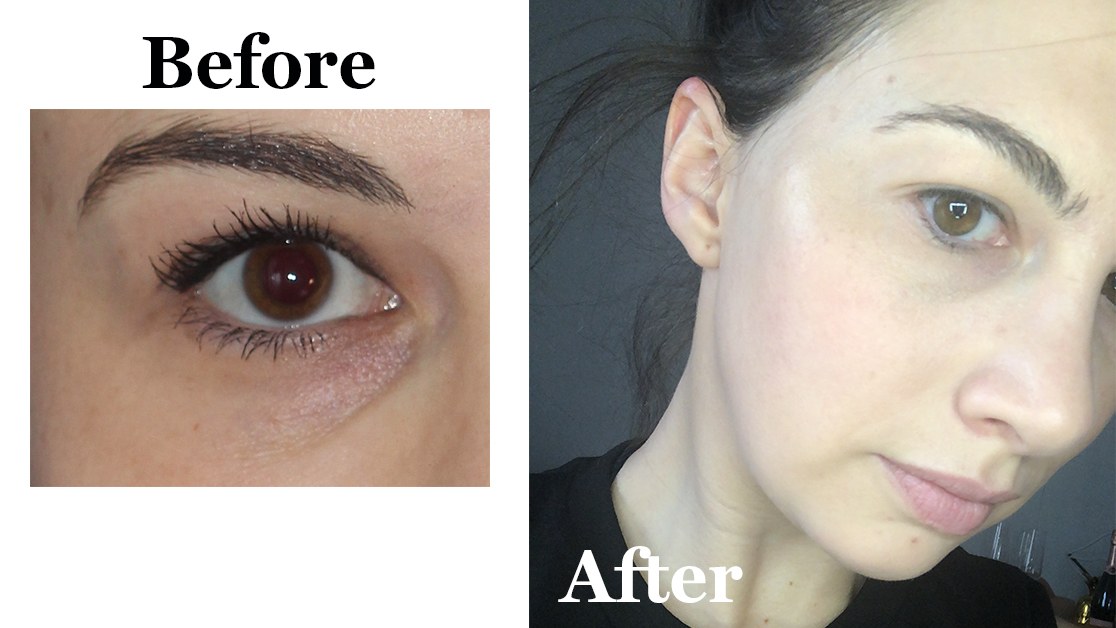
Finding a reputable doctor (and getting tired of smoothing the area in Facetune every time I uploaded a photo) eventually won me over. Although the final results were subtle, they made a noticeable difference that’s already convinced me to go back again when the effects wear off. That said, it’s not an ideal treatment for just anyone, nor is it a job for just any injector. If you’re considering booking your own appointment, here’s what you need to know before you go, according to Dara Liotta, M.D., a New York double-board-certified plastic surgeon.
Alix Tunell
Understand when undereye filler works—and when it doesn’t.
Liotta says that most people who come to her office for tear-trough filler have the same complaint I did: I always look tired because of the indented shadows under my eyes, no matter how much sleep I get or how many $300 serums I tap on. Volume loss under your eyes is what filler works best for, says Liotta, but it can also be used in some cases to treat puffy bags (known as pseudoherniation of orbital fat). What filler won’t help with is pigmentation. If your dark circles are actually caused by darker pigment in your skin, filler will only accentuate them. Not sure how to tell? Hold a mirror and look up so that bright overhead lighting hits you directly. If the shadow disappears, your dark circle is caused by a hollow. If the color is still there, it’s pigment.
Undereye filler is an off-label treatment, but that doesn’t mean it’s unsafe.
Dermal fillers have been approved by the FDA for use only in your cheeks, lips, nasolabial folds, and hands—but doctors will often use injectables in off-label ways. “Just because something isn’t FDA-approved doesn’t mean it’s dangerous when done by an expert,” says Liotta. “We use the same products that are FDA-approved for other areas of the face and we put them in the exact way; it’s just that the studies haven’t been done to get the undereye area the stamp of approval yet.” The tear trough carries the same risk of necrosis as your lips, although it’s less frequently talked about. This occurs when a provider accidentally injects into an artery and causes premature death of cells. Remember that your undereyes are a tricky area to get right and you should trust yours only to a doctor with plenty of experience.
Don’t go to a medical spa.
Get all the chemical peels and laser hair removal your heart desires at a med spa, but please don’t let anyone who isn’t a board-certified dermatologist or plastic surgeon inject under your eyes, no matter how persuasive the Groupon deal or high-tech the waiting room. “There’s a steep learning curve to this area because you’re trying to camouflage very subtle fat or volume loss on a dynamic area of your face,” says Liotta. “It requires extra precision.” Do your research without price shopping, then double-check the doctor’s board-certification status and look at before-and-after photos.
Make sure you’re getting hyaluronic acid fillers.
Most doctors use hyaluronic acid dermal filler for your undereyes, especially if it’s a patient’s first time. It’s worth inquiring during your consultation to be sure. The benefit is that this material can be easily dissolved with hyaluronidase (an enzyme already found in our bodies) should you not like the results or want to take it down a touch. “Forty-eight hours after an injection of hyaluronidase, and the filler is gone,” says Liotta.
Filler isn’t permanent, but it does last longer under your eyes.
There’s no definitive answer to the question of how long injectables last; absorption varies from person to person. In my experience Botox lasts three months in my forehead, and cheek fillers last six to seven months. Because the tear trough isn’t a very mobile place (unlike your lips or forehead), it takes your body longer to “eat up” the hyaluronic acid. This means your results should usually last between one and two years. (Juvéderm Volbella is the longest-lasting, according to Liotta.) I got mine done in February and it’s still going strong. When the hollow becomes more pronounced again, I’ll go back for more.
Having needles around your eyes is just as unsettling as you’d expect.
I love filler, but I really hate the process. It doesn’t hurt that much, but the disorienting popping sound and the sensation of something thick being pushed into deep layers makes me feel faint. (Pro tip: Chug a sugary drink before your appointment and carry a snack in your bag for after.) The good news is that undereye filler requires thinner molecules than the ones used in your cheeks, so I didn’t feel the heavy pressure I’ve come to associate with the treatment. Pain is minimal and lasts only a few seconds, so the main challenge is just staying calm and reminding your brain that nothing is actually going into your eyeball.
You’ll see a difference right away, and there’s no downtime.
There’s no need to reschedule a date or take the afternoon off from work; you can go about your life as usual the moment you leave the doctor’s office. Liotta prefers to inject under the eyes with a blunt-tipped cannula (instead of a needle) because it requires only one entry point to reach all the areas beneath the skin. This reduces the risk of bruising, swelling, and vascular complications, but there is always the chance that you’ll have slight swelling or bruising for 48 hours after. I had a purplish dot at the cannula’s entry point—made by a single needle puncture—for about a week, but it was easily hidden with makeup. If you’re worried, avoid drinking alcohol and taking NSAIDs a couple days before, and ask your doctor to ice your skin before and after.
It’s normal to need a follow-up appointment for some minor tweaking.
“The undereye is the most common place to need to tweak again,” says Liotta. “The first time someone gets filler there, I’ll ask them to come back in two weeks so I can look at it.” That might mean adding a few more drops of filler or using a pinch of hyaluronidase to flatten out any minor puffiness.
Be prepared to spend anywhere from $800 to $3,000.
Prices vary from doctor to doctor and geographical location, but in a major city, it’s safe to assume the procedure will set you back at least a grand. According to Liotta, people who don’t have very deep hollows can use one syringe of filler split between each eye, whereas those with significant hollowing may need one full syringe on each side. The options she offers at her practice cost between $1,000 to $1,500 per syringe.
Undereye filler isn’t as noticeable as other types are (think lips or cheeks), so I didn’t expect to love it as much as I do. After a single session, I look exhausted only when I actually am exhausted, barely feel the need to use concealer, and haven’t touched the blurring tool since 2018. I’ve already decided that I’ll be back for more the second it wears off, stress balls and juice box in hand.
Alix Tunell is a writer in New York City. Follow her @alixtunell.
Lately everyone is obsessed with Miley Cyrus and Liam Hemsworth—and honestly, we can’t blame ’em. From the couple’s impromptu living room wedding in December to Miley’s adorable happy birthday love letter to Liam, it’s obvious that they’re full-on head over heels in love with each other. And during an interview with the Today show, published on Friday (but airing on Sunday), Hemsworth opened up about the moment he knew it was time to propose—again—to Cyrus.
“We’ve been through so much together over the last 10 years, so [I] felt like it was time,” he said in the interview. “I feel really happy and really fortunate to be with such a great person.”
But the couple we know and love to love almost didn’t happen—because they almost didn’t meet in the first place, Hemsworth said. He shared the crazy story of getting cast at the very last second for the movie adaptation of Nicholas Sparks’ The Last Song, where he ultimately met and starred alongside Miley, who played rebel teenager Ronnie Miller.
The Australian native, whose three-month visa was expiring at the time, wasn’t originally cast for the part of Will Blakelee. But as fate would have it, it didn’t work out for the other actor. “My agent calls me like, whispering, like ‘You’ve got to go to Disney right now. It’s not working out with the other guy,” he said. “You’ve got to go in and read with Miley again’…I come in and everyone starts clapping like, ‘We should have gone with you first!'”
The now-newlyweds eventually fell hard for each other, just like their on-screen characters. I mean, just look at this clip Hemsworth posted on Friday.
“It’s sort of weird how it all comes together, and then 10 years later I’m here, married,” Hemsworth said.
Just further proof that fate is a very strange and wonderful thing.
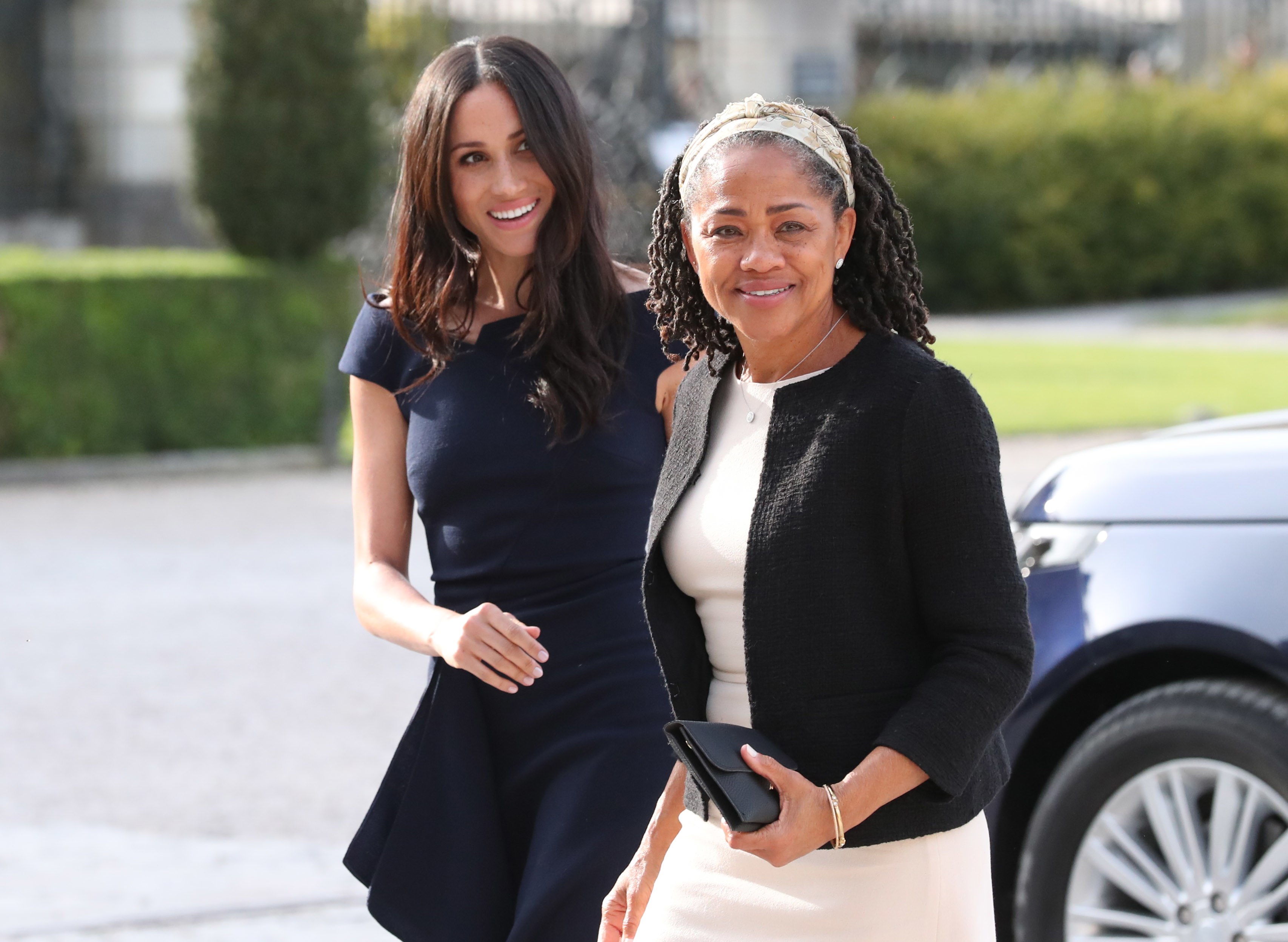
The world has watched Meghan Markle very closely since she and Prince Harry got together; she can hardly sneeze (or even trip) without making headlines. But by some sort of sorcery, her mom, Doria Ragland, recently made a secret trip to London to visit her daughter, and literally no one noticed.
In a new interview with Good Morning America, royal expert Omid Scobie revealed that Ragland spent some time in the U.K. over the summer. “ICYMI: Sources confirm to @ABC @GMA that Duchess Meghan’s mom Doria Ragland visited Prince Harry and her daughter for an extended stay at their Oxfordshire home this summer,” he wrote in a tweet. “Doria is said to enjoy a close relationship with Harry and continues to be a pillar of strength for Meghan.”
This under-the-radar trip may have been a chance for Ragland to prepare for a move. Earlier this summer, rumors began to fly that she was considering moving to London to be closer to her daughter and new son-in-law. “She fell in love with England and told me when she got back that it’s somewhere she believes she too could happily live,” a source told the Sunday Express in early August*.* “I think this has been coming for a while. Even before the wedding she told me how she misses her Megs so much she would do anything to be closer to her, especially now Meghan will be starting a family of her own.”
The source said the move could happen as early as “next month” (meaning September), though considering how skilled Ragland seems to be at dodging the paparazzi, it may have already happened and the world is none-the-wiser.