Planning a traditional wedding requires a few key things: a florist, the band or DJ, the cake, and the ability to keep track of finding, hiring, and paying for all of them. (Fun!) Now, you can add visiting a dermatologist to that laundry list. But forget a nice, relaxing facial—these days, more brides to be are springing for cosmetic injectables to smooth crinkles and plump lips before their wedding day.
“We have definitely seen an uptick in consultations with brides-to-be who want to get a skin care game plan even a year before the big day,” says Kristel Polder, M.D., a board-certified dermatologist at Dallas Center for Dermatology and Aesthetics in Dallas, TX. “Brides want to look good for all aspects surrounding a wedding—portraits, bachelorette party, wedding, and honeymoon.”
Cosmetic injectables are a natural fit for this. “Fillers have a longevity that allows you to maintain these results through the process,” Polder says. “Particularly with millennials, we’ve been asked for smaller dosing to test out fillers in their lips, cheeks, and under their eyes.” Meanwhile, neuromodulators (or “wrinkle reducers” as they’re more commonly called) such as Botox and Dysport have become popular among brides for specific areas of the face.
Polder’s clinical experience is reflective of the large-scale trend of pre-wedding injectables. RealSelf, a review site that tracks the popularity of cosmetic treatments, found that in the past year, neuromodulators accounted for 15% of nonsurgical pre-wedding treatments, with injectable fillers close behind at 14.15%. This follows the overall rise in the use of injectables, which are no longer solely within the realm of antiaging. That is, actual aging is no longer a prerequisite for cosmetic injectables.
Instead, contoured cheekbones, preternaturally smooth foreheads, and plump lips have taken over Instagram feeds and celebrity faces alike, underscoring the new role of cosmetic injectables as a way to sculpt and augment in addition to lift and firm—no matter your age. (Unsurprisingly, the look has been been dubbed “Instagram Face.”) And they’ve been embraced accordingly. According to the American Society of Plastic Surgeons, the number of filler procedures among people between 30 and 39 years old has grown by nearly 30% since 2010. (And of those, the number of hyaluronic acid filler injections in particular, such as Juvéderm or Restylane, has almost doubled.) Meanwhile, the number of neuromodulator procedures among patients between 30 and 39 has increased by nearly 35% to 1.3 million.
Working in the beauty industry in the age of Instagram has admittedly made me a bit too fixated on my appearance, but it’s also taught me how to differentiate between empty marketing and what actually works. The biggest scam of all, in my opinion? Eye creams, specifically those promising to fix dark circles and puffy bags, which are often hereditary.
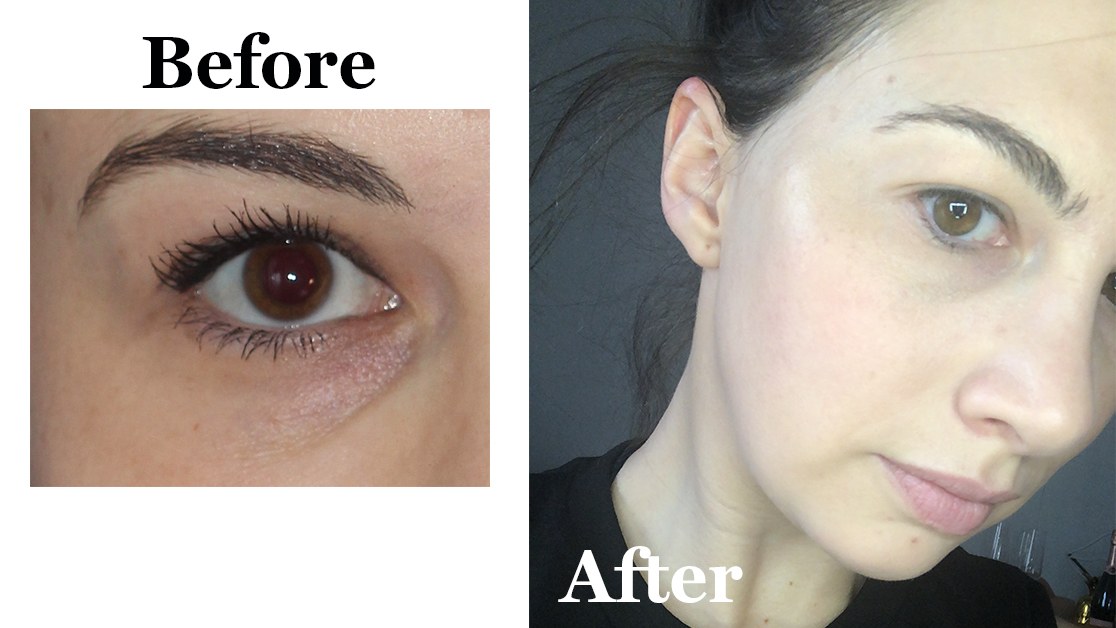
After years of asking dermatologists and plastic surgeons what could be done for my tired-looking undereyes, I realized my most effective option would be to get undereye filler (or, as it’s sometimes called, “tear-trough filler”) to level things out and diffuse the dark shadows. Even though I’ve gone under the knife and have no issue getting Botox, the mere thought of a needle that close to my eyeball freaked me out. Would I be able to feel something under my skin each time I touched the area? Could I survive without fainting?
Finding a reputable doctor (and getting tired of smoothing the area in Facetune every time I uploaded a photo) eventually won me over. Although the final results were subtle, they made a noticeable difference that’s already convinced me to go back again when the effects wear off. That said, it’s not an ideal treatment for just anyone, nor is it a job for just any injector. If you’re considering booking your own appointment, here’s what you need to know before you go, according to Dara Liotta, M.D., a New York double-board-certified plastic surgeon.
Alix Tunell
Understand when undereye filler works—and when it doesn’t.
Liotta says that most people who come to her office for tear-trough filler have the same complaint I did: I always look tired because of the indented shadows under my eyes, no matter how much sleep I get or how many $300 serums I tap on. Volume loss under your eyes is what filler works best for, says Liotta, but it can also be used in some cases to treat puffy bags (known as pseudoherniation of orbital fat). What filler won’t help with is pigmentation. If your dark circles are actually caused by darker pigment in your skin, filler will only accentuate them. Not sure how to tell? Hold a mirror and look up so that bright overhead lighting hits you directly. If the shadow disappears, your dark circle is caused by a hollow. If the color is still there, it’s pigment.
Undereye filler is an off-label treatment, but that doesn’t mean it’s unsafe.
Dermal fillers have been approved by the FDA for use only in your cheeks, lips, nasolabial folds, and hands—but doctors will often use injectables in off-label ways. “Just because something isn’t FDA-approved doesn’t mean it’s dangerous when done by an expert,” says Liotta. “We use the same products that are FDA-approved for other areas of the face and we put them in the exact way; it’s just that the studies haven’t been done to get the undereye area the stamp of approval yet.” The tear trough carries the same risk of necrosis as your lips, although it’s less frequently talked about. This occurs when a provider accidentally injects into an artery and causes premature death of cells. Remember that your undereyes are a tricky area to get right and you should trust yours only to a doctor with plenty of experience.
Don’t go to a medical spa.
Get all the chemical peels and laser hair removal your heart desires at a med spa, but please don’t let anyone who isn’t a board-certified dermatologist or plastic surgeon inject under your eyes, no matter how persuasive the Groupon deal or high-tech the waiting room. “There’s a steep learning curve to this area because you’re trying to camouflage very subtle fat or volume loss on a dynamic area of your face,” says Liotta. “It requires extra precision.” Do your research without price shopping, then double-check the doctor’s board-certification status and look at before-and-after photos.
Make sure you’re getting hyaluronic acid fillers.
Most doctors use hyaluronic acid dermal filler for your undereyes, especially if it’s a patient’s first time. It’s worth inquiring during your consultation to be sure. The benefit is that this material can be easily dissolved with hyaluronidase (an enzyme already found in our bodies) should you not like the results or want to take it down a touch. “Forty-eight hours after an injection of hyaluronidase, and the filler is gone,” says Liotta.
Filler isn’t permanent, but it does last longer under your eyes.
There’s no definitive answer to the question of how long injectables last; absorption varies from person to person. In my experience Botox lasts three months in my forehead, and cheek fillers last six to seven months. Because the tear trough isn’t a very mobile place (unlike your lips or forehead), it takes your body longer to “eat up” the hyaluronic acid. This means your results should usually last between one and two years. (Juvéderm Volbella is the longest-lasting, according to Liotta.) I got mine done in February and it’s still going strong. When the hollow becomes more pronounced again, I’ll go back for more.
Having needles around your eyes is just as unsettling as you’d expect.
I love filler, but I really hate the process. It doesn’t hurt that much, but the disorienting popping sound and the sensation of something thick being pushed into deep layers makes me feel faint. (Pro tip: Chug a sugary drink before your appointment and carry a snack in your bag for after.) The good news is that undereye filler requires thinner molecules than the ones used in your cheeks, so I didn’t feel the heavy pressure I’ve come to associate with the treatment. Pain is minimal and lasts only a few seconds, so the main challenge is just staying calm and reminding your brain that nothing is actually going into your eyeball.
You’ll see a difference right away, and there’s no downtime.
There’s no need to reschedule a date or take the afternoon off from work; you can go about your life as usual the moment you leave the doctor’s office. Liotta prefers to inject under the eyes with a blunt-tipped cannula (instead of a needle) because it requires only one entry point to reach all the areas beneath the skin. This reduces the risk of bruising, swelling, and vascular complications, but there is always the chance that you’ll have slight swelling or bruising for 48 hours after. I had a purplish dot at the cannula’s entry point—made by a single needle puncture—for about a week, but it was easily hidden with makeup. If you’re worried, avoid drinking alcohol and taking NSAIDs a couple days before, and ask your doctor to ice your skin before and after.
It’s normal to need a follow-up appointment for some minor tweaking.
“The undereye is the most common place to need to tweak again,” says Liotta. “The first time someone gets filler there, I’ll ask them to come back in two weeks so I can look at it.” That might mean adding a few more drops of filler or using a pinch of hyaluronidase to flatten out any minor puffiness.
Be prepared to spend anywhere from $800 to $3,000.
Prices vary from doctor to doctor and geographical location, but in a major city, it’s safe to assume the procedure will set you back at least a grand. According to Liotta, people who don’t have very deep hollows can use one syringe of filler split between each eye, whereas those with significant hollowing may need one full syringe on each side. The options she offers at her practice cost between $1,000 to $1,500 per syringe.
Undereye filler isn’t as noticeable as other types are (think lips or cheeks), so I didn’t expect to love it as much as I do. After a single session, I look exhausted only when I actually am exhausted, barely feel the need to use concealer, and haven’t touched the blurring tool since 2018. I’ve already decided that I’ll be back for more the second it wears off, stress balls and juice box in hand.
Alix Tunell is a writer in New York City. Follow her @alixtunell.
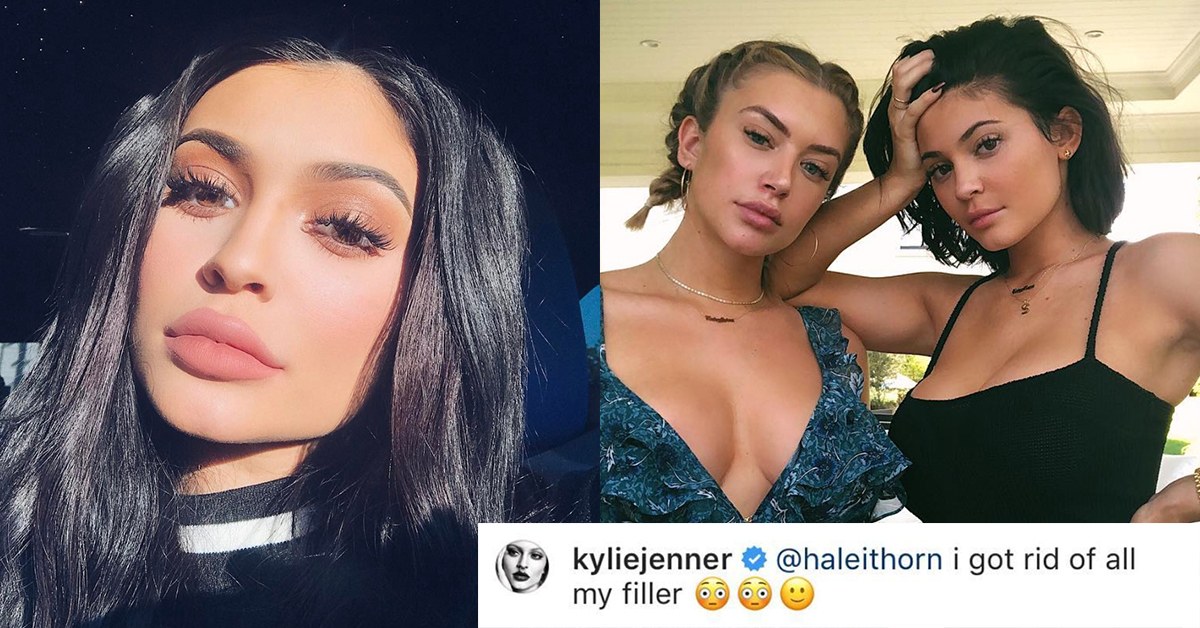
The basis of Kylie Jenner’s $420 million makeup empire might have started around her famously Juvaderm’ed lips, but it’s looking like her interest in the pillowy look is deflating. On Instagram Sunday night, Jenner revealed that she’s done with filler—for now at least.
The speculation first started when fans began commenting that she looked an awful lot like the “Old Kylie” in a new photo she’d posted; to which the new mom responded, “I got rid of all my filler,” which was captured on the Comments By Celebs account. Of course, Instagram and Twitter blew up in reaction to the announcement.
If there’s one person who can be singlehandedly credited to the rise of fillers—for better or worse—it’s Jenner. When the then 17-year-old revealed on Keeping Up With the Kardashians that her lips had been enhanced (and not just overlined, as she previously claimed), it virtually changed beauty standards overnight. “When she first talked about her minimal cosmetic procedures I saw a new trend of younger women who suddenly felt empowered to unapologetically want to look more beautiful. It’s like Kylie singlehandedly gave a whole generation the ticket to a more enhanced version of themselves,” Dr. Simon Ourian, the man behind Jenner’s signature lips, said in a WWD interview late last year.
Where talking about cosmetic enhancements was once considered taboo, the stigma attached to it dissolved. Not only that, injections became a status symbol. “I had treated hundreds of celebrities before but very few of them were bold enough to share their secrets with such transparency,” Dr. Ourian added. “Her influence was much that what was once a taboo has now become a bragging right. People want to brag about having their lips done. My social media patients put up a selfie with me so that they can say they came to our office.”
The reactions, suffice to say, have been coming in hot and fast on social media, with responses ranging from everything including how great Jenner looks to wondering whether this means injections are dead or not.
While it’s too soon to tell what—if any—effect her move will have, knowing her influence, if she says injections are dunzo, it could be the end of the Insta look as we know it. Or at least the beginning of a Kylie “Natural Lips” Kit.