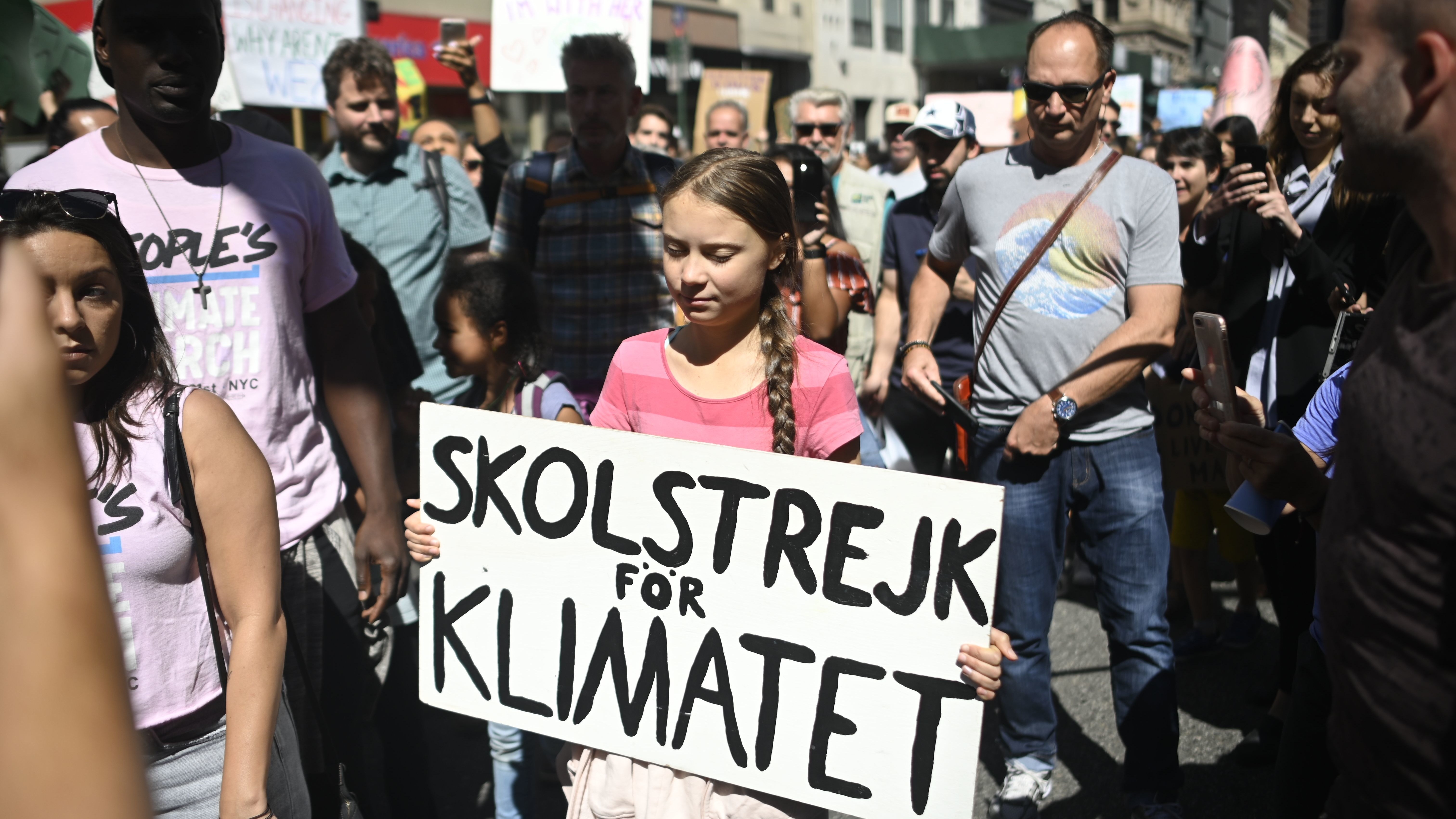
In more than 3,600 locations around the world today, students walked out of classrooms and took to the streets to demand action to fight climate change. This is the third climate strike that teens have led in 2019 and it will kick off the first-ever UN Youth Climate Summit in New York on Saturday. The movement began 12 months ago, when 16-year-old Greta Thunberg started protesting alone on Fridays outside of the Swedish Parliament building in Stockholm to call attention to the environmental crisis. Thunberg—who addressed Congress on the subject earlier this week—spent the afternoon marching in New York, alongside other teen activists.
And nationwide, girls in particular took a stand, demanding more from their parents and their politicians. Kate Puharich, a Chicago-based high school freshman told the Chicago Tribune that she’d “always been told, ‘Just wait when you’re older to get into politics.'” But when she saw the United Nations report that the damage done to the environment will become irreversible by 2030, she thought, “Wow, I can’t wait that long.”
Others echoed her demand for urgent action. “I’d rather go protest about the Earth and how something’s going wrong than sit in my classroom and act like nothing’s happening,” one high school student shared with the radio station WOSU in Columbus, Ohio.
“It’s our futures—if we don’t stand up now then eventually it will be too late,” San Francisco eighth grader Lily Salazar told Mercury News. “We’re going to have to live with it.”
Here, we’ve collected the most powerful and hopeful scenes from the Global Climate Strike.
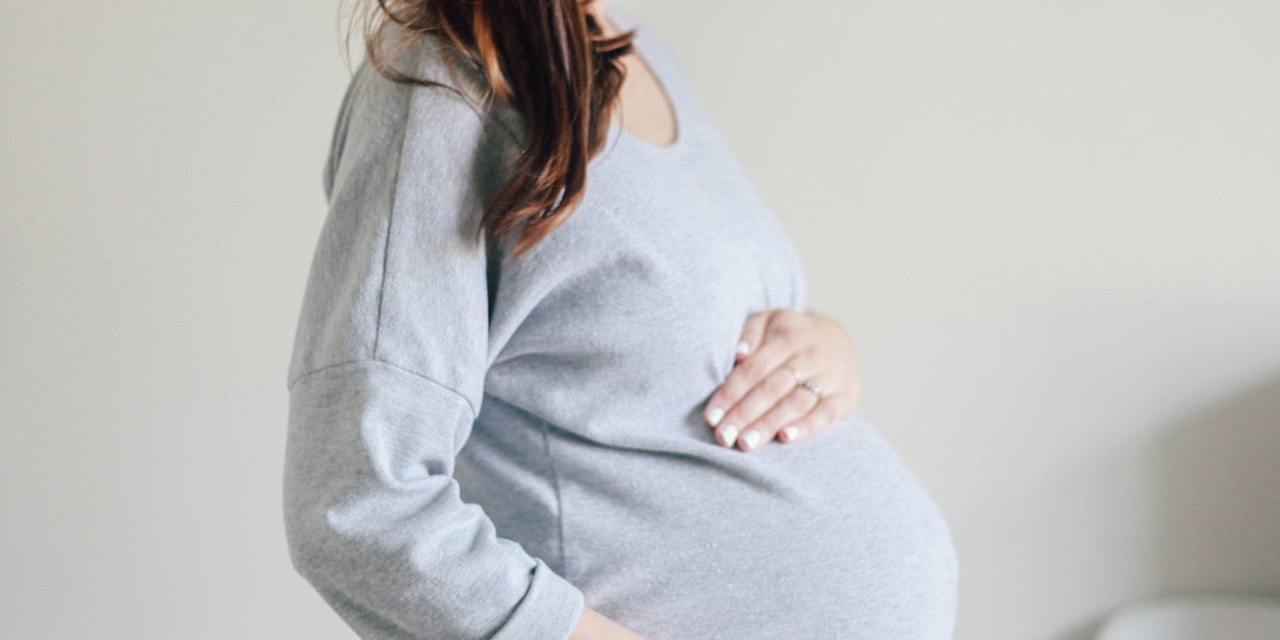
The Zika virus is not the only mosquito-borne virus pregnant women need to know about. According to new research, Rift Valley fever is poised to become an even more dangerous global health crisis—especially if you’re pregnant.
The idea that something as innocuous as a mosquito bite could cause severe birth defects, is nothing short of terrifying. When cases of Zika broke out in 2015, experts quickly declared it a global health crisis, issuing travel warnings and safe-sex recommendations to help stem its spread. But Zika isn’t the only mosquito-borne virus that pregnant women need to know about—researchers are growing increasingly concerned about the virus that causes Rift Valley fever (RVF), which is found throughout Africa and the Middle East.
In a recently published study, a team of researchers studied the effects of Rift Valley fever using infected rats and human fetal tissue—and their findings are setting off alarm bells among global health officials. The virus, according to the report, can infect the layer of cells in the placenta that’s responsible for delivering nutrients to the fetus. Translation: Unlike Zika, which indirectly affects the placenta, RVF is able to take a short cut, which can mean birth defects and death when pregnant women are infected, according to a report on the study by the New York Times.
To be clear, RVF hasn’t yet reached the level of global health crisis for pregnant women like we’ve seen with Zika—the World Health Organization has called the RVF a potential public health emergency, according to the New York Times. But researchers are on alert now in an effort to help pregnant women across the globe stay ahead of the curve. “Zika caught everybody by surprise,” study author Amy Hartman, Ph.D., an infectious disease specialist at the University of Pittsburgh, told the New York Times. “If doctors had known about Zika’s birth effects, they could have done a lot more to protect pregnant women and babies. With Rift Valley fever, we’re trying to get ahead of the curve.”
RVF isn’t exactly new. The virus is primarily found in livestock throughout sub-Saharan Africa but it can be transmitted to humans via mosquitos where it can cause flu-like symptoms, liver issues, and in pregnant women, birth defects that can be life-threatening for the fetus. In 2000, there was also an outbreak of RVF in the Middle East, according to the World Health Organization, which raised the possibility that it could spread to other parts of the world just like Zika.
The good news? So far, there are only two cases of fetuses infected with RVF on record, the New York Times reports, but since the disease can be asymptomatic (meaning pregnant women may not even know they’ve been infected), the researchers note it’s possible many more cases could have been misdiagnosed. According to the Centers for Disease Control and Prevention, the most common symptoms of RVF include fever, weakness, back pain, dizziness, and weight loss. Most people recover after a few days but severe cases can involve brain swelling, and in extremely rare cases, death.
At this stage, there are no Zika-like travel advisories for pregnant women related to RVF. But if you’re traveling while pregnant, it pays to take extra precautions, says Adeeti Gupta, M.D., a board-certified OB/GYN and founder of Walk-In GYN Care in New York. “I would say, exercise caution while traveling to sub-saharan Africa, West Africa and Madagascar. Thankfully, it is not a widespread health emergency yet,” she says. The best thing you can do is protect yourself against mosquito bites—especially when you’re traveling in Africa or the Middle East.
And to be extra safe, Dr. Gupta advises flagging any travel to your doctor while you’re pregnant so that you can stay up on any risks and get any appropriate vaccinations. “You should also be aware of any infections—even mild flu like illnesses,” upon your return, Dr. Gupta says. “If you experience any such symptoms, seek medical care to get tested for conditions such as Zika to stay ahead of the game.”
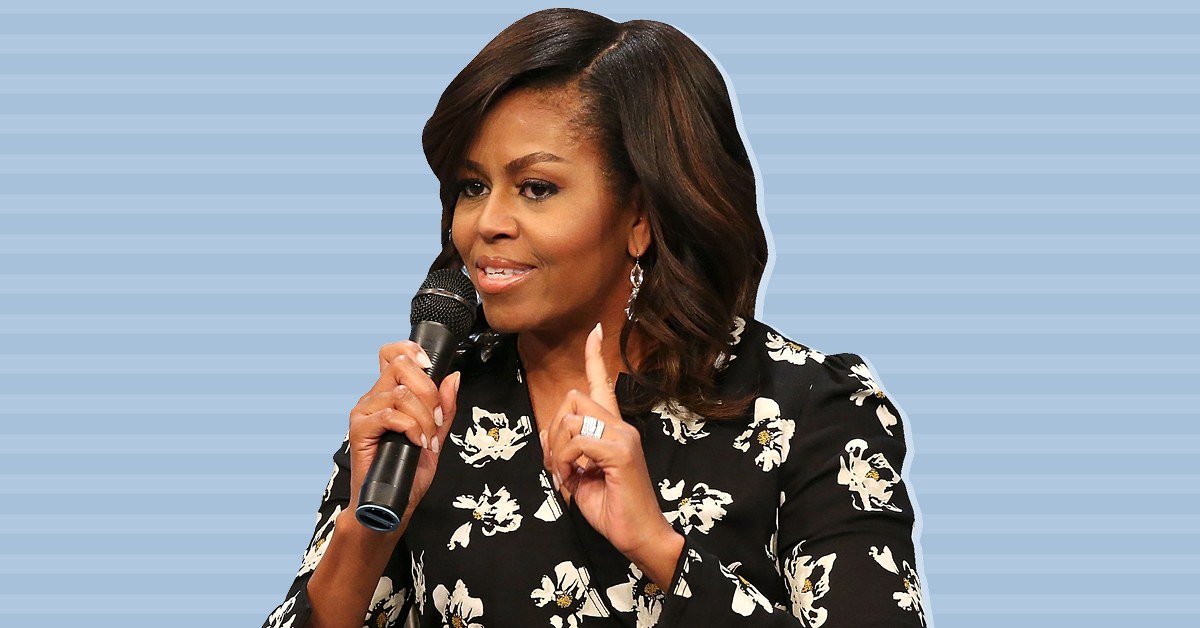
Michelle Obama is officially back with a new initiative post-White House, and true to form, she’s using her platform to stand up for girls globally.
To kick off International Day of the Girl on Thursday, the former First Lady announced her first major project from the Obama Foundation on the TODAY Show: The Global Girls Alliance. Their mission is right in line with much of the work Obama did during her time in Washington D.C.—to empower adolescent girls around the world through education, giving them the tools to support their families, communities, and countries. According to program, 98 million girls are not in school. But with the alliance, and some help from community, Obama intends to change that alarmingly high number.
“The stats show when you educate a girl, you educate a family, a community, a country,” Obama said in front of a live audience filled with young women. “It makes no sense that girls and women are not getting educated, that they’re not in school. If we care about climate change, if we care about poverty, if we care about maternal child health, then we have to care about education.”
“Think about our daughters, with all their promise, with all that they have in them,” she told TODAY hosts (and moms to daughters) Hoda Kotb and Savannah Guthrie. “You know even now at this young age that there is something burning in them that is dying to get out. Well, that is true for millions of girls around the country and they are battling through misperceptions, violence, stigma to get their way into a classroom. And many of them don’t have access to a classroom so we want to play a role in building an alliance of young people who are out there doing the work on the ground. And we want to give them an opportunity to network with one another because working on these issues out in the world can be lonely.
And all this as she gears up for the launch of her much-anticipated new book, Becoming, which documents Obama’s own experiences growing up in Chicago and her road to the White House with former President Barack Obama.
News of Obama’s latest project to support girls isn’t surprising: One of her signature initiatives during her husband’s presidency was “Let Girls Learn”, which she and President Obama launched in 2015. The program focused on recruiting government agencies, corporations, and nonprofit organizations to invest in adolescent girls’ education around the globe. (The Trump administration chose not to continue “Let Girls Learn” as a standalone program, though they say they are continuing some aspects of its work.)
And then, of course, there was Obama’s #62MillionGirls campaign which launched under the “Let Girls Learn” umbrella in 2015. With 62 million girls not attending school around the world, the social media campaign asked celebrities (like Kerry Washington) and supporters to share their education stories using the hashtag. In a video announcement at the time, Obama said, “I see myself in these girls. I see my daughters in these girls. These girls are our girls, and I simply can’t walk away from them. So for me, this is truly a moral issue.”
That same year, Obama participated in Glamour‘s “The Power of an Educated Girl” panel with former Australian Prime Minister Julia Gallard, Sophia Bush, and Charlize Theron.
“For me, this is personal,” Obama said during the panel. “When I think about the 62 million girls not in school, I think of myself and my daughters—all my girls, all our girls. I think about where I would be in my life if I didn’t work hard in school and had the opportunity to go to college and law school. I wouldn’t be here. It’s imperative—and it’s my passion and my mission—that every girl on the planet has the same opportunity that I have and my daughters have.”
This new alliance will leverage Obama’s massive platform and popularity to give support and raise awareness of organizations already doing amazing work in this space. To that end, the Global Girls Alliance’s goals include driving public awareness and action, bringing together grass-roots leaders who don’t have necessary funding, fundraising, and engaging people in the United States and around the world. “The world is a sadly dangerous place for women and girls, and we see that again and again,” Obama said on TODAY. “I think young women are tired of it. They’re tired of being undervalued. They’re tired of being disregarded. They’re tired of their voices not being invested in and heard. And it’s not just around the world, it’s happening right here in this country. And if we’re going to change that, we have to give them the tools and the skills through education to be able to lift those voices up.”
[embedded content]
There are going to be a lot of different ways to get involved and engage with the Global Girls Alliance. Grass-roots groups will be able to access a Facebook network where they can share research, resources, and helpful best practices. Global Girls Alliance is also partnering with GoFundMe to create a fundraising platform that will vet specific programs and enable people to give directly to the project of their choice. The Alliance will also work to inspire and challenge young people to learn about important issues and will offer toolkits that girls can take back to their own schools and communities to affect change.
We can’t wait to see what’s next; we all know the power of girls and women can be a massive force for change when we work together.
For more information on the Global Girls Alliance, click here or here.
Demi Lovato is a vocal crusader for a number of important causes: body positivity, self-esteem, and her sobriety (going on six years!), among others. But one thing she’s been extra passionate about is mental health. She told Glamour last year that she considers speaking out about mental illness and addiction is her “true purpose,” and been active and visible in leading reform for it. Case in point: she’s partial owner of a rehab facility she once went to for treatment, led a series of wellness conferences, started a program that helps people who can’t afford treatment get it, and shown up at Congress to lobby for mental health reform.
Now, Lovato’s continuing her work on an even larger scale: she’s the mental health ambassador for Global Citizen, the “social action platform” that uses Twitter, Instagram, and other social media as a road for social change.
She announced the news on her Instagram on Sunday afternoon—and according to the caption, the first thing on her agenda seems to be a pilot program with Save the Children in Iraq.
According to the second Insta in the slideshow, Lovato will be taking Save the Children’s HEART program—which focuses on healing, psychological support, and “basic education through the arts”—to kids who have been displaced in the Middle Eastern country. “My hope is that this program can bring a bit of comfort to those who need the most,” she wrote. “This isn’t about politics or race or religion. It’s simply about humanity and protecting one another.”
Such a cool cause—and what a perfect champion for it.