Categories
Health

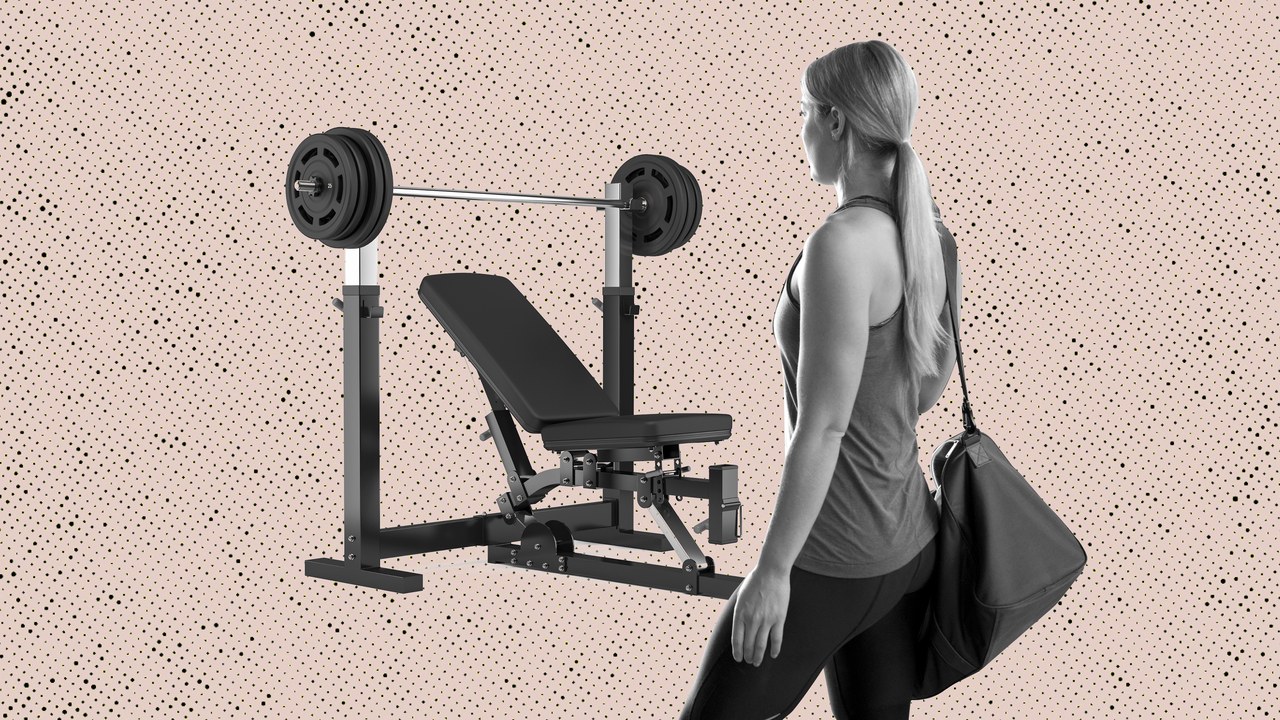
A Gender Gap at the Gym Is Keeping Women From Working Out


Growing up, Sayeeda Chowdhury, 24, never thought of herself as an athlete. She developed an aversion to the gym young, when classmates stared at the “Muslim girl modifications” to her PE uniform. “I hoped I could find the courage to go to the cardio room one day, but never imagined going into the weight room filled with testosterone and people staring,” says Chowdhury.

But that didn’t stop her from admiring strong female athletes. One day, watching a powerlifting video posted by a woman in her medical school class, she couldn’t help herself: “#goals,” she commented.

To her surprise, the woman invited her to come to the gym to learn to lift. With encouragement, Chowdhury kept coming back, gaining confidence on top of strength. “I stopped caring about who was watching me,” she says. She was hooked, and today she’s a powerlifter in her own right.

Chowdhury definitely isn’t the only woman to feel a sense of gym intimidation—if you’ve ever set foot in a bro-y weight room and suddenly felt like everyone was judging you, you know the feeling. But it’s not just a matter of making women self-conscious: Researchers argue experiences like this contribute to a gender gap in physical activity levels that harms women’s health.

Globally, women are less likely than men to get enough exercise: 57 percent of men ages 18 and over meet recommended aerobic activity levels, versus 49 percent of women, according to CDC data. When it comes to the number of people who meet guidelines for both aerobic and muscle strengthening activity, the gap widens. (Further marginalized groups have it even worse—in a recent study, young Black women were the least likely group to report any physical activity, and given the discriminatory policies trans and non-binary people face in sport and gym environments, experts suspect their exercise participation rates are even lower.)

In my six years as a personal trainer, I’ve seen this firsthand. It’s more than a personal frustration—it’s a serious health equity issue. Research tells us that regular exercise is one of the most powerful things a person can do to reduce their risk of developing chronic disease: It lowers the risk of hypertension, heart disease, stroke, diabetes, and numerous types of cancer. Exercise is also beneficial for mental health, and helps to build and maintain bone density, a concern especially relevant for women who are at greater risk for osteoporosis.

Just like the wage gap, the gender gap at the gym robs women of a better future.

So what’s responsible for the gym gap? The answer is complex, but a major factor is that active spaces are plagued by gender-specific deterrents that encourage women to stay on the sidelines.

For starters, women are more likely than men to experience weight stigma, which can discourage women from going to the gym (and even the doctor’s office.) Then there’s the issue of harassment—as in most public spaces, women’s experiences in gyms and on hiking trails and running routes are often marred by harassment. While running in a busy park in Salt Lake City, Shauna North, 26, was followed by a man in his car. He would park, watch her run past, drive up ahead, and park to watch her run by again. Later during that same run, she was whistled at by two more men, separately, as they drove by. Over 40 percent of women experience harassment while running, according to a 2017 Runner’s World poll. North was so shaken by her experience, she gave up on the idea of running a half marathon, afraid of what might happen on training runs after work. “If the same thing were to happen to me at night with no people around, I don’t know what the outcome would have been,” she says.


Source link

Categories
Health

Jill Soloway on Identifying as Gender Nonbinary


Jill Soloway is under construction. This is true both ­literally—Soloway’s house, in the Los Feliz hills of Los Angeles, smells faintly of sawdust and has caution tape ringed around the banister—and in a deeper sense: The writer and director recently came out as gender nonbinary, meaning Soloway doesn’t identify as a woman or a man and prefers to use singular they pronouns rather than she or he.

It’s a significant shift for someone who has long been a proponent of the “female gaze” in filmmaking, meaning movies and TV that present women as the protagonists rather than as objects of male pleasure. For many years Soloway was a producer and writer on shows like Six Feet Under and Grey’s Anatomy, but you most likely know them as the creator of Amazon’s Transparent, inspired by Soloway’s own parent coming out as transgender. Onstage, accepting the Emmy for best director of a comedy series last year, Soloway yelled, “Topple the patriarchy!” (Topple is also the name of their production company, which most recently produced the Amazon series I Love Dick.)

The past few years have been full of change in other ways too. After Soloway and their former partner, music supervisor Bruce Gilbert, separated in 2015, Soloway dated punk poet Eileen Myles. The couple broke up last year, and these days Soloway is enjoying being single, setting up house, and focusing on writing. We sit down for a conversation in Soloway’s bedroom, which is painted a soft, purplish gray, with French doors that open out onto a wide patio. Soloway does a lot of writing here in bed, they explain, particularly on a “hilarious and moving” book about the past five years of their life, from when their parent came out as trans to when they came out as nonbinary. It’s been quite a journey.

Glamour: How do you feel about being part of “TV’s female revolution” in Glamour when you don’t identify as a woman anymore?

Jill Soloway: I’m happy to always be included in the list of women. I feel like nonbinary can mean both. I’d like to be in the sections about female leaders and male leaders. Why not?

Glamour: How did you start to question your female identity?

JS: I always had trouble with the idea of getting dressed up. I remember being 25 and dating this guy, and he was talking about a wedding that we were supposed to go to. I was just like, “Ugh, weddings. People getting dressed up. Why do people do it?” I could put on a dress and do hair and makeup, but I felt like I was in drag. I couldn’t wait to get home: That feeling of, “Get these Spanx off me. Get these shoes off me.” When Transparent happened, every couple of days somebody was coming over to put makeup on me, and then we would look in the mirror and decide if I was pretty. It’s assumed that if you’re a woman, you want to be the prettiest version of yourself. It always put me in a bad mood. It was like, “OK, I’m successful. I’m supposed to be happy. Well, why aren’t I happy?” Part of the problem was that my looked-at-ness had become a priority over my art making. Over and over again it was like, “I don’t have time for this. I want to work.” I love writing. I don’t love somebody putting false eyelashes on me.

Glamour: Why did you feel you couldn’t say no to hair and makeup?

JS: Before I had all this information about my parent being trans, I just accepted certain aspects of what it meant to be female or feminine or femme. [Recently] I was thinking about being a little girl and letting your tummy stick out, and then puberty hits, and you have to hold your tummy in. And you’re not really allowed to let your tummy out again until you’re pregnant. To just walk around leading with the belly—you can’t do it. You can, but you won’t be sexy. And that, to me, just feels like a real kind of handicap.

Glamour: Did that shift after you started dating women?

JS: I was still mostly dating butch women and identifying as femme. So my prettiness was part of our dynamic. Then I [realized] I don’t actually want to be femme at all. When I started thinking of myself as butch—oh my God. It started to change everything: the way I walked, the way I sat, the way I talked. I said my ideas out loud more. I didn’t think about how I sounded. A lot of this is influenced by Eileen Myles. I was so in love with her and jealous of her; I really studied the minuscule amount of difference between her interior self and her exterior self. We’ve all heard women say, “I have to put my face on”; [that implies] there’s a very big difference between who they are alone and who they are outside. I wanted to put together my interior and my exterior.

Glamour: Of course there are some women who sincerely enjoy lipstick and heels!

JS: There are a lot of women who are thrilled to have a conversation about shoes…. [But] the category of nonbinary or gender-queer feels like a relief to me. It’s sort of a safe home, a place in which my self wishes to reside…. I know it’s awkward and hard to understand, but all we have is the language. These words are attempting to catch up to something that is a question of how one exists inside one’s mind or one’s soul.

Glamour: How do you work differently than straight male showrunners or directors?

JS: I’m working a little bit more like a psychologist or a magician, offering the actors the opportunity to spend a lot of time on the set until they feel like they’ve lived there for 20 years. And then we’ll tiptoe in with a camera. We’ll put some music on. The camera operator will shimmy over close to them. I’ll slowly but surely turn the music down. I’ve secretly told somebody to start rolling sound. And we just swish into the feeling. I don’t know if that’s female or feminine, or just not male, or not the way things have been done. [We want to] generate a whole new style.

Glamour: If heels and lipstick once limited you, what is making you feel free these days?

JS: The shorter my hair gets, the more I’m like, “Oh, I actually don’t have to look in the mirror, because there is nothing to adjust.” Wearing men’s clothes and having my waistband be down here, rather than up here—’cause then I can just stick my stomach out.

Glamour: Belly pleasure is real.

JS: Yeah, it’s real. And I’m so into decorating my room and wanting it be both masculine and feminine at the same time and just have all parts of me.

Ann Friedman writes for New York magazine and the Los ­Angeles Times; sign up for her newsletter highlighting great stuff to read at annfriedman.com.

-Related Stories:
This Trans Activist Photographed Themself Free-Bleeding to Make an Important Point About Periods and Gender
The MTV VMAs Nominations Are Here, and Gendered Categories Are a Thing of the Past


Source link

Categories
Health

Christian Siriano's Inclusive Spring 2018 Runway Featured Size, Gender Diversity


Though it was only last September that he introduced size diversity onto his runways, Christian Siriano has long been praised for his inclusive approach to fashion—both in terms of the women he dresses and in how he runs his business. Since his Spring 2017 show, which featured five plus-size models among the lineup, the designer has hired more curvy spokespeople for his brand (on the catwalk and in campaigns), dressed celebrities who have had trouble finding a brand to outfit them, and continued to be an advocate within the industry. And for Spring 2018, Siriano is doubling down on his commitment to represent a variety of folks on the runway during New York Fashion Week by expanding his inclusive casting to include male-bodied, trans, and gender non-conforming models.

After seeing what Siriano estimates to be “over 450 people” through the audition process, the designer put together a cast for his Spring 2018 show that was size-inclusive (“we started with [five] curvy girls—we’re now up to twelve,” he says) as well as gender-inclusive. “This season, I wanted to show that it’s not only about size—it’s also about color, race, and gender,” he tells Glamour. “We have a couple of male models and a beautiful trans model in the show this season. If you’re out shopping and you love a dress, it doesn’t matter if you’re a boy or a girl or whatever.”

It’s the first time the designer, who’s perhaps best known for his evening wear, broadens the scope of his cast to include a range of gender identities. It’s a demographic that has historically been underrepresented on the runway, even as castings become more racially and body diverse. According to The Fashion Spot‘s diversity report for Fall 2017, 12 trans women walked the catwalks throughout Fashion Month—that’s 0.17% of all model bookings for the season.

Siriano says the impetus to diversify on this front came from the customer. “We’re getting requests from around the world, from men asking for wedding dresses—we’re getting everything,” he explains. “People reach out to us every single day—not only directly to us, but to our retailers,” he explains. “I was noticing a change. People, I think, feel comfortable [coming] to me and not feeling turned away. That’s the biggest part of this: I really want anyone who wants to look great in clothes and buy a beautiful suit or dress or whatever to feel good in it. There are no rules for that.”

The Spring 2017 show, with its size-inclusive casting, “changed our entire business,” says Siriano. “I didn’t think it would, but I approach everything that way now. I just want to see different types of people always, whenever we’re booking for any job or for anything—I’m doing a really great beauty project with e.l.f. Cosmetics, and it’s the same process with them: We need a very diverse collection, I’m not interested in making pretty products for ten percent of the world. I love that the retailers are starting to get on board. I love that Moda Operandi is now going up to size 26, and a few seasons ago only went up to a size 12 or 14. I’m trying to, and I know there are other designers doing the same, so it’s awesome that we’re all getting together on this.”

Though these deliberate Fashion Week casting moves certainly draw more eyeballs to his brand, Siriano says it’s his work on the red carpet that brings him a lot of exposure. “I’m dressing so many different types of people—obviously, one of my favorite people to dress is Janet Mock, who’s become such an activist in the trans community, and she’s so amazing,” he explains. “I love creating for her, and that has trickled into a whole other part of the world that I’m super happy and proud of.”

PHOTO: Taylor Hill

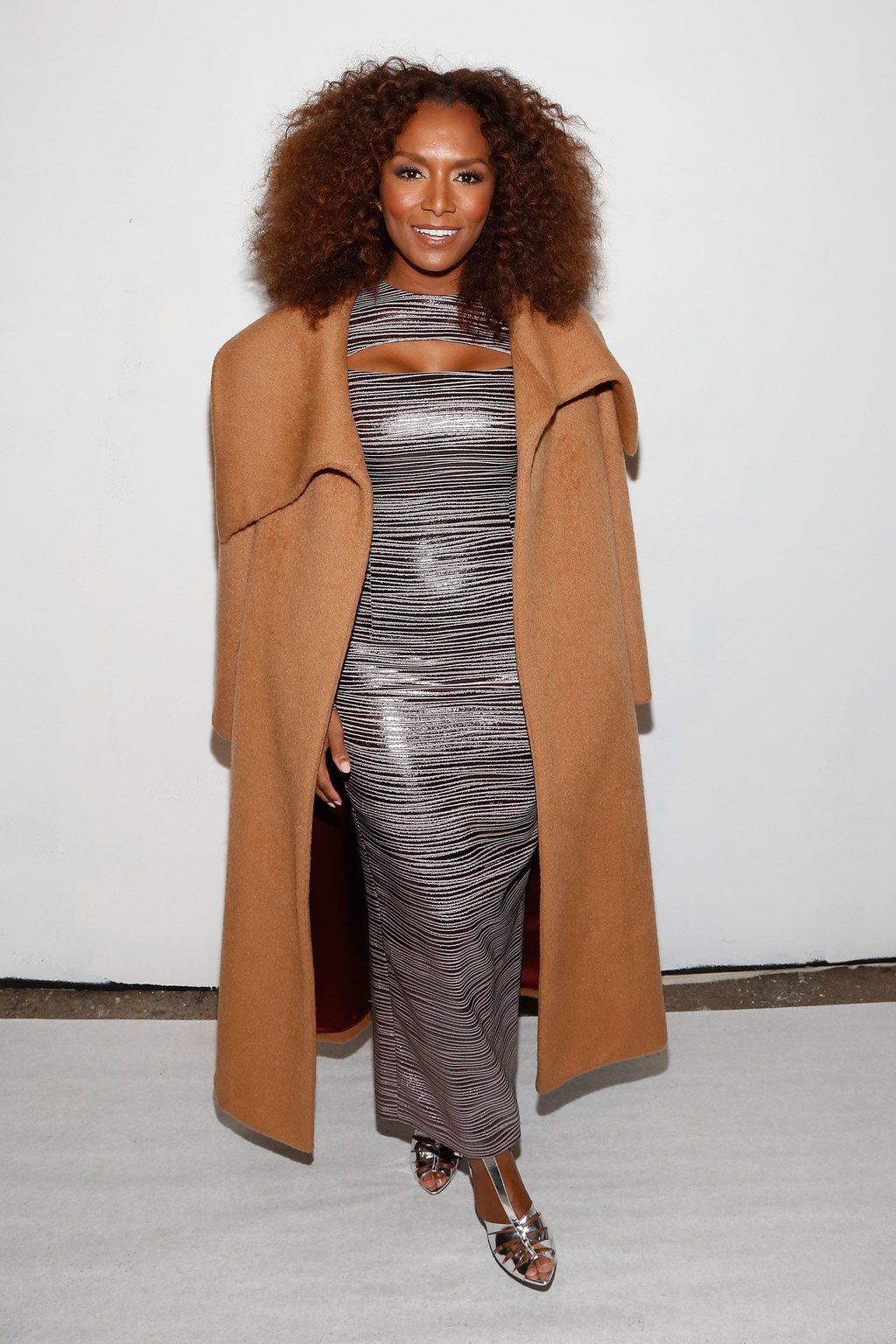
Janet Mock at Christian Siriano’s Fall 2016 show during NYFW.

Over the years, he’s dressed celebrities from diverse backgrounds and with different body types—all of which have gotten him a lot of press. (Think Leslie Jones, Laverne Cox, Coco Rocha, Danielle Brooks… The list goes on, and on, and on.) However, this wasn’t a preconceived business strategy from Siriano, but rather the natural evolution of his brand. At this point, though, it’s what the public has come to expect of Siriano— something that the designer actually enjoys, since he’s “up for the challenge” of building upon his own record. He continues: “I want it to just feel normal. It’s great that we’re getting exposure, but I want people to be like, ‘Wow, these girls look great in these clothes.'”

No matter how folks get acquainted with his work, Siriano does stress the value of using the catwalk as a platform. “As a fashion designer, our voice is in the work, like an artist—Fashion Week is kind of our performance of the year, and the clothing is supposed to speak for us,” he says. What you send down the runway, then, is a reflection of your brand and informs how the world sees you. However, he’s well aware that there are bigger fish to fry in 2017—and fashion should be a joyous aspect of a person’s life. “There’s so much hate going on in our world, especially politically, that I think fashion really needs to be the fun part of your day; It shouldn’t be this stressful, horrible thing in the morning, [to not] find something to wear. That’s kind of how I’m approaching it.”

With his Spring 2018 collection, Siriano hopes people will see it as a means “to show how beautiful people are… Everybody obviously has their opinions on what they think is beautiful or what they think is a great look—we’re all subjective, that’s what judging clothing is about. But I think this collection is so bold, vibrant, colorful, and powerful [that what I hope] people take away is, ‘Wow, the women and the men that are on the runway are just beautiful.'” It’s a nice continuation of the phrase Siriano highlighted on the Fall 2017 runway with his slogan T-shirt: People are people.

Related Stories:

Last NYFW, Fashion Got ‘Political’—Now What?

Laverne Cox Stars—Nay, Slays—in Beyoncé’s New Ivy Park Campaign

See Every Look From LC Lauren Conrad’s First Plus-Size Collection


Source link