Categories
Health

My Friend Has Stage IV Breast Cancer. Here Are Some Things She Wishes You Knew


Don’t wait to start self-exams and mammograms.

“You’re never too young to start self-exams, and you should go for an annual mammogram as soon as possible, certainly by 40, but earlier if you have a history of breast cancer in your family,” says Tami. Be your own advocate on the latter; controversially, the American Cancer Society recently raised its recommended age for starting annual mammograms from 40 to 45, yet most insurance companies will still cover routine mammograms at age 40, often younger. “If I’d followed the age-45 guideline, I wouldn’t be alive today,” Tami once said to me. Terrified, I went and got my first at age 38 by asking my ob-gyn to write me a prescription. At the time, I had no family history, but insurance did cover the test. Now, lo and behold, I do have a family history; my mom is currently being treated for breast cancer. I’m so glad that I already got a couple “baseline” mammograms—ones that future tests can be compared against to look for changes.

No type of breast cancer is “no big deal.”

Since one in eight women get breast cancer, almost all of us know someone who’s had early-stage and seems perfectly healthy now. “The perception is, ‘Oh, you have breast cancer, you’ll be fine,’” Tami says. “People think you can just have a double mastectomy and be cured.” She did, when doctors initially thought she was stage II. “In my mind, I said, “OK. I know there’s a high survival rate. I don’t care, I don’t need my hair, I don’t need my boobs. Now I know that even for stage II, a mastectomy is just the first step of a year-long process of reconstruction and treatment.” And much too often, the story doesn’t always end there: “Thirty percent of early-stage breast cancer will eventually come back as stage IV or metastatic, where it has spread to other organs or the bones, and there is no cure for that.”

Picture an airplane falling from the sky every single day.

And each time, 115 people die. Imagine the hysteria and outrage we would all feel. Yet that’s how many people die each day from metastatic breast cancer. I found this analogy so powerful when Tami first shared it with me. Research leading to new treatments for MBC is the only thing that can reduce that number, yet just 3 to 5 percent of U.S. breast cancer research funding currently goes toward that. How to begin to shift that imbalance: Find out what percentage of dollars from any breast cancer donation you make will go toward research, versus awareness and programming. Better yet, donate directly to metastatic breast cancer research. METAvivor is currently the only U.S. organization dedicated solely to awarding annual peer-reviewed stage IV breast cancer research grants. To raise awareness for this cause, metastatic breast cancer has its own awareness ribbon, one with stripes of green (representing spring and the triumph of life over death), pink (indicating that the cancer originated in the breast) and teal (representing spirituality and healing). More than 80 iconic landmarks around the globe have showcased the colors during Breast Cancer Awareness Month in 2019.

There are so many people just waiting for that next drug to come out.

“Will there be another drug by the time this one doesn’t work?” It’s the question Tami’s friend Monica was asking until she recently passed away at age 33, leaving a 3-year-old daughter behind. “What gives people hope is the fact that they are coming out with more drugs, so the money and the research does make a difference, even if it’s not curing the disease.” Ultimately, MBC patients know that they will need to resort to clinical trials. “There are amazing resources out there now to help patients navigate clinical trials,” Tami notes. “One of the best websites available was designed by a metastatic patient for metastatic patients. Called The Storm Riders Network, it pulls trials from all over the world into an extremely user-friendly interface.”

Source link

Categories
Health

I Lost My Fertility to Breast Cancer—But I Gained a Best Friend


It’s just a plugged milk duct, I thought, as I stared at my bumpy breast in the bathroom mirror. I had just stopped breastfeeding my nine-and-a-half-month-old son, so this was bound to happen. But when the lumpy area on my miniature mound was still there a few weeks later, I made a doctor’s appointment to check things out. “It’s probably infected,” I told my family physician as I undressed, talking nonstop and ignoring the look of panic in her eyes as she felt the suspicious area on my right boob. She ordered an urgent ultrasound and mammogram. A follow-up biopsy confirmed: It was cancer.

They caught it early, I had a double mastectomy, it didn’t spread. Really, I’m a lucky gal. But due to the hormonal treatments, which I will be on for many years to prevent a recurrence, I’m unable to carry another baby. My husband and I were ready to start trying for a buddy for our first bundle of joy, so as you can imagine, this was, shall we say, a bummer.

But then we remembered the Fabulous 14—our fertility Hail Mary.

Several years back I’d read about the rising trend of couples in their 30s freezing their embryos, giving them more time to save money and work on their careers. At that point, my husband and I had been talking about having kids but weren’t quite ready. Freezing our future chances seemed like a brilliant idea. I shot needles in my belly for several weeks, had my eggs retrieved, and we were able to freeze 14 embryos, aka the Fabulous 14. After it was confirmed I wouldn’t be bearing our next love child, we did some research, met with a lawyer, and decided surrogacy would be a great way to complete our family.

Green tea latte in hand, I went where I always go when I need an answer in a hurry: Facebook. A few keystrokes later, I found a handful of very active groups dedicated to surrogacy in Canada. I figured I had nothing to lose, so I posted my story. Within minutes I had multiple responses, including one from a surrogate who was currently pregnant but had a close friend who was looking for IPs (intended parents). “I think you two would really get along,” she wrote. “She has a great sense of humor.”

She passed along my info, and this gal, let’s call her Rose (after my favorite Golden Girls character), and I start messaging each other daily, getting to know each other and feeling things out like some weird surrogacy version of The Bachelorette. A fellow Scorpio, she’s hysterical and whip smart (like me, right?). She texted me pictures of a coworker napping at the office, and I of my son having a meltdown. We shared details here and there about our surrogacy expectations, but mostly it just felt like two girlfriends catching up. I flew to see her one Monday—as much as I love a good text, an IRL meeting seemed like a prerequisite to asking this lady to carry my baby—and we spent the entire day at a Swedish spa laughing, drinking, and almost getting kicked out of the “quiet meditation pool.” Silent Scorpios, I think not.

We made it official when she popped the question: “Listen, I was wondering, would you like to go out with my uterus?” We were a perfect match.

She’s the first person I reach out to when I wake up, oftentimes with a video of me singing Queen off-key in the car on my way to Starbucks. When she came to Toronto, where I live, for the medical screening, she brought her husband and kids. I fell in love even more. It was so easy to be around them all, almost as if we had been in each other’s lives forever—the oldest and dearest of family friends.


Source link

Categories
Health

How to Support a Friend With the Breast Cancer Gene


Each year, an estimated 330,500 women (and 2,670 men) in the United States will be diagnosed with breast cancer. But many more women are living with the knowledge that they are a carrier for what is commonly known as the “breast cancer gene.”

Technically “breast cancer gene” refers to a mutation in one of two genes, BCRA1 or BRCA2. Everyone has the BRCA1 and BRCA2 genes but certain mutations in them can significantly increase your risk of breast and ovarian cancer. To put it in context, the average woman in the U.S. has a 12% risk of developing breast cancer in her lifetime, according to BreastCancer.org—a BRCA mutation ups your risk to a 72% chance of being diagnosed with breast cancer during your lifetime.

A BRCA gene mutation doesn’t mean you will get breast cancer—but it is something to take seriously.

As a friend of someone who recently found out that they have the breast cancer gene mutation, you might be wondering: What can I do during this difficult time? Can I help my friend? What is the best way to offer support? We spoke with six women who have been there about the kind of support that actually helped. Below, their 10 best pieces of advice on how you can support a friend with the breast cancer gene.

Show up for her.

“I would make sure to call or text her on a regular basis. Having people check in was so nice. I had one friend who thought she was giving me space, but when people give you space and don’t call, it just feels like they’re too uncomfortable to care.” —Zina, 31

Let your friend simply talk about her feelings.

“In the days after I found out, the most helpful thing was just having honest conversations about my feelings with friends. Just having friends that let me talk out my feelings was incredibly helpful.” —Sarah, 37

Or let her cry if she needs to.

“After I screamed at my mom who was trying to tell me what to do—or not do—as a result of the genetic results, my brother admitted that he didn’t know what to do and how to help. So he just sat with me and let me cry and complain and process.” —Angela, 37

Don’t offer advice unless you’re asked.

“The most helpful reaction was asking what exactly it meant, what my plan was and how they could support me. No judgment, no suggestions of alternative lifestyles or comments like ‘but you breastfed so your risk is lower.’ We have doctors for advice. Friends are for support.” —Katrina, 31

Know that knowledge is power, so arm yourself with it.

“My family and friends all rallied around me. We sat down with my breast oncologist and she gave us a lot of information. I know it is scary as hell to find out you carry the gene, but knowledge is power. Be there for your friend, go to appointments, show up and show support. If you have to, utilize the internet for information and join Facebook groups. At the end of the day, just be there for her so that she knows she’s not in this alone.” —Beth, 39

Don’t try to sugarcoat their diagnosis.

“Honestly, it’s just nice when someone isn’t trying to make you feel better or try to show you the silver lining. Having BRCA sucks and I don’t need someone to sugarcoat that.” —Zina, 31

Offer to help in practical ways.

“If your friend opts for preventative surgery, offer a practical act of service, like bringing her a meal or babysitting for her afterwards.” —Sarah, 37

Do not try to give advice on what you would do.

“Do not freak out. Do not tell them that they need to remove their breasts or ovaries ASAP. Don’t assume you know what a BRCA mutation means; do your own research and learn a bit more about it. And do not bother sharing with your friend what you would do if it was you. It’s not you; everyone’s situation is different.” —Jennifer, 47

Connect your friend with someone dealing with the same thing.

“The absolute best thing was when someone is able to connect you with another previvor—someone who is a survivor of a predisposition to cancer but who hasn’t had the disease—so you can hear from someone who has been there.” —Katrina, 31

Reach out, even if you haven’t spoken in a while.

“I had a lot of friends come out of the woodwork and reach out to me, people with whom I had not spoken in years, and I was really touched. If you’re not sure if it’s okay, just reach out. The worst that will happen is that the person will not respond, but it may change the outlook for someone struggling.” —Angela, 37


Source link

Categories
Health

Hello Hope, My Old Friend: As Donald Trump Faces Impeachment and Elizabeth Warren Rises in the Polls, Can Democrats Learn to Hope Again


But last month, I registered a shift. In me. In the people I know. Even on Twitter. An odd thing has happened. For the first time since the presidential election, some of us have started to feel…hopeful?

The sensation is so novel, I didn’t recognize it at first. But it began with that old nemesis of mine—polls. After months of ambitious plans, hundreds of photo lines, and countless appearances, Elizabeth Warren surged ahead in them. At last a woman whose hard work seemed to be noted and appreciated. The first primaries are still months from now, but for a lot of women, Warren presents a chance to finish what Geraldine Ferraro, Margaret Chase Smith, and Shirley Chisholm started. For a lot of us, the fact that we’ve never had a female president still stings. Even prim-and-proper England had Margaret Thatcher. (Yes, I know.)

Sure, Clinton had her problems, but those issues paled compared to her opponent’s deficiencies; the harassment and assault allegations, his numerous bankruptcies, the grift. I’m not here to re-litigate 2016, but the stark fact was that one candidate was qualified and the other didn’t know who Fredrick Douglass was.

Then, the Ukraine news broke. As reports trickled out, we learned that Trump has been pushing Ukraine for dirt on Joe Biden. Even moderate Democrats backed impeachment proceedings. And in the time since, I have sometimes wondered: What would happen if we didn’t all get dark and doubtful again? What would happen if we decided to hold the Trump administration accountable for once? Stranger things have happened.

There’s an expression in politics that “Republicans fall in line and Democrats fall in love.” As much as I hate the idea, I think there’s some truth to it. But I’ve held off on following my heart. I’ve been burned, and it’s so much easier to just assume the worst than hope for the best. At least that’s how I felt until now.

For the next few weeks, the Trump administration will have to answer for their actions. And in the meantime, women continue to run rings around him. Harris is on the cover of TIME Magazine! Warren, with her focus on childcare and student debt, makes me feel warm inside! I can’t help it. I feel…almost optimistic.

This election will take place 13 or so months and several million news alerts from now. And I am not blind to the realities of our current moment. Abortion is on the chopping block. Immigrants rights’ have been trampled. Our president just asked China to interfere in our elections from the White House lawn. I’m not delusional, but I am hopeful. Because for the first time in a long time, some determined part of me feels like we’re at the beginning of something.

Molly Jong-Fast is the author of three novels. Follow her on Twitter @mollyjongfast.


Source link

Categories
Health

Serena Williams Wants Everyone to Know What a Great Friend Meghan Markle Is


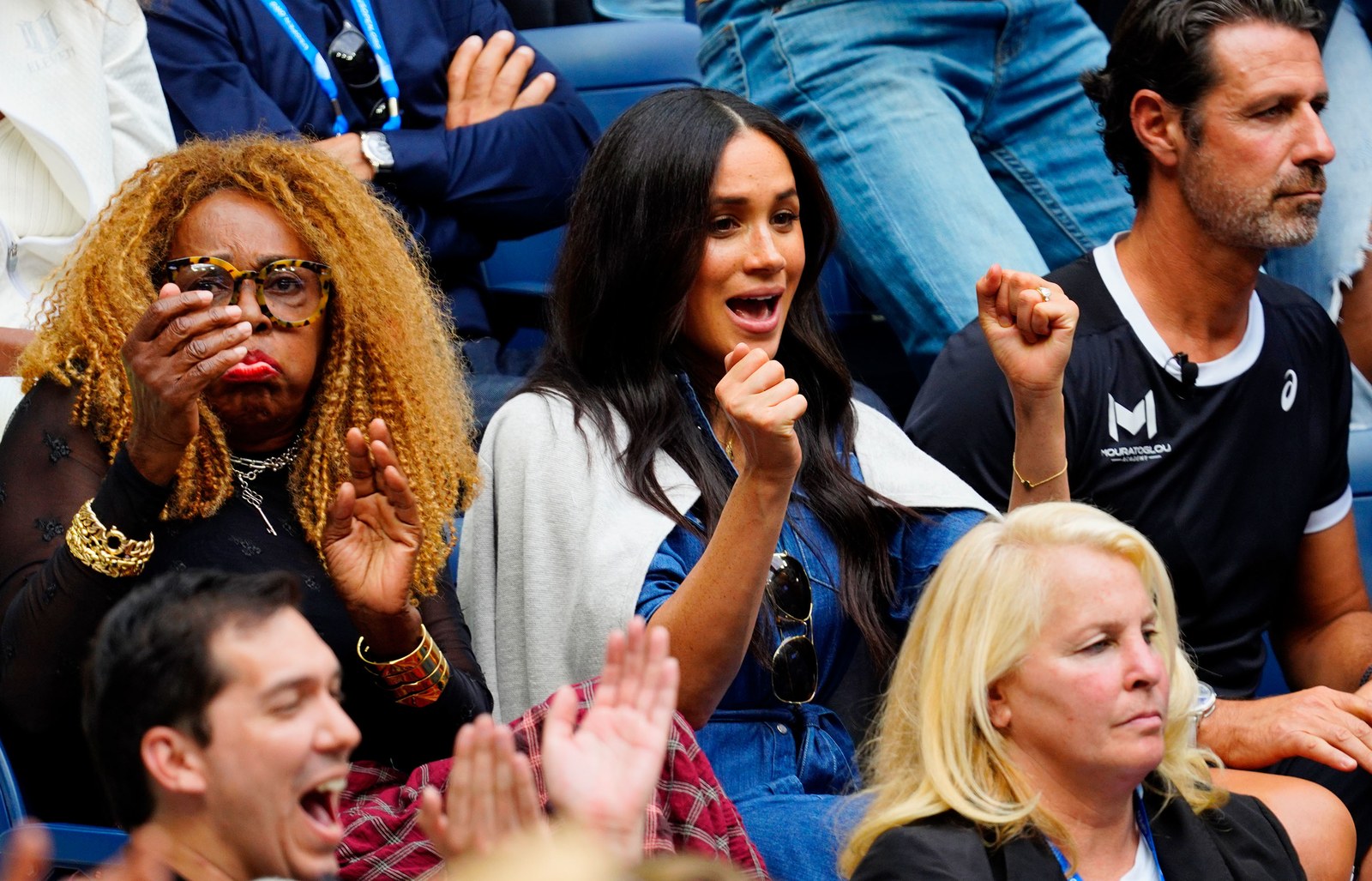
Serena Williams and Meghan Markle are two of the most well-known women in the world. But, to each other, they’re just really good friends. Like, the kind of friends who will fly across the ocean to support each other in their big moments.

Williams, of course, was among the famous guests when Markle married Prince Harry on the world’s stage back in May 2018. And the Duchess of Sussex has very publicly showed up for her tennis star friend at Wimbledon and most recently, the U.S. Open finals in New York City.

The Duchess of Sussex made the solo trip—sans Harry and baby Archie—just ahead of ending her royal maternity leave, and Williams wants everyone to know how much it meant to her. “Meghan is amazing,” she told E! News at the fashion show for her S by Serena line. “She literally flew across the seas just to support for a few hours with a newborn baby.”

Gotham/Getty Images

“She is the most positive, amazing human that I know,” Williams continued. “Everyone needs to know how amazing she is. I don’t know if I could have done that with my daughter at that age. But she did it. And that shows the kind of person that she is.”

Markle released a fashion line of her own this week in her official return from maternity leave. The “Smart Set” capsule collection benefits one of her royal patronages, Smart Works, with a one-to-one model. For every item purchased, that same item will be donated to the charity, which helps outfit women looking for jobs.

Female friendship and support playing out on the world’s stage? You love to see it. Now, would it be too much to ask to get some photos of a play date between Williams’s daughter, Olympia, and little Archie? Probably, but a girl can dream.


Source link

Categories
Health

Kylie Jenner Reportedly Hosted a Handmaid's Tale-Themed Birthday Party for a Friend


To some, the novel and Hulu show The Handmaid’s Tale is a searing study of gender, power, and politics in a dystopian society. To Kylie Jenner, it’s the perfect inspiration for a birthday party theme. Wait, what?

Hollywood Life reports that Kylie Jenner celebrated a friend’s birthday (Anastasia Karanikolaou, who turned 22) by throwing her a Handmaid’s Tale-themed party. On Saturday, she and guests posted several photos from inside a gathering where they watched the show’s season three premiere dressed up like its titular handmaids in red robes.

If you’re not familiar with the source material, The Handmaid’s Tale TV series is based off of Margaret Atwood’s 1985 bestselling novel, in which women preserve the nuclear family (man marries woman; they have babies; lather, rinse, repeat) through government-mandated abuse. While the show ventures beyond the end of the novel for further seasons in its fictional nation, Gilead, it doesn’t leave out the terror its characters experience while they’re forced to conceive and carry children (among other things).

This party made Gilead look less futuristic hellscape and more Bachelorette rose ceremony: Guests entered the party through an entryway lined with curtains. They were greeted by staff dressed in servants’ uniforms and repeating an oft-quoted phrase from the show: “Praise be.” Inside the party, each guest received a red handmaid’s robe, a white bonnet, and roses. Red roses also decorated the dinner table, and there were also floor-to-ceiling posters bearing Gilead’s insignia.

A guest enters the party. To the right, you can see the greeters.

Instagram @sofiarichie


Source link