Categories
Health

Time Magazine's Powerful New Cover Features First-Time Female Candidates


Time magazine revealed its newest cover yesterday, and it features nearly 50 first-time female candidates who say they were inspired to run for office following the election of Donald Trump and the 2017 Women’s March.

Time calls the candidates The Avengers, and a corresponding story by journalist Charlotte Alter explains how after marching, these women have taken politics by the reins and launched campaigns of their own. Alter also examines how a new grassroots movement has encouraged women to run for office in droves and empowered them to become more politically engaged in the Trump era.

“Call it payback, call it a revolution, call it the Pink Wave, inspired by marchers in their magenta hats, and the activism that followed. There is an unprecedented surge of first-time female candidates, overwhelmingly Democratic, running for offices big and small, from the U.S. Senate and state legislatures to local school boards,” Alter writes in the piece.

Pictured on the cover, and highlighted in the story, are women such as Lauren Underwood, a nurse with a heart condition who says she decided to challenge Illinois Congressman Randy Hultgren after he broke his promise to protect pre-existing conditions in a Republican healthcare bill, and Mai Khanh Tran, a pediatrician running for Congress in California.

Recent data shows that there is a significant new wave of political interest from women. In the article, Alter tracks stats from the Center for American Women and Politics at Rutgers University that show that at least 79 women have thought about runs for governor in 2018—that’s about twice as much as a record previously set in 1994. Political action organizations like Emily’s List, which helps train and elect prochoice Democratic women, have also reported an increase in women who have reached out to them, interested in campaigns.

“In dozens of interviews with Time. progressive women described undergoing a metamorphosis. In 2016 they were ordinary voters,” Alter writes. “In 2017 they became activists, spurred by the bitter defeat of the first major female presidential candidate at the hands of a self-described pussy grabber. Now, in 2018, these doctors and mothers and teachers and executives are jumping into the arena and bringing new energy to a Democratic Party sorely in need of fresh faces.”

The new cover was published just weeks after Time revealed its 2017 Person of the Year: the women who started the #MeToo movement and spoke out about instances of sexual misconduct in Hollywood. It’s exciting to see Time continuing to put the spotlight on women spurring change across the country.


Source link

Categories
Health

This Chart Breaks Down the Lack of Female Best Director Honorees at the Critics' Choice Awards Since 1995


The Critics’ Choice Awards provided an extremely fast follow-up to the Golden Globes, an event where Time’s Up dominated and women’s representation—especially in categories like directing—were hot topics of conversation. The Thursday evening award ceremony, however, lacked a lot of the punch of Sunday evening’s epic kick-off. Gone were the Time’s Up pins and speeches about women’s empowerment—with a few noteworthy exceptions like Gal Godot’s “See Her” award, featuring a rousing introduction by Wonder Woman director (and 2017 Glamour Woman of the Year) Patty Jenkins. There were some uncomfortable moments, like Elisabeth Moss getting played off after accepting her award for The Handmaid’s Tale.

For this award season, we’re eschewing some of the standard fare of previous years—consistent “Best Dressed” round-ups, for example—to focus on spotlighting the ways women are changing Hollywood, from record-breaking awards to the characters redefining how woman are portrayed on-screen. We’re also digging into the data behind key categories at all the major award shows. Just how often do women get nominated? And how often do they win? And are we getting better at being truly representative of the people watching TV and film?

Our reasoning is simple: we believe that better representation—both in front of and behind the camera—means healthier workplaces, and better storytelling.

In the case of the Critics’ Choice Awards, categories like directing are just as lacking when it comes to women as its peers. (The Golden Globes, for example, didn’t nominate a single female director this year, and a woman hasn’t won in this category since 1984.) We break down the honorees since 1995 in this chart. (Note that in some years, there was only a winner that was honored—no nominees—and that years correspond to the year in which film hit screens.) While Greta Gerwig was nominated for Ladybird, the 2017 winner in this category was Guillermo Del Toro. The only female Critics’ Choice Award winner for Best Director since 1995 was Kathryn Bigelow, for The Hurt Locker.

In addition, we looked at the recent data—from 2009-2017—across a variety of gender-neutral categories like Editing and Best Original Screenplay, and found that here, too, women are woefully underrepresented. Categories like Editing, Adapted Screenplay, and Director have had only one winner who identifies a female since 2009; there have been zero female winners for Original Screenplay in that time.

You can filter the results by clicking on any of the categories at the top, and you can also hover over any of the individual squares to see the nominee—male (in gray) or female (in peach)—and the work for which they were nominated.

To be sure, this data is just a limited window into women’s representation in the overall business—and also doesn’t factor in the inequality that women of color, for example, face—but even this limited window offers a stark portrait of how far we have to go. The good news, at least, is that we’re speaking up and getting loud. Change is sure to follow.

Graphic: Condé Nast Data Visualization

MORE FROM HOLLYWOOD’S BIGGEST SEASON:


Source link

Categories
Health

Why Female Democrats Are Planning to Wear Black to Donald Trump's State of the Union Address


At the 2018 Golden Globes, the red carpet was flooded with black dresses and Time’s Up pins, a coordinated protest against sexual abuse and harassment in Hollywood and other industries. Though responses to the blackout (and the efficacy of this type of showing) was mixed, it does appear to have inspired a similar movement in a different field: politics.

NBC News reports that another blackout demonstration against sexual misconduct is in the works—this time, in Washington, D.C., on the occasion of President Donald Trump’s State of the Union address. On January 30, members of Congress, led by the Democratic Women’s Working Group, are invited to wear black to the address as an act of solidarity. Representative Jackie Speier, a Democrat from California who will be participating, told NBC News: “This is a culture change that is sweeping the country, and Congress is embracing it.”

PHOTO: Christopher Polk/NBC

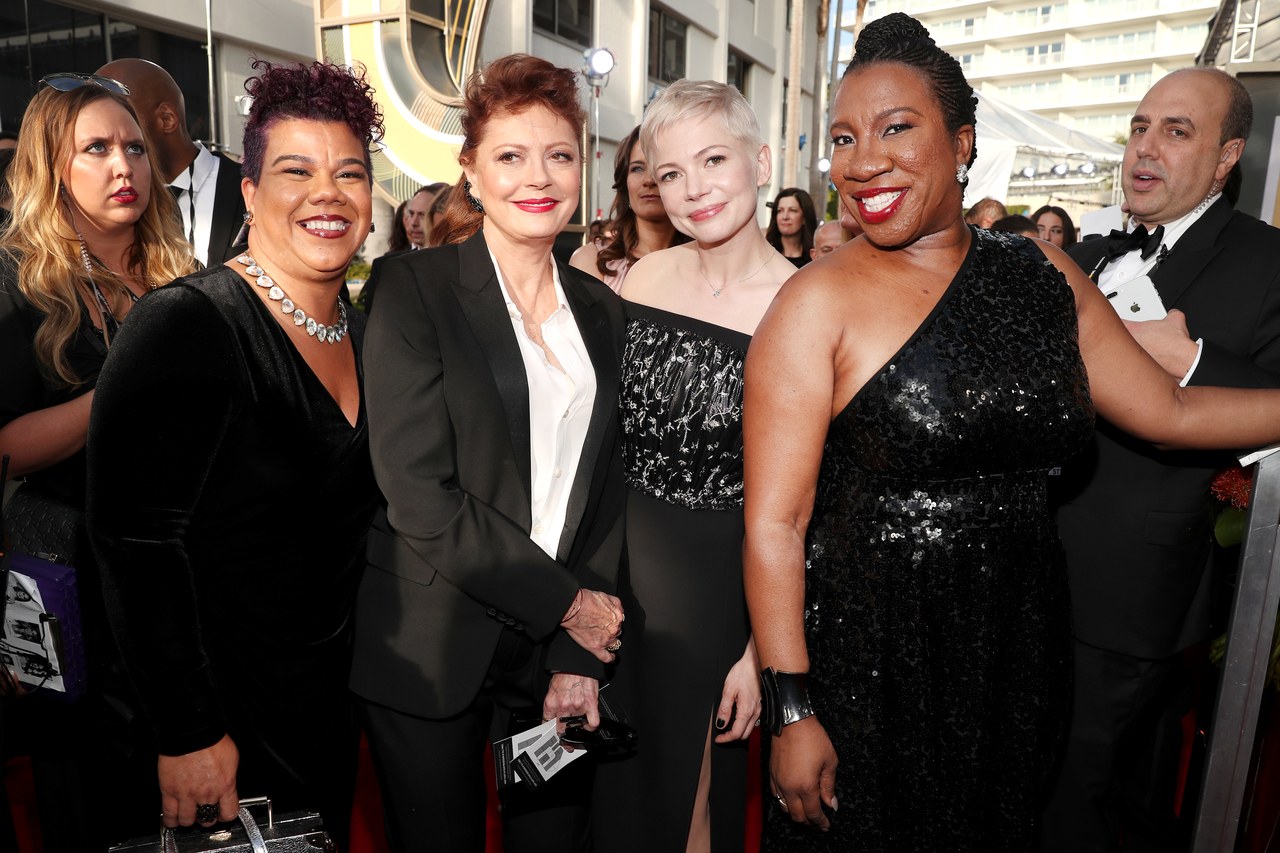
Activist Rosa Clemente, actresses Susan Sarandon and Michelle Williams, and activist Tarana Burke at the 2018 Golden Globes red carpet.

Last year, female Democrats staged a similar fashion demonstration when President Trump addressed a joint session of Congress for the first time: They wore white as an homage to the women’s suffrage movement, and to make a statement about women’s rights. They documented it with the hashtag #WomenWearWhite.

While lawmakers in Washington are often starkly divided by their political affiliations, Speier and other organizers hope that a call to stand up for victims of sexual harassment and abuse will transcend party lines, with members of both parties showing up in black.

Capitol Hill is no stranger to the rampant sexual abuse that has plagued professional environments, from film to farming. A November New York Times report described sexual harassment as an “occupational hazard” for women entering politics; in the same month, fifty women spoke to CNN about their experiences with harassment while working in Washington. And when it comes to individual politicians (mostly male), accusations of sexual misconduct abound: Most notably, President Trump has dodged and denied accusations of sexual harassment since his 2016 campaign, while Senator Al Franken and Representative John Conyers (both Democrats) stepped down from office following allegations of their misconduct.

The Golden Globes blackout was met with criticism, many notes that seeing a sea of black dresses—and reading the statements of actresses who participated—made for one of the most meaningful red carpets in entertainment history. At this time, few politicians have announced their intentions to wear black alongside the Democratic Women’s Working Group to the State of the Union. On January 30, we’ll see which lawmakers step up—and whether the President responds to the protest.

Related Stories:

Reports: Capitol Hill Has a Huge Sexual Harassment Problem Too

How Designers, Stylists, and Fashion Critics Responded to the 2018 Golden Globes Blackout

Actresses Explain What Wearing Black to the 2018 Golden Globes Means to Them


Source link

Categories
Health

Natalie Portman Just Burned the Golden Globes for Not Having Any Female Directing Nominees


Five people were nominated for Best Director at the 2018 Golden Globes , and they all have something in common: They’re men. Guillermo del Toro, Martin McDonagh, Christopher Nolan, Ridley Scott, and Steven Spielberg were the only directors to score nods this year, leaving out talented filmmakers like Greta Gerwig and Dee Rees, who both helmed two of the most celebrated movies of the year, Lady Bird and Mudbound. It’s a move that angered and upset many—both celebrities and fans. This was a banner year for women in entertainment, so for female directors to be completely snubbed in this category was upsetting, to say the least.

And Natalie Portman called the Globes out for it—on the air. The Annihilation actress presented the award for Best Director tonight, and she made sure to let the room know how she felt…in the most savage way possible. “And here are the all-male nominees,” she said right before listing del Toro, McDonagh, Nolan, Scott, and Spielberg’s names. Check out the moment for yourself, below:

What an A+ (and necessary) burn. Sadly, this isn’t new for the Golden Globes. The Hollywood Foreign Press hasn’t given a female director the award in over 25 years, despite so many talented women creating extraordinary work. Saoirse Ronan, who starred in Lady Bird, raved about Gerwig’s directing in a 2017 interview with Glamour.com. “As you would get with a male actor and a male director, or a female actor and a female director, is perspective and understanding,” she said. “They are able to relate to each other in a way that a man wouldn’t be able to, and vice versa.”

Hopefully, Portman’s call-out will make the Hollywood Foreign Press considering giving female directors the shine they deserve next year.

For more of our 2018 Golden Globes coverage, click here.

Related Stories:

Natalie Portman Says She’s Still Reckoning With the Sexism She’s Experienced on Almost Every Project

Celebrities Are Urging Women Watching the Golden Globes at Home to Wear Black in Solidarity with Time’s Up

Nicole Kidman’s Golden Globes Speech Was All About the ‘Power of Women’


Source link

Categories
Health

This Staggering Graphic Will Remind You That the Golden Globes Haven't Honored a Female Director in 25+ Years


In the wake of a year in which Harvey Weinstein and #MeToo dominated the entertainment headlines, this year’s overall awards season has—rightly—centered more on change in Hollywood than any red carpet predictions or accolade-worthy performances. This year, the spotlight is on worthy initiatives like Time’s Up, an ambitious initiative backed by 300 powerful women in entertainment with the goal of ending systemic inequality and harassment in the workplace.

And here’s the thing: One of the most meaningful ways to combat systemic inequality—and harassment, for that matter—is to ensure that all workplaces have a better gender balance. Most importantly, that women are visible in leadership positions and recognized for their achievements.

In the entertainment industry, for example, that means taking a hard look at areas like directing, where women are particularly underrepresented. Even in 2017—a year that saw Patty Jenkins crush box office records with Wonder Woman—just 11 percent of the directors of Hollywood’s top-grossing films were women. Looking ahead to the Golden Globes as an early indicator of how we’re honoring these female directors’ achievements, we see more bad news: Not a single female director was nominated for a Golden Globe award this year, despite heavy praise for Dee Rees’ work on Mudbound and Greta Gerwig’s first directing work with Ladybird. (Gerwig received a nomination for Best Screenplay.)

In the 75-year history of the Golden Globes, a woman has been given an award for Best Director exactly once: Barbra Streisand won for Yentl in 1984. Worthy women have since been nominated—including Ava DuVernay and Kathryn Bigelow—but none have won. (The Academy Awards haven’t fared better: Kathryn Bigelow is the only woman to have won—for Hurt Locker in 2010—in nearly 90 years.)

We looked at the data on female Golden Globe nominees in four clearly gender-neutral categories over the past 25 years and found that in categories like Best Screenplay and Best Score, women (meaning nominees who identify as female) are staggeringly underrepresented. Take a look at the data, below. You can filter the results to “Best Directing” or “Best Original Score” by clicking on any of the categories at the top, and you can also hover over any of the individual squares to see the nominee—male (in gray) or female (in peach)—and the work for which they were nominated.

In 2005, there were zero nominations for women in these four categories, full stop. In the Best Original Score category, men have outpaced women 143 to 7 over the past 25 years. Overall, female nominees represent just 12 percent of the overall nominees in these categories over the past 25 years. Twelve percent!

In the October 2017 issue of Glamour, cover star Reese Witherspoon elaborated on the problem female directors face: “It’s definitely easier for a male director with a few flops under his belt to get another job directing; that’s not the case for women. Shouldn’t female filmmakers get as many shots as men do? Or how about a shot, period? Women directors, writers, and producers still face considerable challenges just getting hired in the first place. Only about one in four people working in those roles in TV are women; in film it’s even worse—17 percent.”

The statistics inspired Witherspoon to start her own production company, and they also inspired us to launch the #NewView film competition to showcase how young female filmmakers see the world. (Watch the incredible winning films here!)

For this award season, we’re eschewing some of the standard fare of previous years—consistent “Best Dressed” round-ups, for example—to focus on spotlighting the ways women are changing Hollywood, from record-breaking awards to the characters redefining how woman are portrayed on-screen. (TV, for example, finally seems to be getting mothers right. Or at least more right.)

We’ll also keep digging into the data behind key categories at all the major award shows. Just how often do women get nominated? And how often do they win? And are we getting better at being truly representative of the people watching TV and film?

To be sure, this data is just a limited window into women’s representation in the overall business—and also doesn’t factor in the inequality that women of color, for example, face—but even this limited window offers a stark portrait of how far we have to go. The good news, at least, is that we’re speaking up and getting loud. Change is sure to follow.

Graphic: Condé Nast Data Visualization

MORE GOLDEN GLOBES:


Source link

Categories
Health

The New Season of 'Black Mirror' Features Only Female Leads


If you haven’t watched Black Mirror, now is a very good time to start: The British show, now on Netflix, has four incredible seasons on the streaming platform. If you haven’t seen it, it’s set in a not-so-unrealistic future, usually with varying levels of hits-far-too-close-to-home dystopia commenting on things like dating, marriage, and, of course, governments gone awry—a Twilight Zone for 2017. And each episode is a different story with different characters, like a mini-movie each time. The six-episode fourth season, which hit Netflix on Friday, has a twist, though: every single one of the season’s main characters is a woman.

Of course, if every character was a man, this wouldn’t exactly be news. But the stats still show that women are a minority when it comes to owning lead roles on television: in the U.K., where Black Mirror hails from, of the top 50 television shows, just 18 have female protagonists. In the U.S., only 42 percent of shows have women playing a “major character,” according to a study covering 2016-2017 shows from the Center for the Study of Women in Film and Television at San Diego State University.

Apparently casting a woman for each lead role wasn’t the intention—it just kind of happened, according to The Hollywood Reporter, who talked to Annabel Jones, a co-executive producer on the show (alongside creator Charlie Brooker).

“Charlie and I don’t tend to think about the stories that way. Sometimes, it just comes out,” Jones told the publication. “But it’s great — great! — that they’re all strong female protagonists. I think what’s lovely about the show is that it’s not a strident statement. It’s more: Why not? We don’t even think about it from a gender perspective and I hope that’s progress. It’s more that we explore the best story and the best way to tell it.”

If that weren’t enough to get Black Mirror on your watchlist, the new season sounds empowering AF: “Whether they are survivors in the traditional sense or not, they each reach a moment in their story where they are challenged to reclaim their power, stand up to some level of tyranny or fight to write their own ending,” writes The Hollywood Reporter. Sounds like just what we need to close out 2017.

Related Stories:
British Media Published Nude Photos of Jodie Whittaker, the First Female ‘Doctor Who’

Michelle Rodriguez Just Called Out ‘Fast and Furious’ Again for Its Lack of Female Characters


Source link