Categories
Health

Hoda Kotb Teared Up on the Today Show Talking About the Coronavirus


America’s morning show anchors—like Hoda Kotb and Savannah Guthrie on the Today show, or Gayle King on CBS This Morning—are in a unique position during a crisis like the coronavirus. They’re not only providing factual information and updates to millions of Americans but offering a steady voice and presence in a chaotic time.

But they’re also just people trying to do their jobs to the best of their abilities. Kotb, who is beloved by Today fans for her warmth and daily on-air “boosts,” showed that very relatable human side on Friday morning, March 27. After interviewing New Orleans quarterback Drew Brees about his family’s $5 million donation to COVID-19 relief efforts in Louisiana, she was visibly shaken and in tears. (Kotb worked for years in New Orleans and often talks about her love of Brees and the Saints on the show.)

As Kotb tried to gather herself in the studio and kept saying “sorry,” her co-anchor Guthrie (who is broadcasting from her home) said, “Oh Hoda, I know, it’s a lot. Hoda, I’m so sorry, hun. It’s a lot. I know where your heart is, I do,” before taking over the next story tease. The two discussed the moment later on Today. “You sort of look around for someone to hug just because—that’s also part of it,” Kotb said,

The response on social media to Kotb was heartwarming. “May sound weird, but Hoda Kotb crying on the @TODAYshow after interviewing Drew Brees was what I needed this morning. She kept apologizing. She didn’t need to. We’re all in this, and it’s hurting us all,” one person tweeted. Another said, “I think we are all Hoda right now.”

“Watching @hodakotb show emotion after a piece on her home is the most human thing I’ve seen. We love you Hoda! @TODAYshow,” wrote a third person.

Hang in there, everyone.


Source link

Categories
Health

Pet Supplies to Buy When Social Distancing During Coronavirus, According to Veterinarians


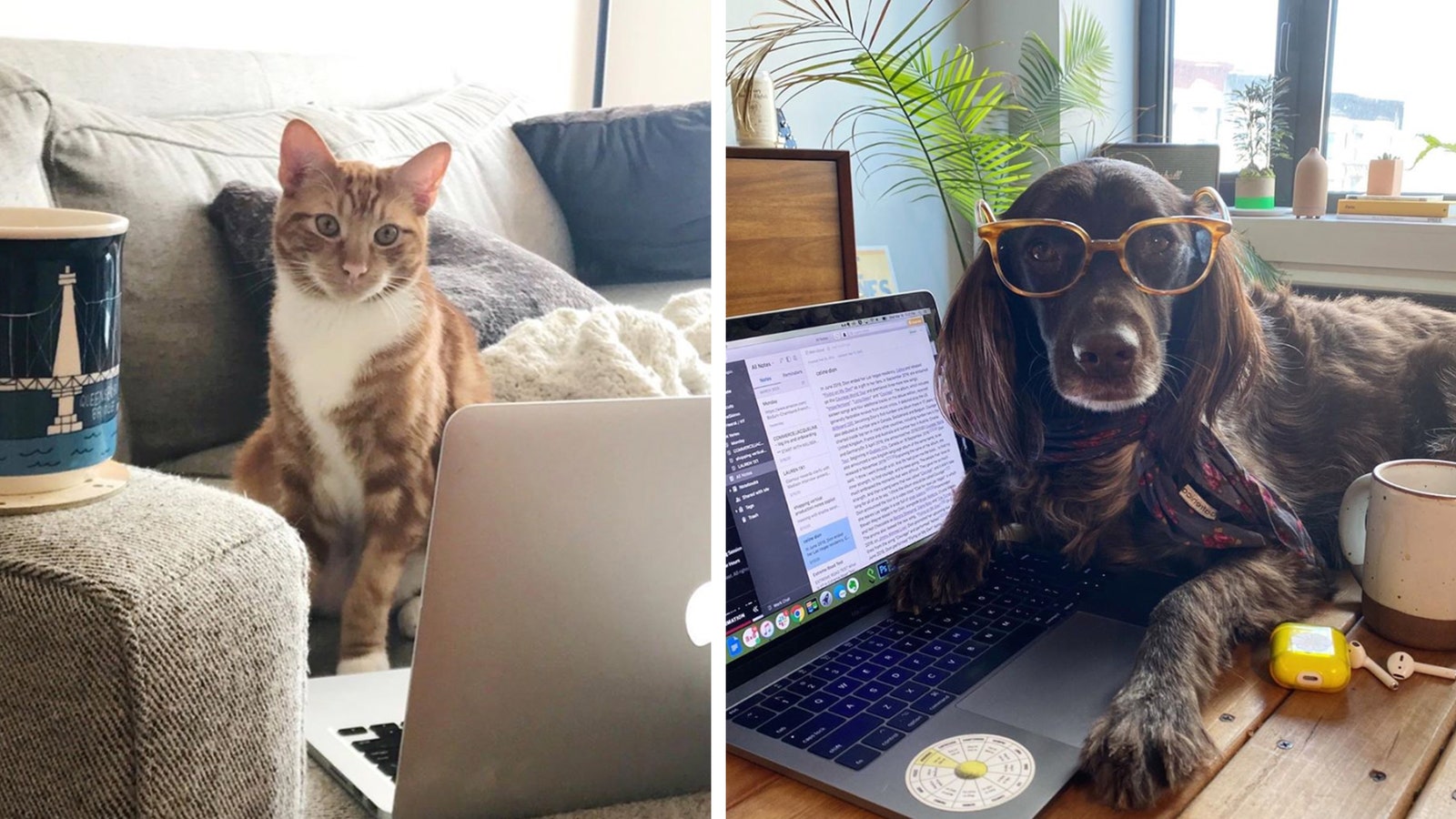
If there’s a silver lining to everything that’s happening right now, it’s that we’re able to spend more time than ever with our pets. It’s rekindled our literal puppy love, encouraged more pet fostering, and finally answered the burning question both you and your pet have been wondering all these years: what in good graces are they up to all day? There’s even a new Instagram account, @dogsworkingfromhome, that’s sharing pet colleagues from around the world, you know, in case smiling is something you’re into.

Animals are a guaranteed source of comfort on any day, but especially now that we’re navigating the extremes of ceaseless boredom and crippling anxiety. But taking care of a pet right now isn’t exactly a walk in the park (because the park is covered in germs), and there are some things that pet owners should be aware of—including what you may want to buy for your furry bunker-buddies now that quarantine is widespread. So, we reached out to some veterinarians to find out everything pet parents should know about keeping their little ones happy and healthy while social distancing is the soup du jour, and the Netflix binge never seems to end.

Are pets safe from the coronavirus?

According to the World Health Organization, there’s no indication that cats, dogs, or any other pet can transmit the virus to humans. Jennifer Freeman, DVM and PetSmart resident veterinarian, adds that while pets don’t appear to become ill, it’s important to limit contact between pets and people with the coronavirus as an extra precaution. “You can interact with your pets as usual if you are not showing signs of illness, but be sure to wash your hands before and after handling your pet or feeding them. And no kisses!” If you are showing signs of illness, the CDC recommends that you isolate yourself from your pet and that someone else in the household feeds and cares for them.

What should I do when taking them outside?

“Remember to be smart and keep your distance between other pets and their parents,” says Dr. Stephanie Austin, BVMS of Bond Vet, an urgent and primary care pet clinic. “You may use antiseptic wipes on their paws after a walk, but be careful not to overdo it, as it can be very drying. Ideally, wipes formulated for pets are best, or even just some warm water and a rag!” And for those who feel that it is an absolute necessity to take your dog to the dog park, Austin reminds everyone to “please be respectful of other pet owners’ boundaries and keep six feet between you and them.” That includes holding back on petting every dog you see. (Cries softly.)

How to take care of pets during social distancing

Like actual children, routines are important to help them stay sane. “With so many things changing, routines should remain as unchanged as possible.” Freeman says to “keep feeding times consistent and–if your pet is used to certain activities throughout the day–keep them at the same time.”

What if my pet gets stressed or sick?

“Pets may be susceptible to stress when stuck indoors for an extended period of time. It’s important to keep an eye on them should they start exhibiting destructive behavior and/or anxious behavior,” Freeman tells us. “Should that happen, increasing enriching activities and playtime should help.” If there’s a medical issue, like vomiting, diarrhea, decreased appetite, bleeding, coughing, and sneezing, Austin says to call your vet so you can get to the bottom of the issue.

“If you can’t leave home or you’re quarantined due to coronavirus contraction, you can try a telehealth service. Bond Vet just launched theirs so they could reach more pets in need of veterinary care,” she adds. “We also suggest extra cuddles to help lower their anxiety—and yours!”

How do I keep them entertained at home?

Some of us live in a shoebox apartment in Brooklyn (hi, it’s me) and are trying to wrack our brains with ways to make 500 square feet amenable to a dog. Austin says it’s just as important to keep your pets mentally stimulated as physical. “Keep your pets entertained while at home with dog puzzles, treat-dispensing toys, and smart bowls (which require pets to figure out the solution to get their treat/food). There are also dog and cat music and TV channels on YouTube if you have to work and want to keep them entertained.”

Are pet stores open?

Pet stores (including your local one) are considered an essential business, so most stores have remained open, though some only offer curbside pick-up right now. Owners can stock up on supplies from the usuals like Amazon, Chewy, Petsmart, and Petco. For Chewy, orders over $50 qualify for free shipping; for PetSmart, orders over $49 qualify for free shipping when you join the brand’s free loyalty program; for Petco, orders $35 and up qualify for free shipping.

What pet supplies should I stock up on?

There’s no need to panic, but stocking up on necessary pet supplies means you won’t have to head to the store or veterinarian any more than you need to. Ahead, some recommendations from the experts.


Source link

Categories
Health

How to Safely—and Ethically—Shop During Coronavirus


The dark-haired man stood six feet away from me, but his eyes urged me to come closer. It had been days—no, more than a week—since I had gotten any. I wanted it so badly. My mouth was dry; I felt almost dizzy. He nodded, as if daring me to ask. And before I knew it, I had ordered a large, iced, half-caf, whole milk, churro-flavored latte. With tip, it was seven dollars.

Even though nothing brings me more joy than exchanging money for decorative steamed milk, my coffee purchase felt a little nightmarish to me, too. Trying to figure out how to shop during Coronavirus is so fraught I wasn’t sure if I was holding a cup of drinkable virus, a fun indulgence, a stake in a teetering local business, or an oversized portion of my shrinking savings.

Wrapped up in my coffee concerns are more persistent, uncomfortable questions about how to generally shop and consume during coronavirus: Are items brought in from outside our homes or handled by delivery people, even safe? How can we help local businesses? What do we owe to the delivery people whose bodies are on the line while the rest of us barricade ourselves indoors as much as possible? Even the pros are dealing with these concerns: “These are hard questions that I’ve found myself struggling with as well,” says Rima Basu, an assistant ethics professor at Claremont McKenna College.

Right now, when it comes to spending, whether it’s a cup of coffee or a bag of essential groceries, or a new pair of sweatpants, confusion reigns. Amazon, InstaCart, and other shopping services that offer home delivery say they are hiring hundreds of thousands of workers to match demand. Local businesses are folding. Some Republicans argue that millions of deaths may be a fair price to pay to boost the economy. And some people are spraying down junk mail with Lysol. Let’s look at the safety and ethics of shopping during coronavirus.

Can coronavirus live on packages and mail?

According to the World Health Organization, it is safe to receive packages. “The likelihood of an infected person contaminating commercial goods is low and the risk of catching the virus that causes COVID-19 from a package that has been moved, travelled, and exposed to different conditions and temperature is also low,” the organization writes. You can catch COVID-19 by touching a surface that a person with the disease has coughed or breathed on, and then touching your face, the WHO says, but it’s fairly low risk.

The CDC shares the same caution, but adds, “this is not thought to be the main way the virus spreads.” Neither the CDC nor the WHO has recommended disinfecting packages, only washing your hands regularly. But it might not be totally crazy to do so—a study published in the New England Journal of Medicine found that coronavirus becomes undetectable over 24 hours on cardboard. A different study, released by the CDC on Friday that showed that the virus lived on surfaces of cruise ships for up to 17 days. Those alarming findings grabbed headlines, but the CDC report added that it’s not known “whether transmission occurred from contaminated surfaces.” Essentially—packages are very low risk. But experts still don’t know as much about this disease as they’d like to.

Can coronavirus live on food?

“Currently there is no evidence to support transmission of COVID-19 associated with food,” the CDC writes. “In general, because of poor survivability of these coronaviruses on surfaces, there is likely very low risk of spread from food products or packaging that are shipped over a period of days or weeks at ambient, refrigerated, or frozen temperatures.”

Is it ethical to use delivery services?

“In ordering by delivery, we are asking already economically vulnerable people to also make themselves physically vulnerable for the safety of others (that is, more physically vulnerable than usual)” Basu says. “For this reason, I do believe that we should limit ourselves to ordering just what is necessary.” If we want we’re asking others to make sacrifices for us, we need to make sacrifices, too. “We must ask ourselves with each purchase, is it worth the risk we’re imposing on the workers tasked with bringing us that purchase? For essential goods, yes. For a Darth Vader toothpick dispenser, no.” We also have to consider the number of people who depend on delivery services. “In increasing the risks for delivery workers we also increase the risks for those people who have no choice but to use delivery.”

The grocery delivery service Instacart announced this week that it will hire 300,000 people, who will hand-deliver food to people who are staying inside. Amazon and Walmart each said they will hire 100,000 more workers. These low wage workers often don’t have access to a safety net, or reasonable benefits. Instacart workers, for example, make $10, maximum, per assignment, before tip. Postmates guarantees workers less than $4 per trip. On that kind of income, is it really likely that a sick worker would be able to take the day—or 14 days—off? “I can’t self-quarantine because not working is not an option,” Mariah Mitchell, a driver for Postmates, DoorDash, Uber Eats, Instacart, and Lyft wrote in the New York Times this week. “If I don’t make enough money, I can’t feed my children for the next six weeks. I’m not stopping, fever or no fever.”

How can I most ethically use delivery services?

“It’s important to start by asking, if I were a delivery worker, what would I want in this situation?” Basu says. A good start is to tip your delivery person the way you would want to be tipped if you were in their shoes, and to leave them a positive review if applicable. But as consumers, we can also push for systemic changes. “If it’s the case that relying heavily on delivery services is an effective means to limiting the number of people who could be potentially exposed to the virus, that means that our testing resources should be prioritizing exactly these kinds of essential workers,” Basu suggests. “Further, they should be provided with the appropriate personal protective equipment given the risks they’re exposing themselves to—and potentially exposing others to given the nature of their work.”

Is it important to support local businesses?

Ethically, throwing your support behind the small guys is a great choice. Local and independently-owned businesses are under massive stress right now, and shoppers are getting mixed messages about what’s considered essential purchases. Some might think buying a new pair of spring shoes is frivolous, while the independent store those shoes come from need you to add to cart. What not-so-essential items you buy right now is a personal choice, but many smaller businesses are adopting special measures to keep packaging and delivery ultra hygienic, if that’s your concern. Coming Soon, a furniture, design, and gifts store in New York, is making sure packages stay super-clean without risking the health of employees. “To keep exposure at a minimum we have only one employee handling all shipping and our employee wears gloves and a mask while working with all merchandise incoming and outgoing,” say Helena Barquet and Fabiana Faria, the store’s owners.

In Seattle, smaller businesses are partnering to help each other not go out of business—trading yoga classes for consulting help, or offering cooking lessons to corporate groups. In Austin, a group of five drag queens performed live on Facebook and Instagram to raise funds for a beloved local bar. Almost everywhere, you can support your local bar or restaurant by buying a takeaway cocktail, which has to be at least a whisper of a silver lining.

Tip well, listen to the CDC, push for change, and go a little easy on yourselves—ethics professors aren’t totally sure what the right answer is, either.

Jenny Singer is a staff writer for Glamour. You can follow her on Twitter.


Source link

Categories
Health

This Mom Threw Her Son a 21st Birthday Party at ‘Club Quarantine’ Because of the Coronavirus


It seems everything is on hold in the era of the coronavirus: schools, restaurants, stores. You name it. Bars across the nation are also shutting their doors to promote social distancing and try to keep the number of COVID-19 cases from completely overwhelming our health care system. But just because the clubs aren’t open doesn’t mean American kids have stopped turning 21.

One of those Gen-Zers is Jack Torchia, who returned from college to isolate with his family in New Jersey. When his plans to party with his family and friends fell through, his mother, Carolyn, took it upon herself to make sure he had the full club-hopping experience, even if it had to happen in her husband’s “man cave.”

At midnight on March 22, Jack’s 18-year-old sister, Emily, captured the whole thing before putting it on the popular social media app TikTok. It currently has over 4.5 million views.

“Let’s see some ID, please,” father/“security guard” Anthony Torchia requests before allowing his son to enter “Club Quarantine.”

His mother was situated behind the bar to provide drinks. “It’s our policy that we give you a free green tea shot,” she says in the video before pouring one out for her son, the “bouncer,” and herself.

Emily, who returned home from Penn State due to the coronavirus pandemic, told Glamour that this type of gesture is par for the course with her family. “My mom comes from a very big and passionate family, so we do stuff like this all the time, surprisingly,” she said over Instagram. “It took about a day since my garage is already a ‘man cave.’ My parents just moved stuff around and then added decorations!”

With two kids home from college earlier than expected, the Torchia family has been using this time to reconnect. “My family has always been very close, but this situation definitely made us closer, which I didn’t think was possible,” Emily said.

“My dad is the most excited, which is the funny part,” she adds about her parents’ reactions to their new TikTok fame. “My mom was very touched by the positive comments people wrote about them as parents, as well.”

It looks like these DIY birthday parties are becoming somewhat of a trend on TikTok and Twitter while the nation hunkers down to protect themselves and others from contracting COVID-19. CNN’s Saba Hamedy shared a few more of these makeshift celebrations on her Twitter:

Honestly, all these parents are killing it right now.


Source link

Categories
Health

When the Coronavirus Cancels Therapy


These are anxious times. Health care systems are overwhelmed, nearly everything has been cancelled and there’s no telling when we’ll all be collectively out of our sweats. In the face of the coronavirus outbreak, mental health care is more important than ever—but it’s also disappearing.

Martha Smith, a 38-year-old in Oakland, California, who works for a global online auction company, has been dealing with the anxious effects of the coronavirus since January. “The company that I work for, just because of what we do, we’ve been experiencing the effects of the coronavirus since the first of the year,” says Smith. “So it’s actually been a really stressful and difficult time.” She’d been seeing a therapist since June of last year, which helped, but earlier this month, Smith’s therapist was forced to close her office and switch Smith’s sessions to Zoom.

“Most psychologists are suspending their office practice and will be continuing to treat their patients remotely,” says Franklin Porter, a licensed clinical psychologist based in New York City. “While that’s obviously not ideal, people can still maintain therapeutic contact with their therapists, wherever they may be located.”

Virtual therapy sessions are a solid plan B. “I slept until 15 minutes before my appointment,” says Smith. “I’m feeling much more well-rested than I usually am, and I’m in my own bed surrounded by my cats. I’m in my safe space.”

But for some, the prospect of having to DM their therapist is just one more thing to be anxious about. “My main concern in regard to online appointments is the feeling of isolation they create,” says Elizabeth Keller, a 21-year-old student at the University of Southern California. “A part of the therapy experience that I enjoy is visiting my therapist’s office, as I associate that space with a measure of peace and reassurance,” she says. “I’m afraid that I won’t feel the same way if I begin speaking to her online, as my apartment is even now beginning to make me a little stir crazy, and I anticipate that feeling will only unfortunately get worse as the quarantine situation evolves further.”

In the face of so much anxiety and uncertainty in mental health care, the experts recommend focusing on the things you can control. “Excessively worrying about unknowns outside of your control can exacerbate anxiety,” says Mimi Winsberg M.D., chief medical officer at Brightside Health in San Francisco. Here’s how to keep prioritizing your mental health:

Plan ahead and create a routine.

In the face of so much change, something as simple as a schedule can be a powerful form of self-care. “Emulate your life before COVID-19 to the best of your ability,” says Winsberg. “Follow the same schedule of when you wake up, when you eat, and when you go to sleep.”

Do the same for mental health care. If you typically see a therapist once a week, aim to keep up that same cadence virtually. Or if your therapist can’t offer virtual sessions, keep that hour blocked on your calendar for your own form of self-care such as doing some yoga, video chatting with a friend, or cooking something you love.

Limit information overload.

Being subjected to a 24-hour news cycle won’t do much good for your nerves. Sometimes it’s hard to get an escape, so it’s best to limit your exposure and be a little more intentional about how often you check for news updates.

“Try choosing two times per day to catch up on the latest developments or choose a singular news source that you trust and sign up for alerts so the latest developments come to you, rather than the other way around,” says Winsberg. You don’t have to cut yourself off completely, but just dial back.

Prioritize your physical health

You’re probably finding yourself at home a lot these days. If you’re in an environment that allows it, go for a long walk around your neighborhood or start an at-home yoga practice. Moving your body is essential in lifting your spirits. As for food, try to prioritize health. “Foods that are high in protein and potassium have shown to help calm moods,” says Winsberg. Treating your body with kindness and compassion will go a long way as you work or go to class from home.

Breathe and practice mindfulness.

Breathing sounds like such a no-brainer, but it’s important to your overall health and wellbeing. Winsberg swears by the 4-7-8 breathing technique. Also known as “relaxing breath,” it’s been proven to lower heart rate and alleviate anxiety.


Source link

Categories
Health

Chrissy Teigen Has Thoughts About People Calling the Coronavirus Test ‘Invasive’


We’re living through strange times in America, but that hasn’t stopped Chrissy Teigen from being her wonderfully authentic self on social media—from showing up to husband John Legend’s Instagram Live concert in a towel to sharing some real talk about childbirth.

Teigen took umbrage with President Donald Trump and Vice President Mike Pence talking about the discomfort they felt during their own coronavirus tests, which involve swabbing inside the nostrils. “[It’s] not something I want to do every day, I can tell you that,” Trump told reporters last week. “It’s a little bit of — good doctors in the White House, but it’s a test. It’s a test, it’s a medical test,” he continued. “Nothing pleasant about it.” Pence and his wife, Karen, were also recently tested. The VP described the test as “kind of invasive” and “not comfortable.”

“My vagina was ripped to my asshole giving birth to Luna. I had a vagasshole. fuck your swab pain,” Teigen tweeted in response to a tweet about Trump. “They had to put a garbage bag at the end of the bed to collect my blood before stiching [sic] me up, where I then had to pee using a water bottle as a pain fountain for 3 months. so yeah. the swab, I bet it’s super rough.”

Lots of other moms started to weigh in on social media, too.

“Do men have a low pain threshold or what? Mike Pence on the test: ‘It was kind of a pinch. It was kind of invasive. But we were grateful for the support.’ I pushed a 10 lbs baby out of my vagina…” Shannon Watts of Moms Demand Action tweeted.

“I was in labor with my first kid for 52 hours. 52. Hours. Of. Labor. Y’all can all manage a nasal swab for 30 seconds,” another woman wrote.

It seems the moms of America have spoken.


Source link