Categories
Health

'Full Frontal' Producer Describes What It Was Like to Witness Ireland's Historic Abortion Referendum Firsthand


When producer and correspondent Allana Harkin pitched her latest segment idea to the team at Full Frontal With Samantha Bee, she says eyebrows were raised.

“Everyone’s looking at me like, ‘Allana, where’s the fun part,'” Harkin told Glamour. The pitch? To cover Ireland’s historic abortion referendum. “All I did was throw up my hands, like, ‘It’s Ireland, everything will be funny.'”

In the end, Harkin traveled to Ireland to film the segment, which airs Wednesday night, just before the May 26 vote to repeal the Eighth Amendment, an amendment voted into the constitution in 1983 which banned abortion. Irish citizens, many of whom traveled to Ireland for the vote, ultimately passed the repeal, signaling a historic change for women’s reproductive rights in the country.

While the change was celebrated by many, Harkin says she found the mood to be more solemn in Ireland.

“Everyone we spoke to said, ‘Nobody’s saying they want an abortion.’ It’s more about a woman’s right to choose and a woman’s body and her health,” Harkin told Glamour. “It wasn’t like an in-your-face kind of celebration.”

That’s reflected in this exclusive Full Frontal clip for Glamour, which shows Harkin speaking to a voter about the gravity of the amendment.

“This oppression of women is absolutely normalized here,” Karen Twomey, Founder of Global Repeal Network tells Harkin in the clip. “We are kind of addicted to oppression in this country.”

“This story was a more personal one for me, simply because of my connection to the country,” says Harkin, whose parents were born in Ireland. “I’m looking at the situation in Ireland from a woman’s point of view—this is something that affects my life and affects my daughters’ lives. And I want them to live in a world where they receive really positive messages.”

But this is comedy, after all.

“We’re punctuating the news story with some really great jokes,” says Harkin. “We’re not journalists at all, but our job is to sort of turn the story on its head and find a new way into it.”

Full Frontal airs on Wednesdays at 10:30 p.m. ET on TBS.

READ MORE:


Source link

Categories
Health

Twitter Reacts to Ireland's Historic Abortion Vote


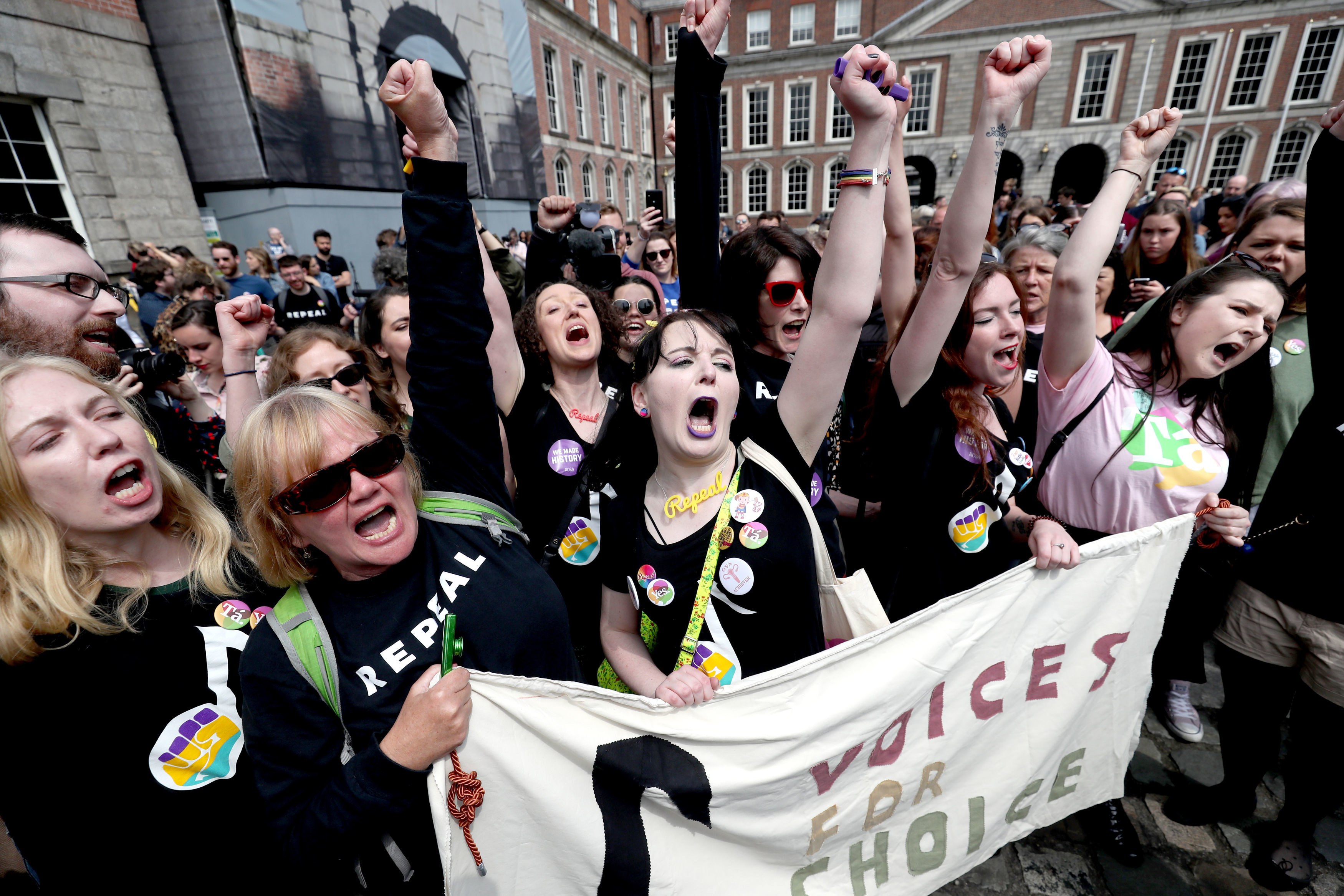
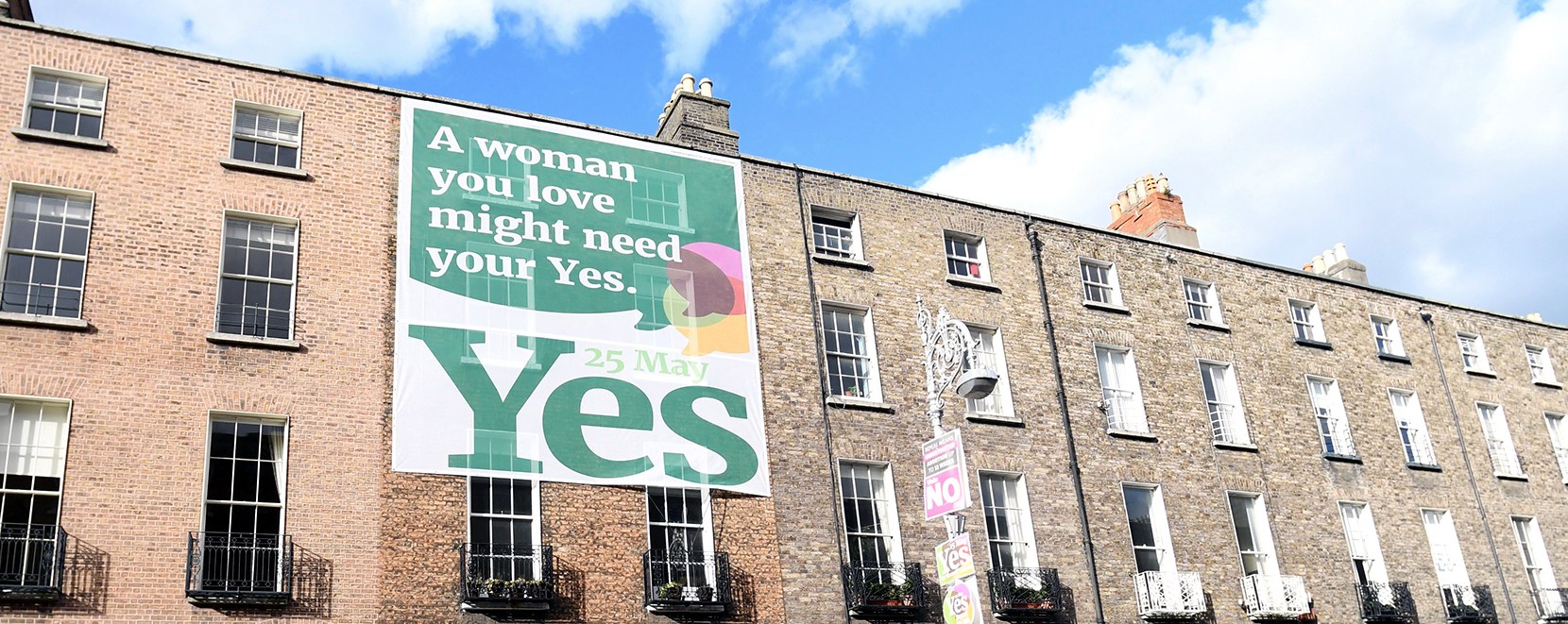
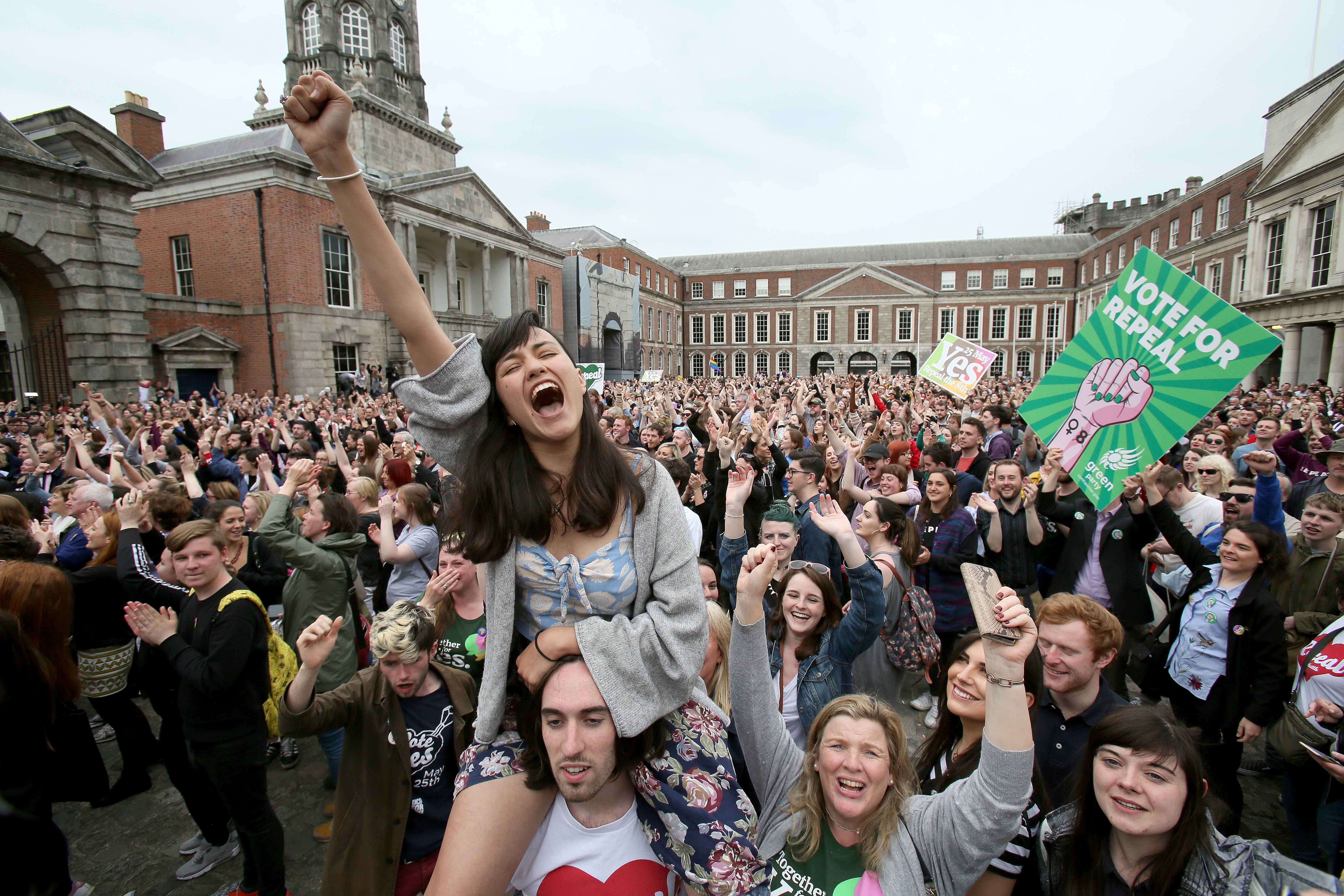
On Friday, voters in Ireland took to the polling stations to cast their ballots on whether the country should repeal the eighth amendment of its constitution, which effectively bans abortions. Results for the referendum started coming in on Saturday—by the afternoon, the final vote was at 66.4 percent for the repeal and 33.6 percent against—and folks around the globe celebrated what could be considered Ireland’s first step towards allowing legal and safe abortions.

Constituents gathered at Dublin Castle in the nation’s capital, taking a moment to honor Savita Halappanavar, a dentist who died of sepsis in 2012 during a miscarriage, during which she’d asked several times for an abortion (doctors wouldn’t administer one as they could still hear a fetal heartbeat). Her death was considered a catalyst for the movement to repeal the eighth amendment, her image becoming a part of the campaign for a “yes” vote.

When the results were announced, Taoiseach (that’s Prime Minister to those of us outside Ireland) Leo Varadkar gave an incredible speech, remarking: “Today is an historic day for Ireland. A quiet revolution has taken place, and a great act of democracy. A hundred years since women got the right to vote. Today, we as a people have spoken. And we say that we trust women and we respect women and their decisions.”

“Today I believe we have voted for the next generation,” he continued. “We have voted to look reality in the eye and we did not blink. We have voted to provide compassion where there was once a cold shoulder, and to offer medical care where once we turned a blind eye.”

Across the globe, many chimed in via social media with their thoughts on Ireland’s historic referendum. Here are some of the most powerful, poignant reactions to the repeal vote from Twitter.

There were celebrations and congratulations…

…as well as reminders about the collective power of women at the polls.

Read the stories of women who traveled home to Ireland to vote in the historic referendum here.

Related Stories:

Why These Women Are Traveling Over 9,000 Miles to Vote in Ireland’s Abortion Referendum

Ireland Has Voted to Repeal Its Abortion Ban

Why You—Yes, You—Need to Pay Attention to Ireland’s Historic Abortion Referendum


Source link

Categories
Health

Ireland Has Voted to Repeal Its Abortion Ban


It’s official, and by a landslide: The people of Ireland have voted to repeal the eighth amendment of its constitution, which currently says an unborn child has an equal right to life as the woman carrying it, effectively placing a total ban on abortion.

With 37 out of 40 constituencies reporting as this article was published, 67.3 percent of Irish citizens voted for the repeal, and 32.7 percent against—with just one remaining constituency, Donegal, expected to vote “no.”.

Abortion has been illegal in Ireland since 1861. In 1983, this was written into the country’s constitution with the passage of the eight amendment, which reads: “The State acknowledges the right to life of the unborn and, with due regard to the equal right to life of the mother, guarantees in its laws to respect, and, as far as practicable, by its laws to defend and vindicate that right.” This effectually outlaws abortion completely, including in situations of rape, incest, and if the fetus a woman is carrying has a fatal condition.

According to the most recent data from U.K. Department of Health, more than 170,000 Irish women are estimated to have traveled to the U.K. and the Netherlands for abortions since 1980. It’s also estimated that, every day, nine women make the journey from Ireland to the U.K. to have a legal abortion. Then, there are those who either choose to or must stay home, as not all can afford flights, hotels, lost wages, and childcare while away—an estimated 1,500 women each year take abortion tablets without any medical supervision; if they’re found in possession of said pills, they could face jail time for up to 14 years.

But the Ireland of today is a very different place than the Ireland of 1983, says Glamour’s editor-in-chief, Samantha Barry, who’s a native of Cork

“To Americans it might sound like we’re slow to adopt cultural norms you’re accustomed to, but progress has been made: In 1985 the Irish government approved the sale of contraceptives, divorce became legal in 1995 following another referendum, and Ireland is now the European hub of some of the largest and most innovative tech companies in the world, including Google and Facebook,” she wrote ahead of the repeal. “Our current political leader, Prime Minister Leo Varadkar, is the gay son of Indian immigrants!”

When news of the repeal vote broke, Varadkar posted about it on his Twitter account: “Fantastic crowds at Dublin Castle. Remarkable day. A quiet revolution has taken place, a great act of democracy,” he wrote.

In light of this historic referendum, many Irish ex-pats have traveled home to vote. (Unlike the United States, voting by mail or absentee ballot is not an option for Irish folks living outside the country.) One woman, Elaine Arnold, told Glamour she spent over $1,500 Australian dollars to travel from Sydney to her hometown of Dublin to do so; another Irish native, Sorcha Lowry, used her credit card and her only vacation days at a new job in New York, where she currently lives, to make sure she voted “yes” to the repeal.

“The minute the date was announced for the referendum, I booked my flights,” Lowry told Glamour. “I have to be part of it. Not turning up would essentially be a ‘no’ vote, so I have to do my bit.”

Though after 35 years in effect, the people of Ireland have voted to repeal the eight amendment, abortion won’t be available overnight—rather, it will be replaced by a clause that reads: “Provision may be made by law for the regulation of termination of pregnancy.”

But it seems like that provision is coming: According to Sky News’ senior political correspondent, Ireland’s health minister, Simon Harris, said on Saturday he’ll ask for formal approval to turn a draft of abortion law into “full text.”

Meanwhile, the Guardian reports that Varadkar hopes that laws allowing abortions in the first 12 weeks of pregnancy will be in place by the end of this year.

Related Stories:


Source link

Categories
Health

Why Americans Need to Pay Attention to Ireland's Historic Abortion Referendum


Three years ago this week, I cried with joy as I sat in my New York apartment and watched the country I grew up in make joyous, beautiful, progressive history with a national referendum that ultimately allowed us to become the first country in the world to grant into law gay marriage.

On Friday, May 25, I will again be frantically refreshing news pages as I await the result of another historic referendum—which means a country’s entire electorate are invited to vote—this time on whether to repeal the Eighth Amendment. Or for those of you unaccustomed to the Irish constitution, whether abortion will be legalized.

Abortion has been illegal in Ireland since 1861 but, in 1983, the Eighth Amendment was voted into the Irish Constitution, stating that the life of a pregnant woman is equal to that of an unborn child, and outlaws abortion for every woman.

Indeed, Ireland has had a troubling history of oppressing women, insofar as the country has had to reckon with the fact that up until as recent as the mid 1990s thousands of unmarried pregnant women were placed into servitude in what was known as the Magdelene Laundries—essentially confinement asylums run by Roman Catholic nuns for girls or young women who had become pregnant outside marriage or whose families could not or would not support them and had to be hidden away.

In many other ways, though, Ireland has changed a lot since 1983. In just a few decades, it’s gone from an often-insular society with institutions controlled by the Catholic Church to a multicultural society of socially progressives. To Americans, it might sound like we’re slow to adopt cultural norms you’re accustomed to, but progress has been made: In 1985 the Irish government approved the sale of contraceptives, divorce became legal in 1995 following another referendum, and Ireland is now the European hub of some of the largest and most innovative tech companies in the world, including Google an Facebook. Our current political leader, Prime Minister Leo Varadkar, is the gay son of Indian immigrants!

I want to stress that you don’t have to agree with abortion to hope for an affirmative outcome. You just have to agree that Irish women should be afforded a legal—and safe—choice.

On Friday, if the vote gets a majority Yes, Ireland will likely enact legislation that will allow for legal abortions up to 12 weeks into a pregnancy (for context, most states in the US allows abortion up to the 20th week). After that time period, abortions will only be carried out on the grounds of a serious mental or physical health risk to the mother, or a fatal fetal condition. A No vote means that Ireland’s abortion laws, which are some of the most restrictive in the developed world, would remain in place.

This referendum is deeply divisive in Ireland and for the Irish diaspora around the world, many of which are traveling long distances to be able to cast their vote. And, right now, the polls are too close to call.

Having lived outside Ireland for the past eight years, I’m not eligible to vote but given the opportunity I would certainly vote a resounding YES to repeal the 8th.

Because abortion is illegal—full stop—thousands of women have had to seek them out in unsafe and illegal ways. According to the UK Department of Health data, nine women make the journey from Ireland to the UK to have an abortion every day. They bleed on the way home on Ryanair flights from London where they’ve had to travel to get legal terminations; they wait in anxious hope for the illegal “abortion pills” they’ve surreptitiously ordered online to make it through the postal system without getting caught because if they do, they can face up to 14 years in jail; they cry in airports with their husbands and partners when they’ve been told they have a terminal pregnancy but under Irish law they have to carry the baby to term. In Ireland, a sexual assault survivor could potentially face more jail time for terminating a pregnancy than her rapist.

As I explain this referendum to curious friends and colleagues here in the US, I want to stress that you don’t have to agree with abortion to hope for an affirmative outcome, you just have to agree that Irish women should be afforded a legal—and safe—choice.

I urge Glamour readers to pay attention to the outcome of tomorrow’s vote. While women’s reproductive rights—an area Glamour has long been committed to covering—are in a precarious place in the US right now, the fact is, for many women in many states, access to safe and legal abortions exist. I hope you’ll join me in agreeing that right should be afforded to the women across the Atlantic, too.

Samantha Barry is Glamour’s Editor-in-Chief


Source link

Categories
Health

Elizabeth Warren: Trump's 'Domestic Gag Rule' Threatens More Than Just Abortion


The Trump Administration formally came out Friday in favor of cutting off federal family planning money to organizations that perform abortions or make referrals for them.

The rule change affects Title X, the $260 million federal program which underwrites the costs of contraception, reproductive health services and STD screening for low-income and uninsured patients.

The fundamental premise of this Title X change is as simple as it is controversial: The administration believes abortion is not “family planning” and the two do not belong in the same place or conversation.

NPR broke out the details further, saying it “would require facilities receiving federal family planning funds to be physically separate from those that perform abortion; would eliminate the requirement that women with unintended pregnancies be counseled on their full range of reproductive options; and would ban abortion referrals.”

The White House says this change fulfills Trump’s “promise to continue to improve women’s health and ensure that federal funds are not used to fund the abortion industry in violation of the law.” Critics call it a “gag rule” that prevents caregivers from giving patients full information and makes good on Trump’s vow to defund Planned Parenthood.

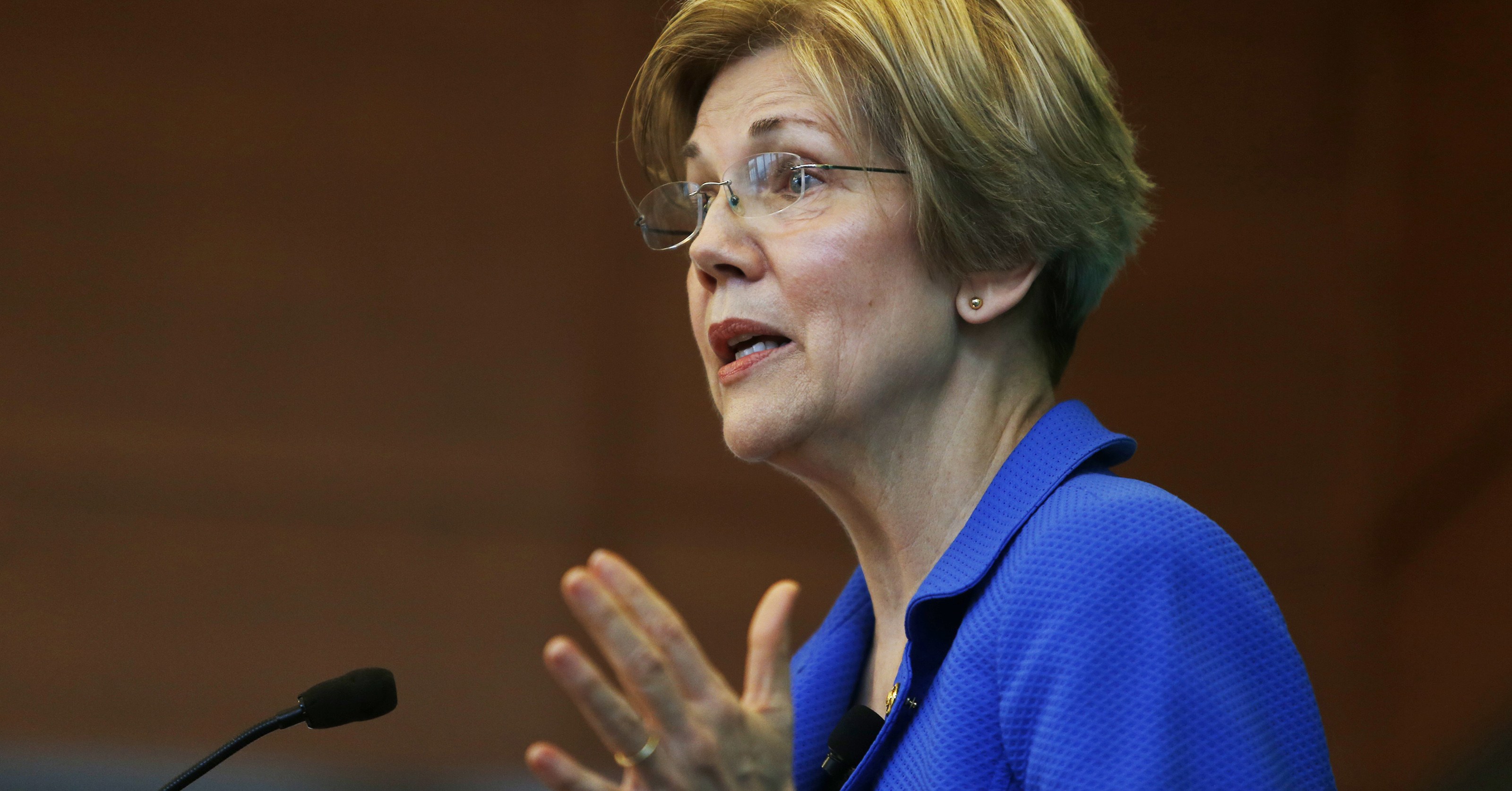
In a conversation with Glamour this week, Sen. Elizabeth Warren slammed the Title X proposal as bad policy that could endanger women.

“Forcing doctors to keep information from patients about their health options is dangerous and just plain wrong,” the Massachusetts Democrat said.

What Trump is pursuing isn’t new: He’s bringing home the essence of the so-called “Mexico City Policy,” which cuts off federal funding to worldwide health groups that perform abortions or even provide information about them.

The proposal now on the table could have an outsized effect on Planned Parenthood, which offers a variety of reproductive and wellness services in addition to abortion. According to Kaiser Health News, “Planned Parenthood affiliates account for about 13 percent of total Title X sites but serve an estimated 40 percent of its patients.”

Federal law has long prohibited the use of public money to subsidize abortion procedures. But Warren, who was among many lawmakers who signed a letter protesting the Title X changes, says “there’s a lot more on the line as well.”

The Title X rule change “demands that multi-service providers not put a woman’s best interest first — and that if they do, they will lose federal funding for the full array of healthcare services,” Warren said. “That’s shocking.”

“Accessible contraceptives, services to help women prevent unplanned pregnancies [and] care for children after they’re born are all under attack by the Republicans,” she added.

Warren also called the fight a matter of equity. “Threatening to cut back on basic health care services disproportionately hits communities of color, the uninsured and low-income women,” she said.

“This is about personal liberty, but it’s also about women having full economic participation in this country. Women who can’t get access to basic reproductive service health care services have fewer economic opportunities going forward. An unplanned pregnancy can derail an education or the early steps of a career.”

Planned Parenthood sized up the significance of the current Title X change in a blunt Friday email to reporters: “For nearly two decades, Title X law has been clear: Health care providers cannot withhold information from you about your pregnancy options. This rule means they can.”

The White House, however, sought to frame the new proposal as simply shoring up existing law.

“The new proposed rule would not cut funds from the Title X program. Instead, it would ensure that taxpayers do not indirectly fund abortions,” the press secretary’s statement said. “Contrary to recent media reports, HHS’s proposal does not include the so-called ‘gag rule’ on counseling about abortion that was part of the Reagan Administration’s Title X rule.”

The Reagan version of the rule was similar, but not identical, to the Trump iteration. It called for separate facilities for abortions and said Title X recipients could not disseminate information about, or advocate for, terminating a pregnancy.

Called a “gag rule” for prohibiting doctors from talking to patients about abortion, Reagan’s policy got bogged down in court battles and “never went into effect as written, although the Supreme Court ruled it was an appropriate use of executive power,” as the Associated Press reported. His Democratic successor, Bill Clinton, ultimately rescinded it in 1993.

While Vice President Mike Pence—along with his wife, Karen—is a stalwart conservative known for a desire to end abortion in the U.S., Trump himself has come a long way from the self-described “very” pro-choice views he once held.

Days after his 2017 inauguration, Trump reinstated the “Mexico City” order, known by detractors as the “global gag rule.” This past January, he became the first sitting president to address the annual anti-abortion March for Life in Washington via video link. And on May 22, Trump keynotes a “Campaign for Life” gala hosted by the anti-abortion group Susan B. Anthony List.

“The ‘Protect Life Rule’ would not cut a single penny of family planning funding,” said Mallory Quigley, a spokeswoman for Susan B. Anthony List, said in support of Trump’s Title X stance. “This is simply about responding [to] a desire on the part of American taxpayers, six in 10 of whom do not want to be complicit in abortion through their federal funds and taxpayer dollars.”

Dawn Laguens, executive vice president of Planned Parenthood Federation of America, said pro choice advocates would “not stand by while our basic health and rights are stripped away.”

“Everyone has the right to access information about their health care—including information about safe, legal abortion—and every woman deserves the best medical care and information, no matter how much money she makes or where she lives. No matter what,” she said in a statement. “They won’t get it under this rule.”


Source link
Categories
Health

How Motherhood Made Me a Better Abortion Provider


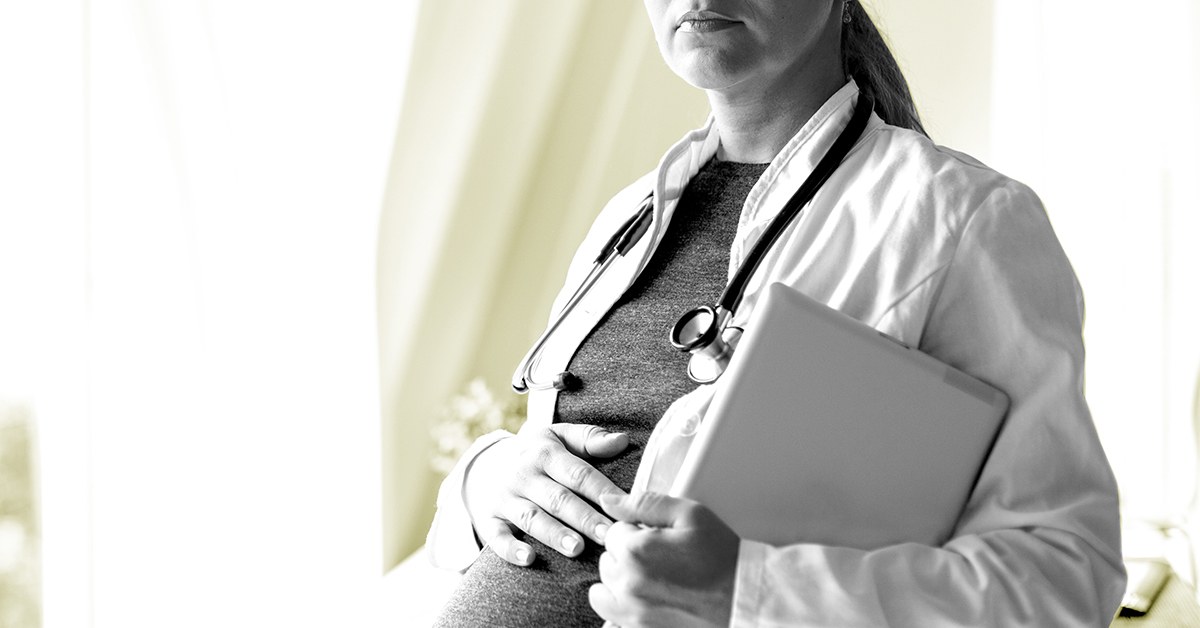
“Are you still planning on doing abortions after you have your baby?” a colleague asked. I was visibly pregnant in my third trimester and pushing a patient to the operating room. I was surprised at the question; We were friends and most of my coworkers knew I became a doctor in order to provide abortion care. “Of course I am, why?” I asked her. She replied: “I just thought it might be hard to do abortions once you have a baby yourself.”

“Nothing’s going to change,” I smiled.

I became pregnant halfway through my second year of OB/GYN residency training. Despite working in a profession dedicated to the care of pregnant women, I was surprised to find that having a baby as a female resident is strongly discouraged. I immediately came under scrutiny from my superiors. There were “jokes” about forcing other residents to be on birth control to prevent spreading the disease. I was determined not to show any weakness in my training as a result of my pregnancy, and continued to work 80-hour weeks, study, mentor, lead care teams, and work 24-hour call shifts until I’d reached 37 weeks. I assisted in a 12-hour robotic surgery at the beginning of my third trimester. I performed a cesarean section the day before my own. Nothing was going to change.

But mastering the care of pregnant women had not prepared me for the challenges of motherhood. I was fortunate to have six weeks of leave, and I had never been more tired, physically challenged, or emotionally drained. I had also never been more joyous. I would look down at my son and weep as tidal waves of love would flow through me. Motherhood is a constant negotiation between mountainous joy and deep sorrow—with sorrow always threatening to swallow you whole. My joy was a privilege—one that depended on factors like my partner, my social support, and, importantly, my ability to choose when to parent.

I am often asked if providing abortion care is hard as a mother—as if abortion somehow exists in a realm outside of motherhood. But, motherhood is not an accidental or natural job; motherhood is a job done with intention. Holding my baby’s tiny hands in my own not only strengthened my commitment to providing compassionate abortion care, but also exposed how I needed to commit to supporting all mothers in all aspects of my care.

I am often asked if providing abortion care is hard as a mother—as if abortion somehow exists in a realm outside of motherhood. But, motherhood is not an accidental or natural job; motherhood is a job done with intention.

I returned to work a different person. I had spent my pregnancy overworking to prove I was strong, but I returned committed to demonstrating vulnerability. I spoke openly about crying out of love and fear for my child with my patients and colleagues. I shared my struggles with breastfeeding and pumping with them, too. I admitted that parenting was hard.

My postpartum visits became longer. I stopped focusing on physical exam check boxes and shifted to psychosocial questions: How much are you sleeping? Who is helping you at home? How are you feeling emotionally? I spent extra time reassuring patients they were doing a good job, that they were enough. I openly talked to my abortion patients about their children and about motherhood.

There is no Mother’s Day card to celebrate abortion. There are Mother’s Day cards to celebrate giving hugs, wiping noses, and kissing boo-boos—actions that are seen as the core of how a mother expresses love for her children. For my patients who were not parents, and did not want to be at that moment, or who never want to be a parent, I recognize their abortions as an act of intentional motherhood. Choosing when to parent is an act of love. For my patients that were already parenting, I feel the deep love they had both for the children they had and for the pregnancies they were ending. Choosing an abortion is an act of love.

Recently, I had a patient encounter that reminded me of that conversation I had with my colleague during my pregnancy. My patient came to her abortion procedure without her partner or a friend, but with her two small children. She couldn’t secure childcare and couldn’t reschedule her abortion. As a mother, I know how hard it can be to get anywhere with just one child. I told her we’d get though it together. As I finished the five-minute abortion procedure, we laughed about motherhood as her other child watched videos on my phone. We laughed about how demanding and obstinate toddlers can be, about the tribulations of potty training, and about how absolutely strange that “Daddy Finger” song is. I was wrong: becoming a mother fundamentally changed everything.

Dr. Ghazaleh Moayedi is an OB/GYN, abortion provider, and fellow with Physicians for Reproductive Health.


Source link