.jpg)
On Wednesday, Supreme Court Justice Anthony Kennedy announced his retirement from the bench. The 81-year-old has served since his appointment by President Ronald Reagan in 1988. Now, the world must sit and wait for President Donald Trump to nominate his second Supreme Court judge in less than two years.
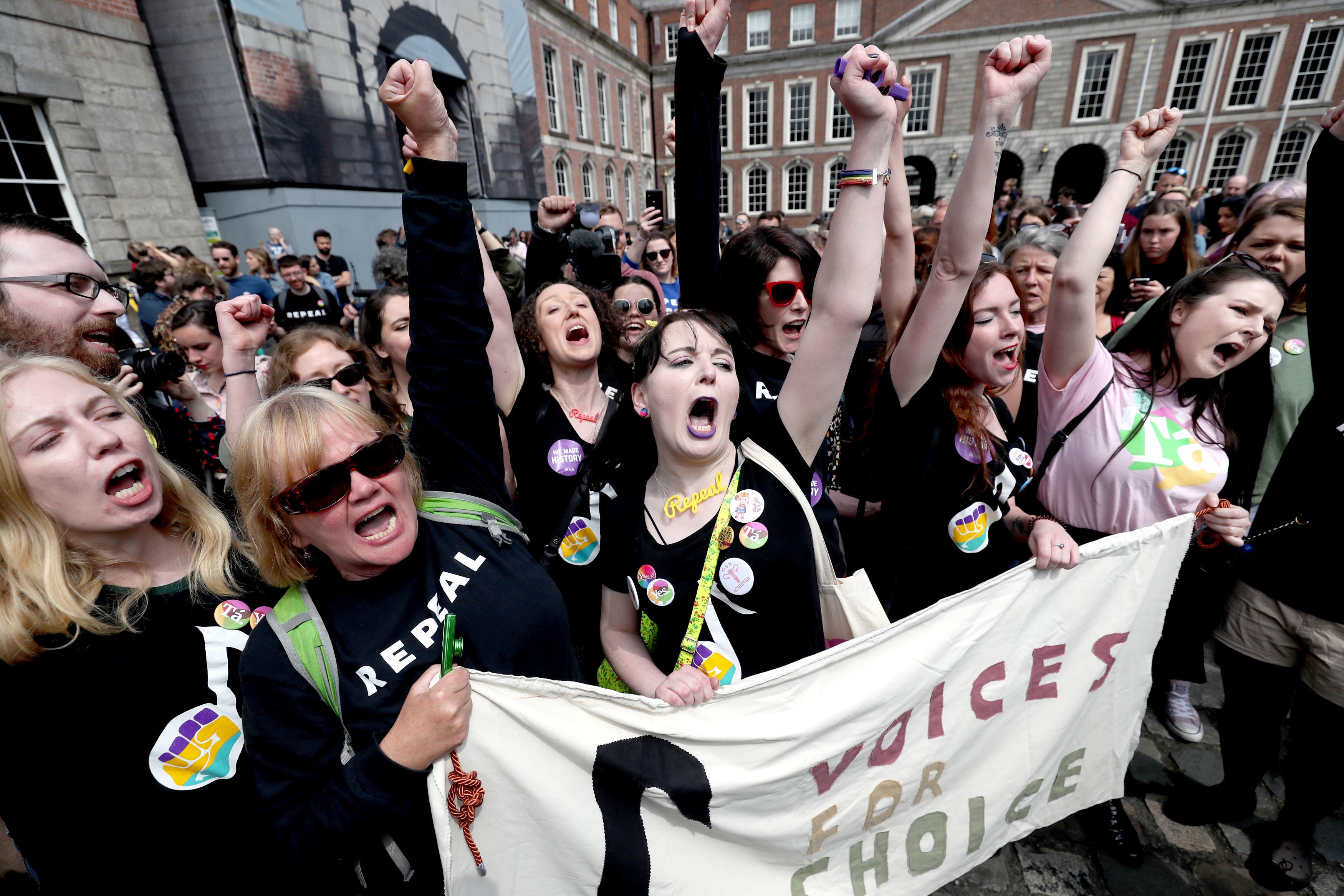
Though conservative, Justice Kennedy was known for his more centrist viewpoints and rulings. As CBS reported, he was a pivotal swing vote for marriage equality, corporate spending on elections, affirmative action, and the protection of abortion rights in 1992’s Planned Parenthood v. Casey. That case, CBS explained, would have prohibitively restricted abortion access for women across the nation.
And now, women fear they may soon face a similar battle. After all, Trump himself stated during the final presidential debate that he would work to see the end of Roe V. Wade.
“If we put another two or perhaps three justices on, that’s really what’s going to be, that’s what will happen,” he said. “And that’ll happen automatically in my opinion, because I am putting pro-life justices on the court.”
To find out just how concerned women should be, Glamour called Jennifer Dalven, Director of the Reproductive Freedom Project of the American Civil Liberties Union, to find out more. For two decades, Dalven has dedicated her work to protecting access to abortion and reproductive health care.
And due to the latest SCOTUS shakeup, she says she’s never been more worried about women’s reproductive rights.
“I can say this is the time I’ve been most concerned in my 20 years here about the future of access to abortions in our country,” she told Glamour.
That’s because she knows that it won’t take a repeal of Roe v. Wade for extreme restrictions to be put in place. Here, she explains:
What specifically is making you so concerned?
Justice Kennedy provided a key vote to uphold a woman’s right to abortion and to stop politicians from blocking women from getting abortions. And President Trump, as you know, has repeatedly pledged to appoint justices who will take away our right to legal abortion. If we allow him to follow through on that promise, the balance of the court will certainly turn against the constitutional right to abortion and access to abortion.
What’s the possibility of Roe v. Wade being overturned?
That’s a really good question, but I think that if President Trump gets to appoint a new justice in the mold he has said he would appoint, whether Roe gets overturned outright or not won’t really be the question. We may not know the specifics, but whether the right to legal abortion is taken away entirely or whether the court decides, ‘no, we don’t need to go quite that far, we don’t need to be that explicit about it, but we’ll simply uphold every restriction that comes this way,’ the effect will be dire for women and families in this country.
How have abortion rights been restricted already?
In the first quarter of 2018, 37 states introduced 308 new abortion restrictions. So there is no doubt that there are politicians out there in a huge number of states who are standing at the ready to restrict women’s access to abortion care.
This could really go two ways: With a new justice on the court, the right to legal abortion could just be taken away entirely. And states could ban abortion outright and we know that there are states chomping at the bit to do that. By some counts almost half of the states are ready to do that. But, as I said, the court doesn’t have to go that far. It could simply decide to uphold any restriction that a politician can dream up and that will just make it impossible for women to get the care they need.
A couple of years ago, there was a case before the Supreme Court called Whole Woman’s Health that was challenging a Texas abortion restriction that would have had the effect of making Texas a state that went from about 40 clinics to about 10 clinics. And what that would’ve meant for women is that abortion would have been as good as outlawed. Justice Kennedy provided the crucial fifth vote to strike down that law. Without Justice Kennedy on the court, if a new justice upholds a requirement like that, we could see laws like that throughout the country. We know that 10 percent of the states are down to one abortion provider already.
Of President Trump’s a current list of nominees, who would you say is the closest to a Justice Kennedy that the American public could hope for?
I can’t comment on the specifics of that list, but what I can tell you is he and Mike Pence have been unbelievably clear that they have a litmus test and that they will only nominate somebody who will overturn the right to legal abortion. Mike Pence said he wants abortion “consigned to the ash heap of history where it belongs.” So we need to be incredibly skeptical and need to carefully evaluate any nominee that President Trump forwards. And the Senate really needs to do its job and carefully evaluate any potential nominees.
This isn’t a drill. This is real. This will have effects for generations to come. Seven in 10 Americans believe that abortion should remain a legal right. If you are one of those people, the time is now to make your voice heard.
Speaking of making your voice heard, what would you say people should do to make that happen?
The most direct way is to let your Senators know where you stand because they are the folks that will stand between a nomination from President Trump and that person actually sitting on the Supreme Court. But I would not be surprised if there are marches and protests in the streets in the coming weeks and months ahead as this battle heats up. But I think that the most direct thing is letting your Senators know where you stand and that you take this issue very seriously.
Note: This interview has been condensed for clarity and length. You can find more information on abortion and women’s reproductive rights, here.
Related Stories:
How Justice Anthony Kennedy’s Retirement From the Supreme Court Could Erode Women’s Rights
Democratic Voters Wanted Something Different. They Got Alexandria Ocasio-Cortez.