Categories
Health

Hospitals Billed Sexual Assault Survivors for Rape Kits. Now They're Paying the Price.


The cost of rape may be incalculable—but this wasn’t supposed to be part of it.

New York hospitals illegally billed survivors for hundreds of forensic rape examinations, a new investigation by state Attorney General Barbara Underwood finds.

In a deal first shared with Glamour, seven hospitals have signed a settlement with Underwood’s office to pay back sexual assault survivors who were charged for their rape exams and to set up new policies to keep it from happening again.

“Survivors of sexual assault have already gone through unfathomable trauma; to then subject them to illegal bills and collection calls is unconscionable,” Underwood said in a statement provided to Glamour. “Hospitals have a fundamental responsibility to comply with New York law. My office will continue to do everything in our power to protect survivors and their rights.”

The seven hospitals in the settlement, according to the attorney general: Brookdale University Hospital Medical Center, Columbia University, Montefiore Nyack Hospital, NewYork-Presbyterian Brooklyn Methodist Hospital, NewYork-Presbyterian Columbia University Irving Medical Center, Richmond University Medical Center, and St. Barnabas Hospital.

Settlement documents reviewed by Glamour said the hospitals didn’t admit or deny breaking the law, but that they agreed to repay patients who were improperly billed and also to adopt written policies that make clear survivors are not to receive bills for rape exams.

PHOTO: Tetra Images

“Survivors of sexual assault have already gone through unfathomable trauma; to then subject them to illegal bills and collection calls is unconscionable,” says New York Attorney General Barbara Underwood.

New York law says hospitals that provide services to sexual assault survivors—including forensic exams, commonly called rape kits—are supposed to send bills directly to the state’s Office of Victim Services (unless a patient chooses otherwise).

That system is supposed to protect survivors’ privacy by making it less likely that a relative or employer might learn they sought medical help. The added layer of confidentiality ideally encourages more people to agree to undergo the exams—which means more physical evidence that can help police find attackers.

But the new investigation found that in the case of these hospitals, that process went awry.

Instead, at least 200 forensic rape examinations conducted by the health care providers were billed to patients or their insurance companies. Amounts ranged from approximately $46 to $3,000, an Underwood aide said. The hospitals also repeatedly failed to inform survivors about their billing options, according to the settlements. In some cases, the bills were sent to collection agencies whose job it was to chase down the outstanding balance.

54279831

PHOTO: Deborah Jaffe

Forensic rape examinations at seven hospitals got wrongly billed to patients or their insurers, Underwood’s office says.

Last year the New York attorney general’s office settled with Brooklyn Hospital after an investigation that started when a patient came forward to say she had been billed—not once, but seven times—for care associated with a sexual assault case.

Underwood is the first woman to serve as New York attorney general. She took over the state’s top law enforcement job on an interim basis earlier this year after Eric Schneiderman resigned amid a flurry of accusations of abusing women, which he publicly contested. In this year’s midterm elections, New Yorkers elected Letitia James to become the first black woman in state history to fill the role. James will take office in January.

It remains to be seen whether the New York settlement will encourage fresh investigations or changes in hospital and clinic rape-kit billing elsewhere, but the problem is not new, with past controversies reported from Arkansas to Alaska.

For now, Underwood’s office encourages anyone with questions about their New York hospital billing to contact its health care bureau at 800-428-9071.

Celeste Katz is senior political reporter for Glamour. Send news tips, questions, and comments to celeste_katz@condenast.com.


Source link

Categories
Health

Sen. Heidi Heitkamp Mistakenly Identified Sexual Abuse Survivors in a Campaign Ad


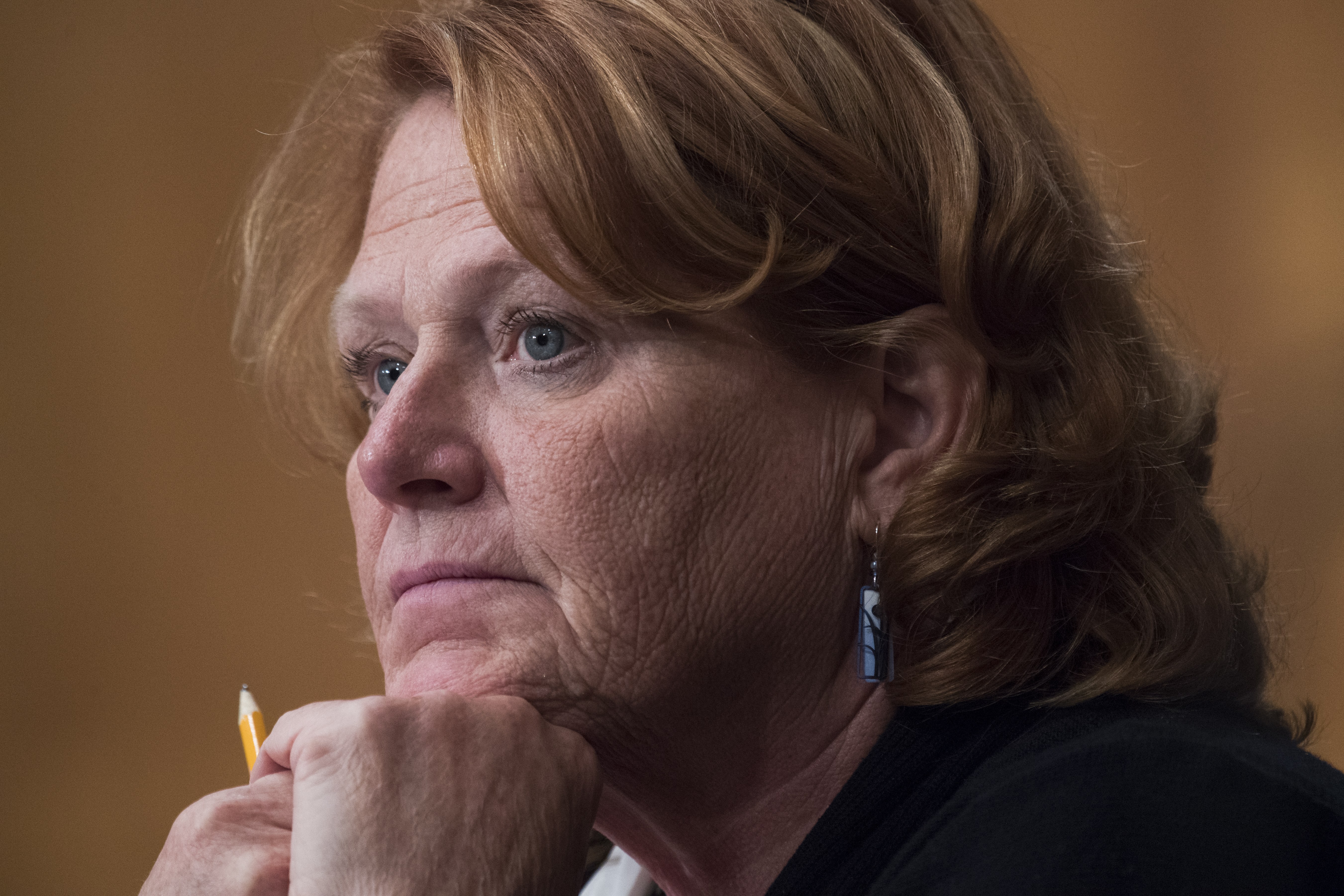
North Dakota Democrat Heidi Heitkamp was already in a tough battle to retain her senate seat in a state that President Donald Trump won by 36 points. And now a mistake by her campaign could be costing her more votes.

Earlier this week, Heitkamp’s campaign published a newspaper ad that was meant to serve as a rebuttal to her Republican opponent Kevin Cramer, but ended up naming sexual assault survivors without their permission or misidentifying them altogether. Cramer has come under fire for his comments about the #MeToo movement in the New York Times. He questioned whether “you’re just supposed to believe somebody because they said it happened.”

“They cannot understand this movement toward victimization,” Cramer said, referencing the women in his life, including his mom, wife and daughters. “They are pioneers of the prairie. These are tough people whose grandparents were tough and great-grandparents were tough.”

The letter was supposed to show Cramer “what prairie tough looks like.” It included signatures from more than 120 women who were supposed to be survivors of “domestic violence, sexual assault, or rape.” But once it went public, some women came forward saying they either weren’t survivors or had never given permission for their information to be used.

The campaign quickly apologized. “We recently discovered that several of the women’s names who were provided to us did not authorize their names to be shared or were not survivors of abuse,” Heitkamp said in a statement. “I deeply regret this mistake and we are in the process of issuing a retraction, personally apologizing to each of the people impacted by this and taking the necessary steps to ensure this never happens again.”

But, that may not be enough. “I don’t know what she [Heitkamp] could do that would make it better,” Lexi Zhorela, a self-identified liberal and one of the women named in the ad, told CNN. “I know that’s why a lot of the people in this situation are reaching out to seek legal counsel because of, you know, what she did is wrong.” She went on to call the mistake “reckless” and said, “You know, the names that didn’t want to be out there are already out there for the world to see. You can’t really retract that, the damage is done.”

And, as of now, Heitkamp has lost her vote, according to CNN.

Heitkamp has been vocal in her support of survivors, including voting “no” on the nomination of Brett Kavanaugh to the Supreme Court. She has also spoken out about her own mother’s experience. “I think it’s wonderful that his [Cramer’s] wife has never had an experience, and good for her, and it’s wonderful his mom hasn’t,” she said previously to the Times. “My mom did. And I think it affected my mom her whole life. And it didn’t make her less strong.”

It remains to be seen how this misstep will ultimately affect Heitkamp’s poll numbers, but the issue is almost certain to come up in her first debate with Cramer Thursday night.

MORE: North Dakota Senator Heidi Heitkamp Arm-Wrestles in New Campaign Ad


Source link

Categories
Health

For Some Sexual Assault Survivors, Justice Looks Like a Sit-Down With Their Assailant


In the year since the #MeToo movement took center stage, one thing is clear: Consent can still be a hard concept to grasp. What is consent? Is there a double standard that comes with it? And when an encounter is not consensual, what’s the best path to accountability and healing? In a recent VICE on HBO episode, correspondent and producer Isobel Yeung (pictured above) explores the conversations around sexual assault. A survivor herself, the episode is a harrowing look at the long-term effects of assault for the victim…and the assailant.

Highlighting one of the most polarizing ways to hold the accused accountable, Yeung takes viewers through an emotional “restorative justice” session between a survivor and her alleged assailant. Sitting face-to-face, the two discuss the alleged assault—a revealing and powerful inside look at how both parties have processed the incident—and what justice looks like for the victim. Of course, for many victims, restorative justice isn’t enough justice. But, as Yeung states in the episode, this avenue isn’t a solution for all. “But at least it’s providing the beginning of a way forward.”

Here, Yeung describes what watching that session was like, the complexities of consent and the path to redemption and healing for survivors.


If one thing is clear after the tumultuous Kavanaugh-Ford hearings last month, it’s that trauma from sexual assault is real, lasting and deep. As millions of Americans listened to Dr. Christine Blasey Ford’s brutal, heartfelt testimony, many survivors were triggered to think back to their own, harrowing experiences. Hundreds felt compelled to recount their stories to colleagues, friends, family members, the Sexual Assault Hotline, and even C-SPAN.

Many of these stories emerged from women who for so long had resolved not to speak about their sexual encounters in public or even with those closest to them. Anxiety, self-blame, shame and fear are among the reasons that individuals stay silent.

That was the case for me. When I was 18, a man who I considered my close friend forced himself upon me. I didn’t understand what was happening until I looked around to see him with his clothes off, pushing my head towards his genitals. The details of that night are hazy and have long been a deep source of embarrassment to me, resulting in a resolution not to discuss it with anyone or to allow it to define my life.

At the time, I dismissed the criminal justice system as a means to any solution, knowing that I would have to explain, justify and relive that night in a public arena. I also had very little faith in justice effectively being served, which reflects thousands of other survivors, too. According to the non-profit RAINN, only 6 out of 1,000 rape cases result in successful convictions, meaning survivors are left fearing not only the humiliation of court proceedings, but also the high likelihood of their offender walking free.

Yet in this extraordinary moment of cultural reckoning, our lack of real options for addressing such experiences should not be ignored. How can we move on with accountability, healing and closure? And what should these look like? As part of our VICE on HBO documentary ‘Consent,’ we wanted to break through the heated political debates raging on both sides of this issue and search for solutions.

[embedded content]

What we found was that the most compelling alternative to the legal system is a relatively new technique known as restorative justice. The concept is simple: to facilitate a dialogue between perpetrator and survivor, allowing both sides to talk openly.

In California, we met a woman named Alexis and a man named James (not his real name). Back when they were college roommates, they had been drinking heavily one night and wound up having sex. In the decade since then, James has maintained that this was merely a drunken incident while Alexis believes it to be rape. Alexis reached out to James several months ago to let him know that legal action was off the table, but that she wanted to talk. We watched as the two of them arrived in a dimly lit warehouse for one of a series of highly orchestrated sessions that professor and restorative justice facilitator Alissa Ackerman had arranged. For two excruciatingly uncomfortable hours in which they sat directly facing one another, they recounted their memories of that night almost 10 years ago.

Alexis broke down as she recalled flashes of James letting himself into her room and climbing on top of her. But she spoke more of how that one incident had impacted every facet of her physical and mental life. She felt disbelieved and outcast from their friendship group, eventually dropping out of college. She’s suffered from years of severe depression and at one point attempted to take her own life. Even now, she continues to suffer from profound PTSD, which has only been made worse by the inescapable news in recent months, weeks and days.

James also sobbed as he grappled to come to terms with his own behavior and how he had inflicted so much hurt. With the encouragement of Professor Ackerman he eventually stuttered, “It was rape… That’s not easy to say, both because I know what it’s done to you and I know, you know… there’s a flash of fear every time I associate with it.”

It was tense and uneasy to be a witness to this and I was mesmerized by the level of honesty, humanity and vulnerability in the room. It ended with the two of them standing up and hugging. It all seemed like a visible relief for Alexis, who was eager to continue the sessions on a regular basis. “This is a justice process that puts the survivor in the driver’s seat,” she told me. “We’re not really moving the needle at all until men start doing it, and your words have the potential to reach any other men and show that there’s a path to taking responsibility.”

There’s limited data on the long term benefits of restorative justice, but initial studies suggest participant satisfaction and a lower recidivism rate. Of course, that won’t be the case for everyone. In some cases, it is too soft an approach and is seen as excusing criminals or even giving them a platform, while risking re-traumatization for survivors.

Despite that, interest is steadily growing. In this nauseating time of very public anger, denial and partisan noise, it’s refreshing to think of an alternative reality where accountability is palpable. What James and Alexis proved was that in some of the darkest corners of ourselves, there could still be a chance for redemption, healing and repair.


Isobel Yeung is a VICE correspondent and producer. You can watch the full “Consent” VICE on HBO special report, here.

MORE: Your Best Consent Ever: How You Both Can Get the Sex You Want


Source link

Categories
Health

Are Hashtags Like #MeToo and #BelieveWomen Hurting or Helping Survivors?


When friends and former colleagues started sharing #MeToo stories, or, in those first furtive days of virality simply dropped the hashtag and left the details opaque, it was palpable: Something was shifting right before our eyes and the power of women speaking, typing, screaming what had for generations mostly been whispered or not said at all, was weighty in the air.

The way we grappled with, identified and discussed sexual assault would never be the same, it seemed.

MeToo—the hashtag that took off after Alyssa Milano, using activist Tarana Burke’s decade-old campaign, put a pound sign in front of the rallying cry—prompted a tsunami of stories and a national intervention on sexual harassment and assault.

It was an eye-opener. Many women I know, myself included, began digging through moments that we’d waved off—the unwanted hands, the inappropriate boss, the ass-slap at work, the boys who’d been boys—and wondered how we’d become conditioned to accept it. Many men voiced surprise and shock at such pervasive harassment and assault. Women described groping , a constant flow of harassment, molestation and even rape. Powerful names started to emerge with accusations attached: Larry Nassar, Kevin Spacey, Roy Moore, Louis C.K., Charlie Rose, Matt Lauer, Russell Simmons, Al Franken, Woody Allen (again), Mario Batali. “The Silence Breakers” were Time Magazine’s People of the Year. The language had changed. Posting #MeToo stories was a part of a national movement to decondition our society. Doing so was both brave and necessary.

But this necessity, unsurprisingly, came with a cost. Survivors gave a piece of themselves, their stories, in exchange for a movement that was supposed to create a wave of change. The burden, it seemed, was on women to free our culture of abuse and assault. Unfortunately, the burden was also on them to endure the very specific and unique abuse that survivors face when they come forward—the insidious shaming that puts the onus on victims instead of their attackers and aggressors.

A year later, in the same month as #MeToo’s internet anniversary, we find ourselves in more of the same. Now-Supreme Court Justice Brett Kavanaugh was confirmed and sworn-in to serve on the highest court in the land despite the sexual assault allegations brought forth by three women, including Christine Blasey Ford, and a belligerent show of defense during his Senate Judiciary Committee hearings. Ford, who says the judge attacked her more than 30 years ago when they were in high school, has been mocked by the president for coming forward. She is unable to return home due to death threats. Women—and some men—reported mentally reliving their own attacks after Ford’s testimony, and took deeply personal umbrage at the suggestion that Ford’s delay in reporting somehow indicated she’d fabricated her story. And the vitriol against Ford is not unlike the kind those who shared their stories using the hashtag #WhyIDidntReport, experienced. It might be easy to wonder, is hashtag reporting to eradicate and illuminate our society’s ills all worth it?

Given the historical response to survivors of sexual assault, especially in the age of Twitter, I asked Karestan Chase Koenen, PhD, licensed psychologist and professor at Harvard’s T.H. Chan School of Public Health, what can prompt survivors to voice an incident they held inside, for years or decades. Often, there are spikes in reports “anytime there’s a really high-profile sexual assault case,” says Koenen. This was true during the Clarence Thomas hearings. It was true with Kavanaugh.

“Assault takes a person’s control and power away, and it should be in someone’s own power and control to tell their story.”

Moral obligation also has an incredible power to draw out the truth: Survivors tend to report after their attacker faces other allegations. Koenen herself went public with her own experience: “It was this public thing where I had a purpose for speaking out,” explains Koenen. “For some people, speaking out now has a purpose.”

Then there’s control: “Assault takes a person’s control and power away, and it should be in someone’s own power and control to tell their story, and I don’t think they’re under any obligation,” says Koenen. Your story, once on the internet, is always there, she warns. She’s known women whose new dates Googled them and knew about their assaults before their first dinner. Sharing the story, no matter how important, cedes some control over it and how it will later be revealed to others.

I certainly do not fault anyone for sharing their #MeToo or #WhyIDidntReport stories; it shows staggering courage. For some, it is empowering to finally say it. That shouldn’t get lost. But I worry about so many people who carried a gnawing hurt and fear around for years, who never wanted to speak the words. Early on, I didn’t pause to see how making a disclosure in such a public way also leaves one open to trolling and further harassment, or in Ford’s case, ongoing death treats. Such is the cost of the truth. I’m at once awed by the survivors’ courage, and mourn that this moment again required it of them—and repaid them with so much cruelty. There’s a burden in being a bearer of truth; there’s punishment meted out for telling it.

I wonder how Ford feels now. How ought outspoken survivors all feel, having aired indignities and pain publicly and across generations, to receive lip service from politicians, but ultimately see justice evaporate again?

There’s an unbearable lightness in telling a difficult truth, a freefall sense, a burden cast-off—perhaps traded eventually for new burdens—but in the moment of truth-telling, there’s power in choosing the words. We saw that astonishing power in Ford. She may not have been taken as seriously as she should have been by those seeking other forms of power for themselves, but she changed lives.

There are millions of stories still held in silence.

When truths are told for a higher good, one hopes the teller will be rewarded with seeing some justice. In a good, fair world, that’s how things would work. We don’t yet live in that good, fair world. But we do live in a country where now, the fight is more deeply shared. Losing a battle but ending up with more soldiers isn’t exactly a loss.

For a year, we’ve heard the tallies of the millions of dollars powerful men lose when their “scandals” surface. But I continue dwelling on what’s been sacrificed by so many women who exposed their hardest memories at the cost of waking up the rest of society, the cost of reliving and opening up stories—because the cost could be exponential a moment that never ends.

Unless, because of their courage, eventually, it does end.


Sarah Stankorb is a writer whose work has appeared in The New York Times, Washington Post, Vogue, Marie Claire, Longreads, Catapult, and Slate, among others. @sarahstankorb

MORE: A Year Later, Is the #MeToo Movement Stuck in Hollywood?


Source link

Categories
Health

Brett Kavanaugh's Name Is Now Being Used As A Resource For Sexual Assault Survivors


Brett Kavanaugh’s controversial ascent to the Supreme Court has been difficult for many women, particularly those who have endured sexual assault. But any survivors who are struggling in the wake of the confirmation now have one new and unexpected resource to turn to: Brettkavanaugh.com.

According to reports, the website launched the same day Kavanaugh was sworn in through the efforts of Fix The Court, a non-partisan organization that advocates for increased transparency and honesty within the Supreme Court. The site consists of a simple landing page that includes multiple links to different groups specializing in helping sexual assault victims, and they include the National Sexual Violence Resource Center, End Rape On Campus, and the Rape, Abuse & Incest National Network.

“The start of Brett Kavanaugh’s tenure on the Supreme Court may look like a victory for one interest group or another,” the website reads. “But, more importantly, it is putting a national focus on the issue of sexual assault – and how we as a country can and should do more to prevent it and to support those who have experienced it. This past month, thousands of survivors came forward to tell their stories. We applaud your bravery. We believe you.”

In a statement on its website, Fix The Court executive director Gabe Roth explained that three years ago, he bought a handful of URLs that related to possible Supreme Court nominees. One of these was BrettKavanaugh.com. He also secured BrettKavanaugh.org and BrettKavanaugh.org, which now redirect back to the Brett Kavanaugh landing page.

“I believe Dr. Ford. I believe Prof. Hill. I also believe that asking for forgiveness is a sign of maturity and strength, not weakness,” Roth wrote.

Roth also referred to a divisive public ceremony that the White House held for Kavanaugh on Monday, during which President Donald Trump apologized on behalf of the nation for “pain and suffering” that the new justice been forced to endure” after several women, including Christine Blasey Ford, accused him of sexual misconduct.

“Watching last night’s White House event and listening to the President again cast doubt on veracity of Dr. Ford’s claims, while not hearing a word of contrition from the newest justice, was difficult for many Americans who have experienced sexual misconduct firsthand,” Roth said in his statement. “Fix the Court stands with you. We believe you, and we support you. And if you seek additional resources, you can go to BrettKavanaugh.com.”


Source link

Categories
Health

Watch These Sexual Assault Survivors Confront Republican Senators at the Airport


While the FBI continues its investigation into the sexual assault allegations against Supreme Court nominee Brett Kavanaugh, more women are coming forward to share their personal stories in hopes of swaying the opinions of senators who will eventually vote on whether or not to confirm the conservative judge.

But one group of women isn’t waiting until the vote for a change of heart. Over the weekend The Center for Popular Democracy (CPD) organized their staff and volunteers to speak candidly with senators returning to Washington, D.C., at Ronald Reagan Washington National Airport. And as it turns out, some of those senators were left speechless.

“We were saying, ‘Look us in the eyes, actually have a conversation with us,'” the group’s president and co–executive director Jennifer Epps-Addison told Bustle about confronting the men. She told the outlet that the group spent the weekend studying photos of both Democratic and Republican senators so they could recognize them on sight.

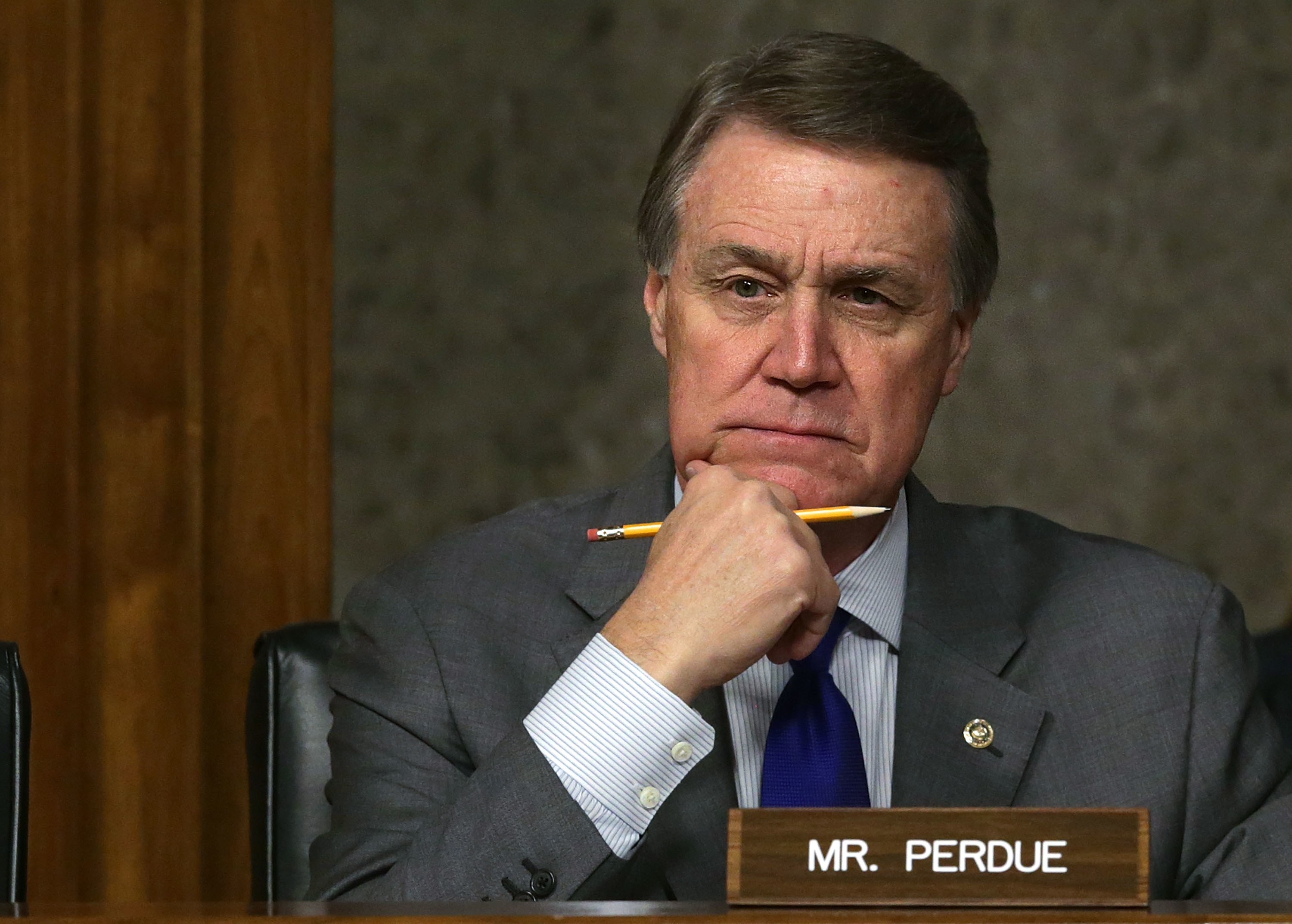
On Monday Senator David Perdue (R–Ga.) was approached by Epps-Addison, Patti Serrano, and Arizona State Representative Isela Blanc as he made his way through the terminal.

After complaining about being touched, he ducks into a men’s bathroom to avoid the women.

[embedded content]

“How can you not talk to women who have been assaulted?” Epps-Adison asks. “How can you ignore our pleas?” Blanc continues, “You represent not just your state’s choice, but every American in this country, and every person that is vulnerable. This is a legacy, and a moment in history that will not be forgotten.”

“He [Perdue] really is demonstrating what women across the country are saying: It’s not only that you are not listening to us, but you are overtly hostile to us when we say that we want the full rights and dignity that everybody in this country deserves,” Epps-Anderson said in her interview with Bustle.

Senate Majority leader Mitch McConnell also found himself on the receiving end of public criticism and questions. “Do you want the Republican party to be the party that is known for supporting rape and sexual assault?” a woman asks.

This isn’t the first time we’ve seen women confront senators in the past week. Many believe that the decision by Senator Jeff Flake (R–Ariz.) to call for the delayed vote and a limited investigation came in part because of a confrontation in an elevator by two brave sexual assault survivors, Ana Maria Archila and Maria Gallagher.

“I was sexually assaulted and nobody believed me,” one said to Flake. “I didn’t tell anyone, and you’re telling all women that they don’t matter, that they should just stay quiet because if they tell you what happened to them, you’re going to ignore them. That’s what happened to me, and that’s what you’re telling all women in America, that they don’t matter, that they just keep it to themselves.”

The vote on whether or not Kavanaugh gets a seat on the Supreme Court bench is scheduled to take place at the end of this week.

MORE: Time’s Up Picks WNBA’s Lisa Borders as Its First-Ever President and CEO


Source link