Categories
Health

There Are Two Typos On the State of the Union Ticket, So Let's All Give Up Now


We still have 24 hours before the big show, but it appears things are already off to an iffy start for President Donald Trump’s State of the Union Address.

On Monday, photos of this year’s SOTU tickets began to surface on social media and showed they came with not one, but two embarrassing typos. Clear as day, on the blue and black tickets it invited guests to attend the “State of the Uniom” instead of Union.

“This will be the last year I go to a scalper for tickets to the ‘State of the Uniom,'” Congressman Raja Krishnamoorthi joked on Twitter.

And while certainly funny, it sort of sucks to be working in the Office of the Sergeant at Arms and Doorkeeper, as they are the ones who print and provide the tickets for spouses and guests of members of Congress. Now, they will have to reprint and reissue every ticket they gave out to ensure the right information is provided, according to CNN.

“Just received my ticket for the State of the Union. Looks like Betsy DeVos was in charge of spell checking,” Rep. Raul M. Grijalva, a Democrat from Arizona wrote in a tweet.

Even Republicans got in on the joke, with leaders like Sen. Marco Rubio tweeting about the error.

Though “Uniom” wasn’t the only error to be printed on the ticket. As Buzzfeed astutely pointed out, the ticket also refers to the “Visitor’s Gallery.” However, according to the Office of Art & Archives, it should read Visitors’ Gallery.

According to a Sergeant at Arms spokesperson, this is likely the first time State of the Union tickets have had to be reissued.

“Sometimes the colors and little details change and obviously the dates,” he told Buzzfeed. “But I don’t recall [the need to reprint due to an error] happening before.”

Related Content:
What to Expect from President Trump’s First State of the Union Address
Maxine Waters Will Follow Trump’s First State of the Union By Giving Her Own Speech
12 Things to Watch This Week (Including, Yes, the State of the Union Address)


Source link

Categories
Health

12 Things to Watch This Week (Including, Yes, the State of the Union)


We’ve got some bad news: The State of the Union Address is happening this week, and yeah, you should probably watch—if only to understand the jokes Saturday Night Live will make about it next weekend. No worries, though: When that’s over, there are plenty of fantastic movies and TV shows airing this week that will bring you back to a happy place. These 11 should be your top priority.

Sunday, January 28

60th Annual Grammy Awards: James Corden hosts tonight’s ceremony, which features performances from Lady Gaga, Kesha, and Rihanna. 7:30 P.M. ET on CBS

Monday, January 29

Girlfriends: Phyllis Logan from Downton Abbey stars in this ITV drama, which centers on three women over 50 struggling with relationships, partners passing away, and navigating the next stages of their lives. It’ll be available to American audiences on the Acorn streaming platform. Available for streaming on Acorn TV

The Bachelor: No, a special episode isn’t airing tonight. This is just your friendly reminder to tune into The Bachelor tonight because this season is one of the most bonkers yet. Krystal is truly the gift that keeps on giving—as is Twitter’s Arie shade. 8 P.M. ET on ABC

Tuesday, January 30

State of the Union Address: Eh, I guess you should probably watch this. Maybe have a glass wine beforehand, though. Or three. 9 P.M. ET on various channels

Super Bowl Greatest Commercials 2018: Before that, though, psych yourself up by watching some great Super Bowl commercials. They’ll elevate your mood before it’s destroyed by Trump. 8 P.M. ET on CBS

Wednesday, January 31

Step Up: High Water: It’s the same Step Up format, but in a new location: High Water, a “cut-throat” performing arts school in Atlanta. My body is ready for all the dance-offs.

Cars 3: Eleven-year-old you will love that you’re watching this sequel, which surprisingly has just as much heart and laughs as the original. If you missed it in theaters, now’s your chance to watch. Available for streaming on Netflix

Thursday, February 1

Meet the Parents: Ben Stiller and Robert DeNiro star in this cult classic about a male nurse who goes home to meet his girlfriend’s parents for the first time. It’s been 18 years since this came out, and the laughs are still incredibly fresh. This is a perfect Netflix option when you can’t think of anything to watch! Available for streaming on Netflix

A.P. Bio : Tune into a special preview episode of NBC’s new comedy A.P. Bio, about a Harvard professor hopeful (Glenn Howerton) who begrudgingly takes a job teaching A.P. biology in a small-town high school. It’s basically Bad Teacher meets School of Rock, minus the singing and Jack Black. 9:30 P.M. ET on NBC

[embedded content]

Friday, February 2

2 Dope Queens: Jessica Williams and Phoebe Robinson’s hilarious hit podcast is getting the HBO treatment in the form of four, hour-long specials. Fingers crossed this becomes a full-blown series.

Winchester: Helen Mirren stars as the real-life figure Sarah Winchester, a firearms heiress who boarded herself up in the Winchester Mystery House after suspecting she was being haunted by the ghosts of people killed by guns. Spooky stuff. In theaters

[embedded content]

Saturday, February 3

The Simone Biles Story: This Lifetime movie explores the Olympian’s meteoric rise from foster care to sweeping the 2016 Summer Olympic games—all before turning 20. 8 P.M. ET on Lifetime

[embedded content]

Related Stories:

Today in Must-Watch: There’s a “Meninist” Parody of The Handmaid’s Tale

What You Must Watch, Read, and Listen to Before Becoming a Grown-Up


Source link

Categories
Health

Maxine Waters Will Follow Trump's First State of the Union By Giving Her Own Speech


Democratic Representative Maxine Waters of California,—she who made “reclaiming my time” a rallying cry—will be is now claiming the spot following President Donald Trump‘s first State of the Union address next Tuesday. Directly after his speech, she’ll be popping by the beginning of BET’s Trump-focused Angela Rye’s State of the Union, a quarterly special bringing political commentator Rye and BET together to comment on Black American issues, according to Buzzfeed.

Waters is known for her fierce outspokenness, including a few viral moments during the past year, whether it’s been for her grilling of Treasury Secretary Steve Mnuchin during which she infamously “reclaimed her time”, or for that moment when she started an “Impeach 45!” chant at the 2017 Glamour Women of the Year Awards. She’s also a feminist icon: she recently wrote an essay for Glamour.com about how the Women’s March revived her faith in the younger generation.

Don’t expect her told hold back during the BET special. “Auntie Maxine,” as her devoted fans call her, has already made her feelings about the president quite clear. While politics is often jargon and spin, Waters hasn’t been afraid to say what’s really on her mind when it comes to Trump—or really anything.

“The most upsetting part is discovering that the person who won the election and became the president of the United States of America is a man who has no good values. His character astounds me,” she said in an interview with Glamour.com last June. “I can’t believe that we have a president who would lie, who would distort, and who does not appear to have an appreciation for government and how it works.”

Waters’ speech is not the official Democratic response to Trump’s first State of the Union—Representative Joe Kennedy of Massachusetts will be delivering that. But official or not, surely Waters will have plenty to say. Perhaps she’ll coin a new catchphrase?

Related Stories:
Maxine Waters on How the Women’s March Revived Her Faith in the Younger Generation
Congresswoman Maxine Waters Is Not Afraid of Donald Trump: ‘I Am So Offended by This President’
Watch Maxine Waters Start an ‘Impeach!’ Chant at the 2017 Glamour Women of the Year Awards


Source link

Categories
Health

Why Female Democrats Are Planning to Wear Black to Donald Trump's State of the Union Address


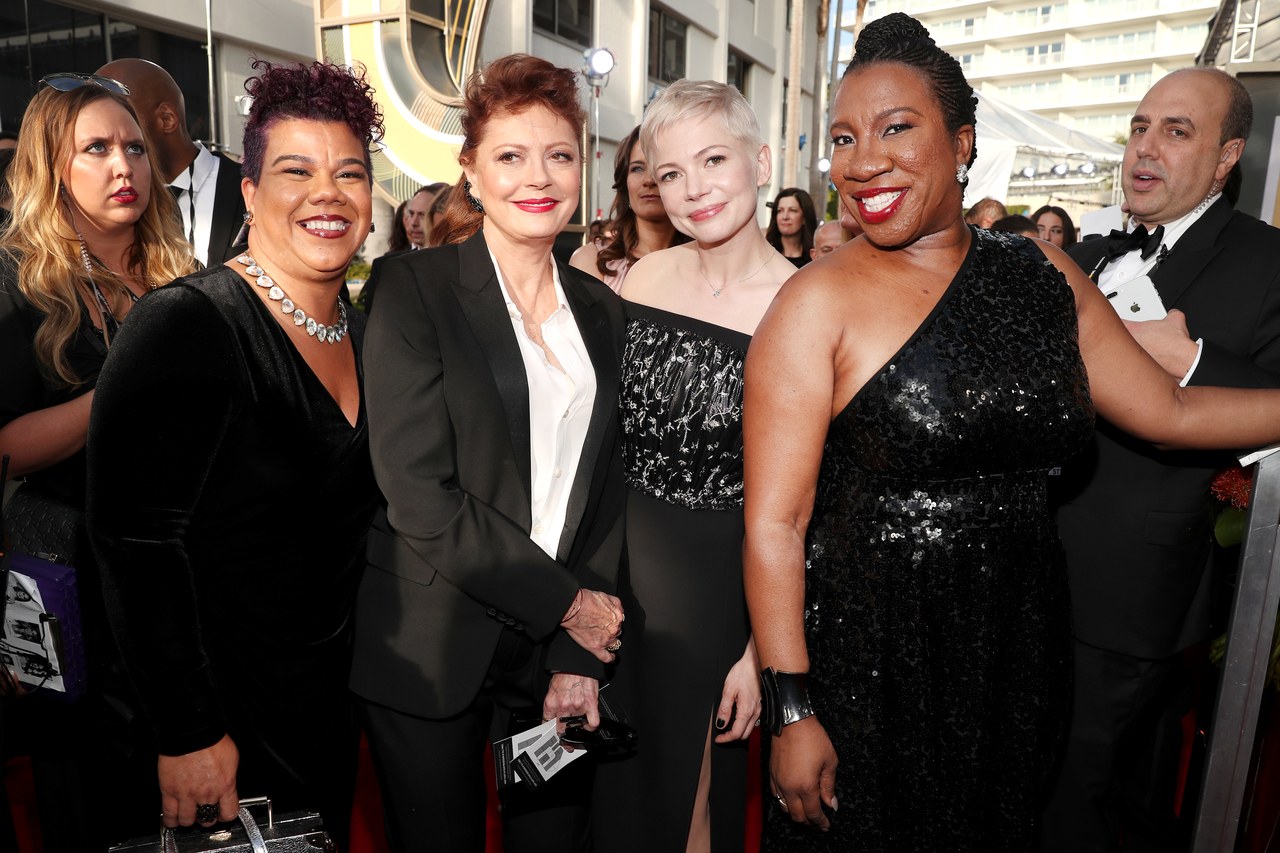
At the 2018 Golden Globes, the red carpet was flooded with black dresses and Time’s Up pins, a coordinated protest against sexual abuse and harassment in Hollywood and other industries. Though responses to the blackout (and the efficacy of this type of showing) was mixed, it does appear to have inspired a similar movement in a different field: politics.

NBC News reports that another blackout demonstration against sexual misconduct is in the works—this time, in Washington, D.C., on the occasion of President Donald Trump’s State of the Union address. On January 30, members of Congress, led by the Democratic Women’s Working Group, are invited to wear black to the address as an act of solidarity. Representative Jackie Speier, a Democrat from California who will be participating, told NBC News: “This is a culture change that is sweeping the country, and Congress is embracing it.”

PHOTO: Christopher Polk/NBC

Activist Rosa Clemente, actresses Susan Sarandon and Michelle Williams, and activist Tarana Burke at the 2018 Golden Globes red carpet.

Last year, female Democrats staged a similar fashion demonstration when President Trump addressed a joint session of Congress for the first time: They wore white as an homage to the women’s suffrage movement, and to make a statement about women’s rights. They documented it with the hashtag #WomenWearWhite.

While lawmakers in Washington are often starkly divided by their political affiliations, Speier and other organizers hope that a call to stand up for victims of sexual harassment and abuse will transcend party lines, with members of both parties showing up in black.

Capitol Hill is no stranger to the rampant sexual abuse that has plagued professional environments, from film to farming. A November New York Times report described sexual harassment as an “occupational hazard” for women entering politics; in the same month, fifty women spoke to CNN about their experiences with harassment while working in Washington. And when it comes to individual politicians (mostly male), accusations of sexual misconduct abound: Most notably, President Trump has dodged and denied accusations of sexual harassment since his 2016 campaign, while Senator Al Franken and Representative John Conyers (both Democrats) stepped down from office following allegations of their misconduct.

The Golden Globes blackout was met with criticism, many notes that seeing a sea of black dresses—and reading the statements of actresses who participated—made for one of the most meaningful red carpets in entertainment history. At this time, few politicians have announced their intentions to wear black alongside the Democratic Women’s Working Group to the State of the Union. On January 30, we’ll see which lawmakers step up—and whether the President responds to the protest.

Related Stories:

Reports: Capitol Hill Has a Huge Sexual Harassment Problem Too

How Designers, Stylists, and Fashion Critics Responded to the 2018 Golden Globes Blackout

Actresses Explain What Wearing Black to the 2018 Golden Globes Means to Them


Source link

Categories
Health

State Senator Gayle Goldin: Why Speaking Out Against Sexual Harassment Backfires for Women in Office


When #MeToo started filling up my Facebook feed, I wavered about whether to join in. As a Rhode Island state senator, I know I’m already judged by the clothes I wear, the tone of my voice, and if I’m likable enough. I’m expected to be a fierce champion and a team player—all while wearing lipstick and nice shoes.

I don’t have a salacious story of sexual harassment at the State House. What I have is the story of sexism that permeates our daily lives.

Politics is all about relationships. We aren’t just making friends at work; we’re building rapport to advance our legislative agenda. When you call out your colleagues for everyday sexism, you earn a reputation of being “difficult,” “sensitive,” or worse. Too many men who are not perpetrating this behavior often turn their colleagues’ comments into jokes or simply shrug. This creates an internal struggle for elected women: Is it more important to gain your colleague’s support on legislation than to remind him that he should stop calling you “one of the girls” when he’s talking to you?

Sadly, for many women in office, if you start speaking truth to power, power talks back—by killing your bills, changing your committee assignments, and smearing your reputation.

In politics, your reputation and your word are everything. When women legislators raise the issue of sexism among our male colleagues, the price we pay is often subtle. We aren’t included in impromptu social gatherings. We’re passed over as bill sponsors. No one asks our opinions on legislation. Suddenly, a colleague who pledged to support your bill changes his mind. We risk losing our colleagues’ trust for not keeping their secrets.

When women in office start speaking truth to power, power talks back—by killing your bills, changing your committee assignments, and smearing your reputation.

And when sexism crosses the line and becomes sexual harassment, an elected woman must face a harsh truth: questions about the credibility of her story often lead to questions about her credibility as a legislator. If our male colleagues decide it just isn’t worth the “hassle” of working with us, it can be fairly easy to work around us. After all, three-quarters of all state legislators are men.

While we may be effective fighters for our policy ideas, confronting everyday sexism is exhausting.

When I was first elected to the state Senate, a strong woman leader who had been in office for decades gave me a piece of advice that made my stomach turn: Smile more, it’ll make some of the men more comfortable. A male colleague once stopped me in the middle of a policy discussion with another senator to tell me I looked pregnant. Work-related events involve alcohol served by women in low-cut shirts and plenty of “locker room talk.” Colleagues interrupt me and tell me to stop asking questions, to calm down, to be helpful. I am often one of the only women in the room.

PHOTO: Courtesy of Gayle Goldin

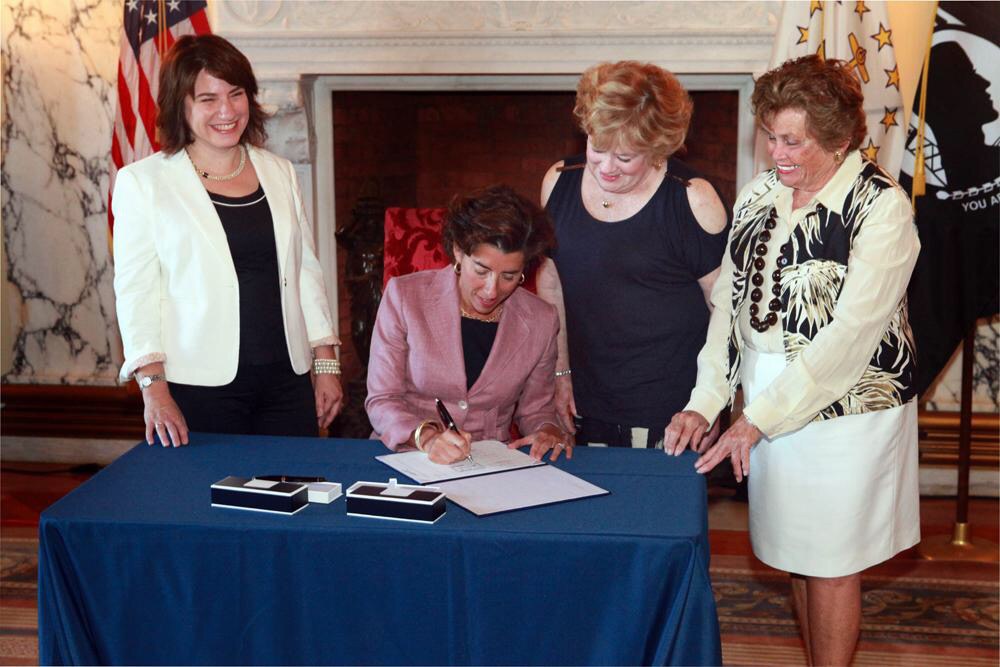
Senator Gayle Goldin (left) attends a bill signing with Rhode Island Governor Gina Raimondo (center).

Individually, these incidents can seem small. Collectively, they are a relentless reminder of how hard women must work to earn basic respect. Sexual harassment and sexism are used to make the victim feel powerless. We learn to quickly calculate the repercussions for speaking up and keep our opinions quiet. We serve as advocates, but we spend too much energy and time trying to placate our colleagues and please the public.

The trouble is, the impacts of this behavior reach beyond me and my female colleagues. When men are not challenged to address their biases, the laws they make reflect them. Equal pay becomes “too difficult for business.” Child care subsidies are “not a priority.” Paid family leave is a “nice perk, but not a necessity.” Threats to reproductive rights are “not worth worrying about.” Removing guns from domestic abusers takes a back seat to guarding a man’s Second Amendment rights.

As more stories of sexual harassment come pouring out, I have thought about why, as women, we pick our battles. I’m finally realizing we shouldn’t have to. We should be able to do our jobs without getting comments about our looks, without having to avoid going into certain rooms alone, and without having to fear for our safety. And we shouldn’t have to mollify our male colleagues and tolerate their bad behavior in order to get a shot at passing legislation that improves the well-being and health of half the population.

We shouldn’t have to tolerate our male colleagues’ bad behavior in order to get a shot at passing legislation that benefits women—like equal pay or paid family leave.

We are elected to be powerful voices, but the reality is we must work twice as hard to be heard. It’s time that women in politics—regardless of party—stand together. I was lucky enough to be elected at a time when the Rhode Island Senate had its first woman president, who hired smart, talented women for our staff and moved women senators into committee chair positions. But the toxic environment won’t change until women are equally represented in every level of government. We need to recruit more women, elect more women, and pledge to support women in office. We need to hold men accountable for their actions and stop electing sexist men, and sexual predators, to office. We need our male colleagues to feel uncomfortable and insulted when a woman is discriminated against or harassed—and to stand up with her.

Mostly, we need to change not only our laws but also how we make them. Yes, we need laws that help create gender equity. But we also need to pay attention to how those laws are made — and to who is in the room. Let’s see state houses where at least half of all committee chairs are women, where every committee has equal representation. Let’s have transparent bill hearing processes and open access to information. Let’s have a government that represents all of us, equally, so that the next generation of women leaders has no reason to join me in saying #MeToo.

Now in her third term in office, Senator Gayle Goldin represents District 3 in Rhode Island. She is one of only 254 Democrat women state senators in the country. She also serves as the family and medical leave insurance campaign advisor to Family Values@Work, a national network of 25 state coalitions leading the movement for better family-friendly workplace policies.


Source link