Categories
Health

Harvey Weinstein Indicted on Rape Charges by New York Grand Jury


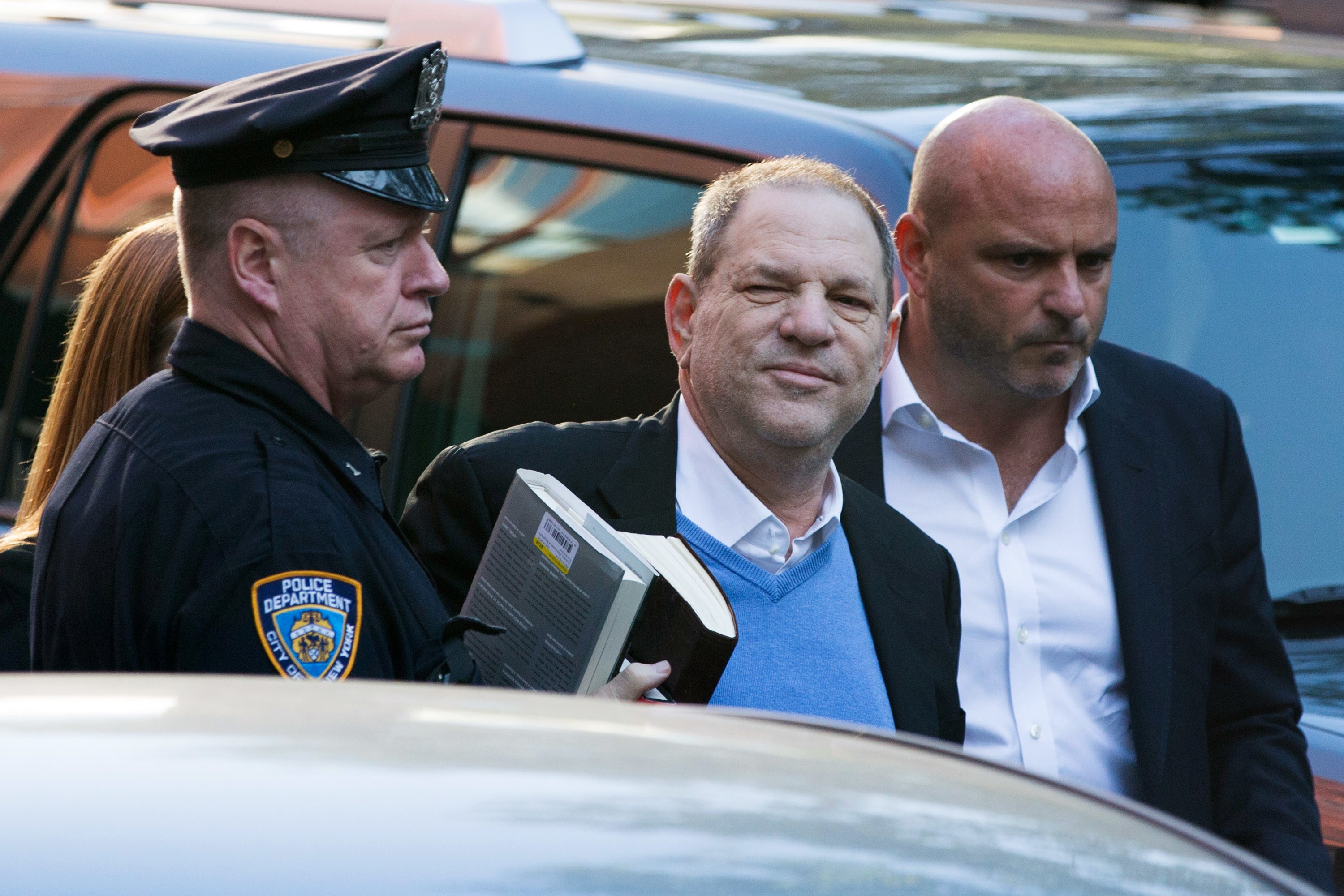
On Wednesday, a Manhattan grand jury officially indicted Harvey Weinstein on charges of rape and criminal sexual act, according to the Associated Press.

“This indictment brings the defendant another step closer to accountability for the crimes of violence with which he is now charged,” Manhattan District Attorney Cyrus Vance said in a statement. “Our office will try this case not in the press, but in a courtroom where it belongs.”

In the statement, Vance also thanked the “heroic survivors for their strength throughout this process” and thanked the New York City Police Department for its dedication to the case. The statement ended by urging any other potential victims to come forward with their allegations.

Weinstein did not testify in front of the grand jury on Wednesday. According to Weinstein’s lawyer Benjamin Brafman, he did not have adequate time to prepare his client for testimony.

“After being unfairly denied access to critical information about this case that was needed to defend him before the grand jury, Mr. Weinstein’s attorneys decided that there was not sufficient time to properly prepare Mr. Weinstein,” Brafman said in a statement. Brafman added that he felt an indictment was “inevitable” regardless of what his client may say on the stand due to “unfair political pressure.”

Weinstein turned himself in to authorities last week to face charges.

The disgraced Hollywood producer will now face the accusations brought by Lucia Evans, who says she met Weinstein in 2004. In October, Evans gave an in-depth interview to The New Yorker where she explained that during a one-on-one meeting with Weinstein, she was forced to perform oral sex on him.

“He’s a big guy. He overpowered me,” Evans said. “I just sort of gave up.”

Weinstein is currently out on $1 million bail and is required to wear an ankle bracelet as he awaits trial. To date, Weinstein has denied all allegations against him.

Related Content:
Harvey Weinstein Turns Himself In to Authorities on Sexual Assault Charges
Harvey Weinstein’s Accusers Are Reacting to His Arrest on Twitter: ‘We Got You’
Here’s How Harvey Weinstein’s Arrest Went Down


Source link

Categories
Health

Mariska Hargitay’s New Documentary Is an Unflinching Look at America's Untested Rape Kits


In August 2009, a group of local officials were on a routine tour of a police storage warehouse in Detroit when an assistant prosecutor noticed a mountain of boxes overwhelming the shelves. Curious, an official asked what was inside. Little did they know that the question would lead to the discovery of thousands of unprocessed rape kits.

These rape kits—which included DNA and other potential crime-solving clues collected from victims of alleged assault—were sitting in the warehouse, gathering dust, some of them for years. While a few had been investigated, most had never been submitted for testing. After they were discovered, prosecutors launched more than 1,000 investigations based on the evidence kits, identifying 817 serial rapists who had attacked multiple victims. (A report on why the rape kits had gone untested found the police were “cutting corners” and failing to follow protocol.) As of December 2017, 127 suspects associated with the cases from the warehouse had been convicted.

PHOTO: Courtesy of HBO

Untested rape kits in evidence room

The massive mishandling of evidence—and, by extension, miscarriage of justice—that occurred in Detroit is not an anomaly. Similar stories have unfolded across the country over the past decade. Back in 2009, there were 6,132 untested kits in Los Angeles and more than 12,000 were found in Memphis, Tennessee, in 2013. Florida officials are still working their way through the 8,600 uncovered back in 2016. And just this February, an audit in North Carolina revealed a backlog of 15,000. Today, nearly ten years after the discovery in Detroit, advocates estimate that hundreds of thousands of rape kits across the country remain untested. But this spring, efforts to end that backlog are being amplified thanks to a familiar face: Mariska Hargitay.

‘Testing kits sends a fundamental and crucial message to survivors that says you matter. And not testing the kits sends a message you don’t.’—Mariska Hargitay

Years of playing Detective Olivia Benson on Law & Order: Special Victims’ Unit inspired Hargitay to assume a second role as a real-life advocate for survivors of sexual assault and other crimes. In 2004, she founded the Joyful Heart Foundation to support survivors of sexual assault. And on April 16, she’s bringing the backlog to an even wider audience with I Am Evidence, a documentary on the crisis produced she produced, that will debut on HBO.

“Behind every kit there’s a person waiting for justice,” Hargitay tells Glamour. “Testing kits sends a fundamental message and message to survivors that says you matter. What happens to you matters and your case matters—and not testing the kits sends a message you don’t.”

The award-winning film, which premiered at the Tribeca Film Festival, captures the heartbreaking scope of the problem as well as the ways it impacts both the delivery of justice and the psyches of the survivors whose cases have languished. Hargitay says she hopes the film will “spark outrage” and action on the issue.

[embedded content]

“People assume that when a woman goes through a four- to six-hour, often retraumatizing, examination of collecting evidence—when her body is a crime scene—that that box gets tested. That is not the case,” Hargitay says. “Justice isn’t being served,” she adds. “Everyone deserves justice.”

The failure to properly track and test the evidence can create major problems for police and prosecutors trying to get attackers off the streets. Untested kits may mean crucial DNA isn’t going into a national database that could be used to apprehend serial rapists commiting crimes across state lines. Beyond that, the treatment of the evidence—and, by extension, the cases and women and men they are tied to—can have an even bigger, sometimes chilling effect on survivors and their willingness to come forward following a violent crime: without confidence that they will be believed and their case will be investigated properly, some survivors might never report their rapes.

There may be more deeply entrenched factors behind the backlog that are harder to solve: a culture of victim blaming and a lack of understanding about how the trauma of assault impacts those who are attacked.

“I call it all the time ‘the neglected child of violent crime,’ because if we were talking about homicides—cold case homicides—we wouldn’t be having this discussion. People would throw resources at it,” Kym Worthy, a Michigan county prosecutor whose efforts to address the backlog in Detroit are featured in the film, told Glamour in an interview. “But because it’s sexual assault—because it’s a crime that happens overwhelmingly to women—people just don’t care.”

Those attitudes are even more prevalent and problematic when it comes to sex crimes targeting predominantly Black and Latino communities, Worthy says. More than 80 percent of the untested kits in Detroit were reportedly from crimes committed against people of color. “You’re not going to find many blonde-haired, blue eyed women [in the backlog],” she told the Detroit Free Press in December 2017, “because their kits are treated differently, their cases are solved. That’s just the way it is in this country.”

“If you look at this issue across this country you will find that most of these [untested] kits are found in communities of color…” Worthy tells Glamour. “As prosecutors we know that and we know that people look at crimes that happen of victims of color, especially women, differently and treat them differently.”

But the backlog problem is also a basic one for all survivors: police departments and crime labs often lack clear policies and sufficient resources to deal with the evidence. Some states, including Massachusetts, reportedly don’t require testing or tracking of the kits at all. To address these lapses, Hargitay and her Joyful Heart Foundation have been pushing for comprehensive rape evidence reform legislation—including mandatory testing of new and old kits, enhanced funding, and an annual audit—in all 50 states by 2020.

They’ve seen encouraging progress in recent years. In 2016, 19 states took some sort of action to address the issue. Last year, Texas became the first state to adopt the comprehensive package proposed by Joyful Hearts. And on the federal level, U.S. Sen. Jeanne Shaheen successfully pushed for passage of a Sexual Assault Survivors’ Bill of Rights, which codifies survivors’ rights to have their evidence kits preserved.

“As painful as all of this is, and we have so much work to do, this is fixable if we change these laws,” Hargitay says.

But it’s worth noting that there may be even more deeply entrenched factors behind the backlog that are harder to solve: a culture of victim blaming and a lack of understanding about how the trauma of assault impacts those who are attacked. Too many police officers still doubt victims if the case doesn’t fit into a neatly confined narrative. And many people, Hargitay and Worthy say, don’t fully appreciate the trauma that survivors of violent sex crimes have experienced. “We don’t really think about the pain and the endurance that each victim has,” Worthy, who has spoken about her own assault during law school, says. “It is bravery beyond measure.”

Every time someone sees this film, we’re talking about a potential juror.

While the documentary began filming back in 2014, its widespread release happens to coincide with the crescendo of the #MeToo movement that has increased awareness of how pervasive harassment and assault truly are. Hargitay and Worthy see that broader dialogue as a step in the right direction. And I Am Evidence serves as a raw and crucial contribution to that conversation: a powerful testament to the importance of the bearing witness to survivors’ experiences and the deep pain the mishandling of these cases can cause.

Two women featured in the film, one from Ohio and one from California, were attacked by the same long-distance trucker more than 2,000 miles apart. Helena, who lived in Los Angeles, waited more than a decade for her assailant to be identified because of an untested evidence kit. By the time that finally happened, the statute of limitations on prosecuting him for rape had passed. In the documentary, she says, through tears, “I can’t understand what was so unimportant about me.”

Hargitay and Worthy hope that seeing survivors tell their stories and seek justice in the documentary will leave a lasting impression a wide audience. “Every time someone sees this film we are talking about a potential juror,” Worthy says.

Beyond that, they hope the film sends a message to survivors that their experiences matter.

“I’m just so grateful that we’re turning up the volume on survivors’ voices, on women of colors’ voices, on voices that have been marginalized that, thank God, are hopefully …not being marginalized anymore,” Hargitay says. “Women’s voices need to be heard.” And projects like I Am Evidence are giving them the megaphone they need.

I AM EVIDENCE debuts MONDAY, APRIL 16 (8:00-9:30 p.m. ET/PT) on HBO. The film will also be available on HBO On Demand, HBO NOW, HBO Go and partners’ streaming platforms.


Source link

Categories
Health

I'm Tired of Male Screenwriters Using Rape as a Convenient Backstory for Women


“I don’t really do films set in the modern day because the female characters nearly always get raped,” Keira Knightley told Variety earlier this week. In the interview, the actress was asked if production companies are backing more female-dominated stories, to which she declared that it’s slowly getting better. “I’m suddenly being sent scripts with present-day women who aren’t raped in the first five pages and aren’t simply there to be the loving girlfriend or wife.” It’s a somber day when one of Hollywood’s leading movie stars has sworn off making new movies because rape is such a pervasive storyline in our cultural landscape.

Good for Keira—we need more stars to speak out about the problems surrounding women’s stories—but honestly, this isn’t a new one. Whether it’s used to drive a heroine’s revenge story or provide us with an understanding of her character, rape as a backstory is a common entertainment trope. These stories are usually meant to be cathartic and powerful, but let’s count the other ways a woman can be seen as multidimensional besides surviving a trauma she didn’t ask for. To me, the constant defaulting to rape narratives feels insulting and misogynistic.

Most times, I’m sure it’s not intentional or even a conscious decision—but it’s not surprising that male screenwriters are the main purveyor of this trope. Of course, many of our most cherished female characters have been written by men. We celebrate these characters because of their valiant displays of badassery, but look deeper at their motivations. The Kill Bill movies, written and directed by Quentin Tarantino, are amongst the most famous rape-revenge films. For many, Beatrix Kiddo is one of the best woman-behaving-badly characters of all time. But when I reconcile Beatrix with similar narratives about intractable women, the unoriginality of it all is shocking.

Beatrix isn’t the only character looking for revenge: In Dick Wolf’s Law & Order: SVU, Mariska Hargitay’s Detective Olivia Benson pursues a career imprisoning sexual predators, having been a child born from her mother’s rape. Martin McDonagh’s Three Billboards Outside Ebbing Missouri stars Frances McDormand on a ruthless trek for retribution against her daughter’s rapist and murderer. It was largely suggested that Furiosa, the heroine of George Miller’s Mad Max: Fury Road was sexually enslaved to Immortan Joe, like the other female protagonists in the film. The list drags on.

“Many male-written movies or TV shows are packed with frivolous and
careless displays of sexual assault.”

Outside of revenge, rape is often used to justify why a female character is so hardened or brawny, as if it’s impossible to imagine a woman being emboldened and traditionally masculine without having survived an assault. Michelle Dockery plays the jaded and thick-skinned Alice Fletcher in Scott Frank’s 2017 mini-series Godless. It’s not enough for her to be an independent ranch owner and strong-willed, protective mother—her chilliness had to be justified by a history of sexual abuse. See: Game of Thrones‘ Khaleesi rising to power after being raped and abused multiple times.

Aggressive and uncooperative female characters are often given the same treatment, like Thirteen’s rebellious Evie, who was raped by her uncle. As are successful women, like the merciless Claire Underwood of Beau Willimon’s House of Cards, who was raped in college. Her assault is used as a device to justify why she seeks to advance her career. Then there’s the prosperous Gabrielle Solis from Marc Cherry’s Desperate Housewives, who was raped by her stepfather.

In contrast, male heroes and protagonists who share personality traits with characters like Khaleesi or Beatrix Kiddo need less explaining to justify their behavior. Many male criminals, spies, thieves, and con artists are often driven by something as simple as love. For example, in Steven Soderbergh’s Ocean’s Eleven, Danny Ocean seeks revenge against a wealthy casino owner, Terry Benedict, because Benedict married Ocean’s ex-wife. A lifetime of enduring painful abuse didn’t create his affinity toward crime—love did.

The psyches of characters like James Bond, Bruce Wayne, Han Solo, John McClane, or Walter White are explained by the death of their parents. Daddy and abandonment issues are extremely common explanations for male superheroes, Superman, Thor, and Tony Stark. Sometimes, men are motivated by betrayal, like Ethan Hunt from Brian De Palma’s Mission: Impossible or the eponymous Jason Bourne. Male characters are often hard and tough, but for a woman to be illustrated the same way, unfortunately, the sexual assault explainer comes into play quite often.

“We need complicated, multitudinous, bull-headed female characters—now
more than ever.”

Keira Knightley is right. Rape is often exploited in film and television, and many male-written movies or TV shows are packed with frivolous and careless displays of sexual assault. David Fincher’s The Girl With the Dragon Tattoo has been criticized as making a spectacle of rape. The highly decorated Darren Aronofsky has directed three films with rape or assault scenes (Black Swan, Requiem for a Dream, and mother!), a tendency that leans heavily toward creepiness or fetish. No doubt, women write these stories too, like Melissa Rosenberg, who created Jessica Jones for Netflix. But often, female-written stories about sexual assault offer an vastly different and important perspective. In Jessica Jones, the titular hero hunts for vengeance against her sexual abuser, but the show’s innate female perspective allowed for a nuanced portrayal of sexual assault and has thus been hailed by women as helpful or “getting it right.”

Many writers do their female protagonists justice, and rape-revenge stories can be mollifying to watch, especially for survivors of assault. But film and TV characters are a reflection of real-life women, and there are an infinite amount of motivations, methodologies, and histories that produce interesting, complicated women. I know, because I know these women, and so do you. I’m not calling for an end to these types of narratives; in this post-Weinstein world, it’s important to continue having important dialogues on sexual assault. But I am requesting a larger breadth of female characters, and a variety of backstories and motivations for them. We need complicated, multitudinous, bull-headed female characters—now more than ever.


Source link

Categories
Health

Alyssa Milano Had to Explain How Rape Culture Works to Matt Damon


Once upon a time last week, actor Matt Damon made a couple of remarks about the Weinstein scandal—and the other once-powerful men who also have fallen due to sexual misconduct allegations in Weinstein’s wake. What he said in that interview with ABC News didn’t go over well: The Internet dragged him for tone-deaf comments about Hollywood’s casting couch problem and attempting to draw lines between various degrees of misconduct, seemingly in a way that suggested one should be considered more excusable than others. (Hint: None of them are excusable.) Luckily, Alyssa Milano was on hand on Twitter to give him a lesson in what exactly rape culture is and why his comments were off the mark.

He started off OK: “I think we’re in this watershed moment. I think it’s great. I think it’s wonderful that women are feeling empowered to tell their stories, and it’s totally necessary …”

Three sentences after he opened his mouth, though, it all went careening downhill: “I do believe that there’s a spectrum of behavior, right? And we’re going to have to figure—you know, there’s a difference between, you know, patting someone on the butt and rape or child molestation, right? Both of those behaviors need to be confronted and eradicated without question, but they shouldn’t be conflated, right? You know, we see somebody like Al Franken, right? I personally would have preferred if they had an Ethics Committee investigation, you know what I mean? It’s like at what point—you know, we’re so energized to kind of get retribution, I think.”

Well, yes. After living under patriarchal oppression for the better part of the last forever and having our bodies continually treated as commodities, there is a certain energy about finally being able to speak up about it—and actually be heard.

“And we live in this culture of outrage and injury, and, you know, that we’re going to have to correct enough to kind of go, ‘Wait a minute. None of us came here perfect,'” Damon continued. “You know what I mean? … The Louis C.K. thing, I don’t know all the details. I don’t do deep dives on this, but I did see his statement, which kind of, which [was] arresting to me. When he came out and said, ‘I did this. I did these things. These women are all telling the truth.’ And I just remember thinking, ‘Well, that’s the sign of somebody who — well, we can work with that’ … Like, when I’m raising my kids, this constant personal responsibility is as important as anything else they learn before they go off in the world.

And the fear for me is that right now, we’re in this moment where at the moment — and I hope it doesn’t stay this way — the clearer signal to men and to younger people is, deny it. Because if you take responsibility for what you did, your life’s going to get ruined.”

Later, by the way, Damon goes on to give a hypothetical example of what would happen if someone falsely (he makes sure to specify this) accused him of sexual harassment. His plans? Lawyer up, and get a settlement on the table.

“I mean, look, as I said, all of that behavior needs to be confronted, but there is a continuum,” Damon continues. “And on this end of the continuum where you have rape and child molestation or whatever, you know, that’s prison. Right? And that’s what needs to happen. OK? And then we can talk about rehabilitation and everything else. That’s criminal behavior, and it needs to be dealt with that way. The other stuff is just kind of shameful and gross.”

What Damon leaves out, obviously, is the “shameful and gross” things he’s referring to have the demonstrated potential to destroy women’s careers. Women don’t escape unscathed from the actions of these men, whether they are attacked or manage to fend off the harassment and assault. Damon putting them on a scale completely negates and ignores the damaging, lasting, and real fallout women experience.

Milano, who has been vocal in the #MeToo movement, called him out in a series of tweets that explained how rape culture works. It was an act of emotional and mental labor that was undoubtedly draining but definitely necessary.

“Dear Matt Damon,” she wrote. “It’s the micro that makes the macro. We are in a ‘culture of outrage’ because the magnitude of rage is, in fact, overtly outrageous. And it is righteous. I have been a victim of each component of the sexual assault spectrum of which you speak. They all hurt. And they are all connected to a patriarchy intertwined with normalized, accepted–even welcomed– misogyny.

We are not outraged because someone grabbed our asses in a picture. We are outraged because we were made to feel this was normal. We are outraged because we have been gaslighted. We are outraged because we were silenced for so long.

There are different stages of cancer. Some more treatable than others. But it’s still cancer. Sexual harassment, misconduct, assault and violence is a systemic disease. The tumor is being cut out right now with no anesthesia. Please send flowers. #MeToo”

Of course, it would be really nice if it were a woman—such as say, Milano—doing the highly visible interview with ABC News as a leader in the #MeToo movement, rather than another male Hollywood figure. Instead, Milano, a victim of sexual misconduct herself, had to do mental and emotional labor to correct Damon’s problematic thoughts. Exhausting.

Related Stories:
–MeToo: Thousands of Women Share Stories of Sexual Harassment and Assault on Twitter
–Post-Weinstein, These Are the Powerful Men Facing Sexual Harassment Allegations


Source link
Categories
Health

Gossip Girl Star Ed Westwick Accused of Rape


In another instance of #MeToo, actress Kristina Cohen has alleged that Ed Westwick—aka Chuck Bass from “Gossip Girl”—raped her three years ago.

Via a lengthy and detailed Facebook post, Cohen says she was taken to Westwick’s home by a producer she was dating at the time. She claims that she first became uncomfortable when the actor said that “we should all fuck,” but was convinced to stay so as to not make things “awkward.”

At some point in the evening, Cohen says she went and laid down in the guest room (at Westwick’s suggestion) and was awakened with the actor on top of her and “his fingers entering my body.” She continues, claiming “he held me down and raped me.” Cohen says that the producer persuaded her to believe that she was somehow complicit and that making accusations against Westwick would kill her acting career. She writes, “And for the longest time, I believed him. I didn’t want to be ‘that girl.'”

Cohen says that her decision to go public now has been an extremely difficult one, but “I hope my coming forward will help others to know that they are not alone, that they are not to blame, and it is not their fault. Just as the other women and men coming forward have helped me to realize the same. I hope that my stories and the stories of others help to reset and realign the toxic environments and power imbalances that have created these monsters.”

Westwick has not yet commented on the allegations.

Read the entire Facebook post below:


Source link

Categories
Health

The Woman Who Accused Nelly of Rape Is Dropping Charges


PHOTO: Scott Dudelson/Getty Images

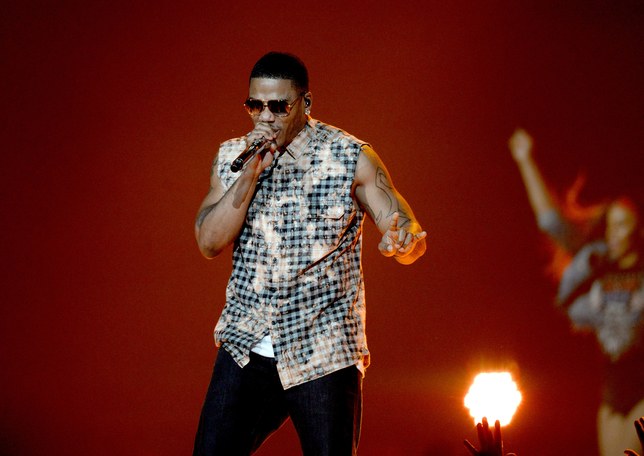
News broke last week that rapper Nelly had been accused of sexual assault by a woman with whom he’d allegedly returned to his tour bus after a concert in Seattle-area Washington. Now, the woman is dropping all charges and halting the resulting criminal investigation.

The alleged sexual assault took place early on the morning of Saturday, October 7 after a Friday-night concert at the White River amphitheater. Seattle-Tacoma Fox affiliate Q13 reported at the time that Nelly went into Seattle after the concert and brought the woman back to his bus.

After the alleged rape, Nelly’s lawyer told The Blast that the rapper was “the victim of a completely fabricated allegation,” adding that it was “motivated by greed and vindictiveness.”

On Friday afternoon (October 13), The Blast obtained a letter they report comes from the woman’s attorney. Her lawyer, Karen Koehler, says that her client reached out to the investigating police department and district attorney to halt the criminal investigation. Her client will also not testify any longer in criminal proceedings, the letter says.

According to the letter, Koehler’s client did not “feel safe enough to pursue criminal charges against a celebrity for an alleged rape.” Koehler writes that her client was immediately contacted by journalists as the news broke, subjected to smears from “the celebrity”‘s legal team alleging she was in it for the money, and, later, the detective in charge of investigating shared information pertaining to the case after promising Koehler’s client he wouldn’t.

“She wishes she had not called 911 because the [sic] she believes the system is going to fail her…She wants this to end,” Koehler writes.

She never wanted notoriety. She never wanted a dime from that man. She wants to go back to school and to graduate.”

The letter continues with a reference to Harvey Weinstein and the women who have come out against him: “One day, maybe our world will change and thirty women will not be needed to (eventually) speak out against a celebrity who has hurt them in order to be believed. But that day has not yet come.”

RELATED: Nelly Has Reportedly Been Arrested on Charges of Sexual Assault


Source link