Categories
Health

Maine Politician Argues Against Guaranteeing Tampons And Pads For Incarcerated Women


Earlier this month, legislators in Maine voted on a bill amendment that would guarantee incarcerated people access to menstrual products. It’s a good idea: While a federal law ensures that federal prisons offer free pads and tampons, that’s not the case at state and local facilities, where supplies are often limited and women are forced to either devise their own solutions or scrounge together funds to purchase the items at commissary.

However, four Republicans balked at the proposal and voted against it. Here’s how State Representative and Dixfield Police Chief Richard Pickett put it, according to a reporter who was on the scene: incarcerated women shouldn’t get more access to menstrual products because “the jail system and the correctional system was never meant to be a country club.”

Alex Acquisto, a statehouse reporter for The Bangor Daily News, quoted Pickett in a tweet. Per his account, Pickett argued that women already have all the menstrual products they need.

“Quite frankly, and I don’t mean this in any disrespect, the jail system and the correctional system was never meant to be a country club…. [T]hey have a right to have these and they have them. If that wasn’t the case, then I would be supporting the motion, but they do,” Pickett said, as cited in a tweet from Acquisto.

Unless the tampons and pads are gold-plated, we have no idea what would compel Pickett to reference a “country club” in the same context as comprehensive access to menstrual products. Tampons and pads are medical supplies, and women deserve to receive adequate care while they’re incarcerated, plain and simple. The harder these products are to access, the more common it will be for women in prisons to face serious health issues. This has been an ongoing fight, with one recent report uncovering instances in New York in which women resorted to trading sexual favors for pads.

According to the Press Herald, several jails in Maine already provide free menstrual products, but incarcerated women have to request them. The proposed legislation would make the pads and tampons more freely available, and there would be no limit on the number that women could have at one time.

Whitney Parrish, a director at the Maine Women’s Lobby, broke it down for critics, according to the Maine Beacon.

“You’re given a limited supply of menstrual products per month, often of low quality due to cost saving, and when you run out, you’re out…. You may have no money to go to commissary, and if you do, you may have to weigh that purchase against other necessities, like making phone calls to your children or attorney. You are forced to make the impossible decision of constructing your own menstrual products, using anything from clothing or notebook paper in place of a tampon,” she said.

Luckily, most saw it as Parrish does. A 6-4 vote allowed the bill amendment to advance, proving that most people understand that basic women’s health care isn’t a luxe perk. It’s a human right.


Source link

Categories
Health

The Best Exfoliating Pads for Radiant, Glowy Skin


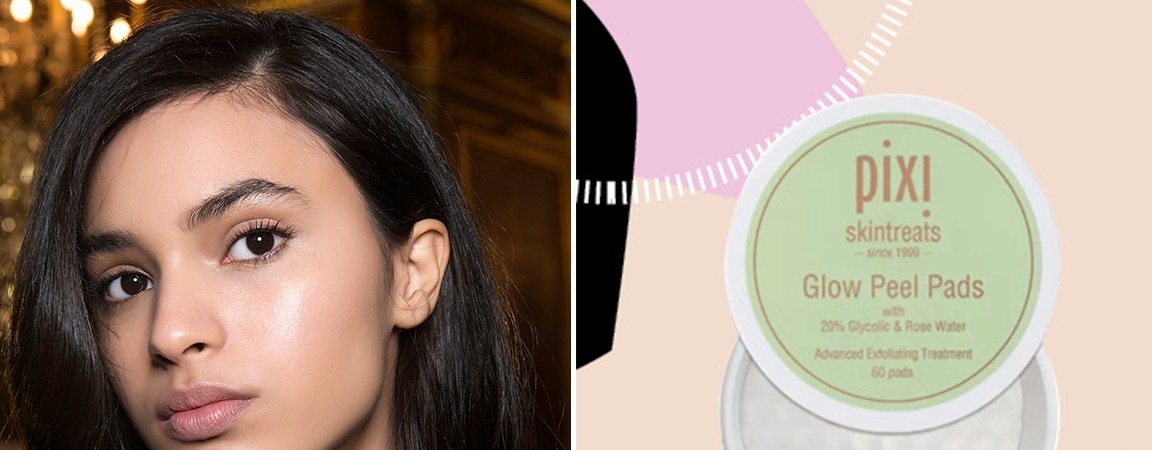
Peel pads changed my life. I’m not exaggerating. They’re so good that anytime someone complains to me about their acne, I basically toss an acid-soaked disc at them. I used to have very stubborn breakouts, relatively mild in severity but still enough that I’d have to excuse myself during dates to dab on more concealer in the bathroom. I dropped a ton of money on charcoal masks and spot treatments and all the salicylic acid in the land, and I now have so many half-empty bottles of benzoyl peroxide cleanser that I could bleach the contents of my closet with it.

Once I swapped in exfoliating pads for my old, not-so-effective acne-fighting products, though, my skin did a 180. I now go outside without makeup. I haven’t touched concealer in months. And, sure, I still get zits from time to time—inevitable, since my oil glands produce more grease than a dollar slice of pizza—but they have a shorter life span and are way less noticeable.

Peel pads are one of the most effective skin care products out there, but you don’t even have to take my anecdotal word for it. Its efficacy is by design. “The pad itself helps to further the exfoliation process,” says Craig Austin, M.D., a dermatologist in New York City. “It gently lifts dead skin cells while wiping your skin’s surface clean from debris and makeup.” Using your fingertips just doesn’t have that same exfoliating effect as the pad, and some pads are actually built to maximize that difference with a mesh or nubby texture.

Glycolic acid—my acid of choice—is the most popular ingredient in peel pads since it clears out pores, hydrates, brightens, and smooths out texture. But you don’t have to stop at acid. Exfoliating pads can be infused with reparative antioxidants, soothing aloe vera, and skin-firming peptides, which can guide you through the daunting task of figuring out which works best for you.

Another perk: They’re idiot-proof. “It’s unlikely to ‘screw up’ when using a peel pad or disc,” says David Colbert, M.D., a dermatologist at New York Dermatology Group in NYC. “Make sure the disc is moist and apply light pressure in a circular motion.” Still, a word to the wise: Read the directions. While some peel pads involve just a swipe and nothing more, others need to be rinsed off. Use it after you cleanse and give it a minute or two to work its magic before applying your serum or moisturizer (or both).

This exfoliating power may be the reason behind peel pads’ bad rap in the skin care world. The claim: They’re too harsh and irritating for sensitive skin. But unless you’re piling on eight different acids, peel pads are totally fine for all skin types. When you first start using a exfoliating pad, “make sure that you’re choosing an acid that is lower concentration, such as a 10 percent peel,” says Dr. Austin. Like other powerful ingredients (looking at you, retinoids), your skin may need a few weeks to adjust, so start by using pads every other night, only working your way up to every night once your skin becomes acclimated to it. (Once you notice less tingling, you can ramp up your usage.) If you notice any kind of irritation or pain and need relief stat, just splash water on your face. “This will stop the acid from continuing to penetrate your skin until you work up more of a tolerance,” Austin says.

And no matter your skin type, slow your roll with other types of exfoliation. “The biggest mistake people make when using peel pads is either overexfoliation with a facial cleansing brush, like Clarisonic or other abrasive cleansers,” says Dr. Austin. Also, follow up any type of peel pad with a high SPF. Since the acids remove dead skin cells—exposing new skin and leaving it more sensitive to light—go with at least SPF 50.

My only regret concerning peel pads is that nobody told me about them sooner. Try them for yourself and feel free to @ me. I’m that sure of them.


Source link

Categories
Health

Hurricane Harvey Victims Need Tampons, Pads, and Diapers—Here's How You Can Help


PHOTO: BRENDAN SMIALOWSKI

It’s been a week since Hurricane Harvey first made landfall, and now tens of thousands of Texans are trying to cope with the colossal damage caused by the storm. Harvey—possibly the worst disaster Texas has ever seen—has left at least 46 people dead, forced around 42,000 into emergency shelters, and left over 60,000 without power.

It’s hard to imagine dealing with your period and other bodily functions on top of it all, but for countless women, it’s the reality. In the wake of the storm, securing tampons, pads, diapers, and other basics has been a major struggle for many women—especially those who are low-income or homeless. Most shelters don’t have such items stocked, and the supplies that were available are quickly dwindling.

“Periods don’t stop for hurricanes,” Dana Marlowe, the founder and executive director of the nonprofit Support the Girls, told Circa. “Periods don’t stop for flooding.”

Millions of dollars have already poured into the Harvey relief efforts—and a growing list of celebrities pledging major donations—but there are plenty of opportunities for you to directly help women and families who are in desperate need of basic supplies. Here are a few organizations that need your help.

The Texas Diaper Bank is preparing for an expected 10,000 displaced families. You can donate to their website or check out their Amazon account for disaster relief essentials you can buy. If you are in the San Antonio area, the organization is also seeking out volunteers to help sort items for distribution.

#HappyPeriod collects pads, tampons, soap, wipes, and underwear for women who are low-income, homeless, or living in poverty. You can donate directly to their Houston chapter or purchase items from their Amazon wishlist to send directly to their Harvey relief operations.

The Homeless Period Project’s Houston affiliate has created an Amazon wish list and you can purchase pads and tampons for women and girls who have been affected by Harvey.

Support the Girls is sending bras, pads, and tampons to women and girls in Houston. A suggested donation of $22 is enough to cover a full kit containing all of these items. You can also send products to their Wylie, Texas, location.

Aquí Estamos RGV, a youth-led south Texas advocacy group for LGBTQ people of color, has partnered with the bilingual multimedia company NETA to collect donations for The Homeless Period Project of the Rio Grande Valley.

Simply the Basics is a San Francisco-based nonprofit that assembles hygiene kits—which include soap, shampoo, toothbrushes, and feminine hygiene products—for homeless and low-income communities. They are accepting donations for hygiene kits to send to victims of Harvey.

For more ways to contribute to the relief efforts, here’s how you can help victims of Harvey in Texas, no matter where you are.


Source link