
Categories
Health

Anne Hathaway's Modern Love Episode Is a Powerful Example of Dating as a Bipolar Woman


Modern Love, the popular New York Times column turned Amazon anthology series, premieres today (October 18) with a full lineup of talented stars—Tina Fey, Dev Patel, Julia Garner, and Andy Garcia among them—and each 30-minute story takes viewers on a journey of self-discovery and love.

The first episode alone nearly wrecked me, but it’s the series’ third, starring Anne Hathaway as a bipolar woman navigating her career and relationships, that is most striking. At times, it even feels like a Broadway musical thanks to the song and dance numbers (there’s even a Mary Tyler Moore theme song homage). But it’s the overarching message about mental health that’s the most important takeaway.

The episode—inspired by author Terri Cheney’s Modern Love column “Take Me As I Am, Whoever I Am,” as well as her memoir, Maniac—follows Lexi, a brilliant and charismatic attorney who’s been hiding her bipolar diagnosis from friends and colleagues. “Anne conveyed the charisma of mania beautifully,” Cheney says of the performance. Cheney knows firsthand how difficult it is to get right on screen. “Mania is often charming, but depression is another story. It’s sometimes an off-putting experience and very hard to describe or portray. Anne captured it in a way that not only showed its anguish, but also moved the viewer to empathy.”

Christopher Saunders/Amazon Studios

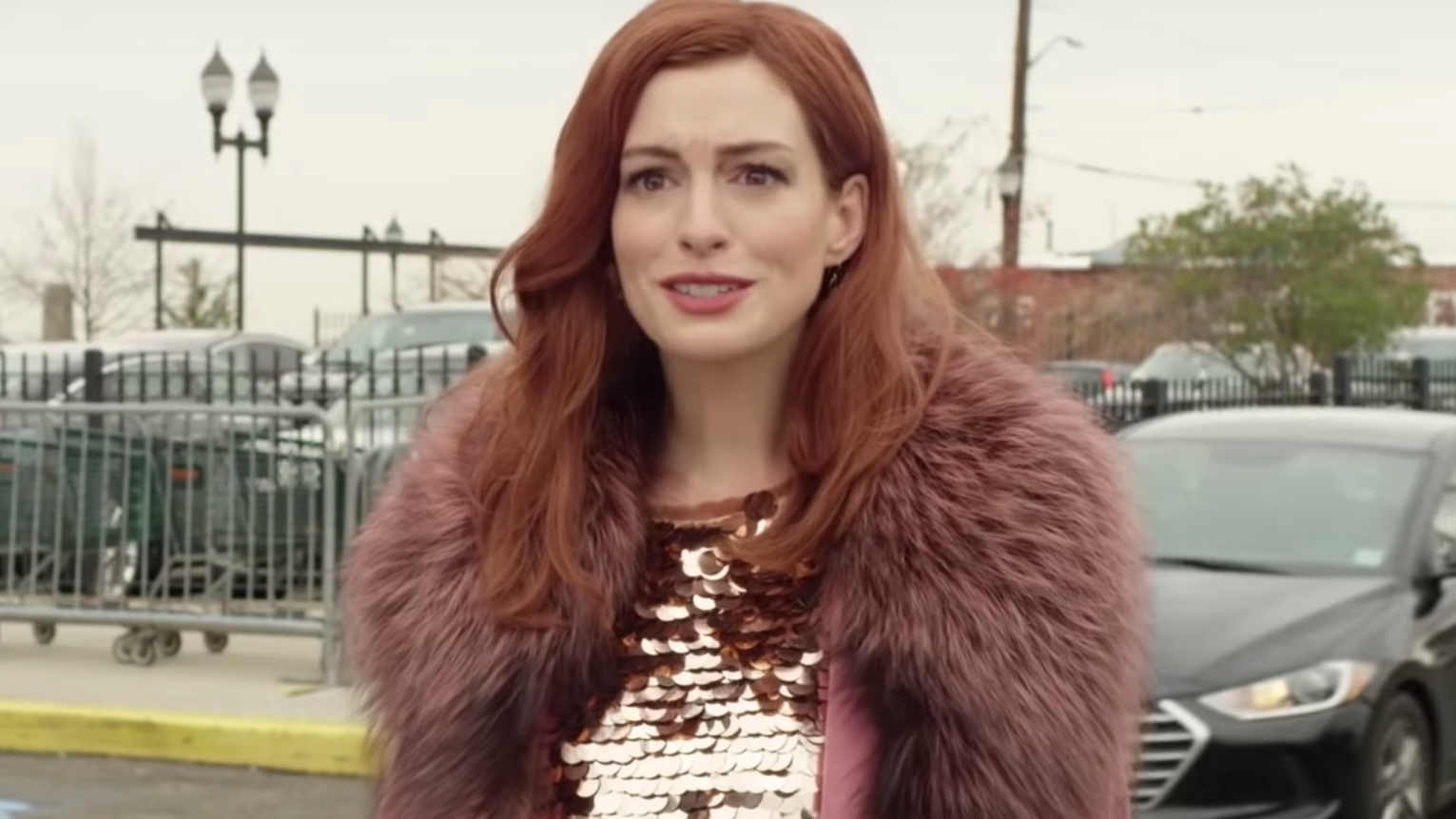
At first, Lexi appears to have a rewarding and glamorous life: She’s got a fantastic wardrobe, a spacious apartment, and a full dating life. But then, her depression plows through like a tornado. “I’ve seen people like Lexi, I have people in my life like Lexi, and I love people like Lexi,” Hathaway tells Glamour. “But I haven’t really seen someone like her ever on screen. So the idea that I was asked to represent someone who maybe hasn’t seen themselves on screen and could see themselves in this was exciting for me.”

To prep for the role, Hathaway spoke at length with Cheney and used her memoir as a guide. “I just let Terri’s story be my story,” she explains. “She took me through the physicality of what being manic feels like, how heavy objects become when you’re in this state of being.”

Cheney hopes viewers will take away a greater understanding of how complicated mental illness can be and recognize when loved ones might be struggling. “When you think of the illness in terms of a familiar face, it’s less frightening and easier to understand,” she says. “That’s why having someone as famous as Anne portray a woman with bipolar disorder is so terrific: It’s an antidote to shame.”

It’s also a reasons why it was so important for Hathaway to tell Cheney’s story. “I have people in my life who I love so deeply who have received various mental health diagnoses, and that’s not the whole story of who they are,” Hathaway explains. “But in many cases, because of an intolerant society, that’s the space of fear they’re kept in.”

Source link

Categories
Health

Modern Love: Everything We Know About Amazon's New Series


For years, people have turned to the New York Times‘ regular “Modern Love” column for essays and personal reflections about romance. And in a few weeks, diehard fans are going to have one more place to dissect these stories: a new Amazon Prime series.

A trailer for the show that dropped on Thursday offers a few clues about what to expect. One storyline involves a character, played by Anne Hathaway , learning to accept love. Another one looks at two people (Tina Fey and John Slattery) locked in a boring marriage. And a third shows a man (Dev Patel) dealing with some tough fidelity issues.

Watch the trailer for yourself, below:

[embedded content]

Here’s everything we know about the show so far:

The format. The show will be made up of half-hour episodes. According to Amazon, the series “explores love in all of its complicated and beautiful forms, as each standalone episode brings some of the column’s most beloved stories to life with a stellar cast.”

The stars. The all-star cast includes Hathaway, Fey, Patel, Cristin Milioti, Catherine Keener, Andy Garcia, John Slattery, Andrew Scott, John Gallagher, Jr., Julia Garner, and many more of your faves.

Major players from the cast attended a Television Critics Association panel recently and talked a bit about their characters. There, Hathaway revealed that she’s playing a women battling challenges with mental health.

[embedded content]

“I am playing a woman who is learning how to find love while also [beginning to process having] bipolar disorder,” she said “I was really humbled by this experience. It wrecked me for a month afterwards…[but being able to walk away from it] expanded my compassion so much for people who have no choice in this matter.”


Source link

Categories
Health

Modern Fertility Launches Annual Fertility Tracking That Puts Women In Control


Cheryl was 23 when she got married and always assumed she and her husband would have kids down the line. “We talked about having two to four kids. There were all these different periods where we set an age or a stage but then we would get there and it would be like ‘oh not yet,’” she says. “We had originally said for sure when I turned 30 we’d start trying—and then the year I turned thirty he decided to get his MBA.”

By the time Cheryl hit 32, kids still weren’t on the horizon. “He asked to wait another three to five years, and I was like oh my gosh, that’s not a part of my plan and now I kind of feel like it’s never going to be a part of our plan together,” she says.

As every cliche about biological clocks will tell you, fertility declines with age, dropping sharply around 35. But the curve doesn’t look the same for every woman—your individual hormone levels and factors like when your mom went into menopause all help to create a more personalized view of your fertility future. But historically, getting this information about your body has been out of reach unless you’re actively trying (and failing) to get pregnant. That means women like Cheryl who are trying to be proactive about making major life decisions have been left without all the info. “I was like this information is there, and it’s mine, and it’s my body,” Cheryl says. “So why wouldn’t I have it?”

Cheryl heard about Modern Fertility, one of a handful of femtech companies (and Glamour’s partner in the Modern State of Fertility survey) who are putting fertility insight straight into the hands of women with an at-home test that gives you a real time look into key measures of egg quality and quantity. “Let’s be realistic—as much as I can climb a career ladder, I only have certain years that are my fertile years. So why aren’t I learning more about my body and what’s possible and what my options are?” Cheryl says.

Modern Fertility’s at home blood test measures key hormones that can tell you if you have more or fewer eggs than the average woman your age, when you’re likely to hit menopause, and give you insight into potential egg freezing or IVF outcomes. Cheryl’s test results were promising—she could likely have kids if she wanted to. So she had a choice to make: stay in a marriage where kids were uncertain or take control. Eventually, Cheryl and her husband got a divorce.

At 33, she was back on the dating scene, armed with new insight into her reproductive future. For the first time in over a decade, she was dealing with all the uncertainties that come with finding a partner but now there was one other uncertainty: how long could she wait before trying to have kids?

A fertility test like the one Cheryl took is a helpful tool—one data point that gives you a good idea of your chances of getting pregnant right now. But the real power comes from understanding how your body is changing over time. This is where Modern Fertility’s latest resources, launching today, come in. To give women like Cheryl the information they need to make major life plans, the company overhauled its fertility reports to support annual testing, allowing women to get specific insight into how their reproductive curve has changed from the previous year. “We periodically check up on our daily steps, nutrition, and financial savings, not to mention cholesterol and blood pressure—why shouldn’t we routinely check in on our reproductive health?” Afton Vechery, co-founder and CEO of Modern Fertility, said in a statement. “This isn’t just about planning for kids or having them, it’s about owning an important piece of our body that impacts our overall health and future.”


Source link

Categories
Health

Chilling Adventures of Sabrina Review: What a Modern Witch Thinks About Sabrina Spellman


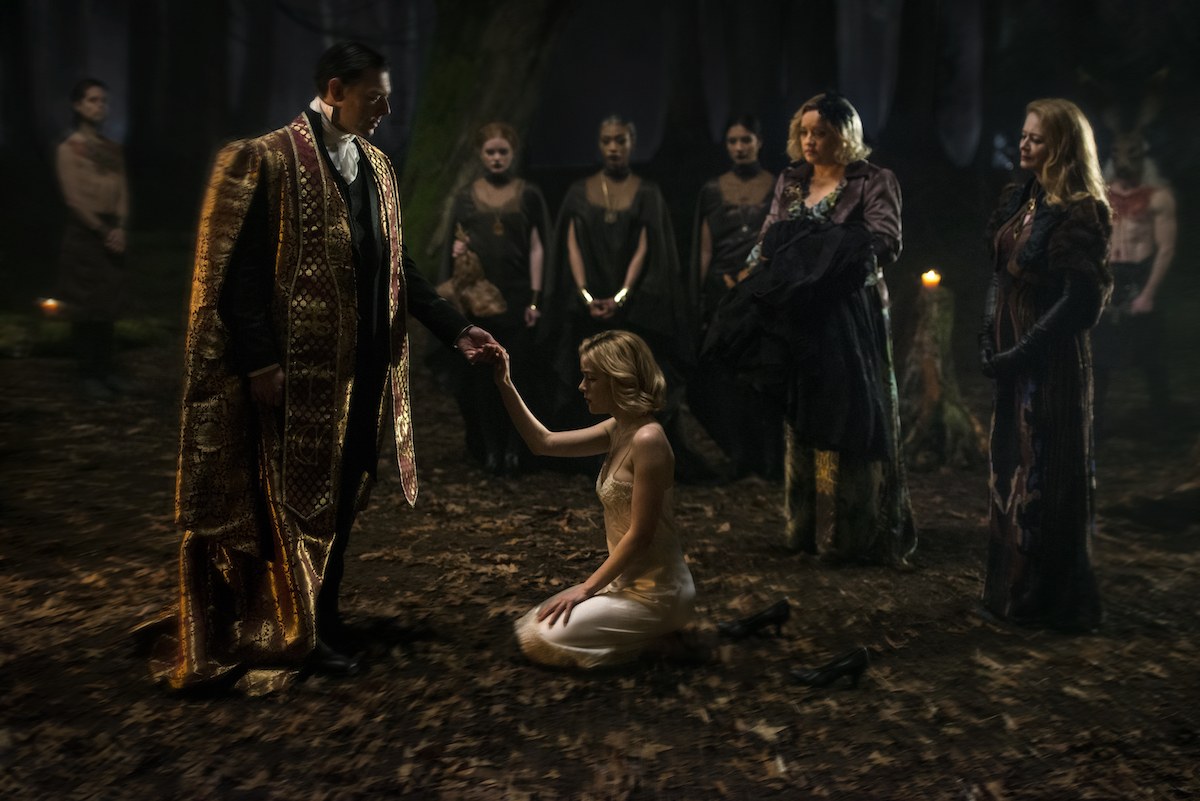
The Chilling Adventures of Sabrina follows Sabrina Spellman, a teen witch who’s approaching the biggest moment of her magical life thus far: her sixteenth birthday. It falls on Halloween and is also the night of her dark baptism—the moment when she becomes an official member of the Satanic Church of Night. The dark baptism involves giving her soul to Satan by signing her name in the devil’s book.

But Sabrina isn’t just a witch, she’s that witch. Not cool with giving up her voice to a being she hasn’t even met, she demands power and agency. Sabrina will not be swayed into giving up her soul just because it’s expected by her family. So when it comes time to sign her name in the book of Satan, Sabrina leaves. She rejects the idea that she has to be loyal to someone else’s authority. The message? Sabrina’s power isn’t rooted in the Devil—it’s in herself.

This is what I love so much about Sabrina Spellman.

PHOTO: Diyah Pera/Netflix

Sabrina at her dark baptism.

As someone who discovered witchcraft at 12 years old—the year before my Bat Mitzvah, when I would become an “adult” in the eyes of Jewish society—I can relate to Sabrina’s situation. By the time my ceremony happened, right after my 13th birthday, I already knew I rejected everything I was being initiated into. I wasn’t Jewish, and I didn’t believe in one god. I was a witch, a Pagan, and believed in many gods.

At the time, I didn’t have the agency, or understanding, to do what Sabrina did when she ran away from her Dark Baptism, but I’ve carried my practice with witchcraft with me ever since. And like Sabrina, whose father was the High Priest in the Church of Night, my father is a clergyman, a Reform Rabbi. Like Sabrina, I’ve had to create and weave my own web alongside a family who doesn’t understand why I believe in what I do. And like Sabrina, I chose myself. I chose my own magick and happiness above all else.

Sabrina’s a wonderful emblem of the power of a free woman, of the liberation that comes from cutting ties to what no longer serves you. She’s an example of what the witch can look like in the modern age—sassy, perseverant, loyal. She makes mistakes, but she learns from them. She dabbles in the light and the darkness. She utilizes magick to create change for what she deems just. She’s an agent of karma, unyielding to forces that go against what she believes in. She may only be a teenager, but she is like Persephone, the goddess of spring and the underworld. To undermine her just because she is young is a grave mistake, because Sabrina contains dualities that let her transcend the realms of mortals and witches. Instead, she lives along the edge of both.

It’s in this blurred space that Sabrina and her mortal (read: non-witch) friends remind us of something important: Everyone has magick inside them. While witches like me may call it intuition, some, including Sabrina’s friend Ros, call it “the cunning.” For their friend Susie, it’s a “vision.” The point is, inside each and everyone one of us is the potential to see, feel, and recognize a glimmer of divine guidance that doesn’t come from anyone else; it comes from listening to ourselves.

1

PHOTO: Courtesy of Netflix

The archetype of the witch, carried through centuries of pop-culture and folklore, is a divisive character. But the example Sabrina puts forward is modern and real. She casts spells and wades in the shadows, but the thing we can all relate to, witch or no, is her message: to know yourself is to know the universe. The strongest magick is that which you claim for yourself; no shame, no judgment. Sabrina reminds us of the beauty of the witch as someone who lives powerfully, consciously, and unapologetically. Hail Sabrina forever.

Gabriela Herstik is a writer, fashion critic, and witch. She writes Nylon’s Ask a Witch column. Follow her on Instagram @gabyherstik.


Source link

Categories
Health

Best White Blouses and Tops for Spring 2018: Cool and Modern Designs for this Season


As far as “wardrobe staples” go, the white blouse feels incredibly familiar: Most people have one hanging in their closets, though it’s not always (okay, really, ever) the most exciting thing in there. It feels to plain or stuffy to be worn on its own, so you start packing on the accessories and the sweaters to embellish, pretty much until the shirt is out of sight. But the white blouse isn’t simply a handy layering piece—it’s one of the most underrated garments in your wardrobe. And this season, brands are giving shoppers more and more reasons to treat it like a statement piece: button-downs with ruffles and cutouts, elegant tops fashioned out of mixed fabrics, and other new riffs on a well-known category of clothing make it feel brand-new. You definitely don’t want to hide these under a sensible knit. Check out 23 revamped versions of the familiar white blouse that are anything but boring.

We bring you the trends. You make them your own. Sign up for our daily newsletter to find the best fashion for YOU.


Source link