Categories
Health

Anne Hathaway's Modern Love Episode Is a Powerful Example of Dating as a Bipolar Woman


Modern Love, the popular New York Times column turned Amazon anthology series, premieres today (October 18) with a full lineup of talented stars—Tina Fey, Dev Patel, Julia Garner, and Andy Garcia among them—and each 30-minute story takes viewers on a journey of self-discovery and love.

The first episode alone nearly wrecked me, but it’s the series’ third, starring Anne Hathaway as a bipolar woman navigating her career and relationships, that is most striking. At times, it even feels like a Broadway musical thanks to the song and dance numbers (there’s even a Mary Tyler Moore theme song homage). But it’s the overarching message about mental health that’s the most important takeaway.

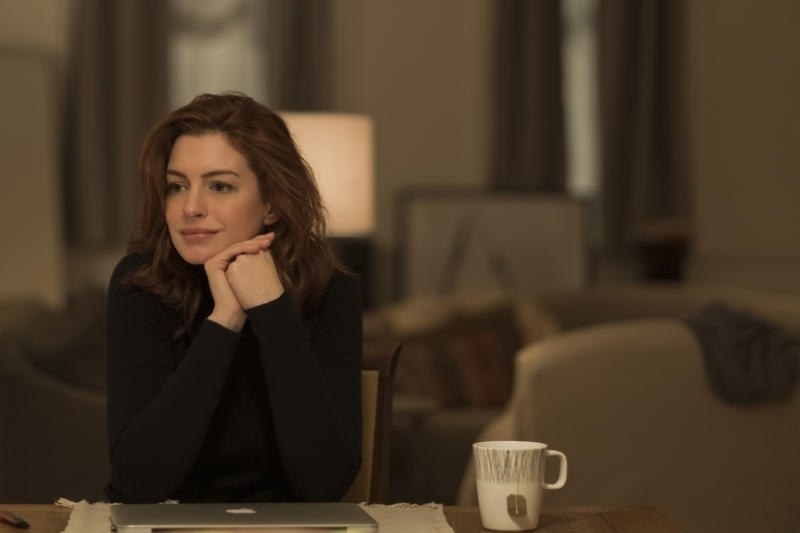
The episode—inspired by author Terri Cheney’s Modern Love column “Take Me As I Am, Whoever I Am,” as well as her memoir, Maniac—follows Lexi, a brilliant and charismatic attorney who’s been hiding her bipolar diagnosis from friends and colleagues. “Anne conveyed the charisma of mania beautifully,” Cheney says of the performance. Cheney knows firsthand how difficult it is to get right on screen. “Mania is often charming, but depression is another story. It’s sometimes an off-putting experience and very hard to describe or portray. Anne captured it in a way that not only showed its anguish, but also moved the viewer to empathy.”

Christopher Saunders/Amazon Studios

At first, Lexi appears to have a rewarding and glamorous life: She’s got a fantastic wardrobe, a spacious apartment, and a full dating life. But then, her depression plows through like a tornado. “I’ve seen people like Lexi, I have people in my life like Lexi, and I love people like Lexi,” Hathaway tells Glamour. “But I haven’t really seen someone like her ever on screen. So the idea that I was asked to represent someone who maybe hasn’t seen themselves on screen and could see themselves in this was exciting for me.”

To prep for the role, Hathaway spoke at length with Cheney and used her memoir as a guide. “I just let Terri’s story be my story,” she explains. “She took me through the physicality of what being manic feels like, how heavy objects become when you’re in this state of being.”

Cheney hopes viewers will take away a greater understanding of how complicated mental illness can be and recognize when loved ones might be struggling. “When you think of the illness in terms of a familiar face, it’s less frightening and easier to understand,” she says. “That’s why having someone as famous as Anne portray a woman with bipolar disorder is so terrific: It’s an antidote to shame.”

It’s also a reasons why it was so important for Hathaway to tell Cheney’s story. “I have people in my life who I love so deeply who have received various mental health diagnoses, and that’s not the whole story of who they are,” Hathaway explains. “But in many cases, because of an intolerant society, that’s the space of fear they’re kept in.”


Source link

Categories
Health

I Was One of Anne Hathaway's 'Hathahaters'—Until Now


Confession: When it felt like the world turned on Anne Hathaway in 2013, around the time of her awards season run for Les Miserables, I fell victim to the narrative. I complained about her incessantly as I watched that year’s Golden Globes and Oscars with my friends, not-so-secretly hoping Amy Adams would pull off the upset for The Master.

I was swayed by the countless think pieces written about what’s colloquially dubbed the “Hathahate.” A New York Times piece, titled “Do We Really Hate Anne Hathaway?”, cited her earnest awards show speeches and a feeling of inauthenticity as reasons for the disdain. “It’s not really Anne Hathaway I ‘hate,’” said Sarah Nicole Prickett in the story. “It’s all the lesser, real-life Anne Hathaways I have known—princessy, theater-schooled girls who have no game and no sex appeal and eat raisins for dessert.”

When writer Ann Friedman polled friends for New York magazine, responses ranged from, “She is that theater kid with good intentions but secretly annoys the shit out of you” to “You want to be excited for her and you are but deep down you are kind of rolling your eyes.”

Others, myself included, might have responded to such a backlash by getting defensive or even outright changing their public persona. Not Hathaway. Instead, she sensed people “needed a break” and took some time for herself. When she resurfaced a year later, it was for Song One—a low-budget independent film, yes, but an earnest romantic drama in which she sings nonetheless.

The lesson? Hathaway’s not going to change just because a few headlines tell her to. “I’m interested in living a very honest life. I don’t know if that makes me a boring person. I don’t really care if it does,” she told Glamour in her recent cover story. “It would be easier if I was better at being misleading or sneaky. I know how all that stuff works. I’m not a naive idiot. I know if I was a little bit mean to everybody, people would be like, ‘Oh, she’s fun. I like her. Come have a drink.’ And I’m just like, ‘Can we have a drink and not try to tear each other apart?’”

And now, the pendulum of public reception seems to have swung back in her favor. That’s in large part thanks to Hathaway being the best thing (among many, many good things) in Ocean’s 8. As Hollywood It Girl Daphne Kluger, Hathaway plays to her strengths: She’s charming, she’s cunning, and, best of all, she’s self-aware. The press tour has been just as positive, giving Hathaway opportunities to share stories like the time Rihanna praised her butt or when the cast stopped filming so she could breast feed.

“For a few years there, Hathaway’s presence in Hollywood was attached to the narrative that she was trying too hard to be likable, that she was embarrassing herself by showing her work,” writes Jia Tolentino in the New Yorker. “This performance is a statement—Hathaway understands the game she’s playing—and a heist in itself. She runs away with the show.”

This switch made me realize something about myself: Sometimes it’s just easier to be snarky. It’s certainly my default position more than I’d like to admit. Really, what’s so wrong with being earnest or trying too hard? I remember once joking that Hathaway seemed like a not-so-great hang—but once I removed my snark-colored glasses, she was, dare I say, delightful. Others agree:

The thing is: Hathaway has always been great; I was just reading her all wrong. The Intern and Devil Wears Prada are two movies I will watch to completion every single time they’re on TV, which has as much to do with Hathaway’s charm as it does her iconic co-stars Robert DeNiro and Meryl Streep. The Princess Diaries (and its sequel) is still endearing—and relatable all over again in the Age of Markle. Hathaway’s fantastic in Brokeback Mountain upon further reflection—that telephone call with Jake Gyllenhaal is more powerful than you may remember—and Rachel Getting Married might be her best work. Oh, and that Oscar-winning turn as Fantine in Les Mis, the one that started all of this “Hathahate,” is actually moving. Seriously, what were we doing criticizing this incredibly talented woman so harshly for so long?


Source link