Categories
Health

Anita Hill Rutgers Commencement Speech: We Will Never Be The Same After #MeToo


Before there was #MeToo, there was Anita Hill.

Nearly three decades after her historic testimony against then-Supreme Court nominee Clarence Thomas, Hill stepped up to a podium Thursday to say the world has irrevocably changed after the scandals that have engulfed powerful men from Washington to Hollywood.

“What happens now? I would say we will never be the same after the Me Too movement — after such revelations of sexual violence. We can never, as a society, ignore it and pretend it doesn’t exist,” Hill told law graduates at Rutgers University, where she delivered the 2018 commencement speech.

“We can’t be the same as we were before, and we certainly can’t go backwards when we know that so many people are hurting and suffering.”

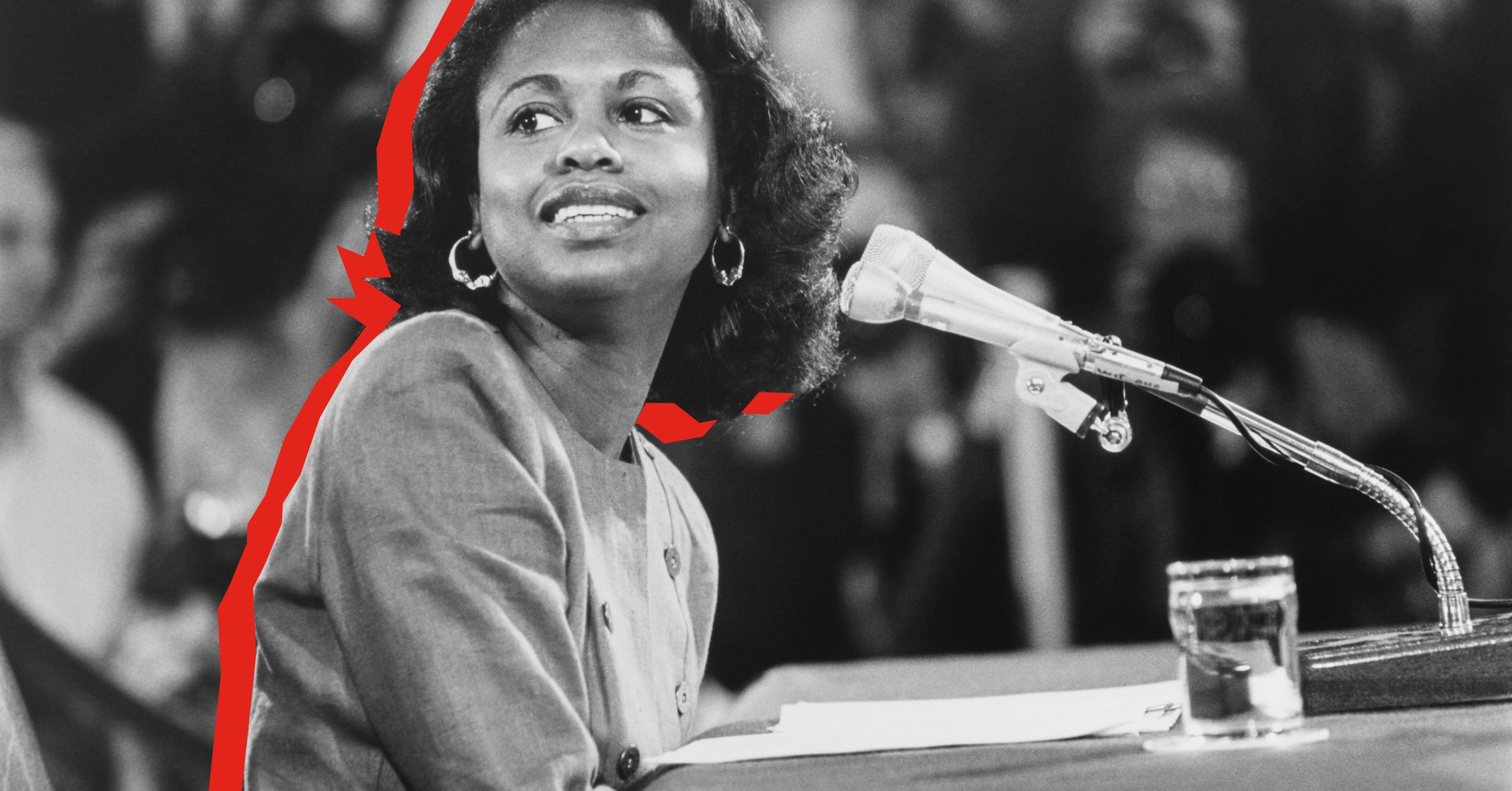
Hill’s 1991 testimony against Thomas, who had been her supervisor at the Equal Employment Opportunity Commission, was a watershed moment in how Americans discussed and viewed allegations of sexual harassment.

In televised hearings stunning for their day, Hill, a black woman, reported to a 14-member Senate panel of white men that Thomas, a black man, had come on to her while they worked together. She detailed how he talked to her crudely, and at length, about porn, sex and body parts.

In one case, she reported, per transcripts published by NPR, “The incident involved his going to his desk — getting up from a work table, going to his desk, looking at this can and saying, ‘Who put pubic hair on my Coke?'”

Thomas, in turn, defended himself, saying, in part, “From my standpoint, as a black American, as far as I’m concerned, it is a high-tech lynching for uppity blacks who in any way deign to think for themselves, to do for themselves, to have different ideas.”

In the end, of course, Thomas was confirmed to the position on the nation’s high court, which he still holds today.

Hill wrote in a 2017 New York Daily News op-ed following the Harvey Weinstein scandal that “since 1991, when I testified about my own experience with sexual misconduct at Judge Clarence Thomas’ confirmation hearing, I regularly hear from individuals who have attempted to stop the abuse they face.”

She also said during a panel discussion that year that she felt her experience had made an impact: “In today’s atmosphere, there would be more people who would understand my story, who would believe my story, and I think the numbers have changed over the year in terms of people who believe me and support me.”

In the time since she questioned — and was questioned about — Thomas’ behavior, Hill said it’s clear some change has come.

“There are movements across the country that have let the world know that campuses should be safe for all,” she told her listeners, pushing them to declare “that we will not be silent again about sexual predation… You, too, fight sexual assault and violence by being an ally.”

Hill, now a law professor at Brandeis, added, “Uncertainty prevails only if it can make cowards of us all, and we can defeat uncertainty if we boldly stand for justice and fairness.”

Despite her personal case and its outcome, Hill told the Rutgers graduates, “Students of all genders have claimed something very basic — so basic, it’s hard to believe it’s even debatable, but the right to have an education free from sexual violence. We all deserve that.”

Yet, she said, “In age of harsh and sometimes immediate backlash that can be delivered nearly instantly and anonymously online with a click of a mouse, challenging the status quo is still risky.”

Hill said some believe society got to “the Me Too” point through the forces of social media: “Trust me, this is a profound moment in our time. But I don’t believe we got here because of social networks or the platforms,” she argued. “I believe we got here because of our enduring longing for community, especially in uncertain times.”

With nods to Dr. Martin Luther King, Jr.’s writings on the pursuit and defense of justice, Hill also urged the class to work toward removing barriers created by race and gender “to make sure that more capable and competent people are in our ranks [and] receive the education that they can and would use if they had the opportunity.”

Movements are important, but so is the quest to keep their driving ideas alive, she said.

She told the newly trained lawyers seated before her that they were equipped to go on to shepherd through legislation to protect “the right to live and work and be educated in safe environments.”

Hill, who will also speak at the City College of New York commencement on June 1, asked her Rutgers audience to make a pact with her, no matter where the law might take them.

“I want you to promise me, and your classmates, that you will make a commitment to social justice part of whatever work or careers you enter,” she said. “And you can do that.”


Source link

Categories
Health

Anita Hill Responded to Joe Biden's Apology About Her Sexual Harassment Hearing


As more women come forward and the number of sexual assault allegations against powerful men grow, we can look back to 1991 and thank Anita Hill for opening the conversation on sexual harassment in the workplace. She appeared in front of the Senate Judiciary Committee to assert that Clarence Thomas, who she’d worked with in Department of Education and the Equal Employment Opportunity Commission, was not fit to sit on U.S. Supreme Court because in years prior, he repeatedly sexually harassed her. In the end, Thomas was confirmed and Hill’s claims proved ineffective at keeping him away from the Supreme Court, but they did pave a way for women to speak up about their experiences.

At this year’s Glamour Women of the Year Awards, Hill shared this #MeToo story on stage alongside other women who have raised their voices against harassment and assault. She also spoke of her pride in her experience’s ability to help other women speak up against their harassers. “The outcome of my testimony was not what I’d hoped, but in no way was it the final word,” Hill said. “In the five years after I testified, sexual harassment complaints filed with the EEOC more than doubled. Legislation against harassment slowly but surely started to pass. And I saw that we had a chance to shift this narrative.”

One of the most outspoken advocates for women in the government recently has been former Vice President Joe Biden, who in 1991 was the senator serving as chair of the Senate Judiciary Committee during Hill’s hearing. But his actions during the hearing, which included pressing Hill about her charge that Thomas had complained to her about pubic hair on a soda can, have come under criticism recently, with some saying he didn’t do enough to support Hill—who was asked to testify to an all-white, all-male committee about her experiences.

Biden apologized during the Women of the Year Awards to Hill as he talked to Glamour editor-in-chief Cindi Leive about his actions on the Senate Judiciary Committee. “I’m so sorry that she had to go through what she went through,” he said. “I’m confident he did what she asserted. I believed in Anita. I voted against Clarence Thomas.”

However, Hill doesn’t feel that he’s taken enough responsibility for his part in her unsuccessful hearing. A few days after his apology, Hill spoke with the Washington Post about Biden’s apology. When asked if she accepted it, Hill replied, “Some part of it. But I still don’t think it takes ownership of his role in what happened. And he also doesn’t understand that it wasn’t just that I felt it was not fair. It was that women were looking to the Senate Judiciary Committee and his leadership to really open the way to have these kinds of hearings.”

“They should have been using best practices to show leadership on this issue on behalf of women’s equality,” she explained to the Post. “And they did just the opposite.”

She acknowledges that things have evolved since the ’90s—but also that we’re far from solving the problem. “Just having somebody come forward is not enough. You’ve got to be able to come into a system that respects and values our experiences and our work and our integrity. And we’re not there yet,” Hill said.

Related Stories:
Post-Weinstein, These Are the Powerful Men Facing Sexual Harassment Allegations
State Senator Gayle Goldin: Why Speaking Out Against Sexual Harassment Backfires for Women in Office
Ashley Judd Just Shared Her Go-To Way to Respond to Sexual Harassment


Source link

Categories
Health

Reports: Capitol Hill Has a Huge Sexual Harassment Problem Too


America is currently grappling with a seemingly never-ending flood of reports, allegations, and #MeToo accounts documenting just how pervasive sexual harassment and assault is in numerous industries. As it turns out, Congress is apparently no exception to this type of predatory behavior—and a new report from The New York Times details just how bad it really is.

More than 50 lobbyists, lawyers, and former aides came forward to share their stories with the Times, describing sexual harassment as an “occupational hazard” for those in D.C. For those who try to report these incidents, they must undergo an arduous process—one that rarely works in their favor.

Per the Times:

Under federal law, complainants must undergo a confidential process,
where co-workers who might be able to provide corroborating evidence
are excluded. They often must wait about three months before
submitting an official complaint, yet must file one no later than 180
days after the episode. Once filed, victims must submit to up to 30
days of mandatory counseling and complete another 30 days of
mediation.

If mediation fails, the person then must wait 30 more days before
seeking an administrative hearing or filing a lawsuit in Federal
District Court.

In the case of M. Reese Everson, a one-time fellow with the Congressional Black Caucus, she was told her report of sexual harassment could not be processed by the Office of Compliance because she was a fellow and not a full-time employee, reports the Times. Other instances the newspaper reports are also incredibly dismaying: Lawyer Rebecca Weir was completely unaware that an office existed to report these kinds of incidents when former Republican Congressman Gary Miller allegedly leered at her and asked her to twirl for him one day in his California office in 2001 when she was a then-district worker. For Hannah Hudson, who worked for a Democratic congressman from Oklahoma in 2009, a work trip allegedly resulted in a Republican senior staffer trying to open her wrap dress and asking her why she was “holding out” on him.

Female legislators are not unfamiliar with facing harassment on the Hill. Three former lawmakers and one current one made allegations to the Associated Press that varied from “isolated comments at one hearing, to repeated unwanted come-ons, to lewd remarks and even groping on the House floor.”

As CNN reported on Tuesday, sexual harassment on the Hill is so prevalent that women legislators, interns, and staffers have formed a whisper network centering on a word-of-mouth “creep list” of men who act inappropriately. There’s also a series of unwritten rules when it comes to interacting with male colleagues: “Be extra careful of the male lawmakers who sleep in their offices—they can be trouble. Avoid finding yourself alone with a congressman or senator in elevators, late-night meetings or events where alcohol is flowing. And think twice before speaking out about sexual harassment from a boss—it could cost you your career.”

Fifty women spoke to CNN about sexual harassment in Congress, and one former Senate staffer described an incident from several years ago that occurred when she was riding in a “members only” elevator that lets legislators quickly reach the House or Senate floor. Her boss introduced her to a fellow legislator, and when she shook the other senator’s hand, he “stroked the inside of her palm ‘in a really gross, suggestive way'” that left her feeling “very yucky.” The woman was “shaken by how brazen the senator was to do this with his colleague standing right next to them.” The woman declined to give her name or reveal the legislator involved in the encounter, adding that she was afraid to tell her boss about the incident. Both of the men in her account are still in office.

The incident described to CNN was certainly not the first time a woman working in Congress has faced unwanted advances in an elevator. In the 1990s, reports alleged that former South Carolina Sen. Strom Thurmond groped Washington Sen. Patty Murray breast while riding in an elevator with her. As Politico reported in 2015, “So notoriously predatory was Thurmond that when Susan Collins came to the Senate in 1997, she was warned to avoid getting on an elevator alone with him.”

For the women coming forward to share their accounts, the goal is for the Office of Compliance to take more pointed action to handle these types of incidents. More than 1,500 former congressional aides have signed an open letter to Congress asking them to mandate sexual harassment training and reexamine how the Office of Compliance handles harassment requests. Already, the Senate has passed legislation to make sexual harassment training mandatory for all members—though the bill did not include any updates on how harassment claims are handled.

Today (Tuesday) the Committee on House Administration is expected to have a hearing on how Congress addresses sexual harassment. Here’s to hoping things move forward quickly.

Related Stories:
An Explosive Report Alleges Decades of Sexual Harassment by Harvey Weinstein
Thousands of Women Share Stories of Sexual Harassment and Assault on Twitter
Jane Fonda and Gloria Steinem Talk Race, Sexual Harassment, and Harvey Weinstein


Source link

Categories
Health

Joe Biden on Anita Hill: 'Think of the Courage It Took For Her to Come Forward'


When former Vice President Joe Biden speaks, we listen. His appearance at the 2017 Glamour Women of the Year Summit was no exception. In a surprise conversation with Glamour editor-in-chief Cindi Leive and Dr. Jill Biden, Biden shared deeply moving stories about his family, discussed ways women can make positive cultural changes in the years ahead, and yes, looked back on those famous Joe Biden and Barack Obama memes. When the conversation turned to Biden’s role as a Senator during Anita Hill’s 1991 sexual harassment trial, Biden made his most noteworthy statement: He voiced his unwavering support for Hill, and an issued an apology to her.

In the context of changing the culture around sexual harassment, an audience member asked Biden if he would have done anything differently in Anita Hill’s case. His response: “I’m so sorry that she had to go through what she went through,” Biden said. “Think of the courage it took for her to come forward. [S]he got put through hell during [the testimony].” He then added that, “I feel really badly that she didn’t feel like the process worked. But I tell you what, I said something at the time that proved to be right, I said this is going to be the start of a fundamental change in what constitutes harassment in the workplace and people are going to begin to change.”

Biden is a vocal advocate for women’s rights and eliminating sexual harassment; he’s spent much of his time since leaving office speaking about consent on college campuses across the country. And in keeping with his statements on consent, Biden backed up Hill’s 1991 testimony against Justice Clarence Thomas. “I’m confident he did what she asserted,” Biden stated. “I believed in Anita. I voted against Clarence Thomas.”

Aside from affirming Hill’s story, Biden went on to defend women’s right to choose if and when they share their experiences of sexual harassment. “Some argued that I should have made her come and testify. The truth of the matter is you don’t want a witness who’s going to come and testify, and be weak in the testimony, and undercut the testimony,” he said.

Biden used his platform to amplify Hill’s story, and those of all women whose cases of assault and harassment weren’t believed in the process. “Anita Hill was victimized, there is no question in my mind,” he said. “Maybe I could have handled it better from the beginning, but I made her case on the floor and I made her case in the committee.”


Source link