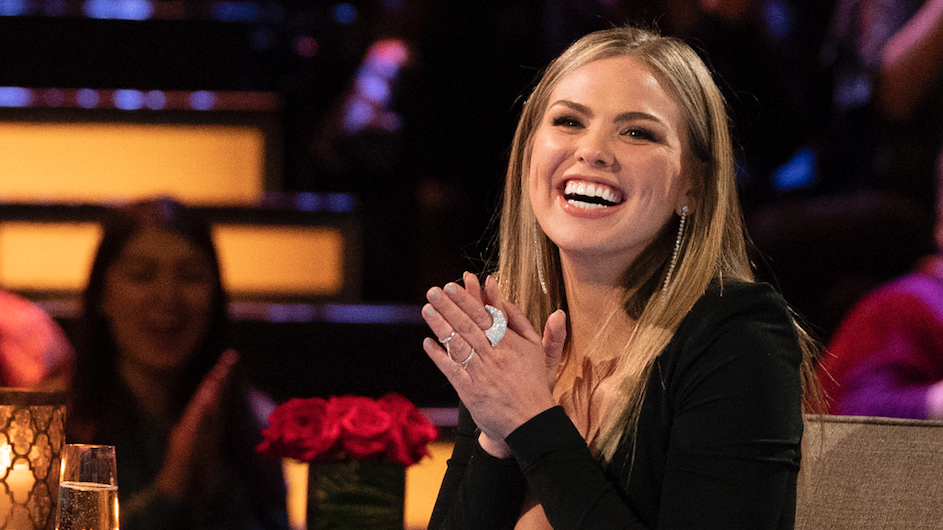
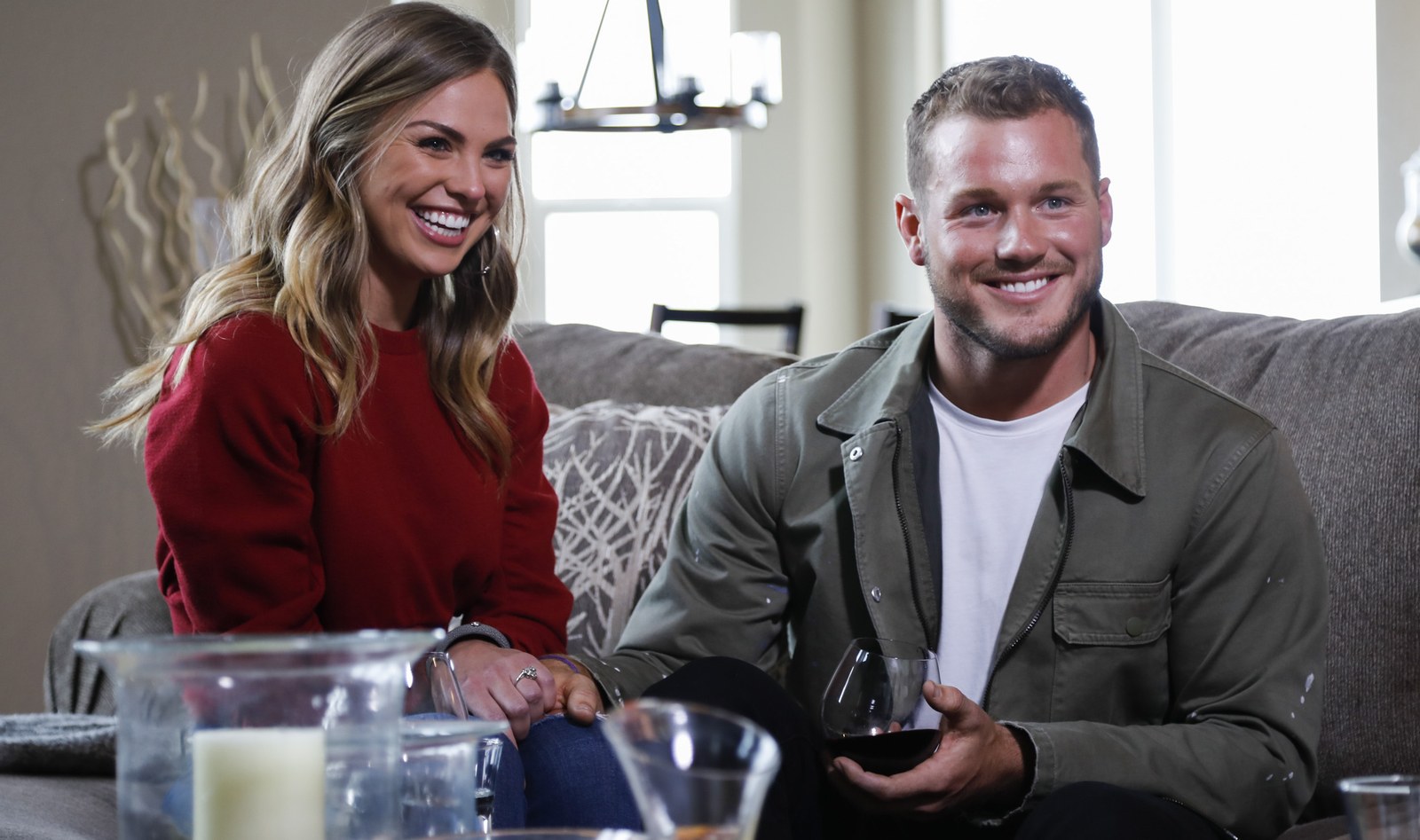
A new season of ABC’s The Bachelor has come to a close with Cassie and Colton announcing that they are, yes, still together and in love. We also found out during the finale who will be the star of the next round of The Bachelorette when it begins this May: Hannah Brown, a.k.a. Hannah B, a 24-year-old former pageant queen.
“Even before The Bachelorette announcement, it was good for me to figure out who I am and what I want,” Brown told Glamour recently. “You can fall in love on this show, and if my person is here on this new journey with me, that’s amazing. I’m so open to it. I’m not here to just be on TV. I truly believe in this experience and want to find my person.”
“I’m happy for Colton. He was able to choose somebody and it wasn’t me, and that’s okay,” she also toldPeople. “I’ve moved on. And I’m excited to find my person.”
But how is Bachelor Nation feeling about this announcement? Here’s what people are saying about the new Bachelorette on social media.
Many are on board
“It never ceases to amaze me how people, specifically women, get hyped whenever the Bachelor is announced, but when the Bachelorette is announced those same women slam and criticize whoever is chosen,” one user wrote. Another said, “Am I the only one who find Hannah B’s awkwardness really quirky and adorable? She’s growing on me.”
Others, however, were less psyched.
“Okie I don’t know if I can watch Hannah B all season,” one Twitter user said. “Does anyone else feel incredibly awkward when Hannah B is on stage? It’s awkward and she seems so uncomfortable. This is going to be weird,” another wrote.
Hannah’s season of The Bachelorette premieres on ABC on May 13.
Before going onThe Bachelor, Hannah Brown had her life planned out: get her degree, marry, have kids, live in Alabama. Now, as the newly-appointed Bachelorette, Brown knows that’s not what she wants. “I want my life to be [exciting] regardless of whether a man is in it or not,” she tells Glamour. “I want to see more of the world and, through that, find out more about myself.” So before this new journey begins, Brown sat down with us to explain why you’ll see a different side of her when The Bachelorette premieres this May. Read on.
I wanted to be a trophy wife, and I was fine with that. I thought I had my life written out—what it was going to be, what kind of woman I was going to be—and none of it happened. I dated this guy forever, and I thought we were going to get married. We looked at land where we lived, and he was going to take over his dad’s business and get his engineering degree. I was going to get my degree and ultimately have babies. And there is nothing wrong with that. I was going be the queen of Tuscaloosa, and it was OK. There was always something in my heart that knew I wanted more, but I settled because that’s kind of what he wanted—and what everybody did back home.
When we broke up, it was shattering for me because I loved him, and it’s what I thought I wanted. Then I won Miss Alabama, which was another dream. It pushed me to start figuring out myself a little bit. Then The Bachelor happened. I was nominated for it, because I had never otherwise put The Bachelor on my list. I was skeptical and kind of terrified, but when Colton was announced I saw potential. On the show, you have to talk about what you want, where you see yourself, who with, and what you want in a person. I don’t think I ever asked myself those questions before. And then all the travel and seeing the world—it just opened myself up to realizing that I don’t want to go back to the life I had before. That is not me, and never was me. I was settling.
Hannah Brown with Colton Underwood on The Bachelor.
ABC
It’s not that it isn’t for other people, but it just wasn’t going to be enough for me. I realized I deserve to be happy and have all the things I want in life. It might be scary and outside the norm of what everybody else does, but I need to just go for it. Ultimately, my future wasn’t with Colton, but my journey isn’t over. I’m so excited for the rest of my life, and I want love to be an adventure. I want it to be fun. I want it to be exciting, and I want my life to be that way regardless of whether a man is in it or not. Alabama will always be home and have a special place in my heart, but I want my life to be more than just living there. I want to see more of the world and, through that, find out more about myself.
In a way, the hardest part of this journey has been the time since I’ve been off show. I haven’t been able to really do much. I’ve worked a little bit for some of my friends that do home decor stuff, but I’ve just had to hang out, which has not been fulfilling at all. I’m kind of living in the past, and I’m ready to move on. The in-between stage is the toughest.
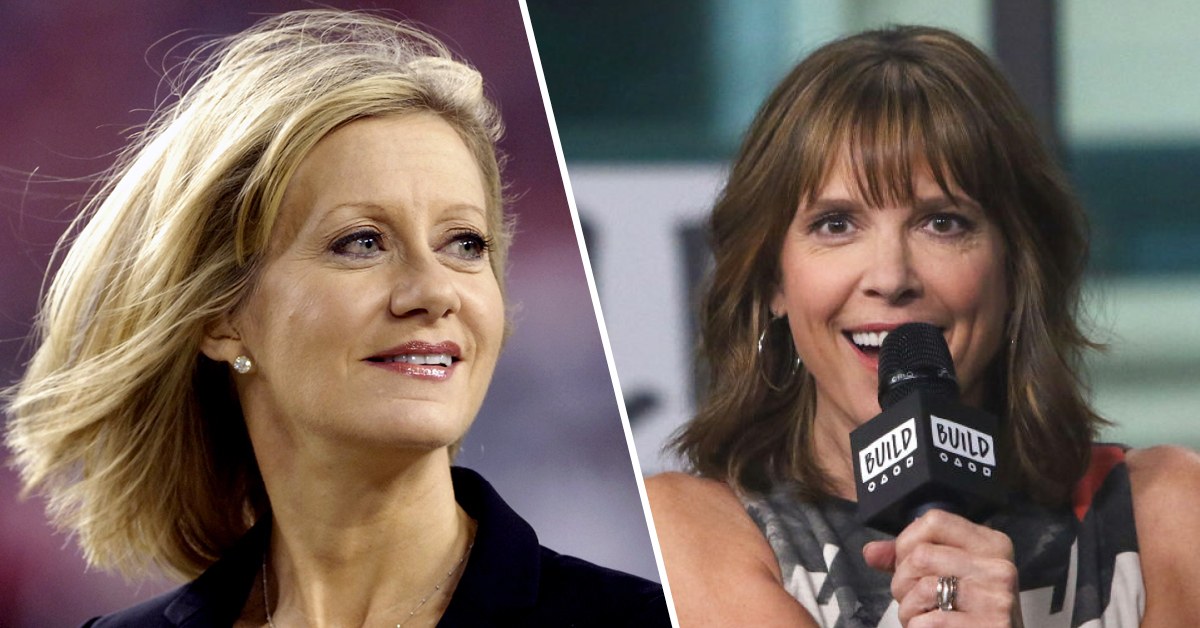
Longtime sports journalists Andrea Kremer and Hannah Storm will make history this week as the first female duo ever to call an NFL game as part of Amazon Prime Video’s newest streaming efforts.
Amazon has announced it will offer “Thursday Night Football” for Prime customers, and they’ve tapped Kremer and Storm to provide commentary and analysis for 11 of the games they’ll show, kicking off Thursday when the L.A. Rams host the Minnesota Vikings. Their decision to hire the award-winning sports commentators was quickly hailed as a refreshing change in sports journalism, and both women released statements expressing how excited they are to work together.
“Teaming up with Hannah and Amazon for this is truly special,” Kremer said. “Hannah is a brilliant journalist and she has been a friend for many years. With decades of experience as storytellers, we will be bringing a different voice and viewpoint to covering the game of football.”
Storm also praised her new partner in a statement: “I can’t imagine embarking upon this new role with anyone better than Andrea. A lifelong friend with Pro Football Hall of Fame credentials, she is the perfect partner. Together we’re looking forward to offering a new option for Prime members on Thursday nights and I’m excited to get to work!”
Amazon Prime will also offer Spanish-language and U.K. feeds, as well as an option with commentators Joe Buck and Troy Aikman calling the games.
As NPR points out, the announcement comes just a year after Beth Mowins became the first broadcaster to call an NFL game on national television. The first woman to call an NFL game ever was Gayle Sierens in 1987, when she called a regional NBC broadcast of a Seahawks-Chiefs game.
While people flooded Twitter with positive reactions to Kremer and Storm’s game-changing news, there were plenty of gross and disappointing comments that exposed the pervasive sexism in sports. Still, both women responded with grace, choosing to thank supporters instead.
“Thanks so much to everyone who has given me and @Andrea_Kremer a shout-out today…Couldn’t ask for a better partner and opportunity! See y’all for #TNF on @PrimeVideo for a great first matchup #MINvsLAR,” Storm tweeted, while Kremer said, “Heartfelt thanks to all those who have reached out to @HannahStormESPN & me today with your words of support. Incredibly grateful for the opportunity & i feel like the players in the 2 week run up to the Super Bowl… can’t wait for gameday TNF on @PrimeVideo.”
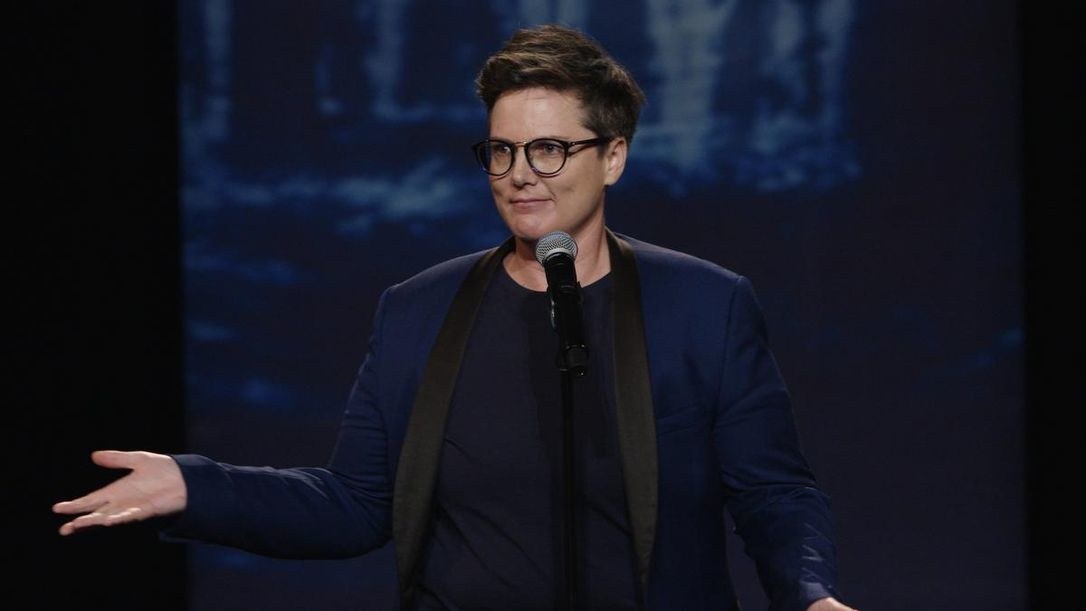
Netflix comedy specials don’t usually make me cry, but right in the middle of watching Austrialian comedian Hannah Gadsby’s Nanette, I broke down. And, up until that particular moment, I’d been having a great time.
Gadsby’s buzzy special takes on everything from her conservative upbringing in Tasmania to Pablo Picasso’s reputation as a notorious womanizer to the humorlessness of her fellow “lezzies” aren’t typical Netflix comedy-special territory. Maybe I was already a little sad because I knew what was coming (OK, maybe I was a little high, too), but there’s a specific moment in the middle of Nanette when Gadsby’s set takes a sharp turn and she announces she’s quitting comedy. She explains that she’s done with self-deprecating humor and dredging up her own painful past for jokes. I could hear the frustration in her voice, and it sounded a lot like my own.
In Nanette, Gadsby is angry—with the misogyny she’s seen in standup comedy, with powerful men who coerce and objectify women in the name of “art,” and with the men who’ve abused her.
So am I.
Like Gadsby, I’ve experienced abuse from men. It’s an experience and a trauma that informs my work, my relationships, and a huge part of my personality and identity. I can trace depression, insecurity, and constant self-sabotage back to these experiences, and they’re part of who I am. I’ve been sad. I’ve cried. I’ve hated myself. I’ve seen therapists who are comfortable helping me work through and express these particular feelings, but few have ever really acknowledged my anger or known what exactly to do with it or with me.
[embedded content]
Watching Nanette and hearing Gadsby describe the anger she still feels and can’t let go of, reminded me that I’m still angry, that my feelings are real. I’m angry at my abuser, and I’m angry at myself. Without any socially acceptable outlet for anger and rage, I, like many other women, have turned the anger on myself. So has Gadsby. “I’ve a built a career out of self-deprecating humor, and I don’t want to do that anymore,” she says in the special. “Because do you understand what self-deprecation means from somebody who already exists in the margins? It’s not humility. It’s humiliation. I put myself down in order to speak, in order to seek permission to speak. And I simply will not do that anymore. Not to myself, or to anybody who identifies with me.”
Traditionally, stand up comedy—and popular culture at large—hasn’t been friendly toward angry women. Comedian Margaret Cho’s controversial 2015 music video “I Wanna Kill My Rapist” was an angry ode to revenge that some fans and critics felt had “gone too far.” As Cho later told Women’s Health, “Being an angry woman is kind of like the scariest thing that you can be in terms of the patriarchy, because we’re the ones who burned our bras, we’re where feminism comes from.” When Cho reportedly opened her act at a New Jersey comedy club with jokes about rape and white privilege that same year, audience members walked out, and Page Six later called the incident a “meltdown,” reporting the story under the headline “Margaret Cho Loses It.”
As Gadsby herself points out, an angry woman who’s a comedian is considered shrill, overly emotional, or otherwise difficult. Angry male comedians, however, are a tradition as old as standup itself, a fixture in virtually any comedy club, anywhere. Both on screen and off, women are rarely, if ever, allowed to be angry, let alone given an hour-long Netflix special like Nanette that acknowledges their feelings openly.
For this reason, Nanette is powerful, and unlike any comedy Netflix has produced thus far. It’s funny, but unconventional, and arguably might not even be considered a comedy special at all. But if the purpose of comedy is to serve as an escape or a shared experience of witnessing a live person tell their story, perhaps we need to rethink the way comedy is defined.
“[Gadsby] makes us ask: Who is defining what’s funny? Who is being allowed to speak? What perspectives are we including?” comedian Sara Schaefer told Vulture in an interview earlier this month. “It made me think so much about my own comedy and how I’ve been afraid to get ‘too angry’ or ‘too smart’ or ‘too female’ onstage.” And it made me think about how much of my own time—off stage, in my private life—is wasted trying to get to the punchline before someone else can.
In a post- #MeToo entertainment culture, Nanette marks a drastic shift in the way audiences experience the work of women in entertainment. Gadsby forces her audience to bear witness to her pain and her rage, and is a massive victory for funny, angry women—those who are pissed off, who want revenge, who want our abusers to feel the same way they made us feel.