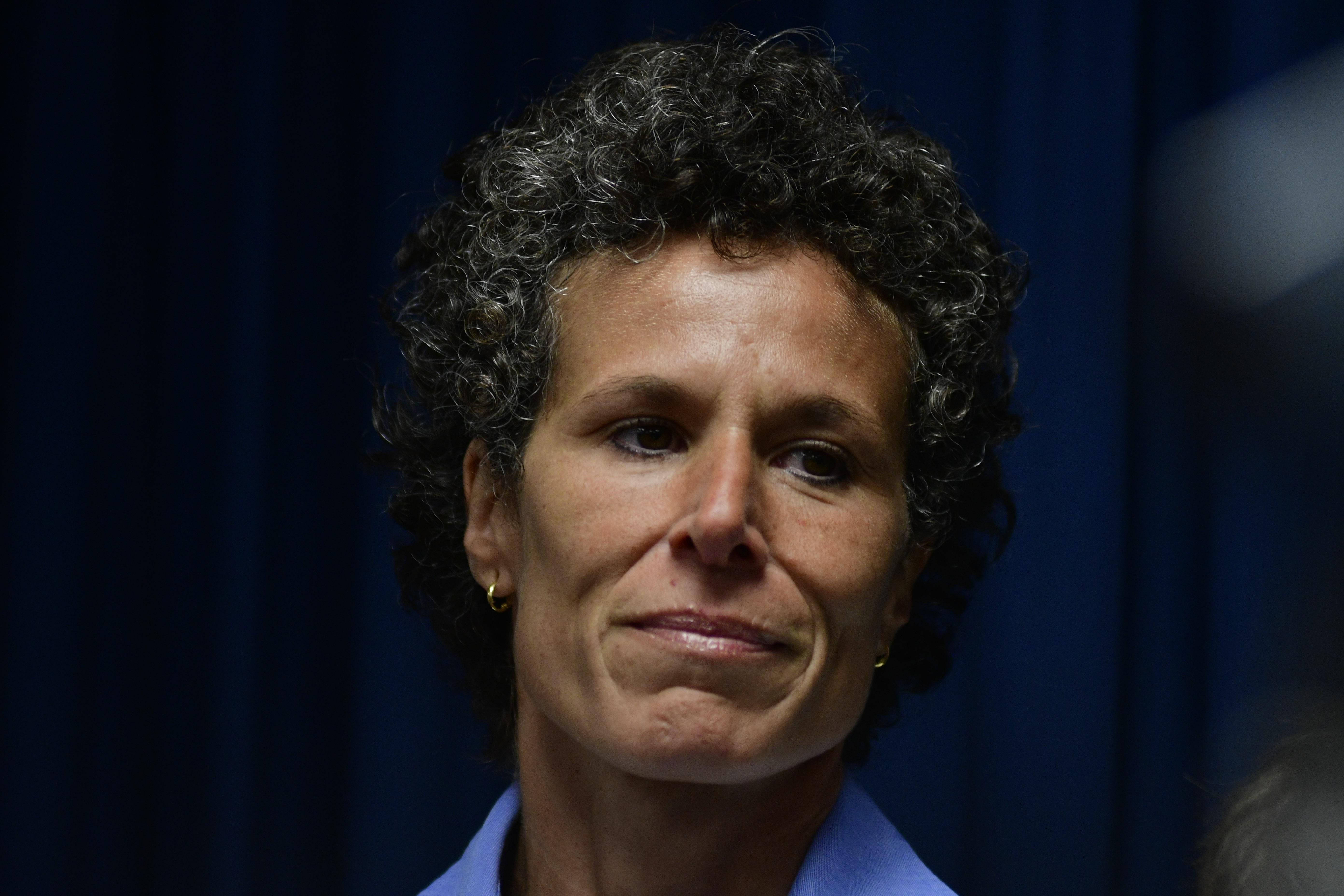
Bill Cosby was sentenced to three to 10 years in a Pennsylvania state prison on Tuesday afternoon, which will hopefully bring some amount of closure to the many women who have accused the comedian of assault over the years.
The victim in the case that resulted in Cosby’s conviction—Andrea Constand—has bravely told the story of how Cosby drugged and assaulted her many times in the lead-up to this day. As part of the sentencing hearing, she submitted a lengthy, written impact statement in which she details how the assault has deeply affected her life, while thanking those who’ve supported her along the way.
“Bill Cosby took my beautiful, healthy young spirit and crushed it,” she writes.
“Instead of looking back, I am looking forward to looking forward. I want to get to the place where the person I was meant to be gets a second chance.”
Read the full transcript of her powerful statement below:
To truly understand the impact that sexual assault has had on my life, you have to understand the person that I was before it happened.
At the time of the assault, I was 30 years old, and a fit, confident athlete. I was strong and skilled, with great reflexes, agility and speed. When I graduated from high school in Toronto, I was one of the top three female high school basketball players in Canada. Dozens of American colleges lined up to offer me basketball scholarships, and I chose the University of Arizona.
For four years, I was a shooting guard on the women’s basketball team, scoring up to 30 points a game. It was an amazing time in my life, and I learned a lot, developed a circle of really good friends, many of them teammates, and travelled around the U.S. to compete.
The only downside was that I missed my family, and developed severe homesickness. When it started to affect my studies and training, my dad came up with the idea to move his own father and mother to Tucson.
My grandparents were in their late 60s when they gamely agreed to move more than 2,000 miles to help me adjust to life away from home. They were retired after selling their Toronto restaurant business, and figured the warm, dry climate would suit them anyway. I had always enjoyed a special relationship with my grandparents. Not only had I grown up in their home, but I spoke Greek before I spoke English. They got an apartment close to mine, and I was there most days, talking and laughing over my favorite home-cooked meals. The homesickness quickly evaporated.
After I graduated from the University of Arizona with a degree in communications, I signed a two-year contract to play professional basketball for Italy. Going pro took my athletic training to a whole new level. Once again, I thrived in the team atmosphere, and enjoyed traveling Europe although we rarely saw more than the basketball venues and the hotel rooms where we slept.
When my contract ended, my former coach from the University of Arizona encouraged me to apply for a job as Director of Operations for the women’s basketball team at Temple University in Philadelphia. It was a busy, challenging position that required me to manage a lot of logistical details so that others could focus on training the team for competition. I also made all the travel arrangements and went to tournaments with the team and support staff.
It was a great job but after a few years, I knew I wanted to pursue a careering in the healing arts, my other passion. I also wanted to work closer to home, where I would be reunited with my large, extended family and friends.
I knew who I was and I liked who I was. I was at the top of my game, certain that the groundwork provided by my education and athletic training would stand me good stead whatever challenges lay ahead. [sic]
How wrong I was. In fact, nothing could have prepared me for an evening of January 2004, when life as I knew it came to an abrupt halt.
I had just given my two-month notice at Temple when the man I had come to know as a mentor and friend drugged and sexually assaulted me. Instead of being able to run, jump and pretty much do anything I wanted physically, during the assault I was paralyzed and completely helpless. I could not move my arms or legs. I couldn’t speak or even remain conscious. I was completely vulnerable, and powerless to protect myself.
After the assault, I wasn’t sure what had actually happened but the pain spoke volumes. The shame was overwhelming. Self-doubt and confusion kept me from turning to my family or friends as I normally did. I felt completely alone, unable to trust anyone, including myself.
I made it through the next few weeks by focusing on work. The women’s basketball team was in the middle of the Atlantic 10 tournament, and was traveling a lot. It was an extremely busy time for me, and the distraction helped take my mind off of what had happened.
When the team wasn’t on the road, however, I was in the basketball office at Temple, and was required to interact with Mr. Cosby, who was on the Board of Trustees. The sound of his voice over the phone felt like a knife going through my guts. The sight of the man who drugged and sexually assaulted me coming into the basketball office filled me with dread. I did everything my job required of me but kept my head down, counting the days until I could return to Canada. I trusted that once I left, things would go back to normal.
Instead, the pain and anguish came with me. At my parents’ house, where I was staying until I got settled, I couldn’t talk, eat, sleep or socialize. Instead of feeling less alone because I was back home with my family, I felt more isolated than ever. Instead of my legendary big appetite and “hollow leg” ― a running joke in my family ― I picked at my food, looking more like a scarecrow with each passing week. I was always a sound sleeper but now I couldn’t sleep for more than two or three hours. I felt exhausted all the time.
I used the demands of my new courses to opt out of family gatherings and evens, and to avoid going out with friends. As far as anyone could tell, I was preoccupied with my studies. But the terrible truth about what had happened to me ― at the hands of a man my family and friends admired and respected ― was swirling around inside me.
Then the nightmares stared. I dreamed that another woman was being assaulted right in front of me and it was all my fault. In the dream, I was consumed with guilt, and pretty soon, that agonizing feeling spilled over into my waking hours too. I became more and more anxious that what had happened to me was going to happen to someone else. I grew terrified that it might already be too late, that the sexual assaults were continuing because I didn’t speak out.
Then one morning I called my mother on the telephone to tell her what had happened to me. She had heard me cry out in my sleep. She wouldn’t let me put her off, and insisted that I tell her what was wrong. She wouldn’t settle for anything less than a complete and truthful explanation.
Reporting the assault to the Durham Regional police in Toronto only intensified the fear and pain, making me feel more vulnerable and ashamed than ever. When the Montgomery County District Attorney outside Philadelphia decided not to prosecute for lack of evidence, we were left with no sense of validation or justice. After we launched civil claims, the response from Mr. Cosby’s legal team was swift and furious. It was meant to frighten and intimidate, and it worked.
The psychological, emotional and financial bullying included a slander campaign in the media and left my entire family reeling in shock and disbelief. Instead of being praised as a straight-shooter, I was called a gold-digger, a con artist, and a pathological liar. My hard-working middle-class parents were accused of trying to get money from a rich and famous man.
At the deposition during the civil trial, I had to relive every moment of the sexual assault in horrifying detail in front of Mr. Cosby and his lawyers. I felt traumatized all over again and was often in tears. I had to watch Cosby make jokes and attempt to degrade my sense of shame and helplessness, and at the end of each day, I felt emotionally drained and exhausted.
When the case closed with a settlement, sealed testimony and a nondisclosure agreement, I thought that finally ― finally ― I could get on with my life, that this awful chapter in my life was over at last. These exact same feelings followed me throughout both criminal trials. The attacks on my character continued, spilling over outside the courtroom steps attempting to discredit me, and cast me in false light. These character assassinations have caused me to suffer insurmountable stress and anxiety, which I still experience today.
I still didn’t know that my sexual assault was just the tip of the iceberg.
Now, more than 60 other women have self-identified as sexual assault victims of Bill Cosby. We may never know the full extent of his double life as a sexual predator but his decades-long reign of terror as a serial rapist is over.
I have often asked myself why the burden of being the sole witness in two criminal trials ad to fall to me. The pressure was enormous. I knew that how my testimony was perceived ― that how I was perceived ― would have an impact on every member of the jury and on the future mental and emotional well-being of every sexual assault victim who came before me. But I had to testify. It was the right thing to do, and I wanted to do the right thing, even if it was the most difficult thing I’ve ever done. When the first trial ended in a mistrial, I didn’t hesitate to step up again.
I know now that I am one of the lucky ones. But still, when the sexual assault happened, I was a young woman brimming with confidence and looking forward to a future bright with possibilities. Now, almost 15 years later, I’m a middle-aged woman who’s been stuck in a holding pattern for most of her adult life, unable to heal fully or to move forward.
Bill Cosby took my beautiful, healthy young spirit and crushed it. He robbed me of my health and vitality, my open nature, and my trust in myself and others.
I’ve never married and I have no partner. I live alone. My dogs are my constant companions, and the members of my immediate family are my closest friends.
My life revolves around my work as a therapeutic massage practitioner. Many of my clients need help reducing the effects if accumulated stress. But I’ve also trained in medical massage at Memorial Sloan-Kettering Cancer Center in New York, and often help cancer patients manage the side effects of chemotherapy and radiation. I help many others too ― people with Parkinson’s, arthritis, diabetes and so on. Some of my clients are in their 90s. I help them cope with the ravages of old age, reducing stiffness, aches and pains.
I like my work. I like knowing that I can help relieve pain and suffering in others. I know that it helps heal me too.
I no longer play basketball but I try to stay fit. Mostly, I practice yoga and meditation, and when the weather is warm, I like to pedal my bike up long steep hills.
It all feels like a step in the right direction: away from a very dark and lonely place, toward the person I was before all this happened.
Instead of looking back, I am looking forward to looking forward. I want to get to the place where the person I was meant to be gets a second chance.
I know that I still have room to grow.
I would like to acknowledge some of the people who have helped me get here today. I will always be grateful for their counsel, friendship and support.
First of all, my lawyers Dolores Troiani and Bebe Kivitz. These two smart, courageous women have been there for me since the beginning. Without them, I would never have been able to navigate this legal and emotional minefield.
I will also be eternally grateful to Kevin Steele, the District Attorney for Montgomery County, who had the guts to believe in me, in the truth, and for trusting that the justice system could get things right ― even if the process had to be repeated.
I also want to thank Mr. Steele’s incredible team of professionals, including assistant district attorneys Kristen Feden and Stewart Ryan, detectives Richard Shchaffer [sic], Mike Shade, Harry Hall, Jim Reape, Erin Slight, Kiersten McDonald, victim services, and many others, for their passion for justice, their skill, and their hard work and perseverance despite the odds.
Thank you to the jurors for their civic duty and great sacrifices.
Thank you to all of the friends, old and new, who have stood by me. You know who you are, and each and every one of you has made a huge different. Please know that.
Last but not least, I want to thank my incredible family: my mother Gianna, and my father Andrew, my sister Diana, her husband Stuart, and their beautiful daughters – my nieces Andrea and Melanie. Thank you for proving over and over again if there’s one thing in my life you can always count on, it’s family.
MORE: Bill Cosby Sentenced to 3 to 10 Years in Prison for Sexual Assault
Source link