Categories
Health

Kate McKinnon's Golden Globes Speech Thanked Ellen for Making It 'Less Scary' to Be Gay


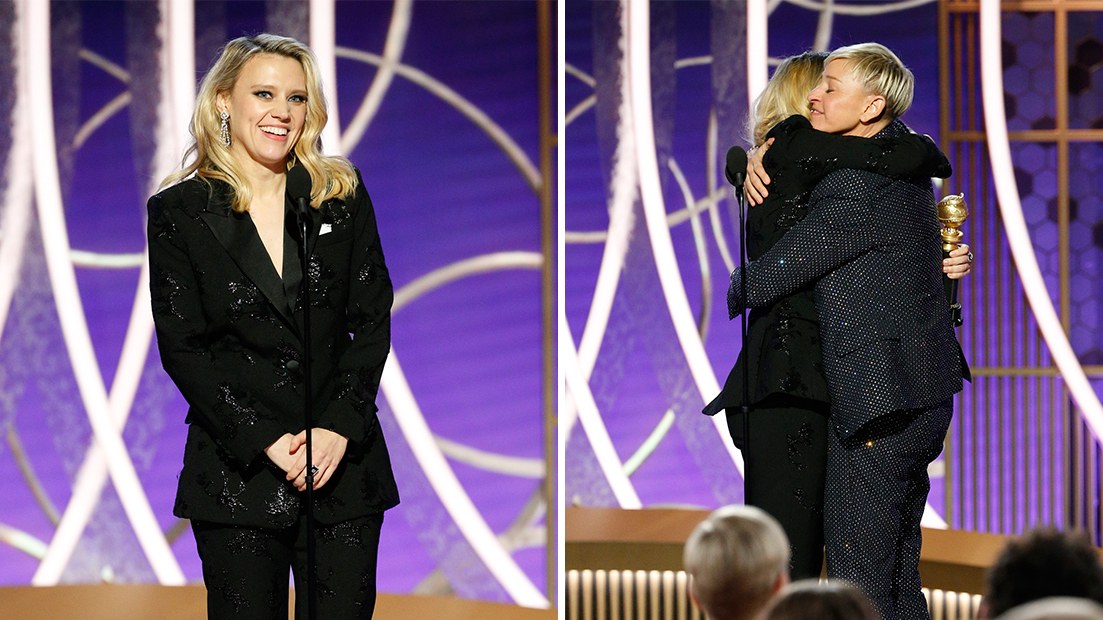
Tonight, the Golden Globes honored Ellen DeGeneres with the Carol Burnett Award for Achievement in Television. Kate McKinnon presented the award to her with a heartfelt—and at times, hilarious—speech. The SNL star, of course, has famously imitated DeGeneres for years and has often appeared on her talk show. While she joked about items of clothing she’s gotten from DeGeneres (some Stan Smiths and her best button-down shirts), McKinnon opened up about how much DeGeneres’ coming out meant to her as a young gay woman.

“In 1997, when Ellen’s sitcom was at the height of its popularity, I was in my mother’s basement lifting weights in front of the mirror and thinking, ‘Am I gay?’” said McKinnon, adding, “And I was and I still am. But that’s a very scary thing to suddenly know about yourself, it’s sort of like doing 23AndMe and discovering that you have alien DNA.”

But watching that historic moment on Ellen changed everything.

“The only thing that made it less scary was seeing Ellen on TV,” McKinnon continued. “She risked her entire life and her entire career in order to tell the truth and she suffered greatly for it. Of course, attitudes change but only because brave people like Ellen jump into the fire to make them change. And if I hadn’t seen her on TV, I would’ve thought, ‘I can never be on TV, they don’t let LGBTQ people on TV,’ and more than that, I would’ve gone on thinking that I was an alien and that I maybe didn’t even have a right to be here, so thank you, Ellen, for giving me a shot.”

You can watch the speech in full, below:

Viewers got emotional watching McKinnon, too.

After DeGeneres accepted the award, she went backstage where she was asked whom she looks up to, reports Entertainment Weekly. Her response? Kate McKinnon, naturally. “I look up to—not just people that are older than me but people that are starting out now and paving the way,” DeGeneres said. “I think Kate McKinnon is brilliant, and I think she’s strong, and I think she’s brave, so I look up to her.”

Source link

Categories
Health

Miss Universe is Breaking Barriers With Its First Openly Gay Contestant


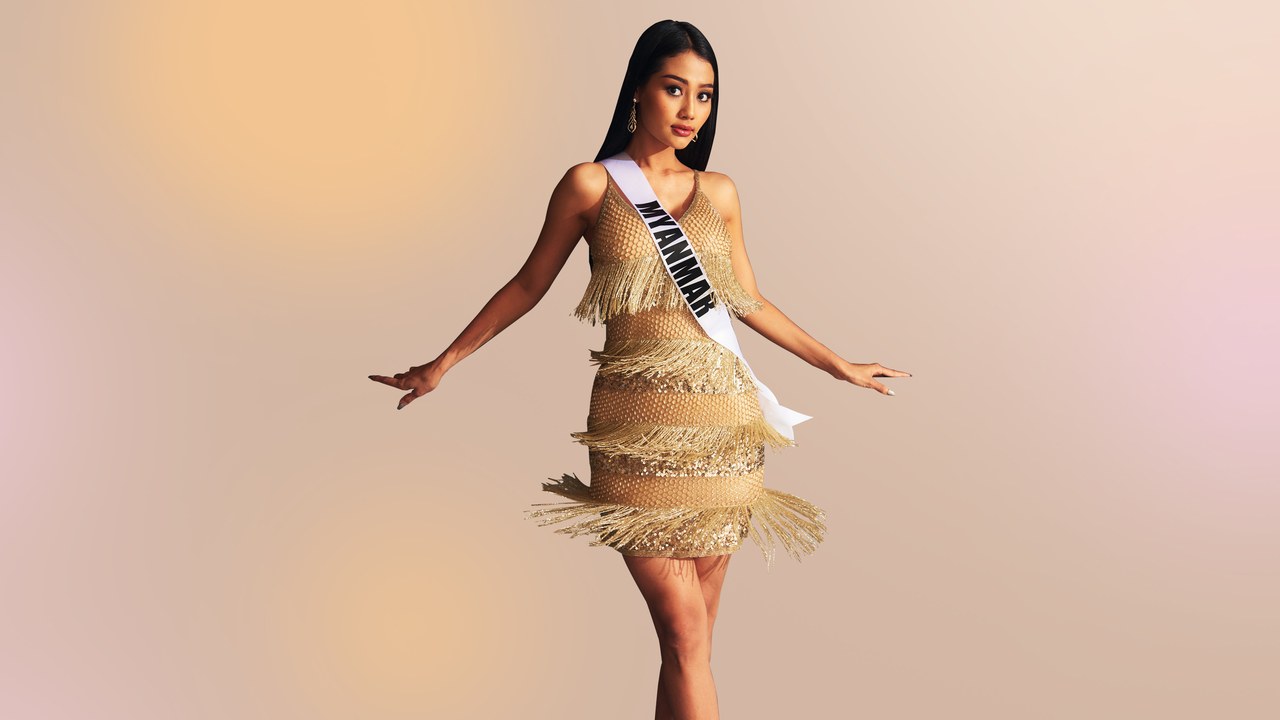
It’s taken 67 years, but when 90 beauty pageant hopefuls strut their stuff across the stage for the Miss Universe competition this Sunday, December 8th, they will be joined by the pageant’s first openly gay contestant—and it’s about time.

The pageant world isn’t especially known for its inclusivity. Contestants have historically been overwhelmingly thin, white and model tall. But times are changing. Last year Miss Universe had their first openly trans contestant and this year, for the first time ever, Miss America, Miss USA, and Miss Teen USA are all black women.

By being the first out gay woman in Miss Universe’s history, Miss Myanmar Swe Zin Htet is helping to write the next chapter in pageant representation. She’s also leaving a lasting and hopefully change-inducing mark in her own country, where same sex relationships are illegal. “A majority of people in Myanmar are not accepting of this,” Zin Htet says of her sexuality. “But my goal is to make them look at me and others that are like me just the same.”

According to the Myanmar Times, members of the LGBTQ+ community can still be prosecuted for being who they are and loving who they love. They are verbally teased and beaten, and being gay is, “punishable with a lengthy stint in prison.”

That’s what makes Zin Htet’s bravery so impressive. “LGBTQ people in Myanmar do not have equal rights and I want to change that,” she says of her decision to come out despite knowing it could create a backlash in the country she calls home. “I feel like if I am open about my sexuality others will open up, too.”

By choosing to come out on such a public stage, she is opening the door for increased inclusivity—while also putting herself at risk. Of course, coming out so publicly wasn’t easy. “This decision was a little bit difficult for me because I’m shy,” she said, recognizing that coming out would increase the public’s interest in her private life.


Source link

Categories
Health

Bride Refuses to Hire Gay Makeup Artist — See the Viral Screenshots


“I still have more questions. How can you be a latina woman and be gay? You do know being gay is a sin correct,” the bride says, making assumptions about Cardenas’s beliefs. “I will pray for you my friend. I’m sorry that you’ve chosen a path that’s going to send you straight to hell. I think you do beautiful makeup but i just can’t have someone who’s gay being apart of my special day. The wedding is in a church and i don’t want you walking into my church.”

As if that weren’t bad enough, the bride ignorantly suggests that if Cardenas suddenly decides to stop being a lesbian, she’ll hire her, saying, “If you at any chance change your mind about being gay let me know please so i can book you.”

Kristian Cardenas

Words like this would be hurtful to anyone who doesn’t identify as straight, but they were especially painful to Cardenas, who told me she had only just recently come out. “I wanted to post [this conversation] for my friends and family because about a month and a half ago, I came out to everyone on social media. I was tired of hiding who I was. And when I had such a positive reaction to me sharing who I was I felt like everyone just needed a little taste of my reality,” she tells Allure, explaining that she’s struggled with facing acceptance in her small Texas town.

The response she’s gotten to the screenshots has been heartening — sympathy, support, love, and a new understanding. “So many friends and family or just strangers had no idea that people could actually be like this. I wanted to share to bring some light on the subject because it’s from someone they know and love,” Cardenas tells Allure. “I’ve been getting such a positive response, so much love and support, whether it be from potential clients, strangers, or someone who’s struggling with their own story. Of course, I have my fair share of awful things still being said to me. I have to brush that aside and focus on the positive.”

In fact, Cardenas tells Allure that even the bride-to-be has reached out after the conversation went viral. “She apologized, but told me it was her wedding and her choice to choose who she wanted doing makeup and hair, and that her beliefs shouldn’t have hurt my feelings,” Cardenas explains. And then, displaying the kind of tolerance Cardenas herself deserves, she says, “I understand where she’s coming from. I just wish she would have been a little nicer about it.”


Source link

Categories
Health

What I Never Expected About Shopping for a Wedding Dress As a Gay Woman


There are certain pieces of clothing that bond women across generations: the first bra, the prom dress, the wedding dress.

I’ve always adored traditionally “feminine” things—nail polish, lipstick, flatirons, crimping irons—even as I started coming to terms with my sexuality as a teenager. Special occasions and holidays, especially, called for a new dress. But those milestone shopping experiences were a struggle.

In 12th grade, I was going to prom with a girl, but I couldn’t shake the feeling that the poufy Betsey Johnson confection I wanted to wear would feed into this archaic tradition of feminine heterosexuality. That was pretty much the opposite of everything I stood for. Still, when I tried it on, I felt like myself: a woman who could openly love and date women, but with sparkle. It was superficial, sure; but gay or not, I deserved to feel amazing that night, like generations of female prom-goers before me.

Flash forward nine years. When I got engaged, I was prepared to commemorate my wedding with new outfits, except I quickly understood that buying a wedding dress was going to be complicated.

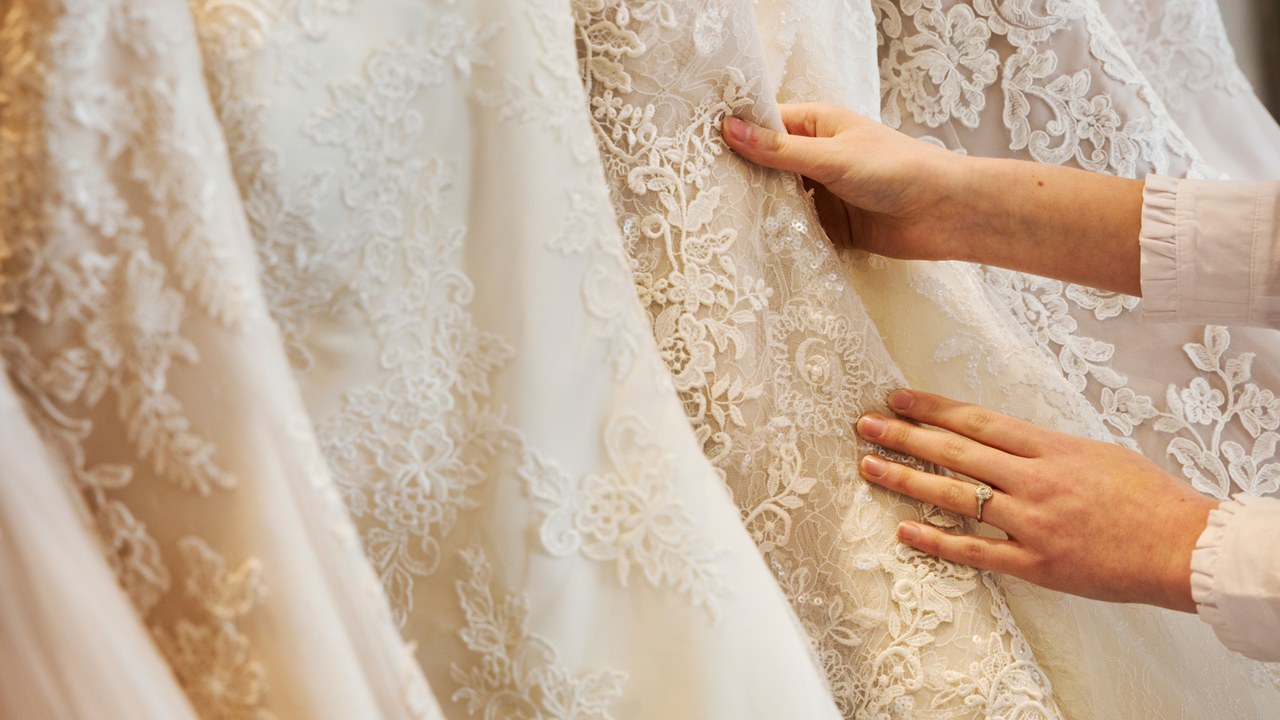
As I thought about what I wanted to wear, I realized I’d never envisioned myself in a wedding dress—not once. My fiancée, who hasn’t worn a dress (or any girl’s or women’s clothing) since the early ’90s, already knew she would be ordering a custom suit from her tailor at Brooklyn’s Bindle & Keep. But I felt a little lost when it came to my own outfit for the big day. I didn’t have a lot of inspiration images from rom-coms or from the traditional wedding mega-industry. Though there have been some improvements on the latter front: Reformation debuted its Fall 2018 bridal collection with a same-sex couple (see below), and David’s Bridal released a similar campaign earlier this year.

As a femme lesbian, I’ve always, by default, “fit in” when it comes to my appearance and gender presentation. But in the bridal industrial complex, that was impossible. As soon as I became a “bride-to-be” I felt like an other.

My bridal shopping journey started where so much of my money is spent: online. I scrolled through the usual sites, loading page after page of images of white gowns, not liking anything (price included.) It brought me back to being a high schooler, conflicted about prom dresses. I wanted to wear a beautiful gown, and yet felt guilty about how that would make me look like a straight woman.

Eventually, I found a dress I liked, with a price tag only slightly higher than the rent on my first Manhattan apartment. (I’d originally wanted to rent a dress, but that feat proved too difficult—and also pricey—to be worthwhile.) I made an appointment to see it, bringing a friend who I knew would offer the right level of enthusiasm and healthy skepticism for the overall bridal culture.

I’m not sure what you’re supposed to feel the first time you try on a wedding dress. Teary? Emotional? Elated? What I felt: Awkward.

I met the bridal consultant, and within five minutes she had me stripping down to my thong. Then, she secured me into the sample with what looked like the plastic clips you use to close a bag of chips, and directed me to pose in front of a mirror, to see if I felt “bridal.” Really, I just felt silly.

Afterward, my friend and I left to eat spaghetti and drink margaritas at a gay bar—much more my speed—and it all started settling in. I’d never, ever thought I’d be here: trying on a wedding dress, discussing the details of my wedding with a friend, paying for things I wanted with my money, going home to an amazing woman at the end of it all. But there I was, doing all of it.


Source link

Categories
Health

Please, Just Let Bert and Ernie Be Gay


The gayest debate of our generation reached a fever pitch yesterday, September 18. No, I’m not talking about Glenn Close vs. Lady Gaga at the Oscars or whether Shangela was robbed during RuPaul’s Drag Race All Stars season three. (She was.) I’m talking about Bert and Ernie’s maybe-maybe-not relationship status on Sesame Street.

It seems like everyone has an opinion about Bert and Ernie. After all, this debate has been raging on for decades, with article after article coming out tackling different perspectives. They’re gay! They’re not gay! They’re gay again! In fact, I wouldn’t be surprised if the first question I asked my mother was, “Are Bert and Ernie gay?” (Show me the receipts, parents.)

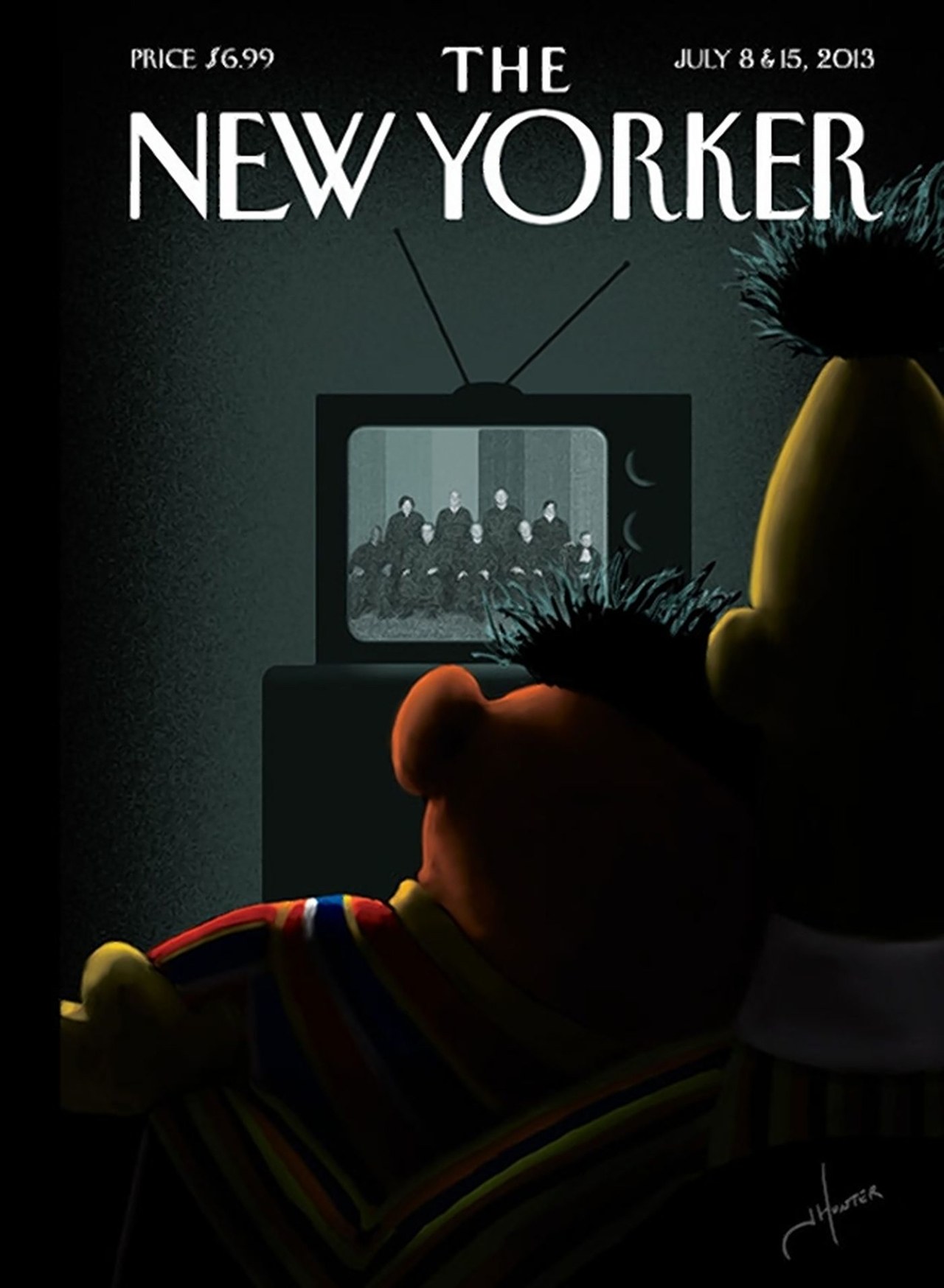
The puppets were first billed on Sesame Street as roommates, but their constant bickering (see below), the fact they slept in the same room, and that New Yorker cover from summer 2013 (celebrating gay marriage becoming legal) all implied there was something happening. And people, for the most part, were cool with this. No one seemed that pressed about Bert and Ernie’s relationship.

[embedded content]

PHOTO: New Yorker

So when Mark Saltzman, a writer who worked on Bert and Ernie for years, told Queerty this week they’re gay, no one was really surprised. If anything, people were elated the truth was finally confirmed. “I don’t think I’d know how else to write them, but as a loving couple,” Saltzman said. “That’s what I had in my life, a Bert and Ernie relationship. How could it not permeate?”

But whoa, whoa, whoa: Not so fast! Soon after this game-changing moment in gay history happened, Sesame Street reps swooped in with a statement declaring otherwise. “As we have always said, Bert and Ernie are best friends,” representatives for the show said in a tweet. “They were created to teach preschoolers that people can be good friends with those who are very different from themselves. Even though they are identified as male characters and possess many human traits and characteristics … they remain puppets, and do not have a sexual orientation.” (Um, has anyone on team Sesame Street seen Avenue Q? Puppets definitely have sexual orientations.)

A second message doubled down: “Sesame Street has always stood for inclusion and acceptance. It’s a place where people of all cultures and backgrounds are welcome. Bert and Ernie were created to be best friends, and to teach young children that people can get along with those who are very different from themselves.”

Here’s the thing, though: These are two Very Serious statements for something that isn’t that deep. Why is it so catastrophic if people want to believe Bert and Ernie are gay? What are the straights afraid will happen if they are? That gay people will descend from the sky, cover them with glitter, and make them listen to Carly Rae Jepsen’s music on repeat? (That sounds like heaven, TBH, but different strokes for different folks.) Bert and Ernie’s relationship isn’t messing up your life or your money, so let them live.

This is more ridiculous than the time a guy flipped out on a woman because she suggested his dog was gay. So what if your dog’s gay? Homosexuality isn’t contagious.

That’s really what this is about: Some people, for whatever reason, are still afraid that gayness can somehow “spread.” If Bert and Ernie are gay, it’s only a matter of time before we start implying other beloved cultural icons are gay. But fear not, heterosexuals: Gay people, myself included, want nothing to do with the shit you like. The NFL, Larry the Cable Guy, and, I don’t know, beer (?) will always remain in your Axe Body Spray-scented bubble. Please enjoy! We’ll be over here kicking it with Bert and Ernie.


Christopher Rosa is a staff entertainment writer at Glamour.

Related Stories:

The Smart Way Sesame Street Is Tackling the Refugee Crisis


Source link

Categories
Health

Gay Breakups Are Better, and Here's Why


Recently a woman I was completely in love with dumped me. Normally I’d dive right into a ­routine of debasing her and emboldening my friends to call her a Demogorgon in wire-frame glasses. Except, unlike other exes, she wasn’t a Demogorgon. In fact, she was honorable in her actions; she let me go instead of leading me on. I actually res…resp…respec—sorry, I’m having trouble saying this­—I respected her. So what now?

After the breakup she reached out a couple times, which I resisted ferociously. But since, I’ve warmed to the idea of being friends with my ex, and even suggest you do the same. It’s not my revolutionary idea: The LGBTQ community is known for its emphasis on tolerance, but one of our progressive dating phenomena is particularly worth praising and sharing. It’s quite common to become friends with exes. I’ve witnessed women introduce an ex to her new girlfriend like this: “This is Sasha. We hooked up for a month then realized we didn’t like each other like that,” or “This is Amanda. We f-cked in the bathroom of Moby’s small-plates restaurant, but it sucked.” Or the gem: “This is Annie. We dated for three years, but our shaman confirmed we had conflicting moon signs.” Why are gay people so good at this? Because we’re used to being judged and shamed for dating each other, staying friends is an act of solidarity; when you’re marginalized and have fewer safe spaces, keeping allies is a means of survival. We see an ex every time we go to a gay bar whether we like it or not. We can’t afford to get upset about it. We have bigger tofu to sauté.

But this behavior is often nothing short of alien to straight people. Imagine a woman at a party with her boyfriend, saying, “Kyle”—I assume his name is Kyle—“this is my friend Josh. We dated for two years in college, but now we’re just BFFs.” That would never happen! Kyle lives in a heterosexual world that breeds stereotypical gender roles and toxic masculinity. But if Kyle focused less on leg day and more on mending his insecurities, maybe he wouldn’t feel he has to compete with Josh. Conversely, she—let’s call her Kate—should feel free to be friends with Josh. She already invested years into nurturing a relationship with him. They even went to Cornell together! This analogy has gone off the rails, but here’s the thing: There are valid reasons to crave actual friendship with an ex. You liked each other at some point and have tons of shared experiences. You shouldn’t have to throw all that away, but most times we do. Why?

It could be because society incubates the idea that exes are our enemies, which is fully encouraged by pop culture revenge plots like Kill Bill and Carrie Underwood ruining her ex’s four-wheel drive. And culturally, we value monogamy so much that we fear being cordial with an ex might agitate our current partner, based on the faulty logic that says you’re more likely to cheat with a past S.O. than anyone else.

But somewhere out there an alternate reality exists, where we’re not stewing in resentment over our exes, unfriending them and their family members, or probing invitation lists to make sure we don’t end up at the same party. Imagine bumping into your ex at the grocery store while wearing a shirt you slept in, with some rogue pimple cream on your chin, and it doesn’t even faze you! You’re just like, “Sup, Kyle. I see you’re still a fan of egg salad.” Doesn’t that sound f-cking beautiful? That’s what the gay community does, that’s what I learned to do, and you can too.

As for my most recent ex? After some time apart, we started sending each other memes, which is 2018’s equivalent of waving a white flag. I’m finally ready to walk into a party with my new girlfriend, bump into my ex, and say, “This is Sally. We dated for four months. She’s my friend.”

Jill Gutowitz is a comedian living in Los Angeles.


Source link