Categories
Health

Kate Middleton and Mary Berry Are Joining Forces for a Holiday Cooking Show


Our two favorite British worlds are colliding soon!

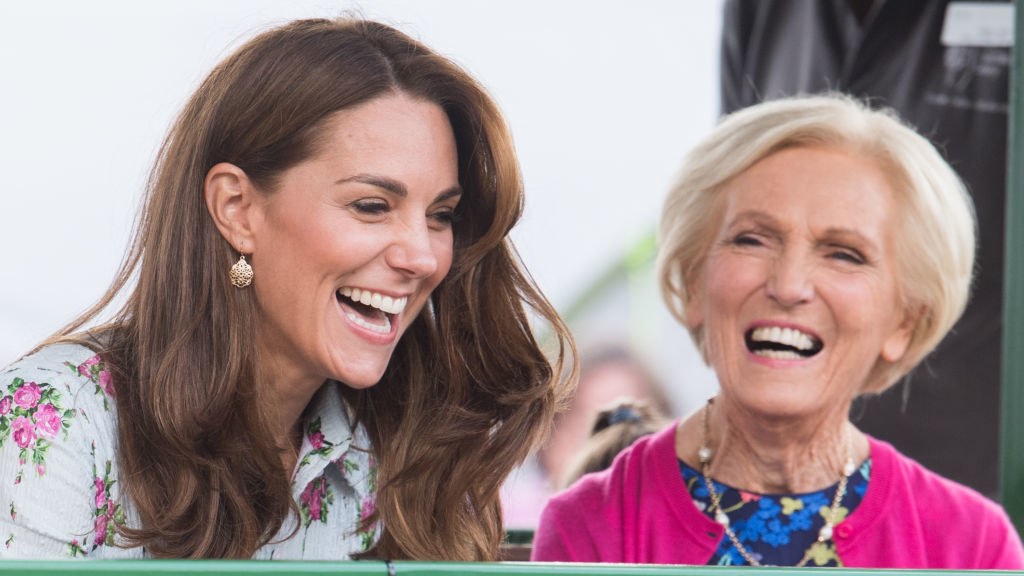
In the purest news of the day, the Sun reports that Kate Middleton and Mary Berry will appear together on a holiday special. The Duchess of Cambridge and The Great British Bake Off’s beloved judge alumna will join forces for a BBC1 seasonal special, in which they’ll work together to make a Christmas feast for charity workers.

The program is reportedly being called “The Mary Berry Royal Christmas Show.” Middleton and Berry apparently have already bonded over their shared love of charity work, and the show will put their friendship on TV for an important meal. The Mirror suggests that the feast might be hosted at “royal venue,” and that Berry will be in charge of the food, while Middleton will help out. “They will bring seasonal goodwill to their guests and to the millions of viewers watching. Expect a properly uplifting Christmas treat,” the Mirror‘s source added. There’s no premiere date quite yet so fans will just have to keep an eye out.

Middleton seems to be more comfortable with TV and film projects these days; back in September, sources said she took a meeting with Love Actually director Richard Curtis to discuss a potential collaboration on something involving mental health. It’s still not totally clear what they’re cooking up, but it all seems to reinforce the idea that Middleton has been taking charge more, doing things she likes, and focusing on causes that are important to her. A People story pointed out that in addition to confidently steering work on parenthood and child development, she’s allegedly writing her own speeches and showing more of her personality while meeting with U.K. organizers. Even the Queen is said to be quite proud of her lately!

“She is now more open with what she wants to say, and funnily enough, she is more relaxed as well,” a family source told People. It looks like this TV moment with Mary Berry is going to offer another chance for Middleton to get personal—and a delightful opportunity for all of us to see this adorable friendship keep unfolding.


Source link

Categories
Health

The Gig Economy Forces Women Freelancers to Get Creative About How They Calculate Their Rates and Value Their Time


Women are trapped in a bind—socialized to believe that the worst thing we can be is an inconvenience and at the same time made to compete in a workforce that punishes those who don’t name their own needs. Erica Greenwald, an event production freelancer, says that each time she’s asked to price her hours, she weighs her own financial concerns with the desire to make a good first impression on her clients. “You don’t want to come off as pushy or thirsty, because people make snap judgments all the time and you’re just trying to get a gig,” Greenwald says. “It all comes down to power dynamics, and sometimes I feel empowered to advocate for myself, but more often than not I accept what I can get.”

In other industries and in Silicon Valley in particular, there’s been a push for salary transparency—but Bolles, Salvo, and Cowan all say that for freelancers, talking money is still largely taboo. Justin Gignac, founder of the 65,000-member freelance platform Working Not Working, encourages the creatives he works with to share information about their rates to ensure they’re getting fair pay. He consistently finds himself urging the women he knows to up their prices. “I encourage the women in the room to say yes to the jobs you think you’re not qualified for and ask for the money you don’t think is reasonable, because the men you know aren’t afraid to do either,” Gignac says.

In 2017, Cowan reopened her photography business under the new name “The Blonde with the Smile” and again she’s navigating the minefield of putting a price on her time. Three months ago, a corporate representative called her to book a last-minute gig for an event, hosted by a software company at the Jacob K. Javits Center. Cowan was told that she’d come highly recommended and was asked to name her price. She floated $550 an hour.

“The woman on the phone was like, ‘I’m sorry, what?’ and immediately, I cringed,” Cowan says. “I was like, ‘Shoot, I’m going to lose this gig.’” But instead, the voice on the line told Cowan she wasn’t charging nearly enough. The male photographer she’d been hired to replace had billed $2,000 an hour, and that’s what the company was ready to pay. “That call changed the trajectory of my life. If I’d been on the phone with a man he would’ve said, ‘$550? That’s great!’”

Since then, Cowan has turned down offers that would barely cover her next meal. When she worked minimum-wage jobs, she was focused on how to make ends meet. Now that she prices out her hours, those rates are also tangled up in conceptions of her own professional value. Billable hours have to add up to more than the rent plus food. But those calculations are challenges (and opportunities) to assert that a woman’s time isn’t available at permanent discount.

Emma Goldberg is a writer whose work has been published in the Washington Post, the New York Times, the Economist, ELLE, and the LA Review of Books, among other places. She lives in Brooklyn, New York.

April is Financial Literacy Month on CNBC. To mark it we don’t just want to talk about the wage gap or the disadvantages women still face in the workplace. We want action—to the tune of $10,000. This month we’ll explore what women can do to net a cool $10K. That means strategies to save more and spend smarter, tactics to negotiate not just at work but on health care, home decor, and more, and stories to inspire your inner CEO.


Source link