
Categories
Health

The Gig Economy Forces Women Freelancers to Get Creative About How They Calculate Their Rates and Value Their Time


Women are trapped in a bind—socialized to believe that the worst thing we can be is an inconvenience and at the same time made to compete in a workforce that punishes those who don’t name their own needs. Erica Greenwald, an event production freelancer, says that each time she’s asked to price her hours, she weighs her own financial concerns with the desire to make a good first impression on her clients. “You don’t want to come off as pushy or thirsty, because people make snap judgments all the time and you’re just trying to get a gig,” Greenwald says. “It all comes down to power dynamics, and sometimes I feel empowered to advocate for myself, but more often than not I accept what I can get.”

In other industries and in Silicon Valley in particular, there’s been a push for salary transparency—but Bolles, Salvo, and Cowan all say that for freelancers, talking money is still largely taboo. Justin Gignac, founder of the 65,000-member freelance platform Working Not Working, encourages the creatives he works with to share information about their rates to ensure they’re getting fair pay. He consistently finds himself urging the women he knows to up their prices. “I encourage the women in the room to say yes to the jobs you think you’re not qualified for and ask for the money you don’t think is reasonable, because the men you know aren’t afraid to do either,” Gignac says.

In 2017, Cowan reopened her photography business under the new name “The Blonde with the Smile” and again she’s navigating the minefield of putting a price on her time. Three months ago, a corporate representative called her to book a last-minute gig for an event, hosted by a software company at the Jacob K. Javits Center. Cowan was told that she’d come highly recommended and was asked to name her price. She floated $550 an hour.

“The woman on the phone was like, ‘I’m sorry, what?’ and immediately, I cringed,” Cowan says. “I was like, ‘Shoot, I’m going to lose this gig.’” But instead, the voice on the line told Cowan she wasn’t charging nearly enough. The male photographer she’d been hired to replace had billed $2,000 an hour, and that’s what the company was ready to pay. “That call changed the trajectory of my life. If I’d been on the phone with a man he would’ve said, ‘$550? That’s great!’”

Since then, Cowan has turned down offers that would barely cover her next meal. When she worked minimum-wage jobs, she was focused on how to make ends meet. Now that she prices out her hours, those rates are also tangled up in conceptions of her own professional value. Billable hours have to add up to more than the rent plus food. But those calculations are challenges (and opportunities) to assert that a woman’s time isn’t available at permanent discount.

Emma Goldberg is a writer whose work has been published in the Washington Post, the New York Times, the Economist, ELLE, and the LA Review of Books, among other places. She lives in Brooklyn, New York.

April is Financial Literacy Month on CNBC. To mark it we don’t just want to talk about the wage gap or the disadvantages women still face in the workplace. We want action—to the tune of $10,000. This month we’ll explore what women can do to net a cool $10K. That means strategies to save more and spend smarter, tactics to negotiate not just at work but on health care, home decor, and more, and stories to inspire your inner CEO.



Source link

Categories
Health

My Journey Into the Gig Economy: Folding Underwear, Walking Dogs, and Building Furniture


Like Athena emerging fully formed and dressed for battle from the head of Zeus, many talented women who joined the professional world during the Great Recession have faced unprecedented challenges. I’ve tried a few unconventional methods of making rent, but even I never could have anticipated the recent Thursday evening I spent folding a stranger’s underwear. Let’s get to that episode in a second. First, about me—I’m a journalist, proud of my profession despite its frequently meager dividends. But sometimes I wonder: Could the gig economy (which, really, is a reductive little phrase used to describe easy-entry odd jobs that, when cobbled together, theoretically add up to a reasonable living or, at the least, a lucrative side hustle) make my rigidly budgeted life more comfortable? I decided to see what results might come of a full-court-press effort, and a willingness to try almost anything once.

Before I got started, I reached out to a few contemporaries to find out how they’d brought in the most cash on the side. I’d gotten my first taste of paid writing work as a college freshman, when the author-illustrator Molly Crabapple commissioned me to write an ode to her friend (a “retired, pragmatic contortionist,” according to Crabapple) in the form of a sestina. However, for the purposes of this experiment, my usual methods of accruing capital were out of bounds.

A culture reporter friend used to make 10 dollars a day texting men through an app called Phrendly that paid out a small amount for every reply to her messages. A fashion world friend, Dominic DeLuque, once picked up lizard food for an eccentric who tipped horribly, shuttled iced coffees to an agoraphobic neighbor, and transported a suitcase to a shady client on the Upper West Side (only realizing later the cargo was most likely drugs) for about $20 per odd job. I wasn’t in the mood to smuggle narcotics or go through the process of establishing relationships with oddball New York strangers, so those options were out, too.

For my first go, I tried out Craigslist. A flower shop in Morningside Heights was looking for an assistant; a “research facility” called MediaScience sought panelists; a gentleman’s club in Midtown needed extra (scantily-clad) help on Super Bowl Sunday. I sent CVs and emails flurrying all over New York City. Not one response.

Undaunted, and remembering the capable man I’d hired to help me move last summer, I went about the process of registering to be a Tasker on TaskRabbit. I paid a $20 registration fee, indicated what I thought were fair rates for the suggested tasks—assembling Ikea furniture, $30 an hour; and so on—and submitted my application. Almost automatically a form email appeared in my inbox. “Hi Helen,” it read. “At this time, we do not have the demand for Taskers in the city and categories you’ve specified, so we will not be moving forward with your registration.” I laughed out loud. But my rejection made sense: If it’s nearly impossible to get a job interview at The New York Times or Goldman Sachs, it stands to reason you’ll be fighting hordes for the considerably smaller scraps too. Ruling out Uber driver, SAT tutor and plasma donor, I sought out other options.

Luckily, deliverance soon arrived in the form of a friend who needed help caring for her brand-new puppy, a 16-week-old Klee Kai named Juneau. I would take him for an afternoon walk and give him lunch for $40 per visit. Our first outing was glorious: the two of us sailed through Central Park. Strangers and their dogs cooed over him. But disaster struck during our second appointment. After a blissful hour’s walk, I struggled with the antique front door of the owner’s apartment. YELP! I spun around to see the puppy, trapped in the heavy oak door, and rushed to free the poor little guy. I neglected to mention the incident to his owner in my otherwise exhaustive follow up text about Juneau’s every bark and bowel movement, and prayed to the dog walker gods that the pup hadn’t suffered any internal injuries.

Next, I trumpeted my services on Twitter. An acquaintance responded—she needed some help with laundry. A day later I made a house call to my client, who asked, “Do you have a problem with washing and folding period-stained sheets?” I waved my hand as if to say “Perish the thought,” and steeled myself like Indiana Jones preparing to raid a cave. I was tasked with washing everything she owned—jeans, sweatshirts, nine pairs of matching socks, the aforementioned sheets—and I went home $20 richer and with a vivid mental image of her boyfriend’s Under Armour boxers.

Ultimately, my weeklong experiment netted me $100 total, but once you factor in the multiple subway trips and the cash I spent on Red Bull for fuel, it would be generous to say I’d scraped a $90 profit. If I’m honest, I kind of expected pathetic results. I’ve always been skeptical of the gig economy. It creates a fantasy that, if you can profit off your every marketable skill, you can subvert the hardships of my much-maligned, profoundly misrepresented generation (including insurmountable student debt, too many music-streaming services to choose from, and the escalating cost of vape pens). Millennials are raised to be brutally hard workers, even if some of us (me) are probably doomed to spend the rest of our lives writing jokes online. We deserve better than what the gig economy has to offer.

Helen Holmes is a freelance journalist living in Brooklyn.


Source link

Categories
Ft Mac Politics

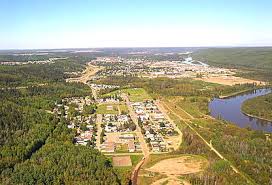
The Top Fort MacMurray Neighborhoods to Visit or Live In

There are many Fort MacMurray neighborhoods which are top choices for visitors or potential residents. These neighborhoods or districts include:

  • Abasand Heights
  • Beacon Hill
  • Confederation Heights
  • Dickinsfield
  • Downtown
  • Gregoire
  • Lakewood
  • Parsons Creek
  • Thickwood, or Thickwood Heights

Timberlea

  • Waterways
  • Wood Buffalo

Each Fort MacMurray neighborhood offers certain residence types, amenities, real estate demographics, and other features. Some districts have many stores and businesses, others are mainly residential. Some neighborhoods offer specific attractions, others have little to attract tourists and visitors and are mainly homes. If you are planning to move to Fort MacMurray or you already live here and you are considering a change in neighborhoods then there are some districts which may be more preferable than others. Your personal preferences are also important. Some people want excitement in their neighborhood, others want to live a quiet and relaxing life at home.

Visitors to Fort MacMurray may choose neighborhoods to stay in that offer many different amenities and attractions. Districts which are mostly residential may not work for short term visitors who want to be close to downtown and the heartbeat of this area. Some neighborhoods offer many lodging choices with numerous hotels, others do not offer this feature. Restaurants, bars, and other types of establishments are popular with visitors, but these may not be as important to residents who live in Fort MacMurray. Do your research if you are planning a trip or vacation to Fort MacMurray, or you are moving from one district to another, so that you choose the right neighborhood to stay in.

Categories
Economic Ft Mac

5 Great Reasons to Relocate to Fort MacMurray

1. Local Economy-  One of the common reasons that people relocate to Fort MacMurray is the local economy. Because of the close proximity to the Athabasca oil sands and the heavy prominence of the oil industry to the economy there are usually plenty of economic opportunities that can be found in the area.

2. Natural Beauty- If you enjoy the great outdoors and natural beauty attracts you then you may find living in Fort MacMaurray to be a dream come true. The surrounding area is exquisite, with incredible vistas and gorgeous views all year long. Take a hike through pristine wilderness and enjoy the best that Mother Nature can offer.

3. Outdoor Activities Available-  You may want to relocate to Fort MacMurray just because of all the terrific outdoor activities that are available. You could visit the city several times a year, but this is not necessary when you can relocate and live here all year long. Fishing, hiking, skiing, and many other outdoor activities can be enjoyed here.

4. Employment- While many areas of Alberta may have few jobs available this is not the case in Fort MacMurray. Because of the oils sands and the necessary infrastructure the oil companies in the region are usually always hiring. In addition there are other components of the local economy that also have a high employment demand, so there are usually enough jobs to go around.

5. Remote Location- When you relocate to Fort MacMurray you can get away from the rush of bigger cities and more convenient locations. The remoteness of the area makes it appealing to many people.

Categories
Economic Ft Mac

What Types of Real Estate Can be Found in Fort MacMurray, Alberta?

Fort MacMurray real estate is similar to what you can find in many bigger cities, and you may be surprised at the variety and the many options that you will find in this area. Whether you are searching for the perfect home to buy or you are looking for a rental unit instead there is plenty of homes, apartments, condos, and rooms for rent that you can choose. There are furnished units and those which you will need to furnish yourself, and a large number of choices as far as the local neighborhood and distance to main points and attractions in Fort MacMurray, Alberta. No matter what your real estate preferences and needs are, whether you want a furnished condo or apartment with 1 bedroom close to downtown or you need a 5 bedroom home in an upscale neighborhood you can find it in Fort MacMurray if you are willing to put in the time and effort to search for it.

Recent Fort MacMurray real estate listings have included locations such as Timberlea, Stonecreek Village, Thickwood, downtown, Abasand, Eagle Ridge, and many more. No matter what type of property you are looking for in Fort MacMurray, Alberta, it is not hard to find what you want with a little searching. This area is beautiful and offers a range of rental and purchase prices, and various features such as parks and other attractions. It is possible to find homes, condos, and apartments close to public transportation or conveniently located in other ways.

Categories
Economic Ft Mac

Fort MacMurray Economic Facts and Figures

The economy of Fort MacMurray depends on several things, and one of the biggest economic sectors in the region is oil production and refining because of the Athabasca oil sands close by. There are a number of oil and energy companies with plants and offices in this area. These companies include Nexen, Syncrude, Shell, CNRL, and Suncor Energy. Natural gas exploration, development, and recovery plays some part in the economy, and so does the necessary pipelines for oil and gas that must be installed. Forestry is also an economic player in Fort MacMurray because of the abundance of forest land and the remote location of the city. One factor of the local economy is tourism, which may seem surprising because of all the oil production, but visitors who have been in the region can quickly understand how tourism can offer economic support because of all the natural beauty.

The housing market in Fort MacMurray is somewhat expensive, especially when the remoteness of the city is considered. The demand for housing has skyrocketed in recent years, and some of the oil companies have had difficulty attracting qualified workers because of the higher than average home and cost of living expenses. Food costs are also a little higher than other remote areas, in part because of the extra transport costs and the other additional expenses involved. The robust economy in Fort MacMurray is going strong, and few economists predict that this will change any time in the near future because of the oil sands and the petroleum industry.