Categories
Health

My Life As a Cam Girl Taught Me About Pleasure, Consent, and Healing


For two years, my days looked something like this: sleep late, buy props, clean my room, get online, do my show, get naked. This was my life as a cam girl.

I had always been fascinated by sex work. I was sexual. I was seductive. I was the girl who took her clothes off at parties. I was the girl who wanted to be wanted. I was the girl who needed attention—sexual attention—all the time. It would have shocked anyone who knew me to know that I never actually got any pleasure from sex. It was the control I craved—the sex at the end felt obligatory. The truth was, in my teens and early twenties, I didn’t know how to experience pleasure. I liked everything around sex but I didn’t enjoy sex itself. It was difficult to reconcile—so for years, I didn’t.

Sex work seemed like an enticing and empowering idea—a way to be desired so much men would pay me for my company and worship my sexuality in a transaction where my pleasure was irrelevant. The perfect job.

Only one problem: I had no idea how or where to get started. Then I learned about sugar daddies— found one on a sugar daddy dating website. We had a lot of fun together, but ultimately, I wanted more from my career in sex work. One night, I was talking to him about the fact that I wanted to try being a stripper. “Have you heard of cam girls?” he asked. I hadn’t.

Being a cam girl meant many different things, I soon discovered. Many cam girls perform sex acts and erotic activities via webcams for money. Many also paint, sing, make art, build friendships and communities, emotionally support clients, and more. I fell in love with what I saw these performers doing, so I made a profile on an upscale subscription-based cam site, built a cam identity, and signed on. I was pumped.

The first site I worked on had a culture based on privates—where viewers paid by the minute for my time. During privates, viewers made specific requests of me, which I pressured myself to comply with, for fear of them ending the private show. I felt like I’d felt almost every time I’d had sex IRL—like I was just going along with what they wanted because I was pressured into it either by the other person, or by society, or by myself. In all of those situations, I told myself I had seduced them, egro I needed to have sex with them. Now, I was being paid—I owed the viewers.

This was not the empowering sex work I had pictured but I wasn’t ready to give up on camming yet. I wanted to feel more agency over my sexuality, so I joined a different cam site. This one was free and based on “tips” for various acts: Tip to set the music in my room. Tip to dim the lights. Tip to tell a joke or sing a song. Tip to show my breasts. Tip to have me touch them. Tip to bring out a sex toy. Tip to use it. I created the menu and set the prices.

Every night I performed for my webcam, putting on quirky shows, trying out an arsenal of sex toys, chatting with the viewers in my room, building a community of regulars. Within months, I became ranked among the top 100 cam girls on the site.

The author during her camgirl days.

Courtesy of Isa Mazzei

This is what I had been looking for. Camming was this structure where I not only set boundaries but I enforced them. Just like Julia Roberts in Pretty Woman, I said who, I said when, I said how much. It gave me a sense of value of my body and more importantly, camming gave me control over that value in a way that was really powerful. It was a safe space to exist not only as a sex worker but as a sexual person.


Source link

Categories
Health

Grey's Anatomy 'Silent All These Years' Recap: Everyone Should See This Powerful Message About Consent


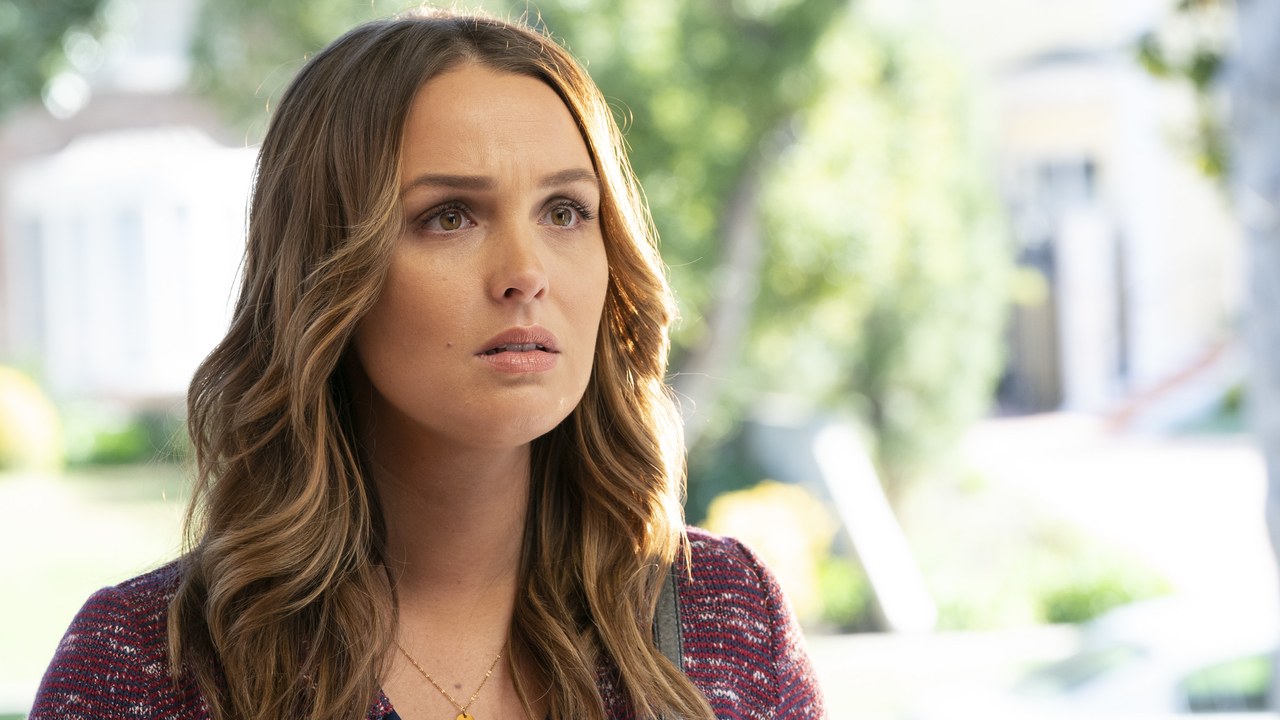
Leave it to a Shonda Rhimes show to give us one of the most definitive episodes of television about consent that I’ve ever seen. This week’s Grey’s Anatomy took on the topic from multiple angles—and the result was incredibly emotional, powerful, and, I hope, educational.

The episode centers around Dr. Jo Karev (Camilla Luddington) in two different storylines. In flashbacks, we see Jo meet her birth mother, the woman who abandoned her at a fire station as a baby. But after finally letting her mother know how much resentment and anger she still feels, Jo learns she was the product of the rape of her teenage mother.

Then, back at Grey Sloan Memorial, Jo meets a patient named Abby (Khalilah Joi), who she believes has been abused in a domestic situation. Jo, herself a victim of domestic abuse, handles the situation with care—and soon she learns Abby has also been sexually assaulted.

When Jo brings in another female doctor, Teddy Altman (Kim Raver), to help with the situation, they make sure Abby knows she is in a safe space where she can talk if she wants to. Eventually, Abby reveals she was raped after leaving a bar—but she’s afraid to tell her husband as well as the police, because she knows all too well that her actions may be twisted into a victim-blaming scenario. The portrayal of Abby’s reaction to her trauma is incredibly powerful to watch, and so is the doctors’ desire to give her agency in her treatment while holding their own emotions in check.

Once they begin collecting evidence for a rape kit (after Abby gives her OK), the process is shown in heartbreaking detail. What stood out to me is how the doctors ask their patient at each step if she’s ready to proceed. They do nothing until they hear her verbally say, “Yes.” And once they do have her permission, they are methodical yet still sensitive as they swab the bite marks on her skin and take samples from inside her body. It’s even more gut-wrenching when you consider that it’s possible some women may not receive the same kind of care. “What you did today, with Abby, that was not protocol…it should be,” Teddy later tells Jo.

But when it’s time to take Abby to surgery, she tells the doctors that every man she sees reminds her of her rapist. So the women of Grey Sloan Memorial Hospital line the hallway with female faces—doctors, nurses, orderlies, administrative staff—and physically block male staff from entering space. All so Abby can feel safe. At this point, I sobbed. It was an amazing visual of women standing up for other women.

The show adds another layer of consent when Dr. Ben Warren (Jason Winston George) is shown having a talk about it with his adolescent stepson, Tuck. “You pay attention to the girl you’re with,” he tells the young man. “You need to care about her feelings, her joy, at least as much as you care about your own. And she gets to change her mind at any time. If she says ‘stop’ or stops having fun, you just plain stop. Time out. Game over.” It really is that simple—and I’m grateful to the show I’ve loved for all these years for stating it so plainly.

One big reason why Grey’s Anatomy was able to handle this episode in such a sensitive and multi-faceted way? Because it’s led by women, including Rhimes and showrunnner Krista Vernoff. This episode, aptly titled “Silent All These Years” after the Tori Amos song about a sexual assault, was also written by a woman, Elisabeth Finch, and directed by a woman, Debbie Allen. It was inspired, in part, by Christine Blasey Ford’s testimony in the Brett Kavanaugh Supreme Court hearings. “How it didn’t mean anything, it hurt our souls,” Vernoff told Entertainment Weekly. “I went to the writers and said, ‘The message that has just been sent to all young women is that consent doesn’t matter. We have an opportunity here to teach men and women about consent and to talk about how lasting and impactful rape can be for generations.'”


Source link

Categories
Health

Role Play Isn't an Excuse for Abuse: What to Know about BDSM, Kink, Consent, and Eric Schneiderman


This week, now-former New York Attorney General Eric Schneiderman stepped down from his office after the New Yorker published a bombshell report in which four women accused him of violence and abuse. He has denied the allegations, but even in an era abundant with details about the alleged sexual practices of our elected officials—from the president down—Schneiderman took an unusual tack. In his statement, he claimed he hadn’t abused anyone, but rather had engaged in consensual “role-playing” in the bedroom.

Schneiderman’s statement read, in full:

“In the privacy of intimate relationships, I have engaged in role-playing and other consensual sexual activity. I have not assaulted anyone. I have never engaged in nonconsensual sex, which is a line I would not cross.”

But when I read the New Yorker article, I felt strongly that the accusations leveled against him in the piece don’t describe what kinky folks partake in as part of BDSM (that is, bondage, dominance, sadomasochism).

As a 34-year-old who’s engaged in this type of sexual behavior since high school, I know BDSM to be safe, sane, and consensual. Instead, the behavior that Schneiderman’s accusers describe involves brutal, nonconsensual assaults, which allegedly surprised and scared his victims.

Moreover, in some instances, the abuse wasn’t sexual at all. “This did not happen while we were having sex,” one of the women, Michelle Manning Barish, said in her account. “I was fully dressed and remained that way.” (Two women spoke to the New Yorker on the record, and an additional two women remained unnamed.)

In the piece, journalists Jane Mayer and Ronan Farrow wrote:

“[Michelle Manning Barish and Tanya Selvaratnam] allege that [Schneiderman] repeatedly hit them, often after drinking, frequently in bed and never with their consent. Manning Barish and Selvaratnam categorize the abuse he inflicted on them as ‘assault.’ … [B]oth say they sought medical attention after having been slapped hard across the ear and face, and also choked.”

The women claim Schneiderman engaged in other nonconsensual behaviors, including name-calling, spitting on them, and making demeaning comments about their appearance. And there’s a problematic racial element as well: Selvaratnam, who was born in Sri Lanka, said Schneiderman referred to her as his “brown slave” and demanded “that I repeat that I was ‘his property.’”

On their own, these allegations are horrible (and hypocritical), given Schneiderman’s cultivated reputation as not just a feminist, but a champion of abused women. (He recently filed a civil rights lawsuit against Harvey Weinstein, which claims that Weinstein mistreated, intimidated, and harassed his staff.)

But what disgusts those of us who engage in BDSM is any abusive man’s attempt to align himself with us by portraying himself as a dominant playing with his submissives.

But what disgusts those of us who engage in BDSM is any abusive man’s attempt to align himself with us by portraying himself as a dominant playing with his submissives. Myself and others who engage in dominant and submissive power play in the bedroom renounce and abhor anything like Schneiderman’s alleged behavior. Furthermore, as BDSM becomes more accepted in the mainstream — thanks to movies like Secretary and songs like “S&M” by Rihanna — we now also see our sexuality co-opted and contorted.

Consensual “role play” is a handy excuse for Schneiderman in response to these allegations of violence, but they don’t pass muster in the BDSM community. Kink is a dynamic between partners built on a foundation of trust. Ethical role play requires that mutually acceptable behaviors are established beforehand and that limits are respected. The abuse that Schneiderman is accused of is, given his power and rank in legal circles, a distinct case, but alas, it’s also familiar. Most of my own kinky partners have adhered to the safe, sane, and consensual tenets but still, there are outliers, and like Schneiderman, they are dangerous.

I was violated by a sexual partner once, and it occurred during consensual BDSM play. When I used our safe word, he accused me of misunderstanding what a dominant actually does in bed. He implied that it was my fault and did it in such a way as to imply that I was ruining his fun.

But I didn’t misunderstand. I don’t think he misunderstood, either. He wanted to cause pain that I didn’t want to feel, and that was both physically and psychologically abusive. For days, I had the worst bruises that I’ve ever had on my backside. I knew they weren’t like the errant bumps or scratches that can occur to anyone fooling around in bed; I knew these marks had been intentional and had been meant to hurt me.

Like consent itself, talking about BDSM play should be a continual conversation with frequent check-ins.

If BDSM is something you’re interested in exploring with a partner, a conversation about it needs to occur while both partners are sober and well in advance of clothes coming off. And it shouldn’t be one conversation either. Like consent itself, talking about BDSM play should be a continual conversation with frequent check-ins. I’ve been married for almost five years and my husband could probably write a dissertation about my sexual quirks, yet I still have conversations with him about what I do and do not want.

Not only is forthright communication good, ethical bedroom behavior, but it’s also reflective of the fact everyone gets their jollies in a different way. Slapping, choking, or being called a “whore” or “slut” — the behaviors Schneiderman allegedly engaged in — are, in fact, practices that some people find sexy in bed. Others enjoy being spanked, whipped, or caned, being handcuffed or tied up. There are endless ways to engage in verbal and physical sexual power play.

Most crucially, none of these behaviors should come as a surprise to a BDSM partner during play (or as practitioners refer to it, “during a scene.”). Both partners must want the behavior, know how an encounter will happen, and consent to it, with room for the terms of the experience to be readjusted and renegotiated while it occurs. And crucially, within BDSM, the play stops immediately when one of the practitioners wants it to stop — typically with the use of a safe word. (I personally find “stop” to work just fine, but many people use “yellow” for “slow down” and “red” for “stop.”)

Schneiderman’s victims describe his reported behavior out-of-the-blue and not only continuing, but, in some cases, escalating, when they made it clear they wanted it to stop. Consensual sexualized violence shouldn’t cause sustained physical harm, like vertigo or ringing in the ears. Of particular concern is how dismissive Schneiderman was when the women allegedly emphasized how unwanted his behavior was. EJ Dickson, an editor at Men’s Health, aptly referred to Schneiderman’s “defense” on Twitter as a smokescreen for intimate partner violence, and experts cited in the New Yorker back that up: Jennifer Friedman, a legal expert on domestic violence, explained that a “slap is not just a slap—it reverberates through the rest of the relationship, making her afraid of setting him off.” That isn’t kink; that’s abuse.

My experience, and that of Schneiderman’s victims, are the antithesis of how BDSM is truly practiced. As the kink-positive feminist writer Feminista Jones wrote Glamour.com in an email:

“Above all else, those of us who live this lifestyle regard consent as non-negotiable, so when someone engages in nonconsensual kink with someone else, that is generally viewed as abuse. When I heard the descriptions of what he is accused of doing, my first reaction was ‘Are they in The Life?’ because what was described was not unheard of in our realm. However, the women say they did not agree to these things and THAT is the difference — you can’t force your kink onto anyone.”

Or, as Michelle Manning Barish’s lawyer Debra S. Katz told the New York Times, it was Schneiderman’s “fantasy and his fantasy alone that the behavior was welcome.”

My own violation both scared and disappointed me, particularly because it showed how no matter how much I discussed or negotiated beforehand, a man could still hurt me in a vulnerable moment if he wanted. That experience caused me to be less trusting of men in general and more cautious around kinky men, especially.

I have since warned other kinky women I know who are dating about the identity of the man who hurt me; I’ve been warned about other men as well. But one-on-one warnings and whisper networks of the “Shitty Media Men” list variety aren’t enough. Not only does the abusive behavior have to stop, but abusive men need to own up to their behavior — and to stop blaming it on BDSM.


Source link

Categories
Health

This Sex Scene on 'Crashing' Proves How Easy It Is to Ask for Consent


“I just want to make sure you want to do this.” These are the simple words Pete Holmes’ character asks his new friend Ali (Jamie Lee) in the season two premiere of Crashing on HBO. At first, the scene is just another unremarkable romp between two intoxicated people; what makes it feel extraordinary and timely is this painless question, posed before the “main event.” The thing is, though, this shouldn’t be extraordinary—it should be considered humdrum sexual behavior.

Still, in the current climate surrounding Time’s Up and our cultural reckoning with sexual assault, it’s refreshing to see a scene on television that proves verbally asking for consent is a normal and positive thing to do. Not only that, it doesn’t deescalate the moment at all. Pop culture is widely lacking in examples that substantiate sex can remain fun, lighthearted—and, yes, sexy—even when you explicitly ask your partner out loud, “Is this OK?”

It’s a necessary scene following the current conversations surrounding Babe’s account of a woman who had a negative sexual encounter with Aziz Ansari. The story, as recounted by a woman called Grace, provoked heavy discourse about sexual assault and a disturbing discussion about what “counts” as a nonconsensual encounter. Amidst such debates, the most prevalent point was the idea of consent. In this post-Weinstein world, women and men are being forced to reckon with what consent has looked like in the past—and what it ideally should look like now.

A pervasive argument in rape culture is the idea that asking for consent ruins the moment. Proponents say, “It’s not masculine,” “It’s not hot,” and, “I know when a woman wants me.” Well, clearly you don’t, and it’s because historically we’ve taught men that asking isn’t sexy—but taking is. Misogynists have created a cartoon-like idea of what seeking consent is like; while kissing a person, you abruptly stop, shove them away, and ask in a 1950s mid-Atlantic bluster, “Say, ma’am, let’s stop for a minute and discuss our intentions!”

“Historically we’ve taught men that asking isn’t sexy—but taking is.”

In reality, asking for consent looks a lot more like the scene in Sunday’s Crashing: Pete and Ali stumble into the apartment, rosy-cheeked and giggling after sloshing back a few drinks. They sloppy-kiss until they hit the bedroom, where they begin undressing. As it’s getting hot and heavy, Pete takes a moment to check in with his partner and make sure she’s on the same page. It’s brief, but clear, and she enthusiastically replies, “All signs point to yes.” This certifies that both he and she want to have sex. The moment never ceased to be sexy, and throughout the entirety of the scene we can trace each moment of verbal and nonverbal consent from both parties. The whole thing had me thinking, “How can someone misread such straightforward signals?”

Aziz responded to Grace’s account by saying he was “surprised” they weren’t on the same page; in his mind, everything “seemed OK.” But is it really that hard to misread verbal and non-verbal cues? In Crashing, Pete and Ali are very visibly having the best time together. They’re laughing while undressing, both are smiling and excited, and they each equally push the moment forward. In a story like Grace’s, one that has resonated with so many women, it’s absolutely mind-boggling to me that a person can move forward with a sexual encounter without these verbal and physical affirmations. Aziz didn’t rape this woman, but she clearly was exhibiting both physical and verbal signals of, “I don’t want to do this.” And yet, he moved forward.

That’s why Crashing‘s sex scene was such a powerful statement of how easy and hassle-free it is to get consent. As a queer woman, I’ve noticed that it’s actually quite common amongst LGBTQ women to check in with each other during sex. Often, my partner and I will offer sentiments like, “Do you like this?” Or, “Is this OK?” There are easy ways to make your partner feel wanted—and safe—that aren’t just important, they’re mandatory. The #MeToo movement has inspired both women and men to definitively outline what feels good and what doesn’t. And now, we’re insisting that the pushing and coercion tactics that Ansari—and so many other men—have used to escalate a situation are undoubtedly not OK.

While this episode of Crashing was a positive example of what consent looks and sounds like, it’s important that more shows and movies demonstrate this moving forward. Reinforcing the idea that consent doesn’t ruin the moment—but rather enhances a feeling of shared safety—is a vital part of this #MeToo and Time’s Up conversation in pop culture and, more importantly, IRL sex.


Source link

Categories
Health

This Powerful Message From the Girl Scouts About Consent Is Incredibly Important


The Girl Scouts have published a powerful message just in time for the holidays that cautions parents about forcing their children to hug adults. Targeted to the time of year when family gatherings are common, the now-viral article, titled “Reminder: She Doesn’t Owe Anyone a Hug. Not Even at the Holidays”, warns parents not to make their kids hug or kiss relatives and other people.

“Think of it this way, telling your child that she owes someone a hug either just because she hasn’t seen this person in a while or because they gave her a gift can set the stage for her questioning whether she ‘owes’ another person any type of physical affection when they’ve bought her dinner or done something else seemingly nice for her later in life,” a developmental psychologist for the Girl Scouts explained in the piece. (The advice in the piece of course applies to children of any gender, not just girls.)

Of course, the message wasn’t without backlash. Some critics of the story accused the group of sexualizing a common way to greet family. Others argued that the Scouts’ message could trigger an emotional conflict in kids.

But it’s not about a child not being allowed to hug or kiss family members—or being made to feel like it’s wrong to do so. As the Girl Scouts’ article stressed, it’s about a child being “reticent” to hug or kiss a family member and being forced to do so, versus doing it of their own free will: “Of course, many children may naturally want to hug and kiss family members, friends, and neighbors, and that’s lovely—but if your daughter is reticent, don’t force her.”

The other point the organization made in the article was that in light of the recent waves of sexual allegations and abuse, practicing consent should be taught early in young children.

“The lessons girls learn when they’re young about setting physical boundaries and expecting them to be respect last a lifetime, and can influence how she feels about herself and her body as she gets older,” Girl Scouts of America psychologist, Dr. Andrea Bastiani Archibald, said in the article. “Plus, sadly, we know that some adults prey on children, and teaching your daughter about consent early on can help her understand her rights, know when lines are being crossed, and when to go to you for help.”

The article also stressed that being polite is still important—but there are alternative ways of being polite and showing affection that don’t necessarily require such close physical contact, like giving high-fives or blowing kisses. In sum? “Give your girl the space to decide when and how she wants to show affection.”

Related Stories:
This 10-Year-Old Who Invented a New Girl Scouts Patch Is Literal #Goals
Some Good News! The Boy Scouts Will Now Allow Girls to Join
Girl Scouts Created a Troop Just for Homeless Girls in New York


Source link

Categories
Health

Sara Sampaio Says French Magazine Published Nude Photos Without Her Consent


PHOTO: Marc Stamas/Getty Images

Portuguese model and Victoria’s Secret Angel Sara Sampaio is ready to name names when it comes to sexual harassment in the workplace.

In an impassioned multiphoto Instagram post, Sampaio recounted a recent experience she had while working on an assignment with the French men’s magazine Lui. As the magazine’s autumn cover star, she agreed to appear under the strict condition of not being photographed nude. “My agency and I insisted on having a clear agreement in place to protect myself in order to control the choice I made around not being shot nude,” she wrote. However, even with this clause seemingly being agreed to, Sampaio says she was allegedly “aggressively” pressured by the Lui staffers on set to pose nude anyway—and when nudity managed to get by in few photos, Sampaio says the magazine used those images in the final spread against her will.

“Throughout the shoot day, I needed to constantly defend myself and reiterate my boundaries with no nude images, making sure I covered myself as best as I could,” she continued. “While reviewing the final images taken, I noticed that there were accidental exposures with parts of my body that I didn’t want exposed. I spoke up and was assured that those images would not be used. The magazine lied and proceeded to publish a cover image of me with nudity, which was in clear violation of our agreement.”

This wasn’t the first violation Sampaio says she’s experienced. “On many occasions where the shoot was to not have nudity, I would arrive on set and the photographer or stylist would pressure, cajole, or demand that I pose nude because I had done it in the past,” she continued in her Instagram post. But just because she consented to posing nude in the past didn’t equate to her wanted to do it in the present. “Many times, I was shown nude images of myself as examples to coerce me into posing nude, and whenever I stood my ground and refused, I was criticized and judged as being difficult.”

As a result of her mistreatment at Lui, Sampaio says that she, her agency, and her attorney are pursuing legal action against the magazine. “What they did to me is unacceptable,” she concludes. “I feel violated, mistreated, and disrespected as a professional and as a woman.”

Sampaio’s Instagram comes after the #MeToo social media movement, in which women (and occasionally men) are detailing how they’ve been sexually harassed and assaulted throughout their lives. It was birthed last week from news that Hollywood mogul Harvey Weinstein has allegedly mistreated and harassed women for decades.


Source link