Categories
Health

Christine Blasey Ford Forced From Home and Receiving Death Threats After Publicly Accusing Brett Kavanaugh of Sexual Assault


Christine Blasey Ford. Over the past few days, you’ve likely heard her name on the news and across social media platforms. You might know that she’s a 51-year-old research psychologist and professor in California, and you’ve almost certainly heard her allegation that Supreme Court nominee Brett Kavanaugh sexually assaulted her at a party when they were both in high school. He has categorically denied her allegations, which you also may have heard.

If you’re paying attention, you’ll realize a familiar narrative emerged this week, one that tends to create an invisible line between those who believe Blasey Ford’s claims and those who attribute her coming forward as a partisan way to derail the confirmation of Donald Trump’s second SCOTUS nominee. Immediately following Ford’s decision to go public, however reluctant, doubts were raised about the veracity of the story and the motives behind it. Excuses were made about Kavanaugh’s behavior—even if he did it, he was just 17. Boys will be boys, they said. I know how honest he is, one Sen. Orrin Hatch said in defense.

In the week that the public has come to know her name, and the disturbing claims of sexual assault she unearthed, never once was Blasey Ford afforded the same benefit of the doubt. Not even now, in the age of #MeToo. In fact, a good amount of commentary about the woman who says Kavanaugh drunkenly groped her in 1982 (and placed his hand over her mouth when she tried to scream) is negative. Violent and threatening, even. This rhetoric isn’t exclusive to those on the right who hope to seat another conservative justice. A quick look at Twitter reveals that many civilians are having a difficult time recognizing the credibility of her claim—yet somehow buy into Kavanaugh’s version of the story with ease. Essentially, the situation is a boiled-down version of what it means to be a woman: the burden lies on you to prove your worth and your truth.

In this way, Ford is being re-victimized in reliving her trauma. But something else is happening as well, something insidious and dangerous. According to reports, Ford says she’s been forced from her home and is receiving death threats. In a letter to Senator Chuck Grassley (R-Iowa), the chair of the Senate Judiciary Committee, her lawyers wrote: “In the 36 hours since her name became public, Dr. Ford has received a stunning amount of support from her community and from fellow citizens across our country. At the same time, however, her worst fears have materialized. She has been the target of vicious harassment and even death threats. As a result of these kind of threats, her family was forced to relocate out of their home. Her email has been hacked, and she has been impersonated online.”

On Friday morning, the President of the United States doubled down on his support of Kavanaugh by attempting to discredit Ford even further, questioning why she didn’t report the incident when it occurred. “I have no doubt that, if the attack on Dr. Ford was as bad as she says, charges would have been immediately filed with local Law Enforcement Authorities by either her or her loving parents,” Donald Trump tweeted. “I ask that she bring those filings forward so that we can learn date, time, and place!”

The irony? While Ford is the one actually under the attack of credible death threats and violent vitriol, Kavanaugh is the person with all the protections of the government. If that’s not infuriating enough, you’re not paying attention.

But if there’s one thing that we can take from the threats against Ford, it’s a reminder that women don’t come forward for fame. No one asks for death threats. And every woman knows what’s at stake when they make the decision to speak out. Sometimes, it’s a sacrifice and a total upending of life as they knew it. According to the National Sexual Violence Resource Center, 63 percent of sexual assaults are not reported to police, and the way Ford’s situation is playing out, it’s not hard to deduce why.

To further the point, survivors are now courageously sharing their #WhyIDidntReport stories on social media.

Here are some other ways in which the treatment of Ford reinforces why women choose to remain silent with their pain.

Kavanaugh supporters claim Ford must be in it for the attention.

Frankly, this sort of nonsense is what should make you want to scream the loudest. The woman has been forced out of her own home and is living in fear for herself and her family. By her own lawyers words, she had no desire to become a public figure. “Dr. Ford sought to tell her story, in confidence, so that lawmakers would have a fuller understanding of Brett Kavanaugh’s character and history,” their letter to Grassley reads. “Only after the details of her experience were leaked did Dr. Ford make the reluctant decision to come forward publicly.”

I can think of exactly zero people in my life who would ask for that kind of attention, and yet it’s usually the first response by detractors when a woman comes forward about a powerful or famous man’s alleged bad behavior.

Ford is being treated dismissively by many of the leaders of our government.

Here’s one example: By refusing to call her by name, Senator Lindsey Graham (R-S.C.) is dismissing the courage it took for Ford to come forward, and essentially erasing her experience.

“They’ve had tons of time to do this. This has been a drive-by shooting when it comes to Kavanaugh,” Graham said. “I’ll listen to the lady, but we’re going to bring this to a close.”

The lady. As Anita Hill said in her New York Times op-ed, “Finally, refer to Christine Blasey Ford by her name. She was once anonymous, but no longer is. Dr. Blasey is not simply ‘Judge Kavanaugh’s accuser.’ Dr. Blasey is a human being with a life of her own. She deserves the respect of being addressed and treated as a whole person.”

Isn’t that the least these men could do?

Ford is being re-victimized.

Ford’s request that the FBI conduct a thorough investigation of her allegations is being twisted as some sort of stalling tactic or evidence that she isn’t telling the truth by her detractors. That, to me, is completely irrational. She is literally asking that professionals dig deeper into her story, not running from it. And she is hoping that the relevant information would be provided to the committee before she sits down to answer their inquiries under oath.

“While Dr. Ford’s life was being turned upside down, you and your staff scheduled a public hearing for her to testify at the same table as Judge Kavanaugh in front of two dozen U.S. Senators on national television to relive this traumatic and harrowing incident,” her lawyers’ letter to Grassley notes. “The hearing was scheduled for six short days from today and would include interrogation by Senators who appear to have made up their minds that she is ‘mistaken’ and ‘mixed up.’ While no sexual assault survivor should be subjected to such an ordeal, Dr. Ford wants to cooperate with the Committee and with law enforcement officials.”

Every time Ford’s character and motives are called into question, she is victimized again. It’s no wonder that Psychology Today cites “fear of consequences” as a reason that women don’t report sexual harassment and assault.

I know I’m not alone in expressing how thankful I am that Ford was brave enough to come forward, but also so desperately sorry that this predictable outcome is the reality she now faces. I am fearful about the repercussions of this situation and the way it has been handled for women all across the country. Ford’s situation is a classic case of the kind of victim-shaming that is so common in these moments. Hers is playing out on the national news, but it could just as easily be happening in your own community, no matter how big or small.

I am incredibly terrified about what it means to have (another) alleged sexual abuser or harasser on the highest court in the land, deciding on cases that affect our bodies. But I am also scared of the message this sends to young women about what happens when you bravely tell your story, whether it’s about a powerful public figure or a guy in your high school.

We’ve seen a transformational year since last October, when Tarana Burke’s #MeToo campaign went viral in the wake of Harvey Weinstein allegations. Women were supported. Women were believed. But to see a case of this magnitude be ignored and discredited by those deciding who gets to sit on the Supreme Court, well, that’s just a reminder that there is no progress without some backlash. We must continue to fight.

Related Stories:

Read This Before Asking Why Christine Blasey Ford Waited to Tell Her Brett Kavanaugh Story

In the Age of #MeToo, Will Christine Blasey Ford’s Experience Be the Same as Anita Hill’s?


Source link

Categories
Health

Read This Before Asking Why Christine Blasey Ford Waited to Tell Her Brett Kavanaugh Story


On Monday, the #MeToo movement will get its highest wattage moment yet when psychology professor Christine Blasey Ford and Supreme Court nominee Brett Kavanaugh testify in front of Congress about one night in Maryland over 36 years ago.

Ford’s lawyer calls what happened an “attempted rape,” involving Kavanaugh shutting her in a bedroom, pinning her down while pawing at her bathing suit, and clapping a hand over her mouth when she screamed; Kavanaugh says he “categorically and unequivocally” never did anything of this sort to Ford or anyone else.

Monday’s hearing is being touted by lawmakers as a chance to find out the truth. But it’s also going to be, in many ways, a public trial for the woman who accused Kavanaugh. With rape culture and victim shaming working overtime, as it so often does in our society, a familiar question will be on the table: Why did she wait so long to come forward?

Conservatives are already teeing up the argument that jumping on a girl and pawing at her is the type of every day occurrence that shouldn’t make headlines. “Sorry, but having a drunk 17 year old BOY grope you at a teenage party is not newsworthy!” one Twitter user posted this week. And by the standards of 1982, when the alleged incident occurred, they’re right. That adds context when considering Ford’s decision to keep the experience to herself. Back then, the phrase “date rape” was newly minted in the lexicon and not widely used. Boys did whatever they wanted to girls. And girls mostly accepted this as the natural order of the species. “Boys will be boys,” explained a lawyer for three high school football players in Glen Ridge, N.J. who sexually assaulted a mentally disabled 17-year-old girl with a baseball bat and a broom handle in 1993.

Back then, as I chronicled in my book Blurred Lines: Rethinking Sex, Power, and Consent on Campus, Americans didn’t consider anything that wasn’t a violent assault by a stranger to be rape. Even intellectuals in the 1980s and 1990s didn’t take sexual assault all that seriously—they treated it more as a philosophical koan of sex relations than an important social issue. In David Mamet’s Oleanna, a play about a feminist college student who accuses her professor of rape, he calls her “frightened, repressed, confused . . . abandoned young thing of some doubtful sexuality who wants power and revenge.” Controversial academic Camille Paglia, extremely popular in those decades, argued that masculine sexual aggression was normal, and a woman’s only choice was to protect herself; to say otherwise, she declared later, was to join a brigade of “fanatical sex phobes.”

In our era of #MeToo reckoning, these voices have become quieter and things have finally started to change. But things haven’t changed enough for one woman’s word to be believed simply on its own without corroborating evidence. Or without the argument that her experience has timed-out—that statue of limitations exist when it comes to trauma.

If history is any indication (or Justice Clarence Thomas’ defense when accused of sexual harassment during his Supreme Court confirmation hearings in 1991) Kavanaugh is going to use the usual playbook to defend himself: calling himself a standup fellow—or, as Kellyanne Conway said, “a man of character and integrity”—and explaining he’s shocked, simply shocked, by this character assassination. He’ll talk about being raised right by his parents and point out that he’s a “carpool dad” for his two daughters, hoping that their mere existence will act as a shield against accusations against a member of their sex. But most importantly, he’ll talk about whether Ford told anyone at the time what happened that night.

No one who understands the nature of trauma and sexual assault thinks that it’s a big deal when women don’t tell an authority for months or years about an assault. Not every woman wants to upend her life in the pursuit of justice, or even deal with criticism about “playing the victim” from their peers or institutions. Couple that with an era where women, if something bad happened with a guy, would likely keep it to themselves due to the blasé attitude surrounding sexual violence and the permission boys and men had to engage in it. A cool Gen-X girl brushed off anything untoward, knowing there was no percentage in calling a boy out because even if a few of her friends believed her, the rest of the school would not. And how could they? In the 1980s, there were no tools and very little language to identify or corroborate assault.

As a friend who went to high school in the 1980s posted on Facebook this week, what might have happened to Ford “happened all the time when I was growing up and no doubt still does.”

“This is such a common story,” she wrote. “This happened ALL THE TIME. What also happened all the time was that women who this happened to didn’t really talk about it much because, see above.” Whether Kavanaugh is confirmed to the Supreme Court or sent off to play endless rounds of golf, one thing we know is that women aren’t being quiet about this any longer. But in addressing sexual misconduct, we must also grapple with our past and understand that the experiences of women of a certain age group cannot be examined without historical context. We cannot dismiss claims with the lazy excuse that “that’s how it was then.”

In fact, in cases like Ford’s, there’s no excuse to resort to old victim-shaming tropes. We have the tools, now. We must use them.


Vanessa Grigoriadis is the author of Blurred Lines: Rethinking Sex, Power, and Consent on Campus, out October 2018, and a contributing writer at The New York Times magazine and Vanity Fair.


Source link

Categories
Health

In the Age of #MeToo, Will Christine Blasey Ford’s Experience Be the Same as Anita Hill’s?
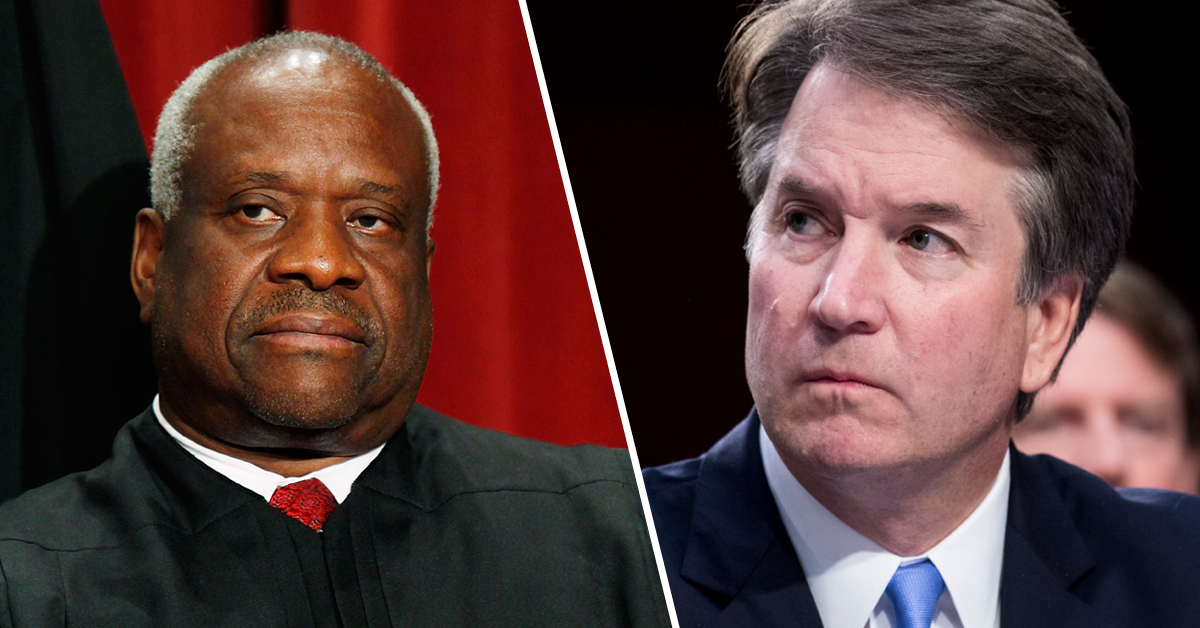

A judge lauded by conservatives gets picked by the president to become the next Supreme Court justice. As he travels the path to Senate confirmation, he unexpectedly confronts graphic allegations of sexual misconduct put forth by a respected female academic. The process is thrown into an uproar—as is the nation.

Brett Kavanaugh and Christine Blasey Ford in 2018? Or Clarence Thomas and Anita Hill in 1991?

On Monday, once again, a woman will go before members of the U.S. Senate to accuse a SCOTUS nominee of wrongdoing.

And it’s hard to ignore that the cases have similarities even though they are playing out nearly 30 years apart.

First a refresher: Republican President George H.W. Bush made Thomas a SCOTUS nominee in July 1991 after Justice Thurgood Marshall announced his retirement. Similarly, Republican President Donald Trump this July nominated Kavanaugh to replace retiring Justice Anthony Kennedy. Anita Hill stepped forward to testify and accuse Thomas of a pattern of harassment when they worked together that included graphic porn references and other inappropriate behavior. At the time, Hill was a law professor; the head of the all-white-male Judiciary committee was a Democratic Delaware senator named Joe Biden.

Now, Kavanaugh is in the hot seat. Christina Blasey Ford, a professor of psychology, had initially asked her identity to be kept confidential when she wrote to Senator Dianne Feinstein (D-Calif.) alleging that Kavanaugh drunkenly assaulted her at at party when they were both in high school. Ford says she’s willing to testify to what happened before Senate Judiciary committee, which is now controlled by Republicans (but is more diverse in terms of gender and race, including four women members).

Republican Sen. John Kennedy, a member of the Judiciary Committee, says both the accuser and accused will have their chance to be heard next week, according to multiple news reports Monday evening.

Kavanaugh denied Ford’s claims in a statement issued through the White House earlier Monday: “I have never done anything like what the accuser describes—to her or to anyone,” the judge said, adding that he’d be glad to talk to the committee “to refute this false allegation, from 36 years ago, and defend my integrity.” Decades earlier, Thomas had emphatically denied engaging in the crude behavior Hill described.

Of course there are serious differences in the cases. Ford’s story recounts attempted rape, not harassment. She’s also coming forward in the #MeToo era, when there is an active conversation about believing women. (Listen to Hill’s questioning by the all-male panel, and you’ll instantly see that wasn’t top of anyone’s mind.)

Duke Professor Emerita Karla Holloway suspects that this time will be different with a Judiciary Committee whose female members include the ranking Democrat, Dianne Feinstein of California, as well as Sens. Mazie Hirono of Hawaii, Kamala Harris of California, and Amy Klobuchar of Minnesota.

“The powerfully present women on the judiciary will temper the aggressive hyper-masculinity we saw in play during the Thomas/Hill moment,” Holloway says: “[They] are clearly positioned and comfortable with challenging and naming that kind of aggression, and I think the men on the committee are aware enough of that potential to worry over how they publicly exercise their privilege. In this case, the political divide will be more telling than gender.”

FiveThirtyEight, in a look back at polling surrounding the Thomas confirmation, notes that his nomination was popular with the public. Not so with Kavanaugh: Recent surveys show Americans totally split on whether he should be confirmed.

In many ways, Hill arguably helped spark the change we are seeing today. Around the time of her testimony and after, polls found many more Americans considered workplace harassment a “very serious” issue. But Hill certainly paid a price for going public. Critics didn’t believe her; some were angry at her for upending the confirmation process for an African-American judge. Biden himself told Teen Vogue last year that he owed Hill an apology for what happened in the Thomas hearings, at which witnesses who backed her up weren’t allowed to testify.

By comparison, Ford, has gotten much more support—fairly understandable given the #MeToo movement, a fast-approaching midterm election focused heavily on women, and a social media-rich environment that didn’t exist when Hill took the stand. (Social media also means more opportunities for people to troll Ford—notably including the president’s son, Donald Trump, Jr., who mocked Ford and Feinstein on Instagram.

Monday afternoon, President Trump defended Kavanaugh as having a spotless record—but, as Jeff Mason of Reuters reported, “signaled he would approve of a ‘little delay’ in the confirmation process” if necessary so as to go through a “complete process.”

Asked by reporters if Kavanaugh had volunteered to withdraw his name in light of the allegations, President Trump replied, “What a ridiculous question.” Decades earlier, then-President Bush had also come to the defense of his nominee, declaring his “total confidence” in Thomas.

Holloway thinks it’s not the allegation that will trouble Kavanaugh’s confirmation. Instead, she says, “His poorly advised ‘categorical denial’ will shift the question from past conduct to present truthfulness before the committee.”

Back when she confronted Thomas, Anita Hill was attacked for her character. She was denigrated as a “a bit nutty and a little bit slutty.” So far, the GOP has not resorted that precise kind of tactic to try to defend Kavanaugh. Instead, they are turning to political process. For example, the head of the Republican National Committee, Ronna Romney McDaniel, chose late Monday not to go after Kavanaugh’s accuser, but Sen. Feinstein, the top Democrat on Senate Judiciary, for doing “a disservice to everyone involved” with how she’s handled the allegations.

If Kavanaugh’s path to confirmation will mirror Thomas’ is still a looming question. Questioning got rough for Anita Hill when she spoke publicly about Justice Thomas, and it’s reasonable to expect some of the same if Christine Blasey Ford testifies before the Senate about Brett Kavanaugh.

When she does, America will have a front-row seat to see how much times have really changed. Or how much they haven’t.

Celeste Katz is senior political reporter for Glamour. Send news tips, questions, and comments to celeste_katz@condenast.com.


Source link