
Categories
Health

What Alexandria Ocasio-Cortez's Hoop Earrings Mean to Latina Women Like Me


Like many Latina women, I got my ears pierced when I was a baby—my mother took me to the pediatrician to have it done less than a month after I was born. (According to her, there were many other new moms and infants in line at the doctor’s office to do the same.) She says I cried through the night afterward, but she kept the earrings in because, as Puerto Ricans say, Antes muerta que sencilla. Better dead than plain.

I’ve worn earrings ever since—mostly hoops, the cheapest pair my mom could find at the mall still made from real gold. And I had to be careful with them: One time, after I lost mine, my mom tightened a butterfly back so hard on my new earrings that we needed tweezers to take them off. But I loved these hoops. They were a rite of passage, one that Latina mothers offered their daughters as a symbol of their womanhood. I was raised to always be accessorized, no matter the occasion.

To me, my hoops were an heirloom, until I learned I’d have to set them aside to be taken seriously in certain circles. When I decided to take my ballet dancing seriously, I ditched the hoops for a pair of stud earrings (or dormilonas, as we call them back home)—the former represented a heritage of salsa and more rowdy dancing, which had no place in professional ballet. I stopped dancing when I was 17, but I kept the feeling that, if I wanted to be perceived as polished, my accessories needed to be more delicate.

PHOTO: Shutterstock

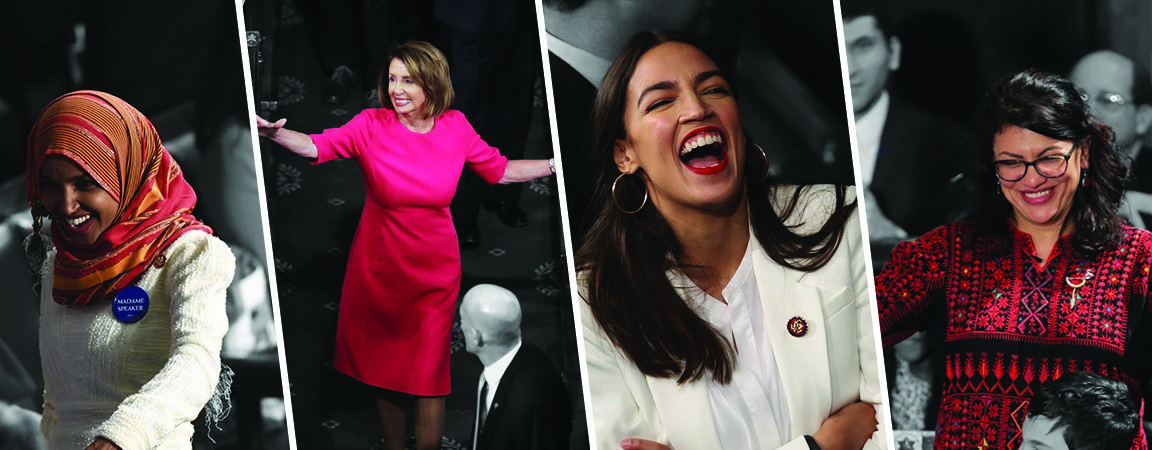
Rep. Ocasio-Cortez on the House floor on January 3.

My mother embraced hoop earrings for all occasions. But there are Latinx folks that are a little bit more careful, even conservative, about hoops because of the stereotypes people assign to what we wear. “My parents wouldn’t ever let me wear them because they felt it would put me into a box, being that I’m Latina and my family is from the Bronx,” says writer Thatiana Díaz, 26. “I know that my mom had a fear of being put into a box and not being taken seriously as an immigrant.”

Briana Mendez, 25, who now works in brand partnerships, had that happen to her growing up in the suburbs in Florida. “I’ll never forget getting made fun of in middle school for wearing hoop earrings that were gifted to me—I was called names and felt extremely belittled,” she says. “After that day, I stopped wearing my hoops and opted for pearl studs to fit in with the more preppy girls from my neighborhood.”

I rediscovered hoops when I moved to New York. I wanted to keep Puerto Rico close to me, so I decided to embrace those cultural touchstones: the nameplate necklaces, red lipstick, Puerto Rican flag paraphernalia, and yes, hoop earrings. I kept coming back to the pair my mother handed to me as a child because they reminded me of her unapologetic femininity. They made me feel more like a woman—a Latina woman.

But I still felt like there were certain places I couldn’t wear them, or couldn’t be accepted wearing them. So when Representative Alexandria Ocasio-Cortez, the Bronx-born Puerto Rican Democrat from New York, was sworn into Congress wearing a white pantsuit, a red lip, and big gold hoops, it wasn’t just a good look—it was a radical act.

PHOTO: Getty Images

Rep. Ocasio-Cortez taking her oath.

In true AOC fashion, the outfit was a collection of references, honoring the women who paved the path for her to take her oath on Capitol Hill. “Lip and hoops were inspired by Sonia Sotomayor, who was advised to wear neutral-colored nail polish to her confirmation hearings to avoid scrutiny. She kept her red,” she tweeted. “Next time someone tells Bronx girls to take off their hoops, they can just say they’re dressing like a Congresswoman.”

I saw myself in her that day: Throughout my professional career, I’ve stepped into spaces of privilege where I felt I wasn’t meant to belong—but instead of pushing aside my heritage to fit in, I insisted on wearing it boldly. Like Ocasio-Cortez, I feel it’s good to remind people (and all of Congress) when there’s a Latina in the House. I wasn’t the only person who, on that swearing-in day in January, felt she had more in common with a congresswoman than I’d felt in a lifetime. “To see a Latina woman like myself—making history and headlines, and being celebrated—own her whole look, her whole identity, gave me joy,” says Victoria Leandra, 22, a producer and writer.

For Latinas in positions of power, something as simple as wearing hoop earrings can feel like a small rebellion against the status quo. Among the corporate-gray suits and nude manicures, they announce our presence, loud and proud.

PHOTO: Getty Images

Rep. Ocasio-Cortez on the House floor.

And people are cheering for her to continue wearing her signature earrings. “Seeing AOC proudly wear hoops in Congress made me realize that…I should embrace what I love to accessorize myself with and never feel ashamed of it,” says Mendez. “Hoops should be destigmatized as unprofessional.”

Ocasio-Cortez is a reminder to celebrate who we are and what we can achieve, that Latina women do have a place in the boardroom, the court bench, and even Congress. She proved to me and other Latina women that you shouldn’t have to sacrifice identity for the sake of professional success.

Says Díaz, “I plan to wear my hoops for interviews, meetings, and any professional setting to make the statement: I’m a Latina, I’m from New York City, and I’m dressing like a congresswoman.”

Frances Solá-Santiago is a writer and video producer from Puerto Rico based in New York. Follow her on Twitter at @frances_sola.



Source link

Categories
Health

From Alexandria Ocasio-Cortez to Ilhan Omar, The Secret Meanings Behind the 2019 Congresswomen's Fashion Choices


The swearing-in ceremony of the 116th U.S. Congress was an emotional one, as an historic number of women and a slew of “firsts” joined the House of Representatives. And even before members of the new class took their oaths, several shared their excitement about this moment on social media—clips and photos from the Washington, D.C. airport, snaps of the name plates outside of their offices, images of their families, who’d tagged along for the ride… and, in at least one case, an #OOTD.

Rep. Rashida Tlaib of Michigan, the first Palestinian-American woman and one of the two first Muslim women to serve in Congress, announced she’d be borrowing a traditional thobe from her mother to be sworn in. Rep. Ilhan Omar of Minnesota, who joins her as the other first Muslim woman and is also the first Somali-American person elected to Congress, became the first to wear a hijab and declared she’d challenge a 181-year ban on headwear on the House floor when she arrived in D.C. And given that Rep. Alexandria Ocasio-Cortez of New York was fielding criticism from conservatives about her wardrobe weeks before her official start date, many anticipated what she’s wear to take her oath.

Fashion choices can speak volumes when a woman is in the public eye—and especially when she’s in public service. It can communicate power (see: Speaker Nancy Pelosi’s viral Max Mara coat), identity (like how members of the Congressional Black Caucus wore kente cloths to President Donald Trump’s 2018 State of the Union address, following his disparaging comments about African nations) and even an agenda (when she was First Lady, Michelle Obama had a whole strategy for championing American designers and for tailoring her fashion choices to wherever she was going.) The incoming congresswomen understood that. And their swearing-in outfits reflected it.

Ahead, see how six U.S. Representatives used fashion on their first day on Capitol Hill to send a message to their constituents—and Americans at large—about who they are and what they stand for.


Source link

Categories
Health

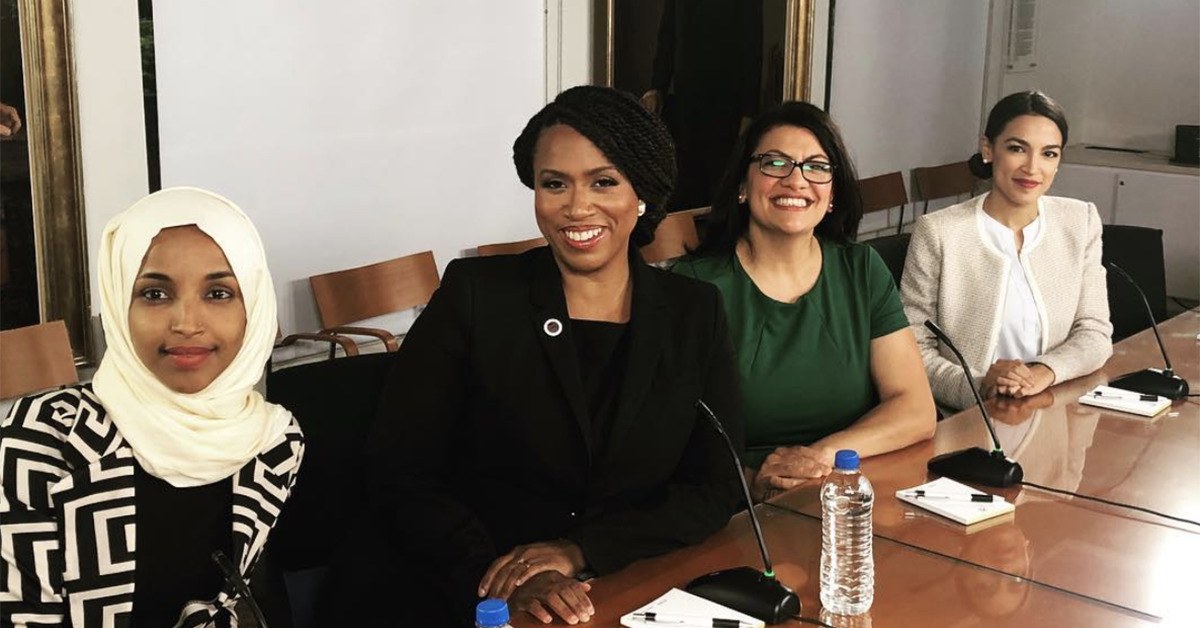
Photo of Newly-Elected Congresswomen Alexandria Ocasio-Cortez, Rashida Tlaib, Ilhan Omar, and Ayanna Pressley


Last week’s midterm elections resulted in so many firsts for women in this country. When Congress is sworn in for its 116th term, there will be a new set of faces who are younger, browner, and more female than ever before. And no, the excitement hasn’t worn off yet.

So you’ll have to excuse the fact that I literally squealed with joy upon seeing New York Representative-elect Alexandria Ocasio-Cortez‘s latest Instagram post from Washington, D.C. featuring none other than her new colleagues Ayanna Pressley, Rashida Tlaib, and Ilhan Omar. This one photo features the youngest person elected to Congress, the first black woman to represent Massachusetts, the first Palestinian-American woman elected to the House, and the first Somali-American Muslim and first woman of color to represent Minnesota.

Talk about a powerful ‘Gram—which Ocasio-Cortez aptly captioned, “Squad”.

Tlaib also posted a photo of this power posse, writing, “#DreamTeam in Congress. Going to hit the ground running fighting for #JusticeforAll. Congresswomen elect Ayanna Pressley, Alexandria Ocasio-Cortez and Ilhan Omar. @ilhanmn @ayannapressley @ocasio2018”

I love that these inspiring women are already hatching plans to change the world together and further disproving the old-fashioned notion that somehow groups of women can’t work with each other without in-fighting and jealousy. If these elections proved anything, it’s that the power of women in America has never been stronger.

And based on the comments, I’m not alone. “The #DreamTeam makes me proud to be an American and gives me hope for a better future,” one IG user wrote under the photo. “Well done ladies!”

“Felicitaciones ❤️This brings tears of joy to me today,” said another. “Thank you all so very much for stepping up. Count on me to support you.”

The new Congress will be sworn in in January, but thankfully, our new Congresswomen aren’t waiting until then to hit the ground running. We can’t wait to see what’s next, ladies.

MORE: This Is How Women Voted in the Midterms—and What It Means for Election 2020


Source link

Categories
Health

Democratic Voters Wanted Something Different. They Got Alexandria Ocasio-Cortez.


When Alexandria Ocasio-Cortez set out to topple one of the most powerful Democrats in Congress, only one thing was certain: The odds were not in her favor.

On Tuesday night, she beat those odds: The 28-year-old Latina crushed incumbent Rep. Joe Crowley in her first run for office—and his first primary challenge since 2004.

Victory in hand, Ocasio-Cortez thanked her supporters and made a prediction. “This is the start of a movement,” she tweeted.

It’s a simple statement that gives rise to a lot of questions.

It’s a big deal that Ocasio-Cortez fought her way to a win in New York’s 14th Congressional District. After all, Crowley is no back bencher. He heads the House Democratic Caucus. There’s been talk of him becoming speaker. He had money. Still, voters looked at that and resoundingly dumped Crowley in favor of a sweeping progressive vision carried by a community activist (and self-identified democratic socialist) half his age.

The Ocasio-Cortez campaign might have been a longshot, but it wasn’t a fluke: In a midterm cycle that’s generated excitement around contests that could elevate female candidates, including women of color, Ocasio-Cortez presented herself as someone not only for, but of, the people of an ethnically diverse district.

She appealed to working class voters by framing her campaign as a chance to break free of centrist compromises and snugly embrace a left-leaning platform: A universal jobs guarantee. Free public college. The end of ICE, for-profit prisons, and corporate money in politics. Her agenda bore more than a passing resemblance to the kind of planks offered by the presidential hopeful she backed in 2016, Bernie Sanders. On the socialism issue, Vogue quoted Ocasio-Cortez as saying, “When we talk about the word socialism, I think what it really means is just democratic participation in our economic dignity, and our economic, social, and racial dignity.” She is a member of Democratic Socialists of America, which describes itself online as an activism group, not a political party, and specifies, “As we are unlikely to see an immediate end to capitalism tomorrow, DSA fights for reforms today that will weaken the power of corporations and increase the power of working people.”

And up against a better-funded candidate, Ocasio-Cortez weaponized her disadvantage in campaign cash by telling voters, “We’ve got people. They’ve got money.” The strategy—and a lot of legwork—carried the day, but it also matters that Crowley represented a district that’s seen big demographic changes since he took office in 1998 and that he’d opened himself up to criticism by sending his kids to school in Virginia, not New York.

While the race involved only one district, two candidates and fewer than 30,000 voters, Christina Greer, an associate professor of political science at Fordham University, told Glamour in a phone interview that the Ocasio-Cortez win suggests Democrats haven’t resolved internal divisions exposed in 2016, when Sanders electrified young progressives by taking on the more moderate Hillary Clinton.

“I do think as far as the party is concerned, [this] particular win signals to establishment Democrats that clearly voters want change,” she said, “and it doesn’t matter how many years or decades you’ve been in office: If there’s a message that resonates with voters, we will vote you out.”

Among insurgents who think they have a winning message, “We’re seeing they’re not waiting for these folks to give up their seats,” Greer said. “They’re coming to take it.”

Tracy Sefl, a Democratic strategist who has worked with Hillary Clinton, said it’s better to interpret contests like NY-14 as showing there are more routes to office than there used to be instead holding up any one particular case as the prototype for a win.

“If there’s anything that it all means, it’s that the usual rules, the tried-and-true playbook, doesn’t apply [anymore],” she said. “That has been true since the day Trump won the election.”

Strategist and commentator Symone Sanders, who worked on the Bernie Sanders campaign, contended that what happened Tuesday night in New York and elsewhere shows the party doesn’t need to pressure candidates to soft-pedal why they’re running: “You can be a progressive person, and stand in your truth and in your values, talk about those things on the campaign trail, and if you’ve got a good ground game, you can win,” she said.

As to the idea that Crowley tanked because he “didn’t look like the district anymore, that’s just not what it is, because he has done really great work, and he should, in fact, be commended,” Sanders said. “But the fact of the matter is, there were new voters who were primed and ready for someone to speak to them, and the other candidate spoke to them. So she won.”

Some analysts saw Tuesday’s outcome as a rejection not just of Crowley, but of House Democratic Leader Nancy Pelosi and the direction of the party itself. There was some evidence to support the theory: Pelosi rushed to burnish Crowley’s legacy—and minimize his defeat—in a post-primary statement that specifically celebrated his “relentless determination to defend the inclusive America symbolized by the Statue of Liberty.”

The Democratic National Committee’s official response saluted Crowley too, but also made a point of saying Ocasio-Cortez “represents an important voice in our party and the next generation of Democratic leaders. She is an inspiration, and we know she will be a tireless fighter for working families.”

President Donald Trump made a point of mocking the Democrats as being in a general state of “turmoil.” While the president also took a personal jab at Crowley, it’s not hard to see the political utility of suggesting the opposition can’t get it together.

The Republican National Committee’s reaction to the vote, meanwhile, offered a preview of a double-edged attack designed to slime establishment Democrats as too extreme for mainstream America: “If there was any doubt that their party has moved drastically to the left, Democrats just elected a self-avowed socialist over the current Chair of the House Democratic Caucus.”

Asked by Glamour whether the optics of Ocasio-Cortez’s great night (and Crowley’s bad one) would reverberate through November, a Democratic Party aide insisted voters in NY-14 came out to make a choice about their own district, “not to send a message about a member of Congress from California, Washington, or anywhere else.”

“As much as beltway insiders may want to try to paint this as a story about Washington, D.C., it’s not — it’s a story about the Bronx and Queens.”

Related Stories:

Everything You Need to Know About Alexandria Ocasio-Cortez, the Millennial Who Beat Top Democrat Joe Crowley

Women in These 8 States Made Huge Strides in Tuesday’s Primary Elections


Source link

Categories
Health

Everything You Need To Know About Alexandria Ocasio-Cortez, The Millennial Who Just Beat Top Democrat Joe Crowley


In a stunning political victory on Tuesday night, 28-year-old first-time candidate Alexandria Ocasio-Cortez defeated 10-term Democrat Joe Crowley in their party’s congressional primary in New York.

Ocasio-Cortez seized 57.5 percent of the votes in New York’s 14th District, which includes the Bronx and Queens. The upset came as a shock to those who hadn’t predicted Ocasio-Cortez could beat Crowley, the fourth-ranking House Democrat positioned to possibly assume leadership as Speaker of the House.

“We beat a machine with a movement, and that is what we have done today,” Ocasio-Cortez said to her supporters on Tuesday night. “Working-class Americans want a clear champion and there is nothing radical about moral clarity in 2018.”

Now that Ocasio-Cortez has become a household name, here’s everything you need to know about the woman being hailed the progressive world’s newest star.

She’s A Proud, Working-Class Latina From the Bronx

Ocasio-Cortez has spoken at length about her working-class roots: Her Puerto Rican mother cleaned houses and her father, a South Bronx native, ran a struggling small business. Up until last year, Ocasio-Cortez helped her family make ends meet by working in restaurants and bartending. “I was shoulder to shoulder with undocumented people in the back of house,” she told the culture website Remezcla. She attended Boston University and worked for Sen. Ted Kennedy of Massachusetts.

A photo of her working behind the bar just this November has been retweeted more than 25,000 times.

She Ran On A Progressive, Socialist Platform

The community organizer and educator, who had volunteered on Bernie Sanders’ campaign in 2016, was endorsed by the Democratic Socialists of America. Her proposals include abolishing Immigration and Customs Enforcement (ICE), reforming the criminal justice system, guaranteeing federal jobs, instituting Medicare for all, and establishing tuition-free college. Just before the primary race, Ocasio-Cortez had spent time protesting the separation of immigrant families at the Tornillo-Guadalupe Port of Entry in Texas.

She Refused Corporate Donations

Ocasio-Cortez ran a grassroots campaign without corporate donors. Jezebel points out that according to the Center for Responsive Politics, Ocasio-Cortez raised more than $300,000 entirely on contributions of $200 or less, with an average campaign contribution of $18.

Crowley, meanwhile, had raised millions of dollars, which cast some doubts on Ocasio-Cortez as a threat. In fact, Crowley skipped two debates with Ocasio-Cortez, which he was called out on by the New York Times editorial board. Ocasio-Cortez’s bid was the first time he had been challenged in a primary race for 14 years.

Her May Campaign Ad Went Viral

A campaign video that she released in May exploded on the Internet, garnering 300,000 views on its first day posted. “Women like me aren’t supposed to run for office. I wasn’t born to a wealthy or powerful family,” she says in the video, adding later, “I’ve worked with expectant mothers, I’ve waited tables, and led classrooms, and going into politics wasn’t in the plan. But after 20 years of the same representation, we have to ask: Who has New York been changing for?”

She Could Be The Youngest Woman Elected To Congress—Ever

She’ll run against Republican candidate Anthony Pappas in the November mid-terms. If she wins, she could be the youngest ever woman elected to Congress. Alexandria Ocasio-Cortez is among several women making strides toward political history in recent primary elections.

Related Stories:

Women in These 8 States Made Huge Strides in Tuesday’s Primary Elections

How Melania Trump’s Jacket Inadvertently Raised Money for Democrats


Source link