Categories
Health

How to Take Control in Bed: 7 Ways to Take Charge


Feeling in charge in the bedroom looks different for everyone—it’s not always the stereotypical fantasy of black leather and whips (though totally fine if that’s your thing). Figuring out how to take control in the bedroom in a way that makes you feel sexy as hell (and just like you’re reinacting some feminist porn scene) takes a little introspection.

We’re constantly bombarded with sex rules that frankly don’t exist—but imagine the mind-blowing time you could have without them. Taking control in bed means authentic expression in whatever form it may take. So, ask yourself: What empowers you? Here’s how to find it:

1. Drop the Labels

We’re all afraid of being “bad in bed”—which is often why one partner takes a back seat and lets the other drive. But the entire idea of “being a great lover, or ‘this good’ vs ‘this is bad’,” is harmful, says relationship and sexuality educator Logan Levkoff. What you want from sex is what you want from sex; stripping it of arbitrary judgements of what’s good is the first step to taking control over your sexual encounters.

2. Talk About Sex, Baby

It comes as no shock that many people—particularly women—struggle to ask for what they want in bed. Power dynamics are seemingly always present regardless of sex and gender. Sari Cooper, founder and director of the Center for Love and Sex, recommends navigating these ropes by holding a Q&A session with your partner on neutral ground. Maybe this sounds obvious: Tell my partner what I want and ask what they want—what a new idea! I know you’ve already thought of this, and I know it’s hard. That’s why Cooper recommends holding the Q&A in a non-sexual location—let’s say the canned foods aisle of the grocery store.

Begin by thinking of the questions you want to be asked. “The more detailed the questions the better, as to model a type of discussion that is flirty, but eager to learn,” says Cooper. Strictly enforce that the person answering the questions has the floor. After you’ve asked your partner about all the things they like, love, or want to try, you can answer the same questions. “This creates a neutral way to exchange information without any power struggle, intimidation and less fear while offering more vulnerability for both partners,” Cooper says.

One thing you don’t want to do is overwhelm your partner with an interrogation about your collective desires in the middle of the grocery store. So let it be casual and stick to one topic at a time: start with fantasies, next week try discussing orgasm, save kink for next month.

3. Embrace the Embarrassment

So you’re in the canned food aisle and you’ve just told your girlfriend that the thing she does with her tongue would be so much better if she just moved it a bit to the left—and you would please like the floor to open up and swallow you whole now, thanks. “No one is super cool and smooth when it comes to talking about these things,” says Levkoff.

Why are you expecting yourself to be so naturally good at talking about sex? Who is? Not to give you bad flashbacks to after-school piano lessons, but: Practice makes perfect. Do it once. Feel weird. Do it again. Feel even weirder. Still not getting what you want? Go ahead and blush to the point you’re sure you’re burning holes through your clothes. It’s okay. “Own the awkward right from the start,” says Levkoff. The embarrassment of talking about sex isn’t within your control—but how you handle it is.

4. Write it Down

That’s fine! Try making a list of what you do and don’t like in bed, says Jenni Skyler, Ph.D., a certified sex therapist at the Intimacy Institute in Colorado. “Categorize sexual acts into red, yellow, and green,” she says. “Red if you know you don’t want those parts of you touched, yellow if you’re tentative but willing to explore, and green for those areas that are strong yeses.” Maybe you read the list out loud to your partner—or maybe you don’t. Maybe you slip it under their pillow or maybe you text it to him or her when you’re feeling frisky after a night out. It’s up to you.

5. Make a Game Plan

Noah and Allie didn’t block off an afternoon on their iCals to scream at each other on a dock in a rainstorm before ripping each other’s soaking wet clothes off—but maybe they should’ve. Spontaneity is often overrated.


Source link

Categories
Health

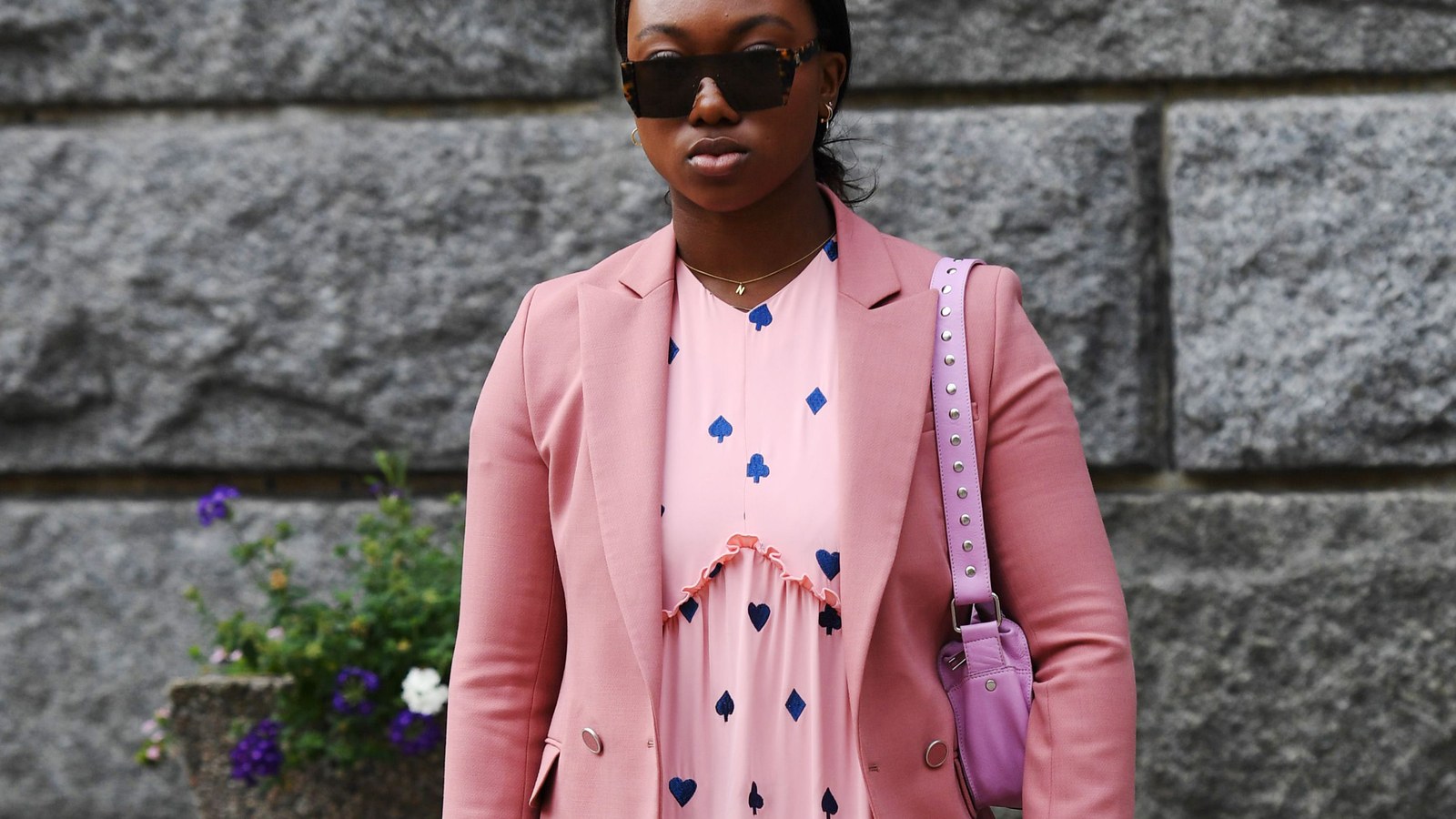
5 Ways to Wear a Blazer, From Our Favorite Fashion Bloggers


Blazers aren’t just meant for the office anymore: Celebrities, bloggers, and certified Fashion People are fans of them for pretty much any occasion, from brunch to date night. And all the great prints and silhouettes out there right now—leopard-print midi skirts, anyone?—have pretty much confirmed what we’ve always known: These jackets are meant for more than just the daily grind.

We turned to the styling pros—a.k.a. our favorite fashion bloggers—for tips on how they love wearing their own blazers in fresh ways. The results? We guarantee they’ll make you see this wardrobe staple in an entirely new light—and transform your closet. Read on for five tips on how to wear blazers, from the art of mismatching prints to pairing them with the unexpected.


Source link

Categories
Health

The sneaky ways Apple it trying to make tech friendlier for women


Naomi Hirabayashi who, with Marah Lidey, cofounded Shine, an app designed to make self-care a daily habit, doesn’t hesitate to describe the value of Entrepreneur Camp: “It’s validity,” she says. “Apple is the world’s most iconic brand, and when they elevate someone or something, it holds so much weight because they are on the pulse of innovation.” The company’s support helped when she and Lidey were marketing the app and won a “best app of the year” designation; Apple also helped them sweat the design details, especially about accessibility, adjusting for things like people who read right to left instead of left to right, or changing icons or notifications so they are visible for people who are color-blind. The upgrades—and their mission to never be “preachy, presumptuous, or pricey” and to assert that self-care is “more than taking a bubble bath at the end of a long day”—have helped them build an audience that is more representative than most, with black women making up some 20 percent of their community, Hirabayashi says. Now Shine is the largest self-care membership in the world, she says, reaching 4 million people in 189 countries every day.

Lactapp founder Maria Berreuzo Martinez, from Spain, was also looking for community when she created her app to support breastfeeding moms. Just a month after giving birth, she was in a car accident that left her hospitalized for two months. She couldn’t see her baby but wanted to continue breastfeeding, so she pumped every day until she was home and could resume nursing. It was possible, she says, because “I had information and support—I had mothers around me that really supported me. Every woman should have that.”

So Martinez set out to create a virtual version of that, spending more than a year to develop an app that would answer questions customized to each mom and the age of her infant. Now Lactapp answers 35,000 questions a week, through live chats and with the help of AI. They’ve also identified key signs a mom may be experiencing things like postpartum depression and, in the next iteration of the app, hope to incorporate information and referrals to doctors for these often undiagnosed conditions. The app, Martinez says, already feels completely new after working with Apple. “We worked for three years on this, and after one session we were like, Oh! We can do this better,” she says. Martinez is mission-driven, but she’s not shy about this being a business (smart since app developers earned $30 billion in the last year alone). “Right now the system makes money when breastfeeding fails,” she says. “What if breastfeeding succeeds? Nobody thinks that way. We have to open a lot of minds.”

Progress on women’s issues, says Kim Azzarelli, cofounder of Seneca Connect, has been “too damn slow. Technology is what’s going to bring us that leap forward.”

photo courtesy of Apple

Kim Azzarelli, cofounder of Seneca Women (alongside Melanne Verveer, the ambassador-at-large for global women’s issues in the Obama administration), admits she wasn’t a tech native when she first had the idea of launching an app, but that didn’t deter her because she felt such an urgency for change. “Those of us who have been working in women’s issues a long time know we have a lot of the solutions, but unfortunately, we’re not able to scale the ideas quickly enough,” she says. “If you want to be part of designing the future, we need women at the table. And to do that we need women in technology.” Azzarelli and Verveer already had a book, Fast Forward, and a newsletter, but that wasn’t enough. An app, Azzarelli explains, offers “the ability to be interactive, to poll people, and to reach the community, but also the ability to be more direct and send daily, more snackable information. In a newsletter we can give people thoughts, but here we can give people something to do, right away.” Apple advised on their Seneca Connect app, which provides tools and resources for female entrepreneurs around the world, and includes the ability to shop from women-owned businesses. The company helped with engineering expertise, and Azzarelli brought her decades of knowledge about women’s issues to the table. Azzarelli has other ideas about AR to help bring these ideas and information to life, but she’s mum for now. “We are coming up to the 100th anniversary of [women getting] the vote…and [progress] is just too slow, too damn slow,” she says.

For her, it would be irresponsible not to use technology to help further the Seneca goals. “Susan B. Anthony traveled all over this country by horse and buggy, not Uber and Lyft,” she says. “They really made sacrifices for 50 years to get us the vote. My fear is that we’re at this moment where [activism is] just in vogue. If we don’t give people actionable things to do and leverage technology, the action we’re seeing now could become another fad, and people will say, ‘Oh, we did that.’ No we didn’t—we’re still stuck. We don’t want the appearance of progress…. Technology is what’s going to bring us that leap forward.” Like the other developers, she found a new community at Entrepreneur Camp, or E Camp, as some call it. “I’ve been in a lot of rooms full of women,” she says. “At E camp, I was with another 15 women-led businesses, from all over the world. You just feel like you’re in something together. You feel like you’re building the future.”


Source link

Categories
Health

How to Get Rid of Dark Circles Under Eyes – The 4 Best Ways


So lately I’ve been considering something quick and cosmetic. Something at the derm’s office. Something like Botox or maybe a filler. I’ve never really been for or against them; I thought I’d maybe try them someday. Then my husband mentioned casually one day that he had tried Brotox (a version of the wrinkle relaxer marketed to men). I looked closer at his face. His brow furrow crease was gone, and I was jealous.

Which is why I find myself one day in Grand Central Terminal, catching a train to Norwalk, Connecticut, to see my sister-in-law Deanne Mraz Robinson, M.D., FAAD, of the Connecticut Dermatology Group. (She was also chief resident of dermatology at Yale.) If I’m going for this, I want to be in her hands.

“To help you look more awake, there are a couple of things we can do,” Deanne says as I recline in a comfy chair in her office. “Soften these lines that form on the side of and between your eyes when you smile with a bit of Botox”—which relaxes muscles and smooths out lines—“here, here, and here, and in between the eyebrows.” (Yes, please!) “And blend the lines under them, the tear troughs, with filler.” For me, she picks Belotero Balance, a dermal filler that unfolds wrinkles and plumps the skin.

I’m nervous and excited. I have no fear of needles, but I’m worried about looking, well, weird, in that waxy, plastic, Hollywood-red-carpet way. The injections take 10 minutes, and it’ll be two weeks before the filler all settles in. At first my face does feel odd. When I laugh, my face feels a little stuck, which makes me laugh even harder. But in exactly 14 days, the funny sensations end. The crease between my brows barely remains—same with the wrinkles around my eyes when I smile. People are noticing (“You look amaaazing,” says one colleague), but more important, I feel better. I get why people spend all this money (sessions start at $450) and make it a regular thing. And I have no guilt—I am a feminist and I think modern feminism means you have the choice to age how you like. My joy is completely unapologetic. Who knows? Maybe by the time my first visit wears off, I might actually be getting some real sleep.

Method #4

Actual Sleep—Eight Whole Hours Of It!

Tester #4: Cristina Mueller

“Are you feeling OK? Do you have allergies?” This is Mary, the lovely woman who runs the shop where I take my dry cleaning. I swear, a kinder, more considerate person doesn’t exist in the world, so if she’s commenting on my bloodshot eyes and haggard face, you know the issue is real. The issue on the day in question isn’t allergies; it’s simply a lack of sleep. I’m a chronically tired mother of a three-year-old, and I average six to seven hours a night—sometimes dipping down to five, with an occasional 2:00 A.M. screaming interlude, followed by a half hour spent scrunched into a four-foot-long toddler bed, reassuring the worried party that, no, there is no wolf lurking in the corner. What I’m saying is: Those six hours do not qualify as beauty sleep.

So when the instructions for this assignment came my way—get significantly more sleep for a week or more—it took about 0.5 seconds to agree to it. My goal: a minimum of eight hours every night, and if I got less, I had to integrate a nap the next day, no excuses.

I got to work immediately.

Week one: I loved those damn naps. I realize that’s akin to saying I liked eating the ice cream or I enjoyed breathing the oxygen. I also realize that naps are easy for me because I work from home—not every woman can just, like, curl up under her desk mid afternoon. But seriously: Naps work. A one-hour nap was eerily similar to getting one of those big-night-out facials. I swear you could see the rest in my face for a few hours after. But by week two, when I’d started to pay off my sleep debt, I was dealing with the vexing consequence of naps: I’d been exhausted for so long that I’d forgotten what well-rested people do to go to sleep, and getting my brain to turn off at 10:00 P.M. felt like a Jedi mind trick I couldn’t master. Keeping the naps to an hour helped, as did nighttime aromatherapy. I’d dab H. Gillerman Organics Sleep Remedy essential oil blend on a tissue and take 10 deep breaths: The zoning-out effect was pretty much immediate.

And after a couple of weeks on my rigorous napping schedule, my skin was good: I was bright-eyed (really); my sporadic hormonal breakouts faded away; random little red bits and inflammation calmed down. Mary noticed (“You must be feeling better!”). But, to be honest, I felt kind of invincible—my eyes, my skin, my mood, the whole package. Because you want the ultimate, most effective tip of all time for how to look less tired? Ready for it? Here it is: Be less tired.


Source link

Categories
Health

6 Ways to Protect Color-Treated Hair When You Go Swimming


It’s safe to say we’re already getting excited for summer—so much so that we’ve already come up with 52 outfit ideas) and planned our next manicure. But, not to kill the vibe, there’s the downsides of all that heat, humidity, and sun to get ready for, too—and hair’s included in that. There’s the obvious offender: chlorine. It can suck moisture from your hair, leaving it dry, tangled, and brittle (plus, there’s that whole turn-blond-hair-green thing it does). But then there are the less-obvious issues we often tend to overlook that can also wreak havoc on color-treated hair—like UV rays from the sun that can break down hair color molecules (it’s especially a problem for red hair).

So, to make your upcoming pool day as chill as it ought to be, we called up some of our favorite colorists to get their best-kept secrets on how to protect color-treated hair. As Elle Woods would say: They’re, like, totally important. Read on for their advice, then get to the much more fun part—figuring out what you’re going to wear poolside.

1. Oil Up
No, not that brown bottle of SPF 4 you used to use before wising up to the dangers of frying in the sun. We’re talking everyone’s favorite multiuse product: coconut oil. “Try coating your hair in coconut oil or olive oil before jumping in the pool,” celebrity colorist Lorri Goddard told us. “It creates a slippery barrier between your strands and harmful chlorine.”

2. Go for a Presoak
“Head over to one of those rinse-off stations, and wet your hair with clean water before you get in the pool,” says Goddard. “This trick lets your hair absorb less chlorine or salt water if you’re dipping in the ocean. Then give it another rinse after you’re done swimming.” At the local pool or a friend’s house and don’t want to run all the way to the shower? No sweat—a bottle of purified water works just fine.

3. Use Sunscreen for Your Hair
Just as your skin needs protection from the sun, your hair does too. “Look for hair products that contain UVA and UVB filters to protect it from the chlorine and the sun,” says Schwarzkopf Professional BlondMe ambassador Kim Vo. We love Sun Bum 3 in 1 Leave In Treatment. It fends off harsh rays and chemical damage, all while helping to repair split ends and frizz. Also, the smell: It’s like the beach in a bottle.

4. Put Your Hair Up
The way you wear your hair to the pool or the beach can have a surprisingly big effect on maintaining it. “Try to keep your head and hair out of the water as much as possible,” says Vo. “A cute bun, topknot, or braid prevents your strands from soaking in the pool water while you float around and wade.” Need some inspo? We’ve got plenty.

5. Shampoo Right Away
You’re hot; you’re tired; you just want to be done for the day when pool/beach time comes to an end. We get it. But resist the urge to go straight from the water to whatever your plans are next. Colorists recommend taking the time to wash any chemicals or drying sea salt from your hair. “Different colors require specific shampoos and conditions for the right protection,” says colorist Lucille Javier from Sally Hershberger Downtown.

“For brunettes, Davines Alchemic Chocolate Shampoo and Mask helps restore the color and adds shine that chlorine can strip away. For blonds, you need a hydrating duo like Sally Hershberger Shampoo and Conditioner to help moisturize bleached hair. And for reds, a sulfate-free shampoo and conditioner like Shu Uemura Color Lustre Sulfate-Free Shampoo and Mask is key.”


Source link

Categories
Health

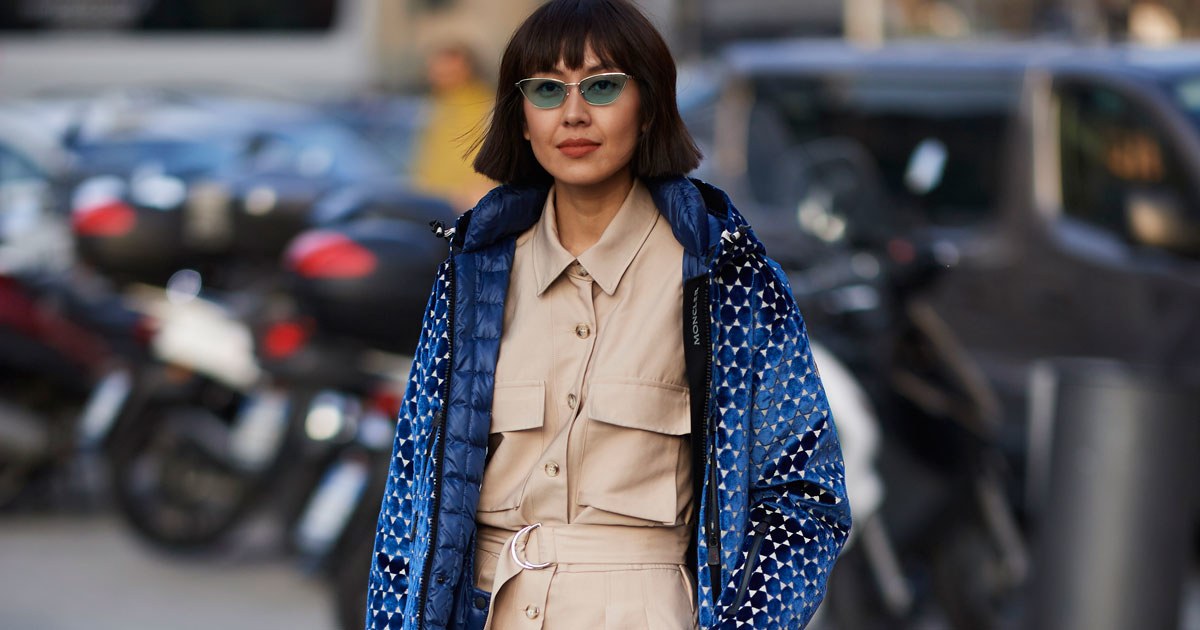
Outfit Ideas: Five Ways to Wear a Jumpsuit


From white sneakers to fleece jackets, practical pieces are ruling fashion right now. Officially making that best of list? Jumpsuits. They’ve been on the runways, in all their utilitarian glory, of Gucci, Valentino, and Tibi. Street-style regulars made the look their own. And now everyone in your social feeds is power-posing in a jumpsuit.

Ever since I first started noticing the rise of the jumpsuit (or coveralls if you prefer), I went back and forth on whether to add them to my cart. I got the obvious appeal: It’s a one-and-done outfit (and with pockets!). But at the same time, I couldn’t visualize how to make something so imposing—a long-sleeve, ankle-length monochromatic one-piece—feel exciting to wear. You can swap the sneakers for heels, yes. But after that, how many different outfits could you come up with?

So when the Top Gun–esque utility styles that were all over Fashion Week this past February, we wanted to see how versatile the jumpsuit could really be. Here, five ways to dress this closet workhorse up and down.


Source link