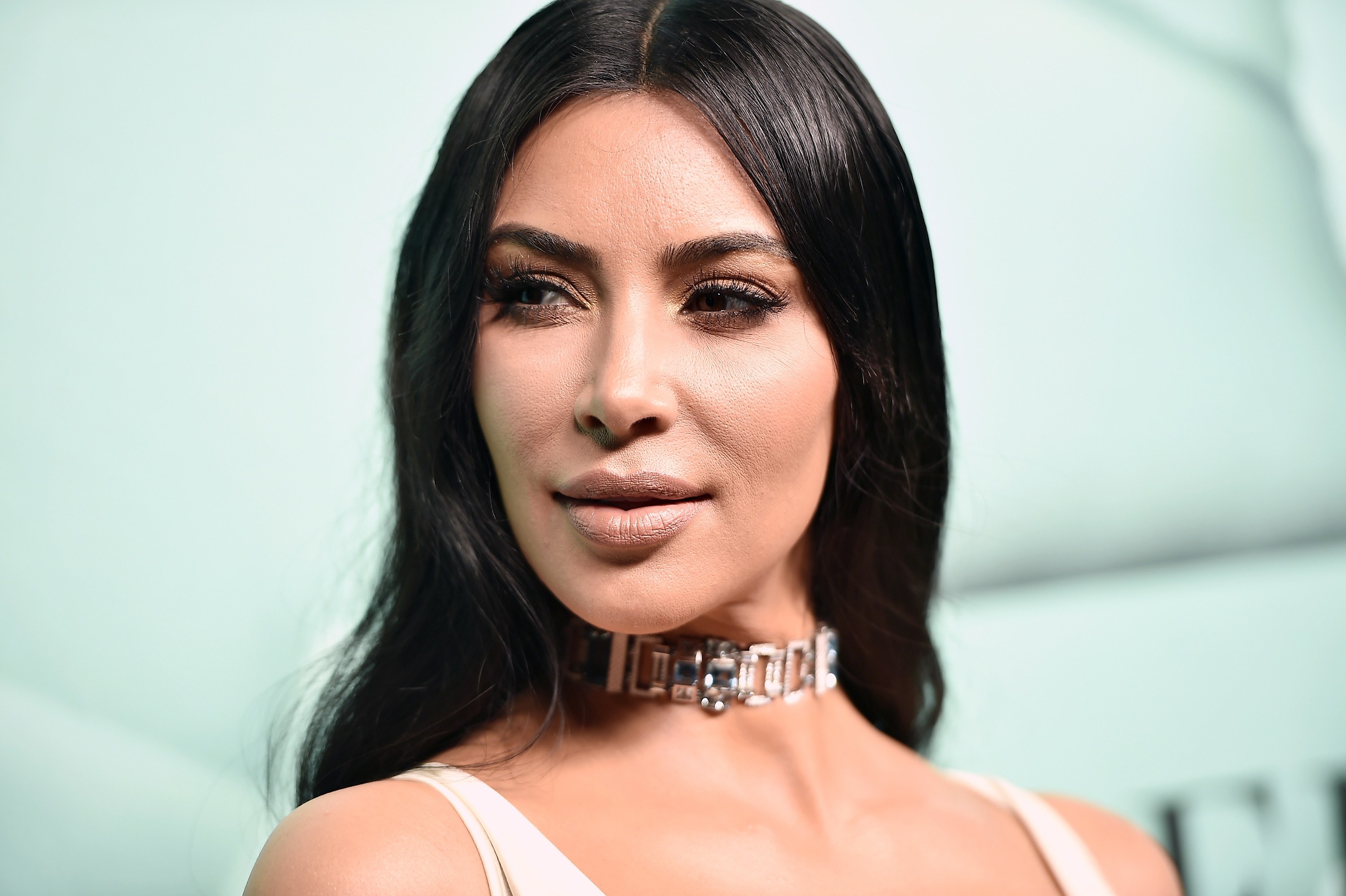
Kim Kardashian might present a heavily filtered life via her Instagram and other social media endeavors, but she got super-real when she described the effects that pregnancy had on her self-esteem—and sex life.
In a new interview with Richardson, an “erotica” magazine (in which she spoke with American Psycho author Bret Easton Ellis, no less), she opened up about how pregnancy altered her view of herself—and how she came back from it.
“I was somebody who gained 60 or 70 pounds in my pregnancies and felt so unlike myself and so unsexy,” she said.
“Literally, at the end, when you can’t even have sex, I thought, ‘I’m never going to have sex again in my life!’ I just felt so bad about myself in my soul,” she told the magazine.
Kardashian also said that motherhood has actually helped her feel “publicly sexy” now.
“I’m actually uncomfortable when I talk about sex,” she told the magazine. “But I’m vain like that. I can go on a set and be fully naked in front of 50 people doing a shoot, but if I’m one-on-one, intimate in bed, I’m, like, shy and insecure. I definitely have two different personalities like that. But I think motherhood has actually made me more confident about being publicly sexy.”
Apparently she also credits Kanye West with opening the doors to that meeting she had with Trump earlier this year, in which she asked Trump to pardon Alice Johnson, a 63-year-old formerly serving life in prison for a non-violent first-time offense.
“I am aware that Kanye speaking out in favor of Trump got me through the door — got him to pick up my call,” she said. “I’ve always had different opinions than Kanye. But when I went there, and when I saw what could be done, I realized that I could get more done if I just stayed focused on the issue I was passionate about instead of complaining.”
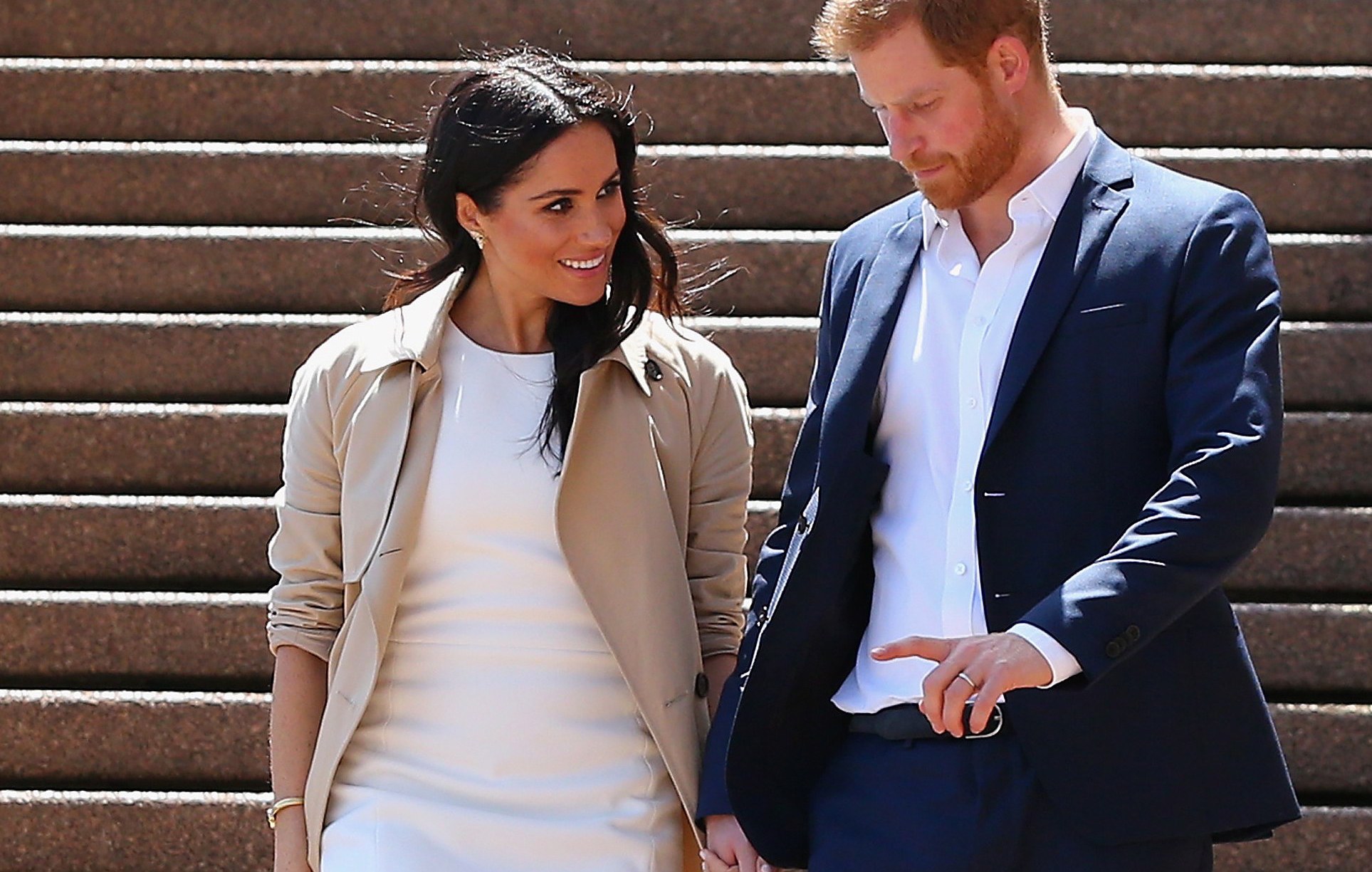
Prince Harry and Meghan Markle announced on Monday (October 15) that they’re expecting their first child, and the Internet’s been in a tizzy ever since. The timing of the announcement came right as Markle and Prince Harry arrived in Australia for their first royal tour.
“It’s great to be back in Australia, and especially even more so, this is my wife’s first trip here, so I’m very excited to show her this incredible country of yours,” Prince Harry said at an event in Sydney this week honoring both him and Markle, according to Entertainment Tonight. “We’re both absolutely delighted to be here and to see you serving beer and tea at an afternoon reception in true Aussie style.”
It wasn’t long before Prince Harry addressed the elephant in the room. “We also, genuinely, couldn’t think of a better place to announce, uh, the upcoming baby, be it a boy or girl, so thank you very much,” he said. And while Markle didn’t officially address the guests, the Daily Mail reports that she was overheard talking to Australian TV personality Eddie Woo, who told her about his own kids. “We’re ready! We’re excited to join the club,” Markle reportedly replied.
“Their Royal Highnesses The Duke and Duchess of Sussex are very pleased to announce that The Duchess of Sussex is expecting a baby in the Spring of 2019,” Kensington Palace posted to both Twitter and Instagram on Monday morning. “Their Royal Highnesses have appreciated all of the support they have received from people around the world since their wedding in May and are delighted to be able to share this happy news with the public.”
Markle is reportedly around 12 weeks pregnant, which means there’s still some time before she does become a member of that club.
Earlier this week, rumors began swirling that Dakota Johnson and Chris Martin were having a baby together. The evidence came from a party thrown at Martin’s house over the weekend, which included baby blue and pink balloons as decorations. One lucky paparazzo captured some of the balloons flying away, leading many to believe the couple was having some kind of sex reveal party.
But this isn’t the case. Reps for the actress said the shindig was just for her 29th birthday. And now Johnson herself is commenting on the rumors: “Well, the only thing I’m pregnant with is a lot of really good ideas. But not any babies,” she said when asked about it on Ellen on Thursday. “It was my birthday and there were balloons that happened to be pink and blue, and so then I was pregnant. I didn’t know that the balloons were gonna be released. They were just in an arch, but I guess that accidentally happened, one of the ends just got let go. A lot of people congratulated me. A lot of attention! More than just having it be my birthday.”
[embedded content]
There was a silly downside to Johnson’s birthday-becoming-headline news, though: She now has to deal with facing the wrath of everyone she didn’t invite. “Now I had to be like, It was just my birthday,” she said, “and all of the people I didn’t invite to my birthday know I had a birthday party.”
“I’m not going to talk about it, but I am very happy,” Johnson told Tatler a few weeks ago when magazine when asked about her relationship with Martin.
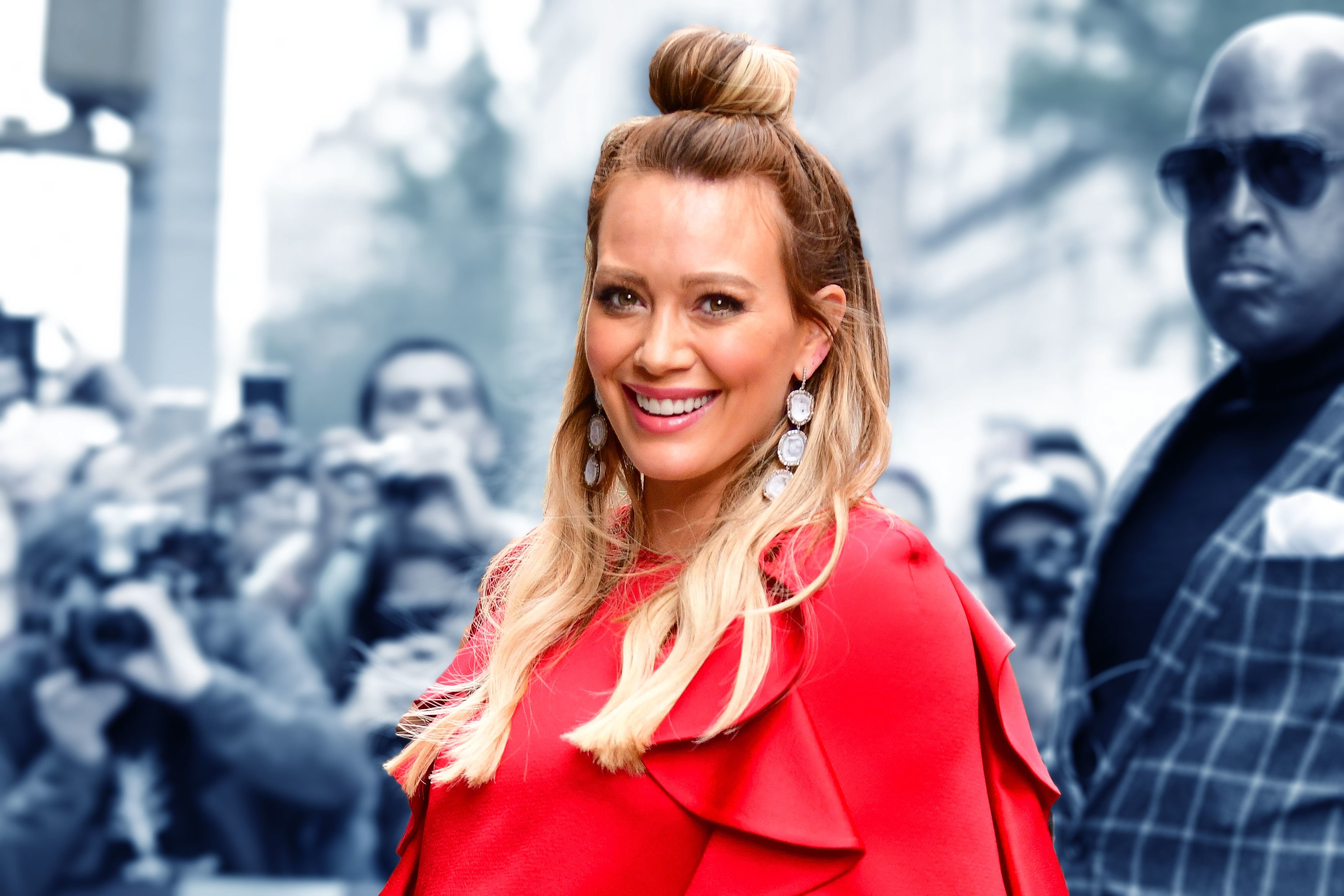
Hilary Duff is currently expecting her second child, and she took to Instagram this week to open up about her “hard as hell” pregnancy.
“The boobs are big the belly is big the body is big. Man.. pregnancy is hard. Giving love to all mamas who make it look effortless… this journey is hard as hell and also incredibly special,” Duff captioned a mirror selfie showing off her bare baby bump on Wednesday. “Lovely to have a little life inside and to day dream of all the new adventures to come buuuut almost impossible to get my own shoes on..sick of getting up 9 times a night to pee and looking at this weird body in the mirror that is not my own at the moment. Women are so bad ass, this was just a note to remind myself and remind others how strong and beautiful you are! WE GOT THIS! ?❤️???✨.”
Duff and Koma announced they were expecting via a pair of matching Instagram posts in early June. “Guess what guys! @matthewkoma and I made a little princess of our own and we couldn’t be more excited!!!!!!” Duff captioned her post. Since then, she’s given her fans and followers frequent updates about her pregnancy.
Not long after Wednesday’s post, Duff took to her Instagram Story to answer some fan questions.”We have picked out the baby’s name, which is super cool and relieves a lot of stress, because we agreed on it right away. I think we’re not ready to share, and we won’t until she’s born, just because we don’t really wanna hear people’s opinions on it. It’s a very personal choice,” Duff said in response to one fan who asked about her future daughter’s name. Congrats again, Hilary!
Picture a pregnancy test, and chances are that some version of the following image will pop up: a clinical plastic stick, possibly with a pink handle and the words “pregnant” and “not pregnant” printed at one end. Now try and imagine a vastly new-and-improved version of the product that’s become so integral to women’s lives, but hasn’t changed in three decades. What would that even look like?
Bethany Edwards has an idea. As the founder and CEO of Lia, a startup with designs to change the way we think about pregnancy tests, Edwards has spent the past four years developing the first-ever fully flushable incarnation. And, if you ask her, it’s an innovation that’s been a long time coming.
“Nobody has innovated on the home pregnancy test [structure] in over 30 years,” Edwards says. Since the 1980s, when ClearBlue put the first pee-on-a-stick style test on drugstore shelves, kicking off the so-called Wand Era, not a whole lot has changed—and the truth is that it took centuries upon centuries of human history for the product to progress to that point. Ancient Egyptians purportedly mixed urine with grains to predict if a woman was expecting (germinating grains were that civilization’s equivalent to a tiny “plus” sign); medical textbooks from the Middle Ages reveal similar experimentation with urine and wheat bran.
Just a century ago, pregnancy testing still resembled something out of a Flintstones cartoon. The “Hogben test,” developed somewhat accidentally by the British zoologist Lancelot Hogben, consisted of injecting a woman’s urine under the skin of a female frog and then checking to see whether or not, hours later, the creature produced a cluster of eggs. If the answer was yes, congratulations were in order. Though similar procedures were performed on mice as well as rabbits, tens of thousands of frogs were subjected to this fate.
PHOTO: Lia Diagnostics
Lia is made from biodegradable paper—no plastic—and flushes like 2-ply toilet tissue.
That is, until scientists developed amphibian-free tests which detected the presence of the so-called pregnancy hormone, human chorionic gonadotropin, a.k.a. hGC. It was a game-changing discovery that ultimately reshaped the experience of finding out you were expecting. In-office chemical tests became the new standard: A woman would give a urine sample to her doctor, who would send it off to the lab and then inform his patient of her results when they arrived back.
Predictably, the male-dominated medical establishment had plenty of reasons why women couldn’t be trusted to administer pregnancy tests on their own—how could an emotional woman be trusted to follow even the simplest of instructions?!at least one doc asked—which meant that confirming you were pregnant almost always happened in the presence of a professional.
Though Lia follows the same pee-on-the-thing principles, there’s no telltale plastic applicator left behind.
Then, in 1967, a 26-year-old product designer named Margaret Crane helped usher in a new era of women’s health by developing an at-home test that brought the science lab into our bathroom. Though the test Crane created (not coincidentally, against the backdrop of the women’s liberation movement) had the look of a DIY science kit, it would ultimately pave the way for the Wand Era: the simple pee-on-a-stick tests we’re familiar with today. Unilever launched its Clearblue Easy test, the first of its kind, in 1988, and the first digital test was released in the early aughts. And, like Edwards said, the design of at-home tests hasn’t changed much in the intervening years.
But, with Lia, women could have a potential new option. In research conducted, one of the things that kept coming up from women was the fact that they wanted a more private test, Edwards explained to Glamour.com over the phone. Pregnancy, and pregnancy testing, is a highly unique and personal experience for every individual; for women in particularly vulnerable situations, the need for privacy can even be a matter of life and death.
“We’ve heard stories from people [about] wrapping [their pregnancy test] in tin foil and putting them in dumpsters or garbage cans across the street,” says Edwards. “It can also be as simple as not wanting your housecleaner or your mother-in-law to be snooping through your trash.” Though Lia follows the same pee-on-the-thing principles—take it into the bathroom, aim, and wait for pink lines to appear (two for positive, one for negative)—there’s no telltale plastic applicator left behind, and it flushes like 2-ply toilet paper.
Used pregnancy tests add up to around 2 million pounds of waste every year.
Which brings us to the next point: the sustainability factor. Data from 2017 shows that 10.95 million American women used an at-home pregnancy test. And, if any of these women followed in the footsteps of Kim Kardashian—who once documented the fact that she used six tests in a row, on an airplane—the number of plastic test applicators starts to get a little mind-boggling: used pregnancy tests add up to around two million pounds of waste every year.
For that reason, Lia was designed to be as earth-friendly as possible, and it’s made from paper, not plastic. ”The idea that all the materials are bio-based in some kind of way so that they can degrade on their own as opposed to having to be recycled,” says Edwards. The materials her team has developed are water disposable and 100% biodegradable, so Lia can go straight back into nature without another processing step.
But while a product that ups privacy and sustainability seem like a no-brainer, Edwards acknowledged encountering some resistance while raising capital. For one thing, introducing the idea of a new pregnancy test to rooms full of male venture capitalists proved to be an uphill battle; she recalls a lot of confused faces, as well as at least one executive who was under the impression that women inserted pregnancy tests like tampons. For another: She has observed that a business with a social good mission isn’t always seen for its profitability potential, making it harder to get buy-in.
It’s an issue that’s bigger than the women’s health space. “Things that are being done in agriculture or different kinds of textiles or different recycling techniques, that naturally have a sustainable kind of bend to them: They might not be statistics-based tech businesses, and they might not be making virtual reality headsets,” she says. “But that doesn’t mean they’re not set up to be profitable businesses. They’re just solving problems that are trying to be in a benefit for the planet.”
As for how the hope for profitability applies to price per unit, Edwards said that the company is really focused on making Lia affordable, and keeping costs comparable to other name brand tests. Though Lia has officially cleared FDA hurdles—it received clearance last December—the next challenge is finding a producer who can make Lia at volume.
“We’re taking techniques from the paper and textile industries and integrating them with techniques from the diagnostic industry,” says Edwards, “so it’s a completely new way of making a product like this.” And so, while the Wand Era might not yet be behind us, the way we think about pregnancy tests—and women’s privacy—has come a long way. Flushable, earth-friendly, and completely private? All positive.
If you’re a woman considering an abortion—a legal procedure in the United States—your doctor may be required by law to present you with alternatives to abortion (like adoption) depending on the informed consent laws in the state you live in.
In fact, according to the Guttmacher Institute, 29 states require that written material on the topic of adoption and abortion be developed by the state. Eighteen states require that those materials be offered to the patient to present options and 11 states say those materials must be given to women. But now, based on the 5-4 ruling by the Supreme Court on Tuesday, crisis pregnancy centers—faith-based non-profit organizations that counsel women against having abortions—in California will no longer be required to provide the same level of information.
In short, while the law requires hospital or health center staffers to tell women seeking abortions about adoptions, it does not require counselors at crisis pregnancy centers to give information about free or low-cost abortions, prenatal care or contraceptives to women. And that hypocrisy has prompted strong responses online, where Twitter users were quick to call out the different standards being applied.
The debate began when anti-abortion centers argued that a California law—the Reproductive Freedom, Accountability, Comprehensive Care, and Transparency (FACT) Act—which required them to disclose information about abortions, went against their beliefs and violated their First Amendment rights.
The law had mandated that these crisis pregnancy centers disclose whether they have a medical license or have medically licensed professionals available. They also had to post a notice in a conspicuous space with the following statement: “California has public programs that provide immediate free or low-cost access to comprehensive family planning services (including all FDA-approved methods of contraception) prenatal care, and abortion.”
The court ruled that the law probably does violate the First Amendment and kicked the case back to lower courts for further proceedings, which is seen as a victory for anti-abortion groups.
Justice Clarence Thomas delivered the Court’s majority opinion writing that the law “targets speakers, not speech, and imposes an unduly burdensome disclosure requirement that will chill their protected speech.”
However, Justice Stephen Breyer called out what appears to be hypocrisy in his dissent: “If a State can lawfully require a doctor to tell a woman seeking an abortion about adoption services, why should it not be able, as here, to require a medical counselor to tell a woman seeking prenatal care or other reproductive healthcare about childbirth and abortion services?”
If informed consent, while not encroaching on constitutional rights, is the goal, it’s hard to see how this ruling accomplishes that. The reason the law came about in the first place was based on the belief that crisis pregnancy centers were willfully misleading patients.
According to the Los Angeles Times, state lawmakers concluded that “as many as 200 pregnancy centers in the state sometimes used ‘intentionally deceptive advertising and counseling practices that often confuse, misinform, and even intimidate women’ about their options for medical care.”
While the abortion debate may never come to an end, the Supreme Court’s ruling today has certainly changed the landscape for many women, and at the very least, highlighted a hypocritical standard and a slippery slope.