Categories
Health

Obsessive Compulsive Disorder: This Is What It's Like to Be Obsessed With Perfection


Eighteen months ago, I was in the throes of some of the darkest moments of my life—but on paper, it didn’t look like that. I had just finished a national tour for my first book, The Crowdsourceress, and positive coverage had started rolling in. My company, which launched crowdfunding campaigns for stellar creators worldwide, had raised a combined $20 million to help bring their creative projects to life. Journalists were calling me a wunderkind and a guru; my name was even added to Forbes’ “30under30” list. By the looks of things, I was killing it.

But alone one day soon after the tour ended, I couldn’t leave my bed. Sobbing on the phone to my mother like a terrified child, I was deep in a spiral of repetitive, fearful thoughts. My skin was crawling with anxiety.

This wasn’t my first total meltdown. I had suffered from these obsessive thoughts of uncertainty for almost two decades of my life.

I grew up a happy kid—spunky, opinionated, and incredibly curious. But something happened in my pre-adolescent years: I became painfully afraid of bad things happening to me. From what I remember, it started when I was around 10. After watching a nineties horror film, I became wildly obsessed with the idea of being abducted by aliens. I would lie in bed every night imagining all the ways I could be abducted, and then rush into my parents room, begging to sleep near them for protection.

The author with her mom.

Courtesy of Meg Daly

I didn’t just have these terrorizing thoughts at night though; on some idle weekends, I would find myself pacing back and forth indoors, thinking about the various ways I could be tortured by the aliens that would eventually abduct me. I remember so clearly one Saturday morning my Dad pointing to a painting and saying, “This painting exists. Aliens don’t. You have a higher probability of being abducted by this painting!” I laughed, relieved, but still uncertain.

When I eventually let go of my alien obsession, I moved onto another fixation: perfection.

I was finishing fifth grade, and applying to a prestigious middle school. I told myself that I had to get in—in my mind, if I failed, it would irreparably derail my entire life. Fixated, I would complete all my homework, organize it neatly in my sparkly folders, and get into bed early. But I couldn’t go to sleep: instead, I would pray relentlessly, pleading for straight A’s. Fearful that my homework could suddenly disappear into thin air while I slept, I’d anxiously jump out of bed to check that it was still there. I would do this about twenty times a night.

By the time I turned 12, my obsessions shifted again, this time to a subject on many a pre-teen mind: sex. But I wasn’t fantasizing about a new crush or exploring pleasure as my body went through puberty. Instead, I was terrified of anything related to sex—it got to a point where I didn’t want to be touched fearing any unpredictable sensation in my body. My obsession became so paralyzing that I would retrace the most innocent of past interactions, analyzing them for the slightest improprieties and confessing whenever I felt something could have been perceived as wrong. Whenever I did have a sexual thought—all of which felt weird and deviant—I would fixate for hours on end about what it meant about my identity as a person, rocking back and forth into what seemed like a hole of darkness.

At first, like my other moments of catastrophic crises, I implored my parents for reassurance, describing my graphic fears in detail. But I realized that this new obsession felt different—it was too taboo. I stopped sharing and began internalizing my rituals, while another obsessive idea set in: I really believed that if my parents knew my thoughts, even though they had been my biggest supporters so far, they would disown me forever.

When I started high school, I became really good at hiding my internal battles—so began my years of trying to cope on my own. I would power through episodes of distress by throwing myself into piles of work as a necessary distraction, or avoid situations that triggered the anxiety. The intense dedication to my work helped me excel but it masked the obsessive thoughts playing on loop in my mind. In college I had two majors, a minor, and an honors thesis but I remember thinking I could have—should have—done so much more.
Source link

Categories
Health

Sandra Oh Brought Her Parents to the Emmy Awards, and Twitter Is Obsessed


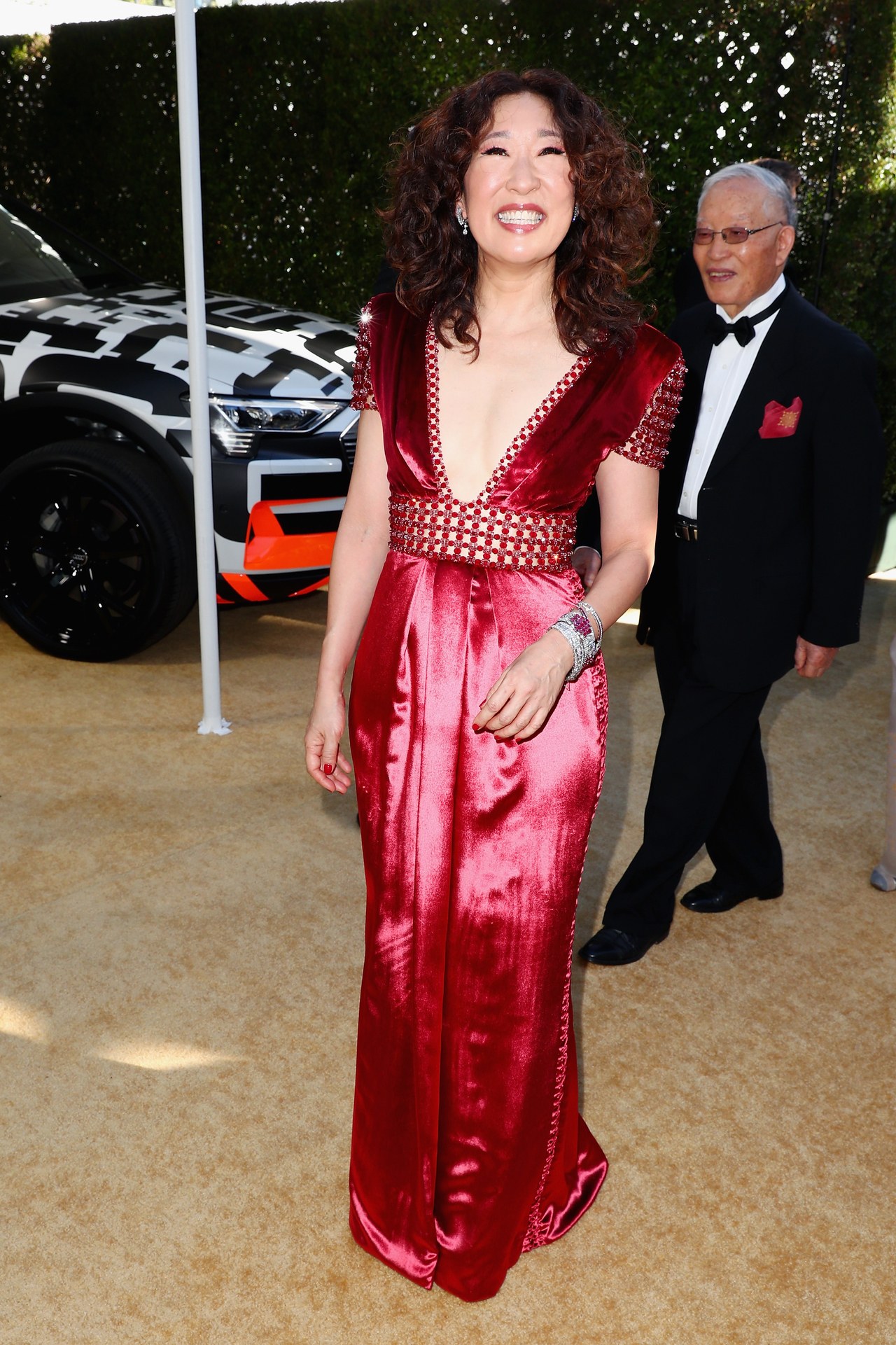
Sandra Oh made Emmy history this year as the first Asian woman nominated as outstanding lead actor in a drama series, thanks to her role in BBC America’s Killing Eve. But it was her parents who stole the show at the ceremony on Monday night (September 17) when they accompanied their daughter on the red carpet.

PHOTO: Joe Scarnici

Joon-soo and Young-nam Oh even joined the actress and Grey’s Anatomy alum in front of the cameras—most notably, to gush about Sandra during an interview with Variety. “I’m so proud of her,” Young-nam said before planting a kiss on her daughter’s cheek.

“Oh my God, that happened on film!” Sandra said in response.

Watch the sweet moment, below:

People also noted that Mrs. Oh wore a hanbok, a Korean dress often worn at formal celebrations and ceremonies, to the Emmys. (Sandra actually wore a modern take on a hanbok to the SAG awards in 2008.) For many, Mrs. Oh’s dress was a proud moment of representation. Mr. Oh, meanwhile, looked dashing in his tux.

“Sandra Oh’s mother is wearing a hanbok and has done more for East Asian representation on television than all the broadcasts networks combined,” one Twitter user wrote. Writer and Sleepy Hollow showrunner Albert Kim tweeted, “Sandra Oh’s mom wore a hanbok to the Emmys! There is a hanbok at the Emmys! Forget K-pop, THIS is the sign that Koreans have arrived.” See more Twitter reactions to the Oh family, below:

Throughout the night, the camera panned to Sandra’s parents sitting next to her, and they excitedly cheered her on as her category was announced. Sandra has received five Emmy nominations for her work on Grey’s Anatomy but never won, and many hoped this year would be her big moment. However, The Crown‘s Claire Foy ended up receiving the award. Still, we hope this means Sandra will continue getting recognized for her work—and bringing her parents to award shows, obviously.


Source link

Categories
Health

There May Be a Very Logical Reason We're All So Obsessed With the Royal Family Right Now


The world can feel like an utter and complete garbage fire at times, and our news cycle is both faster and more chaotic than ever before. Just logging on to social media in the morning can send me into a panicked state before I’ve even brushed my teeth—and I know I’m not alone in this. But everybody deserves a reprieve from time to time, and I’ve finally settled into mine: royals content.

Now, I’m no newcomer to British royal family fandom. As a kid, I followed along with the ups and downs of Prince Charles and Princess Diana’s relationship via my mom’s People magazine subscription. I know exactly where I was when news of Diana’s fatal car crash broke. And until he got serious with Meghan Markle, I used to joke that Prince Harry was my longest (fictional) relationship. Although my dream of him marrying a slightly older American woman didn’t pan out exactly as I had planned, I am very happy for them.

I have devoured every episode of The Crown, The Tudors, and even the CW’s Reign. I’ve oohed and awwed over Prince George and his siblings like a faraway aunt they’ll never meet. But, recently, there’s been a shift in my focus—and my intensity. Given the sheer number of official royal handles, royals reporters, and Instagram fan accounts, I have quite literally altered my feeds’ algorithms.

In other words, I wake up to each morning to an onslaught of imagery and tweets that don’t make me want to crawl back under the covers. It’s a delight, this royal Xanax.

Part of it, of course, are the beautiful clothes, great blowouts, messy buns, newlywed heart-emoji eyes, and adorable little children. But there’s something else that I find so incredibly calming about knowing every last in and out of the royal schedules and protocols.

Dr. Donna Rockwell, Psy.D., a clinical psychologist specializing in the area of celebrity and fame, says that the feeling can be akin to a child finding peace in structure and boundaries, even when they don’t realize that’s what they need. And what’s more structured and filled with rules than a monarchy?

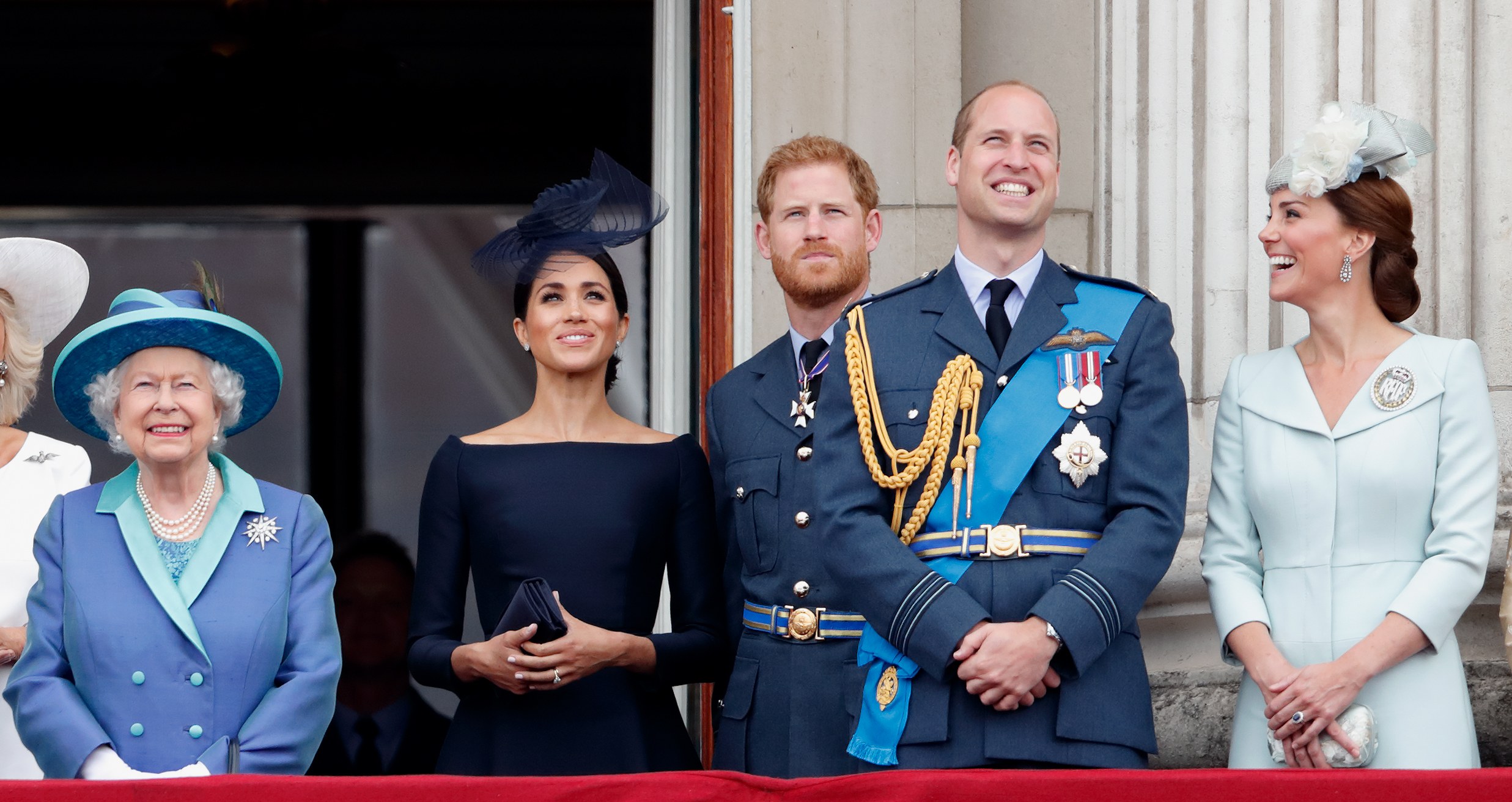
“It’s comforting to see a structure where that structure seems to create a semblance of order,” she told me. “So in the same way, I think that when an adult is feeling a sense of inner chaos, it’s comforting, even neurologically speaking, to be able to observe something of structure. We see structure, and we feel comforted. So it’s actually a neurological response of relaxation that occurs in us in seeing the queen, and the [grand]daughters-in-law, and the line [of heirs].”

“The universe is profoundly chaotic,” Rockwell continued. “So whenever we can anchor ourselves into a sense of order and safety, really, we tend to relax. And that generates the reward center of the brain. Ahhhh, is the reaction.”

Ding, ding, ding. I love when science backs up the pop-culture obsessions I use for self-care: I’m craving structure in the form of royal protocol and a steadfast monarch (and her family) who seems unflappable, even more so compared to the most erratic leader we’ve seen in some time in D.C.

Rockwell also referenced Queen Elizabeth II’s meeting with President Trump earlier this summer. “She was gracious, and it was lovely to see. And maybe here’s the other piece as we’re so polarized in this country right now: graciousness. To see it witnessed right there where some of us, perhaps, are pulling our hair out and we’re at our wit’s end—we see the monarch, the monarchy, exhibiting graciousness to what we see as confusion and upset.”

Listen, I’ll take the serenity anywhere I can get it these days—and you should, too. Even if that means learning completely useless-IRL information about whether somebody you’ll never meet has to curtsy in front of her sister-in-law or whether or not panty hose are required at the Royal Ascot.

Your brain, after all, might just might need it to de-stress.

My favorite royal follows:

@Scobie

Omid Scobie is one of the top royal journalists in the game. He often travels with the family on tours and can offer historical context to protocols and history that are quite foreign to we Americans. He also co-hosts a great royals podcast called “On Heir” with another fantastic royal reporter, Emily Andrews (@byemilyandrews).

@KensingtonRoyal on Instagram and Twitter

These are the official handles of William, Kate, Harry, and Meghan—anything that claims to be otherwise is a fake. But the young royals’ social staff is pretty on point with live coverage of events and first looks at photos from the big wedding or Prince Louis’ christening (William even tweeted via this handle during the World Cup).

@TheElegantDuchess

An account dedicated to all things Kate? Sign me up. You’ll find everything you need to know about the Duchess of Cambridge’s fashion. Plus, if you’re new to royal fandom, there are tons of old photos and fun facts dating all the way back to her university days at St. Andrews, where she met her future husband.

@MeghansMirror

Of course, the newest member of the royal family has become an international fashion icon. If you want to find out what brands she’s wearing immediately, Meghan’s Mirror should be your first follow. They get the details fast and have even more fashion and beauty content inspired by the Duchess of Sussex on their site.

@RoyalDickie

Dickie Arbiter is the royal correspondent for the BBC. Plus, he used to work for the Queen as a press spokesman until 2000, so you know his insights are the real deal. He tweets about all the members of the family which is great when you need some dish on Princess Anne, one of my low-key faves.

@RoyalAddicted2

For those of you who want to obsess over more than just the British royals, this is the account for you. And if you aren’t already a fan of Queen Letizia of Spain, you soon will be: Her Majesty is chic.


Source link

Categories
Health

Why We're Obsessed with Customized Fashion


My most prized sweater has earned that title not because it’s made of the softest black cashmere (although that bit is fantastic). I adore this crewneck because of two small white lowercase letters embroidered on the front left, EH, my initials. I get compliments every time I wear it or post a picture of me in it. It sits neatly folded atop the stack of knits in my closet, an easy grab for keeping it in heavy rotation. I intend to wear it until it unravels entirely.

I’m not alone in treasuring something with a signature touch. Although monogramming has been around since the Greco-Roman era, today the craze for personalized merch has hit a fever pitch. One study by the consulting agency Deloitte reported that roughly one in five adults has bought personalized clothing and one in seven has purchased personalized accessories. We’re hunting for something different, something more representative of our lives, something more special. And we’ve grown accustomed to personal treatment—companies tailor every email or recommendation to our every desire (I’m looking at you, Netflix recommendations).

Interestingly, shoppers don’t seem to want to start from scratch and play designer. It’s too daunting for even the most stylish among us, says Candice Fragis, buying and merchandising director for the luxury e-commerce site Farfetch. They’re more interested in taking a style from a brand they know and adding their own spin—it’s a way to be unique but still part of a club. At Farfetch, for example, the Fendi Kan I F bag comes in five leather colors, two hardware finishes, and six logo shades. At Lingua Franca, shoppers can customize cashmere sweaters; Connie Britton wore one that read “Poverty Is Sexist” to the 2018 Golden Globes, and Tessa Thompson requested “Ava, Greta, Patty & Dee,” although it’s tough to beat the “Tired ass honkey ho” Candice Bergen ordered. Words aren’t your thing? Rebecca Minkoff’s line of So Connected hard-shell suitcases can be dressed up with “statement stickers,” emoji-­like symbols that include a lightning bolt and a pair of lips.

Technology advances have made this easy for ­consumers. Real-time rendering lets you see whether you prefer amethyst satin or pony stripes for your Sergio Rossi loafer, and whether the plate across the toes looks better in crystal or rose gold. However, personalization is no small feat on the manufacturing end. Picking a leather color on, say, a bag, necessitates a custom thread color too. “Little things people don’t even think about mean more time in the production cycle,” says Neal J. Fox, president and CEO of Mark Cross, which can now produce customized handbags in about six weeks.

Fortunately for brands bravely offering up all these options, most shoppers don’t expect a custom Nicholas Kirkwood mule to arrive in 24 hours, says Fragis. In fact, the anticipation of getting a special delivery, she notes, “is part of the fun.”

Elizabeth Holmes, formerly a style reporter for The Wall Street Journal, has also written for The New York Times, InStyle, and Elle.

Related Stories:

What It Means to Be a Female Fashion Designer in 2018

7 Female Stand-up Comics on the Power of Performance Fashion

The Full Story Behind Connie Britton’s 2018 Golden Globes ‘Poverty Is Sexist’ Sweater


Source link