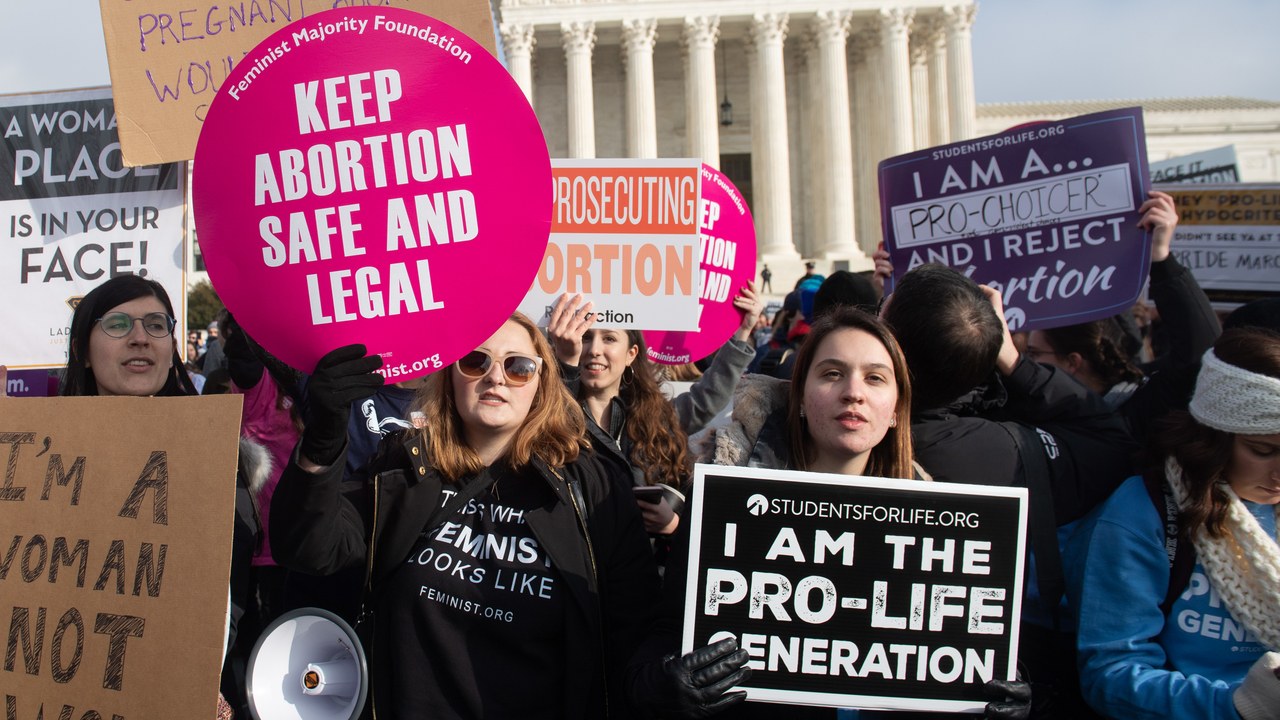
On Thursday (May 16), the Missouri Senate voted to pass legislation that bans abortions after eight weeks of pregnancy, even in cases of rape, incest, or human trafficking. Doctors who perform the procedure could face up to 15 years in prison. The bill still needs to pass the Missouri House of Representatives, but it is expected to do so and will then go to Governor Mike Parson, who has indicated he will sign it into law.
“My administration will execute the laws the legislature passes, and this pro-life administration will not back down,” he told reporters Wednesday evening, according to the Kansas City Star.
That makes Missouri the latest state to pass a bill positioned to challenge Roe v. Wade—the Supreme Court case that established a woman’s right to an abortion in 1973—in the courts after Georgia and Alabama passed similar bills earlier this week.
Here’s a breakdown of all the states with recent restrictive abortion legislation.
Missouri
The bill on the docket in Missouri contains a “trigger” provision that will ban abortion outright if the Supreme Court overturns Roe v. Wade, which legalized a woman’s right to the procedure without undue government interference nationwide. It also contains additional restrictions that would remain in effect if the two-month threshold were thrown out by the courts, as has happened in other states.
“Politicians are putting the health and lives of Missouri women at risk in their race to make our state the one that overturns Roe v. Wade at the Supreme Court,” M’Evie Mead, director of policy and organizing for Planned Parenthood Advocates in Missouri, said in a statement. “These bans on safe, legal abortion will have real costs—expensive legal costs and human costs for the women and families who need reproductive health care.”
Alabama
Yesterday (May 15), Alabama governor Kay Ivey signed into law an abortion bill that would outlaw the procedure as soon as the moment of conception with exceptions only if the mother’s health is at risk. An amendment that would have carved out additional exceptions for cases of rape and incest failed. Under this law, doctors could face up to 99 years in prison if they performed an abortion and could be sentenced to up to 10 years for even attempting to administer one.
“Today, I signed into law the Alabama Human Life Protection Act, a bill that was approved by overwhelming majorities in both chambers of the Legislature,” Governor Ivey said in a statement. “To the bill’s many supporters, this legislation stands as a powerful testament to Alabamians’ deeply held belief that every life is precious and that every life is a sacred gift from God.” Read more about it here.
Georgia
Earlier in May, Georgia’s so-called heartbeat bill was signed into law by Governor Brian Kemp, banning abortions starting at the moment when doctors can detect a fetal heartbeat, around six weeks postconception. At that point many women do not yet know they are pregnant. (The previous law in Georgia allowed abortions up to 20 weeks.) Exceptions are allowed to prevent harm to the woman and in cases of rape or incest in which a police report has been filed. The new bill also criminalizes the procedure itself, which means that a woman who terminates her pregnancy could face life in prison or even the death penalty.
“Our job is to do what is right, not what is easy,” Kemp said. “We are called to be strong and courageous, and we will not back down.”