Categories
Health

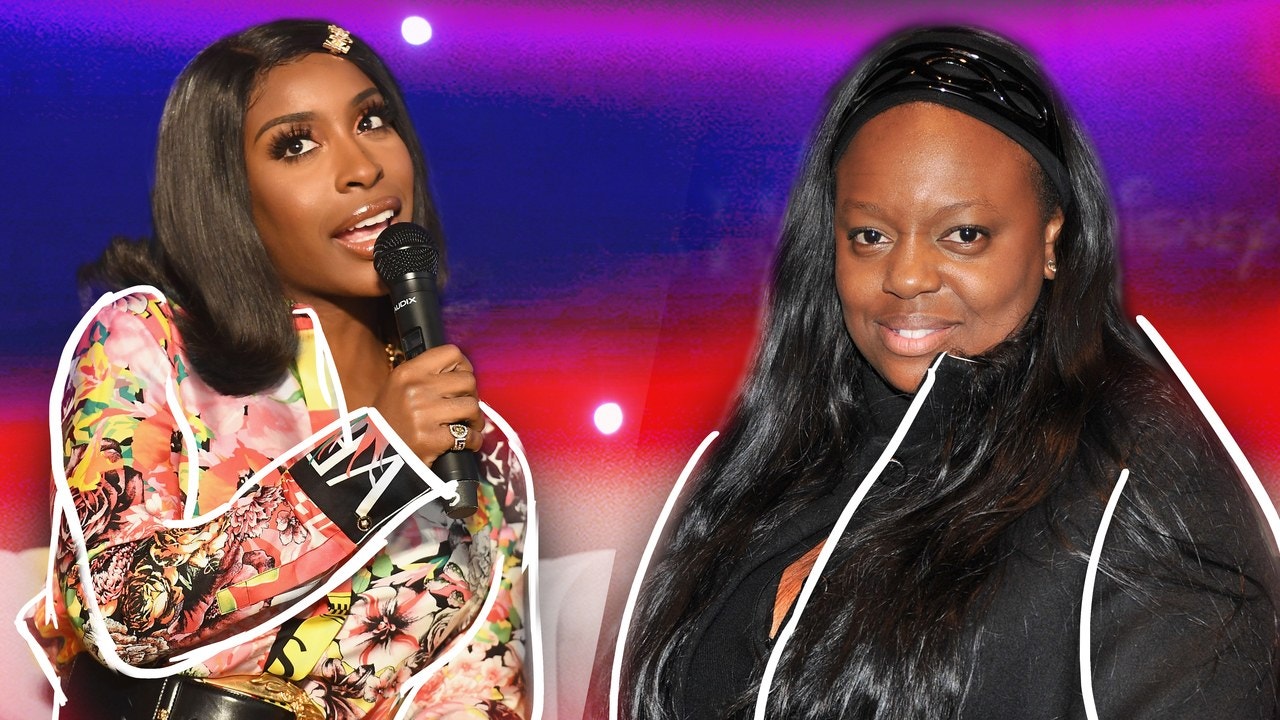
Jackie Aina Learned from the Best


As black women, we’re sometimes put into this box. We wear something or pioneer a look, and it’s considered “ghetto.” Then a little later, people decide that’s a new cool thing, and we don’t get the credit. It doesn’t come from nowhere. I love the fact that Pat does what she does and no one can tell her whether that’s “allowed” or “appropriate.” She has this power where it’s like, “Oh, well if Pat did it, then it’s cool.” People admire her because of who she is, as an authentic leader and creative person. To me, that’s the goal. And when I look at other black women who are so creative and expressive, that’s what I want for them.

What women—and black women, in particular, have shown me—is that if we lift each other up, we all benefit. There are instances where I’m like, “I can do this, but I’m going to bring other people in because I can.” Every single time, I realize again that collaboration improves the work. It can be better and more magical with others than I could make it alone.

So just think of how incredible and how fierce it would be if women collaborated with each other more; if we saw each other as allies and not as competition. I have never regretted sharing opportunities with other women, and in those times that I’ve hesitated, it’s forced me to think about the misogyny that I’ve internalized. When people say women aren’t “cool” or that women are passive aggressive—those messages feed this idea that only a handful of women deserve to succeed. And who benefits when women see each other as a threat? And don’t work together? The status quo. And men.

Working with other women has also reinforced for me how important it is to tell someone what their work means and to encourage them. There are tons of women whose names I want people to know: Sharon Chuter from UOMA Beauty, is one example. She is a fellow Nigerian and her brand is just killing it. I tell her all the time, “Girl, you’re out here killing it.” Naomi Campbell is an icon. And Karen Civil, who knows all about music and hip hop—that woman is a big deal!

But supporting other women isn’t just about business or mentorship because there are the women that I know most people will never hear about who matter just as much to me as those bigger names. I think all the time about a woman I served with when I was in the U.S. Army. I was going through a divorce and I was at work; I had started the YouTube channel, but I wasn’t on social media full-time and I just remember feeling like I was going to crash and burn. A lieutenant found me in the bathroom at March Air Reserve Base, crying my eyes out, mascara running. I was the only girl who wore makeup on base in the whole company. She was obviously superior to me, but she saw me crying and could tell that I was just having a breakdown, just going through it.

I had never met this woman before, but she was also black and there weren’t a lot of us. Plus, she was so far above me in terms of rank. But she saw me just weeping and gave me the words that forever changed my life. She said, “Whatever you’re going through right now, this is not your final destination. You are more than this. You can make it through this.” It was a turning point for me, that this stranger would look at me and know that I was destined for something better than what I was dealing with at the time. It motivated me.

For every major moment in my life, a woman has been there, rooting for me. Even if we didn’t know each other that well or I felt like I didn’t deserve it, someone has seen me and said to me, “You can do this.” When I think about celebrating other women, that’s what I remember—how each of us can be that person for another woman. It’s a responsibility, but it’s also a privilege.

March 8 is International Women’s Day. To celebrate, we asked women like Jackie Aina, Cecile Richards, Andrea Mitchell, and more to reflect on how other women have lifted them up—mentored them, advised them, represented them, and above all showed them what was possible. We’ll be sharing their stories here all week.


Source link

Categories
Health

Jackie Aina Is Changing the Beauty Industry, One Product at a Time


At a time when laws are cracking down on influencers to be more transparent, Jackie Aina rises above the #sponcon. Since launching her YouTube channel over a decade ago, the 31-year-old’s refreshing candor has earned her a reputation for telling it like is. She calls out brands when they’re not inclusive, holds other influencers accountable for offensive remarks, and doesn’t shy away from tough discussions about colorism in the industry. She’ll also make you laugh your ass off.

Not only has it landed her lucrative makeup collaborations, it’s led to actual change in the industry—the latest being Too Faced’s expanded range of Born This Way foundations, which she helped create. Ahead of the launch, the beauty mogul reflects on the pressure to be the voice of a revolution and why she won’t be quiet.

When I started my YouTube channel in 2009, my goal was never to be an “influencer.” I was in the military, far away from friends and family, and really lonely. The one thing that always made me feel better was makeup.

Originally, I think part of me wanted to get on camera to show that not every person who serves their country is rough and rugged. You can be feminine and fight for freedom. So I filmed a few tutorials in my uniform, and the response was crazy. People loved that I wasn’t this out-of-reach makeup artist—just a regular girl.

Then, around 2015, I was feeling less excited by my channel and realized that I was trying to be too “professional” instead of showing my true crazy self. And that’s when I had my first viral video: a parody on all the weird beauty trends (like crazy eyebrows) from that year. Being myself paid off—I think that’s why I now have more than 2 million subscribers on YouTube.

As my fan base grew, beauty brands started sending me lots of products. But it was disappointing to receive things that wouldn’t work for my skin tone. So I really began to take on more of a voice for the black beauty community, critiquing brands that aren’t inclusive.

Some days I have to say, “Kitchen’s closed,” and log off social media.

It’s always been a tough balance. It’d be easier to water down my content—I feel like a lot of people thought that once I hit a certain milestone, 1 million subscribers, then 2 million, I’d stop talking about race or “political stuff,” as so many people call it. I don’t think it’s political; I’m just talking about experiences that are true to me. My goal is to always make people of color feel good when they come to my channel. It’s not just about putting on lipstick. It’s about people feeling beautiful, not intimidated. I’ve learned that as long as I feel passionate about a critique, it’s important to stand by it.

One downside of using my voice? People expect me to have an opinion on everything. Just because I don’t always comment on political issues doesn’t mean I don’t care about them—it just means I can’t take on the weight of everything. Some days I have to say, “Kitchen’s closed,” and log off social media.

But I’ll gladly take on all those frustrations because my platform has given me the power to make a difference. For example, I recently teamed up with Too Faced Cosmetics to help expand its Born This Way foundation range (which comes out today) and make sure the undertones would actually work for women of color. Jerrod Blandino, the cofounder and chief creative officer of Too Faced, could have hired anyone he wanted to help him on this project. Instead he gave a black woman a seat at the table and let me do my thing. He gave me a voice on this issue that is so important to me, and the ability to make a real change. That’s huge!

PHOTO: Jackie Aina

Aina with the swatches from the new collaboration

I’m really proud of the darkest shade, Ganache. After multiple tries (it kept pulling a little too red), we finally got it right, and it’s beautiful. I was so glad they were willing to keep at it. We created nine new shades, and now the line’s full spectrum has 35 colors.

Inclusion doesn’t stop at foundation, though, and that’s what I hope all beauty brands can take away from this movement. Can I use your lipsticks? Are your eyeshadows pigmented enough to show up on my skin tone? Do you have blushes that work for me? For so many brands, I still can’t use anything; it’s literally only for light skin. We still have work to do, and I won’t stop talking about it until it’s done.

For more on Jackie’s collaboration with Too Faced—and to shop the line—click here.


Source link